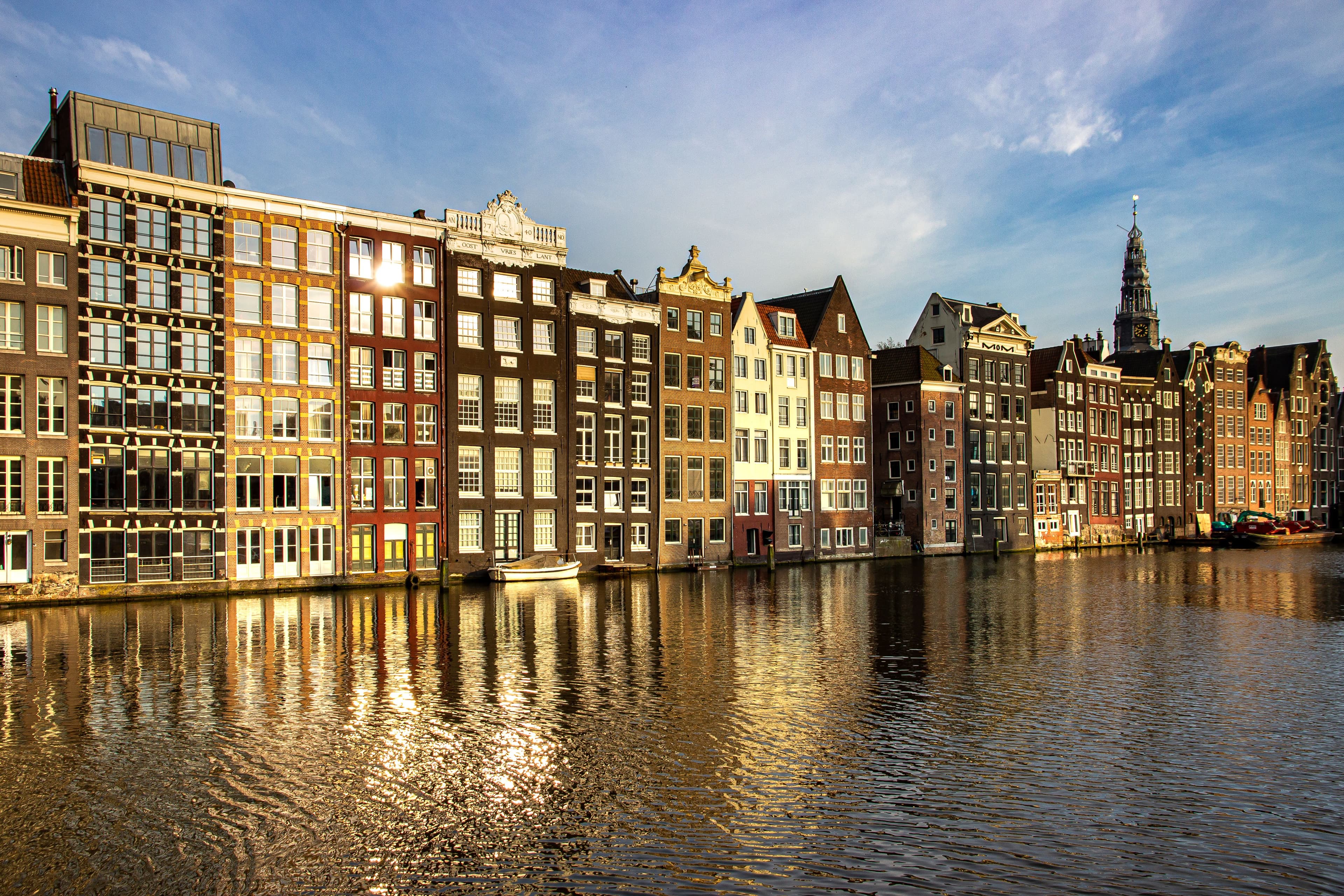
The Race
| Next Race Date | 31 October 2027 |
|---|---|
| Course type | Central Loop (split start, single finish, same venue) |
| Certification | World Athletics Platinum Label Road Race |
| Start | Olympic Stadium (Area A, inside the stadium) and Stadionweg (Area B, outside it), Amsterdam Zuid |
| Finish | Olympic Stadium, in front of the grandstand |
| Total finishers | ~32,000 marathon field cap |
| Avg race-day temp | 8 to 14°C (October) |
| Cutoff time | 6 hours |
| Free race-day transport | No: a discounted GVB public transport ticket code is offered instead |
| Course certification | Overseen by the Dutch Athletics Union and World Athletics; no public AIMS certificate located |
| Sleeper Train | Accessible (European Sleeper's Brussels-Amsterdam-Berlin-Dresden-Prague service calls at Amsterdam Centraal three times weekly) |
Running Through a National Museum
Most marathon landmarks are viewed from the road. Amsterdam’s is one runners run directly through. Around km 4, the course passes beneath the Rijksmuseum itself, through the passage that also functions as a public cycling and walking route on every non-race day of the year. It is one of a small number of moments in world marathon running where the route uses a functioning cultural building as part of the route itself. The same stretch of city gives the course its other structural signature: Vondelpark, crossed twice, once within the first ten kilometres and again in the closing five, turning the same green space into two entirely different experiences depending on which direction the legs are facing.
History
The Amsterdam Marathon held its first edition in 1975, when just over 300 runners took on a course built around the Olympic Stadium, the venue that hosted the 1928 Summer Games. That link between the marathon and Olympic history has stayed intact for fifty years; the stadium remains the emotional centre of the modern race, used as both start and finish. Le Champion, the Dutch sports-events organiser, has run the event since its early years and still runs it today.
Growth has been steady. The race passed from a domestic event into an international fixture, and by 2025 it drew 60,000 runners from more than 140 countries across the full weekend programme, up from that original field of 300. World Athletics recognised the race with a Gold Label from 2013, and in 2020 it became the first Dutch marathon to receive a Platinum Label, the sport’s top classification for road racing.
The results have kept pace with the label. Geoffrey Toroitich Kipchumba ran 2:03:30 in 2025, taking down Tamirat Tola’s previous course record of 2:03:39. The women’s course record stands at 2:16:52, set by Yalemzerf Yehualaw in 2024; Aynalem Desta came within 45 seconds of it in 2025. The same year brought a genuinely deep men’s field, including Joshua Cheptegei, with the top five runners all finishing inside 2:04:52.
Amsterdam sits alongside Rotterdam as one of the Netherlands’ two major marathons, but the comparison is not a duplicate. Rotterdam is built purely for speed. Amsterdam trades a little of that rawness for a route through Vondelpark, the Rijksmuseum and the Amstel River, then closes with a finish that few marathons can offer: back through the tunnel of a working Olympic stadium and onto the track in front of the grandstand.
The course
The marathon starts in two places at once: Area A on the field inside the Olympic Stadium, Area B on Stadionweg immediately outside it, both in Amsterdam Zuid. From there the route runs north through Vondelpark and the Museum Quarter, passing beneath the Rijksmuseum at around km 4, then turns south down Beethovenstraat for a loop through Zuidas at km 7 to 9 and east through the Rivierenbuurt. From km 14 the course follows the Amstel, tracing part of the historic 1928 Olympic route past mansions and windmills: south along the west bank to Ouderkerk aan de Amstel at about km 19.5, then back north along the east bank to km 24, on an open, largely unshaded stretch. The route then runs through Overamstel and Duivendrecht (km 26 to 30), Watergraafsmeer and the Indische Buurt (km 32 to 34), and along Zeeburgerdijk and Mauritskade, where a short underpass beneath Wibautstraat and a rise over Torontobrug come at about km 36.5. Stadhouderskade takes the course back past the Rijksmuseum at km 38 and into Vondelpark a second time at km 39 to 40.
The course is flat. The whole route sits inside a 13 m band on the chart below, and no rise lasts longer than a bridge or an underpass ramp. The race finishes inside the Olympic Stadium, in front of the grandstand.
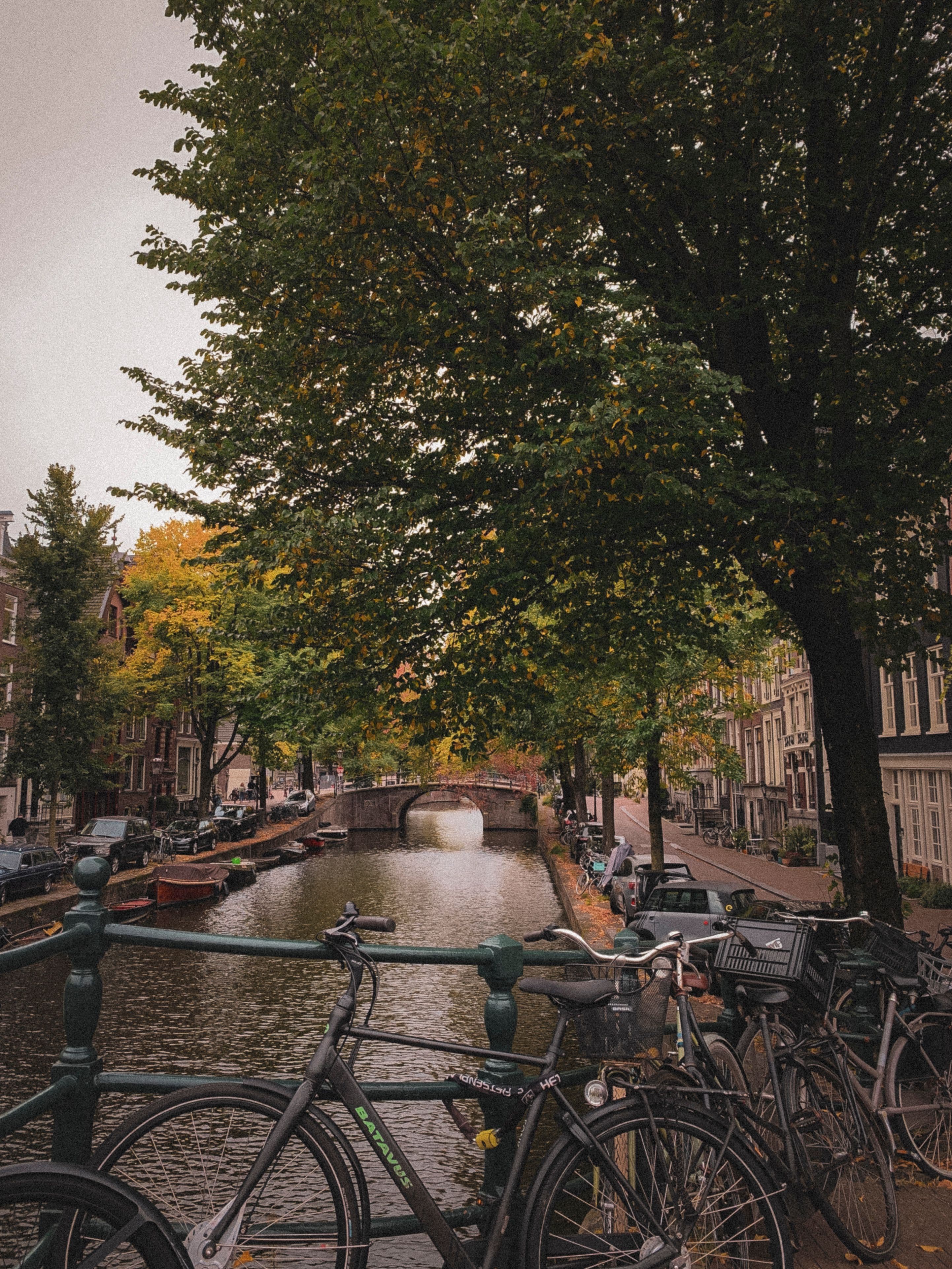
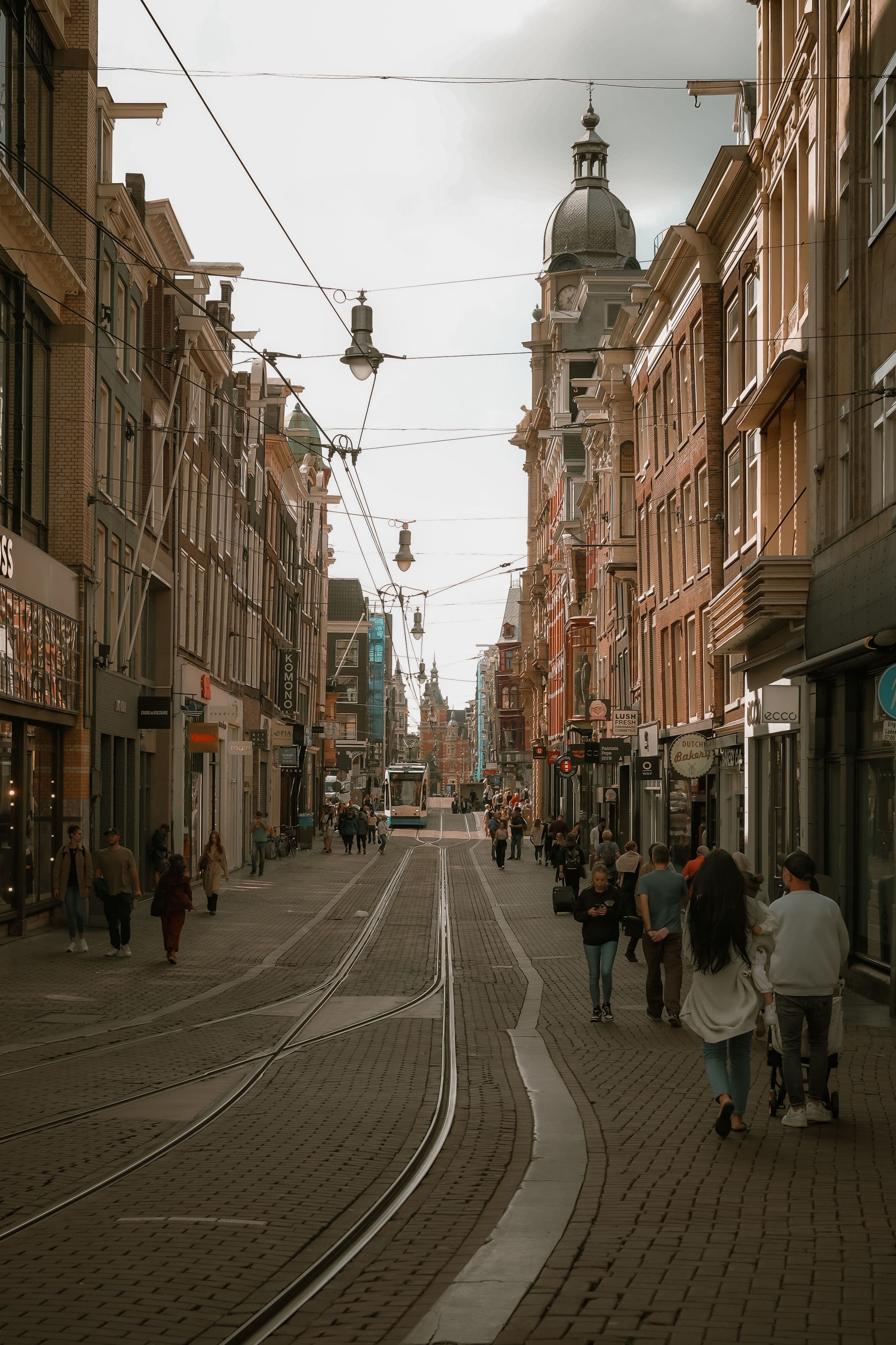
Km 0-4: Two starts, one park. Bib colour decides which of the two start areas applies, and the rule only runs one way: a runner can start later than assigned, never earlier. Area A fills the Olympic Stadium field itself; Area B lines Stadionweg outside. With up to 32,000 marathon runners split across both, the opening kilometres are orderly but genuinely busy, and the first useful skill is patience. Vondelpark arrives quickly and the course crosses it twice across the full distance; this first pass is not the place to weave through the field looking for space, since the crowding here is a scheduling fact and a sign of nothing worse.
Km 4-14: The Rijksmuseum passage and the turn south.The course’s best-known moment comes early: at about km 4, a run directly through the passage beneath the Rijksmuseum, spectators packed close on both sides. It photographs well and it should be enjoyed, but this is also where a fresh field is most likely to go out too hard on adrenaline alone. The route then works south along Hobbemakade and Beethovenstraat to a short loop through Zuidas at km 7 to 9, and east through the Rivierenbuurt before the city thins out ahead of the river.
Km 14-24: The Amstel. This is the psychological core of the race. The course follows part of the old Olympic route along the Amstel, south on the west bank to Ouderkerk aan de Amstel and back north on the east bank, past stately houses and windmills, with long sightlines and comparatively little crowd noise. It is flat, but flat is not the same as easy: wind off the open river can turn a controlled pace into unplanned effort, particularly for runners chasing a GPS number instead of running by feel. After the river, official spectator guidance flags km 26-31, through Overamstel and Van der Madeweg, as a livelier pocket with music and support before the course turns back toward the city.
Km 33-37: The hard part. The organiser identifies this stretch as where the race gets hard for most runners. The course stays flat through here, so the difficulty is glycogen and concentration. A Mini Marathon and energy station around km 33 adds some noise back into the residential streets of Amsterdam Oost. At about km 36.5 on Mauritskade, a short underpass beneath Wibautstraat drops below street level, then the course rises over Torontobrug and heads along Stadhouderskade towards Vondelpark. Neither feature would register on a fresh pair of legs; after 37 km of flat running, both are noticeable.
Km 37-42.195: Back through the park to the stadium. The second Vondelpark crossing plays very differently to the first. What was a crowded, fresh-legged park at km 7 becomes, near km 40, a corridor of returning familiarity and crowd noise. From there the course pulls back toward the Olympic Stadium for a finish few marathons can match: through the stadium tunnel and out onto the track in front of the grandstand.
Follow the blue tangent line throughout. Amsterdam’s course includes enough turns along the Amstel and through the Museum Quarter that running the shortest legal line, not the widest one, adds up to a measurable difference over 42.195 km.
Split start areas by bib colour, a busy but orderly opening, and a first pass through Vondelpark. Settle in; there are no gaps worth chasing.
The course's signature moment at km 4, running directly beneath the museum, then the Zuidas loop. Enjoy it, but do not spend energy chasing the crowd noise.
A long, flat, exposed river stretch out to Ouderkerk and back that rewards patient, even pacing and punishes anyone racing a headwind instead of running to effort.
Duivendrecht and Oost, the hard stretch from km 33, the Wibautstraat underpass and Torontobrug at km 36.5, then a second pass through Vondelpark before the finish inside the Olympic Stadium.
Course Map
The map shows the official 2025 course route through Vondelpark and along the Amstel, the two split start areas, the shared finish at the Olympic Stadium, the expo at RAI Amsterdam, and the key transport stations. Tap a marker for details, and scrub the slider or press play to move the orange marker along the course with the elevation profile beneath it.
Pacers
Official pacers run through the Dutch Pacing Team / Runner’s World Pacing Team, free, with no advance sign-up required. Pacers report directly to their assigned start area and carry flags marked with their target time.
| Wave | Start time | Corrals / colour | Pacers available |
|---|---|---|---|
| Wave 1 (White) | 09:00 | Invited athletes and sub-2:35 | None: elite and sub-elite runners only |
| Wave 2 (Yellow) | 09:03 | 2:35-3:00 | 3:00 |
| Wave 3 (Pink) | 09:07 | 3:00-3:30 | 3:10 · 3:20 · 3:30 |
| Wave 4 (Orange) | 09:17 | 3:30-4:00 | 3:40 · 3:50 · 4:00 |
| Wave 5 (Green) | 09:31 | 4:00-4:30 | 4:10 · 4:20 · 4:30 |
| Wave 6 (Blue) | 09:43 | 4:30-6:00 | 4:40 · 4:50 · 5:00 |
Runners targeting faster than 3:00 or slower than 5:00 will not find an official pacer group and should plan splits independently.
What to wear
Race-day temperatures typically sit between 8°C and 14°C through late October, cool enough that overdressing is the more common mistake once running starts. Conditions can swing from a calm, ideal PB morning to damp, breezy and considerably colder than it looks from a hotel window; October in Amsterdam brings a real chance of drizzle and gusty wind, particularly along the exposed Amstel stretch from roughly km 14 to km 24. Dress for racing pace, not for standing in the pen: a throwaway top, gloves and a bin-bag or cheap poncho make the wait in Start Area A or B far more comfortable, since the start window runs from 09:00 to around 09:50 and later waves stand around considerably longer than earlier ones. Free clothing drop-off is available at both start areas, so a throwaway layer costs nothing to abandon. Sunscreen is a lower priority than at most autumn marathons given the typical cloud cover, though a clear morning in the later start waves can still catch runners out. Wind along the river is the detail most likely to catch out a runner who has only checked the temperature forecast; check wind speed and direction along the Amstel section specifically, not just the general city forecast.
Entry
| Registration type | Open (general registration, no ballot) |
|---|---|
| 2026 marathon entry fee | €145 (approx. £125) |
| Charity minimum | €750 via KWF Run Against Cancer |
Amsterdam runs general registration with no ballot, but recent editions have sold out, so the practical entry strategy is the same as a ballot race: register the moment the window opens. The 2026 marathon capped at 32,000 places within a weekend field of more than 60,000 runners, and both the marathon and the Mizuno Half Marathon subsequently sold out.
The latest published individual entry fee for the full marathon was €145, roughly £125. The half marathon cost €43.50, the 7.5K €23.50, and the Good Morning City Run €19.50. Entry includes a personalised bib with timing chip, the race app with LiveTracking, official results, a certificate, a Mizuno race shirt for full marathon finishers, on-course refreshments, a pre- or post-race massage option, medical cover and the finisher’s medal.
There is no age-graded fast-runner entry table comparable to a Boston or London Good For Age standard on Amsterdam’s public registration pages, and elite entry is handled directly through the organiser; no standards table is published.
Charity entry runs through KWF Run Against Cancer: a minimum sponsorship of €750 buys a guaranteed place plus an exclusive event shirt in the latest published edition. International runners who miss the public sale, or who want a guaranteed bib bundled with accommodation, can book through Globalrunning.com, the race’s official travel partner.
Wave allocation runs on expected finish time and bib colour, and a runner may move to a later wave but never an earlier one. If a bib changes hands after a published cutoff date (7 September in the 2026 edition), the new runner inherits the original wave and start time. Cancellation terms are strict: entry fees are non-refundable if a runner cannot take part, and transfer of a competitive entry is not permitted outside the platform’s own resale system.
Race Weekend
Expo and Race Pack Collection
The Marathon Expo and bib collection moved to RAI Amsterdam (Europaplein 24) from the 2025 edition. In the latest published programme it ran Thursday 13:00-20:00, Friday 10:00-20:00 and Saturday 09:00-19:00, with bib collection available only across those three days. RAI has its own railway station, a three-minute walk from the venue, and is also reachable via metro lines 50, 51 and 52.
Bring the QR code sent in the final participant email, photo ID, and any confirmation for paid extras such as the race shirt or pasta party. No medical certificate requirement was found for Amsterdam. The Thursday opening is the quietest window and worth prioritising for runners arriving early in the week, since Friday and especially Saturday draw a much larger share of the 60,000-strong weekend field through the same hall.
Getting to the Start
The marathon starts from two locations at once, and getting this distinction right matters more than any other piece of race-morning planning. Start Area A is on the field inside the Olympic Stadium; Start Area B is on Stadionweg immediately outside it. Both use the same wave schedule: Wave 1 (white, invited athletes and sub-2:35) at 09:00 through Wave 6 (blue, 4:30-6:00) at 09:43, with the overall start window running 09:00 to roughly 09:50.
The organiser’s advice is to arrive by public transport; parking is limited and large parts of the city close to traffic on race morning. Station Zuid is the recommended arrival and departure point, with a signposted walking route on to the Olympic Stadium and Sporthallen Zuid. From the Museum Quarter or De Pijp, metro line 52 to Zuid plus a short walk is the most reliable option. From Zuidas itself, walking is usually simplest.
Placement is purely by predicted finish time; there is no separate first-time-marathoner wave. Arrive earlier than the wave time suggests, particularly if bag drop, toilets and a calm entry into the correct pen all matter to the morning. Clothing drop-off is free and organised by start area: Area A runners use tents around the Olympic Stadium, open 07:30-17:00; Area B runners use tents at Stadionplein, open 07:45-17:00. There are no lockers, and the organiser takes no responsibility for stolen or missing items.
After Finishing
Runners receive their medal and a heat sheet if conditions require it, then water inside the stadium, followed by banana and more water outside it. Limited changing rooms and showers are available at Sporthallen Zuid, along with medal engraving. For the return journey, Station Zuid is again the advised route. Amstelveenseweg metro station has closed from 13:00 to 18:00 on race Sunday in a recent edition for crowd-safety reasons, so finishers should not assume it will be running. Taxis near the stadium are a weak plan on marathon Sunday given road closures and the volume of finishers converging on the same few streets.
Nutrition on Course
Maurten is the official on-course nutrition partner, and all Maurten products handed out on course are described by the organiser as allergen-free. Runners cannot arrange personal bottle or gel drop-off through the organisation, so anything beyond what is provided needs to be self-carried.
| Km marker | Water | Sports drink | Gel / food |
|---|---|---|---|
| 5 | Yes | Maurten Drink Mix 160 | - |
| 11 | Yes | Maurten Drink Mix 160 | Banana pieces |
| 15.5 | Yes | Maurten Drink Mix 160 | Banana pieces |
| 18 | - | - | Maurten Gel 100 (confirmed) |
| 20 | Yes | Maurten Drink Mix 160 | Banana pieces |
| 26 | Yes | Maurten Drink Mix 160 | Banana pieces |
| 30 | Yes | Maurten Drink Mix 160 | Maurten Gel 100 (confirmed) + banana |
| 35 | Yes | Maurten Drink Mix 160 | Banana pieces |
| 38.5 | Yes | Maurten Drink Mix 160 | Banana pieces |
| Finish | Water | - | Banana, Maurten Solid 160 bar |
Only two gel points are clearly confirmed across the full 42.195 km, at km 18 and km 30, so runners with a specific carbohydrate-per-hour target should carry their own gels. Sponges and toilets are available at refreshment stations generally, alongside first-aid points.
Spectating
Amsterdam rewards spectators who plan around the metro; following the race by tram or car does not work. Two locations offer a genuine double sighting without needing to move at all. Vondelpark carries runners past at roughly km 2 and again at roughly km 40, and Stadhouderskade, by the Rijksmuseum, offers a similar pairing around km 4 and km 38.
For supporters willing to move once or twice, the organiser highlights Beethovenstraat and Zuidas as a spot where the course loops back on itself for a possible second sighting in the early kilometres, and Overamstel and Van der Madeweg as a livelier zone around km 26-31, with music and organised entertainment.
Itinerary A: start at Rijksmuseum/Stadhouderskade for km 4, take metro line 52 to Overamstel or Van der Madeweg for km 26-31, return by metro 52 toward Vijzelgracht or De Pijp for km 38, then walk on to the Olympic Stadium for the finish.
Itinerary B: start at Vondelpark for km 2, take metro line 52 to Zuid or Zuidas for the km 6-9 loop, return to Vondelpark by the same route for km 40, then walk on to the Olympic Stadium for the finish.
Itinerary C: base at the Olympic Stadium for the start, stay put through the covered stands watching the start and then the finish of every distance across the day. No transport moves required, the lowest-effort strategy for spectators who prefer certainty over multiple sightings.
The official race app includes LiveTracking and course maps. Treat it as a guide, not a basis for an ambitious cross-city dash: road closures and crowded metro platforms on race day can slow a journey that looks quick on the app.
Where to Stay
Stay near the finish. Amsterdam starts and finishes in the same Olympic Stadium area, which makes this one of the more straightforward “where to stay” decisions among the major autumn marathons: there is no separate start-line logistics problem to solve.
Oud-Zuid
Oud-Zuid, around the Olympic Stadium itself, gives the shortest possible route from bed to start and from finish to shower. Stadionplein, Amstelveenseweg and the south-west edge of Vondelpark all put both start areas within a five-to-twenty-minute walk. Hotel supply here is thinner than in the city centre, and prices climb sharply around marathon weekend, so this is a neighbourhood to book early.
Museum Quarter
The Museum Quarter is the best all-round compromise between race logistics and an Amsterdam holiday. It sits close to the Rijksmuseum, the Van Gogh Museum, Vondelpark and De Pijp, and puts a hotel within the km 4/km 38 spectator zone as a side benefit. The walk to the stadium runs 25 to 40 minutes depending on the exact hotel, or a short transit-and-walk combination.
De Pijp
De Pijp works for runners who want restaurants, cafes and direct metro line 52 access over postcard views. It sits well for both the RAI expo and the race itself via Station Zuid, and gives spectators good access to the Stadhouderskade and Rijksmuseum side of the course. Restaurant streets can stay lively on Saturday night, so a side street away from the main strip sleeps better than a room above a busy corner.
Canal Ring and Centrum
The Canal Ring and Centrum are the classic Amsterdam choice: canals, the Jordaan, the Anne Frank House, and a walking-city holiday feel. They are the weakest option purely for race logistics, since race morning depends on metro 52 to Zuid or a longer journey than any of the south-side neighbourhoods require. Choose this base if the trip is built around the city first and the marathon second.
Zuidas
Zuidas is underrated for marathon weekend specifically. It has the best transport connections in the city, centred on Amsterdam Zuid station, which the organiser itself recommends for both arrival and departure on race day, and it sits within walking distance of the Olympic Stadium. Nights are quieter than the centre, and airport access by direct train is straightforward. What it lacks is old-city character: this is a modern business district, not a canal-side neighbourhood.
Amsterdam West
Amsterdam West, on the Vondelpark side, suits runners who like the idea of walking to the start through the park itself. Transport to the RAI expo is less direct from some parts of the neighbourhood, and race-day closures make taxis unreliable, so it is worth checking a specific hotel’s proximity to a tram or metro alternative before booking.
Book as early as the entry is confirmed. The marathon’s recent sell-outs, at 32,000 marathon places and more than 60,000 runners across the full weekend, put real pressure on the hotel supply in Oud-Zuid, the Museum Quarter, Zuidas and De Pijp specifically, and prices in those areas rise well before the wider city fills up.
Recommended hotels
The closest hotel to both start areas and the finish, making it the strongest choice for a calm race morning and an immediate post-race shower. Expect it to sell out or rise sharply in price well before marathon weekend.
Sits on the finish side of the park the course crosses twice, with a walkable route to the stadium. A calmer, greener base than the stadium hotels without adding real distance to race morning.
The best pick for runners prioritising transport certainty. Amsterdam Zuid station is the organiser's own recommended race-day arrival and departure point, and it is also the fastest rail link to Schiphol.
A genuine recovery hotel, with spa facilities and restaurants suited to a slow day after 42.195 km. The trade-off is a longer post-race walk unless race-day transit to the area is confirmed in advance.
The practical choice for runners collecting their bib at the RAI expo, since the hotel and venue share the same transport corridor. Better value than an equivalent canal-side room, at the cost of needing race-day transit to reach the start.
Booking timeline
Registration for the 2026 edition opened on Saturday 20 December 2025 at 12:00 CET, and both the marathon and the Mizuno Half Marathon subsequently sold out. Because Amsterdam runs general registration with no ballot, hotel booking pressure follows entry sell-out, with no separate results date; once registration opens, or once a runner has secured a guaranteed bib through a travel partner, that is the moment to book accommodation.
Hotels near the Olympic Stadium, Vondelpark, the Museum Quarter and Zuidas book up and rise in price well ahead of race weekend given the volume of both marathon and half marathon entrants competing for the same rooms. Flights into Schiphol should be booked with the same urgency, particularly for the Friday-arrival pattern that lines up with Thursday or Friday expo collection. Runners who miss the public entry sale, or who want a guaranteed bib bundled with a hotel, should check Globalrunning.com, the official travel partner, before turning to informal resale.
See & Do
The Olympic Stadium sits at the edge of Vondelpark, five minutes’ walk from Museumplein. The finish puts you immediately adjacent to the Rijksmuseum, Van Gogh Museum and Vondelpark itself.
Rijksmuseum
The course runs directly through the museum’s ground-floor passage around km 4, which makes this the one attraction with a genuine narrative connection to the race itself. Book timed tickets in advance and treat post-marathon legs kindly: a short, focused visit on the Friday or Saturday works better than attempting the full collection after finishing.
Van Gogh Museum
Sits close to both the Rijksmuseum and Vondelpark, with timed entry that keeps queues manageable. Better scheduled before the race than after it, since the museum involves more standing and stair use than a tired runner will want on Sunday afternoon.
Vondelpark
Crossed twice by the marathon and directly adjacent to the finish area, this is the easiest possible post-race stop: flat, free, and open-ended for a shakeout walk or a spot to sit down. Avoid the most crowded paths on the day itself if stiff legs need a wide berth.
Anne Frank House
A serious, emotionally demanding visit rather than a casual stop, with narrow stairs and standing time built into the route through the building. Tickets sell out well in advance and should be booked for the Friday or the Monday, not immediately after the marathon.
Canal cruise, Jordaan
A sit-down canal cruise is one of the better post-race options precisely because it requires no walking, while the Jordaan itself rewards a slow wander through cafes once legs have recovered enough for cobbles and bridges. Choose a shorter loop over a full-city cruise on race day itself.
Read Before you Run
Amsterdam: A History of the World's Most Liberal City
Russell Shorto
The strongest pre-race read for understanding what the course actually runs through. It traces the trade, tolerance and urban planning that shaped the canals, the museum district and the compact city geometry a runner covers between the Olympic Stadium and the Amstel.
The Diary of a Young Girl
Anne Frank
Not a running book, and not light travel reading, but effectively inseparable from an Amsterdam visit that includes the Anne Frank House or a walk through the Jordaan. Recommend it for the emotional context it gives the wider trip, not as a casual add-on.
After the Race
The Amsterdam Marathon runs in late October. These itineraries range from a same-day trip to Haarlem to a four-night rail chain through Belgium.
A compact old centre built for tired legs: Grote Markt, café terraces and minimal walking between them. The lower-effort choice over Zaanse Schans for the day immediately after the marathon.
A calmer canal city than Amsterdam itself, with a compact centre that rewards an unhurried recovery day. Minimal transfer logistics make it the easiest single-night extension on this list.
Base in The Hague for museums and, weather allowing, the seaside at Scheveningen, with Delft as a half-day side trip by local train. Wider streets than Amsterdam's centre make this a gentler few days on recovering legs.
A practical rail chain through three distinct Belgian cities: Antwerp for architecture and food, Ghent for a lively canal-city base, Bruges as the postcard finale. Best suited to runners already touring Europe, not as a day-after-marathon plan.
Frequently asked questions
Should I stay near the start or the finish?
Stay near the finish. Amsterdam starts and finishes in the same Olympic Stadium district, so there is no separate start-side neighbourhood to weigh up. Oud-Zuid and the Olympic Stadium area give the shortest walk on both ends; the Museum Quarter is the best choice if the trip is also a city break. Zuidas offers the best transport certainty, and De Pijp suits runners who want restaurants and metro access above all else.
How far in advance should I book a hotel?
As soon as an entry is confirmed. The marathon field caps at around 32,000 with more than 60,000 runners across the full weekend, and recent editions have sold out. Hotels near the Olympic Stadium, Vondelpark, the Museum Quarter and Zuidas book up and rise in price well ahead of race weekend, since half marathon entrants are competing for the same rooms.
Is there free transport to the start?
No confirmed free race-day transport was found for recent editions; the organiser instead offers a discounted public transport ticket code. Budget for a paid GVB or NS ticket and use OVpay contactless check-in where accepted. Public transport, particularly metro line 52 to Station Zuid, is strongly recommended over driving.
What is the best area to stay?
For pure race logistics, Oud-Zuid around the Olympic Stadium. For a balance of convenience and city character, the Museum Quarter. Zuidas gives the strongest transport links and a quiet night's sleep, while De Pijp works well for restaurants and metro access. The Canal Ring and Centrum suit a wider city trip but add the longest race-morning journey.
When does the expo open?
In the latest published edition, the Marathon Expo at RAI Amsterdam ran Thursday 13:00-20:00, Friday 10:00-20:00 and Saturday 09:00-19:00, with bib collection possible only on those three days. Thursday is the quietest window. Confirm exact 2027 dates closer to race weekend, since they are not yet published.
What is the weather typically like?
Cool and changeable, typically 8 to 14°C, with a real chance of rain, drizzle or wind. Conditions can be excellent for a PB when calm, but the exposed Amstel section between roughly km 16 and km 33 can feel very different in a headwind. Pack for both a mild dry morning and a damp, breezy one.
How do I get from the airport?
The train from Schiphol Airport is the simplest route, departing from directly beneath the terminal and reaching Amsterdam Centraal in around 14 to 17 minutes on a frequent service. For hotels near the race itself, it is often more direct to change for Amsterdam Zuid or RAI.
Is there a bag drop?
Yes, organised by start area. Area A runners use tents around the Olympic Stadium, open 07:30-17:00; Area B runners use tents at Stadionplein, open 07:45-17:00. There are no lockers, and the organiser is explicit that it is not responsible for lost or stolen items.
Should I bring a throwaway layer?
Yes. The start window runs from 09:00 to around 09:50, and later waves can stand around for close to an hour in conditions that are often colder and damper than they look. A cheap top, gloves and a poncho if rain is forecast cost nothing to abandon at the free clothing drop.
How do I get back to my hotel after finishing?
Head for Station Zuid, the organiser's recommended route for both arrival and departure, unless a hotel is within easy walking distance. Amstelveenseweg metro station has closed for part of race Sunday in recent editions for crowd safety, so do not assume it will be running.