The Race
| Next Race Date | Sunday 30 May 2027, 10:00am start |
|---|---|
| Course type | Point-to-point: start on Potterrow, central Edinburgh; finish at Pinkie Playing Fields, Musselburgh |
| Registration | Open entry via the official site; Good for Age and Top Club entry pathways also available |
| Ballot Opens | Not applicable: standard open entry, not a ballot. Good for Age entries close three days before the event or once the field reaches capacity, whichever is sooner. |
| Total finishers | No specific field-size figure is officially published; organiser marketing states the race has sold out every year since 2008 |
| Avg race-day temp | No official average is published; late May in Edinburgh is cool and changeable with a real chance of showers |
| Cutoff time | 6 hours 30 minutes, measured from when the back of the field crosses the start line, strictly enforced by a sweeper bus. Runners overtaken by it do not receive a result or finisher's medal. |
| Free race-day transport | Event shuttle buses run between start and finish; Park and Ride operates from Newcraighall, Straiton, Sheriffhall and Wallyford Park. Whether these are free to participants is not confirmed. |
| Course certification | No AIMS or UK Athletics course-record label was confirmed for this race |
| Sleeper Train | Accessible |
A Point-to-Point Course, Not a Loop
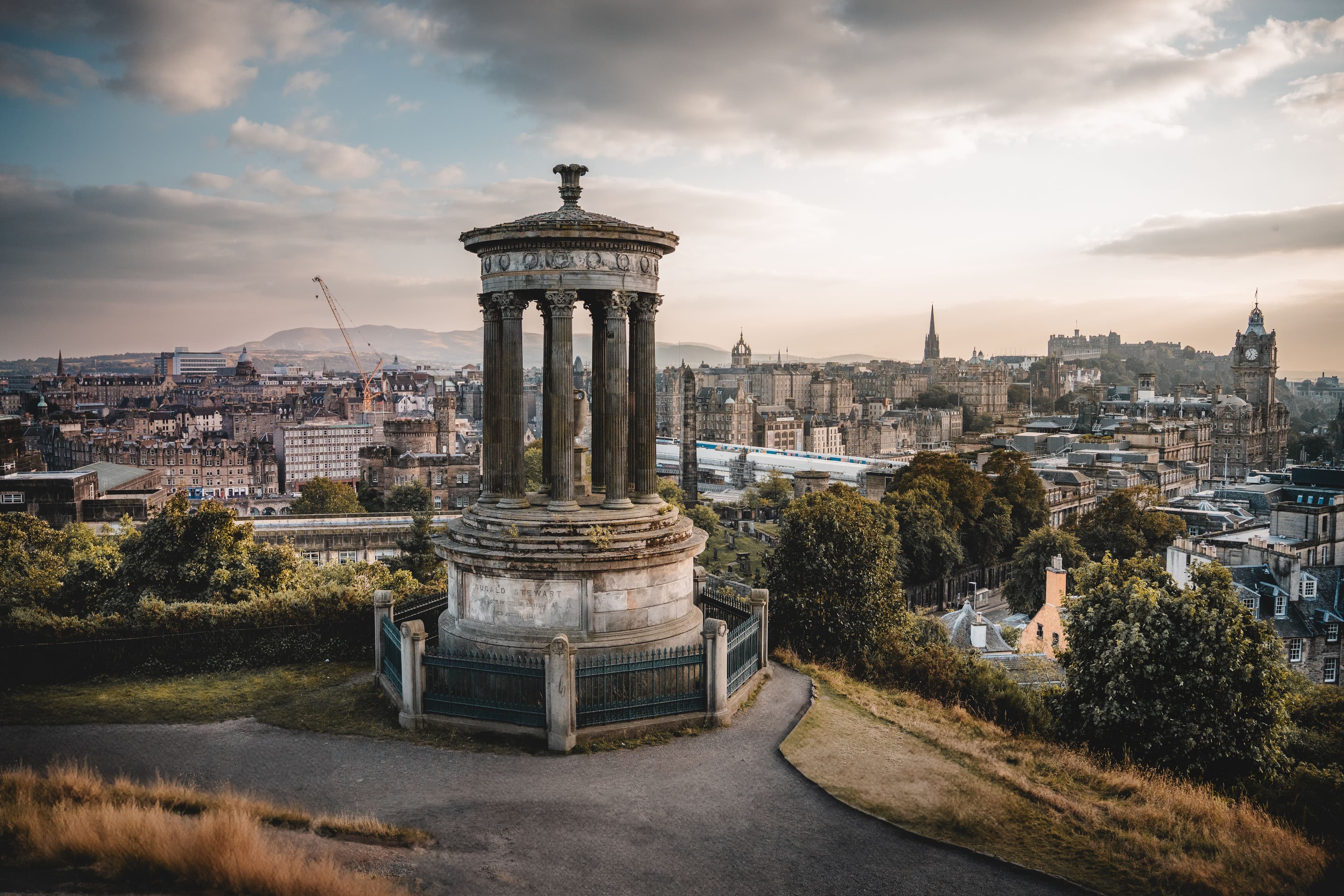
Unlike most UK city marathons, Edinburgh does not finish where it starts. The route runs from Potterrow in central Edinburgh to Pinkie Playing Fields in Musselburgh, several kilometres along the East Lothian coast, past Arthur’s Seat, Portobello promenade and Musselburgh’s Old Course, documented as the oldest golf course in the world. This shapes almost every practical decision around the race: hotel choice should prioritise the central Edinburgh start, and the post-race return journey, by event shuttle bus or Lothian Buses services 26 and 44, needs planning in advance.
History
Edinburgh Marathon runs inside Edinburgh Marathon Festival, a weekend that also includes a half marathon, 10K, 5K, team relay and junior races, organised by GSI Events under the EMF banner. The marathon itself has built its identity around speed: official race material repeats the claim that Runner’s World voted it the fastest marathon in the UK, and that the event has sold out every year since 2008, a run of consistent demand few UK marathons outside London can match.
The course’s shape sets it apart from a typical city marathon: it runs point to point, from Potterrow in central Edinburgh out to Pinkie Playing Fields in Musselburgh, on the East Lothian coast. The early miles use Edinburgh’s tourist core, Greyfriars Kirkyard, the Royal Mile, Edinburgh Castle and Princes Street Gardens, before the route turns past Arthur’s Seat and Holyrood Park and heads east along the coast through Portobello, Musselburgh and toward Longniddry, finishing at Pinkie Playing Fields. That geography, a city start and a coastal finish some distance from the accommodation base most runners choose, is the single most important logistical fact about the race.
The course
Edinburgh Marathon starts at Potterrow in central Edinburgh and finishes at Pinkie Playing Fields in Musselburgh, a genuinely point-to-point course. The opening miles run through the Old Town and New Town, passing Greyfriars Kirkyard, crossing the Royal Mile within sight of St Giles’ Cathedral and Edinburgh Castle, descending the Mound into Princes Street Gardens beneath the Scott Monument. The course then turns past Arthur’s Seat and Holyrood Park before leaving the city for the coast, running through Portobello and along the East Lothian shoreline through Musselburgh, past the Old Course, the oldest golf course in the world with documented play dating to 1672, and on through Prestonpans and Port Seton to a turn near Gosford House at about 29 km, returning along the same coast road to finish at Pinkie Playing Fields. The route is road throughout. All of its height loss comes in the first 11 km, about 90 m from Potterrow down to the sea at Joppa, and everything after that sits within about 15 m of sea level; no official elevation figure has been published.
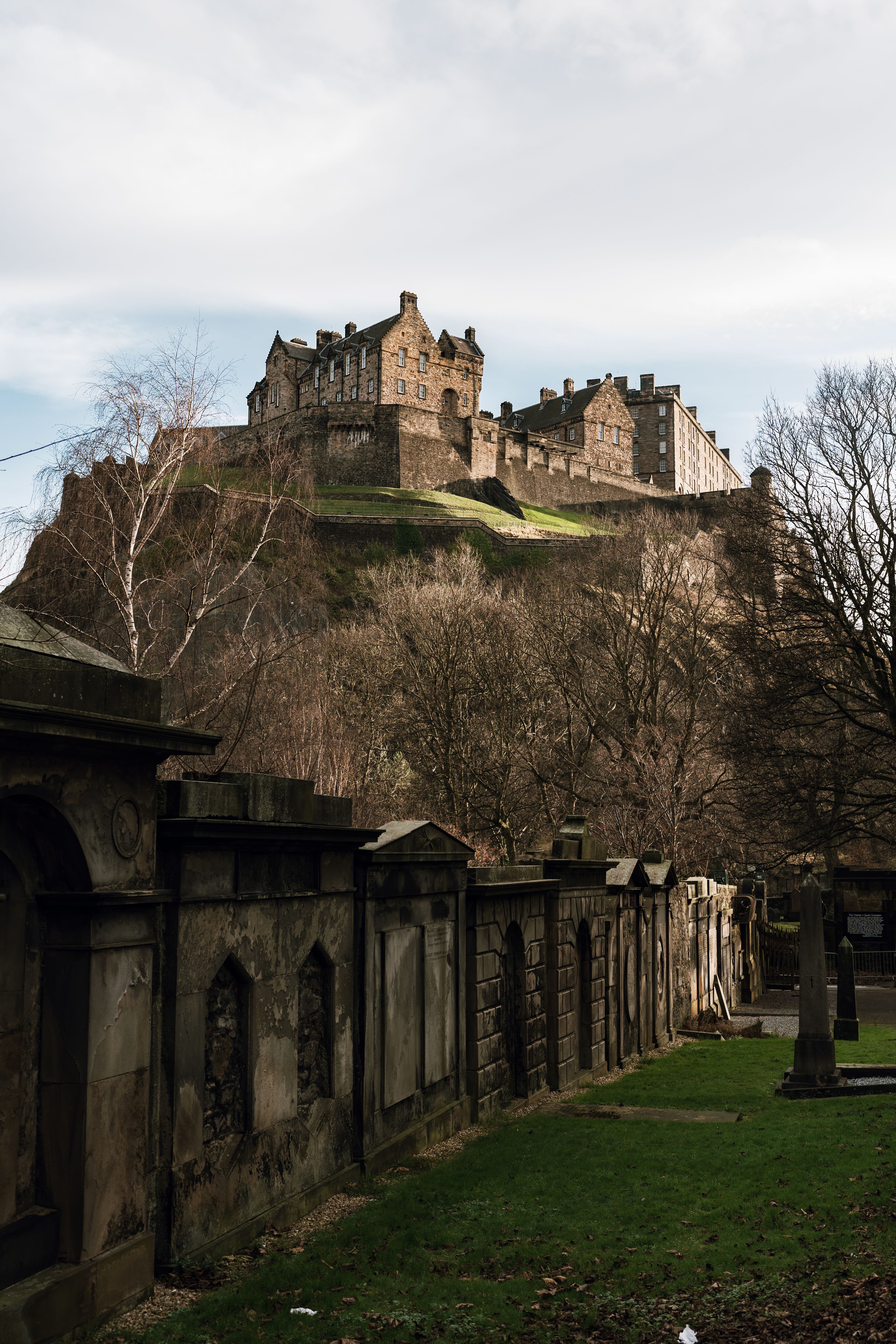
Miles 0-2: the Old Town.The course leaves Potterrow and passes Greyfriars Kirkyard, home to the statue of Greyfriars Bobby, before crossing the Royal Mile with St Giles’ Cathedral to one side and Edinburgh Castle to the other. The route drops to the Mound beneath the Scott Monument, then runs down the Canongate towards Holyrood, losing about 60 m in the first 3 km.
Miles 2-5: Arthur’s Seat and Holyrood.The course passes the Palace of Holyroodhouse and runs round Queen’s Drive beneath Arthur’s Seat and Salisbury Crags, then leaves Holyrood Park at Meadowbank and heads east through Restalrig and Craigentinny toward the coast. This is the last major landmark stretch before the course changes character for the remainder of the race.
Miles 5-9: Portobello and Musselburgh.The route reaches Portobello promenade at about 8 km and follows the coastline east through Joppa, with sea air replacing the city’s density, then crosses into Musselburgh and passes Musselburgh’s Old Course, documented as the oldest golf course in the world, with play recorded there since 1672, at about 14 km. Water stations arrive roughly every 5 km throughout the race, nine in total; the first energy gel station sits around mile 9, near Musselburgh Racecourse.
Miles 9-18: out along the East Lothian coast. The course continues east through Wallyford, Prestonpans and Cockenzie and Port Seton to Longniddry on quieter coastal roads. A second gel station sits around mile 16.2, on Links Road just past Longniddry Bents, and the course turns near Gosford House at about 29 km.
Miles 18-26.2: back along the coast to Musselburgh.From the Gosford turn the route comes back the same way, with a third gel station near mile 21.75, on Gosford Road near Inglis Avenue in Port Seton, and a fourth and final one around mile 24.25, just past Preston Lodge Rugby Club in Prestonpans. This closing stretch is the quietest and most exposed section of the race, away from the city’s crowd density, and is where wind becomes the dominant pacing factor. The course finishes at Pinkie Playing Fields in Musselburgh.
Follow the blue tangent line throughout the city-centre turns in the opening miles, where the route’s direction changes are sharpest; the coastal roads from Portobello onward run largely straight, so tangent management matters far less there than pacing discipline against the wind.
Course Map
The map shows the point-to-point route from Potterrow through the Old Town and Holyrood Park, along the coast through Portobello and Musselburgh to the turn near Gosford House, and back to the finish at Pinkie Playing Fields, plus the EICC expo venue. Tap a marker for details, and scrub the slider or press play to move the orange marker along the course with the elevation profile beneath it.
A fast, landmark-dense opening past Greyfriars Kirkyard, the Royal Mile and Edinburgh Castle, descending into Princes Street Gardens. Easy to go out too hard on the crowd energy alone.
The course's last major city landmark stretch, past the Palace of Holyroodhouse and round Arthur's Seat on Queen's Drive, before leaving the city through Restalrig for the coast.
Portobello promenade, Musselburgh's historic Old Course and the quiet roads through Prestonpans and Port Seton to the turn near Gosford House. Crowds thin here; nutrition strategy through the four gel stations matters more than crowd energy.
The most exposed section of the course, back the same way from the Gosford turn, where coastal wind becomes the defining pacing factor, before the finish at Pinkie Playing Fields in Musselburgh.
Pacers
Start pens are allocated automatically based on the predicted finish time given at registration, locked one month before race day; runners cannot move forward into a faster pen but can move back to start with a friend in a slower one. Official pacers are confirmed to run the race, though specific target finish times are announced closer to the event. A sweeper bus follows the field at exactly 6-hour-30-minute pace; runners overtaken by it are required to board it and are withdrawn from the course.
What to wear
Edinburgh runs in late May, which can mean anything from a mild, still morning to genuinely cold, windy and wet conditions, and the race’s coastal second half means wind matters more here than on most UK city marathons. The opening miles through the city centre are relatively sheltered by buildings; exposure increases sharply once the course reaches Portobello promenade and stays high for the remaining coastal miles. A throwaway layer at the Potterrow start is worth bringing, and runners should be prepared to keep a light wind-resistant layer on longer than they might at an inland race.
Entry
Entry to Edinburgh Marathon is via the official site, open registration with no ballot, though the race has sold out every year since 2008 according to official marketing material, so entering promptly matters. Entries are non-refundable and cannot be deferred to a future event unless the race itself is postponed; a paid transfer to another runner is possible through the official MyRunning platform for a £20 transfer fee.
Start pens are allocated automatically based on the predicted finish time given at registration and locked one month before race day; a Good for Age entry does not itself guarantee a faster start pen. Wheelchair and handbike entrants are welcome across all EMF events, self-propelled only, subject to the same cutoff time as standard entrants.
Fast Runner / GFA Standards
A Good for Age and Top Club entry pathway exists alongside standard entry, selected via an “Other Entry Types” option at registration, requiring proof of a qualifying time. Good for Age entries close three days before the event or once the race reaches capacity, whichever comes first, and applications are reviewed and approved individually. Specific qualifying-time standards by age and gender category are not published on the pages checked; runners should confirm current standards directly with the organiser before entering on this pathway.
Race Weekend
Expo
The pre-race expo runs at the Edinburgh International Conference Centre (EICC) in the days before race day, offering race material collection and the chance to browse running-brand exhibitors. Event information packs, including bib number and baggage tag, are typically available to view in each runner’s MyRunning account from ten days before race day. Any runner missing their pack, or with a missing event number or baggage tag, can visit the Event Number Station at the expo or on race weekend to get a replacement, though a lost event number carries a £5 replacement charge if it happens on race morning itself. Bring confirmation of entry and photo ID for any in-person collection or replacement.
Race Morning
The race starts at Potterrow in central Edinburgh, straightforward to reach on foot, by tram or by taxi from most central hotels. Free baggage trucks run from the start area to the finish, transporting kit to a Reunion Area for collection after the race; a baggage tag is sent with each runner’s event number and must be attached to the bag before leaving accommodation. Suitcases and oversized bags are not accepted, only rucksacks or sports-bag-sized items.
The strict 6-hour-30-minute cutoff, timed from when the back of the field crosses the start line, is enforced by a sweeper bus following the race at that exact pace; any runner overtaken by it is required to board and does not receive a finishing result or medal. Because the finish at Pinkie Playing Fields sits in Musselburgh, several kilometres from central Edinburgh where most runners are staying, getting back to a hotel afterward needs more planning than a typical city-loop marathon: event shuttle buses run between the finish and the city, and Lothian Buses services 26 and 44 connect Waverley Steps to Musselburgh, with service 124 running from Waterloo Place to Prestonpans and Longniddry for anyone staying further along the coast.
Nutrition on Course
Nine water stations are spaced roughly every 5 km across the course, using 330 ml bottled water with a screw cap; bottles cannot be refilled on course. Four energy gel stations are spread through the second half of the race: mile 9 near Musselburgh Racecourse, mile 16.2 on Links Road just past Longniddry Bents, mile 21.75 on Gosford Road near Inglis Avenue, and mile 24.25 just past Preston Lodge Rugby Club. High5 Aqua gels are used throughout, with both caffeinated (Berry) and non-caffeinated (Orange) options available at each station. No energy drink is provided on course, only water and the four gel stations, so runners relying on carbohydrate drinks should plan to carry their own.
Spectating
Edinburgh’s point-to-point course makes spectating structurally different from a loop marathon: a single spot cannot offer a second sighting the way an out-and-back course can, so a spectator plan needs to move deliberately along the route. The city-centre miles, particularly the Royal Mile crossing and Princes Street Gardens, are the most atmospheric and easiest to reach without a car. The coastal miles from Portobello onward are quieter and more spread out, better suited to a spectator willing to use public transport to leapfrog ahead of the field. A city-only plan works well without travelling further: start at Potterrow, walk into the Old Town for the Royal Mile crossing around mile 2, then continue to Princes Street Gardens for a second sighting around mile 3. For a fuller day, base near Holyrood Park for the Arthur’s Seat stretch around miles 2-3, then take Lothian Buses service 26 or 44 from Waverley Steps to Musselburgh for a sighting around miles 9-10 on the way out, continuing to the finish at Pinkie Playing Fields.
Post-Race Food
Scran & Scallie, a gastropub in Stockbridge from the team behind The Kitchin, does a proper Sunday roast alongside its regular menu, a solid option for a finish landing around midday. Maki & Ramen offers a lighter, broth-based alternative for runners who want something warm without a heavy roast. Civerinos Slice gives a fast, carb-heavy pizza-by-the-slice option for runners who want to eat quickly without booking ahead, though given the finish sits some distance from central Edinburgh in Musselburgh, factor in the return journey before choosing a specific restaurant.
Where to Stay
Edinburgh’s point-to-point course complicates the usual start-versus-finish choice: the finish at Pinkie Playing Fields, in Musselburgh, is not central, so almost every hotel choice involves a return journey after the race. Choosing a central Edinburgh base and planning the return trip deliberately is the practical approach for most runners.
New Town
A calmer, grid-planned alternative to the Old Town with strong restaurant options and straightforward walk, tram or taxi access to the Potterrow start. Runs expensive but comfortable, suiting runners who want city-centre convenience without the Old Town’s hills and noise.
Old Town
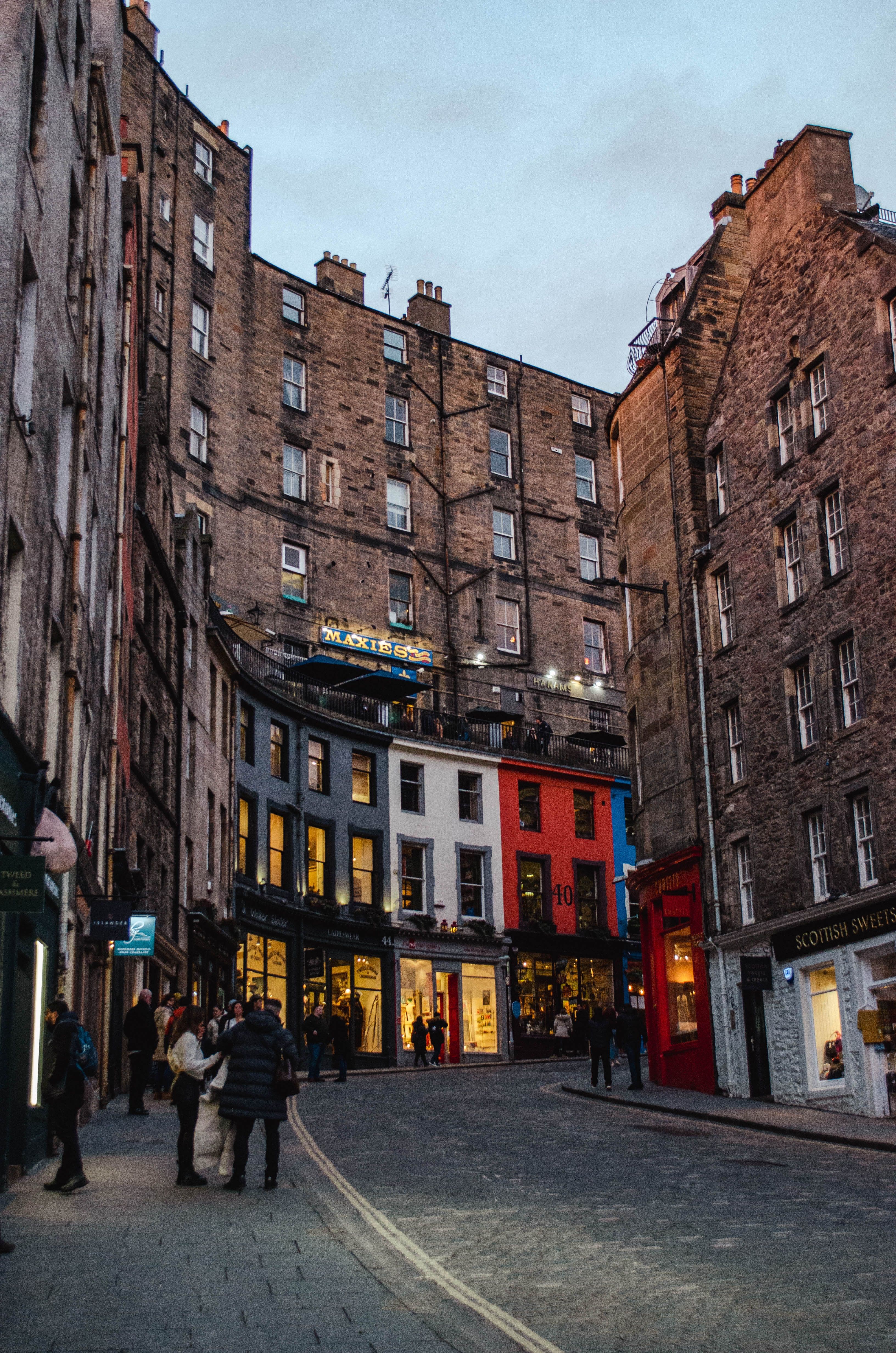
Puts a runner in the heart of Edinburgh’s most atmospheric streets and closest to the start itself, at the cost of steep, cobbled terrain that isn’t ideal the evening before a race or the day after finishing.
Holyrood and Southside
Near the university and close to the start, offering a simpler race morning than the Old Town’s hills, with a mixed-price hotel and student-area feel.
Leith
Edinburgh’s waterfront food district, offering better value and a strong restaurant scene, at the cost of a bus or taxi journey to the Potterrow start.
Musselburgh
The only genuinely finish-side option, quieter and with limited hotel supply, trading Edinburgh’s sightseeing and restaurant density for the most direct possible post-race return.
Recommended hotels
A classic central Old Town base, close to the Potterrow start, though the surrounding streets are steep and the finish at Musselburgh requires a return journey regardless of hotel choice.
A good-value, compact-room option near Waverley station, useful for runners planning to use rail or bus connections back from the Musselburgh finish.
A solid start-side base near the university district, simpler race-morning logistics than the Old Town, though not finish-side.
A good-value base in Edinburgh's strongest food district, at the cost of a longer journey to the start and an even longer one back from the Musselburgh finish.
The only genuinely finish-side option among these five, trading Edinburgh’s city-centre feel for the most direct post-race return available.
Booking timeline
Book accommodation as soon as entry is confirmed, given how consistently Edinburgh Marathon has sold out and how tight Edinburgh’s hotel market runs even outside marathon weekend. Edinburgh’s high season, driven by the Fringe Festival in August, doesn’t directly clash with a late-May race date, but the city’s year-round tourist demand still means central options book up and rise in price well ahead of race day. Refundable rates are worth prioritising given the race’s exposure to Scottish spring weather.
See & Do
The Potterrow start sits in the middle of Edinburgh’s tourist core, with the finish some distance away in Musselburgh, so the city’s main attractions are best planned around the start-side stay.
Arthur’s Seat and Holyrood Park
On the course route, roughly 5 km (3.1 miles) from the start. The extinct volcano that dominates Edinburgh’s skyline and forms one of the race’s most memorable stretches. Climbing it is a genuinely strenuous walk with real elevation gain, better attempted the day before the race than immediately after finishing; the flatter park paths around its base are the more sensible tired-legs option.
National Museum of Scotland
In central Edinburgh, a taxi or transit ride from the Musselburgh finish. A large, largely flat, indoor museum covering Scottish history, science and natural history, a practical wet-weather or tired-legs option regardless of where a runner is staying.
Royal Mile and Edinburgh Castle exterior
In central Edinburgh, on the course route near the start. The most visually dense stretch of the race route itself, running past St Giles’ Cathedral with the castle in view. The cobbled streets and steep closes off the main route make this a moderate-to-hard walk on tired legs; sticking to the Royal Mile itself, out of the closes, keeps the gradient manageable.
Portobello Beach
On the course route, roughly 13 km (8 miles) from the start, and a short bus ride from central Edinburgh. A flat, sandy beach and promenade the course itself runs alongside, worth returning to for a slower recovery walk. Late May can be breezy, so a short visit works better than a long one.
Read Before you Run
Trainspotting
Irvine Welsh
Welsh's 1993 novel is set in Edinburgh's Leith and gives an unromantic, dialect-heavy counterpoint to the Old Town postcard version of the city the marathon's opening miles run through, worth reading precisely because it shows a side of Edinburgh the race route doesn't.
After the Race
Edinburgh Marathon runs in May. These itineraries range from a same-day trip to Portobello and Leith to a three-night extension into the Highlands.
A low-effort day combining the course's own Portobello beach stretch with Leith's waterfront restaurant scene, both reachable by bus without a fixed plan.
Tantallon Castle on the clifftop, Dirleton Castle's herbaceous borders, Bass Rock boat trips, and the best beach in East Lothian.
The historic home of golf, with a walkable old town, a ruined cathedral and a wide, flat West Sands beach.
The bigger Scotland extension, reachable without a car via a single direct train, with long daylight and conditions ahead of peak midge season.
Frequently asked questions
Should I stay near the start or the finish?
Stay near the Potterrow start in central Edinburgh rather than trying to base near the Musselburgh finish. Plan the post-race return journey deliberately using event shuttles or Lothian Buses.
How far in advance should I book a hotel?
Book as soon as your entry is confirmed. Edinburgh Marathon has sold out every year since 2008, and Edinburgh is a busy, expensive tourist city year-round regardless of the race.
Is there free transport to the start?
Event shuttle buses and Park and Ride services operate on race day; whether these are free was not confirmed in official sources checked. Check the official transport guide closer to race day.
What is the best neighbourhood to stay in?
New Town offers the best balance of comfort, restaurants and straightforward access to the Potterrow start, without the Old Town's steep, cobbled streets.
When does the expo open, and what do I need to bring?
The expo runs at the Edinburgh International Conference Centre in the days before race day. Bring confirmation of entry and photo ID if collecting a replacement bib or baggage tag.
What is the weather typically like on race day?
Late May in Edinburgh is cool and changeable, with a real chance of showers and, given the course's coastal second half, consistent wind exposure from Portobello onward.
How do I get from the airport to the city centre?
Edinburgh Airport connects to the city centre by tram and bus, both straightforward for runners arriving from overseas.
Is there a bag drop at the race?
Yes, free baggage trucks run from the start area to a Reunion Area at the finish. A baggage tag arrives with each runner's event number and must be attached before leaving accommodation.
Should I bring a throwaway layer to the start?
Yes. Late May mornings in Edinburgh are cool, and the race's coastal second half means conditions can turn windier than the start-line weather suggests.
How do I get back to my hotel after finishing?
Use an event shuttle bus or Lothian Buses services 26 or 44 from Musselburgh back to Waverley Steps, since the Pinkie Playing Fields finish is not walkable back to the city centre.