The Race
| Next Race Date | 25 April 2027 (Sunday), the 49th edition |
|---|---|
| Course type | Single-loop urban, significant rolling topography |
| Certification | World Athletics Label Road Race · AIMS certified |
| Start | Paseo de la Castellana, near Plaza de San Juan de la Cruz |
| Finish | Paseo de Recoletos, between Plaza de Cibeles and Plaza de Colón |
| Total finishers | ~17,000 marathon places |
| Avg race-day temp | 9–12°C at start; 18–21°C by late morning (April) |
| Cutoff time | Approx. 7h50 from first wave (finish closes 16:35) |
| Free race-day transport | Not confirmed; standard Metro fares assumed |
| Course certification | RFEA / AIMS |
| Sleeper Train | Not applicable |
History
The Madrid Marathon started in 1978, a local race at a time when mass-participation marathons were still working out what they wanted to be. Its organising body, MAPOMA (Asociación Deportiva Maratón Popular de Madrid), shaped it as a popular city event from the beginning, and the early editions drew a field that ran through Madrid's streets more as civic statement than international spectacle. The route was less polished, the field more domestic, but the terrain was always the same: a capital built on a plateau at 667 metres, with the kind of topography that discourages anyone who arrives expecting a flat personal-best course.
Through the 1980s and 1990s, the race grew alongside the European running boom. Valencia would eventually become the country's benchmark fast course, and Seville its winter alternative. But Madrid had something those races could not manufacture: scale, monuments, and a city centre that routes a marathon past the Prado, the Royal Palace, and the Cibeles fountain without any of it feeling contrived. In 2012, the event joined the global Rock 'n' Roll Running Series, which brought more than 30 live music stages to the route and a new structural brand. Zurich Insurance became title sponsor, producing the current name: Zurich Rock 'n' Roll Running Series Madrid.
By 2025, the event had sold out 45,000 bibs across three distances, with 30 per cent of participants arriving from outside Spain and 113 nationalities represented. For 2027, the organiser confirmed a significant structural change: the 10K distance is being discontinued, with the event refocusing around marathon and half marathon only, citing city noise regulations and a desire to elevate the 42.195 km race as an international benchmark. The 2027 field allocates 17,000 marathon bibs and 30,000 half marathon bibs from a total of 47,000 runners.
The course
The marathon starts on Paseo de la Castellana near Plaza de San Juan de la Cruz and finishes on Paseo de Recoletos between Plaza de Cibeles and Plaza de Colón. The course is a single loop running north from the start before curving west through the Cuatro Torres business district at approximately km 4 (the course's highest point at around 732 m), then south and east through the Salamanca and Chueca districts and into the historic centre. It passes through or close to Puerta del Sol and Plaza Mayor around km 19, then continues through Plaza de España, Palacio Real, Templo de Debod and Parque del Oeste before the long south-western loop through Casa de Campo and along Madrid Río, reaching the course's lowest point near km 34 at approximately 576 m. The return into the city climbs steadily through Pirámides, Atocha, Prado, Neptuno and Cibeles before the final run north along Recoletos to the finish. Total elevation gain is approximately 370–414 m; no official km-by-km elevation table is published by the organiser.
The broad Castellana start looks fast and feels fast. It is neither. The first 5 km climbs north to the Cuatro Torres high point at around 732 m above sea level. At Madrid's altitude, even a modest over-effort here costs time in the final 10 km. Run by feel, ignore the crowd, let the groups go.
A long descent through Salamanca, then the sharp transition into the historic centre. Good crowd noise around Sol and Plaza Mayor around km 19, and some granite surface changes that require lighter footing. The visual rewards are high; the pacing job is simply to stay controlled through the turns.
The race's most demanding psychological stretch. Crowd support thins, terrain rolls through open parkland, temperatures peak if it is a warm year. The gel station at km 30 and bananas at km 29 arrive when most needed. Take everything.
A sustained late rise from the lowest point near Madrid Río back into the monumental centre. Runners identify km 36–41 as the longest climb of the race. Crowds rebuild along Prado and Cibeles. Running the tangent conserves what's left. The Recoletos finish is wide.
Km by km
Km 0–7: The northern arc.The start on Paseo de la Castellana looks fast. It is a broad boulevard with space to move and noise enough to push pace, which is precisely the problem. The city is at 667 metres and the first kilometres climb north through the Castellana spine toward Plaza de Castilla and the Cuatro Torres business district. The course's highest point, at around 732 m, is reached by km 4 or 5. For runners travelling from London, Dublin, Amsterdam or other low-altitude cities, the physiological effect at this altitude is real and cumulative over 42.195 km. The instruction is simple: run the opening 7 km by feel, keep a lid on it, and resist the crowd noise. The route at this stage moves through Raimundo Fernández Villaverde, Padre Damián, Plaza de Castilla and back south-west through Bravo Murillo and Cuatro Caminos.
Km 7–18: Salamanca and the eastern districts. After the northern loop, the course descends gradually back toward the central city, passing through República Argentina, Diego de León, Manuel Becerra, Goya and the Salamanca district. These kilometres are through the upscale eastern quarter: broad 19th-century streets, good crowd density, the sense of moving purposefully through a city that is watching. The pacing job here is to bank nothing and coast. The descent is not dramatic enough to repay aggressive running, and the course turns more technical once it reaches the historic centre.
Km 18–24: The historic centre. Around km 18–19, the course enters the old city. Streets narrow, architecture tightens, and the surface changes in places to granite paving blocks (adoquines), particularly around Sol and Plaza Mayor. Wet stone is slippery; even dry stone requires lighter, shorter strides than asphalt. The course passes through or near Puerta del Sol, Plaza Mayor, Bailén, Palacio Real and Plaza de España before heading toward Templo de Debod and Parque del Oeste. The visual payoff is real, but this is not a section to run on autopilot. The turns, the surface changes, and the architecture require attention.
Km 24–35: Casa de Campo and Madrid Río. The course leaves the city centre heading south-west toward Casa de Campo and the river. This is where the character of the race shifts. Shade from the park offers some relief, but by this point in a late-April race the sun can be high and temperatures approaching 20°C. Crowd support thins out. The terrain through Casa de Campo is rolling rather than flat. Multiple runners describe this section, from around km 28 to 35, as the most psychologically demanding part of the course. Take water and Powerade at every station through this section. The Canary Island banana at km 29 and the 226ERS gel station at km 30 arrive at the right moment. Use them.
Km 35–42.195: The return climb.The course's final section rises back toward the city centre. From the lowest point near Madrid Río at approximately 576 m, the route climbs through Pirámides, Acacias, Embajadores, Atocha, Prado and Neptuno before turning north along Recoletos to the finish. This is not a mountain finish, but by marathon standards, with 35 km already in the legs, it is exactly the kind of late gradient that exposes early over-pacing. The crowds rebuild along Prado and Cibeles; the architecture becomes monumental again. Cibeles is the marker that tells you the finish is close. Recoletos is broad enough to find space and run the final stretch without weaving. Follow the official marked course route throughout; runners must pass all timing control points to receive a valid result.
Pacers
Official pacers are confirmed for 2027. Pacers run to net time; corrals are assigned by target finish time. At Madrid's altitude and on this rolling course, effort-based running through the first 15 km is more reliable than locking onto pacer pace from the gun. Find a pacer group once settled, not before.
| Start time | Pace groups available |
|---|---|
| ~08:45 | 3:00, 3:15, 3:30, 3:45, 4:00, 4:15, 4:30, 5:00 |
More than 30 bands and entertainment stages are positioned along the 42.195 km route as part of the Rock 'n' Roll Running Series format. The music is generally denser in the first half, through Salamanca and the historic centre, and thinner through the Casa de Campo section. Runners who find crowd noise a useful pacing cue will find the early kilometres well supplied; those who need quiet to concentrate may find it easier to run with the music rather than around it.
Madrid sits at 667 metres above sea level. This is not high enough for acute altitude sickness, but it is enough to reduce aerobic performance marginally for runners arriving from sea level, and the effect compounds over 42.195 km. Run the first 10 km by effort rather than by target pace. The Castellana start looks fast; the numbers may not reflect that. Runners who train at sea level should expect to be 2–5 minutes slower than on an equivalent flat sea-level course, accounting for both altitude and the course profile. Arrive at least 48 hours before race day if possible.
What to wear
Madrid in late April can begin at 9°C and end at 21°C within the same race. The start is typically cool enough for arm warmers or a light long sleeve, but the final hour, particularly through the exposed Casa de Campo section and the return climb under spring sun, can feel warm in anything heavier than a vest and shorts. The simple rule: dress for the second half, not the start line.
A throwaway layer is worthwhile. Old long sleeves, a cheap zip-up, or a disposable poncho will make the wait in the corrals more comfortable. Check the final runner instructions for disposal arrangements. Gloves are rarely needed past the first few kilometres.
For the race itself: breathable, minimal kit. A vest rather than a short-sleeve if temperatures are likely to climb above 18°C. Sunscreen for exposed skin, particularly for runners starting in later waves who will be out in the midday sun through the final climbs. Compression socks and taping for those who know the late-race climbing will stress the calves and iliotibial band. Warm years in Madrid have pushed late-morning temperatures above 22°C. Carry a practised hydration strategy and do not skip isotonic drink through the open south-western section.
Entry
| Registration type | Tiered general registration (no ballot) |
|---|---|
| Registration opens | 14 May 2026: Fase Fidelidad, Preferente, then General |
| Registration closes | 11 April 2027 |
| Entry fee (marathon) | €100 / €120 / €150 depending on phase |
| Minimum age | 18 |
| Changes deadline | 15 March 2027: distance transfers, bib-holder changes |
| Injury refund | 75% with medical certificate by 15 March 2027 |
Entry to the Madrid Marathon is managed through the official race website and the RockTheSport registration platform. It is not a ballot. Registration is general and tiered: places go on sale and sell through across successive phases, with those who have run the event before given earlier access under the Fase Fidelidad model introduced for 2027. Once all phases are exhausted, a waiting list opens.
For 2027, registration opened at 10:00 on 14 May 2026. AS reported the 2027 allocation as 17,000 marathon bibs and 30,000 half marathon bibs from a total of 47,000. The 2025 edition sold out all 45,000 places across three distances. Demand is high enough that booking early in the general phase is advisable.
Entry fees for 2027 are structured across price tiers: €100, €120 and €150 for the marathon depending on when registration is completed, excluding the platform commission. All participants, including those with foreign federation licences, are required to hold a current RFEA (Real Federación Española de Atletismo) licence on race day. Non-federated runners can process this during registration for €4. This is a firm requirement, not optional.
Registration changes, distance transfers and bib-holder changes are permitted until 15 March 2027. Distance transfers to a more expensive category require paying the price difference; downgrading to a shorter distance incurs no refund. Bib-holder changes carry a €10 management fee for the original holder, with the new holder paying the current entry price. A bib marketplace exists for peer-to-peer transfers. Injury refunds of 75% are available with an official medical certificate from a registered doctor, submitted by 15 March 2027.
Wave seeding is by predicted finish time declared during registration. Runners should be honest about their time: starting in an earlier corral than ability warrants is disruptive and does not improve finish time on a course with this profile. No public GFA qualifying standards were found for general entry; preferred fast corral placement requires a verified timing certificate from an RFEA/AIMS certified race within the previous 24 months.
Race Weekend
Expo and number collection
The Runner's Expo (Feria del Corredor) is at IFEMA Feria de Madrid, Pabellón 14, Avenida del Partenón 5, Barajas, 28042 Madrid. For 2027, the expo runs on Friday 23 April and Saturday 24 April from 10:00 to 20:00 continuously.
Bib collection is only at the expo. There is no race-day collection under any circumstances. Bring your registration proof or collection QR code (sent to registered runners on 19 April 2027; available through the RockTheSport registration manager from 21 April if not received) plus a government-issued photo ID such as a passport, NIE or national identity card. The organiser describes the requirement as "inamovible": no documentation, no bib.
Proxy collection is permitted. The person collecting on your behalf must bring the runner's registration QR code and photo ID. No signed authorisation form beyond the documents themselves was specified in the 2027 FAQ, but bring one in any case.
The expo distributes the race bib with integrated timing chip, the official adidas race shirt, a drawstring gear-check bag, and a 226ERS Fuel Bag containing 2 gels and 1 energy bar for marathon runners. Shirt-size changes through registration closed on 1 February 2027, but a runner-to-runner exchange point is available at the expo for unofficial swaps. Medal engraving is available as a paid service: €10 if purchased during registration before the race, or €20 at the expo or on race day. Book it during registration.
The organiser recommends Friday morning or Saturday afternoon to avoid waiting times. Friday afternoon and Saturday morning are typically busier. IFEMA is in the Barajas district near the airport and takes 20–25 minutes by Metro from central Madrid: Line 8 to Nuevos Ministerios, then Line 10 to Campo de las Naciones. Allow time for the Metro connection.
Getting to the start
The start is on Paseo de la Castellana near Plaza de San Juan de la Cruz. The official recommendation is Metro: Line 7 or 10 to Gregorio Marañón, or Line 5 to Rubén Darío. Gregorio Marañón is the closer option and better suited to runners arriving from Chamberí, Almagro or anywhere connected to Lines 7 or 10. Rubén Darío suits runners in Chueca, Alonso Martínez, or the Salamanca area using Line 5. Madrid Metro runs from 06:00, which covers a standard marathon start time; check for service notices on race morning and allow extra time for crowded carriages.
Do not plan to drive. The official FAQ advises against parking near the finish because the area is closed until the race ends; the same logic applies to the start zone on race morning. Taxis and ride-share services may face road-closure complications. Metro is the reliable option.
The first marathon wave is expected around 08:45 based on Madrid tourism's 2027 listing, though the official FAQ listed the time as TBC at the time of research.
Bag drop and the start village
The free gear-check service is in the finish area on Paseo de la Castellana between Calle Hermosilla and Calle Ortega y Gasset. It opens at 07:00 on race day. Marathon bag-check collection closes at 17:00. Use only the official gear-check bag with the numbered sticker provided at bib collection. The organiser accepts no liability for loss, theft or damage.
Plaza de San Juan de la Cruz provides portable toilets, information desks and medical tents. Toilet queues build from around 07:30 as runners gather; plan accordingly. A throwaway layer makes the 30–45 minute corral wait comfortable. Madrid's late-April mornings are cool, typically 9–12°C, and standing still in the corrals before the gun is not the same as running. Verify with the final runner instructions whether the organiser has a designated charity donation point for discarded clothing.
Post-finish
Runners cross on Paseo de Recoletos between Cibeles and Colón. The finish area distributes medal, refreshments and a recovery bag containing water and Powerade. No unregistered person may enter the finish chute or cross the line with a runner. Provisional results are published through the official app within 48 hours of finishing, then on the official website.
The finish on Recoletos is long and the post-race zone is busy. Agree a meeting point off the course before the race: the north side of Plaza de Colón, outside Banco de España Metro entrance, or a named café two blocks from Recoletos. Mobile signal in the finish area is often degraded by crowd volume; have a fallback plan.
Race logistics map
Nutrition on course
The Madrid Marathon has 13 aid stations across 42.195 km. Official nutrition partner is 226ERS (gels); sports drink is Powerade. The single on-course gel station is at km 30.
| Km | Water | Powerade | Gel | Food | Toilets |
|---|---|---|---|---|---|
| 5.0 | Yes | Yes | No | No | Yes |
| 10.5 | Yes | Yes | No | No | Yes |
| 15–16 | Yes | Yes | No | No | Yes |
| 20 | Yes | Verify | No | No | Yes |
| 23 | Verify | Yes | No | Banana | Verify |
| 25 | Yes | Verify | No | No | Yes |
| 26.5 | Verify | Yes | No | No | Verify |
| 29 | Yes | Yes | No | Banana | Yes |
| 30 | Verify | Verify | 226ERS | Verify | Verify |
| 32 | Yes | Yes | No | No | Yes |
| 35.8 | Yes | Yes | No | No | Yes |
| 38 | Yes | Yes | No | Banana | Yes |
| 40 | Yes | Yes | No | No | Yes |
| Finish | Yes | Yes | No | Banana + recovery bag | — |
[V] = verify against the final runner instructions. The 226ERS Fuel Bag from the expo provides 2 gels and 1 bar. The long south-western section through Casa de Campo (km 28–35) has fewer crowd support points and higher sun exposure; this is where dehydration and under-fuelling compound fastest. Runners requiring more frequent fuelling should carry their preferred product from the start.
Spectating
Madrid's Metro network makes it realistic for a spectator to see a runner three or four times without hiring a taxi or memorising bus routes. Road closures cover most of the central race route from early morning; the Metro is the only reliable way to move around the race corridor. Download the official "Zurich Rock 'n' Roll Running Series Madrid" app before race day. It provides 5 km split tracking and estimated position on course.
The best single spot in the race, for any spectator, is along Paseo de Recoletos and Cibeles. The finish is here, the architecture is monumental, and there are entertainment stages. Getting here early and staying is valid if the runner is in a later wave.
Take Line 7 or 10 to Gregorio Marañón for the start (km 0–1). Watch the first wave go through, then take Metro to Banco de España (Line 2) or Colón (Line 4) for Recoletos. Allow 45 minutes minimum for Metro transfer and positioning.
Take Metro to Sol (Lines 1, 2 or 3) for the km 18–19 section through Puerta del Sol, roughly mid-race. After the runner passes Sol, walk south-east along Gran Vía or Metro two stops to Banco de España (Line 2) for the finish approach. This is the most logistically manageable two-spot plan for a spectator who is not familiar with the course.
Start at Gregorio Marañón for the Castellana start (km 0–1). Take Metro to Príncipe Pío (Line 6 or 10) for the Parque del Oeste / Casa de Campo approach (km 25–28 approximately). Then Metro back toward the centre, Ópera, Sol or Banco de España, for the return leg. Verify exact km markers against the final 2027 course map before committing to this itinerary.
Post-race eating
The finish is on Paseo de Recoletos, which puts runners within easy reach of the Barrio de las Letras and the Salamanca dining zone. After the recovery bag, medal engraving queue and the long shuffle out of the finish zone, a mid-afternoon late lunch is more practical than an immediate restaurant.
Sobrino de Botín on Calle Cuchilleros, a few minutes' walk south of Plaza Mayor, has a sustained argument for being the world's oldest continuously operating restaurant and serves cochinillo asado (roast suckling pig), which is calorie-dense enough for marathon recovery without requiring any particular subtlety in ordering. Book ahead; it fills on weekends.
In Barrio de las Letras, Casa Alberto on Calle de las Huertas is a traditional taberna that has been in operation since 1827 and serves vermouth and patatas bravas in a setting that is entirely functional and not performed. Close enough to Atocha and Neptuno to walk from the finish in under 25 minutes. For something lighter: the Mercado de San Miguel, just off Plaza Mayor, offers standing room and varied small plates. It runs hot on race weekend afternoons; visit later in the day once crowds thin.
Where to Stay
The finish is on Paseo de Recoletos between Cibeles and Colón. Stay within walking distance of Recoletos. The start on Castellana is served by Metro from most central neighbourhoods in under 15 minutes, making start proximity a secondary concern.
Salamanca
Salamanca is the most straightforward choice. Wide streets, low ambient noise by central Madrid standards, a good restaurant concentration and an easy walk to the finish zone, between 5 and 25 minutes to Recoletos depending on exact hotel location. Metro access to the start is via Rubén Darío (Line 5), Núñez de Balboa or Diego de León. Prices on marathon weekend rise sharply. The main disadvantage is cost rather than logistics.
Retiro
Retiro's hotels west and north of the park are close to the Paseo del Prado / Neptuno / Cibeles axis, the final approach road, which makes the walk back from the finish relatively intuitive. Atocha station, 15 minutes on foot from most of Retiro, gives good Metro connectivity for the start. The neighbourhood is quieter than Sol or Malasaña on Saturday night; the Retiro park itself is useful for a Saturday shakeout run.
Chueca
Chueca is well connected, close enough to Recoletos (10–20 minutes' walk from most of the neighbourhood), and useful for running partners who want restaurants and energy on the Saturday. Metro access to the start is via Alonso Martínez or Rubén Darío (Line 5). Saturday night noise on some streets is real; ask for a quiet or courtyard-facing room when booking.
Centro / Sol
Centro and Sol are best for runners whose trip is as much a Madrid weekend as a marathon weekend. Sightseeing within walking distance includes Puerta del Sol, Plaza Mayor, Gran Vía, Palacio Real and Opera. Walk time to Recoletos from Sol is around 15–20 minutes. The problem is Saturday night: street noise around Sol and Gran Vía runs late. Not a recommendation for runners who need eight hours of quiet.
Chamberí
Chamberí is practical rather than exciting. Parts of the neighbourhood are within walking distance of Gregorio Marañón, making race morning straightforward, and the residential streets are quieter than anywhere further south. Finish walk time from Chamberí to Recoletos is 25–40 minutes depending on location. Useful for runners who want to prioritise a calm race morning over post-race convenience.
Malasaña
Malasaña has boutique hotels, independent cafés, and genuine character. Within range of the finish, 20–30 minutes' walk from most of Malasaña to Recoletos, and served by Metro for the start. The issue is Saturday night: Malasaña is one of Madrid's main nightlife districts and streets around bars are genuinely noisy until the early hours. Not suitable for runners who are light sleepers unless the hotel room is off the main streets and the windows are thick.
Hotel recommendations
Directly at Plaza de Colón, at the exit of the finish zone. Luxury tier with above-average soundproofing for a hotel in a central location. The proximity to the finish makes it useful for runners whose supporters will be waiting and who want to get to a bed quickly. Book very early.
One of the closest marathon-weekend options to the finish zone, a short walk from Plaza de Colón and the Recoletos finish gantry. Useful for runners who want to minimise post-race movement. Metro to the start via Rubén Darío (Line 5) is a 5-minute walk. Book early.
Well positioned between Retiro park and the Paseo del Prado / Cibeles approach. A flat 10-minute walk to the finish and easy walking access to Atocha for Metro and Cercanías connections to the start. Quieter than Salamanca with a good street-level eating scene around Puerta de Alcalá.
A design hotel on a quiet residential street in Chamberí, around 8 minutes' walk from the Paseo de la Castellana start area. Good for runners who want start-side convenience and a calm Saturday night. Metro connection to the Recoletos side for post-race return is Line 10.
Value-tier option between the Prado and Atocha, walkable to Neptuno and the finish approach. Useful for runners watching the budget who still want a reasonable walk to the finish. The Barrio de las Letras has good post-race eating options within a few streets.
Booking timeline
Registration for the 2027 edition opened 14 May 2026. The 2025 edition sold out 45,000 places; demand for 2027 is expected to be equally high. Book accommodation as soon as registration is secured, not after. Hotels within walking distance of Recoletos sell out or shift to premium-only inventory within weeks of registration opening. Cancellable rates are widely available in Madrid; book one, review it three months out, change if needed.
April is high season in Madrid independently of the race. Flights from London, Dublin and Amsterdam tend to be booked at least six to eight weeks ahead. Search flight and hotel as a pair on the day of registration confirmation rather than in separate planning sessions weeks later. Marathon weekend hotel prices are typically 30–50 per cent above the surrounding weeks. Runners who book in October or November for the following April pay less for the same rooms. [Price premium is approximate]
See & Do
The finish on Paseo de Recoletos puts runners on the edge of the Prado district, with the Retiro park on one side and the museum corridor on the other. The five places below are within reach of the finish and the recommended hotels; distances are from the Recoletos finish.
Museo del Prado
0.9 km (0.6 miles) from finish. The course runs directly along the Paseo del Prado in the final kilometres, giving runners a view of the building's neo-classical facade at the point when they most want to look anywhere but at the road. Going inside is a different proposition. The collection, Velázquez, Goya, El Greco, Titian, is not something to rush. A slow two-hour morning visit on Friday or Monday, when the marathon crowds are not yet in the city, works better than Saturday afternoon on tired legs. Book tickets online in advance; queues without pre-booking can be long.
Parque del Retiro
0.5 km (0.3 miles) from finish (nearest entrance). A 350-acre former royal estate east of the finish zone, with a boating lake, a 19th-century glasshouse (Palacio de Cristal) and enough flat paths for a 20-minute pre-race shakeout without straying into traffic. On Saturday morning it is full of local runners. On Sunday afternoon it is a reasonable place to sit on grass with a medal and do nothing in particular, which has its merits after 42.195 km.
Palacio Real and Catedral de la Almudena
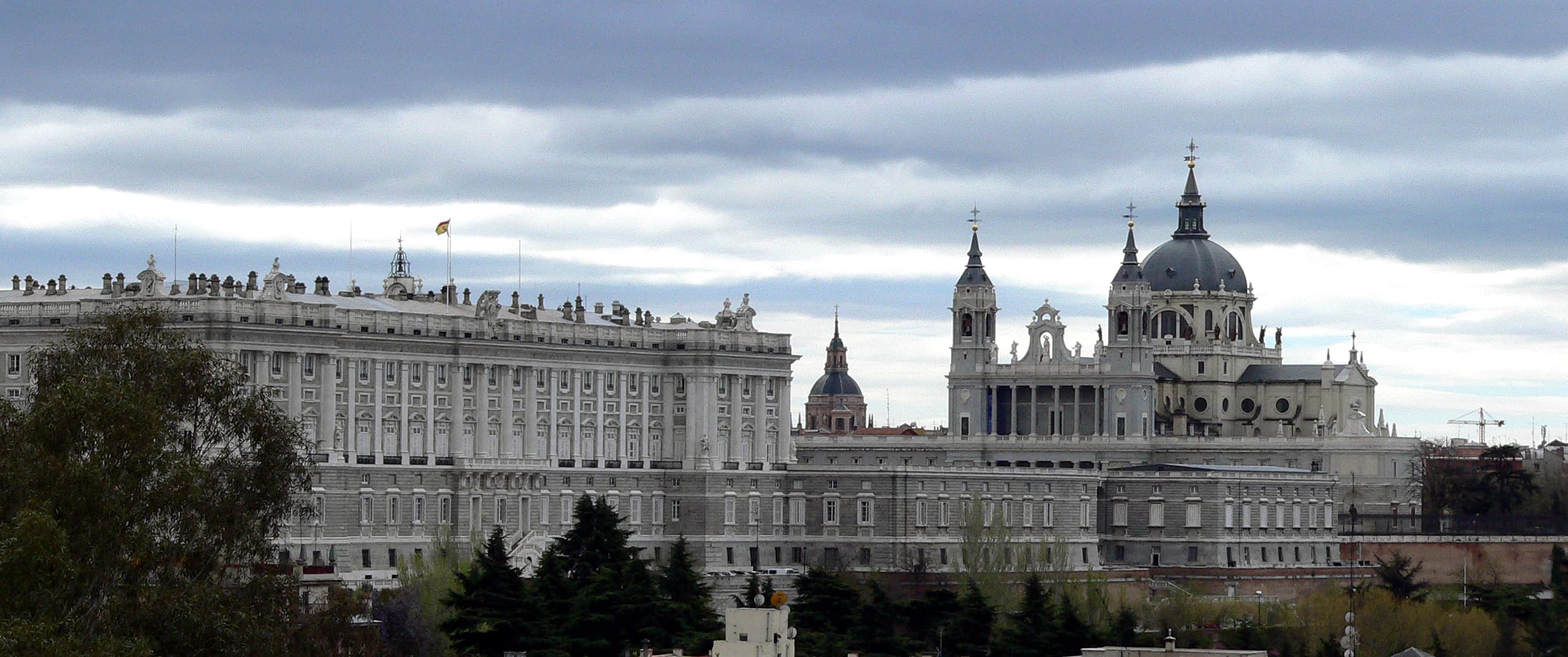
1.8 km (1.1 miles) from finish. The course passes close to the Royal Palace in the mid-race historic centre section around km 20–22. The building is easier to appreciate on a Thursday or Friday than from inside a marathon. The adjacent Almudena Cathedral is smaller, newer and less visited than its neighbourhood suggests; together they make a walkable two-hour morning before the expo. Go early, tourist volumes peak by 11:00.
Puerta del Sol and Plaza Mayor
1.6 km (1.0 mile) from finish. The course runs through or near Sol at approximately km 19. Both squares are better on a weekday morning than on a marathon Saturday when runner registration and early arrivals add to the usual tourist density. Plaza Mayor is useful for a coffee under the arcades; Sol is useful for understanding the city's transport geography. Avoid both as Saturday-night accommodation zones.
Templo de Debod and Parque del Oeste
2.5 km (1.6 miles) from finish. An ancient Egyptian temple transported to Madrid in 1968 and reconstructed on a shallow platform above Parque del Oeste. The course passes nearby in the mid-race section, roughly km 22–24, before heading toward Casa de Campo. The sunset view west from the hill behind the temple is well known and easy to arrange on a Friday evening, with the park providing a flat walking route from the city centre.
Read Before you Run
Ghosts of Spain
Giles Tremlett
A journalist's account of modern Spain, working through the country's complicated relationship with the Civil War, the Franco years and the transition to democracy. The streets of Madrid the marathon uses were built partly on silence about all of this. Reading Tremlett before race weekend gives those streets some of their weight back.
The Sun Also Rises
Ernest Hemingway
The final chapters are set in Madrid. The characters eat at Sobrino de Botín on Calle Cuchilleros, ride through the Paseo del Prado, stay at hotels on Gran Vía. Most of the book is in Pamplona, but its emotional geography ends in the city the marathon routes through. A short re-read of those final pages before race weekend takes ten minutes.
After the Race
The Madrid Marathon runs on the last Sunday of April. Late April in Castile has clear air, long evenings, and the Tagus valley showing the last of the spring green before the summer heat arrives. Atocha station, 1.5 km from the finish, connects to Toledo in 33 minutes; Chamartín, 4 km north, dispatches high-speed trains to Segovia in 28 minutes and regional services to Ávila in 90. The excursions below are all planned for slow post-marathon legs and are doable from Monday with no car required, except the Sierra de Guadarrama loop.
Toledo sits on a granite ridge almost entirely encircled by the Tagus. The Cathedral begun in 1226 contains El Greco's El Expolio and the extraordinary Transparente altarpiece. Santa María la Blanca is the oldest surviving synagogue in Europe still in its original location. Trains run roughly hourly; book at renfe.com as this is a reserved-seat service.
813 metres of Roman aqueduct built without mortar in the 1st or early 2nd century AD, rising to 28.5 metres at the Plaza del Azoguejo. The last Gothic cathedral built in Spain, begun 1525. Cochinillo asado at Mesón de Cándido. Shuttle bus connects the high-speed station to the city in 15 minutes. Book at renfe.com.
The royal garden city on the Tagus floodplain. Late April is the peak season for white asparagus and strawberries, both with protected designation of origin status, and every restaurant in the town is serving them fresh. The Jardín del Príncipe, 150 hectares of flat shaded royal parkland along the Tagus, is the post-marathon walk. No advance booking needed for Cercanías.
The birthplace of Cervantes and the site of the founding university of Renaissance Spain (1499, UNESCO World Heritage). The Calle Mayor arcade runs 800 metres through the old town; the Colegio Mayor de San Ildefonso has three connected courtyards in plateresque stone. Flat throughout. The Parador de Alcalá de Henares is in a 17th-century convent on Calle Colegios. Cercanías C2 or C7; no advance booking needed.
The best-preserved medieval walls in Spain: 2.5 kilometres of 11th-century granite circuit, 88 towers, 9 gates, at 1,131 metres above sea level. The Paseo del Rastro, a flat gravel path along the outer base of the southern wall with the Amblés Valley opening below, is the post-marathon walk. Book the Parador de Ávila in a 15th-century palace embedded in the walls. Reserve at renfe.com in advance.
Spain's ceramic capital, entirely off the tourist circuit. The Basílica del Prado is lined from floor to vaulted ceiling with centuries of blue, yellow, and white tile panels. Restaurant Raíces (Carlos Maldonado, Michelin star awarded 2020; verify current status before booking) serves modern Castilian cooking from the Tagus valley. The flat riverfront park follows the Tagus through the city. Book at renfe.com.
Two UNESCO World Heritage cities in three nights, no car required. Segovia on the first night (Avant, 28 minutes); Ávila for two nights via Avanza coach from Segovia bus station (1 hour 15 minutes). Return to Madrid Chamartín on the Media Distancia (1 hour 30 minutes). The recommended car-free itinerary for runners who want the big Castilian landscapes. Book all three legs at renfe.com and avanzabus.com before race week.
Car hire required; book an automatic transmission as a post-marathon requirement. El Escorial, the colossal Renaissance monastery-palace of Philip II (closed Mondays), then over the Puerto de Navacerrada into the Lozoya Valley at Rascafría. The Bosque de Finlandia is a flat forest trail along the Lozoya River. Stay at the Parador de Rascafría in a former Carthusian monastery. Return via Manzanares el Real and its 15th-century castle above a reservoir.
Three UNESCO World Heritage cities in four nights, entirely by rail and coach. Toledo on the first night (Avant from Atocha, 33 minutes); Segovia via a Cercanías C4 transfer to Chamartín then Avant north (28 minutes); Ávila via Avanza coach across the plateau (1 hour 15 minutes); return to Madrid Chamartín (Media Distancia, 1 hour 30 minutes). The Atocha-to-Chamartín transfer requires 45 minutes in the schedule. Book everything at renfe.com and avanzabus.com before race week.