The Race
| Next Race Date | Saturday 2 October 2027 (provisional; the organiser has not yet published the 2027 date) |
| Course Type | Point-to-point, net downhill ~900m |
| Start | Pine Valley Mountains staging area (~1,768m elevation) |
| Finish | Vernon Worthen Park, downtown St. George (~870m elevation) |
| Registration | First-come, first-served. Opens 1 April annually. |
| Total Finishers | ~4,000 |
| Sub-3 Hour Finishers | ~11% |
| Avg Race Day Temp | 5–9°C start / 15–20°C finish |
| Cutoff Time | 6 hours |
| Transport to Start | Official shuttle buses only - no parking at start |
| Course Certification | USATF certified |
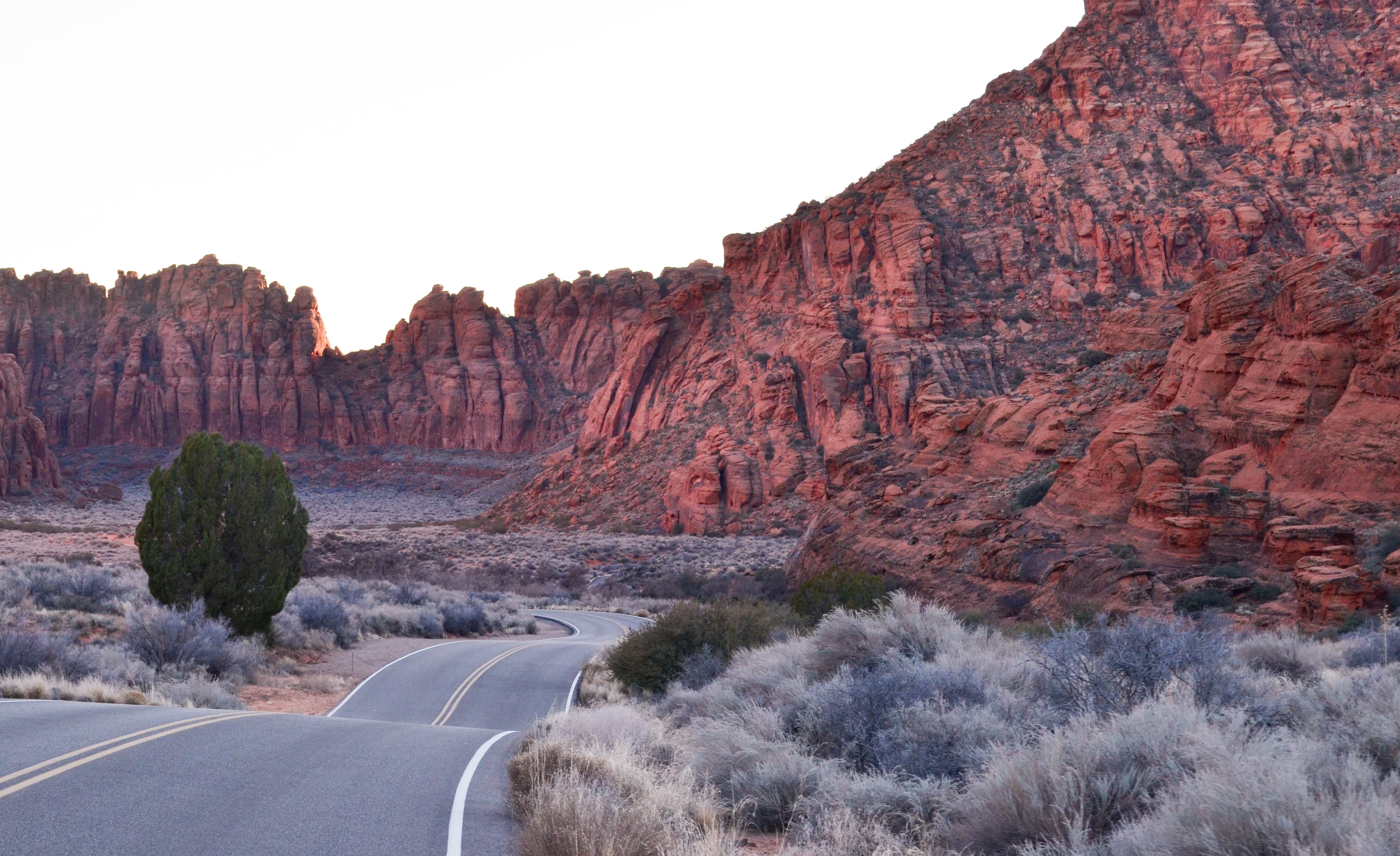
The bus drops you in darkness, in the cold, at 1,768 metres above sea level, in the Pine Valley Mountains above St. George, Utah. The start coral is a collection of headtorches and disposable layers on a desert plateau. Then the sun comes up behind the red rock escarpments, and the canyon country below reveals itself in the first morning light, and you run down into it. The St. George Marathon has no famous skyline to offer. What it has instead is one of the most dramatic approaches to a start line you will experience.
The course is point-to-point, descending approximately 900m net over 42.195km from the volcanic upland of the Pine Valley area through the high desert to Vernon Worthen Park in downtown St. George. It is USATF certified, which means the time you run here counts for Boston qualification. The 11% sub-3 finishing rate - more than double that of London or Berlin - reflects the course geometry. Gravity does meaningful work on this road.
The course is not purely a sustained descent. There are uphills in the first few kilometres and at points through the volcanic rock section in the middle miles. The field size of 4,000 is deliberately constrained by the logistics of moving runners to a point-to-point mountain start; this makes for a more concentrated, faster field than most city marathons of similar profile. Runners chasing times should pace conservatively for the first 20km: the downhill makes the legs feel easy, the toll comes after mile 18.
The course in sections
The opening kilometres drop from the plateau through the scrub and juniper of the high desert. Around mile 6 the course enters the black basalt lava flow area - the remnant of eruptions from the Quaternary period - and runs across the dark rock surface with the red canyon walls visible to the east. The valley floor opens from mile 12 as the route descends into the broader wash country north of St. George. The final 10km are comparatively flat as the course enters the city proper, running south through residential streets and into Vernon Worthen Park.
Weather
The start at elevation is cold. Plan for 5–9°C in pre-dawn darkness at the mountain staging area; the high desert air loses heat quickly at night and the wait for the gun can be 45–60 minutes in those conditions. A throwaway layer is not optional. Once the race is underway and the descent begins, the temperature climbs. By the time the course reaches the valley floor, it is 12–18°C. The finish area in downtown St. George in early October is warm and sunny, often 20–24°C by late morning. The UV index at southern Utah elevation is high; sunscreen at the start is sensible even in the cold.
Entry
| Registration Type | First-come, first-served (not a ballot) |
| Registration Opens | 1 April annually, at a specific published time |
| Next Race Date | Saturday 2 October 2027 (provisional; the organiser has not yet published the 2027 date) |
| Official Website | stgeorgemarathon.com |
| Entry Fee | ~$130–$150 (check current pricing on the official site) |
The St. George Marathon is not a ballot race. It is first-come, first-served - registration opens at a published time on 1 April each year and places sell out within minutes. Sometimes within seconds. This is a speed-of-click event, not a lottery. Set the alarm, confirm your payment details are ready in your browser, and be at your device precisely at opening time.
There is no charity entry programme, no international guaranteed entry route, and no wave system that allocates places over time. You either register at the moment it opens or you do not race this year. The race has operated this way for years with no sign of changing model. Waitlists do sometimes open; check the race website after the initial sellout.
Race Weekend
Expo and Number Collection
The expo and number collection is at the Dixie Convention Center in St. George. It runs on the Friday and Saturday before race day. Check stgeorgemarathon.com for current opening hours and location. Number collection is mandatory before race morning - there is no collection at the start.
Getting to the Start
The start in the Pine Valley Mountains is inaccessible by private vehicle on race morning. Official shuttle buses run from designated pickup points in St. George - typically from the finish area at Vernon Worthen Park and from the expo site. Shuttles depart from around 4:30 AM to allow time for the drive into the mountains and the pre-race wait. The precise schedule is published on stgeorgemarathon.com in race week. Plan your race morning around the earliest practical shuttle.
The staging area at the start has fires, warm drinks, and portable toilets. The wait is typically 45–60 minutes. This is the time the disposable layer earns its keep.
The Course
The first section descends from the staging area through the high desert plateau, juniper scrub, and volcanic rock country. The miles between 8 and 14 cross the black basalt fields - a distinctive and otherworldly stretch of road unlike anything in European or major-city US marathon courses. The valley broadens from mile 14 as the course drops into the agricultural fringes north of the city. Miles 22 through 26 run through the residential grid of St. George itself, with crowd support building in the final kilometres.
The Finish
The finish line is at Vernon Worthen Park in the centre of downtown St. George. The park has grass, shade, and the immediate post-race recovery facilities. Medal collection, baggage reunion, and post-race food are all in the park. From the finish, most downtown hotels are within 1–2km. Uber and Lyft are available in St. George.
Where to Stay
Stay in downtown St. George, close to Vernon Worthen Park. The start is in the mountains and accessed only by official shuttle; where you stay has no bearing on the race morning commute. The priority is proximity to the finish, the expo at the Dixie Convention Center, and the restaurants on Main Street.
Book immediately after securing race entry. St. George is a small city - the total hotel room count within a useful radius of the finish is not large, and 4,000 runners all enter on the same day in April. By the time most people think about hotels, the closest options are already gone.
Marriott Autograph Collection. A converted historic building on Main Street, the most characterful hotel in the city. Close to the finish and to the restaurants on Main Street. Book immediately after securing race entry.
Reliable mid-range option close to the finish and the convention centre. Outdoor pool, which has genuine post-race recovery value. Practical, well-positioned, and significantly cheaper than the Advenire.
On St. George Boulevard near the Dixie Convention Center (expo venue). Indoor pool. The best-value option in the convention centre corridor with a room count large enough to still have availability after a week of entry opening.
Standard Hampton product. Reliable, consistent, and bookable at Hilton rates. Useful for points redemptions. Breakfast included. Close enough to walk to the expo and the finish area without needing a car.
See & Do
The Vernon Worthen Park finish is at the edge of downtown St. George, surrounded by the flat grid of the city. Snow Canyon State Park is 12km north-west. The scenery that makes this corner of Utah worth travelling to begins immediately outside the city limits.
Snow Canyon State Park
12km (7.5 miles) north-west of downtown, 15 minutes by car. The canyon runs roughly north-south between walls of red Navajo sandstone, with basalt lava flows from Quaternary eruptions visible at the canyon floor. The main park road is paved for 11km and flat enough for a recovery drive with short stops at the viewpoints. The Jenny's Canyon Trail (0.4km return, flat sandy wash) reaches a small slot canyon without requiring any significant climbing. October light in the canyon is excellent - lower sun angle, warm colour on the red walls, and no summer queue at the entrance gate.
Red Hills Desert Garden
1 N Dixie Drive, at the base of the Red Cliffs. A botanical garden of native Mojave and Great Basin desert plants, built on what was formerly a flood retention basin. Flat walking on surfaced paths, interesting geology visible in the adjacent cliffs, and free admission. The garden is less than 2km from Vernon Worthen Park and can be walked to from most downtown hotels on post-race legs that have a reasonable grip on basic locomotion.
Dinosaur Discovery Site at Johnson Farm
2180 E Riverside Drive. In 2000, a local farmer levelling land for a building project uncovered one of the densest concentration of dinosaur tracks in North America - more than 1,700 individual prints from at least seven species preserved in 200-million-year-old Jurassic mudstone. The site is now a small museum built over the tracks. Twenty minutes to look at properly; longer if you are the kind of runner who finds Early Jurassic geology as compelling as marathon splits.
Historic Main Street
St. George's historic district is centred on Main Street, a few blocks from Vernon Worthen Park. The St. George Utah Temple (1877, the oldest operating Latter-day Saint temple) anchors the north end. The Tabernacle (1876) is a block away. Both are visible from the exterior; the Temple Visitors' Center is open to all. The Main Street corridor has enough restaurants and cafes for a post-race afternoon without requiring any transport.
After the Race
The St. George Marathon is on the first Saturday of October. Southern Utah in early October is the best it gets: 20–24°C, dry, clear skies, and tourist numbers that have dropped sharply from the summer peak. The national parks within reach - Zion (45 minutes), Bryce Canyon (2 hours), Capitol Reef (3 hours) - are all meaningfully quieter than they are in July. The itineraries below are calibrated for post-marathon legs: flat walks, park shuttles, and roads that do the distance rather than the feet.
Red Navajo sandstone cliffs, basalt lava flows from Pleistocene eruptions, and sand dunes in a canyon running roughly north-south. The main park road is paved for 11km through the canyon, flat enough for a slow post-race drive with short walks. The Jenny's Canyon Trail (0.4km return, sandy wash) reaches a small slot canyon without any demanding terrain. In early October the light on the red walls is at its best, the summer crowds are gone, and the temperature is 20-24°C. Entrance fee is modest; no overnight facilities in the park itself.
Stay in Springdale, the small town at Zion's south entrance. The Driftwood Lodge and Cable Mountain Lodge are both reasonable options a short walk from the park gate. The free park shuttle runs through the canyon floor in season; in early October it is still operating. The Riverside Walk (3.2km return, flat, paved along the Virgin River to the Narrows entrance) is the post-marathon walk. The Narrows themselves require wading and scrambling - hold those for the next trip. The canyon walls reach 600-900m above the river. In early October the cottonwood trees along the riverbed turn gold.
Spend the first night in Springdale for Zion, then drive north on US-89 through the Grand Staircase to Bryce Canyon. The Bryce Canyon Rim Trail connects the major viewpoints along the plateau edge at 2,400m - largely flat, with the amphitheatre of hoodoos (eroded limestone spires) visible below at each overlook. Sunrise Point and Inspiration Point give the best angles in the early morning. The light in October is lower and warmer than summer, and the crowds are genuinely thin by mid-week. Stay at Bryce Canyon Lodge (inside the park) or in Bryce Canyon City on the highway.
The four-night version covers more ground than the legs strictly need. Day one: drive east on UT-9 through Zion (stop at the Canyon Overlook Trail, 1.6km return, moderate grade - push through it). Night one: Springdale. Day two: north on US-89 to Bryce Canyon, afternoon at the rim. Night two: Bryce area. Day three: east on UT-12 to Capitol Reef National Park - the road itself through Grand Staircase-Escalante is as interesting as the parks. Night three: Torrey (Capitol Reef gateway). Day four: south via UT-12 and US-89 back toward St. George, or west on I-70 to I-15 south. The drive totals roughly 600km; the roads are quiet and the scenery continuous.
Frequently Asked Questions
Should I stay near the start or the finish?
The finish, at Vernon Worthen Park in downtown St. George. The start is accessible only by official shuttle from the city. Proximity to the start is irrelevant.
How do I enter the St. George Marathon?
Registration opens at a set time on 1 April at stgeorgemarathon.com. First-come, first-served, not a ballot. Places sell out within minutes. Be at your device exactly at opening time.
How far in advance should I book a hotel?
Immediately after securing entry, which means potentially April for an October race. St. George is a small city - the hotel inventory moves fast when 4,000 runners arrive simultaneously.
Is there transport to the start?
Yes - official shuttle buses only. No parking at the start. No alternatives on race morning. Shuttle schedule published at stgeorgemarathon.com closer to race day.
What is the best neighbourhood to stay in?
Downtown St. George, within 1-2km of Vernon Worthen Park. The Main Street and convention centre corridor have the highest hotel concentration.
When does the expo open?
Friday and Saturday before race day, at the Dixie Convention Center. Check stgeorgemarathon.com for current hours. Number collection is mandatory before race morning.
What is the weather like?
5-9°C at the pre-dawn start in the mountains, rising to 15-20°C by the time you reach downtown St. George. Dry. UV index high by late morning; sunscreen matters.
How do I get to St. George?
St. George Regional Airport (SGU) has direct connections from LA, Phoenix, Denver, and SLC. Las Vegas (LAS) is 175km south on I-15, approximately 1 hour 50 minutes by car - many runners fly into Las Vegas.
Is there a bag drop?
Yes, managed at shuttle pickup points. Bags transported to the finish at Vernon Worthen Park. Check stgeorgemarathon.com for current procedures.
Should I bring a throwaway layer?
Yes. The wait at the mountain start is cold and dark - 5-9°C. A disposable layer or old fleece is essential. It drops away once the race begins and you descend.