The Race
| Next Race Date | 6 December 2026 |
|---|---|
| Course type | Loop: starts and finishes at the City of Arts and Sciences |
| Certification | World Athletics Platinum Label · AIMS/RFEA approved (not an Abbott World Marathon Major, but an Abbott WMM Age Group World Rankings qualifying race) |
| Start | Plaça de la Marató, beside the Pont de Montolivet / City of Arts and Sciences |
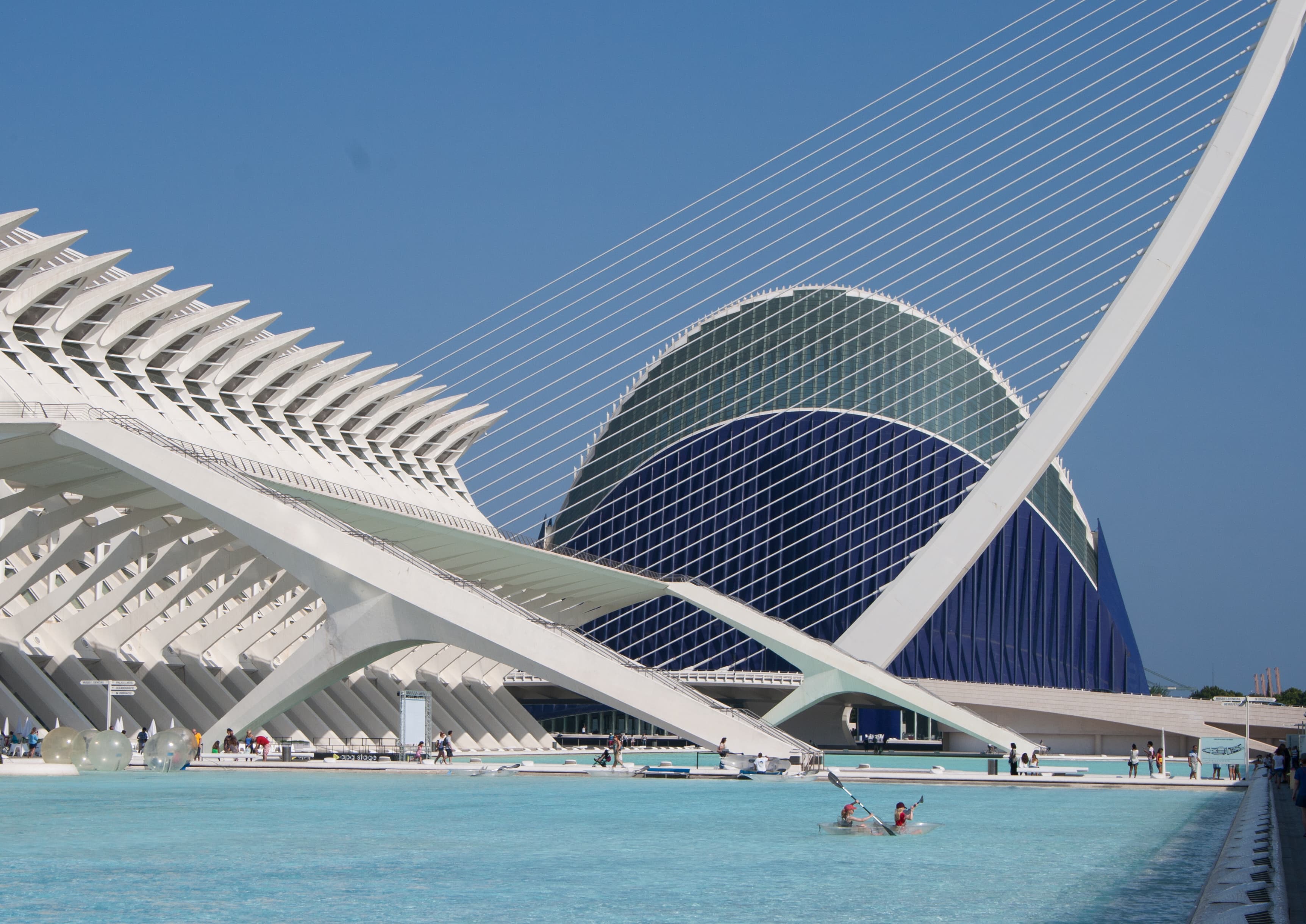
| Finish | Blue walkway over water, City of Arts and Sciences, beside L’Hemisfèric and the Museu de les Ciències |
| Total finishers | ~36,000 bib capacity |
| Avg race-day temp | 10–17°C (December) |
| Cutoff time | 5 hours 30 minutes from crossing the start line; course closes 3:15 p.m. |
| Free race-day transport | Yes: reusable transport card with four free Metrovalencia trips over race weekend, based on the 2025 pattern |
| Course certification | AIMS / RFEA certified |
| Sleeper Train | Not accessible: Valencia has no practical UK sleeper-train connection; reached by flight or high-speed rail via Barcelona or Madrid |
History
Valencia's marathon began quietly. In 1981, SD Correcaminos, the athletics club that still organises the race, launched the Marató Popular de València as a respectable regional event. The 2009 winning times, 2:26:57 for the men and 2:50:46 for the women, belong to a different race entirely from the one that exists now.
The transformation started in the 2010s, when SD Correcaminos, the Ajuntament de València and the Fundación Trinidad Alfonso stopped treating the marathon as a single civic day out and started building infrastructure around it. The Foundation, created in 2012 with backing from Mercadona's Juan Roig, first grew the Valencia Half Marathon before folding the full distance into a wider "Valencia, City of Running" project. That project put money into a dedicated running circuit through the Turia Gardens, the dry riverbed that runs through the city after the catastrophic 1957 flood forced its diversion.
Sporting credibility followed the investment. World Athletics results list the 2020 edition as Platinum Label, the sport's top tier, a status Valencia has held onto for 2026. The times back up the ranking. Sammy Kitwara ran 2:05:15 in 2017, the fastest marathon then run on Spanish soil. Evans Chebet won the pandemic-era elite-only 2020 race in 2:03:00. Kelvin Kiptum debuted over the distance here in 2022 with 2:01:53. Sisay Lemma lowered the men's course record to 2:01:48 in 2023, and Joyciline Jepkosgei set the current women's record of 2:14:00 in 2025, at the time the fourth-fastest women's marathon ever run.
The course itself explains why elites and amateurs alike keep coming back. It is flat, at sea level, and finishes on a blue platform over water inside Santiago Calatrava's City of Arts and Sciences complex, a setting unlike any other finish line in European road running. By 2026, a 36,000-bib field with a full ballot and official tour-operator packages had turned Valencia into Spain's most ambitious marathon and, for many Europeans chasing a December personal best, the last realistic shot of the year.
The course
The Valencia Marathon starts and finishes at the City of Arts and Sciences in the south-east of the city, on Plaça de la Marató beside the Pont de Montolivet. From there the route heads out through the port and marina district in the early kilometres, then loops north and west through the city's wide avenues and neighbourhood corridors before threading past the historic centre, close to the Torres de Serranos. The final kilometres return along the Turia-side roads toward the start point.
The course is asphalt throughout, with no cobbled sections identified in official materials. The organiser describes it as completely flat and at sea level; the 2025 route profile indicates roughly 78 m of accumulated ascent across the full 42.195 km. There is no published kilometre-by-kilometre elevation table. The profile below sits between 2 m and 30 m, and the one shape on it works in the runner’s favour: the course tilts gently upward to its high point of 30 m at km 35.3 out at Avinguda del Cid, then loses 24 m over the closing 7 km, with 13 m of that in the single kilometre from Carrer de Colón at km 40.
The finish is the course's signature feature: a blue carpeted walkway over water inside the Calatrava-designed City of Arts and Sciences complex, with L'Hemisfèric and the Museu de les Ciències forming the backdrop.
Km 0–5: The launch and the harbour. The first wave leaves Plaça de la Marató at 8:15 a.m., early enough that the light is still low. Nine waves separate the field by accredited target time, so the opening kilometres are calmer than at most large European races, though everyone around you is chasing roughly the same number. The route heads out past the port and marina in this stretch. It is wide and open, which is a gift in still air and a problem in a breeze. There are no bridges and no gradient to slow anyone down here, which is exactly why this is the section where a marathon gets ruined before halfway: five seconds per kilometre too fast feels like nothing at 8:20 a.m.
Km 5–15: The long straight. The course moves through the modern southern and eastern reaches of the city on broad, unbroken avenues. Crowd support builds in pockets around junctions and plazas, and thins between them. This is Valencia doing what it does best and worst at the same time: fast, flat, wide roads with little to distract from pace, which rewards discipline and punishes anyone still riding adrenaline from the start.
Km 15–23: Back toward the water. The route turns back east through el Pla del Real and returns to the maritime quarter, running Carrer de la Reina and Avinguda del Port through the low ground around km 20, where the course drops to 4 m, the lowest sustained running of the day. It is wide, exposed and quiet, and that quiet is the trap. This is where patient runners bank their personal best and impatient ones start racing the clock too early.
Km 23–32: The Turia corridor and the historic centre. The route works back inland along the old riverbed that gives Valencia its running identity, the green corridor created after the 1957 flood forced the Turia underground and out of the city centre, then passes close to the Torres de Serranos and into Ciutat Vella around km 28 to 31, where Baroque and Art Nouveau façades replace the open-road feeling of the first half. Spectators cluster more densely here and the noise is more concentrated than anywhere else on the course. Aid stations are long and duplicated through this stretch, useful given the size of the field, but a fast, dense crowd can still make them busy. Treat each one as part of the pacing plan, not an interruption.
Km 32–42.195: The reckoning.There is no hill to blame for what happens here. The course drifts up to its high point of 30 m out at Avinguda del Cid around km 35, but 30 m in a city at sea level does not read as a climb, so any damage from overpacing at kilometre 5 shows itself in full by kilometre 34. What the closing 7 km give back is 24 m of gentle descent toward the coast, 13 m of it in the single kilometre from Carrer de Colón at km 40. The smart way to run Valencia is to arrive at 32 km still feeling slightly under-committed. From here the route draws back toward the City of Arts and Sciences, and the white Calatrava buildings shift from postcard scenery to finish-line magnet. The last kilometre announces itself well before you reach it: L'Hemisfèric, the Palau de les Arts and the Museu de les Ciències frame a short blue carpeted walkway over water that is long enough to hurt and short enough to savour.
Blue tangent line:Valencia's blue tangent line is worth following properly. On a course this wide and this fast, the difference between the racing line and a wandering one is measurable over 42.195 km, and with a field this deep, that difference matters more here than on tighter, twistier courses. The timing mat sits on the finish walkway itself, so there is no separate hunt for the true line once the Calatrava buildings come into view; the visual finish and the timed finish are the same place. One practical warning worth carrying into the closing metres: runners have reported a small step where the road meets the blue carpet, easy to catch a tired foot on after 42 km of flat concentration.
Course Map
The map shows the route, the shared start-finish location at the City of Arts and Sciences, the expo at Feria Valencia, and the nearest Metrovalencia and tram stations. Tap a marker for details, and scrub the slider or press play to move the orange marker along the course with the elevation profile beneath it.
Why Valencia Runs So Fast
Valencia's flatness is not a marketing line, it is a measurable fact. The course sits at sea level throughout, with roughly 78 m of accumulated ascent across the full 42.195 km and no climbs worth naming beyond a single small railway bridge. Wide roads remove the congestion that slows fields at tighter European marathons, and a nine-wave start seeded by target time keeps runners grouped with others chasing a similar pace from the gun.
The results back up the reputation. Sisay Lemma's 2:01:48 course record from 2023 remains one of the fastest marathons ever run, and Joyciline Jepkosgei's 2:14:00 in 2025 stands as the fourth-fastest women's marathon time recorded at the point of that race. Sebastian Sawe's 2:02:05 in 2024 was the fastest marathon run anywhere that year. Reddit reporting suggests the field's depth extends well beyond the elite race, with figures circulating that put sub-3 finishers at around 18.4% of the full field and close to 29.2% among men under 45.
For a runner chasing a personal best, the practical takeaway is discipline, not heroics. Nothing on this course will slow you down if you go out too fast. The flat roads that make Valencia famous are exactly what make early overpacing so costly by kilometre 35.
Flat, wide and exposed near the port, with nothing to slow the field down. Wave seeding keeps the early chaos lower than most big-city races, but the temptation to bank easy speed here is the single biggest reason Valencia marathons fall apart late.
Broad avenues give way to denser neighbourhood corridors and the first thick pockets of crowd noise. Aid stations start becoming real pacing checkpoints, not quick stops.
The course runs the green riverbed corridor before threading past the historic centre. Quieter, cooler, and the section where patient runners protect a personal best instead of chasing one.
No hills, no excuses. Early overpacing shows itself in full here. The Calatrava buildings of the City of Arts and Sciences pull the field home across the blue walkway finish.
Pacers
Valencia runs both elite pacemaking and a citizen pacer group, MSC Pacers, carrying visible banners intended to pace from start to finish.
| Wave | Start | Target box | Pacers (2025 pattern) |
|---|---|---|---|
| Wave 1 | 8:15 | Sub-2:50 | Elite pacemakers only, no citizen pacer banners |
| Wave 2 | 8:25 | 2:50:00–2:59:59 | Sub-2:50 and 3:00 pacers reported in fast boxes |
| Wave 3 | 8:35 | 3:00:00–3:11:59 | 3:00 pacer |
| Wave 4 | 8:45 | 3:12:00–3:19:59 | 3:15 pacer |
| Wave 5 | 8:55 | 3:20:00–3:31:59 | 3:30 pacer |
| Wave 6 | 9:05 | 3:32:00–3:42:59 | No confirmed pacer for this box in 2025 materials |
| Wave 7 | 9:15 | 3:43:00–3:55:59 | 3:45 pacer |
| Wave 8 | 9:25 | 3:56:00–4:09:59 | 4:00 pacer |
| Wave 9 | 9:35 | Over 4:10 | 4:15, 4:30 and 5:00 pacers reported in this box |
Sub-3 pacers have appeared in recent editions, but the exact wave placement and total pacer count should be confirmed against the final race guide before planning around a specific pacer.
What to wear
December mornings in Valencia are cool, not cold, typically 10–12°C at the 8:15 a.m. start, warming to a comfortable 15–17°C by late morning. Runners in the later waves, who may stand in the corrals for a while after the first wave departs, feel the chill more than early starters. A throwaway layer is strongly recommended: an old sweatshirt, gloves or a disposable poncho for the wait, discarded once the race begins.
Wind can be a factor, particularly in the exposed harbour and marina section in the opening kilometres, where the course has little shelter. A light, wind-resistant top for that stretch is worth considering in a breezy year. Once moving, most runners find conditions close to ideal for racing; overdressing is the greater risk on this course, not underdressing.
Because the race starts and finishes in daylight, low winter sun can affect visibility on exposed east-west sections, especially on a clear morning. Sunglasses or a cap are worth carrying even if the forecast reads cool. Humidity has been reported in some years alongside the mild temperatures, so runners sensitive to muggy conditions should not assume December automatically means dry air.
Entry
Valencia now runs a structured two-stage registration process, not a simple sell-on-a-date system, and the 2026 race sold out under it. The pattern, based on the 2026 cycle, ran a loyalty window for 2025 finishers from 11–15 December 2025, followed by a public ballot from 16–26 December 2025. The draw took place on 12 January 2026, with results emailed the following day and successful entrants given from 13–26 January to complete registration. Unfilled places went to the waiting list from 26 January.
Pricing for the 36,000-bib field sat at €80 for bibs 1–10,000 and €180 for bibs 10,001–36,000 and all ballot places, plus a mandatory €5 day licence for runners without a valid RFEA, Valencian regional or Runner Plus Card licence. Entering the ballot itself is free, though the official process places a temporary €5 hold on a bank card for 15 days as a no-show deterrent; this is not an entry fee and is released automatically. Runners can enter solo or in groups of up to three, with group members confirming by email and receiving consecutive bib numbers: the official FAQ is explicit that group entry does not improve the odds of selection.
Valencia does not offer a separate guaranteed-entry fast-runner route in the way London or Boston does. It does, however, verify performance for anyone registering to start in a box aiming for under 3:32:00: a previous marathon, half marathon, 15K or 10K result from the last three years must be provided, checked automatically against prior Valencia results or via a submitted result link. This functions as a corral-integrity check, not a separate qualifying entry path, which is why no standard Fast Runner/GFA standards table applies to this race.
There is no charity-bib route that guarantees entry in exchange for fundraising, unlike London or Boston. The official charity partner for the 46th edition is Casa Caridad Valencia, and runners can donate during registration, with the Z Zurich Foundation matching contributions. Tour operator entry is a meaningful route into a sold-out race: the official site lists authorised operators including 2:09 Events, Sports Tours International, Marathon Tours & Travel, Race Beyond, Viviesorridi and Kirun, several with UK coverage, offering guaranteed bibs while availability lasts alongside runner benefits such as race-day transfers and early breakfast.
Deferral and injury-cancellation policy was not fully captured in the official materials reviewed.
Race Weekend
Expo and Bib Collection
The Expo 42K is held at Feria Valencia, Av. de les Fires, s/n, 46035 València, and it is the only place to collect a bib. The regulations are explicit that bibs are issued exclusively at the expo, with no race-day collection.
Published hours for the days before the race were: Thursday 5:00–9:00 p.m., Friday 9:00 a.m.–9:00 p.m., Saturday 9:00 a.m.–7:00 p.m., with the organiser flagging 12 noon–2 p.m. and 6–7 p.m. as the busiest windows to avoid. Reach the venue by tram Line 4 to the Feria Valencia main entrance, EMT bus Line 62, or by car using the on-site parking.
Bring official photo ID and any collection QR code or confirmation email specified in the final runner instructions. Proxy collection rules were not clearly documented in the official materials and should be checked in the final race guide before publishing a claim either way.
The runner goodie bag varies by year. The 2025 edition included items such as Importaco nuts, Central Lechera Asturiana milk, Chic-Kles gum, ColaCao and ColaCao-branded products, plus a separate finisher bag with New Balance, Enervit, Aquabona, Powerade and fresh fruit. 2025 contents should not be treated as guaranteed for 2026 until the current goodie-bag page is confirmed.
Getting to the Start
The Valencia Marathon runs on a precise nine-wave system, seeded by accredited target time, with no single mass start, starting at Plaça de la Marató beside the City of Arts and Sciences. The most reliable rail link is Metrovalencia/tram Line 10, Amado Granell–Montolivet, with a short walk to the start boxes; road closures make rail the safer choice over buses on race morning. For the 2025 edition, runners received a reusable transport card with four free Metrovalencia trips valid across race weekend, including airport journeys. First-marathon or first-time-in-Valencia runners should build in a wide arrival buffer: security, toilets and last-minute layer decisions all take longer than expected in a field this size, and the wave system, while efficient, does not make it easy to move between boxes once you are close to your own start time.
Bag drop exists but is capped and must be pre-booked. Recent published information lists 8,000 spaces and a €6 fee, with the drop-off point on Avenida del Profesor López Piñero, next to l'Umbracle, close to the City of Arts and Sciences. International runners in particular should not assume they can turn up on race morning and hand over a bag without reserving a space in advance.
Toilets and basic medical support are available in the start village according to the official route map. A public headphone policy was not found in the accessible 2026 regulations; given field size and wave discipline, low volume or open-ear headphones are sensible defaults, not a confirmed rule.
Nutrition on Course
Valencia runs roughly a dozen aid stations along the course, using Aquabona water and a Powerade-style sports drink at full stations, with three standalone Enervit gel points and three rapid-assistance points offering vaseline and analgesic spray.
| Km | Water | Sports drink | Gel | Food | Notes |
|---|---|---|---|---|---|
| 5.5 | Aquabona | Yes | No | No | First full station |
| 10 | Aquabona | Yes | No | No | Full station |
| 14.5 | Aquabona | Yes | No | No | Full station |
| 16.2 | No | No | Enervit | No | Gel-only |
| 18.7 | Aquabona | Yes | No | No | Full station |
| 23 | Aquabona | Yes | No | Fruit | Pacing checkpoint from here on |
| 24.5 | No | No | No | No | Rapid assistance (vaseline/spray) |
| 25.8 | No | No | Enervit | No | Gel-only |
| 28.3 | Aquabona | Yes | No | Fruit | Full station |
| 29.5 | No | No | No | No | Rapid assistance |
| 33.1 | Aquabona | Yes | No | Fruit | Full station |
| 34.0 | No | No | Enervit | No | Gel-only |
| 34.2 | No | No | No | No | Rapid assistance |
| 37.1 | Aquabona | Yes | No | Fruit | Late-race fuel |
| 40.4 | Aquabona | Yes | No | Fruit | Final full station |
| Finish | Aquabona | Yes | No | Finisher fruit (banana, kaki) | Varies annually |
Water is served in 33 cl bottles, sports drink in cups, based on 2025 race-week reporting. No mass-runner personal bottle service was found in the public regulations; this appears to be an elite-only provision.
Several Reddit accounts flag that electrolyte and sports-drink volume at aid stations has felt thin in past editions relative to the size of the field, and that the Enervit gels are notably sweet. Runners training with their own gels or electrolyte tabs should plan to carry them, since the course may not match a specific brand or intensity.
Spectating
Valencia rewards a mobile spectator. Because the course loops through a compact city and returns to a single finish point, three to four sightings are realistic for someone comfortable with Metrovalencia and a bit of walking; two sightings plus the finish suits families or anyone less keen on moving fast between points.
The single best fixed spot is the finish itself, the blue walkway at the City of Arts and Sciences. It is the most visually striking point on the course, but also the most crowded: arrive early, agree a specific meeting point away from the barriers before the race starts, and expect phone signal and messaging to lag once thousands of runners finish in a short window.
For anyone willing to move, the Turia Gardens corridor is a genuine advantage. Because the park runs alongside several sections of the course, spectators can reposition along it without crossing traffic-heavy roads repeatedly, and it doubles as a pleasant place to wait between sightings, with bridges and clear landmarks for regrouping.
Route A: Start at the City of Arts and Sciences for the 8:15 a.m. start and early kilometres, take Metrovalencia/tram Line 10 from Amado Granell–Montolivet toward the city centre for a mid-course sighting around km 15–20, then walk into the historic centre near Torres de Serranos for a further sighting around km 28–31.
Route B: Base at the marina/Veles e Vents area for an early sighting around km 3–5, before road closures tighten, move via local transport or on foot back toward the city centre for the km 15–20 window, then finish at the City of Arts and Sciences in good time before the leaders return.
Route C:Stay within the Turia Gardens corridor throughout, repositioning on foot along the park for two to three sightings as the course passes nearby sections, then finish at the City of Arts and Sciences, using the park's landmarks and bridges to arrange a clear meeting point in advance.
Valencia uses live results and photo services, with app and tracking details normally confirmed in the final race guide. A simple shared-location plan on a phone works as a practical backup, for runners happy to carry one.
The Finish
Post-finish, runners receive a medal and finisher items, with the goodie-bag contents varying annually as noted above. Medal engraving is available near the bag-drop area on Avenida del Profesor López Piñero for those who have pre-purchased or pay on the day. Showers are listed at the San Luis municipal swimming pool, 10 a.m.–5 p.m., in current service materials.
The finish zone at the City of Arts and Sciences is visually open but becomes genuinely crowded once the bulk of the field comes through; agree a specific meeting landmark in advance, such as l'Umbracle or the Museu de les Ciències side. "Meet at the finish" is not a plan. Pregnancy or medical deferral policy was not confirmed in the official materials reviewed.
Where to Stay
Valencia's start and finish sit at the same point, the City of Arts and Sciences, so there is no start-versus-finish trade-off to weigh. Choose a neighbourhood based purely on how close it sits to that one location.
City of Arts and Sciences / Quatre Carreres
Modern and event-shaped, with many hotels within 10–25 minutes' walk of the race zone. This is the pick for runners who care more about race-day logistics than the old town's narrow streets and market halls. Saturday night noise is generally low, though marathon traffic adds some activity. Prices carry a marathon-weekend premium reflecting the convenience.
Ruzafa
Roughly 2–3 km from the finish, walkable for many runners once the legs are moving again. Ruzafa is Valencia's food-and-café neighbourhood, hip without being difficult, and probably the best all-round base for runners who want restaurants and independent shops alongside race practicality. Choose a side street over a bar-facing apartment if Saturday-night noise matters.
Alameda / Pla del Real
Elegant and greener, close to the Turia corridor and Mestalla, with a calmer feel than the centre. Good for runners who want access to shakeout routes along the park and a less tourist-heavy base, at a mid-to-high price point depending on the hotel.
El Carmen / Ciutat Vella
The historic centre, roughly 3–4 km from the finish, better suited to companions and a wider Valencia city break than to runners planning an immediate post-race walk home. Bar-street noise varies block by block; avoid apartments directly above nightlife if sleep matters more than a central address.
Cabanyal / Marina / Beach
Beachside and gentrifying, useful for early-course spectating near the harbour and for sea-air recovery walks, but less convenient for the finish than Ruzafa or the City of Arts area. Value can be better here than in the centre, though marathon demand narrows that gap.
Benimaclet
A student neighbourhood with a local, unpolished feel and generally better prices, at the cost of a longer public-transport journey to the finish. Suits budget-conscious runners comfortable planning transit around race-morning closures.
Booking Timeline
Ballot results for Valencia are typically emailed in mid-January for a December race, giving successful entrants roughly eleven months of lead time, but that also means nearly a year for hotel prices to climb before race weekend. Rooms near the City of Arts and Sciences and in Ruzafa book up fastest, since both sit within practical reach of the start-finish zone.
The sensible approach is to book a flexible-rate room as soon as the ballot result is known, well before registration completes in late January. Official travel-service hotels and authorised tour-operator packages can include runner-specific benefits, such as early breakfast, late checkout and race-day transfers, which are worth weighing against a cheaper non-refundable room booked independently. December marathon weekend carries a meaningful price premium over a normal winter weekend in Valencia, and the sold-out field size means that premium holds even for budget options further from the race zone.
Recommended hotels
Sits opposite the City of Arts and Sciences area, about as close to the start-finish zone as a hotel gets. Best suited to runners who want to walk to the start and be back in a room within minutes of finishing. Confirm current availability and rates before booking.
One of the most convenient hotel locations for the finish itself, useful for a quick post-race shower and change before the crowds clear. Confirm current availability and rates before booking.
A budget-to-mid option genuinely marketed by the brand for marathon stays, close enough to walk to the race zone without the premium pricing of the hotels directly opposite the finish. Confirm current availability and rates before booking.
The strongest runner-city-break balance on this list, with Ruzafa’s restaurants and cafés on the doorstep and a realistic walk or short transit into the race zone once legs allow. Confirm current availability and rates before booking.
A calmer, greener base near the Turia corridor for runners prioritising comfort and recovery over minimal walking distance; featured in some tour-operator premium packages. Confirm current availability and rates before booking.
See & Do
City of Arts and Sciences
0 km (0 miles) from finish. The finish sits inside this Calatrava-designed complex of white structures, water and glass, home to L'Hemisfèric, the Museu de les Ciències and the Palau de les Arts. Visit before race day for orientation, or afterwards only if the legs agree.
Turia Gardens
Adjacent, running across the city. A nine-kilometre green corridor through the old riverbed, created after the 1957 flood forced the Turia underground. Ideal for a Friday shakeout or a gentle post-race walk, though it is easy to talk yourself into "just one more kilometre" here the day before the race.
Ruzafa Market and neighbourhood
2.5 km (1.6 miles) from finish. The best area for pre- and post-race eating, coffee and casual wandering, with a local-neighbourhood feel that still has enough energy for non-running companions. Book dinner early, ahead of typical late Spanish hours if a normal pre-race routine matters.
Valencia Marina / Veles e Vents
3.5 km (2.2 miles) from finish. Open water, wide quays and America's Cup history, a different face of the city from the centre. Useful for early-race spectating and a good flat recovery walk, though wind exposure can make it feel cooler here than elsewhere in December.
Albufera Natural Park
11–15 km (7–9 miles) south, roughly 40–50 minutes by Line 24/25 bus. Valencia's rice-and-lagoon landscape and the spiritual home of paella. A recovery-appropriate half-day out: bus or taxi, a boat ride, lunch in El Palmar, sunset if energy allows. Better saved for the Monday after the race than a pre-race Saturday.
Post-Race Food
Ruzafa is the easiest post-race food base, roughly 2–3 km from the finish and worth the short taxi or walk once legs allow. La Tasqueta del Mercat, Calle Maestro Aguilar 2, sits beside the Mercado de Ruzafa itself and serves market-driven small plates at neighbourhood prices: croquetas, a weekly-changing rice dish, and an ensaladilla rusa that regulars rate among the best in the city. It is informal, quick to seat, and well suited to a group still in trainers.
For something a little more composed without tipping into formal dining, Canalla Bistro at Calle de Sueca 46 runs an affordable small-plates menu from chef Ricard Camarena's stable, mixing Spanish and international dishes designed to share. It is a good option for a slower recovery dinner later on race day, when appetite has properly returned and a wider spread of flavours is more appealing than another plate of plain carbohydrate.
Both restaurants were verified as real, currently operating businesses with confirmed addresses at the time of research.Both sit within easy reach of the neighbourhood's cafés for an earlier coffee-and-pastry stop, useful for runners who want food in stages instead of one large meal straight off the course.
Read Before you Run
The Cid (El Cantar de mio Cid)
Anonymous, medieval Castilian epic
Valencia sits at the centre of the Cid’s legend, and this medieval epic gives cultural context to the city’s history as a contested Mediterranean stronghold, useful reading for runners spending time in or around the historic centre.
La Barraca (The Cabin)
Vicente Blasco Ibáñez
Blasco Ibáñez is Valencia’s great novelist of the huerta, the agricultural landscape surrounding the city, and this novel connects directly to the rice fields and irrigation culture that shape both the Albufera excursion and the city’s food identity.
After the Race
The Valencia Marathon runs in early December, when the city itself stays mild and the coast and interior towns south and west are still comfortable for walking. All excursions below are planned for post-marathon leg tolerance, from a same-day lagoon trip to a four-night loop through Madrid and Seville.
The most recovery-friendly first day out: a lagoon boat ride, rice fields and a paella lunch in El Palmar. Keep it simple and stop short of turning it into a hike, and bring a jacket for the water and the evening.
History and a change of scenery, with a castle above the old town. On the day after a marathon, stick to the old town and lunch and save the full castle climb for later in the trip.
A coastal extension with beaches, a marina and seafood, without a full city transfer. Keep activity low: a promenade walk, a long lunch, an early night.
The obvious add-on for a wider Spain trip, with December Christmas markets and city energy, though also more crowds and higher prices than a quieter extension.
Museums, Christmas lights and the Prado in Madrid, followed by orange trees, plazas and easier walking once the legs return in Seville. A workable rhythm: race Sunday, Madrid Monday to Wednesday, Seville Wednesday to Saturday.
Frequently asked questions
Should I stay near the start or the finish?
Valencia makes this easy because the start and finish are the same place, the City of Arts and Sciences. Stay nearby if race logistics matter most: you can walk to the start and get back quickly afterwards. Ruzafa is the best compromise for restaurants and a proper neighbourhood feel while staying within manageable reach of the race zone.
How far in advance should I book a hotel?
As soon as your ballot entry looks likely. Valencia’s 36,000-bib field and December timing create heavy demand, and prices climb through the roughly eleven months between the January ballot result and race day. Book a flexible-rate room early and firm it up once entry is confirmed.
Is there free transport to the start?
For the 2025 edition, runners received a reusable transport card with four free Metrovalencia trips over race weekend, including airport journeys. This should be checked in the final 2026 race guide before relying on it, since transport benefits vary by year.
What is the best area to stay?
Ruzafa offers the best all-round balance of restaurants, independent shops and manageable distance to the race zone. Choose City of Arts / Quatre Carreres for maximum convenience, or Alameda / Pla del Real for a calmer, greener base near the Turia corridor.
When does the expo open?
Expo 42K at Feria Valencia typically runs Thursday evening through Saturday, with no bib collection on race day itself. Recent hours ran Thursday 5-9 p.m., Friday 9 a.m.-9 p.m. and Saturday 9 a.m.-7 p.m., though these should be confirmed against the current runner guide.
What is the weather typically like?
Cool and mild, not cold. Expect roughly 10-12°C at the 8:15 a.m. start, warming to 15-17°C by late morning. Valencia’s December reputation for good marathon weather is well earned, though wind near the harbour and occasional humidity have both been reported in past editions.
How do I get from the airport?
Valencia Airport connects to the city by Metrovalencia, generally the simplest option for runners with manageable luggage. The 2025 free transport card reportedly covered airport journeys; confirm this benefit for the current year. Taxis suit heavier luggage or late arrivals.
Is there a bag drop?
Yes, but it must be pre-booked, never assumed. Recent editions offered 8,000 spaces for a €6 fee, located on Avenida del Profesor López Piñero next to l’Umbracle. Reserve a space in advance; bags cannot be handed in on race morning.
Should I bring a throwaway layer?
Yes. Mornings are cool and later waves may stand around for a while before their start time. A cheap sweatshirt, gloves or a disposable poncho makes the wait more comfortable. Once running, conditions are usually close to ideal, so avoid overdressing for the race itself.
How do I get back to my hotel after finishing?
Walking works well for anyone based near the City of Arts and Sciences. From Ruzafa the walk is longer but realistic for many runners. From the old town, Cabanyal or Benimaclet, use Metrovalencia or tram until road closures clear, since buses will not be running, and agree a meeting point away from the finish barriers in advance.