Bologna: The City That Puts Half of Italy Within Reach
The Termal Bologna Marathon runs in early March, before the April crowds arrive in Florence and Venice. Florence is 37 minutes by Frecciarossa. Venice is 75. Verona is under an hour. One hotel room, four cities.
MarathonPassport · March 2026 · 9 min read
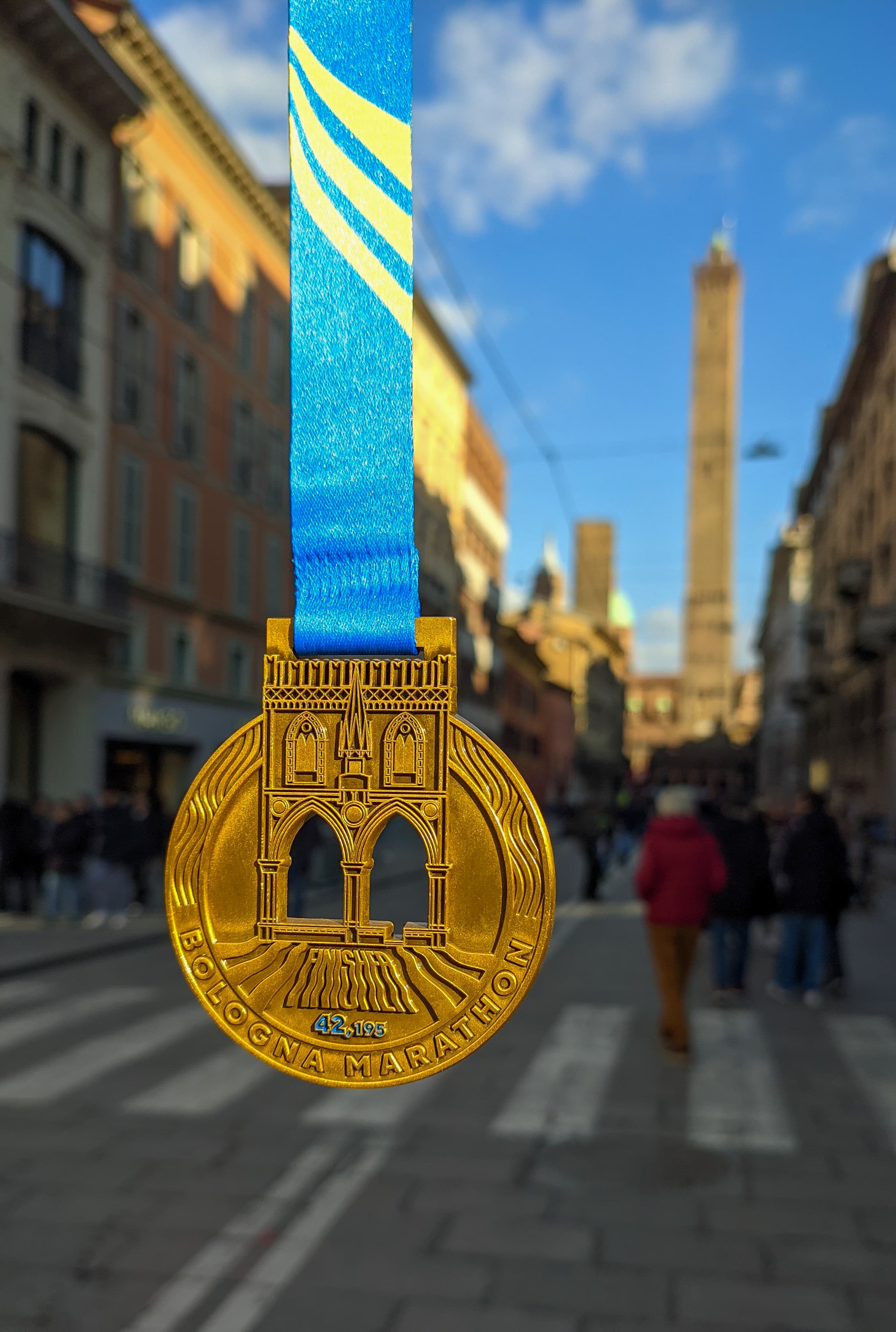
The medal was still around my neck when I walked back through the porticoes to my hotel. Bologna had just put me through 42 kilometres of medieval streets, past towers and terracotta and the vast stone floor of Piazza Maggiore, and I had finished somewhere in the middle of several thousand people who seemed equally pleased with themselves. My legs were asking questions I wasn’t ready to answer. But the thing I couldn’t stop thinking about was a train timetable.
The race runs in early March. It is not peak season for northern Italy. The April crowds have not yet arrived, the queues at the Uffizi are manageable, and Venice in March belongs mostly to people who live there. Bologna sits at the geographic fulcrum of northern Italy, pressed against the Apennines in the south with the Po plain spreading away to the north. And Bologna Centrale, the city’s railway station, sits fifteen minutes’ walk from Piazza Maggiore in a state of almost indecent connectivity.
The Race
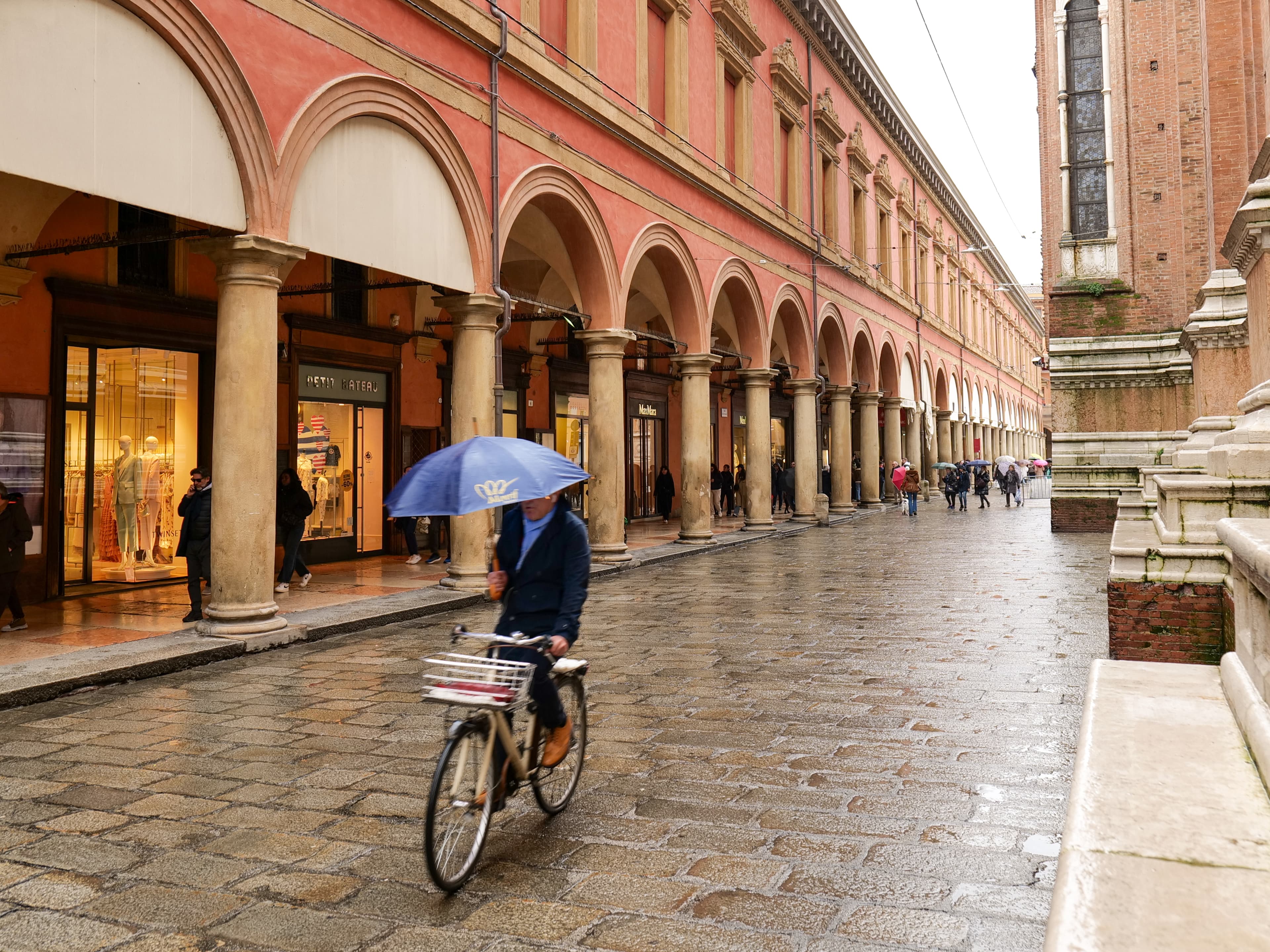
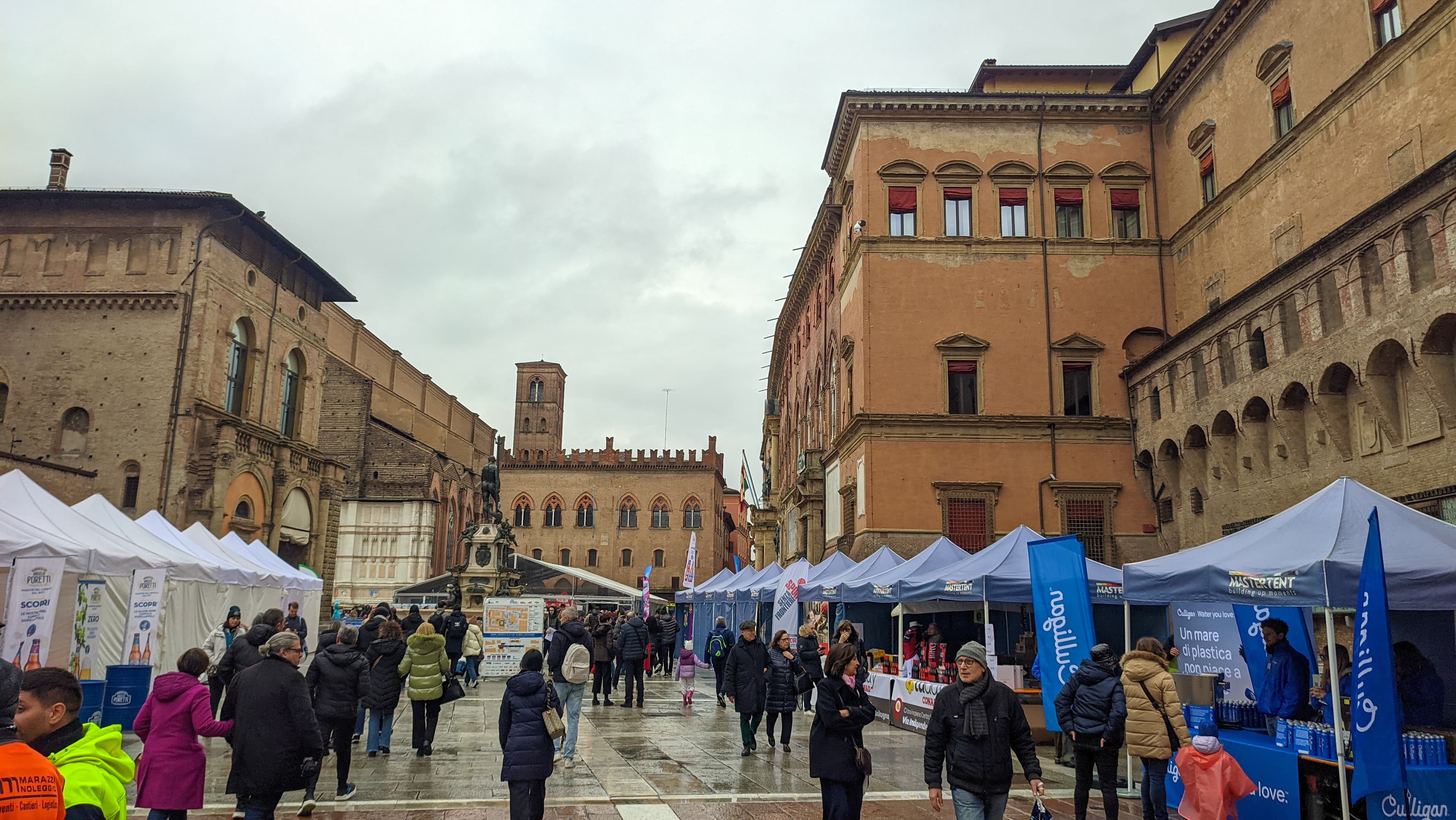
The Termal Bologna Marathon starts and finishes in Piazza Maggiore, one of the largest medieval squares in Italy, framed by the Basilica di San Petronio and the Palazzo del Podestà. The course winds through the old centre and out through the city’s residential quarters, running past the porticoes that line the streets rather than beneath their arcades, giving the race a character that few city marathons can replicate: you are inside the city rather than watching it from cordoned road edges.
It is an open-entry race, which matters. There is no ballot, no lottery, no deferral anxiety. You decide to go, you register, you go. The field runs to around 7,000 across all distances, which makes it intimate by the standards of the major European city marathons. The pace groups exist but the crowd support is concentrated and loud rather than spread thin across 40 kilometres of suburban road.
Bologna is also one of five races in the HypER 5 circuit, an Emilia-Romagna regional series run by Maratone Emilia-Romagna. The other four are Parma (October), Rimini (April), Ravenna (November), and Reggio Emilia (December). Runners have until April 2030 to complete the set. Of the five, Bologna is the best connected: it sits on the main high-speed rail junction through which most northern Italian routes pass, and its airport connects directly to the station by monorail in seven minutes.
La Dotta, La Grassa, La Rossa
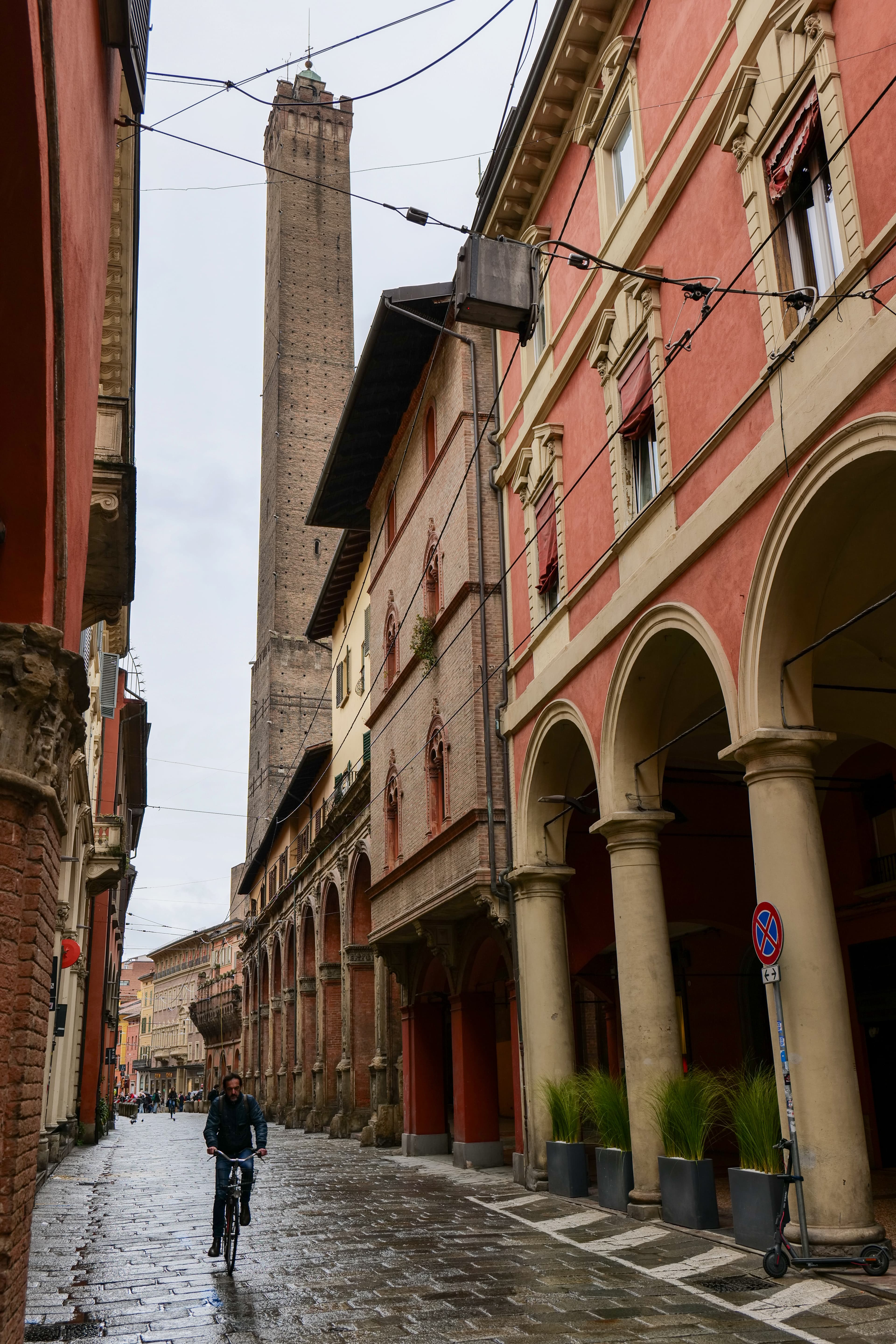
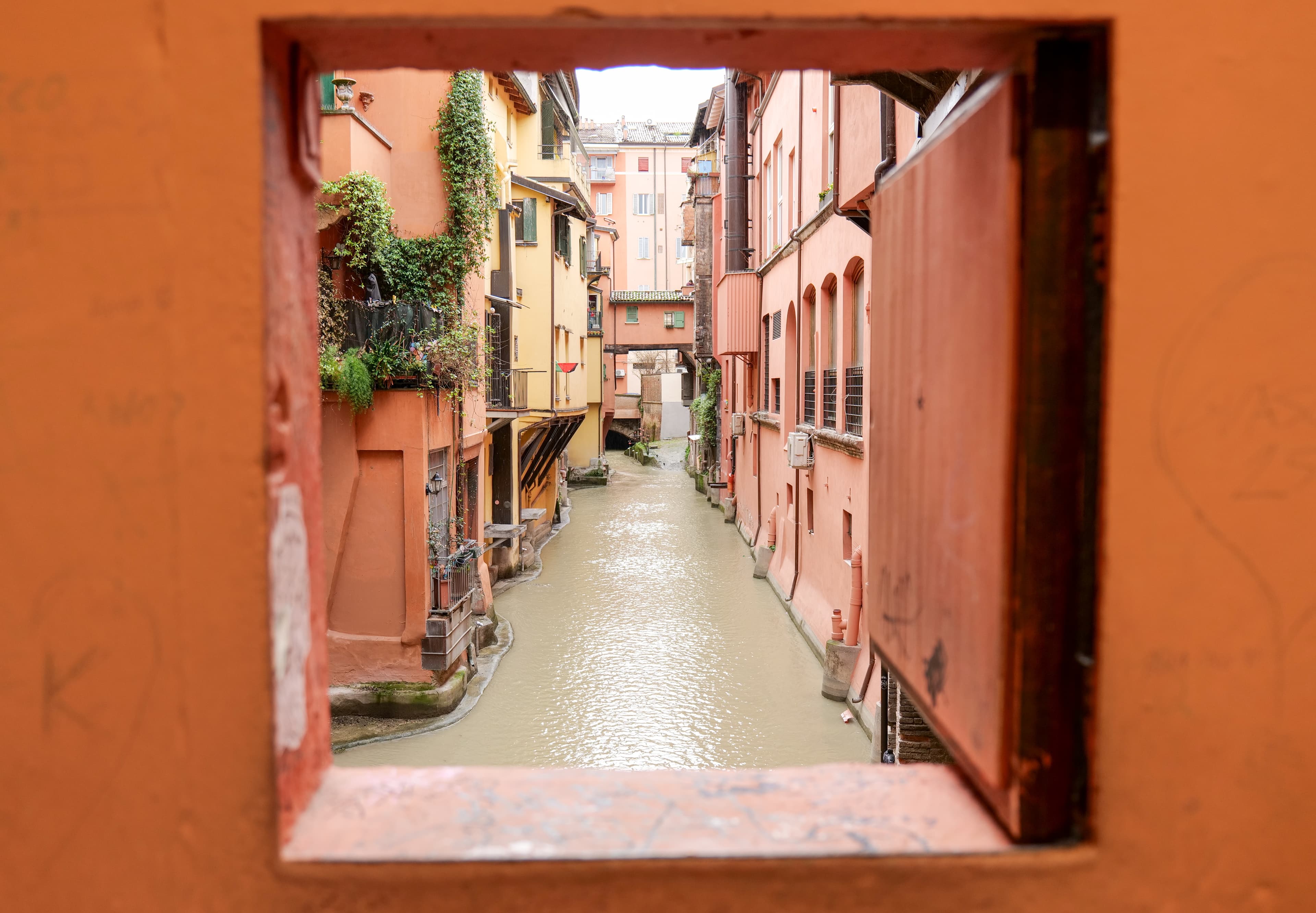
Bologna has three nicknames, all of them accurate. La Dotta: the learned one, home to the oldest university in Europe, founded in 1088 and still operating as a university rather than a heritage attraction. La Grassa: the fat one, which is not an insult but an acknowledgement that this is where tortellini, mortadella, tagliatelle al ragù, and the Parmigiano-Reggiano and Prosciutto di Parma of the surrounding plain all converge on the same table. La Rossa: the red one, for the terracotta and brick of the medieval buildings, and for the 40 kilometres of covered walkways that run beneath them.
Those porticoes deserve the attention they receive. Bologna’s network of 666 covered arcades, which UNESCO added to the World Heritage list in 2021, were not built for aesthetics. They were a medieval solution to a medieval planning problem: the university was expanding, there was no space to build outward, so the city built upward, and then, to compensate for the encroachment on the street, covered the ground floor to preserve public passage. The result is a city that is almost singularly pleasant to walk in after a marathon. The surfaces underfoot are smooth, the gradient through the old centre is forgiving, and the March rain, which arrives without much apology, largely fails to reach you.
One specific complication worth naming: the Portico di San Luca. It runs for 3.8 kilometres under 666 consecutive arches from the Porta Saragozza to the hilltop sanctuary of the Madonna di San Luca, climbing around 300 metres in the process. On post-marathon legs, the day after the race, it is a bad idea. Two days later, when the legs have begun to function again, it becomes one of the more satisfying walks in northern Italy, the city spread below, the snow-dusted Apennines visible beyond it, and not a drop of March rain getting through the arches.
One Room, Four Cities
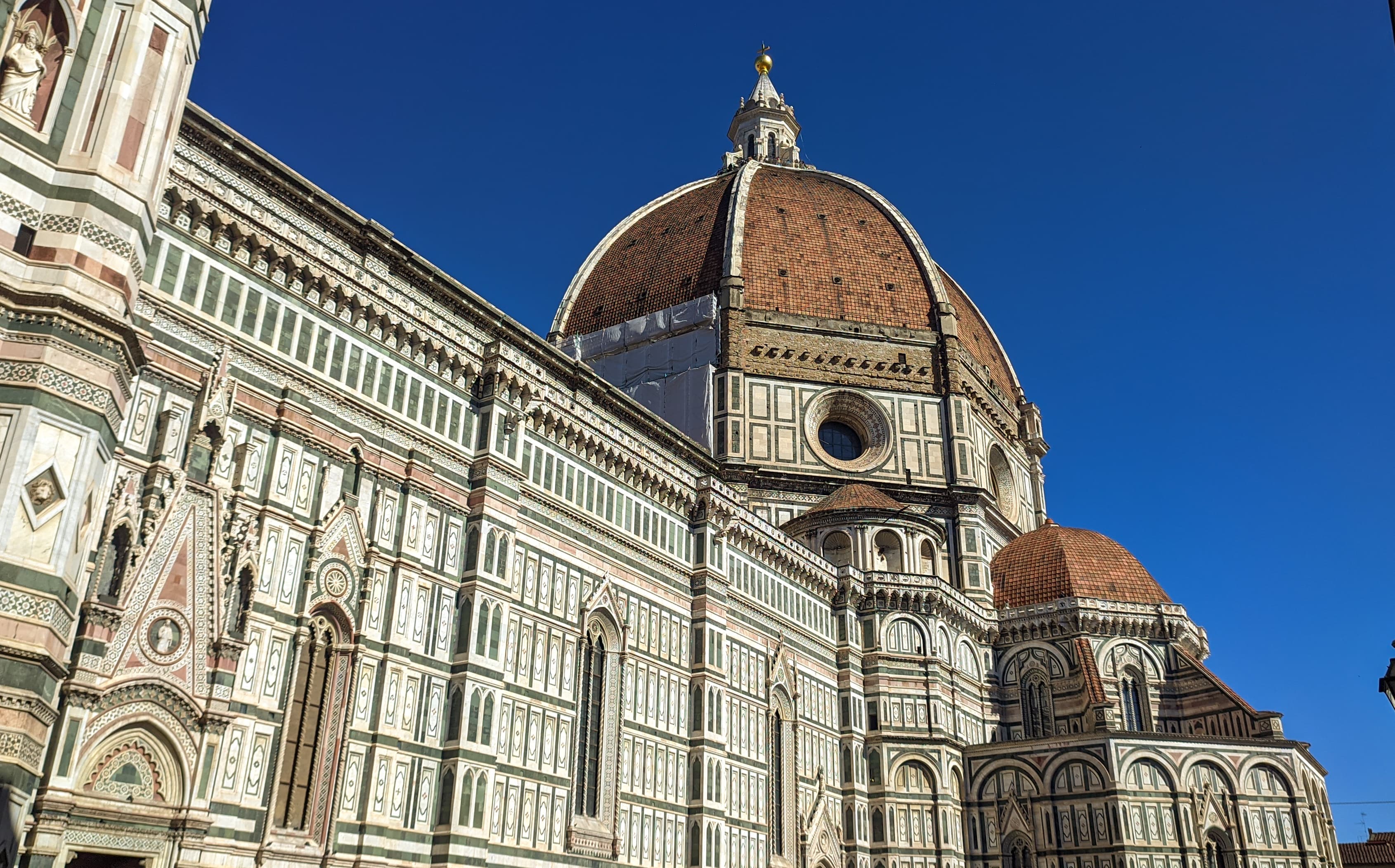
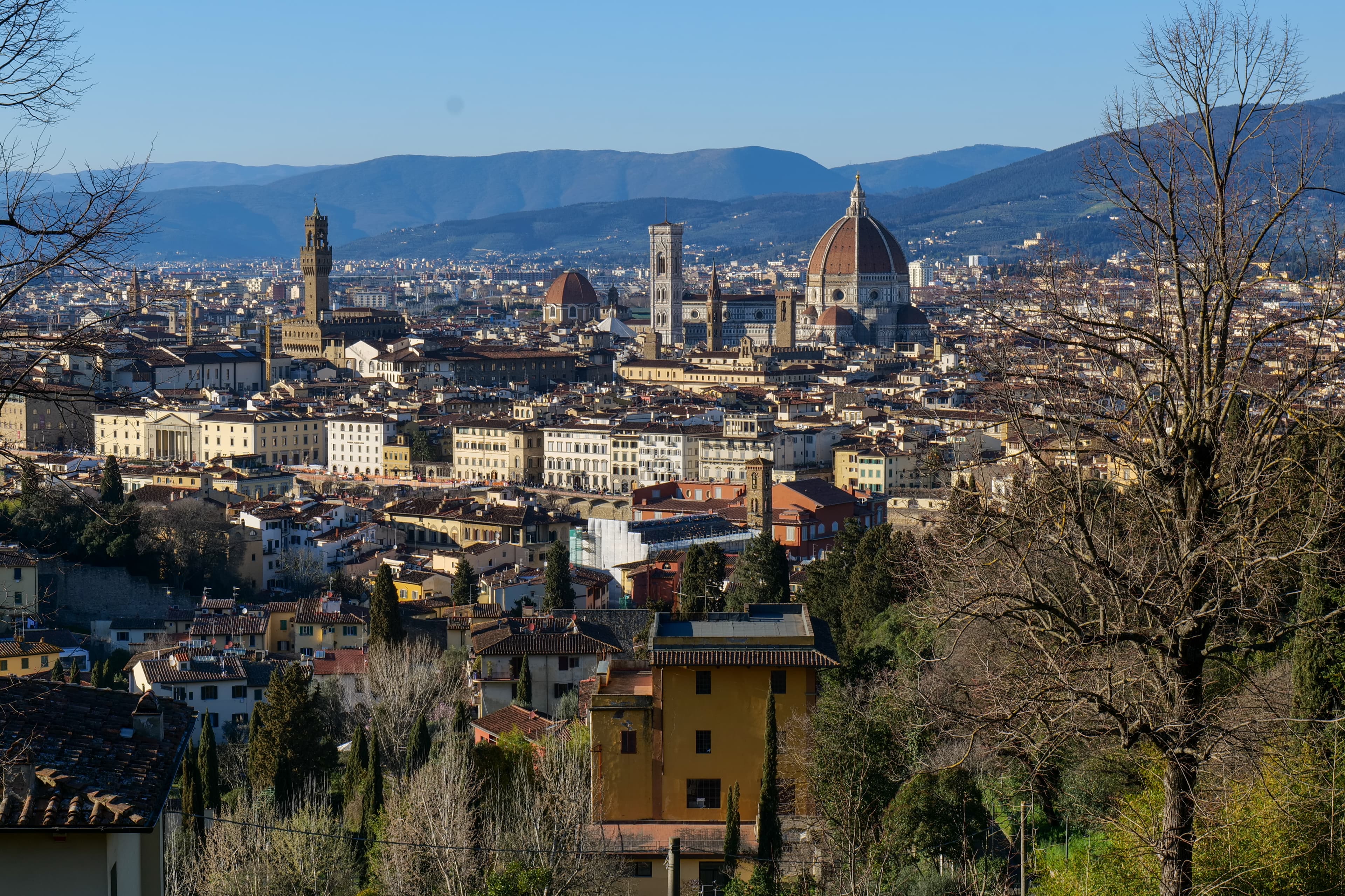
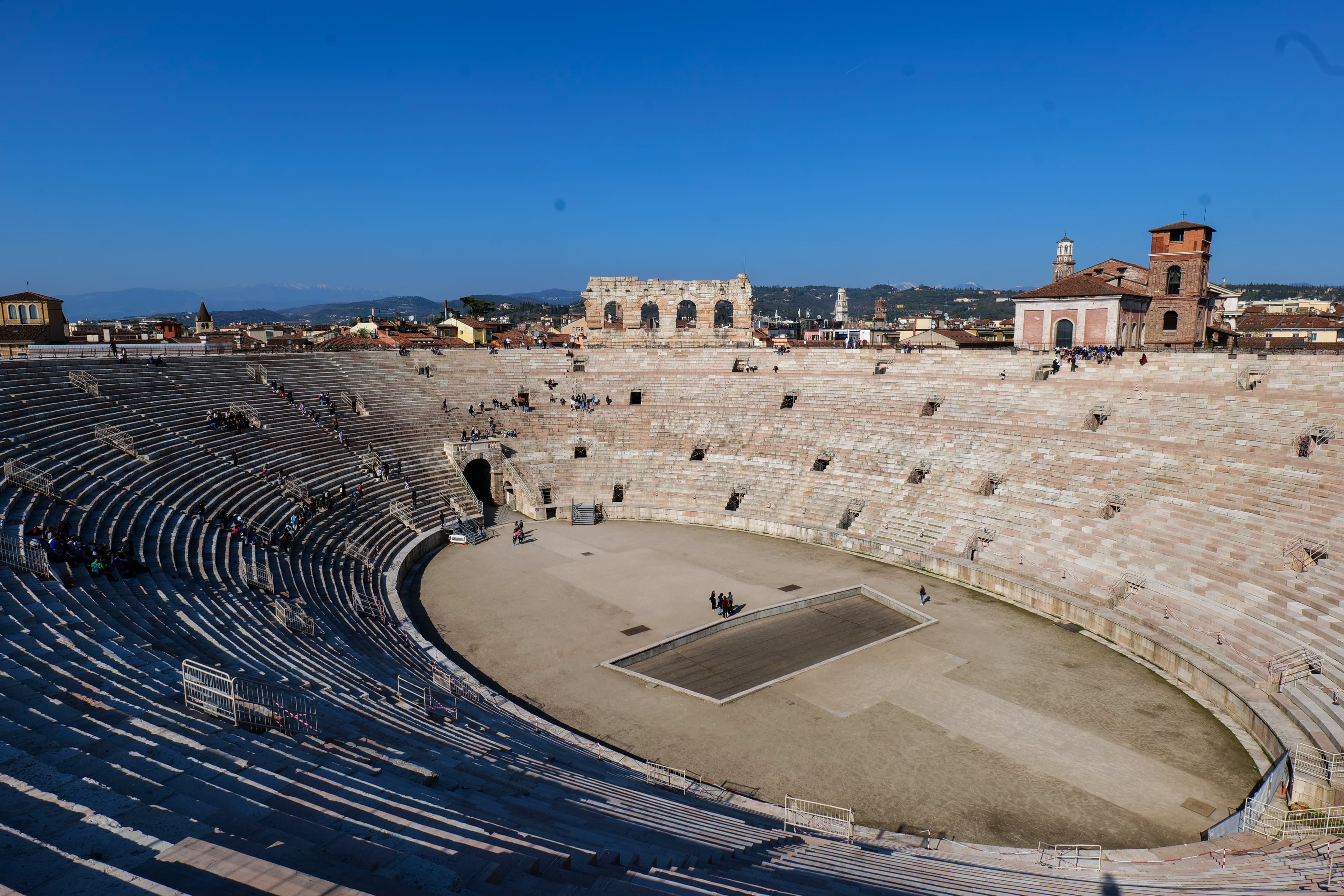
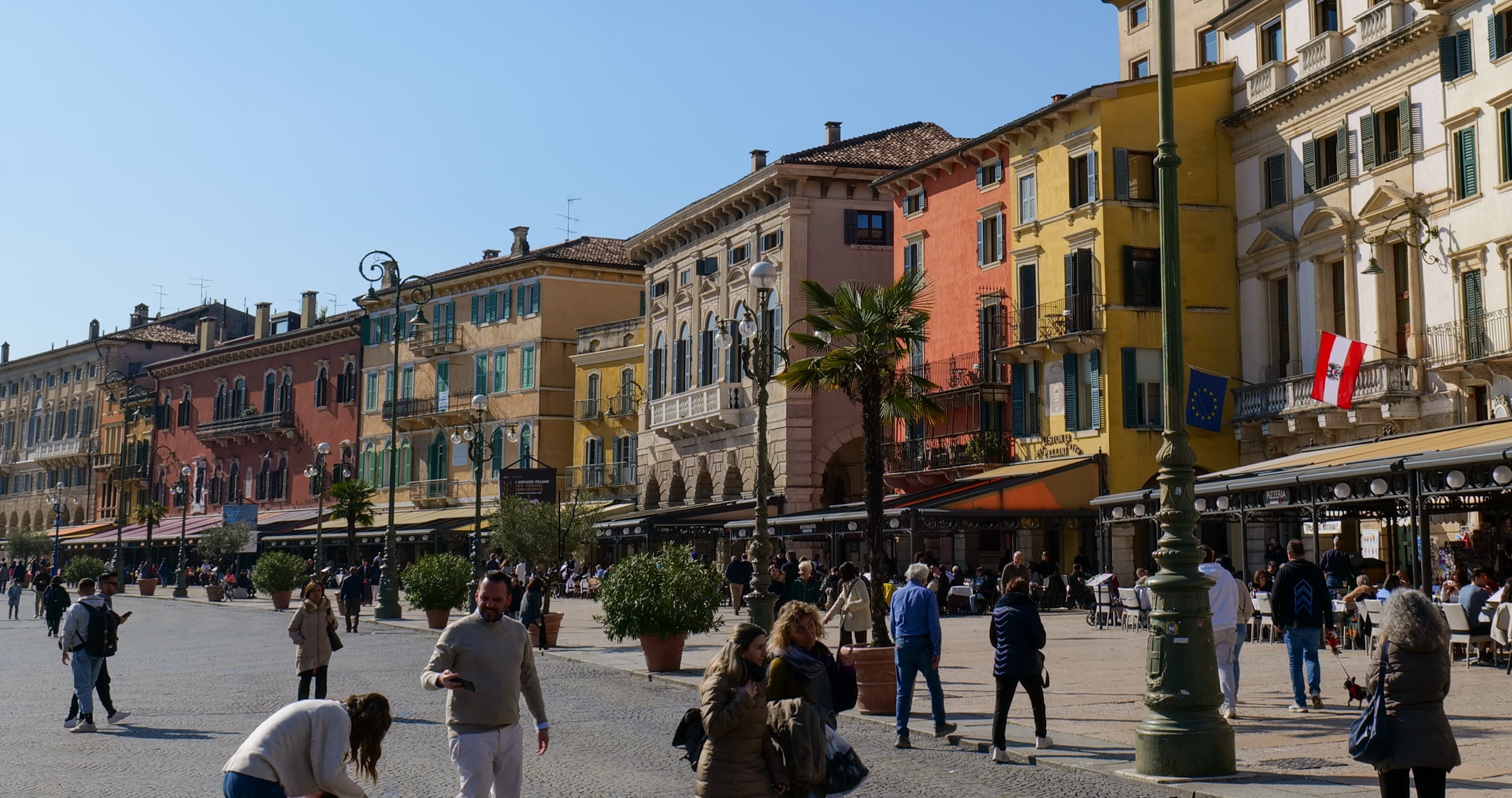
Florence is 37 minutes by Frecciarossa. Venice is 75 minutes. Verona clocks in at under an hour on the fast service. The standard post-marathon calculation - pack everything into one city then fly home - does not survive contact with this timetable.
The economics reinforce it. Venice three-star properties typically run to €150 to €220 per night. Florence is cheaper but not dramatically so, with options near the Duomo or in Oltrarno running €160 to €250. Bologna boutique hotels run €100 to €160, with the overall market sitting roughly 30 to 40% below Florence rates.
A runner who books four nights in Bologna and takes three day trips by Frecciarossa - Florence one day, Venice the next, Verona the day after - will in most scenarios spend less in total than a runner who moves hotels to each city in turn. The train fares start at around €10 to €25 per journey booked in advance.
There is also a less quantifiable reason. After a marathon, most people do not want to pack a bag and move. The hotel room that absorbed the salt-stained kit and the compression socks on Sunday is still there on Monday. The staff know your name. You know which café opens earliest. You know the route to the station.
Before the Crowds Arrive
The Apennines still have snow on them in early March. The porticoes are earning their keep. And the crowds that descend on Florence and Venice from April onwards have not yet fully arrived, which means the Uffizi queue is shorter, the Doge’s Palace is navigable without booking several weeks in advance, and the Verona Arena is not competing with a summer opera audience for the same piazza space.
Bologna itself in March has a specific quality. The markets on Via Ugo Bassi carry the first asparagus of the season alongside the last blood oranges. The bars around Piazza Verdi, the square outside the opera house that functions as the social centre of the university quarter, are busy with students who have been indoors since November and are now, cautiously, returning to outdoor tables.
This is the timing case for Bologna: not that March is Italy’s finest month, but that it is the right month to be in Florence and Venice and Verona without the logistics of summer, and Bologna is the most affordable and most convenient base from which to do it.
Plan the Trip
Entry details, course profile, and hotel recommendations near the Piazza Maggiore finish on MarathonPassport.
Race guide→The Bologna collection covers Florence, Venice, and Verona as day trips, Modena as a two-night stay, and Ravenna and Parma as a four-night route. Transport details and walking routes assessed for post-marathon legs.
Browse itineraries→Full details of the Emilia-Romagna five-race circuit - Parma, Rimini, Ravenna, Reggio Emilia, and Bologna - including registration and the digital passport.
maratonemiliaromagna.it→Trenitalia Frecciarossa for Florence; Italo is worth comparing on Venice and Lake Garda routes. Book in advance - early fares for the Florence route are significantly cheaper than walk-up prices.
trenitalia.com→