Chicago in October: When the City Runs Gold
The Chicago Marathon falls on the second Sunday of October, the same week that northern Illinois reaches peak autumn colour. This is what the days around the race look like.
MarathonPassport · October 2026 · 9 min read
The finish line at Grant Park is behind you. Your legs have an opinion about that Roosevelt Road bridge crossing near mile 26, and your medal is heavier than you expected. Around you, the maples lining Columbus Drive are turning in real time - the kind of rust-orange that happens only in the two weeks straddling the Chicago Marathon, when the trees between the lakefront and Lincoln Park hit their colour at roughly the same moment the city fills with 45,000 runners from 130 countries.
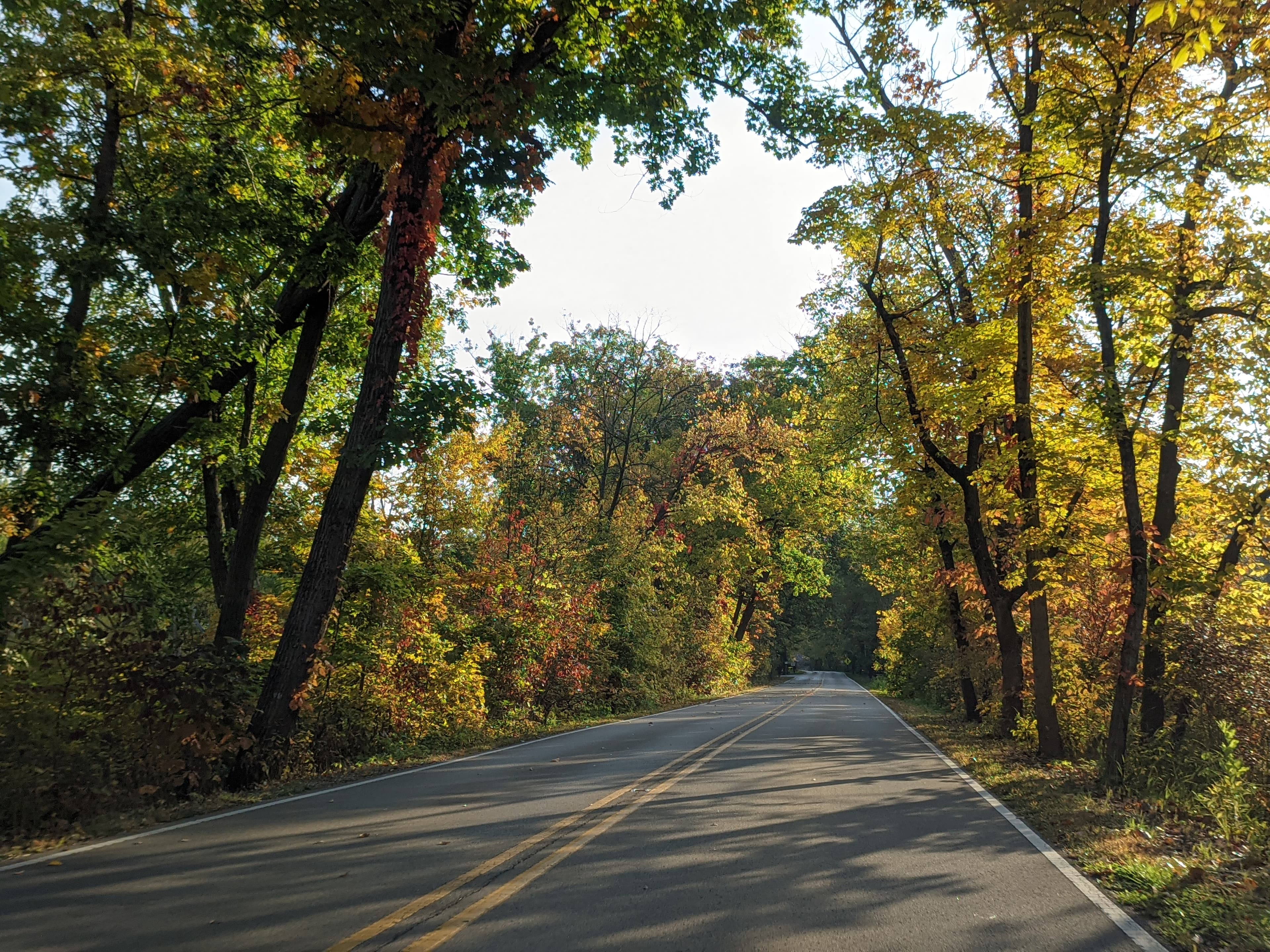
This is not accidental timing. The Chicago Marathon falls on the second Sunday of October precisely because this is the window when cool morning air makes fast running possible. It also happens to be the window when northern Illinois does something spectacular with its trees. The leaves, which the Morton Arboretum tracks weekly at its site in Lisle, typically peak between 7 and 21 October across the Chicago area and the river valleys to the west and south. By marathon weekend the maples are turning the same shade of amber as the school buses that thread through the city’s morning streets, and the days after the race are when the colour deepens further.
Chicago in mid-October runs between 7°C and 17°C on most days, clear and low-humidity in the afternoons, cool enough for layers by evening. The summer crowds have thinned. The restaurant queues are shorter. And outside the city, within 90 minutes of O’Hare in most directions, some of the best autumn scenery in the Midwest is at its fullest in exactly this week.
A Race That Runs Through 29 Neighbourhoods
The Chicago Marathon’s course is a loop starting and finishing in Grant Park, running north through Lincoln Park and Old Town in the first eight miles, then west through Greektown and Little Italy, south through Pilsen and Chinatown, and back north through Bronzeville and Hyde Park before the final push up Michigan Avenue. The course has produced seven world records on roughly 90 feet of total elevation change across the full distance. The sole exception is the Roosevelt Road bridge near the finish, which runners who went out too fast in the first half tend to remember with some feeling.
What the course numbers don’t explain is the texture of running through 29 distinct neighbourhoods with 1.7 million spectators on the street. Chinatown’s drummers start at around mile 20. Pilsen’s mariachi bands sit at mile 16. Boystown’s sound system is audible from several blocks away. The energy shifts roughly every mile, which is fortunate because the miles after the halfway point are where you need it most.
Entry is by ballot, which typically opens each autumn for the following October. Runners who have a recent marathon time meeting the age-graded time standard can apply via guaranteed entry: the qualifying times start at 2:50 for men and 3:20 for women in the 16–34 age group, graduating upward through each five-year band. Charity places are available through the official programme. The ballot has grown more competitive in recent years, and some international runners use vetted tour operators to secure a place with accommodation included.
Full entry details, ballot timelines, and hotel recommendations at the Chicago Marathon race page.
Grant Park to Glencoe
Lincoln Park, which the marathon runs through in its early miles, has red maples, birches, elms, and ash trees that turn in the second and third weeks of October. The Cloud Gate in Millennium Park is surrounded by ginkgoes that go yellow in a single spectacularly sudden event, usually mid-October, when the entire tree drops its leaves over approximately 48 hours. The window is brief enough to be worth checking in advance. Lurie Garden, just south of the Pritzker Pavilion, has ornamental grasses and late-season perennials that hold colour through October and attract considerably fewer photographers than the Bean twenty metres away.
The Chicago Botanic Garden in Glencoe, 40 kilometres north on the Metra Union Pacific North line, is reachable without a hire car: the train stops at Glencoe station, about a mile from the garden’s entrance. In the evenings through October the garden runs the Night of 1,000 Jack-o’-Lanterns, with handcarved pumpkins lit along its night paths. In 2025 the event ran from mid-October through to the end of the month.
Into Illinois: The Colour Outside the City
The real case for timing a marathon holiday around the Chicago race is what lies outside it. Drive 42 kilometres west on I-88 and you reach the Morton Arboretum in Lisle, 1,700 acres of living collections containing more than 4,000 tree species. The Arboretum publishes a weekly fall colour report on its website from September through November, updated with specific trail recommendations as different species peak. Scarlet oaks, sugar maples, and bald-cypress are the main draws in mid-October; the view across the DuPage River Valley from Frost Hill when the oaks are at full colour is genuinely worth the 40-minute drive.
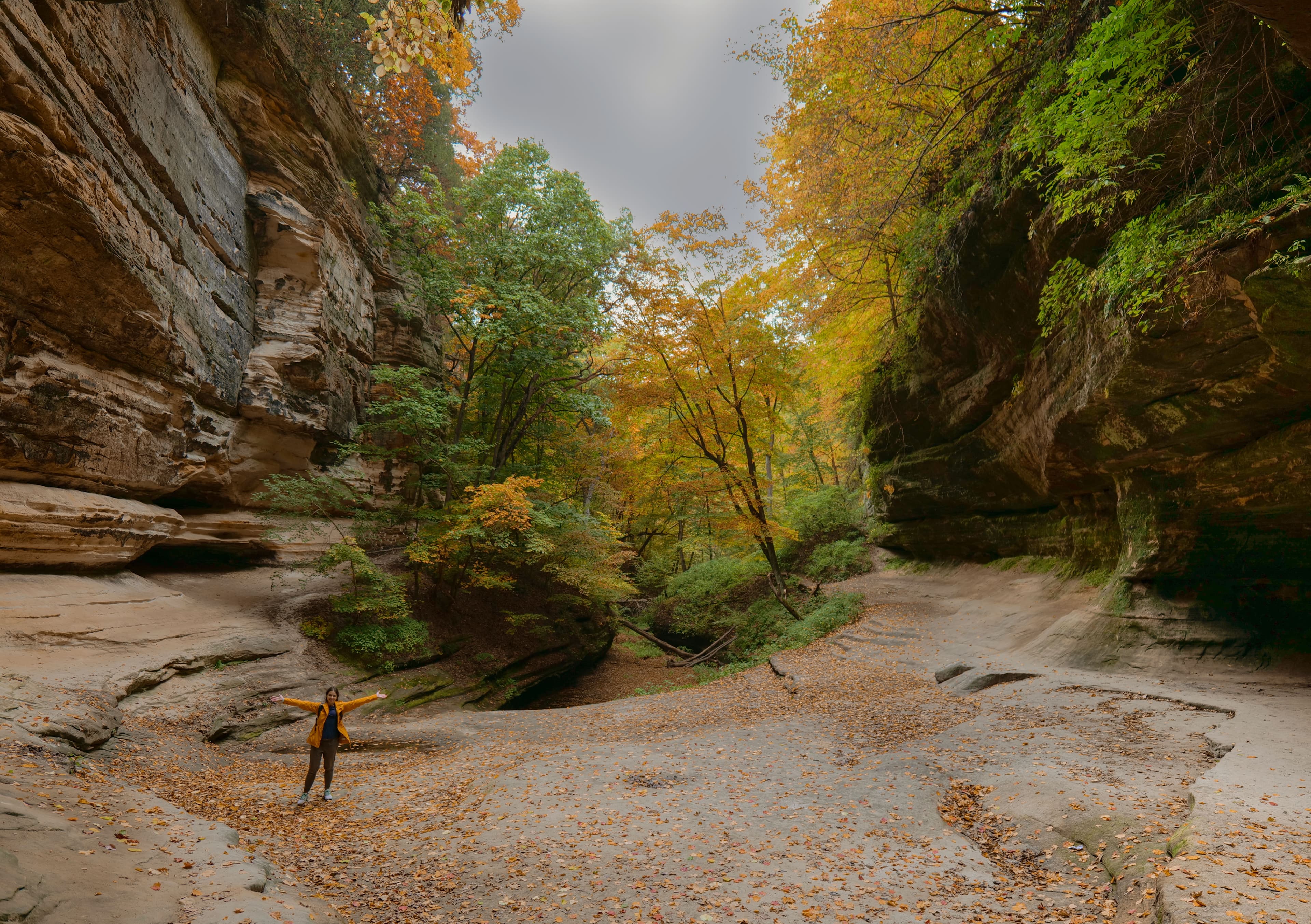
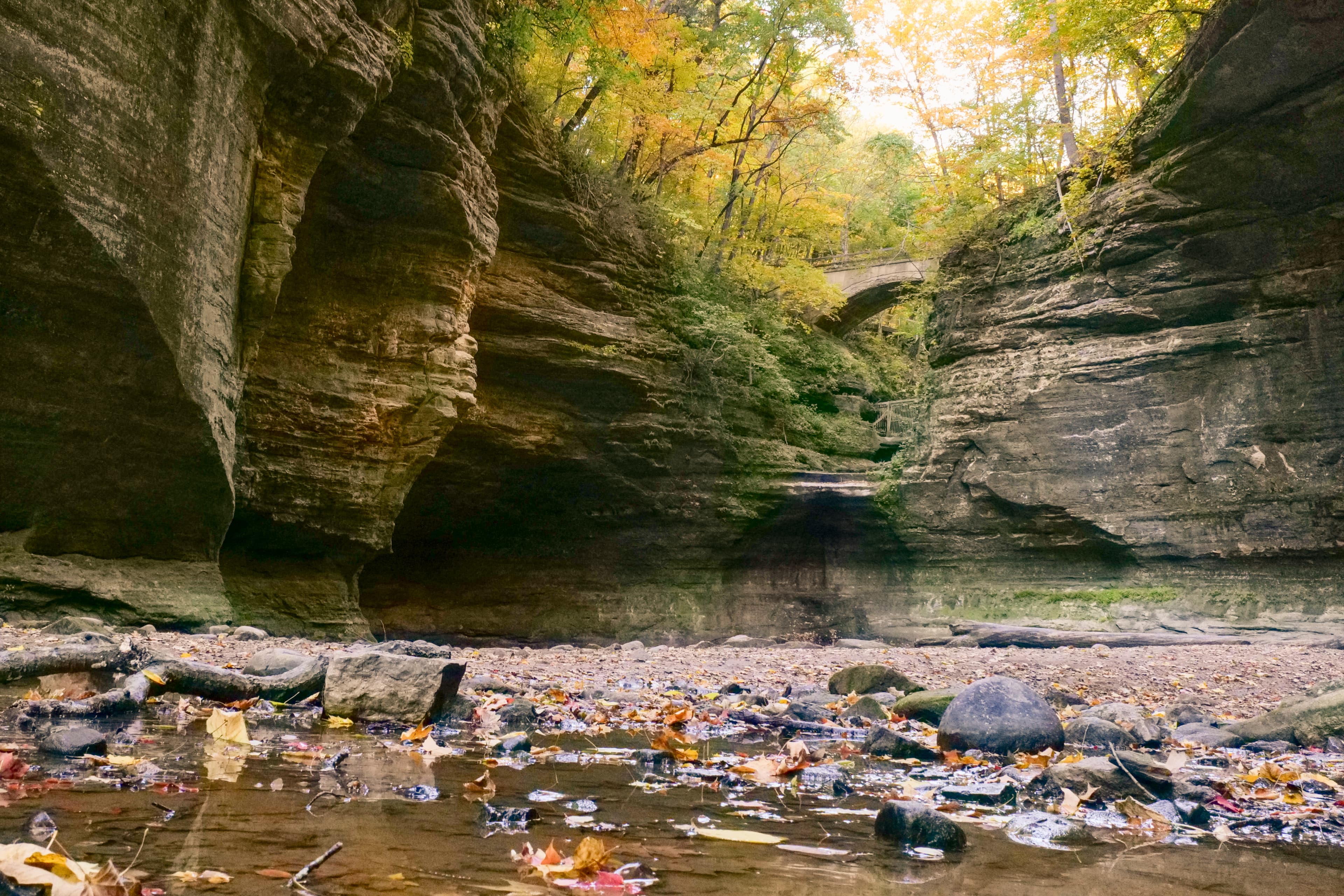
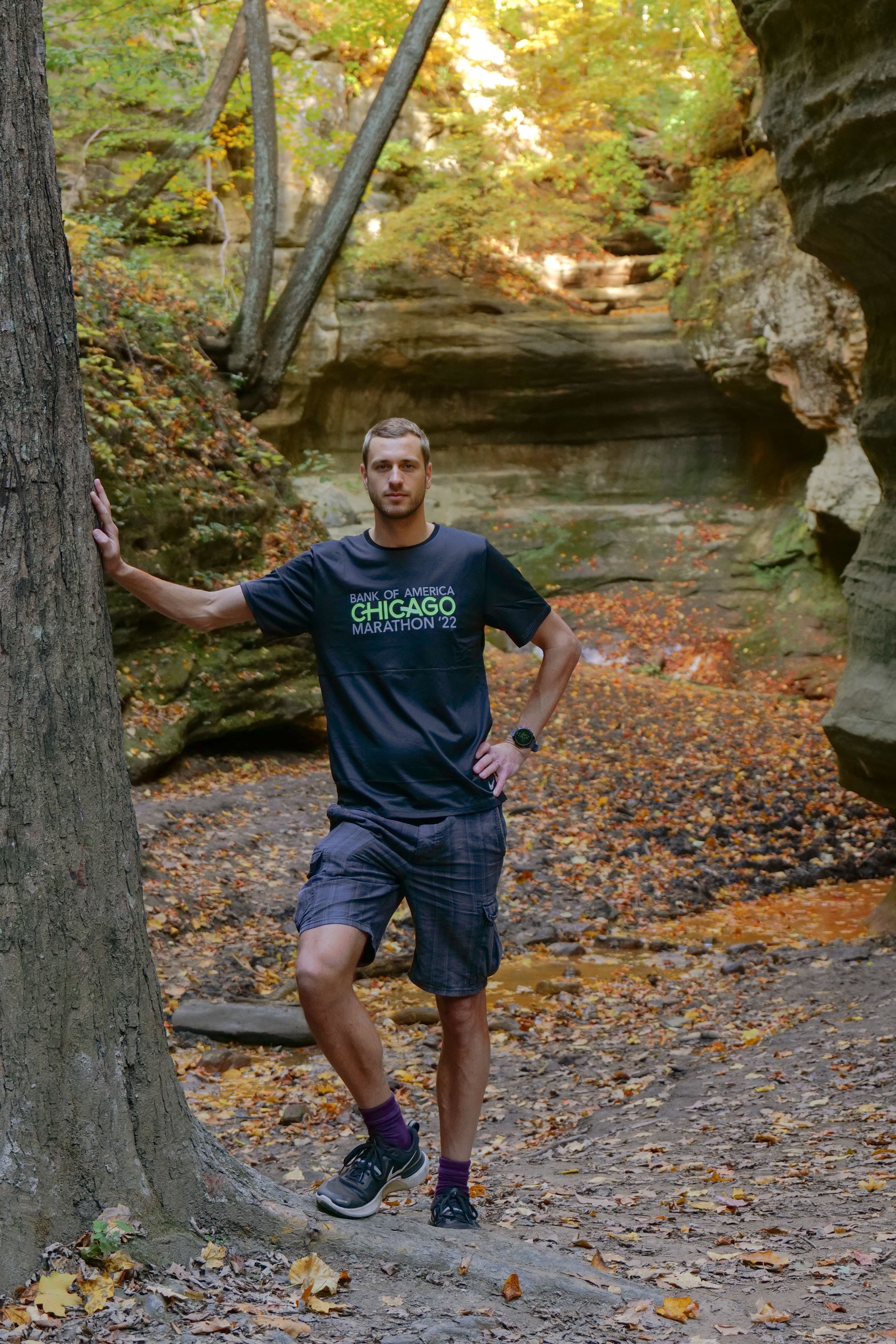
Ninety minutes further west on I-88, the Illinois River Valley at Starved Rock State Park is at its most visually dramatic in exactly the week after the Chicago Marathon. The park has 18 canyons carved by glacial meltwater into St Peter sandstone, their walls streaked with mineral deposits in ochre, green, and rust. In mid-October the canyon rims are lined with turning cottonwoods, oaks, and maples, their reflections occasionally catching the waterfall pools at the canyon floors. The park receives over a million visitors a year and the crowds thin significantly on weekdays, so a Monday or Tuesday visit gives you the canyons largely to yourselves. Local Chicago television stations, including WGN, run dedicated fall foliage reports through October that track exactly when the Illinois River Valley hits peak colour. Check them in the days before you drive.
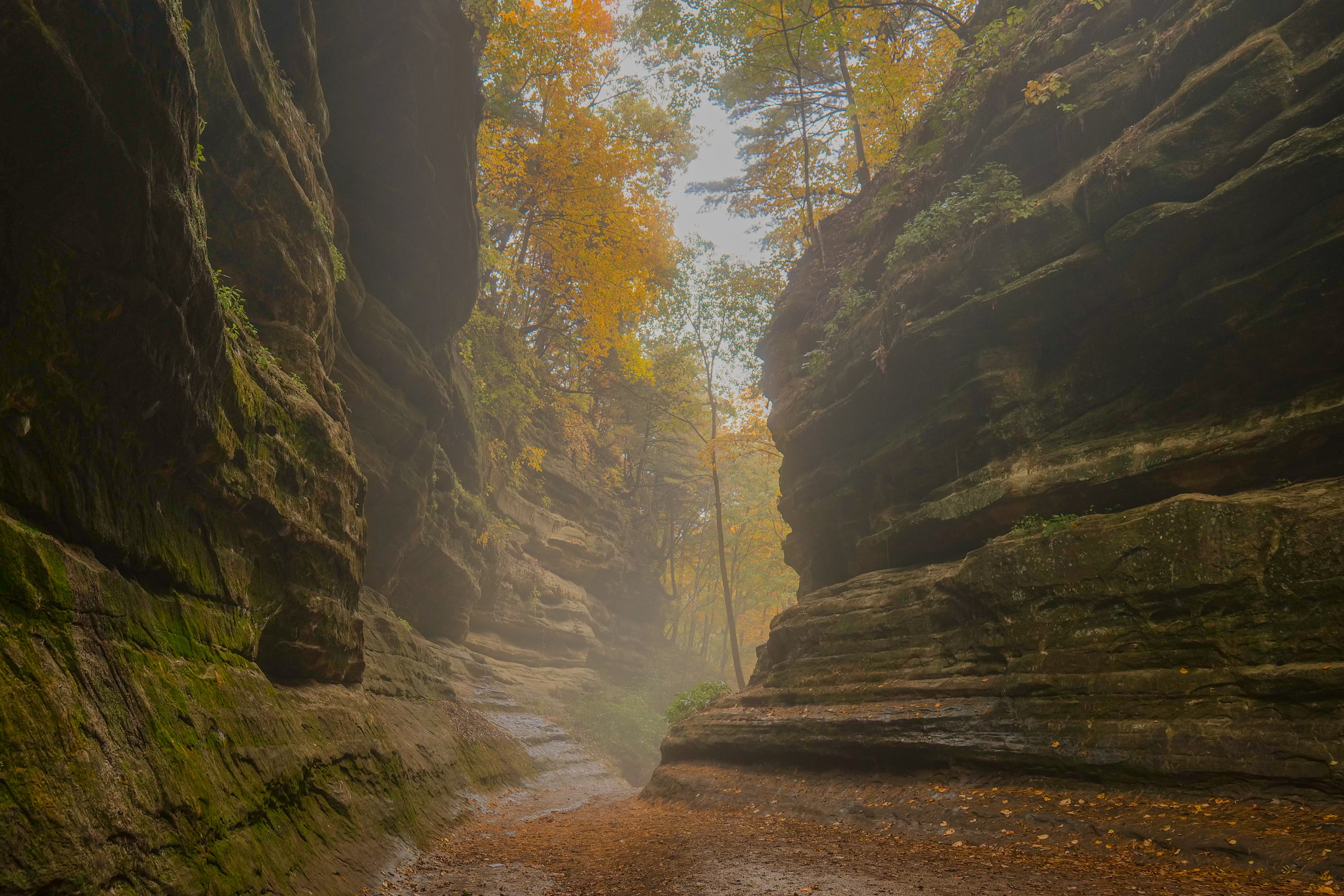
For post-race legs, the canyon terrain is worth acknowledging honestly. French Canyon requires descending roughly 150 stone steps to reach the floor. LaSalle Canyon involves a similar descent. The trails shift between timber boardwalks, bare rock, and packed earth, often in quick succession. Two days after a marathon this is genuinely manageable active recovery; the distances are short, the stops are frequent, and the movement loosens stiff muscles. But wet sandstone is not forgiving, and shoes with grip matter. Three miles south on Route 178, Matthiessen State Park has slightly more level terrain for the same canyon and waterfall experience with a fraction of the visitors.
The Starved Rock Lodge, built by the Civilian Conservation Corps in the 1930s in log and stone, sits inside the park itself. It books out months ahead on autumn weekends but remains available on weekdays, and its dining room is the right place to be on a cool October evening after a day in the canyons.
Halloween Gets There Before October Does
The first jack-o’-lantern in a shop window in Lincoln Park tends to appear in late September. By the time marathon weekend arrives, the city is already halfway into Halloween.
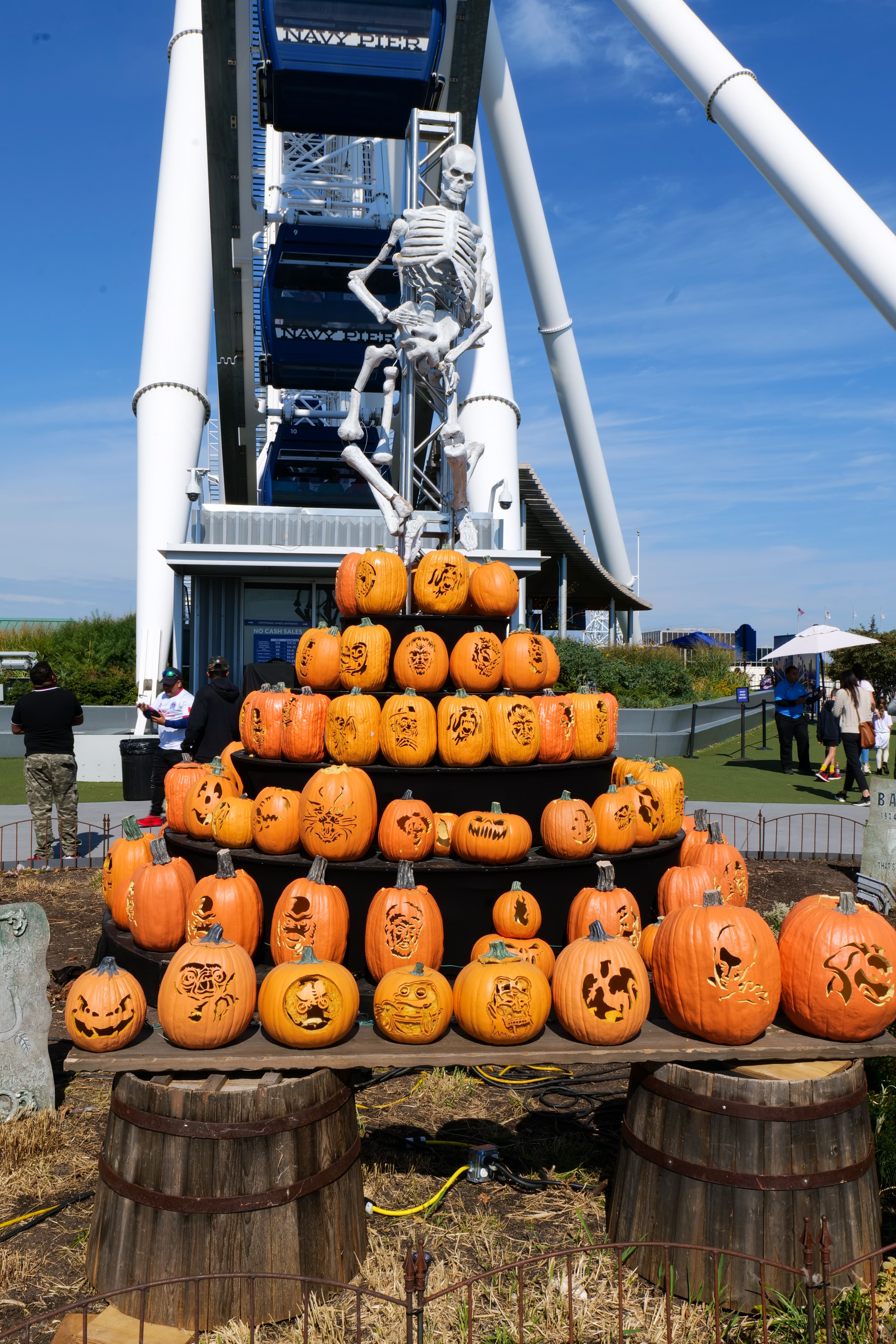
Navy Pier, on the lakefront at the foot of Grand Avenue, goes into it properly. In mid-October the pier hosts large seasonal displays of decorated and carved pumpkins along its outdoor promenade, with the Lake Michigan waterfront providing a backdrop that is considerably more dramatic than most pumpkin patches manage. The Ferris wheel is still running, the outdoor bars are serving seasonal drinks, and the whole thing has the specific quality of a Halloween decoration that knows it can compete with the view.
Arts in the Dark, the city’s annual Halloween parade, brings artists, puppeteers, and community groups down State Street in a procession of large-scale sculpture and masked figures. It typically falls in mid-October, close enough to marathon weekend that it can overlap. The Lincoln Park Zoo runs Fall Fest on select weekends from late September through October, with a pumpkin patch, fairground rides, and evening programming. Jack’s Pumpkin Pop-Up takes over Goose Island with a corn maze, fire pits, and an event scaled, unmistakably, for adults who want to drink seasonal beer around open flames.
The Candlelight Concert series runs Halloween-themed programmes through October in indoor venues across the city, typically staging pieces like Night on Bald Mountain in small, candlelit rooms. For sore legs and an evening that does not require standing, it works well.
Plan the Trip
Entry details, ballot timelines, course profile, and hotel recommendations near the Grant Park finish on MarathonPassport.
Race guide→Four-night post-race road trip: Starved Rock State Park and the Illinois River Valley, north to Lake Geneva, across to Milwaukee, back to O'Hare. A two-night Milwaukee-only option runs on the Amtrak Hiawatha from Union Station, no hire car required.
Browse itineraries→Updated weekly from September through November with specific trail recommendations as each species peaks. More reliable than any fixed guide.
mortonarb.org→The Illinois Department of Natural Resources interactive map tracks peak timing for the Chicago area, the Illinois River Valley, and the Starved Rock corridor.
enjoyillinois.com→