The Race
Chicago's defining trait isn't its history so much as its geometry: a single loop that starts and finishes in Grant Park, without ever asking a runner to leave downtown for long. The race began in 1977, when a Chicago running club revived the idea of a major city marathon under the name Mayor Daley Marathon, drawing 4,200 entrants for the first edition. What turned a local civic event into one of the Abbott World Marathon Majors was the discovery that a flat street grid running through 29 neighbourhoods could double as one of the fastest courses anywhere. Steve Jones broke the world record here in 1984; Khalid Khannouchi did the same in 1999; Kelvin Kiptum ran 2:00:35 in 2023, the fastest marathon ever recorded at the time, and Ruth Chepngetich lowered the women's world record to 2:09:56 in Chicago the following year. Bank of America has held the title sponsorship since acquiring LaSalle Bank's parent company. Chicago suits a runner chasing a specific number on the clock; on a course engineered for speed, carbon-plate shoes deliver closest to their measured effect. Anyone hoping for mountain scenery or a slow-burn sightseeing tour should look at London or Tokyo instead.
| Next Race Date | 11 October 2026 |
| Course type | Single loop, road. Start and finish in Grant Park, Columbus Drive. |
| Certification | World Athletics Platinum Label, cert IL23026NM / USA-2023-244, valid through 2028 |
| Series | One of the Abbott World Marathon Majors |
| Start location | Grant Park, Columbus Drive, Chicago Loop |
| Finish location | Grant Park, south end of Columbus Drive |
| Neighbourhoods on course | 29 |
| Elevation gain | Minimal (flat lakeside city); no official kilometre-by-kilometre table published |
| Finishers | 54,000+ in 2025; 55,000+ participants expected in 2026 |
| Cutoff time | 6:30:59 (~15:00/mile rolling reopen) |
| Avg race-day temp | High 18.3°C / Low 8.4°C (NWS October 11 normals) |
| Free race-day transport | CTA recommended; not confirmed free with bib |
| Timing mats | Start, each 5K, halfway, 20-25 miles, 25.2 miles, finish |
| Aid stations | 20, roughly 1-2 miles apart |
| Water refill stations | 4 new for 2026, immediately before aid stations 4, 7, 12 and 16 (about km 9.2, 16.3, 25.3 and 32.7) |
| Gels | Maurten Gel 100 at mile 12.4 (about km 20.0) and mile 18.1 (about km 29.1), caffeinated and plain |
The course is a single loop that starts and finishes in Grant Park on Columbus Drive, with the finish about 1.3km south of the start, which is why downtown hotels double as start and finish accommodation. Runners leave Columbus Drive heading north, cross the river bridges into River North and Streeterville in the first two kilometres, then turn west on Grand Avenue and run south down Dearborn Street (km 2 to 3.5) to Jackson Boulevard, new for 2026 in place of State Street. A turn west on Jackson leads to LaSalle Street, which the route follows north at km 5. From there it runs up LaSalle and Stockton Drive beside Lincoln Park (km 8 to 10) and through Lake View on Sheridan Road and Broadway to the northern turn at km 12.5, 8.3km from the start. The return south uses Broadway, Clark Street and Wells Street and reaches the Loop again at km 21. The second half heads west on Adams Street to km 25, comes back east on Jackson Boulevard, then runs south on Halsted Street, west on Taylor Street and Roosevelt Road, and south down Blue Island Avenue into Pilsen at km 31. It follows 18th Street east, then Cermak Road and Wentworth Avenue through Chinatown (km 33 to 35), and turns at East 35th Street in Bronzeville at km 37.7 and runs north up Michigan Avenue for the final four and a half kilometres, turning east on Roosevelt Road and north on Columbus Drive to the finish between Roosevelt Road and Balbo Avenue. Surface is asphalt throughout, and the downtown bridge decks and towers in the first five kilometres can throw off GPS pacing before the field has settled.
The organiser publishes no gain figure, and the course profile shows why one would add little: all 42.195km sit inside a 7m band, from 179m at km 34 to 186m at the top of the finish approach, and nearly all of it stays between 180m and 183m. The one rise worth naming is short and comes at the very end: about 4m in the last 500m, from roughly 182m to 186m on Roosevelt Road after the turn off Michigan Avenue, with the finish on Columbus Drive just beyond.
Route change for 2026: the early southbound passage through the Loop uses Dearborn Street instead of State Street, so a course loaded onto a watch from an earlier year, or a spectator plan built on the old map, will be a block out. The sequence is Columbus Drive, Grand Avenue, Dearborn Street, Jackson Boulevard, LaSalle Street. Check this year's official course map before choosing spectator points.
Course by kilometre
Km 0-5: Columbus Drive north, the river bridges, west on Grand Avenue and south down Dearborn Street (new for 2026) to Jackson Boulevard, then LaSalle Street. Towers and bridge decks distort GPS pace here; race by effort and the official mats, not your watch.
Km 5-12.5: North up LaSalle and Stockton Drive past Lincoln Park (km 8-10), then Lake View on Sheridan Road and Broadway to the northern turn at km 12.5.
Km 12.5-21: South on Broadway, Clark Street, Sedgwick Street and Wells Street through Lincoln Park and the Near North Side, back into the Loop for the halfway point at km 21.
Km 21-31: West on Adams Street to km 25, east on Jackson Boulevard, then south on Halsted Street, west on Taylor Street and Roosevelt Road, and south down Blue Island Avenue to Pilsen at km 31.
Km 31-37.7: East on 18th Street, then Cermak Road and Wentworth Avenue through Chinatown (km 33-35) and Michigan Avenue south into Bronzeville, turning at 35th Street at km 37.7. Flat and exposed on warm years.
Km 37.7-42.195: North on Michigan Avenue, then the only hill on the course, a short rise of about 4m on Roosevelt Road, and the finish on Columbus Drive.
Course Map
The loop north to Lake View and back, west through Pilsen and Chinatown, and up Michigan Avenue to the finish in Grant Park. Tap a marker for the start, the Dearborn Street change, the neighbourhoods and turns, the expo and the nearest train station, and scrub the slider or press play to move the orange marker along the course with the elevation profile beneath it.
MarathonPassport
Pace plan and spectator planner for the Chicago Marathon
Enter a start time and goal finish, then tap the course map. Each point you pick shows the window of time your runner is expected to pass it.
October timing note: Mid-October in Chicago coincides with peak fall foliage in the upper Midwest. The post-race travel options to Wisconsin and Indiana are at their most scenic in this specific window.
Entry
The Chicago Marathon operates a public ballot for the majority of places. Applications for the 2027 race open on Thursday 8 October 2026 at 8am Central, before this year's race, and close on Thursday 29 October 2026 at 2pm Central, with the drawing results on Tuesday 8 December 2026. Charity entries, Guaranteed Time Entry (GTE), and international tour operator packages also provide alternative routes to a place.
Alternative routes: Charity places and international tour operator packages with guaranteed entry are available for runners who do not receive a ballot place.
View entry options at Chicago Marathon →Important Dates for 2027 entry
Applications open: Thursday 8 October 2026, 8am Central (2pm BST)
Applications close: Thursday 29 October 2026, 2pm Central (7pm GMT)
Payment, guaranteed entrants: By 11:59pm Central on Tuesday 10 November 2026
Drawing results: Tuesday 8 December 2026
Payment, selected applicants: By 11:59pm Central on Tuesday 15 December 2026
A place that is not paid for by its deadline is forfeited.
Anyone registered for this year's race who cannot run can cancel through their Participant Account by Wednesday 7 October 2026 and take guaranteed entry to the 2027 race. The current entry fee is not refunded and does not carry forward, so a new entry is paid for. Charity and tour entries are excluded, as are runners who already carried a cancelled 2025 entry into 2026; pregnancy and postpartum arrangements have a separate policy.
Collectors have another route. Finishing the 2027 Shamrock Shuffle 8K, Chicago 13.1 and the Chicago Marathon earns the Chicago Distance Series medal and guaranteed entry to the 50th Chicago Marathon in 2028. That is three separate entries and fees.
2027 Guaranteed Entry (GTE) time standards
Runners who meet the qualifying time for their age category and gender in an eligible marathon are guaranteed a place, bypassing the ballot. The qualifying marathon must fall between 1 January 2025 and 29 October 2026 on a certified course, and age is assessed on race day, 10 October 2027. Half-marathon and ultra results do not qualify.
| Category | Standard |
|---|---|
| Men 16-34 | 2:50:00 |
| Men 35-39 | 2:55:00 |
| Men 40-44 | 3:00:00 |
| Men 45-49 | 3:10:00 |
| Men 50-54 | 3:15:00 |
| Men 55-59 | 3:25:00 |
| Men 60-64 | 3:40:00 |
| Men 65-69 | 3:55:00 |
| Men 70-74 | 4:15:00 |
| Men 75-79 | 4:30:00 |
| Men 80+ | 4:50:00 |
| Women 16-34 | 3:20:00 |
| Women 35-39 | 3:25:00 |
| Women 40-44 | 3:30:00 |
| Women 45-49 | 3:40:00 |
| Women 50-54 | 3:50:00 |
| Women 55-59 | 3:55:00 |
| Women 60-64 | 4:15:00 |
| Women 65-69 | 4:30:00 |
| Women 70-74 | 4:45:00 |
| Women 75-79 | 5:00:00 |
| Women 80+ | 5:20:00 |
Non-binary entrants use the women's standards table.
Race Weekend
The Expo: Thursday to Saturday
The Abbott Health & Fitness Expo runs Thursday to Saturday at McCormick Place North Building, and there's no way around it: bib collection is in person only, with no race-day pickup and no mailing. International runners especially should build in a buffer day, since the organiser requires a government-issued photo ID matching your registration name and offers no visa support. The expo is in Hall B1 on Level 3. Bring the Packet Pick-up Ticket email, on your phone or printed, along with photo ID; tickets were emailed on 30 September, and Participant Services can resolve a missing one. Allow at least an hour once you account for the queue and the walk from the Green Line stop at Cermak-McCormick Place. The expo is worth browsing rather than shopping seriously - this is not the place to buy new shoes.
| Thursday | 10am-6pm |
| Friday | 9am-6pm |
| Saturday | 9am-6pm |
Race Day Morning
Getting to the start is Chicago's biggest logistical advantage: both start and finish sit in Grant Park, so most recommended hotels are within walking distance of a corral gate.
- Leave your hotel with enough margin for the 5:30am opening of Grant Park, gear check and the corrals; the corral for your wave closes before its start, as the table below shows.
- From River North, walk south across the river toward Grant Park, or take the Red Line to Lake, Monroe, or Jackson depending on your assigned gate.
- From West Loop, use the Green, Pink, or Blue Line into the Loop, then walk east.
- From O'Hare-area hotels, take the Blue Line to Jackson or Monroe.
| Group | Corral closes | Scheduled start |
|---|---|---|
| Professional men and women | n/a | 7:30am |
| Wave 1 | 7:20am | 7:35am |
| Wave 2 | 7:45am | 8:00am |
| Wave 3 | 8:10am | 8:35am |
All times are Chicago local time, and a scheduled wave time is not a guarantee of your own start time. Bring a disposable layer for the wait: October mornings are usually the cooler end of the day, and Wave 2 and 3 runners can be standing well past sunrise.
Forecasts early in race week point to a warmer afternoon, with a start in the 50s to 60s °F (about 10 to 17°C) and a high near 25°C. Later waves spend more of the race in the warmth. Check the organiser's latest guidance and your own wave's forecast before Sunday.
Hydration, gels and equipment
New for 2026, four water-refill stations sit immediately before aid stations 4, 7, 12 and 16, at about km 9.2, 16.3, 25.3 and 32.7 (converted from miles 5.7, 10.1, 15.7 and 20.3). They are for runners carrying their own approved containers; the standard cup stations stay in place. Lemon-lime Gatorade Endurance and water are served at the regular stations, Maurten Gel 100 is handed out at mile 12.4 (about km 20.0) and mile 18.1 (about km 29.1), and bananas are offered at aid stations 16 to 18. Gels are not at every station, so carry any you rely on.
Handheld bottles, soft flasks, fuel belts and vests with front-pocket carry are allowed. Backpacks and vests with hydration bladders are not, and containers may need to be emptied before you enter Grant Park.
Pace teams and GPS
Free pace teams run from 2:55 to 6:00 and are allocated by corral: 2:55 in corral B, 3:00 and 3:05 in C, 3:10 to 3:20 in D, 3:55 and 4:00 in H, and 5:15 to 6:00 in N. You cannot move to another corral to join a pace group. The expo has a booth with pace tattoos. Downtown GPS drift can affect the first few miles and the return through the Loop near halfway, so check your elapsed time against the course markers and use a pace band or a pacer as a cross-check. Loading a course onto your watch does not fix reception between the towers.
Spectating
Chicago rewards spectators who commit to public transport and accept two or three sightings rather than one continuous chase. The loudest stretch is Northalsted and Lakeview on the North Side, reached by the Red Line to Addison; the Loop and Michigan Avenue work almost as well and put you closer to Runner Reunite afterwards. A genuine two-for-one is possible around River North and the Loop, since the field passes north early and returns south later, though street closures make the timing tighter than the map suggests. Spectators can't enter Grant Park before 9:30am, when Runner Reunite and the 27th Mile Post-Race Party open in Butler Field - plan to meet your runner there, not at the finish line, which is restricted to participants and staff. Don't try to drive: the closures make a car a liability, not a shortcut.
The official tracking app is ChiMarathon, from TCS, with runner tracking, an interactive course map and bib sharing: App Store and Google Play. Search results for "Chicago Marathon" do not always surface it. CTA bus routes are rerouted downtown from about 6am to 4pm on Sunday, so plan around the trains, and expect crowded Red Line platforms. Choose two or three realistic viewing points, leave time between them, and agree an exact meeting place and a fallback before the start. Spectators cannot walk participants to the start or enter the restricted finish area, and the 27th Mile Post-Race Party runs from 9:30am to 4pm. Runners can plan their own viewing windows with the Chicago pace and spectator planner.
After Finishing
The finish and recovery area are in Grant Park. Most central hotels are within comfortable walking distance. The finish area is large and disperses efficiently; the CTA Blue and Red Lines are immediately adjacent for those further from the park.
Crossing the line is followed by a walk through the finish chute and recovery area before you can meet anyone, so a hotel's distance from Grant Park is not the whole walk. Agree both the reunion letter and a specific side or spot, and do not expect an immediate reunion. Runners finishing after 3:30pm are directed to an area west of the finish line for refreshments and medals, and their supporters meet them there, entering at 11th Street and Michigan Avenue.
The Gage, directly across Michigan Avenue from Millennium Park, is the closest proper sit-down option to the finish and keeps its kitchen open 10am-11pm on Sundays; book ahead, since everyone within walking distance has the same idea. Order the fish and chips or a full brunch plate rather than anything that needs a quick turnaround. For deep dish without crossing town, Lou Malnati's South Loop on State Street opens at 11am, though the dish itself takes time to bake - treat it as a relaxed refuel rather than urgent post-race calories.
Where to Stay
Stay for the finish, not the start: Chicago finishes exactly where it starts, in Grant Park, so the neighbourhood question here is really about how far you want to walk on legs that no longer negotiate. The Loop is the practical first choice: many hotels sit within a five-to-twenty-minute walk of the security perimeter depending on which gate you're assigned, and it's quieter at night than the blocks north of the river. South Loop is the sharper pick if a calmer base matters more than a livelier restaurant strip outside the door: it sits closer to the finish-side end of the park and to the McCormick Place expo, usually at a gentler room rate than the Loop proper. Skip both if you want nightlife on your doorstep and don't mind a longer walk after 42km; River North and Streeterville put you closer to the bars and further from the finish line you'll be glad to reach quickly.
Hilton Chicago
££££The official headquarters hotel, overlooking Grant Park itself. Closest possible base for both the start and finish. Sells out early and priced accordingly.
Hyatt Regency Chicago
£££Large convention hotel with easy Loop and river access. Reliable rather than characterful, and marathon weekend fills it fast; book early.
The Langham Chicago
££££On the Chicago River in the IBM Building. Full spa, strong pool, the premium recovery-friendly option. North of the river adds to the finish-day walk.
Hotel EMC2
£££Science-themed boutique hotel near the Magnificent Mile and lakefront. Further out than the Loop or South Loop options, but a quieter block.
Freehand Chicago
££Boutique hotel and hostel hybrid, the best value in the central corridor for marathon weekend. Book the private rooms early; can be noisy.
Best Western River North Hotel
££Practical and lower-cost, with a pool on site. Not a luxury stay, and the north-of-river walk is a genuine consideration on race-day legs.
Official housing partner is Maritz; headquarters hotel is Hilton Chicago.
Book your Chicago hotel as soon as the drawing results land in December, or immediately if you've entered on a guaranteed route: downtown rooms on marathon weekend go quickly once results are out, since the race and its 45,000-plus field share the same compact stretch of Grant Park hotels. The premium is demand-driven rather than supply-driven - Chicago has plenty of hotel stock, but very little of it sits within genuine walking distance of the finish, and that's the inventory that disappears first. Miss the window and you're choosing between a taxi on race morning or a much longer walk home afterwards.
See & Do
The Chicago Marathon finishes in Grant Park, which puts the Art Institute, Millennium Park, and the Chicago Riverwalk within a short, flat walk of the finish line rather than a city-wide expedition. The most recovery-friendly option of the four below is Millennium Park itself: five minutes there and back, no queue, no walking beyond what your legs have already done.
Art Institute of Chicago
Directly across Michigan Avenue from the park, the best option for the day after: indoors, close, paced entirely by how long you can stand. Open 11am-5pm most days, 11am-8pm Thursdays, closed Tuesdays. Book ahead for a specific weekend.
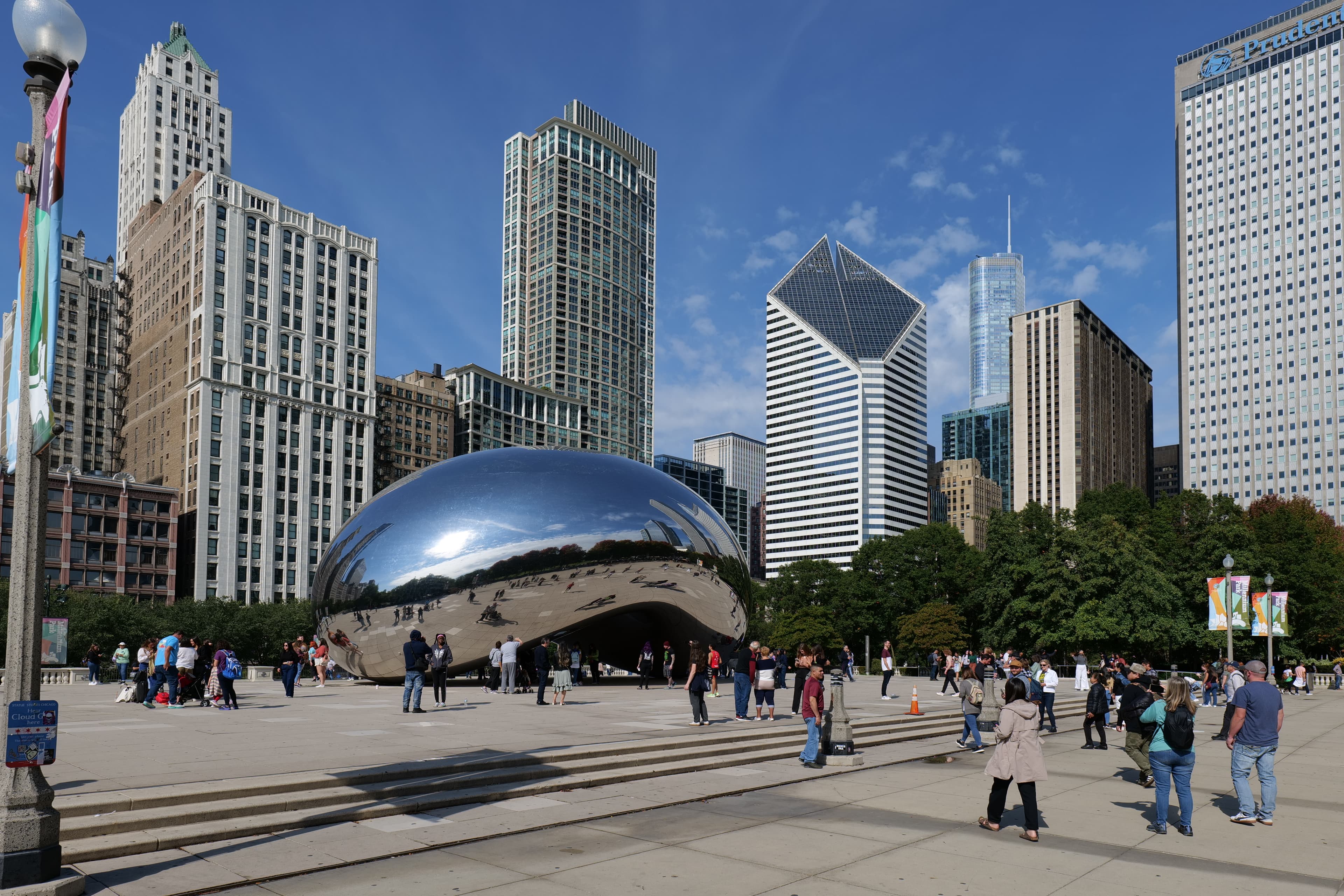
Millennium Park and Cloud Gate
Immediately adjacent to the finish, open 6am-11pm. The Bean is a five-minute photo stop rather than an outing, most bearable early, before the crowds and the expo queues a few blocks south.
The Chicago Riverwalk
A flat 1.25-mile path along the river, about 1km (0.6 miles) north of Grant Park. Free, open 6am-11pm. October river wind can feel colder than the streets, so save it for a dry Saturday shakeout rather than the morning after.
Chicago Architecture Center river cruise
Departing from Wacker Drive, about 1.5km (0.9 miles) from Millennium Park. Seated for its full length, a proper sense of the skyline without a flight of stairs. October sailings run a reduced schedule later in the month; check times first.
Read Before you Run
The Devil in the White City
Erik Larson
Draws a direct line between Daniel Burnham's 1893 World's Columbian Exposition and the architectural ambition that still shapes the Grant Park skyline runners finish under.
Buy on Amazon ↗Chicago: A Biography
Dominic Pacyga
A grounded read on the neighbourhoods the course actually passes through: the immigration patterns and civic history behind Pilsen, Bridgeport, and the South Side stretches most tourist guides skip.
After the Race
The Chicago Marathon is on the second Sunday of October - the exact peak of fall foliage season in the upper Midwest. Four itineraries below, from a one-night train trip to a four-night road trip. The nights given are a comfortable minimum; each destination rewards staying longer if your schedule allows. For the full picture of what October looks like in and around Chicago, see the Chicago in October destinations guide.
Evanston
CTA Purple Line Express from the Loop · 35 min · $2.50 · no hire car · direct taxi to O'Hare
The CTA Purple Line Express runs from any downtown Loop station to Evanston in 35 minutes, fare $2.50. Get off at Davis Street - the most central stop for the lakefront and Northwestern University. Evanston is the first substantial suburb north of Chicago's city limits: a flat glacial plain on Lake Michigan, 75,000 people, in full fall colour by mid-October.
Northwestern University's lakefill - campus built on fill land that extended the original shoreline eastward - has a flat paved path running approximately 1.5 kilometres at the water's edge. October: dark blue-grey water, the beginning of the winter chop, the Chicago skyline visible to the south. Walk to the observatory promontory and back. The Grosse Point Lighthouse at the northern end of the lakefill is a National Historic Landmark, built in 1873 after the ship Lady Elgin sank off this shore in 1860 with 300 passengers aboard. The grounds are accessible; weekend tours are available at grossepointlighthouse.net.
The Davis Street corridor has a good concentration of independent restaurants within a 10-minute flat walk of the lakefront. Farmhouse Evanston on Grove Street is the local benchmark for Midwest farm-sourced cooking; Peckish Pig on Davis Street is the craft beer and gastro-pub option. Return to O'Hare by taxi or rideshare (35 to 45 minutes, $35 to $50), or take the CTA Purple Line to Howard and transfer to the Red Line (approximately 60 minutes, considerably cheaper).
Indiana Dunes National Park
South Shore Line from Millennium Station · 65 min · ~$10–12 · no hire car required
The South Shore Line commuter rail runs from Millennium Station (under Millennium Park, entrance at 151 E. Randolph) to Dune Park station in 65 minutes, with trains roughly every 30 to 60 minutes; fare approximately $10 to $12. From Dune Park, a short taxi (approximately $8) reaches the park visitor centre. Indiana Dunes National Park covers 24 kilometres of Lake Michigan shoreline in northwest Indiana: moving sand dunes, oak savannas, bogs, and the Great Marsh, one of the largest remaining Great Lakes wetlands.
The Great Marsh Trail is the post-marathon walking infrastructure. Level throughout - wide, compacted earth, firm in October - it follows the marsh perimeter through sedge meadows, willow thickets, and open water, approximately two kilometres each way from the main trailhead. October is peak migration through the Lake Michigan bottleneck corridor: tens of thousands of raptors, songbirds, and waterfowl move through the dune and marsh landscape in a way that summer visits simply are not. The tall sand dunes that give the park its name involve significant climbing and are not the post-marathon programme.
The Century of Progress Architectural District within the park contains homes from the 1933–34 Chicago World's Fair, relocated to the dunes after the exposition closed - modernist experimental designs by George Fred Keck and others, accessible from the exterior year-round. Stay in Chesterton (adjacent to Dune Park station), where the Gray Goose Inn is the small-hotel option and Octave Wine Bistro is the dinner recommendation. Return: South Shore Line to Millennium Station (65 minutes), then CTA Blue Line to O'Hare (approximately 45 minutes).
Milwaukee by train
Amtrak Hiawatha from Chicago Union Station · ~90 min · from $19 · no hire car required
Leave the car at home. The Amtrak Hiawatha runs from Chicago Union Station directly to Milwaukee Intermodal Station in around 90 minutes, with up to six departures a day. Union Station is on the west side of downtown Chicago and straightforward to reach from the Grant Park finish area by rideshare. Take the afternoon train the day after the race, check in, and walk the Historic Third Ward - Milwaukee's converted warehouse district along the Milwaukee River, flat, with the city's best independent restaurants and the covered Milwaukee Public Market.
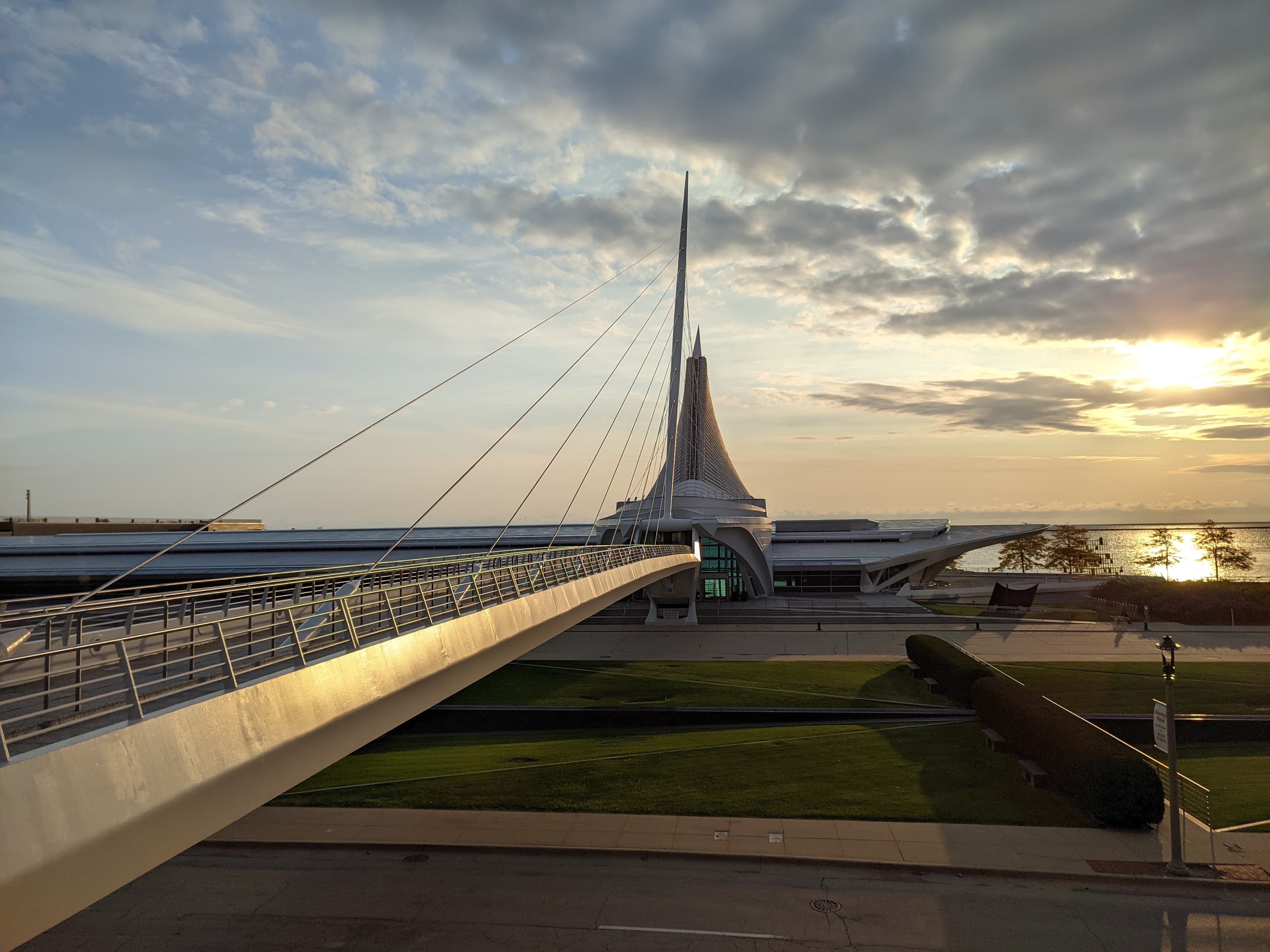
The second day is the full Milwaukee day. Start at the Milwaukee Art Museum (700 N Art Museum Dr) before the crowds arrive. The building is Santiago Calatrava's Quadracci Pavilion, completed in 2001 - a white wing structure on the Lake Michigan waterfront that opens and closes its moveable brise-soleil twice a day. From outside it looks like a ship about to sail. Inside, the collection runs to 32,000 works and the lakefront views from the upper galleries are among the best in any American museum. Allow two hours.
Two miles southwest of the art museum, the Harley-Davidson Museum (400 W Canal St) covers 20 acres along the Menomonee River with over 450 machines on display from the first Harley built in 1903 to current production models. The early machines - assembled in a 10-by-15-foot shed behind the Davidson family home - are extraordinary objects to stand next to. The MOTOR Bar on site is a solid lunch stop. Lakefront Brewery (1872 N Commerce St), in a former Milwaukee pumping station on the Milwaukee River, has been doing guided tours and tastings since 1987; the Friday fish fry is a Wisconsin institution, but any day works.
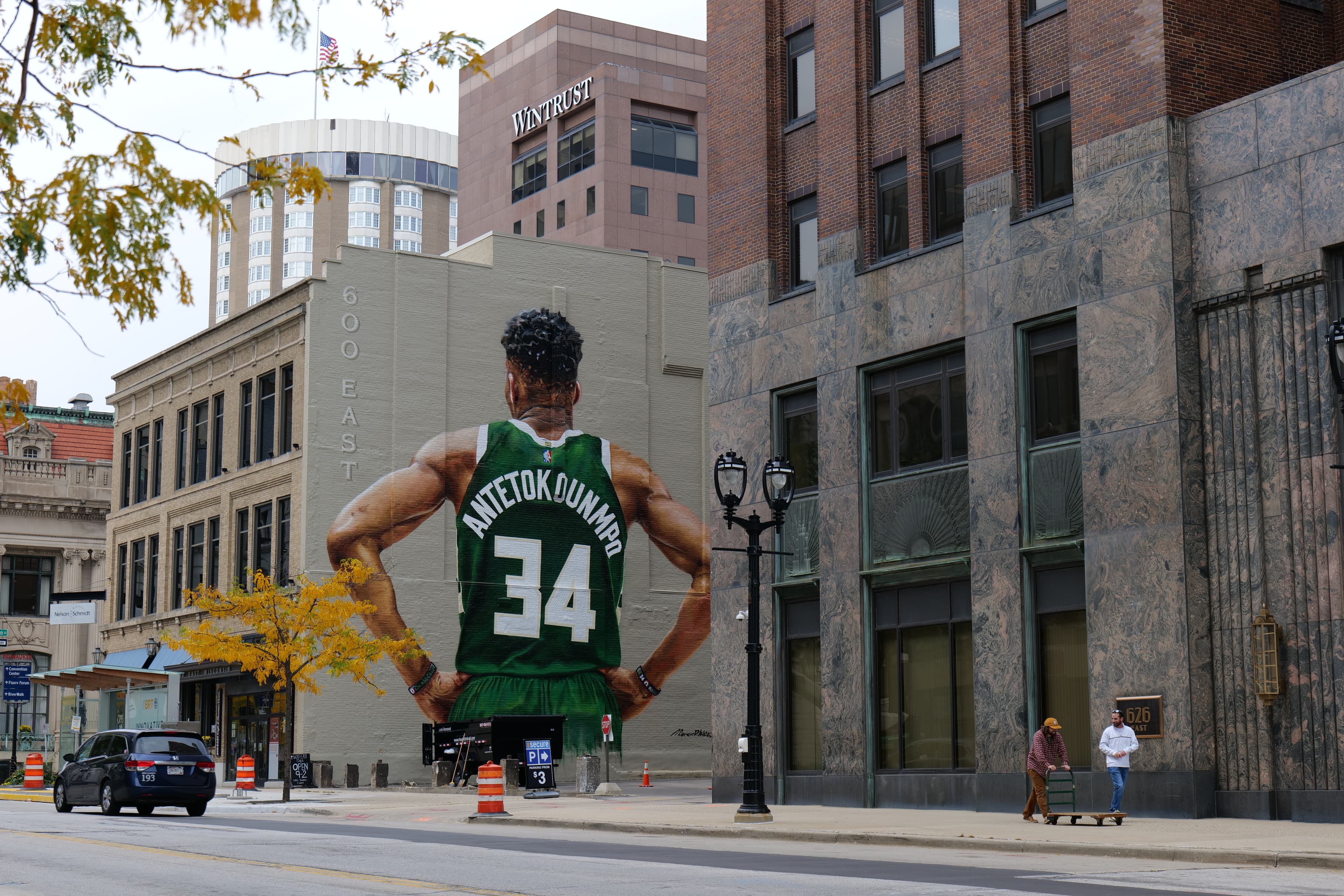
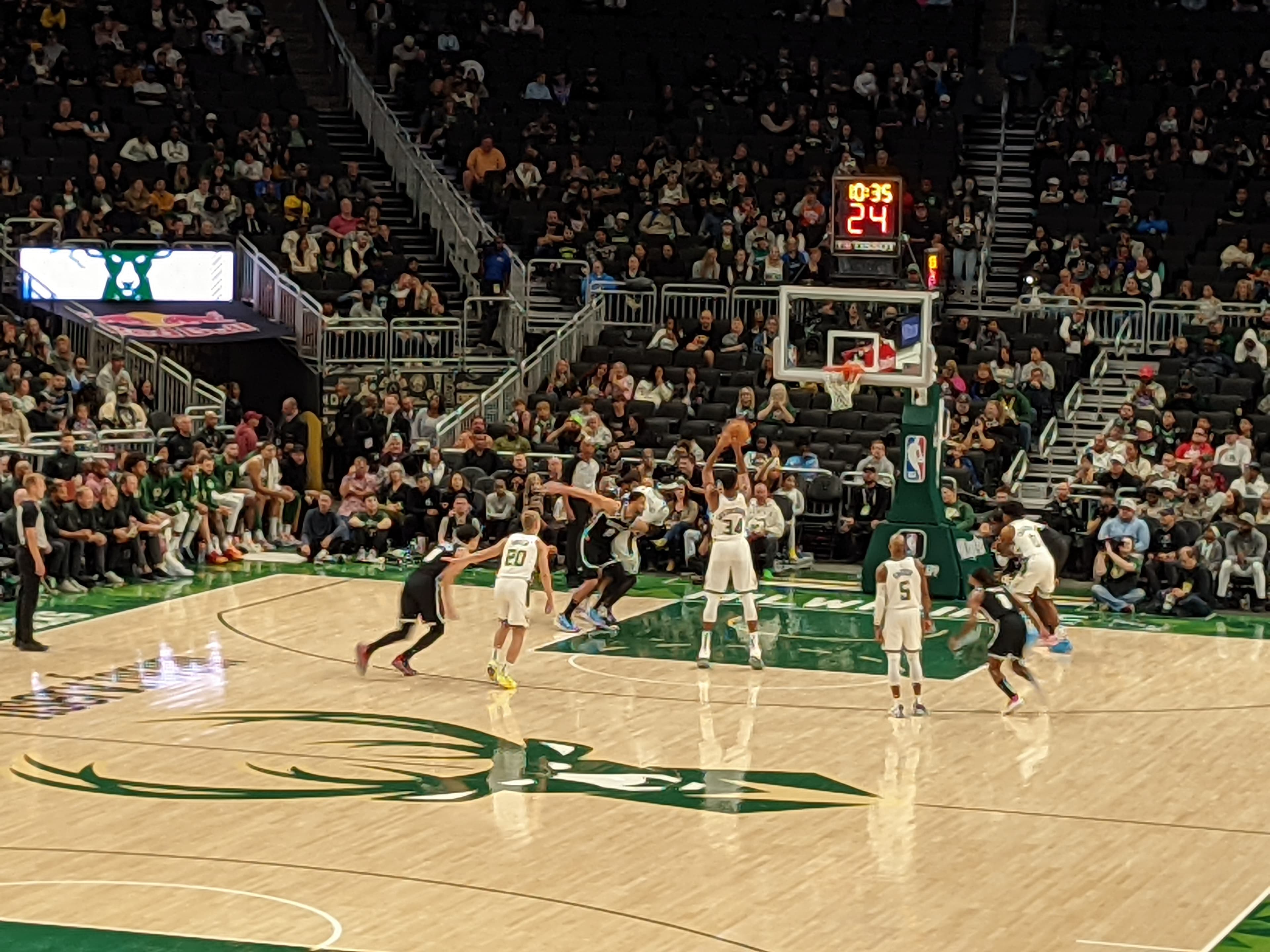
If the Milwaukee Bucks are playing during your visit - the NBA season runs from October - a ticket to a game at Fiserv Forum is a genuinely good evening in a city that lives for its team. Even without a game, the Deer District bars and restaurants are lively and the arena is worth seeing. Two nights in Milwaukee is the right amount of time. The Hiawatha runs back to Chicago Union Station with up to six departures daily from early morning to late evening.
Staying in Milwaukee: The Pfister Hotel on Wisconsin Avenue is the grand old address, from 1893, lobby Victorian and well-maintained. The Iron Horse Hotel, near the Harley-Davidson Museum, is a warehouse conversion with a motorcycle sensibility that suits the city.
Starved Rock, Lake Geneva and Milwaukee
Hire car from O'Hare · 330 miles total · O'Hare drop-off on return from Milwaukee
Nights 1 and 2: The Illinois River Valley
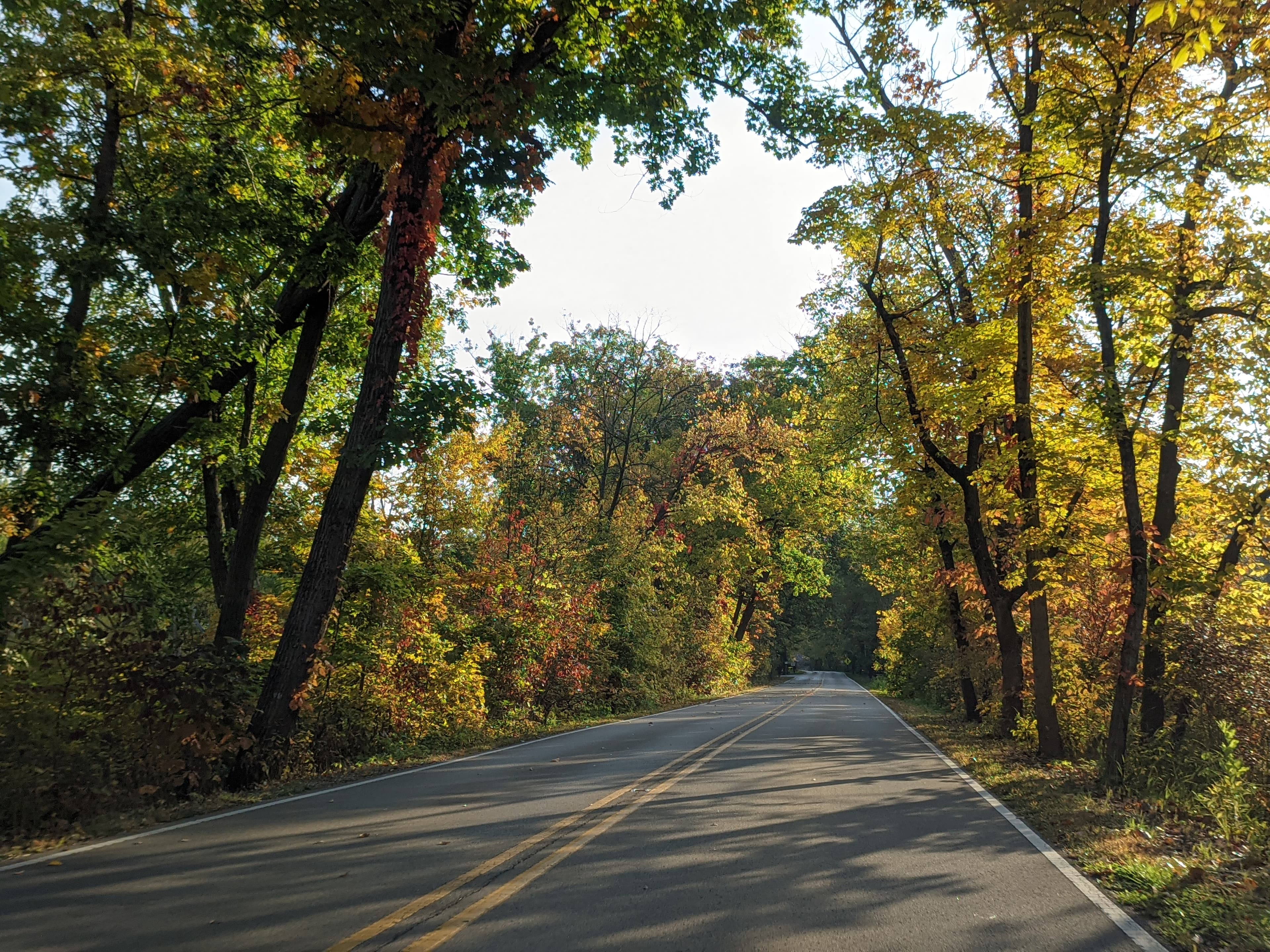
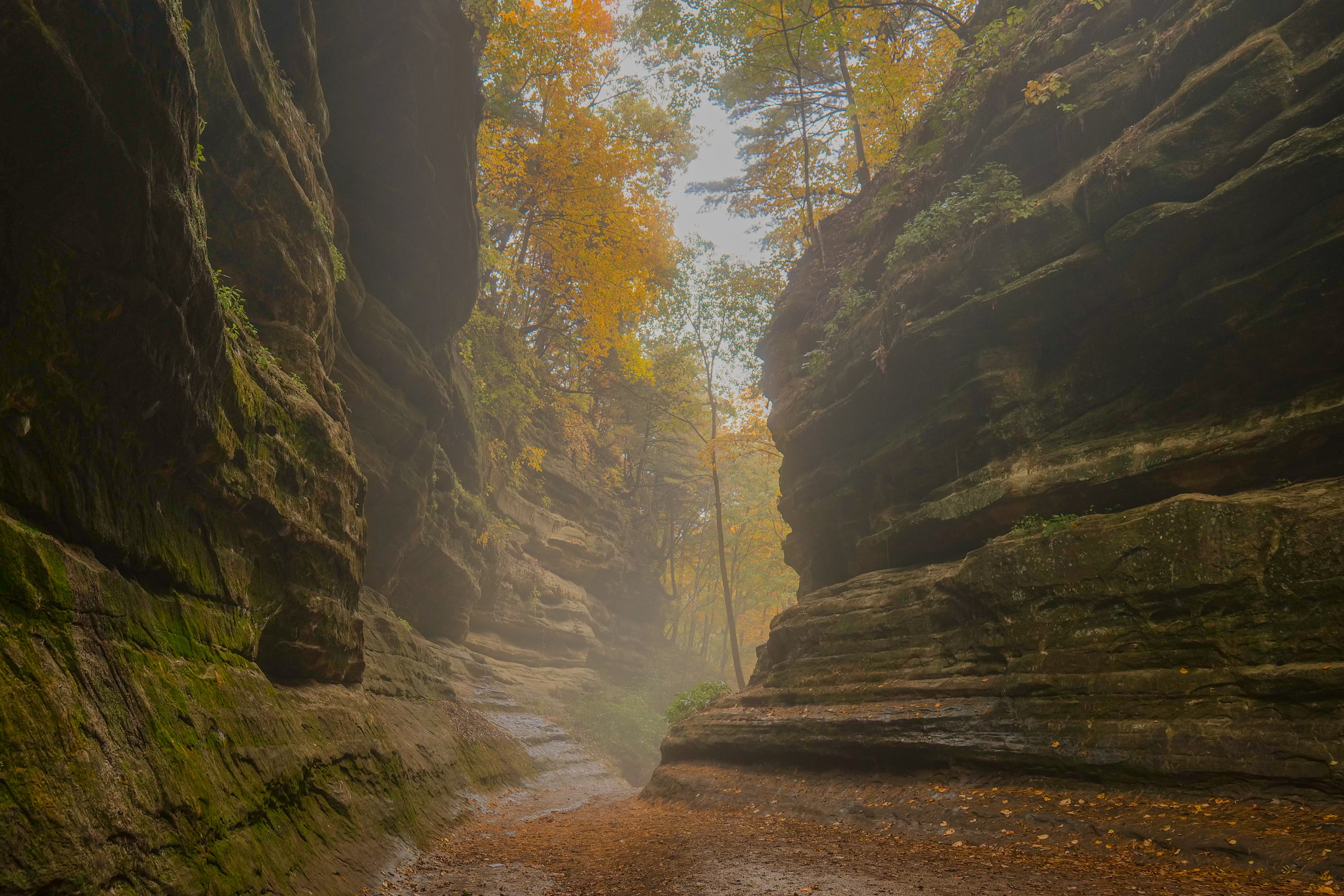
Pick up the car at O'Hare - the airport sits on the northwest edge of the city and puts you directly on I-88 heading west. The drive to Oglesby takes around 90 minutes. Starved Rock State Park has 18 canyons carved by glacial meltwater into St. Peter sandstone: walls streaked with ochre, green, and rust mineral deposits, ferns growing from every crevice, and several waterfalls that run well into autumn after rains. The park receives over a million visitors a year; on weekdays the canyons are largely empty.
Do not hike the first evening. The flat Riverview Trail along the top of the bluffs is enough. The canyons require stairs, steep descents, and uneven footing - French Canyon alone descends 150 stone steps to the floor. Two days after a marathon this is genuinely good active recovery, but go slowly, use the handrails, and wear shoes with grip. The short loop from the Visitor Centre through French Canyon and Wildcat Canyon covers around two miles. Extending east to LaSalle Canyon adds the park's tallest waterfall. In mid-October, cottonwoods, oaks, and maples line the bluffs in full colour.
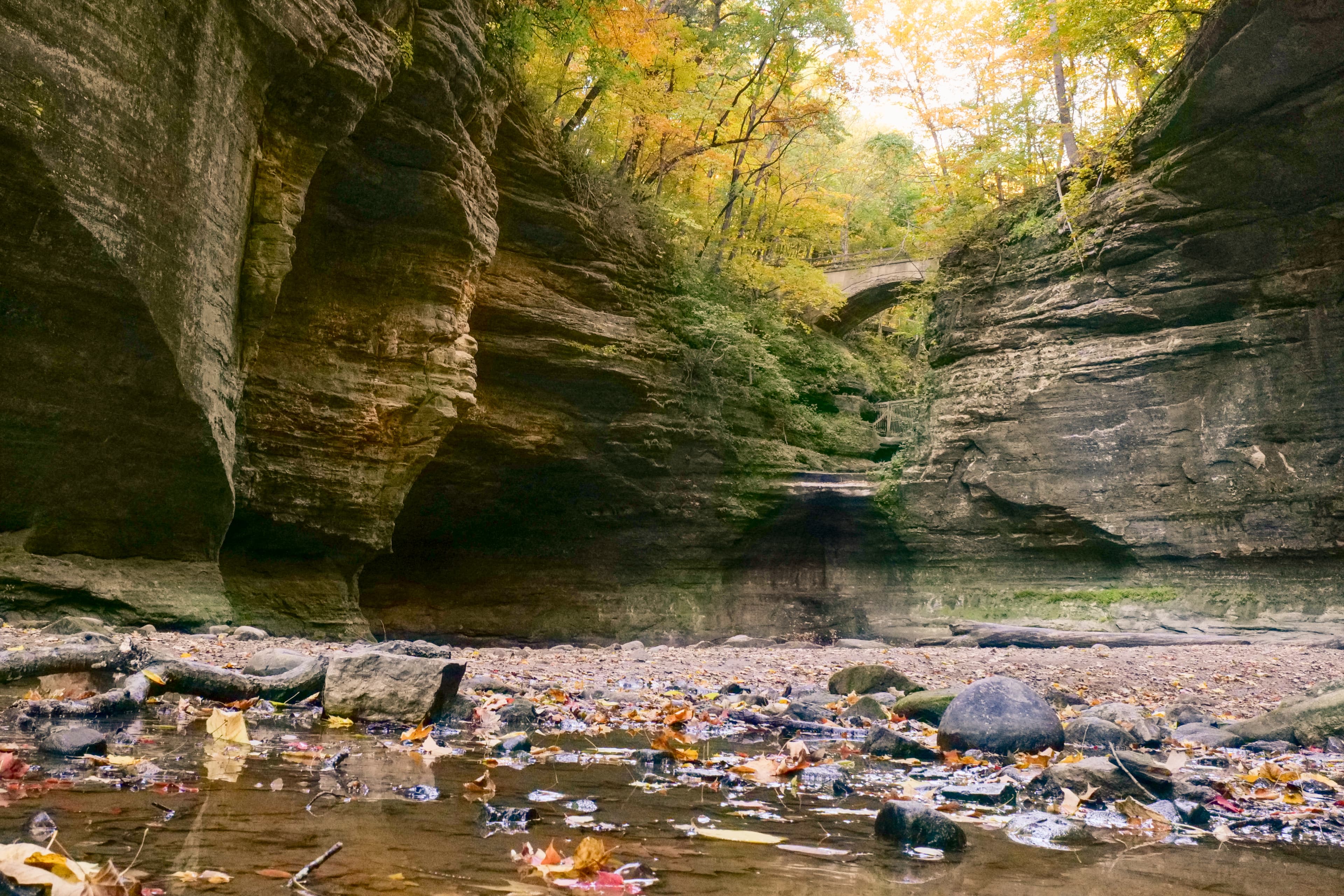
Matthiessen State Park is three miles south on Route 178 and receives a fraction of Starved Rock's visitors despite having the same sandstone canyons and waterfalls. The Dells Area trail descends via boardwalk and stone steps to Cascade Falls, where the canyon drops 45 feet into a pool. The walk from the parking lot to the main waterfall is around 10 minutes on more level terrain than Starved Rock's busier trails, which makes it the better choice for post-race legs. The full Dells loop is around two miles. Between the two parks, expect four to six miles over the day with frequent stops.
Staying near Starved Rock: Starved Rock Lodge (2668 E 875th Road, Utica) is a 1930s log-and-stone building by the Civilian Conservation Corps inside the park itself - real fireplaces, hearty food, the right depth of beds. It prices accordingly and books out months ahead for autumn weekends. Budget chains in Oglesby, five minutes from the park entrance, are a practical alternative.
Day 3: Lake Geneva, then north to Milwaukee
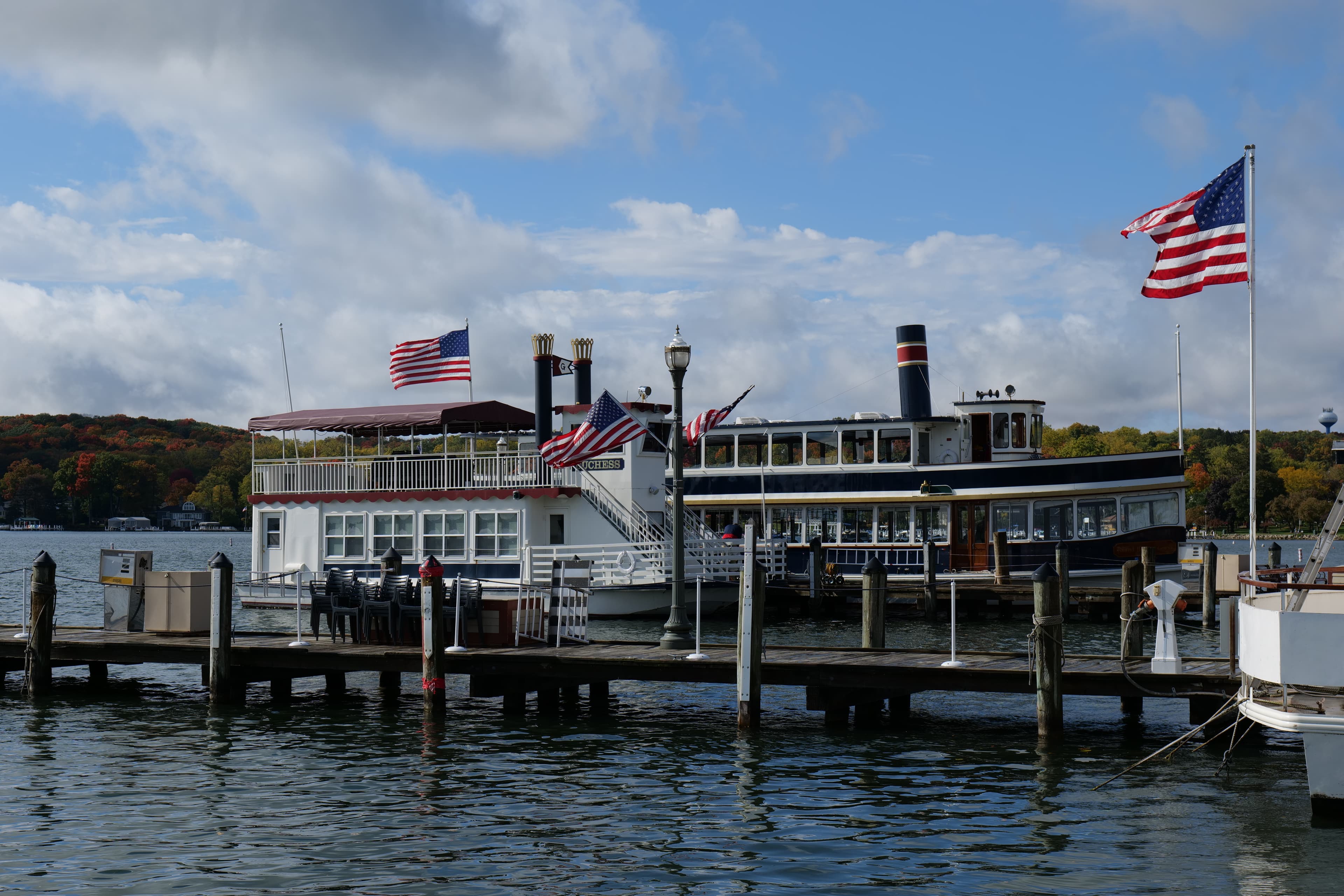
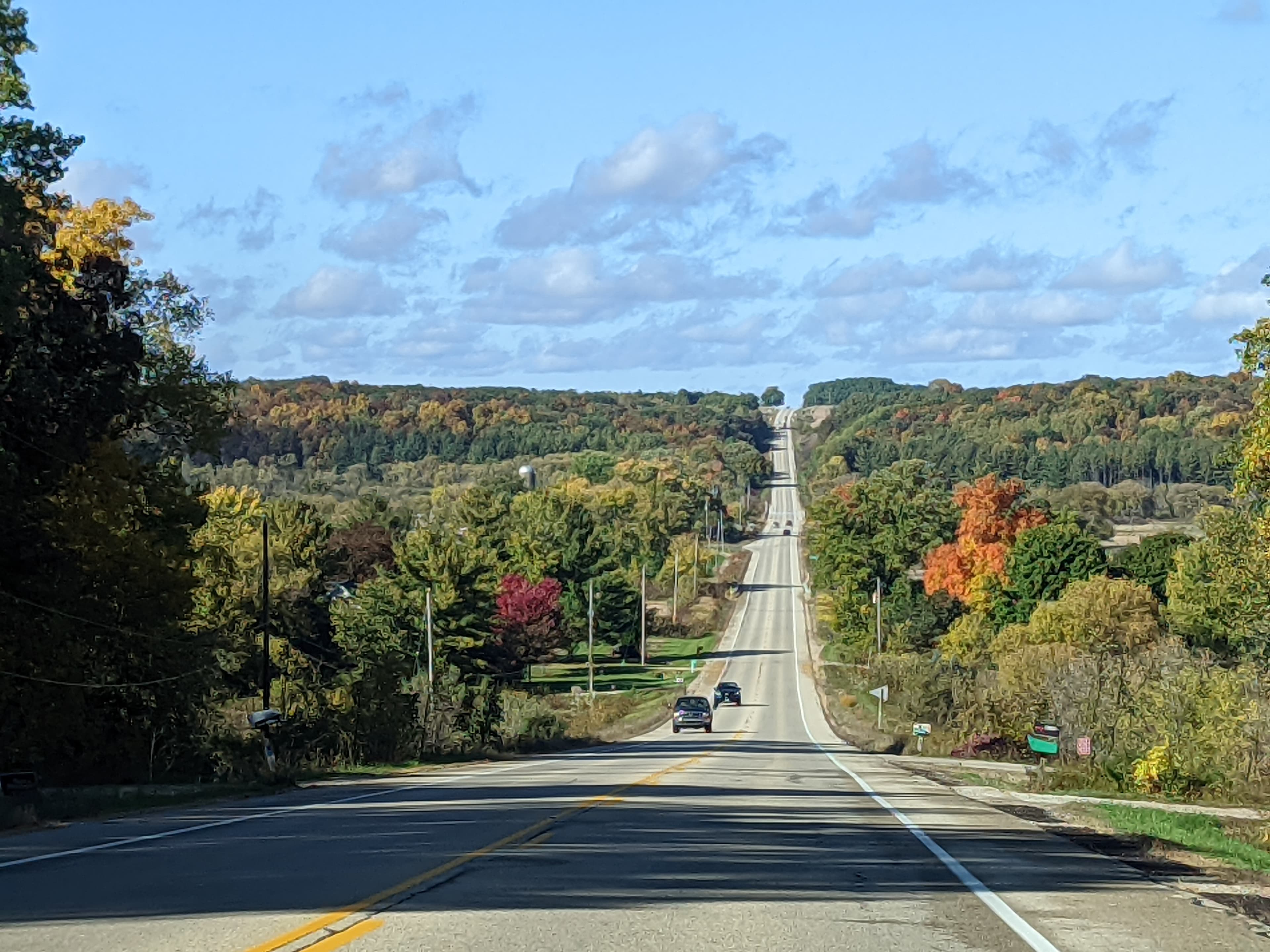
The drive from Oglesby north to Lake Geneva takes around 90 minutes on US-34. You cross into Wisconsin somewhere around Genoa City and the landscape shifts: more farmland, more dairy barns, Holstein herds visible from the road. Lake Geneva sits on the southern shore of Geneva Lake, a glacier-formed lake that has been a retreat from Chicago summer heat since the 1870s. The grand estates along the shoreline were built by the families whose names are still on Chicago buildings - Wrigley, Schwinn, Montgomery Ward - and some of those houses are still there, glimpsed through mature trees as you walk the shore path.
The Geneva Lake Shore Path runs 21 miles around the full lake. For post-marathon legs, two to four miles along the town waterfront is the right section: minimal gradient, alternating between concrete, gravel, and packed earth, the water close enough to feel throughout. The lake is still and deep blue in October, and the crowds are thinner than in summer. Pick up the path at Riviera Docks in the town centre and walk in either direction. Lunch in downtown Lake Geneva before driving north: the food skews towards Wisconsin comfort - fish fry, cheese curds, hearty soups. The drive from Lake Geneva to Milwaukee takes 45 minutes on I-43.
Nights 3 and 4: Milwaukee
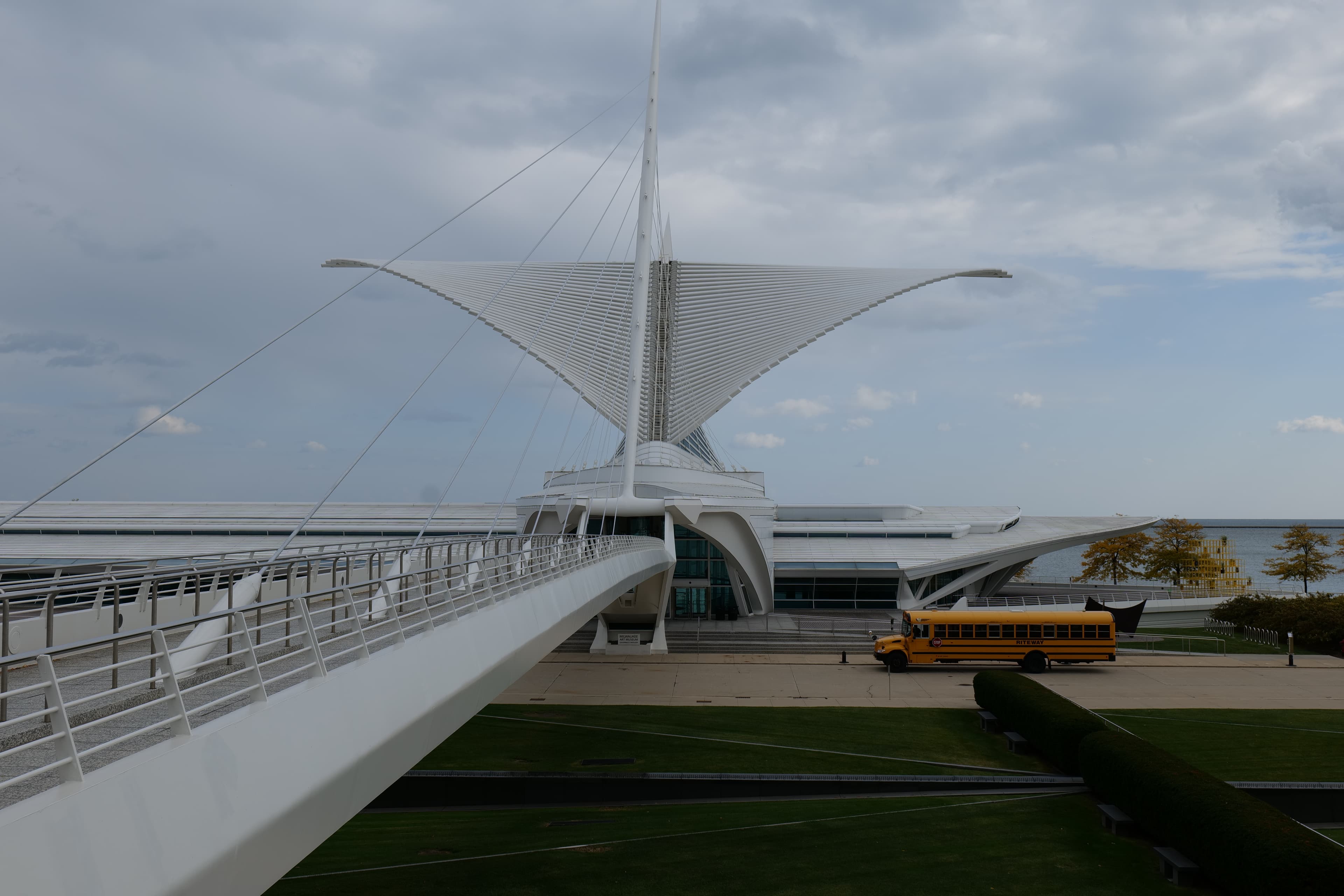
Milwaukee rewards a slower look than most visitors give it. Start the first morning at the Milwaukee Art Museum before the crowds arrive. The Calatrava Quadracci Pavilion opens and closes its moveable brise-soleil twice a day; from outside it looks like a ship preparing to sail. Allow two hours for the collection and the Lake Michigan views from the upper galleries. The Harley-Davidson Museum (400 W Canal St) is two miles southwest: 20 acres along the Menomonee River, 450 machines from the first Harley of 1903 to current production. The early machines - assembled in a 10-by-15-foot shed - are extraordinary objects to stand next to. Lakefront Brewery (1872 N Commerce St), in a former city pumping station, does the best guided tour in Milwaukee.
If the Bucks are playing, a game at Fiserv Forum is a good evening in a city that lives for its team - the NBA season runs from October so the timing works. The Historic Third Ward, Milwaukee's converted warehouse district, is the right place for the final afternoon: flat, walkable, independent restaurants and the Milwaukee Public Market under one roof. Return the car to O'Hare via I-94 east; the drive takes around 90 minutes. Leave Milwaukee by mid-afternoon if you have an evening flight.
Staying in Milwaukee: The Pfister Hotel on Wisconsin Avenue is the grand old address, from 1893. The Iron Horse Hotel, near the Harley-Davidson Museum, is a warehouse conversion with a motorcycle sensibility that suits the city.
| Leg | Distance | Drive time |
|---|---|---|
| O'Hare to Starved Rock | 90 miles | ~1h 30m |
| Starved Rock to Lake Geneva | 100 miles | ~1h 45m |
| Lake Geneva to Milwaukee | 50 miles | ~45m |
| Milwaukee to O'Hare | 90 miles | ~1h 30m |
Frequently asked questions
Should I stay near the start or the finish?
Chicago finishes exactly where it starts, in Grant Park. The Loop gives the shortest, quietest walk to the perimeter; South Loop sits closer to the finish-side end of the park and the McCormick Place expo, usually at a gentler rate.
How do I enter?
Public ballot for 2027: applications open 8 October 2026 and close 29 October 2026, with results on 8 December 2026. Guaranteed Entry time standards, charity places, and international tour operator packages also provide a route in. Register at chicagomarathon.com.
How do I get from O'Hare?
CTA Blue Line from O'Hare to the Loop: approximately 45 minutes. Taxi or rideshare: 25 to 45 minutes depending on traffic.
What is the weather typically like?
NWS 11 October normals: high 18.3°C, low 8.4°C, usually low humidity. That is a normal, not a guarantee - the 2007 race was cancelled mid-event due to extreme heat (29°C).
What is the best area to stay?
The Loop for the shortest walk; South Loop for a calmer, usually cheaper base near the finish and expo. River North and Streeterville trade distance for nightlife.
When does the expo open?
Thursday to Saturday at McCormick Place North Building. Bib collection is in person only, no race-day pickup. Green Line to Cermak-McCormick Place is the direct route from the Loop; allow at least an hour.
Is there free transport to the start?
Not confirmed free with your bib. CTA is recommended, and the Grant Park start is walkable from most Loop, River North, and Streeterville hotels regardless.
Is there a bag drop?
Yes, in Grant Park at the start. Bags reunited with runners in the finish area. Use the official marathon bag.
Should I bring a throwaway layer?
Yes. October mornings are usually the cooler end of the day, and later waves can be standing in exposed Grant Park corrals well past sunrise.
How do I get back to my hotel after finishing?
The finish in Grant Park is central. Most Loop and South Loop hotels are walking distance. CTA Red and Blue Lines sit immediately adjacent for anyone further out.