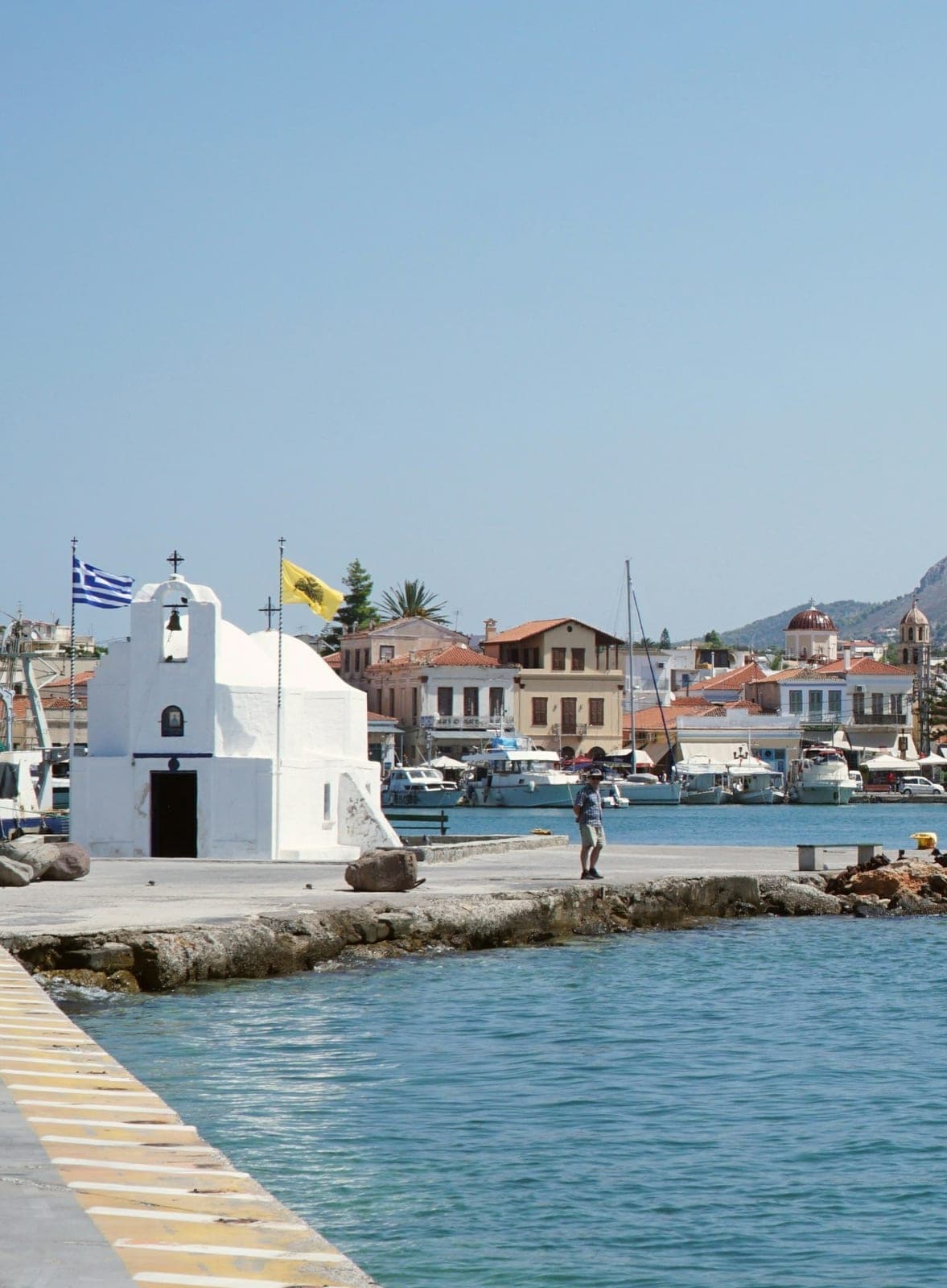
Aegina is the Athenians' island: forty minutes from Piraeus on the fast ferry, and slower on the quayside than anywhere in Athens. A runner arriving in Aegina Town on a November morning finds the summer crowds gone, the pistachio vendors set up along the waterfront and the fishing boats still tied to the dock.
The pistachio harvest runs through September and October, so the stock in the shop windows is fresh by race weekend. The Temple of Aphaia keeps winter hours (10:00–17:30), the KTEL buses from the port are running and the tavernas on the harbour are open.
Getting to Piraeus
From central Athens, take Metro Line 1 (Green Line) from Monastiraki or any connecting station direct to Piraeus. The journey from Monastiraki takes approximately 20–25 minutes and costs €1.40 (or is included in a day ticket). From the Piraeus metro exit, Gate E8 is a five-minute walk following signs for the Saronic ferries. A 2026 runner reached the ferry port by metro using a free travel pass.
A taxi from Pangrati or Syntagma to Piraeus Gate E8 takes approximately 20–30 minutes outside rush hour and costs €15–25 depending on traffic.
The Ferry
Multiple companies operate the Piraeus–Aegina route daily throughout the year.
Fast ferry (recommended): Hellenic Seaways and Aegean Flying Dolphins operate hydrofoil/catamaran services taking approximately 40 minutes. Tickets from approximately €9.50–19.50 one-way foot passenger. Book at ferryhopper.com or at ticket offices near Gate E8. Arrive at the port at least 30 minutes before departure.
Conventional ferry: Saronic Ferries and others operate larger vessels taking approximately 65–75 minutes, from around €8.50. Good for the outward journey when you have time - take the fast ferry back if you want to save the hour.
Book the ferry online. In 2026 the fastest crossing was sold out for the afternoon return, and return tickets were discounted, so one runner used the same ferry company for both legs. Both crossings were busy.
All ferries dock at Aegina Town port. The main waterfront is directly at the quay.
The Temple of Aphaia
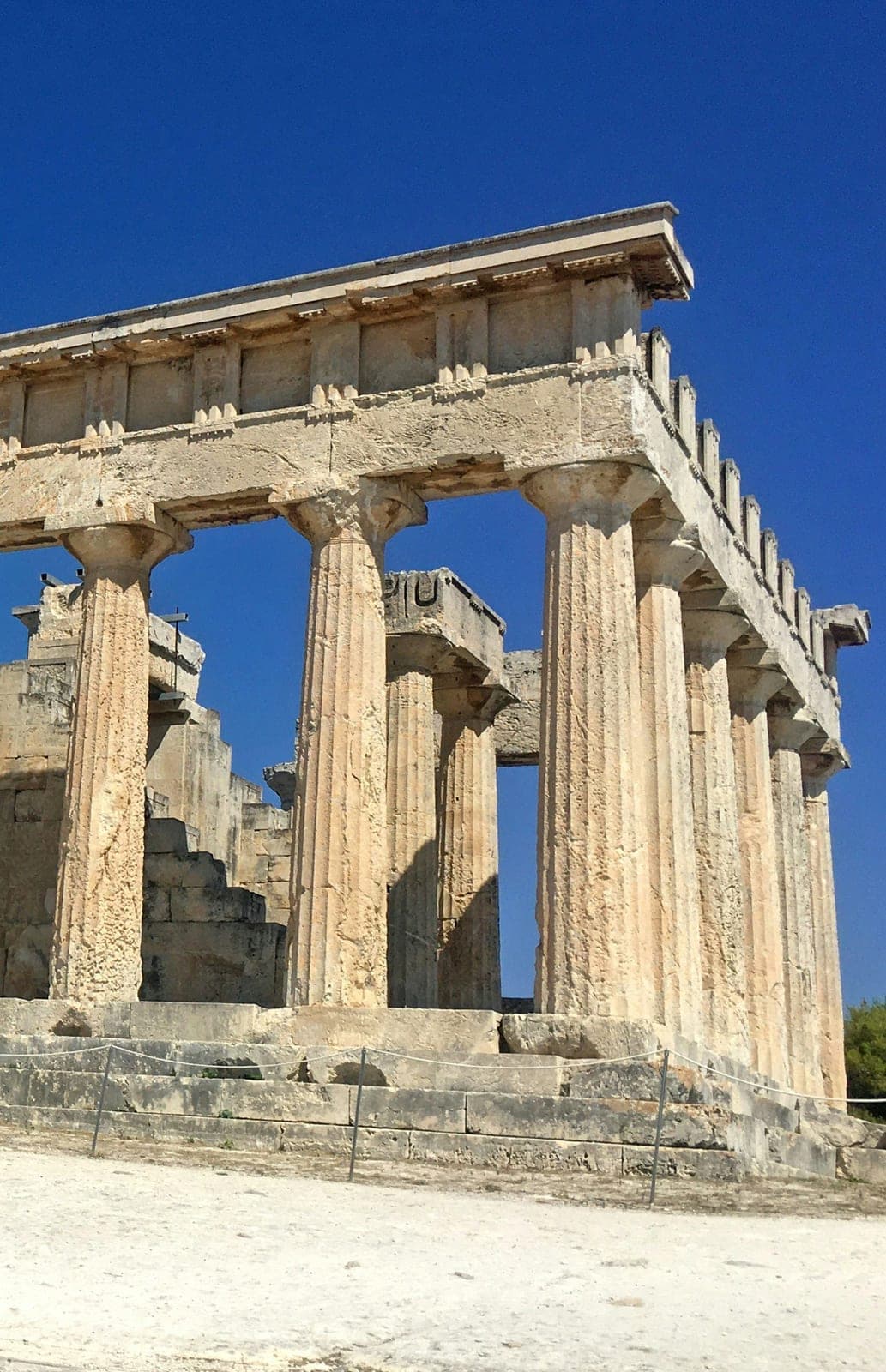
The primary reason to come to Aegina, and one of the most satisfying ancient sites in the Athens region. The temple was built around 500–490 BC on a hilltop 160 metres above sea level in the pine forests above the east coast. Twenty-four of the original thirty-two Doric columns are still standing - one of the most intact temples in Greece. In clear weather you can see both the Acropolis of Athens and the Temple of Poseidon at Cape Sounion from here.
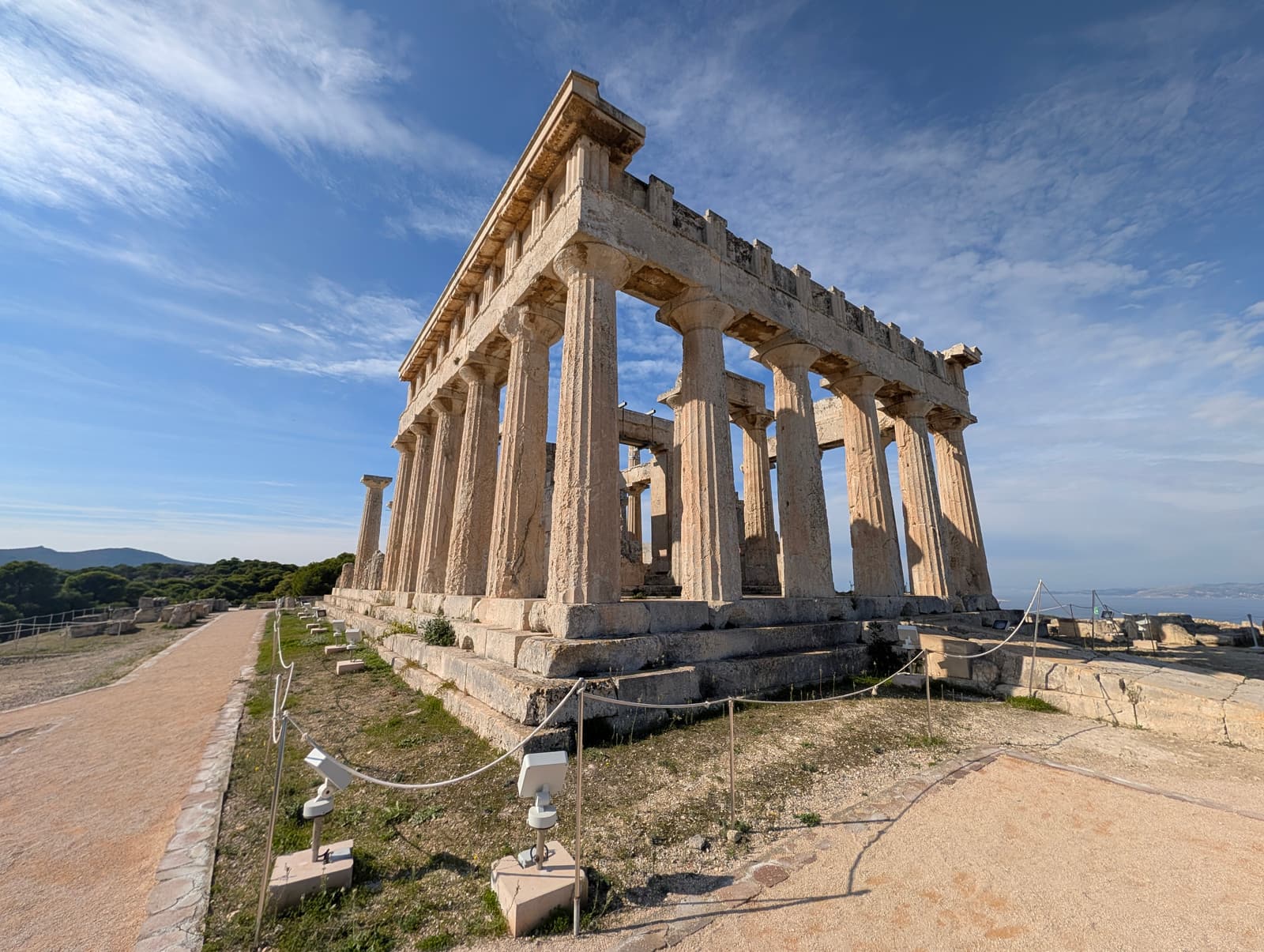
Getting there from Aegina Town: The KTEL island bus runs from the square directly opposite the ferry ticket offices (Ethnegersias Square, by the port). The Agia Marina bus stops at the Temple of Aphaia; the journey takes approximately 25 minutes and the fare is €2. The bus also stops at the Monastery of Agios Nektarios on the same route.
The bus to Aphaia ran only twice on the Monday in 2026, at 07:30 and 15:15. The sign at the stop had been changed to show Tuesday's times of 07:30, 11:00, 11:55, 13:40 and 15:10, and it said Monday to Friday. It is not clear whether the reduced Monday service is a one-off or applies every Monday, so check the sign when you arrive and have a taxi as the fallback.
For post-marathon legs: The bus drops you immediately beside the entrance; the path from the gate to the temple is roughly 200 metres of gentle paved incline. There are benches and cats along the way, and a small cafe opposite the entrance sells coffee and pistachio ice cream. Allow 60–90 minutes. A return taxi cost €50 (£42) in 2026, and the driver waited while the visitors looked around. Entry was €10 (£8.50) each, with no seasonal reduction.
Aegina Town
Pistachio stalls line the sea front, and they were doing steady trade in 2026. The harbour promenade is completely flat paved concrete and tarmac - a good start on post-race legs. The waterfront runs for several hundred metres with the sea on one side and neoclassical mansions in faded ochre and pink on the other. The Markellos Tower, a Venetian-era structure painted a distinctive dark red, stands a few minutes' walk from the ferry. The Kolona site (a single standing column from the archaic Temple of Apollo) and its small archaeological museum are a ten-minute walk along the northern waterfront.
Aegina pistachios have Protected Designation of Origin status, which sets them apart from anything sold as "Greek pistachio" elsewhere, and the shops along the harbour sell them by the bag. Mourtzis Traditional Sweets on Panayioti Irioti Street has pistachio baklava and local spoon sweets. The harbour-front stalls all offer tastings. Gelato Follia on the waterfront serves pistachio gelato.
Where to Eat
On the harbour: A dozen tavernas line the harbour. The catch of the day comes off the boats that morning: grilled sea bream, calamari and octopus. Sit outside if November permits and face the sea.
Perdika is a small harbour village on the south-west tip of the island, 10km from Aegina Town and reachable by taxi in 15 minutes. Nondas has been here since 1936 and remains the best-known table on the island for grilled fish and octopus orzo. If you want a proper long lunch with a waterfront view of the Peloponnese, take a taxi to Perdika after the temple and catch a late afternoon ferry back.
Returning to Athens
Multiple return ferries depart Aegina Town through the afternoon and early evening. In November, the last ferry typically leaves between 18:00 and 20:00 - check the schedule when you buy your ticket or at ferryhopper.com. Buy the return ticket before leaving Piraeus, or at the ticket office on the Aegina waterfront.
The fast ferry returns to Piraeus in 40 minutes. Metro Line 1 from Piraeus back to Monastiraki takes 25 minutes. You can be back in central Athens for dinner without rushing.
For Athens International Airport (ATH), change at Monastiraki to Metro Line 3 (Blue line); total journey from Piraeus to the airport is approximately 45–55 minutes.