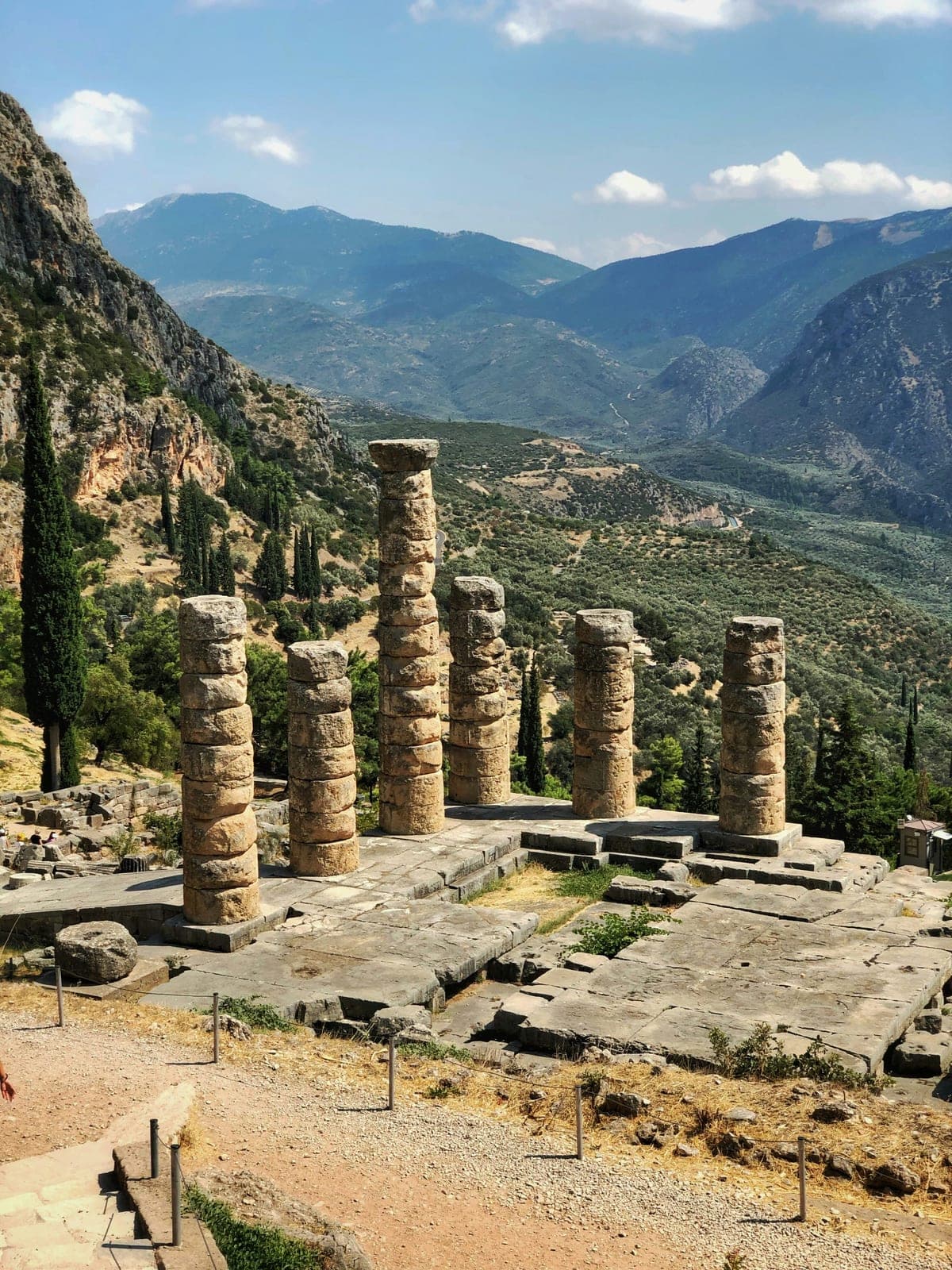
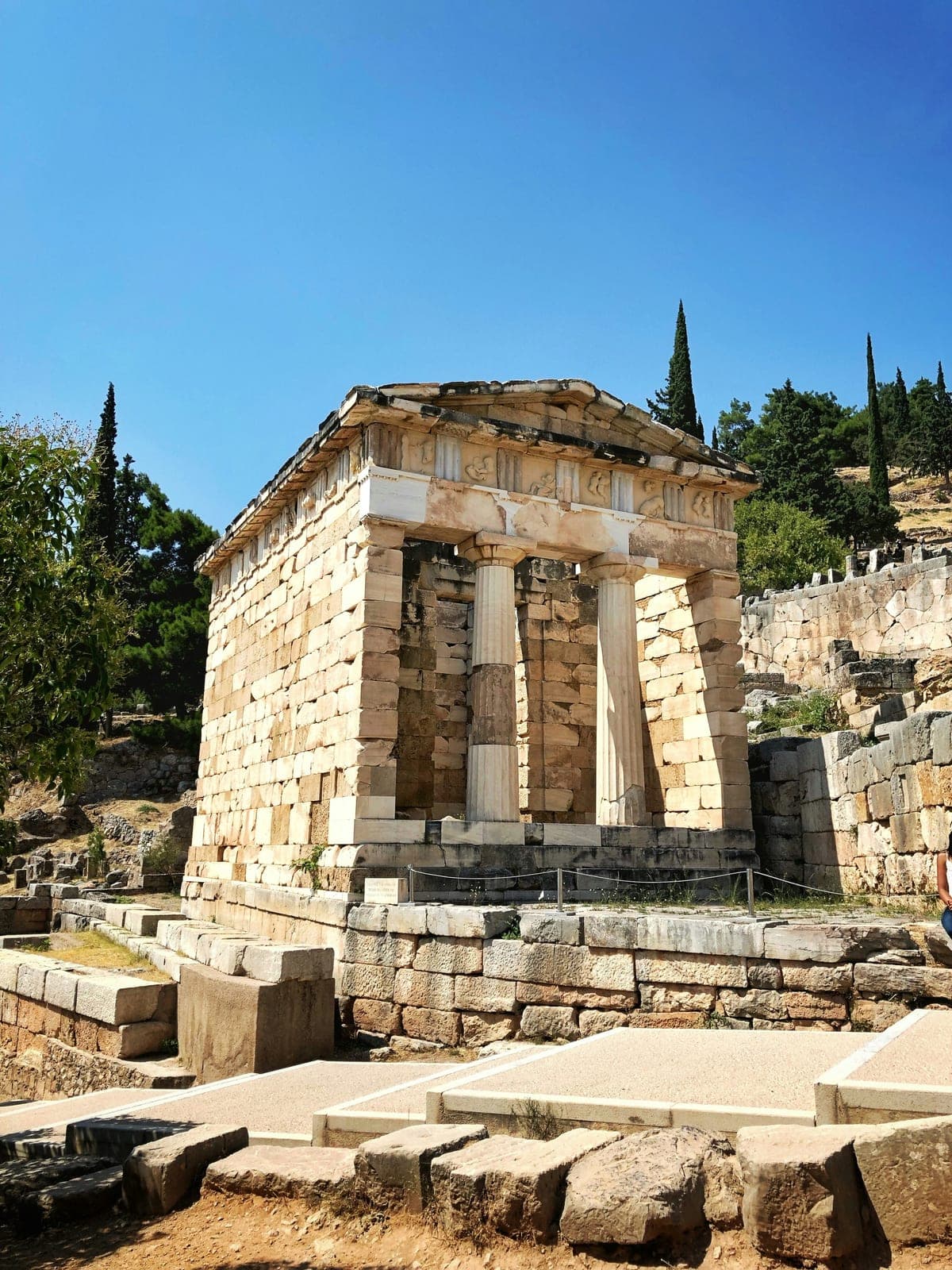
The Athens Marathon runs on the second weekend of November, when the summer coach parties at Delphi have thinned to almost nothing. The archaeological site opens at 08:00, the Parnassus air carries a bite of autumn cold, and the low-angled light turns the stones amber by mid-morning. The ancient Greeks held that the world's axis passed through the earth at this spot, and in November few other visitors stand on it with you.
November temperatures at 550 metres above sea level run 8–14°C - cooler and damper than Athens below. Bring a proper layer. The views down the Pleistos valley towards the Gulf of Corinth are clearest in autumn, when the summer haze has burned off.
Getting There
An organised coach tour is the easiest way to do Delphi. In 2026 a runner joined one that picked up near Plaka. The coach stopped for coffee on the way, a guide gave the history of the site on the journey, then led a tour of Delphi and of the museum, and left some free time to explore. On the return the coach stopped at Arachova for a late lunch. Several other marathon runners were on the same Tuesday tour and everyone seemed to cope well.
Search online for an organised Delphi tour from Athens, or look at Key Tours, a local operator.
By public bus: KTEL Fokidas operates direct buses between Athens and Delphi from Liosion Terminal (KTEL Liossion) at 260 Liossion Street, near the Kato Patissia station on Metro Line 1 (Green Line).
From Syntagma or Monastiraki, take Metro Line 1 towards Kifissia and alight at Kato Patissia - approximately 15 minutes from Omonia. Alternatively, take a taxi from central Athens: 20–25 minutes outside rush hour, approximately €10–14.
Seats are assigned and numbered - buy tickets in advance at ktel-fokidas.gr (search "Delfi" with an F). One-way fare approximately €16.50. Arrive at the terminal at least 20 minutes before departure.
There are typically four departures daily. The 08:30 bus is the choice for a day trip by public bus: it arrives in Delphi around 11:00, giving approximately five hours before the late-afternoon return. Confirm the current winter timetable before you go.
Journey time: approximately 2.5 hours each way. Going by public bus involves connections that an organised tour removes.
The Site
The archaeological site of Delphi and the attached museum occupy a hillside on the southern slopes of Mount Parnassus. Buy a combined ticket for both at the entrance. In November (winter pricing), adult admission is approximately €6 for the site; the combined ticket is approximately €9–12.
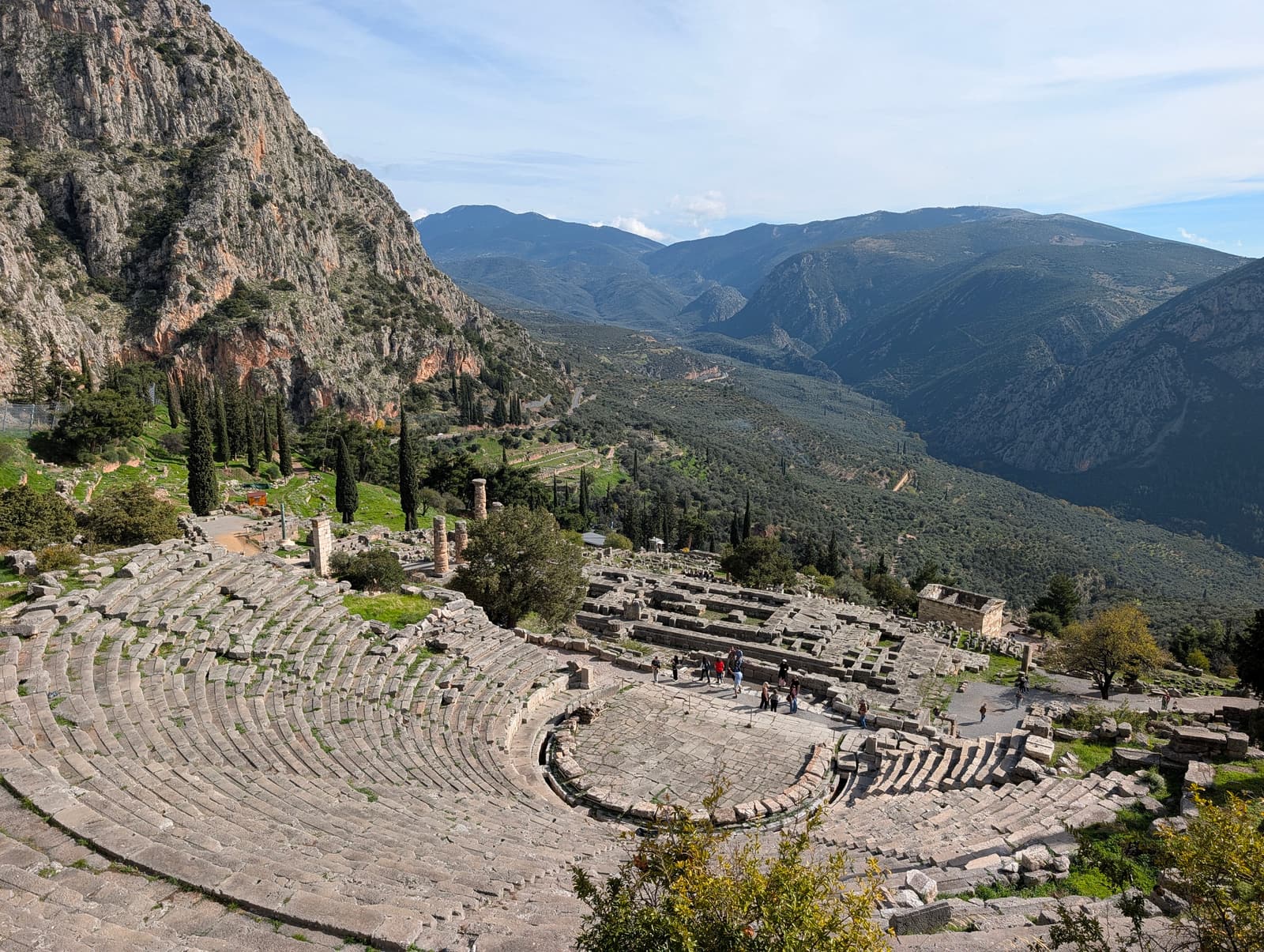
The site rises steeply. From the entrance gate at road level, the Sacred Way climbs through a series of treasury buildings to the Temple of Apollo at the centre of the sanctuary. Higher still is the theatre, and above that the ancient stadium. The ascent from entrance to stadium is roughly 300 metres of walking with a steady gradient and sections of original Greek and Roman stonework underfoot - uneven, occasionally sloped, hard after a marathon. Delphi is built on a hillside, so there is no avoiding the steps. Take them slowly, and use any free time to rest rather than to see everything.
The sensible sequence on post-marathon legs: ascend at walking pace and allow 2–2.5 hours for the full site. If the stadium feels too far, the theatre already provides one of the best views in Greece. The valley drops away below, the Gulf of Corinth glitters in the distance, and the scale of what was built here, on a near-vertical hillside, by hand, over several centuries, is clear from the seats.
The Museum
The Delphi Archaeological Museum sits at road level, a ten-minute walk from the site entrance. The Charioteer of Delphi is a bronze figure from around 478 BC, one of the best-preserved large-scale bronzes from antiquity: the original polychrome inlay still visible in the eyes, the driving tunic with its subtle twist still readable after 2,500 years. The Naxian Sphinx, carved around 560 BC to stand on a column, is in the same collection. Allow 45–60 minutes. Do not skip the museum in favour of more time at the site.
The museum is entirely flat and paved throughout - the easier half of the visit for post-race legs.
Where to Eat
The village of Delphi is small, with a single main street running along the ridge above the archaeological site. All tavernas are open in November.
Taverna Vakchos (on Apollonos Street) has been a reliable local option for decades - lamb chops, moussaka, grilled fish - with views across the valley. Prices are reasonable and the kitchen is open through the afternoon.
The cafe at the museum entrance serves coffee and basic food and has outdoor tables facing the valley. Sit down for 20 minutes after the site.
Returning to Athens
The return bus stop in Delphi is not a formal station building. It is a stop on the main street of the village, marked by a sign on the wall of a nearby restaurant. Ask locally when you arrive, or note the exact spot where the bus drops you off.
Return buses depart from approximately 15:00 onwards; confirm the specific departure when you arrive. The last bus back is typically around 17:00–18:00 in winter. Buy the return ticket at the same time as the outbound.
The bus arrives at Liosion Terminal; take a taxi back to your hotel (10–20 minutes) or walk to Kato Patissia metro station. You will be back in Athens by around 20:30–21:00, in time for dinner.