The Race
| Next Race Date | To be Confirmed: April 2027. The 2026 race ran on Sunday 19 April |
|---|---|
| Course Type | Loop: an out-and-back along the western shore to Lathuile. Start at Avenue du Petit Port and finish at Le Pâquier, about 1.9 km apart |
| Registration | Online, in rising price phases. No ballot and no qualifying time |
| Ballot Opens | Not applicable: open registration |
| Total Finishers | 5,261 (2026, marathon distance) |
| Average Race Day Temperature | About 5°C to 16°C (April normals) |
| Cutoff Time | 5 hours 30 minutes |
| Free Race Day Transport | None confirmed. In 2025 a paid SIBRA event pass cost €3 for one day or €5 for two |
| Course Certification | FFA Label Argent (Silver) for 2026. No World Athletics or AIMS label |
A flat course inside a mountain basin
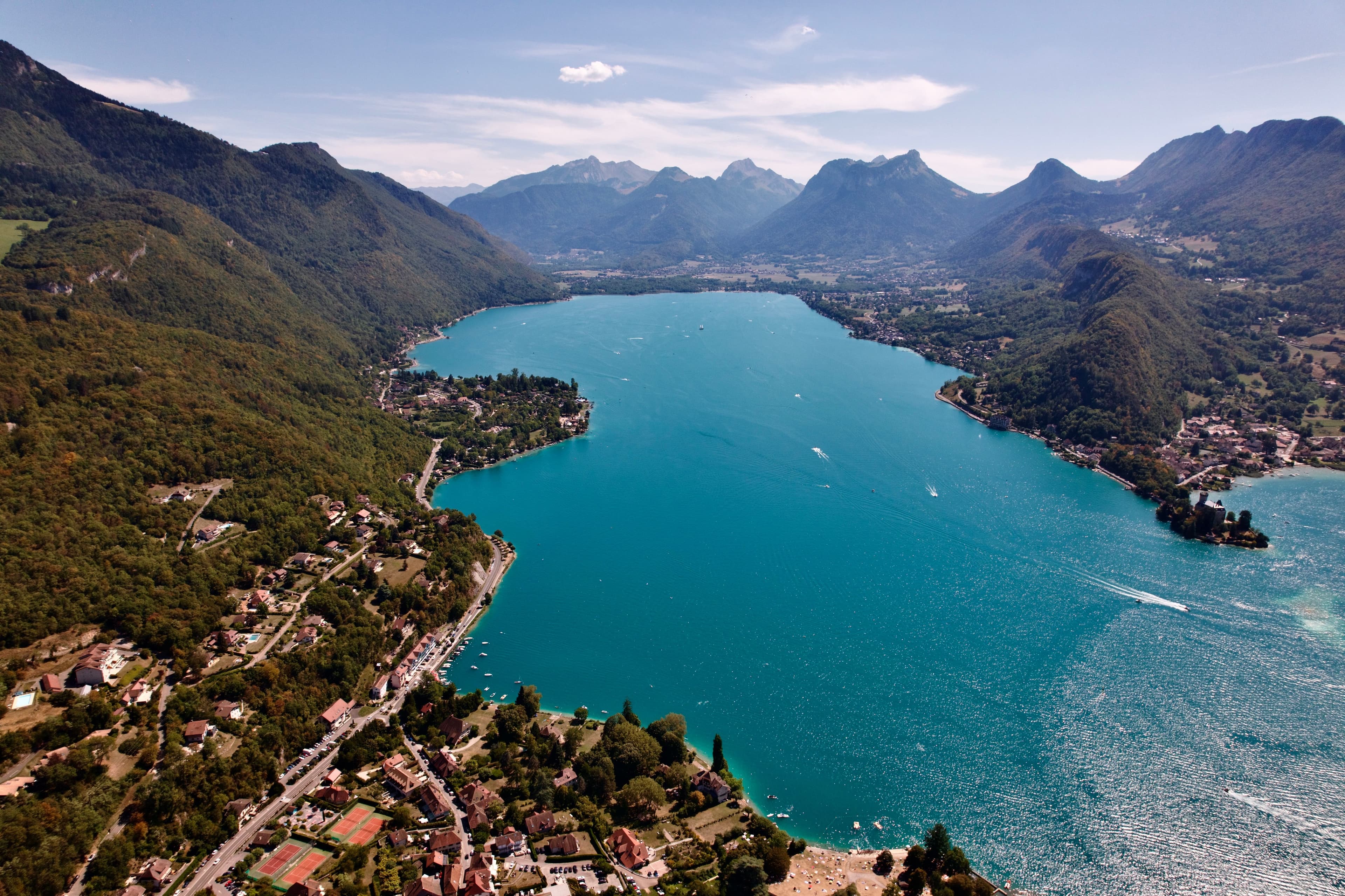
For all the Alps around it, the course climbs only about 77 m in total, closer to a flat city marathon than the setting suggests. The course records, 2:11:26 and 2:28:03, both set in 2022, show it is fast, and Benjamin Polin won in 2:13:20 in 2026. What slows people down here is not gradient: it is a route that uses narrower cycleway and pedestrian sections for a field of several thousand, wind along an open lake shore, and an out-and-back that asks for patience on the way home. Treat the flat profile as an opportunity that depends on pacing and a read of the wind, not a guarantee.
History
The Marathon du Lac d’Annecy has run since 1980, organised throughout by Annecy Haute-Savoie Athlétisme, the city’s athletics club. It has grown from a single marathon into a weekend with a half marathon, a 10 km, a 5 km and a walking event, all based at Le Pâquier, the lakeside lawn in the centre of town. Brooks is now the title sponsor. It is a different event from the Marathon du Clair de Lune, a night race around the lake, and from the MaXi-Race trail weekend, both also based in Annecy.
The lake has been the constant. The course is not a tour of monuments: its character comes from a low-gradient route with open water on one side and mountains framing the basin, and that setting plus real speed has given the race a following well beyond Haute-Savoie without a World Athletics label.
The standard is high. The FFA gave the 2026 edition its Silver Label, and both course records date from 2022: Felix Kirui Kiprotich’s 2:11:26 and Cynthia Chepchirchir Kosgei’s 2:28:03. In 2026 Benjamin Polin won in 2:13:20, within two minutes of the record, and Magali Aureille defended her 2025 title in 2:35:43. That year set a record: 18,000 entrants across the five races, 6,500 of them in the marathon, and 5,261 marathon finishers, 333 of them under three hours.
The race has changed operationally too. Runner accounts from 2022 describe a cramped start and crowded bib collection, which the organiser has since addressed with bookable collection slots and a bigger village, so those complaints belong to that year. AHSA has confirmed a return in April 2027 but has not yet published the date.
The course
An out-and-back down the western shore of Lake Annecy. The start is on Avenue du Petit Port, on the lakefront north-east of the centre. The route runs west along the shore past Le Pâquier at about km 2, then south through Sevrier, Saint-Jorioz and Duingt, past Doussard, to a turnaround at Lathuile at the southern end of the lake at about km 21. It comes back the same way and finishes at Le Pâquier, about 1.9 km from where it started.
The surface mixes road, cycleway and pedestrian paths, and the whole course climbs about 77 m according to the organiser’s runner guide: very little for a marathon inside an Alpine basin. The finish returns you to the village, the bag drop and the old town. Kilometre points are from a recent edition; the 2027 route has not been published.
Km 0 to 5: from Petit Port past Le Pâquier. In 2026 the field left Avenue du Petit Port in five waves, five minutes apart: handisport at 07:45, the elite and A wave at 08:00, then B, C, and D and E at 08:15. The staggering spreads thousands of runners before the route narrows onto cycleway-width sections. The opening kilometres run west along the lake past Le Pâquier, flat and easy, which is exactly why it pays not to bank time.
Km 5 to 15: down the western shore. The course follows the lake south through Sevrier and Saint-Jorioz, with the water and mountains alongside the whole way. Aid comes at about 4.7 km and 10.5 km, the second with food. A mixed road and cycleway corridor means a field this size can feel busy without any city streets.
Km 15 to 21: Duingt and the turn at Lathuile. More aid at about 15.1 km and 20 km, the latter with food. Past Duingt the cycleway runs gently downhill to Doussard, about 20 m over 2.5 km, then the route leaves the lakeshore at the Bout du Lac and climbs about 20 m in 2 km to the turnaround in Lathuile at km 21.3. At about 1% it is no real hill, but it is the first sustained gradient of the day. The rest is known ground now, and the turn can swing the wind from behind you into your face.
Km 21 to 35: the long way back. The return drops 20 m back to the lake below Doussard, then climbs about 23 m over 2.5 km to Duingt by km 27, the longest rise of the second half. After Duingt it runs back up the same shore, level from Saint-Jorioz to Sevrier. Aid comes at about 25.8 km and 29.4 km, the latter with food, and a TA Energy product at 34.9 km. A headwind on the return can wipe out the advantage of the flat profile, and passing people on a shared cycleway costs energy a wide boulevard would not.
Km 35 to 42.195: back into Annecy. The last aid is at about 40 km, and the surroundings turn urban again as the course comes back into town and onto the Le Pâquier finish, the busiest supporter area on the route. No blue line has been published.
Course Map
The out-and-back from Petit Port down the western shore to Lathuile, finishing at Le Pâquier. Tap a marker for details, and scrub the slider or press play to move the orange marker along the course with the elevation profile beneath it.
Pacers
The 2026 marathon had pace groups at 15-minute steps. The 2027 targets will be confirmed in the runner guide.
What to wear
April mornings in the Annecy basin are cool even when the afternoon looks mild. Annecy-Meythet’s 1991–2020 normals put the April average minimum at 5.0°C and maximum at 16.3°C, with 96.1 mm of rain in the month: you can start in single figures and finish in short-sleeve weather, or the reverse if rain comes in. With waves between 07:45 and 08:15, you set off near the cool end.
Wind matters as much as temperature. The western shore gives little shelter, and a still start can turn breezy by the turnaround, where the wind direction changes relative to you. Bring a throwaway layer for the wait, and consider a light wind or rain layer instead of trusting a forecast for four or five hours. Check the wind direction on race morning: on a flat course it is often what decides how the day feels.
Entry
Entry is direct, with no ballot: places are sold in date-based price phases until the field fills or the deadline passes. For 2026, registration ran from 21 October 2025 to 12 April 2026, and the marathon fee rose in five steps from €75 before 1 December to €91 from 2 March, roughly £64 to £78 at September 2026 exchange rates. Entry included a choice of T-shirt, socks or bottle, a finisher medal and chip timing, with a pasta party and a guided city visit offered as extras.
For 2027, AHSA has confirmed the race returns in April and ran a limited priority pre-registration linked to its June 2026 athletics meeting, with more communication promised by the end of September 2026. General entry dates and prices have not been published. Treat sell-out risk as high: the 2025 race sold out all four main events, and 2026 set a record.
The organiser warns against buying a bib from anyone else; transfers, changes and cancellations go through its own support platform, which offers partial refunds within set deadlines. France’s PPS health requirement and licence rules change between editions, so check the current instructions when you enter.
Fast Runner / GFA Standards
Not applicable. There is no guaranteed-entry or fast-runner route; everyone enters the same way.
Race Weekend
Expo
Bib collection is at Le Pâquier, the lakeside lawn that also holds the finish and the event village. In 2026 it ran on Friday 17 April from 09:00 to 20:00, Saturday from 06:00 to 20:00, and race morning from 06:00 to 07:30, closing half an hour before the first main wave. The organiser used bookable collection slots to cut queues. Bring your confirmation, photo ID and any PPS document; someone else can collect for you with a copy of your ID.
Race-morning collection exists but leaves almost no margin, and the start is 2 km away, so collect on Friday or Saturday. The village runs across all three days as a public running festival, with Brooks and partner stands alongside bib collection.
Getting to the Start
The start is on Avenue du Petit Port, on the lakefront about 2 km north-east of Le Pâquier and the old town, a 25-minute walk along the lake. The 2026 waves left five minutes apart: handisport at 07:45, the elite and A wave at 08:00, B at 08:05, C at 08:10, and D and E at 08:15. In 2025 the organiser promoted a paid SIBRA event pass, €3 for one day or €5 for two, which may not return; walking is simplest from anywhere central. The 2027 bag drop and toilet layout has not been published, so check how bags get from the start to the Le Pâquier finish before race morning.
Runners in 2022 reported slow bib pickup and difficult corral access. The organiser has changed both since, but arrive well before your wave closes, especially if you do not know the site.
Nutrition on Course
The 2026 course had eight aid points. Fruit and pain d’épice were on offer at the food stations; no drinks brand, cup type or personal-bottle service has been published, so carry your own gels if you rely on them, especially for the exposed return between 21 and 35 km.
| Approx. point | Drinks | Food or energy |
|---|---|---|
| 4.7 km | Drinks | — |
| 10.5 km | Drinks | Food |
| 15.1 km | Drinks | — |
| 20.0 km | Drinks | Food |
| 25.8 km | Drinks | — |
| 29.4 km | Drinks | Food |
| 34.9 km | Drinks | TA Energy product |
| 40.0 km | Drinks | — |
Spectating
Le Pâquier is the obvious base for supporters: the course passes it at about km 2, heading out, and finishes there. Watch the start at Petit Port or the pass at Le Pâquier, spend the morning in the old town, and come back for the finish. Roads and cycleways further down the shore are restricted on race morning as the field moves south.
Stay in town. See the runners pass Le Pâquier early on, then return to the same lawn for the finish. The easiest plan, and the right one with children.
Out to Sevrier. Head south towards Sevrier along the western shore to see a runner going out and, depending on pace, coming back, then make your way back for the finish. Check the 2027 closures and bus stops first, and never walk or cycle on the live course to get ahead of a runner.
Post-Race Food
The finish is beside the old town, not in an outlying stadium, so eating afterwards is easy. Recover at the village first, shower, then eat in the old town once your appetite returns. Savoyard classics, tartiflette, raclette and fondue, are heavy straight after a marathon; pizza, pasta or brasserie food sits easier in the first hours, and the Savoyard dinner can wait for the evening. Book ahead on race weekend, and check Sunday opening hours.
Where to Stay
Stay near the finish at Le Pâquier. It holds the finish, the village and bib collection, and it sits beside the old town. The start at Petit Port is about 2 km north-east along the lake, an easy walk before the race; the walk back after 42 km is the one to keep short.
Le Pâquier and the old town
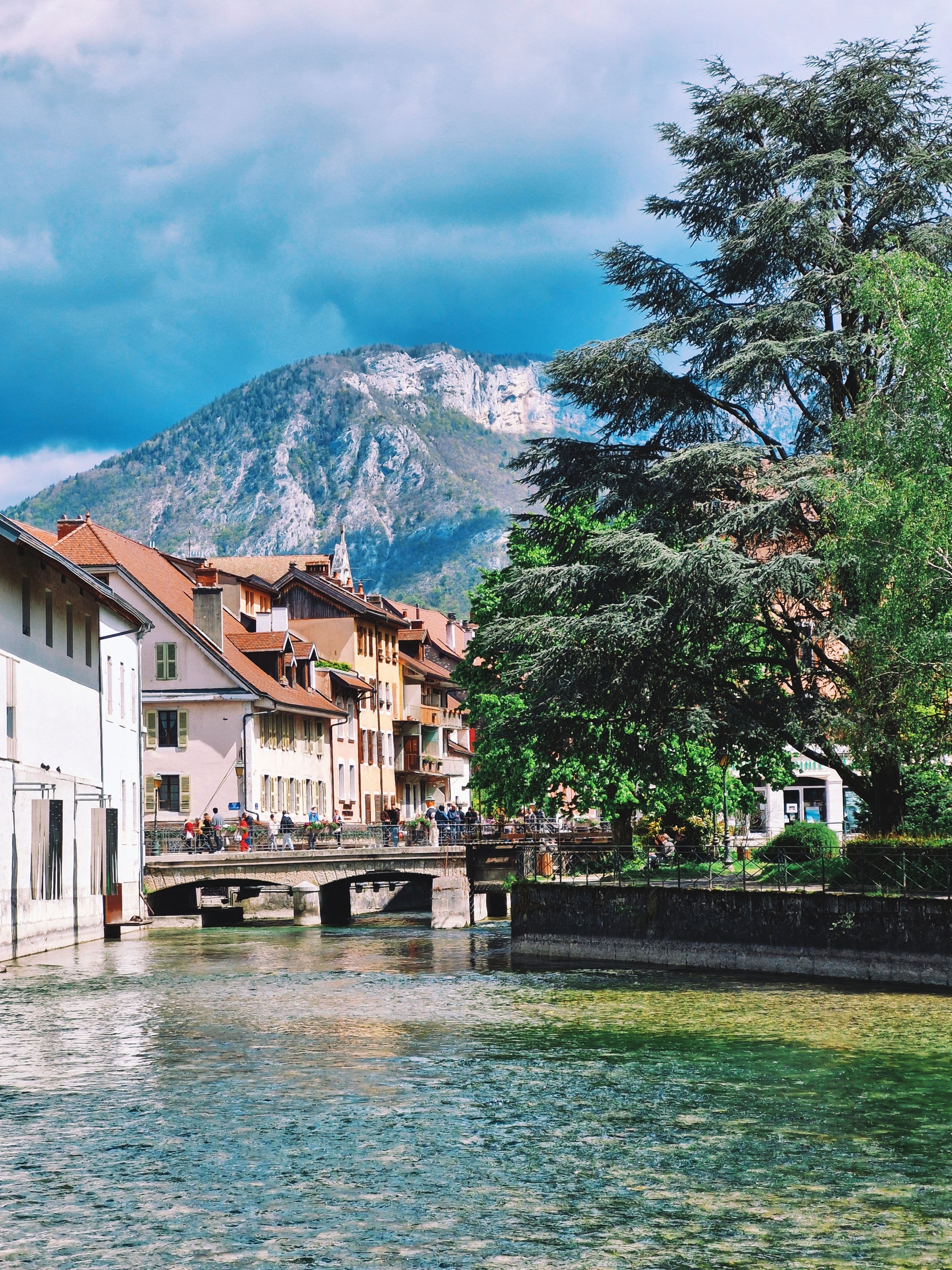
Le Pâquier and the northern edge of the old town are the best race base: a few minutes from the finish and the village, and 25 minutes’ walk from the start. The old town itself, with its canals, holds most of Annecy’s restaurants and makes the best base for a first visit. This area books early for race weekend and is expensive, so treat booking as a priority once the date is known.
The station and the central shopping streets
The station district suits train arrivals. Direct trains from Paris take from about 3 hours 43 minutes, and hotels here are a short walk from the finish at better rail value than a lakefront address.
Albigny and the lakefront
Albigny, the lakefront between Le Pâquier and Petit Port, is the premium option, home to the Impérial Palace. It sits between the start and the finish, so neither walk is long.
Sevrier, Saint-Jorioz and Talloires
The villages further round the lake have attractive places to stay, but they are awkward before an 08:00 start, and Sevrier and Saint-Jorioz sit on the course itself. Unless you have a car and the 2027 closure plan, stay in central Annecy and save the lake villages for after the race.
Recommended hotels
A 67-room hotel in the old commercial centre, the closest of these to the Pâquier finish and the old town’s restaurants. The start at Petit Port is a 25-minute walk along the lake.
A 49-room hotel between the station and the lake, a good balance for runners arriving by train who still want to walk to the finish.
A 100-room hotel at the lake edge with lake and mountain views and its own restaurant.
A practical mid-range option near the station and the old town, for runners who value rail access and price over a lake view.
The premium lakeside choice, open all year, with 90 rooms, 14 suites, restaurants and a spa. It sits along the lakefront between Le Pâquier and Petit Port, so neither the start nor the finish is far.
Booking timeline
The moment AHSA publishes the 2027 date, book a refundable central room: Annecy is a busy destination anyway, and race weekend adds thousands of runners in April. Enter promptly when registration opens, since the race has sold out. About three months out, book your travel to Geneva, Lyon or Paris and recheck the PPS rules. In the last month, book any pasta party or city-visit extras and a bib-collection slot when they open. In race week, confirm your wave, the village hours, whether a SIBRA pass is on offer, the forecast and the final course. The hardest thing to get here is usually a central room, not the race entry.
See & Do
All of these are close to the Le Pâquier finish and the central hotels. Distances are on foot from the finish.
Le Pâquier and the Jardins de l’Europe
At the finish itself. Free, flat lakeside parkland, the least effortful way to spend a Sunday afternoon by the water without covering any more ground.
Annecy old town and the Palais de l’Isle
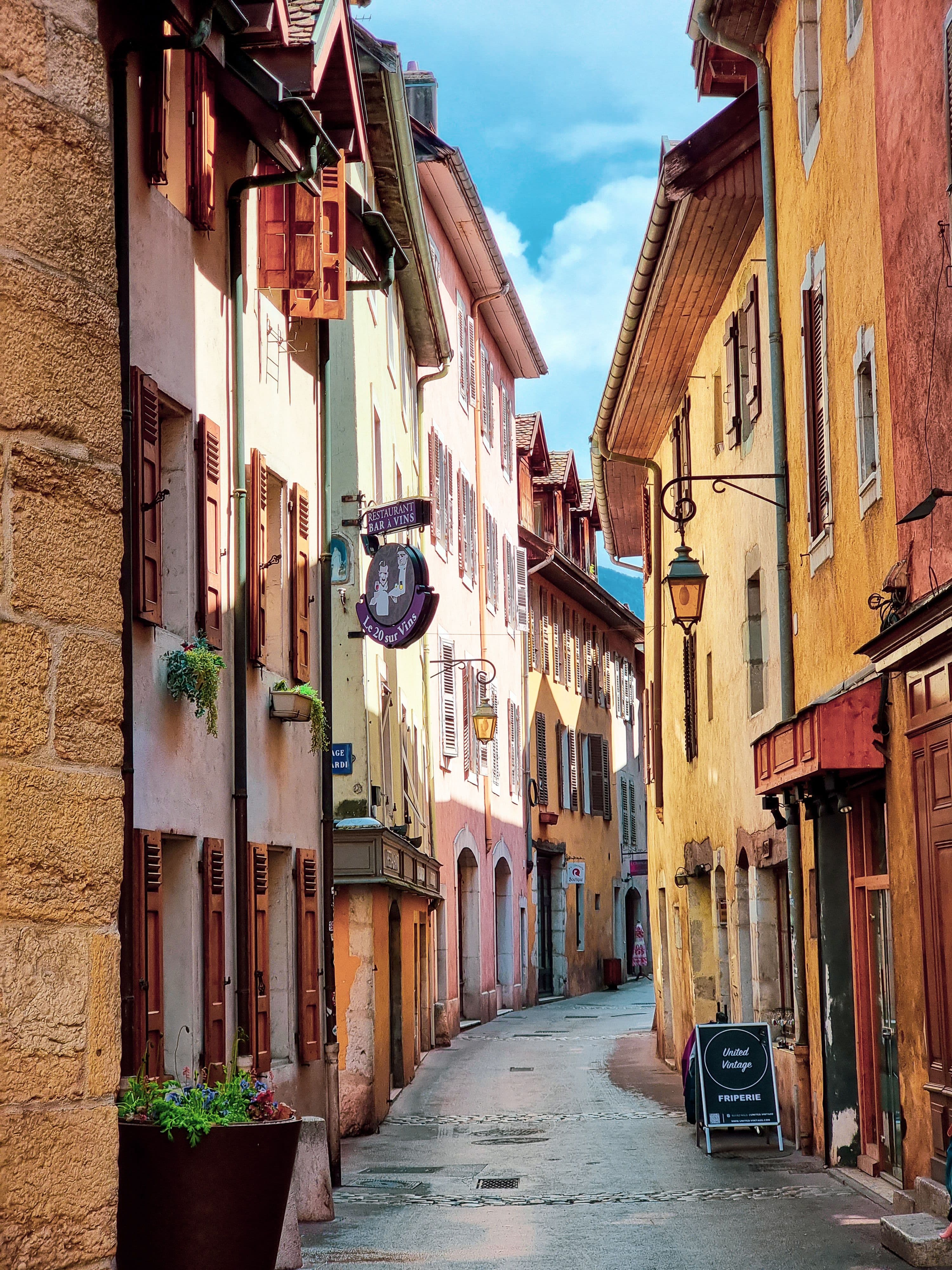
About 500 m (0.3 miles) from the finish. A compact old town laced with canals, reachable on foot straight from the finish. The Palais de l’Isle, the old prison set in the middle of the Thiou canal, is its best-known building and a short, flat visit. The old town works well on the Friday or Saturday before the race, and again afterwards at a slower pace.
Lake Annecy cruise
From central Annecy, a few hundred metres from the finish. Croisières des Alpes runs its season from 1 April to 31 October, so race weekend falls inside it. A cruise of about an hour asks nothing of tired legs beyond finding a seat.
Château d’Annecy
About 600 m (0.4 miles) from the finish, but uphill. The château gives history and views over the lake and old town, and the climb up to it is real, so visit before the race while your legs are fresh.
April is shoulder season on the lake. The cruise runs, but do not count on mountain attractions or high passes beyond the lakeside being open.
Read Before you Run
The Alps: A Human History from Hannibal to Heidi and Beyond
Stephen O'Shea
A readable history of the Alps as a whole, which gives the mountains framing the course some meaning beyond the view.
After the Race
Mid-April is shoulder season around Annecy: the lake cruises have started, the Navibus shuttle has not, and the high mountains are still in winter. Annecy’s bus and rail links make the short trips easy on tired legs: Aix-les-Bains in under half an hour, Geneva and Chamonix in an hour or so, Lyon in about two.
A short hop across the Swiss border, easy as a day out and handy for routing home through Geneva airport.
A spa town on Lake Bourget, barely further than a local bus ride, on the same rail line that continues to Lyon and Paris.
A slower lakeside night in Talloires, Menthon-Saint-Bernard or Sevrier. The Navibus lake shuttle does not run in April, so plan on the bus.
A mountain-town trip beneath Mont Blanc, not a hiking one: mid-April is before the high trails and most lifts open.
France’s food capital, direct enough by train to add without a wasted travel day either side.
Frequently asked questions
Should I stay near the start or the finish?
Near the finish at Le Pâquier, beside the old town. The start at Petit Port is about 2 km north-east along the lake, an easy walk before the race.
How far in advance should I book a hotel?
As soon as the 2027 date is confirmed. The 2025 race sold out and 2026 drew a record 18,000 across the weekend, so book a refundable central room early.
Is there free transport to the start on race day?
Not confirmed. In 2025 a paid SIBRA event pass cost €3 a day. The start is about 2 km from the old town, so most central runners walk.
What is the best area to stay?
The old town and around Le Pâquier, a few minutes from the finish. The station district suits train arrivals; the Albigny lakefront sits between start and finish.
When does the expo open?
In 2026, at Le Pâquier: Friday 09:00 to 20:00, Saturday 06:00 to 20:00 and race morning 06:00 to 07:30. Collect before race morning.
What is the weather typically like on race day?
Cool mornings: April normals run from about 5°C to 16°C. Wind along the open lake shore often matters more than temperature.
How do I get from the airport?
Fly to Geneva, about 1 hour 15 minutes by direct bus, or Lyon, under two hours by train. Annecy’s own airport has few routes.
Is there a bag drop?
Yes, at the Le Pâquier village, though the 2027 layout is unpublished. With the start 2 km away, check how bags are handled in the runner guide.
Should I bring a throwaway layer?
Yes. The waves leave between 07:45 and 08:15 and Alpine mornings are cool. A light wind or rain layer is worth considering too.
How do I get back to my hotel after finishing?
Walk: Le Pâquier is beside the old town, a few minutes from most central hotels. No post-race shuttle is documented.