The Race
| Next Race Date | Sunday 25 April 2027 |
|---|---|
| Course type | Loop, start and finish 17 m apart at Cais da Fonte Nova |
| Registration | Open online entry, no ballot |
| Ballot opens | No ballot |
| Start | Cais da Fonte Nova, beside the congress centre, 08:00 |
| Finish | Cais da Fonte Nova, the same quayside |
| Total finishers | 700+ (marathon) |
| Avg race-day temp | Not confirmed. April normal is about 95.5 mm of rain over ten wet days |
| Cutoff time | 6 hours, with removal at km 23 after 12:10 and km 33 after 13:30 |
| Free race-day transport | No. Road closures also disrupt local buses |
| Course certification | World Athletics Road Race Label, held since 2023 |
History
Aveiro City Council and the event operator GlobalSport put on the first Europe Marathon in 2019, pairing a full marathon with a half, a shorter race and a participation walk. The aim was a major Portuguese marathon anchored to the Aveiro region. The pandemic cut that growth short, and the race returned as a largely regional road event before widening again.
The turn came in 2023, when the organisers obtained a World Athletics Road Race Label. A label changes who can be recruited and what a performance counts for: times run here sit inside the World Athletics road-race system instead of only in a municipal event's own results. It remains the race's principal credential.
The course widened with the field. Cais da Fonte Nova, the waterside district beside the congress centre, has stayed as start and finish throughout, but the marathon now leaves Aveiro entirely, crosses into Ílhavo municipality and reaches the Atlantic side of the lagoon at Praia da Barra and Costa Nova before coming back. The first and last few kilometres carry the city's crowds. The 25 km in between are open, straight and largely empty.
The weekend numbers have moved quickly. The organiser reported 21,686 registrations across all distances at the most recent edition, with runners from 82 countries, and the expo grew from 2,000 m² to 5,000 m² with 52 exhibitors. Those are weekend-wide totals across every race; the marathon itself is a much smaller field, listed at more than 700 finishers. The most recent winners were Semachew Birhanu Welde of Ethiopia in 2:10:04 and Hanane Bouaggad of Morocco in 2:31:40.
The course
The marathon starts and finishes at Cais da Fonte Nova, with the two points 17 m apart. From the quayside it runs east and then west through Aveiro's streets, passes the salt pans at Cais do Sal and picks up the Estrada da Ria, the road along the lagoon, from about km 5. It crosses into Ílhavo municipality and reaches Gafanha da Nazaré at km 12, runs out past the commercial port to Praia da Barra at km 20, then turns south down the sand spit through Gafanha da Encarnação to Costa Nova. The furthest point from the start comes at km 25.5, 9.4 km out. The return retraces the spit and the lagoon road before climbing gently back into the city from km 38.5.
It is genuinely flat. The whole course spans 21 m between its lowest and highest points, and the organiser's route page gives 146 m of total ascent. The highest ground of the day arrives at km 1.6, at 19 m, while the runner is still inside the city. Everything after that sits between sea level and about 7 m until the closing climb. There is one sustained rise on the entire route: 15 m over the 2.2 km from km 38.5 to km 40.7, averaging 0.7 per cent, as the course leaves the lagoon and works back up into Aveiro.
Wind is the variable that decides this race, and the course layout is what makes it so. Roughly 25 km of the middle sit on an open lagoon road, a commercial port approach and an exposed Atlantic sand spit, none of which offer shelter. The surface is tarmac throughout with no trail or gravel section. The organiser's About page gives 165 m of ascent against the route page's 146 m; the lower figure is published here and both are worth a check against the current athlete guide.
Kilometre by kilometre
Km 0 to 5: the city, and the only hill you will meet. The gun goes at 08:00 on the quayside. The opening kilometres run through Aveiro's street grid and along Avenida Doutor Lourenço Peixinho, the avenue that leads to the railway station, and this is where the crowds are. It is also, counter-intuitively, the highest ground of the day: the course touches 19 m at km 1.6 before dropping back toward the water. A field made up of marathon, half marathon and walk entrants leaves together at 08:00, so the opening kilometres are crowded and loud. Let them go.
Km 5 to 12: the salt pans and the lagoon road. Past the Parque dos Remadores Olímpicos the course reaches Cais do Sal and the salt pans, then settles onto the Estrada da Ria along the edge of the lagoon. The ground here is at or barely above sea level and stays that way. Shelter thins with every kilometre. On a calm morning this is where a rhythm locks in; on a windy one it is where the day is decided, and finding a group to sit in is worth more than any pacing plan.
Km 12 to 20: Gafanha da Nazaré and the port. The course crosses into Ílhavo municipality and reaches Gafanha da Nazaré at km 12, running the length of Avenida dos Bacalhoeiros and Avenida José Estevão. The name is literal: these are the codfishermen's avenues, and the Aveiro fleet still works out of the port the course skirts from km 15. Reference points sit further apart here and the roads are wide. It is quiet, and a runner who needs crowd noise to hold pace should know that in advance.
Km 20 to 27: Praia da Barra, Costa Nova and the turn. The Atlantic arrives at Praia da Barra around km 20, with the lighthouse as the marker, and the course then turns south down the sand spit through Gafanha da Encarnação toward Costa Nova and its striped palheiros. This is the most photographed ground on the route and the most exposed on it. There is no climb to warn you that the wind has changed direction. Run to effort here and let the watch read what it reads. The furthest point from the start is km 25.5, and everything from there is nominally homeward.
Km 27 to 38: back up the spit, and the long flat return. The route retraces the spit north, passes back through Gafanha da Nazaré around km 33 and rejoins the Estrada da Ria for the run along the lagoon. The ground is flat and the scenery repeats, which is its own test after 30 km. On a day with any wind, the accumulated cost of the outward leg gets collected somewhere in here. The last four aid stations sit at roughly km 31.7, 33.4, 36.8 and 40, and in warm conditions they are the ones that count.
Km 38 to 42.195: the one climb, then the quayside. From km 38.5 the course leaves the lagoon and climbs back into Aveiro, gaining 15 m over 2.2 km along Estrada de Santiago and Avenida de Santa Joana, past the Museu de Aveiro. At 0.7 per cent it is barely a gradient on paper and it is the only sustained rise on the course, arriving with under four kilometres left. It tops out around km 40.7 and the last kilometre and a half fall back to the quayside. The finish is at Cais da Fonte Nova, the same place the day started, and the walk back to a Fonte Nova hotel is measured in minutes.
The day’s high point is 19 m at km 1.6, inside the city. After that the course drops to the water and stays there. Crowds end where the Estrada da Ria begins.
Wide codfishing avenues and the commercial port approach. Flat, quiet and open. Find a group before the coast if the wind is up.
The Atlantic sand spit, the lighthouse and the striped houses. The most exposed ground on the course. Furthest point from the start is km 25.5.
Back up the spit and along the lagoon, then 15 m of climbing from km 38.5 to 40.7 at 0.7 per cent before the drop to the Fonte Nova finish.
Course Map
A loop that leaves Aveiro westward, follows the lagoon to Gafanha da Nazaré, reaches the Atlantic at Praia da Barra and turns south down the spit to Costa Nova before retracing its way home. Tap a marker for the start and finish, the expo, the railway station and the three course landmarks, and scrub the slider or press play to move the orange marker along the course with the elevation profile beneath it.
Pacers
Not confirmed. The organiser's information page reserves a Pacemakers section and currently reads “coming soon”, and no pace bands or wave allocation have been published. Plan to pace yourself, and check the athlete guide when it is released.
Pack for the forecast and not for the month. Aveiro in April is Atlantic and unsettled: the 1991 to 2020 normal gives about 95.5 mm of rain across just over ten days with at least 1 mm, and the race has also had warm editions, with April in the most recent year classed as exceptionally warm across mainland Portugal. An 08:00 start on an open quayside can be cool and breezy or already mild.
A light disposable layer suits a cool, breezy start beside the water. On a warm forecast, leave it behind: the start area is exposed and the coastal stretch from km 20 has almost no shade. No clothing-donation scheme is published, so anything discarded should be cheap and treated as gone. A peaked cap earns its place in either direction, keeping sun off on a bright day and rain out of the eyes on a wet one, and sunscreen is worth applying on shoulders and neck even under cloud. Road shoes are all that is needed; the whole course is tarmac and the risk here is a long, straight, wind-facing road, not the surface.
Entry
Entry is direct and online with no ballot. Registration is confirmed only on payment, and the organiser can close entries at a published deadline or when capacity is reached. With more than 21,000 registrations across all distances at the most recent edition, the late price band is poor value even when places remain.
Recent marathon bands ran from €60 to €70 early, rising to €120 late in the cycle, which is roughly £51.50, £60.10 and £103 at €1 = £0.8588. Runners pay in euros and card providers apply their own rate, so treat the sterling figures as comparison only and check the live registration platform for the current bands.
There is no age-graded Good For Age route for mass entrants. What exists instead is a sub-elite application: at the most recent edition the organiser could allocate sub-elite bibs to runners with a marathon inside 2:30 (men) or 2:40 (women) in the previous three years, or a half marathon inside 1:10 (men) or 1:20 (women). Proof had to reach the organiser by email before a deadline in early April. Thresholds and the deadline move, so check the current regulations before relying on this.
No charity-place scheme of the London kind was found, though the organiser runs inclusive and solidarity projects. The race names OptViagens as its official travel partner for accommodation, transport and tailored experiences; the partner page does not state that a package guarantees a bib, so treat it as a travel service and not an entry route.
Changes to your registration data were allowed for a fee until a published deadline. Transfers and resale of bibs to third parties are prohibited outright. Cancelled registrations generally get no refund, with one narrow exception for a payment made after the platform deadline, which allows a refund request within 30 days for a €10 administration fee. That exception is not a general cooling-off period, and it should not be planned around.
Bib collection can be delegated: a third party can collect in advance with the original proof of registration. The organiser still recommends collecting before race morning, and the Sunday window makes that advice worth following.
Fast runner standards
There is no qualifying-time route into the general field, and no age-banded standards table to publish. The sub-elite thresholds above are a single band open to men and women and are an application, not an entitlement.
The Canal Challenge is a two-day entry pairing Saturday's 10K with Sunday's half marathon or marathon, and it awards three medals across the weekend. Saturday's 10K has its own collection window, including a 06:00 to 07:00 slot reserved for 10K and Challenge runners, so the first day needs planning around getting your bib before you race rather than after. Treat the 10K as a shakeout and keep something back for Sunday: a 10K run hard the day before a marathon is a poor trade for a third medal.
Race Weekend
Expo
The Race Office and expo, branded Expo Maratona, sits at Cais da Fonte Nova beside the Meliá Ria hotel, in the same district as the start and the finish. At the most recent edition the athlete guide put number collection and bag services in an expo tent there.
Published hours are Friday 10:00 to 20:00 and Saturday 10:00 to 19:00, with two narrow early windows: Saturday 06:00 to 07:00 for 10K and Canal Challenge runners only, and Sunday 06:00 to 07:00. The marathon starts at 08:00, so Sunday collection leaves almost no margin and should be a fallback and nothing more. Collect Friday or Saturday.
Bring proof of registration and photo identification. A third party can collect in advance with the original proof of registration. Write your emergency contact and any relevant medical information on the back of the bib. T-shirt sizes depend on stock and an alternative may be offered if yours has gone. The expo has grown from 2,000 m² to 5,000 m² with 52 exhibitors, so it now takes real time instead of a quick desk visit: Friday afternoon is the calmer slot, since Saturday concentrates marathon runners with the 10K and Canal Challenge fields collecting the same day.
Getting to the start
The marathon, half marathon and 5K walk all start at 08:00 at Cais da Fonte Nova. Anyone staying in the district or in central Aveiro can walk to the line: from the Meliá Ria the start is effectively outside the door, from the canal and Rossio area it is a short city walk, and from the railway station it is about 1.3 km. No free public transport comes with the bib, and race closures disrupt local buses, so build the morning around walking and not around a bus.
At the most recent edition the athlete guide placed check-in and bag drop beside the expo, and named Escola Dr. Mário Sacramento and Escola Secundária José Estêvão as shower locations. The organiser's current information page lists cloakroom, showers, parking and supplies as coming soon, so treat all of that as precedent and not as confirmation.
Arrive early enough to absorb shared participant flows, because three races leave the same quayside at the same time. Pen entrances, toilets and warm-up areas come with the athlete guide. The bib carries the timing chip and must be visible on the front of the chest; using another runner's chip, carrying more than one, or missing an intermediate control mat can all lead to disqualification. Motorised devices and bicycles are prohibited on the course.
The six-hour limit is enforced with removal points, and they are earlier than the headline figure suggests. At the most recent edition a runner reaching km 23 after 12:10, or km 33 after 13:30, had to surrender the bib and either leave the race or take the sweep vehicle. Anyone continuing after that did so outside the race and under normal highway rules. Working back from those two points, the cutoffs ask for roughly 5:40 pace to km 23 and a little more room after it.
Nutrition on course
The most recent aid plan put water at roughly every 4 km from the start, added sports drink from km 12 and gels at km 20 and km 31.7. Water was Vitalis. Bananas and oranges rotated across the stations, sponges appeared where the weather required them, and the finish served water, isotonic drink and an apple.
| Km | Water | Sports drink | Gel | Food |
|---|---|---|---|---|
| 4 | Yes | No | No | None |
| 8 | Yes | No | No | None |
| 12 | Yes | Yes | No | Orange |
| 16 | Yes | Yes | No | Orange |
| 20 | Yes | No | Yes | Banana |
| 23.5 | Yes | Yes | No | Orange |
| 27.5 | Yes | Yes | No | Orange |
| 31.7 | Yes | Yes | Yes | Banana |
| 33.4 | Yes | Yes | No | None |
| 36.8 | Yes | Yes | No | Orange |
| 40 | Yes | Yes | No | Orange and banana |
| Finish | Yes | Yes | No | Apple |
Eleven on-course stations is a comfortable frequency for a conservative hydration plan. Two details are worth planning around. The first gel comes at km 20 and that station carries no sports drink, so anyone who fuels earlier than halfway should carry their own for the first half. And the last four stations, at roughly km 31.7, 33.4, 36.8 and 40, sit on the exposed return leg where a warm or windy day collects its debt; take a cup at each one. Sponges were available at several stations when the weather required. No general personal-bottle service for ordinary runners was found, so carry your own if you depend on a specific brand.
Spectating
Aveiro's geography settles the spectating question quickly. The course leaves the city for Ílhavo, Barra and Costa Nova, and race closures disrupt local buses, so chasing this marathon by public transport does not work. The reliable plan is the start, one or two central sightings if the published map allows, and the finish.
The best single spot is Cais da Fonte Nova, which covers the 08:00 start and the finish and keeps food, toilets and central hotels within a short walk. Crowd support is loudest in central Aveiro, on the quayside and in the settled coastal areas; the connecting roads between them are quiet. Supporters who do make the trip out to the coast get a scenic, windy spot with the striped houses of Costa Nova and the Barra lighthouse behind them.
- Watch the 08:00 start at Cais da Fonte Nova
- Walk into the centre toward the canal and Rossio for an early sighting in the first few kilometres
- Walk back to Fonte Nova, 10 to 15 minutes, in good time for the finish
- Watch the start at Cais da Fonte Nova
- Take a taxi or ride-hail toward Gafanha da Nazaré after checking the race-day traffic plan, for a sighting near km 12 outbound or km 33 on the return
- Return to Aveiro well before the expected finish times, without counting on buses during closures
- Skip the start and go out to Costa Nova or Praia da Barra before the closures begin, with transport confirmed in advance
- Watch from the promenade and the seafront cafés, where you can shelter between passes and catch runners twice on the out-and-back spit
- Do not plan a tight return to Aveiro for the finish unless the published traffic plan gives a reliable route
The finish area at Fonte Nova is where runners and supporters meet, and a meeting point is confirmed in the athlete guide. Agree a fallback with your runner in advance, because phone signal in a finish crowd is unreliable everywhere and Aveiro is no exception.
Post-race food
The quickest proper meal is at Do Lago, the restaurant inside the Meliá Ria at Cais da Fonte Nova, Lote 5, beside the race hub. It serves Sunday lunch from 13:00 to 15:30, which lines up with most finishers, and a Portuguese and Mediterranean menu makes a full carbohydrate-and-protein meal easier to assemble than finish-line snacks allow.
For a longer sit-down, Salpoente is at Canal de São Roque 82 and 83, in converted salt warehouses. Lunch runs 12:30 to 15:00 and dinner 19:30 to 22:30. The kitchen works with regional ingredients, and fish and rice dishes are staples along this coast, so ask what the day's menu has. It is not cheap, and a reservation on race Sunday is sensible.
The canal area around Rossio holds plenty of cafés and restaurants within an easy walk of the finish, though hours shift and are worth checking before setting out on tired legs. Aveiro's own sweet, ovos moles, is a thin wafer shell filled with egg-yolk and sugar paste and sold across the centre. It is dessert, not recovery.
Where to Stay
Aveiro removes the usual start-versus-finish calculation, because both are at Cais da Fonte Nova and 17 m apart. Staying near the finish and staying near the start are the same decision. What remains is how much walking and how much city life you want around that fixed point, and the answer for most runners is the western edge of the centre, between the quayside and the canal.
Fonte Nova and the Congress Centre
Fonte Nova is the most efficient base in the city. The start, the finish and the expo all sit here, so race morning is a walk of minutes and the return after the line is trivial. The Meliá Ria is in the district. The trade-off is price and availability: the area has few budget rooms and weekend demand concentrates on it. It suits runners who put logistics ahead of evenings out. Price tier: ££££.
Central Canal and Rossio
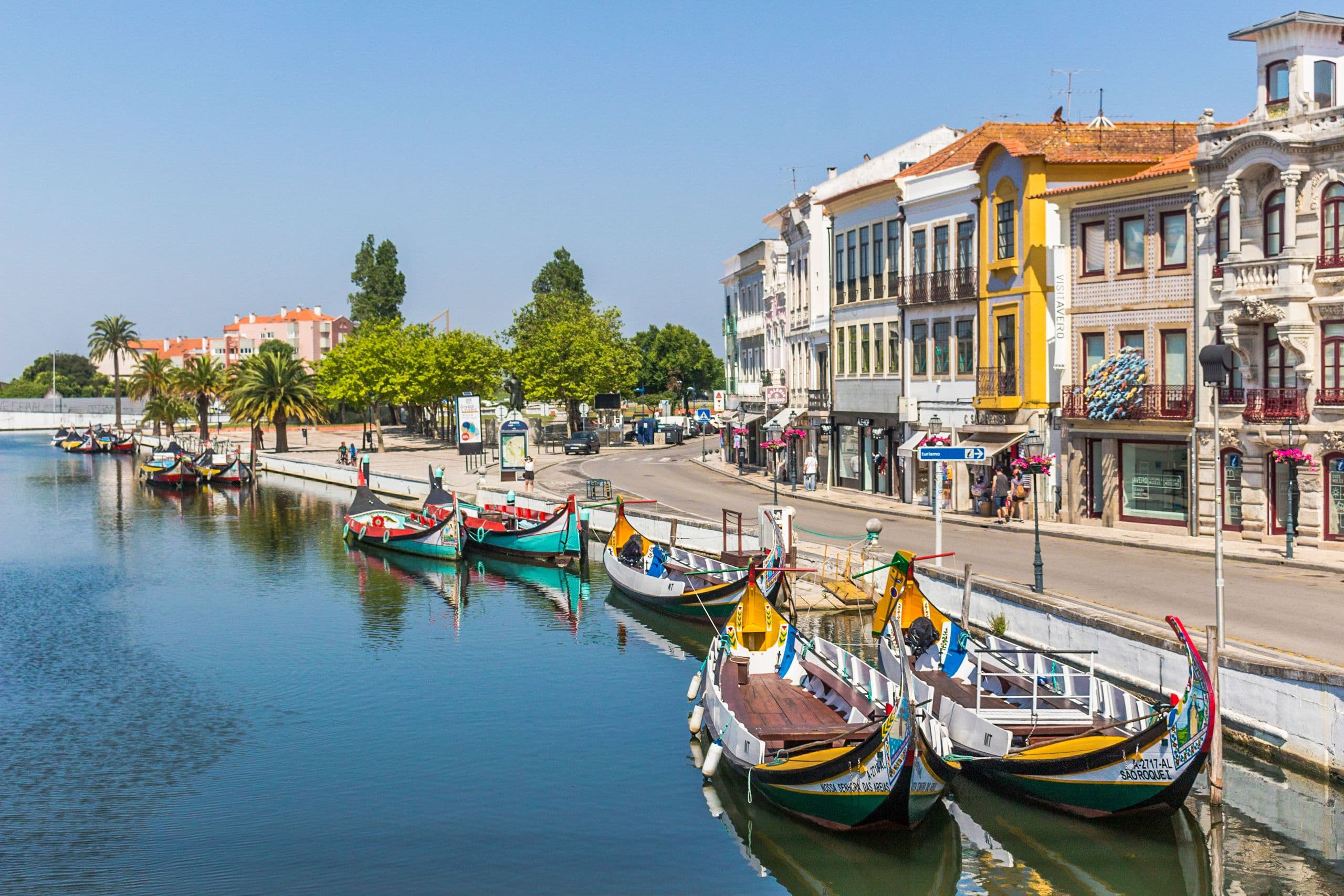
The historic commercial centre around the canal sits about 1 km from Fonte Nova and carries the better restaurants, the moliceiro moorings and the evening activity. Hotel Moliceiro and Hotel Aveiro Palace are both here. Saturday-night noise is higher around the bars and terraces, so light sleepers should ask for an inward-facing room. For most visitors this is the best balance of race access and city. Price tier: £££ to ££££.
Railway station and Avenida Dr. Lourenço Peixinho
The station district is the practical choice for anyone arriving by train from Porto or further afield. It holds more mid-range rooms, sits about 1.3 km from the race hub, and makes an early departure after the race straightforward. The marathon route runs along Avenida Dr. Lourenço Peixinho in its opening kilometres, so you can watch the race pass from close to your hotel. Less picturesque than the canal front. Veneza Hotel and As Américas are here. Price tier: ££ to £££.
Beira-Mar and São Roque
The older streets on the north-west side of the centre put you near the Canal de São Roque and the converted salt warehouses that house Salpoente. The walk to Fonte Nova is longer than from the canal core. Beira-Mar suits runners who want a more residential, historic feel, with the usual caution about noise near the nightlife streets. Price tier: ££ to £££.
University and Glória
South and south-east of the centre, the university district is quieter, with open campus ground around the University of Aveiro. The walk to Fonte Nova stays reasonable depending on the property. Glória suits runners who want calm and do not mind a longer walk before an 08:00 start. Late-night dining is thinner here than in the canal centre. Price tier: ££.
Costa Nova and Praia da Barra
Costa Nova and Praia da Barra sit out on the marathon route itself, between km 20 and km 27, which is exactly what makes them a poor race base. Closures and the distance from an 08:00 start make the morning fragile, and no organiser transfer has been published. These are excellent places to spend the nights after the marathon, with beach access and a quiet recovery, and poor places to spend the night before it. Price tier: ££ to £££.
Recommended hotels
The address is Cais da Fonte Nova, which puts it effectively on the race hub. The expo, the start and the finish are all outside the door, so race morning needs no plan at all. It also houses the Do Lago restaurant. Expect premium pricing and the heaviest demand of any hotel in the city.
At Rua Viana do Castelo 4, on the canal in the historic centre. Restaurants and the moliceiro moorings are on the doorstep and the walk to the start stays comfortable. Central position means some evening noise from the bars.
A 49-room hotel in a strong central position for a weekend built around the city as much as the race. There is no on-site parking, and it sits at the premium end of the local market.
About 100 m from Aveiro station, which suits arrival from Porto with luggage and an early departure afterwards. Less picturesque than the canal front, and the walk to the start is straightforward.
Listed in the municipal accommodation guide and a workable balance of station access and central position. Recheck the race-morning walking route once the closure map is published.
Booking timeline
There is no ballot result to wait for, so the trigger is your own registration. Book a cancellable room at the moment you enter. The most recent weekend drew more than 21,000 registrations across all distances, Aveiro is a small city, and the rooms closest to Cais da Fonte Nova are limited enough to tighten well before race week.
For an April race, autumn through early winter is a sensible window if you want the Meliá Ria, a canal-front hotel or a specific room type. That is a planning recommendation and not an organiser deadline. The race site names OptViagens as its official accommodation and logistics partner, so compare its packages against refundable direct rates before committing.
One date deserves attention beyond the race. 25 April is Dia da Liberdade, Portugal's Freedom Day public holiday, and in 2027 it falls on race day itself. That lifts hotel demand and rail loadings across the country independently of the marathon, so book travel earlier than you otherwise would and expect the trains from Porto to be busy. Flights into Porto generally offer more choice than anything closer; book those once entry and accommodation are settled. Race-day road closures affect buses far more than the mainline railway, which makes a station-area hotel a useful fallback if Fonte Nova prices climb.
See & Do
Everything below sits within a short walk of the Fonte Nova finish and the central hotel districts. Costa Nova and Praia da Barra are covered in the post-race itineraries instead, because they are 10 km out on the course and need transport.
Museu Arte Nova
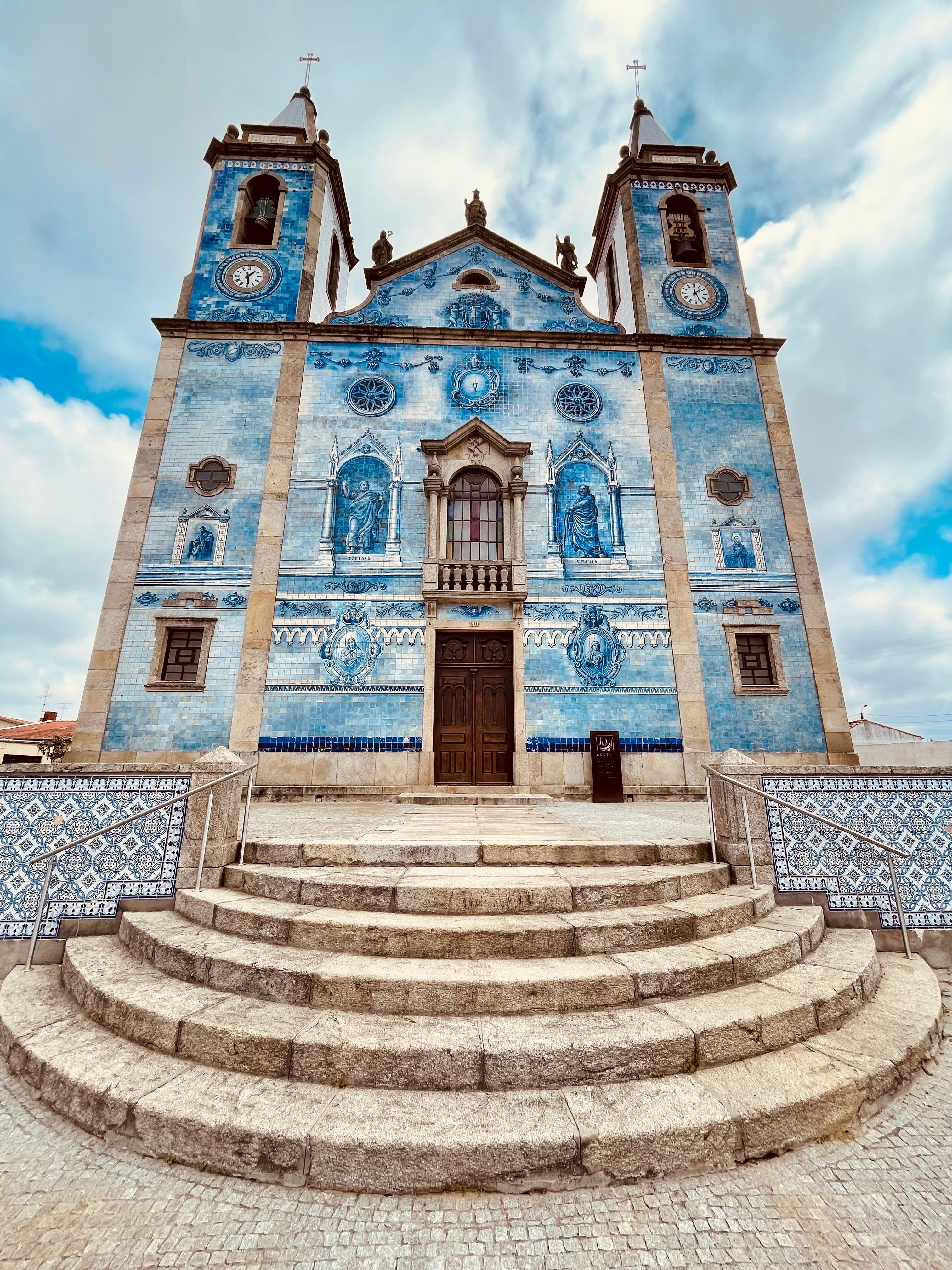
The museum occupies the former Casa Major Pessoa and is the natural way into Aveiro’s Art Nouveau frontages, which are the city’s real architectural signature and easy to walk past without registering. Open Tuesday to Sunday, 10:00 to 12:30 and 13:30 to 18:00. A short indoor visit that suits a Saturday when the legs are being saved.
Museu de Aveiro / Santa Joana
On Avenida de Santa Joana, which the marathon runs along in its closing kilometres during the one climb on the course. The cloister, church and collections carry more historical depth than the canal front. Open Tuesday to Sunday, 10:00 to 12:30 and 13:30 to 18:00. The stairs and the standing make this better the day after the race than the day before.
Ecomuseu Marinha da Troncalhada
An open-air working salt pan on the edge of the lagoon, with no fixed indoor hours. It explains the ground the race crosses in its first ten kilometres, where the course passes Cais do Sal and the salt flats. April weather is not guaranteed, so treat it as a short and flexible visit.
A moliceiro canal trip
The flat-bottomed moliceiro boats were built to harvest seaweed and now run tours of the central canals. It is the lowest-effort way to see the city on a marathon evening or the morning after, since the only thing required of you is sitting down. Use a licensed current operator; schedules and prices vary through the season.
Read Before you Run
Journey to Portugal
José Saramago
Saramago travelled the country by road in the late 1970s and published the account in 1981 as Viagem a Portugal. It is not a running book. It is the best available argument that the Centro region is worth more than the two days a race weekend gives it, and it stops Aveiro reading as an isolated venue with a lagoon attached.
After the Race
Late April on this coast is shoulder season, which is the point. The beaches are open without being full, the Douro vines are in fresh leaf, and Aveiro sits on the main Lisboa to Porto line with Coimbra half an hour south, Porto an hour north and Lisbon under two hours by Alfa Pendular. Flat ground is worth more the day after a marathon than it sounds, so the trips below are ordered by how much walking they ask of you. The three day trips are all flat: two of them cover ground the race itself crossed, and Espinho sits on the coastal railway north. The longer ones trade level streets for hills, which is why Coimbra and Porto get an extra night each.
The striped palheiros, a working lighthouse and a flat seafront promenade, on ground the marathon covers between km 20 and km 27. Late April is shoulder season, so plan for cafés and walking over swimming.
The Museu Marítimo de Ílhavo covers the cod fleet the race runs past on Avenida dos Bacalhoeiros, and the Vista Alegre porcelain museum trades walking for indoor time. A good fit for the day after.
A flat grid of streets, a long sandy beach and a wide seafront promenade, with the fishing port supplying the restaurants. The station has lift access, and the same line carries on to Porto, so it doubles as a stop on a travel day.
A direct rail run to Portugal’s second city, with the Ribeira waterfront for a first evening. Porto has far more hills and stairs than Aveiro, so one night suits tired legs better than a same-day dash.
A university city on a hill above the Mondego. Two nights allow one gentle recovery afternoon and one fuller day for the old centre, which is steep enough to need the extra day.
Two nights based in Parque das Nações, the flat Expo ’98 district on the Tagus, with the Oceanarium and the riverfront esplanade. Alfama and Bairro Alto stay off the plan. Humberto Delgado Airport is two Metro stops away.
Base in Porto and take the river-valley railway into wine country. Late April vines are in fresh leaf, and the train ride along the water is the point of the trip.