The Race
| Next Race Date | To be Confirmed |
|---|---|
| Course type | Loop: two laps of 21.1 km from Tanunda |
| Registration | Open entry, four price tiers |
| Ballot opens | No ballot |
| Start | The Rex, Barossa Aquatic Centre, Magnolia Road, Tanunda, 07:30 |
| Finish | The Rex, Barossa Aquatic Centre, Magnolia Road, Tanunda |
| Total finishers | To be Confirmed |
| Avg race-day temp | 3 to 16°C (August) |
| Cutoff time | 6 hours |
| Free race-day transport | No: an A$25 return bus runs from Adelaide, and a free shuttle serves the Bethany Reserve parking |
| Course certification | AIMS |
History
The Barossa running festival is older than its marathon. By 1999 the event already had a Barossa Legends scheme recognising regular runners, but the full marathon was only added in 2012. The South Australian Road Runners Club, which also runs the Adelaide Marathon, has organised it since, and it is the club's second marathon of the year, about three and a half months after Adelaide.
The club has kept its loyalty scheme. Runners who complete ten marathons or twenty half marathons at the Barossa are recognised, and in 2023 the levels were renamed Vintage and Magnum, in keeping with the valley's trade.
The course is AIMS certified and flat, and it has produced fast times: Ryan Waddington's course record of 2:28:08 in 2024 and Noo Bowker's women's record of 3:02:15 from 2018. The festival adds a half marathon, a 10 km and a 5 km, and more than 3,500 people entered across all distances in 2026.
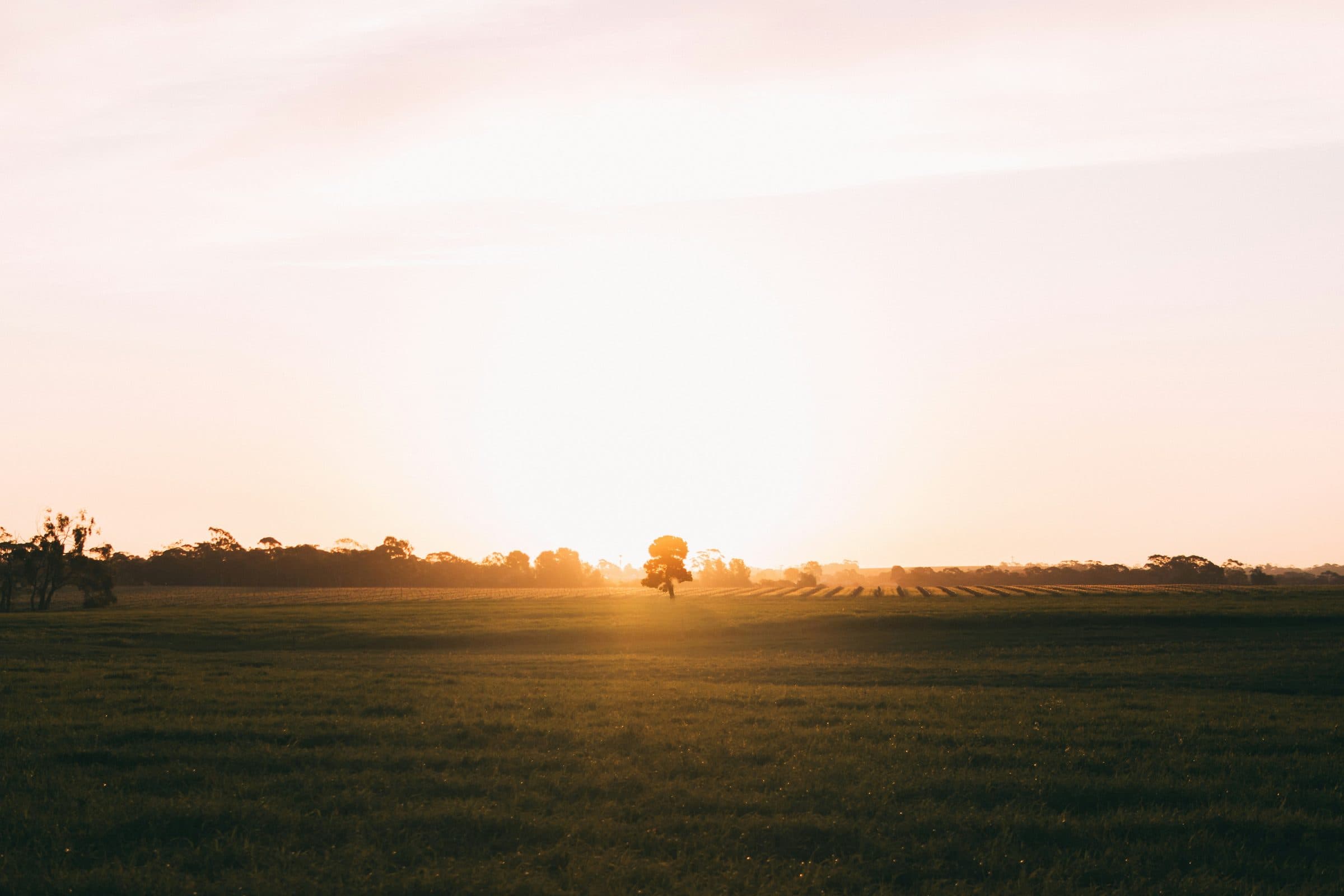
The race is held in late August, deep in the Barossa winter. The vines are bare and being pruned, the paddocks between them are green and the cellar doors are quiet.
The course
The Barossa Marathon starts and finishes on Magnolia Road in Tanunda, in front of The Rex, the Barossa Aquatic Centre, and runs two laps of 21.1 km through the vineyards north-east of the town.
Each lap leaves Tanunda by Research Road and climbs gently past the southern edge of Nuriootpa to Nuraip Road and Light Pass Road, which lead to Light Pass at about 7 km and on to Penrice at 8.1 km, the eastern end of the lap. It loops back through Penrice Road and Research Road to a northern point at 9.8 km, returns to Light Pass Road at about 13 km and comes home by Light Pass Road, Barossa Trail and Research Road to Magnolia Road. It is not a straight out-and-back: only Light Pass Road is run in both directions.
The roads are sealed country roads between vineyards, with long open straights and few buildings. The course is flat. It sits between about 277 and 297 m above sea level: each lap climbs about 19 m over the first 5.7 km, a gradient of 0.3 per cent, to the high point on Light Pass Road, falls back to Penrice Road, climbs about 17 m again over 3 km at 0.6 per cent on Light Pass Road and then descends about 17 m over nearly 10 km to Tanunda. The organiser publishes no total climb.
Kilometre by kilometre
Km 0 to 5: out of Tanunda. The start on Magnolia Road is at 07:30, soon after sunrise on a cold August morning. The course leaves the town by Research Road and runs north-east into the vines on quiet sealed roads, past the southern edge of Nuriootpa. Expect frost on the grass and breath in the air. Warm up gradually.
Km 5 to 8: the long drag. The road turns onto Light Pass Road and rises to its high point at about 5.7 km, roughly 19 m above the start over 5.7 km. It is barely visible, but it shows on the watch. Hold effort instead of pace, then run through Light Pass to Penrice at 8.1 km.
Km 8 to 13: the loop at the top. The course loops through Penrice Road and Research Road to its northern point at 9.8 km and turns back east and south. Here you see the runners ahead of and behind you on the loop, and a short drop before the second, sharper rise: about 17 m over 3 km, 0.6 per cent, on Light Pass Road between 11 and 14 km.
Km 14 to 21: back to Tanunda. From the top of Light Pass Road at about 14 km the return is downhill for nearly 10 km: Barossa Trail, then Research Road into Tanunda. The finish area on Magnolia Road is halfway, and marathon runners carry on for the second lap.
Km 21 to 42.2: the second lap. The same circuit again. With the half marathon finished the road empties, and the long straights between the vineyards feel longer. Open country means the wind can be significant, and on a leg into it, tuck in behind another runner. The finish is back on Magnolia Road.
There are few spectators away from Tanunda, so pacers matter more here than at a city race. No blue line is published.
A cold start, a long gentle drag to 5.7 km and the loop at Penrice. Hold back on the rise.
A second rise on Light Pass Road, then nearly 10 km of downhill to Magnolia Road. Check the split at halfway.
The road empties once the half-marathon runners have finished. Find a group or a pacer before the drag.
Open vines, possible wind and few spectators. The finish is back in Tanunda.
Course Map
Two identical laps from Tanunda: north-east on Research Road to Light Pass, a loop through Penrice and back by Light Pass Road and Barossa Trail. The line overlays itself. Tap a marker for Light Pass, Penrice, the northern point and the parking, and scrub the slider or press play to move the orange marker along the course with the elevation profile beneath it.
Pacers
Official pacers run at 3:00, 3:30, 3:45, 4:00, 4:13 and 4:30. The 4:13 group runs at 6:00 per km, as at the Adelaide Marathon.
The Barossa recognises its regulars. Runners who complete ten Barossa marathons reach Vintage status, and those who complete twenty half marathons reach Magnum. The scheme dates back to the festival's Barossa Legends of the 1990s.
The South Australian Road Runners Club also runs the Adelaide Marathon in early May, two laps of the River Torrens and the park lands from Pinky Flat. The two races are about three and a half months apart.
Late August is winter in the Barossa. Tourism guidance gives days of about 12 to 16°C and nights of 3 to 6°C, and the 07:30 start comes after a cold night, often with frost on the ground. Plan for a start in low single figures and a finish in the low to mid teens.
Gloves, a hat or headband and arm warmers are worth wearing for the first hour and can come off later, and many runners race in a long-sleeved top. Bag drop is included, so keep warm clothes on until close to the start and hand them in. Anyone on the SARRC bus from Adelaide leaves at 05:30 or 06:00 and arrives in the dark, so bring a warm layer for the wait at The Rex.
Rain is possible in winter. The open roads have no shelter, so a light waterproof in the bag is sensible.
Entry
Entry is open, with four price tiers and no ballot or qualifying time. The 2026 adult prices were A$140, about £74, to mid-May, A$155, about £82, to mid-July, A$170, about £90, to mid-August and A$180, about £96, after that. SARRC members pay less in every tier.
Entry includes a personalised bib, bag drop, pacers, aid stations and a finisher's medal, and medal engraving costs A$9 to A$10 extra. The SARRC bus from Adelaide is an optional extra at A$25 return. The course is AIMS certified, so times can be used as qualifying times for other marathons where they are accepted.
There is no good-for-age route and no charity allocation. Check the refund and transfer terms when entering: SARRC's policy for the Adelaide Marathon allows no refunds, with credits for members, and the Barossa terms may match.
Fast runner standards
There is no good-for-age route and no qualifying standard.
Barossa Marathon Festival (SARRC) →Race Weekend
Bib collection
There is no expo, but there are four chances to collect a bib, including race morning. In 2026 they were Thursday 16:00 to 19:00 and Friday 08:00 to 17:30 at RunDNA in Hindmarsh, Adelaide, then Saturday 11:00 to 15:00 and race morning 06:00 to 08:30 at The Rex, Barossa Aquatic Centre, Tanunda.
Runners staying in Adelaide can collect in the city on Thursday or Friday. Those staying in the Barossa should collect on Saturday at The Rex, which also lets them see the start area in daylight. Race-morning collection exists, but with a 07:30 start it leaves little margin.
Getting to the start
The marathon starts at 07:30 on Magnolia Road in Tanunda, in front of The Rex, the Barossa Aquatic Centre. SARRC asks runners to arrive by 06:30. There are three ways to get there.
Stay in Tanunda. The Rex is on the eastern side of the town, and much of Tanunda is 15 to 30 minutes' walk away. This is the easiest option.
Take the SARRC bus from Adelaide. Buses leave the club's rooms on MacKinnon Parade, North Adelaide, at 05:30 and 06:00 and take about an hour. They return at 11:00, 12:30 and 13:45. Tickets are A$25 return and must be booked in advance, and marathon runners finishing after about five hours should take the 13:45 bus.
Drive. Parking is at Bethany Reserve, 324 Bethany Road, about 2.7 km south of the start, and along Bethany Road, with a free shuttle to the start from 06:00. Do not plan to park at The Rex.
Bag drop and the finish. Bag drop is included and sits at the race village. Hand in warm clothes close to the start, because it will be cold. After the finish, runners return to the race village at The Rex, with bags, toilets and food.
Nutrition on course
Aid stations are included in the entry, but SARRC has not published their positions or products for the next edition. On a course of two identical laps each station is passed twice, which makes planning simpler.
Carry your own gels and take them at the stations. On a cold morning thirst is easy to ignore, so drink at regular intervals anyway. At the Adelaide Marathon SARRC uses Blue PURE Hydration electrolyte, but the Barossa arrangements are not confirmed.
Spectating
Spectating at the Barossa is simple. The start, halfway and finish are all on Magnolia Road in front of The Rex, so a supporter who stays at the race village sees a runner three times without moving.
The course itself runs through open vineyard country with few places to stand and no public transport. A supporter with a car can reach the Light Pass end, but road closures and narrow verges make that awkward.
- The Rex for the 07:30 start
- Stay for halfway, about 1 hour 30 minutes to 2 hours 30 minutes later
- Stay for the finish
- Watch the start
- Walk or drive into Tanunda's main street for breakfast
- Return to Magnolia Road for halfway and the finish
- Watch the start, then drive towards Light Pass, following closures, for the loop at Penrice at about km 8 and again at km 29
- Drive back to Tanunda for the finish
Post-race food
Tanunda's main street, Murray Street, is the place for lunch after the race, with bakeries, cafés and restaurants about 2 km west of The Rex. The Barossa's German settler heritage survives in its bakeries, and bienenstich or a sausage roll is a fair recovery order.
Most runners finish by mid-morning or early afternoon, well before the cellar doors fill. Eat first, drink water and leave the wine until later. The town is full on race weekend, so book an evening meal.
Where to Stay
Stay in Tanunda, within reach of the finish at The Rex on Magnolia Road. The start and finish are in the same place, the Barossa has almost no public transport, and walking back to a room after 42 km beats a drive.
Tanunda
Tanunda is the Barossa's central town, with the race village, Murray Street's restaurants and the Barossa Visitor Centre. Guest houses, cottages and motels sit between about 0.8 and 2.5 km from the start, 10 to 30 minutes on foot. It is the obvious choice.
Nuriootpa
Nuriootpa, about 6 km north, is the valley's service town, with supermarkets and larger motels. The course passes its southern edge, but it needs a car on race morning, and roads between it and Tanunda may be closed.
Angaston
Angaston, on the eastern edge of the valley about 7 km from the start, is a pretty stone town with good restaurants. It requires a car and time to reach the parking at Bethany Reserve.
Rowland Flat and Lyndoch
The southern end of the valley has resort accommodation, including the Novotel Barossa Valley Resort at Rowland Flat, about 7 km from the start. It is 10 to 15 minutes by car from Tanunda.
Adelaide
Many runners stay in Adelaide and take the SARRC bus at 05:30 or 06:00, returning after the race. It works, but it is an early start and a long morning.
Booking advice is in the timeline below.
Recommended hotels
A motel-style hotel on the northern edge of Tanunda with a restaurant, the closest of the three to Magnolia Road.
A historic pub hotel on Murray Street. Saturday night in the bar can be busy, and it is a 25 to 30 minute walk to the start.
A resort with a restaurant and pool at the southern end of the valley. A car is needed on race morning.
Booking timeline
Book accommodation when you enter. The Barossa has a limited number of rooms, and the festival draws several thousand runners and supporters to Tanunda in one weekend. The race date is announced by SARRC, so book a refundable room at the same time as entering.
If you are staying in the valley, collect the bib on Saturday at The Rex and arrive by mid-afternoon. Adelaide Airport is about 1 hour 15 minutes by car from Tanunda. Runners without a car should either stay in Tanunda and arrange a transfer from Adelaide, or stay in Adelaide and book the SARRC bus when entering.
See & Do
Tanunda's main street and visitor centre are about 2 km west of the finish, and the wineries are a short drive.
Murray Street, Tanunda
Tanunda's main street of stone buildings, bakeries and cellar doors, level and short. It is the easiest walk on race afternoon.
Barossa Visitor Centre
In the centre of Tanunda, the place to book tastings, tours and a driver for the days after the race.
Seppeltsfield
A historic winery reached by an avenue of date palms, with fortified wines aged in its cellars since 1878. A seated tasting is about as strenuous as the afternoon needs to be.
After the Race
Late August is the Barossa's quiet season: bare vines, green grass between the rows, open fires at the cellar doors and the whale season under way on the south coast. The trips below keep the first day short and the wine for later.
A palm-lined avenue to a winery with barrels going back to 1878, then Maggie Beer's Farm Shop and the view from Mengler Hill. Book a driver.
A smaller wine valley to the north, with the flat Riesling Trail along an old railway line and Jesuit cellars at Sevenhill.
Two nights in the state capital, with the Botanic Garden, the free North Terrace galleries and the tram to the beach at Glenelg.
The Fleurieu Peninsula's vineyards and a south-coast town where southern right whales calve in winter, within sight of the shore.