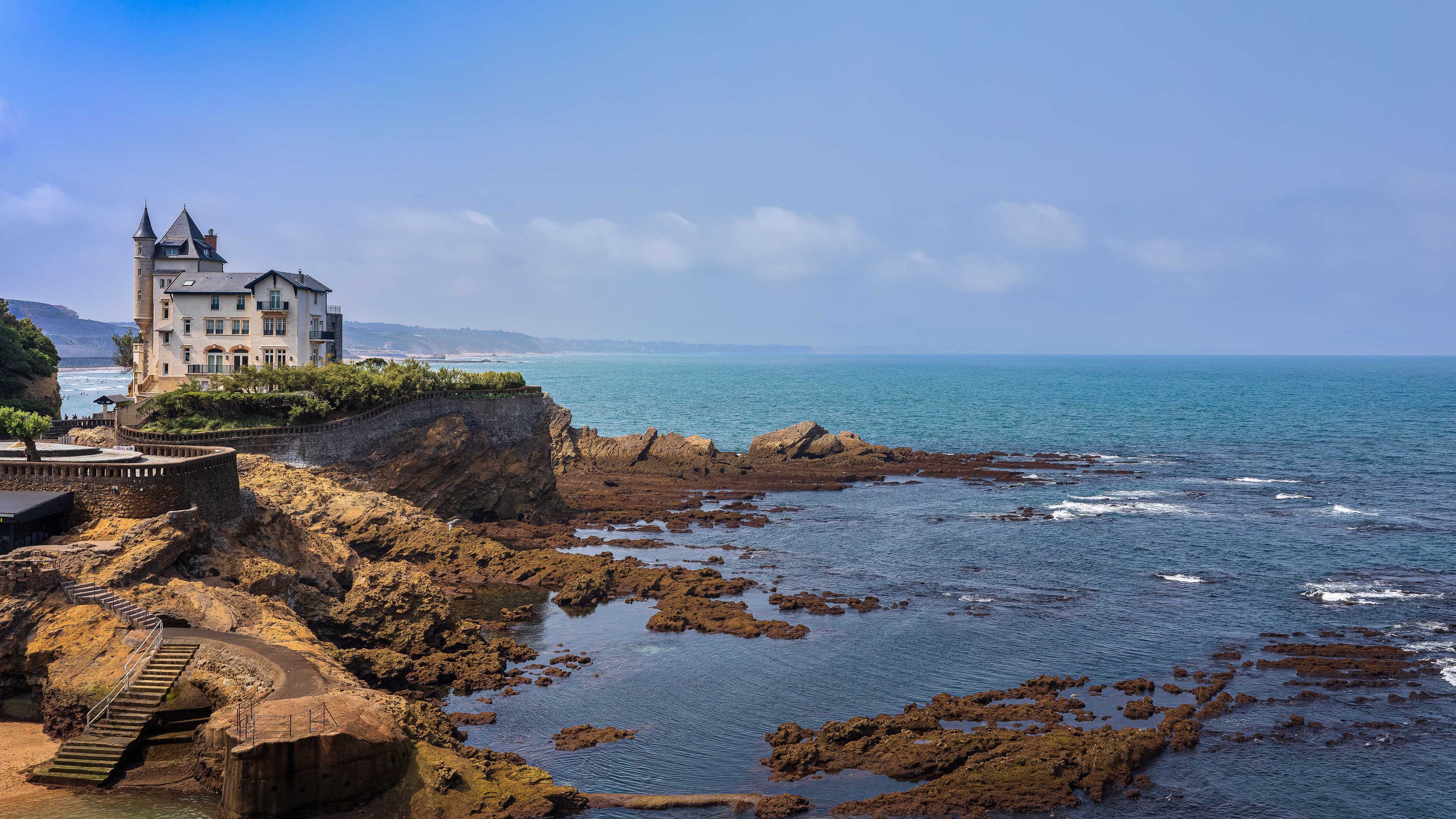
The Race
| Next Race Date | Sunday 25 April 2027, 07:00 |
|---|---|
| Course Type | Loop: start and finish both at Parc des Sports d'Aguiléra |
| Registration | Open, direct entry with tiered pricing. No ballot |
| Ballot Opens | Not applicable: this race has no ballot |
| Total Finishers | About 1,931 (2026 marathon) |
| Average Race Day Temperature | 8.8°C to 16.8°C (April normals, mean 12.8°C) |
| Cutoff Time | 8 hours. The course closes at 15:00, with an intermediate cutoff at Ilbarritz, km 32, by 13:30 |
| Free Race Day Transport | Not confirmed. Event shuttles ran from Halle Iraty in 2026, but no source states they are included with entry |
| Course Certification | FFA-measured route, certificate N-A064/07096/2024/A. No World Athletics label |
Bring a cup. There are none on the course
Eight aid stations, roughly every 5 km, and not a single cup at any of them. Every runner carries their own flask or soft cup for the whole race, and the rules add a personal food reserve and a survival blanket to that list as mandatory kit. This is the detail most likely to catch out a runner arriving from a race where cups are handed over in the usual way, and it is worth packing for before anything else on this page.
History
Biarritz Olympique Omnisports settled plans for a marathon in 2020, working with the events agency Extra Sports. The launch was set for 2021 and the pandemic stopped it, so the race first ran in 2022. It arrived at a scale most debut marathons never see: more than 10,000 runners across the weekend programme in year one.
Growth since has been quick. Participation across all formats went from about 12,000 in 2024 to roughly 16,000 in 2025 and around 18,000 in 2026. Those totals cover the whole event, which runs a three-person marathon relay, a half marathon, 14 km, 10 km and 5 km races and children’s events alongside the individual marathon. The marathon itself drew about 1,931 finishers in 2026, a small fraction of the weekend’s headline number, and the two should never be confused.
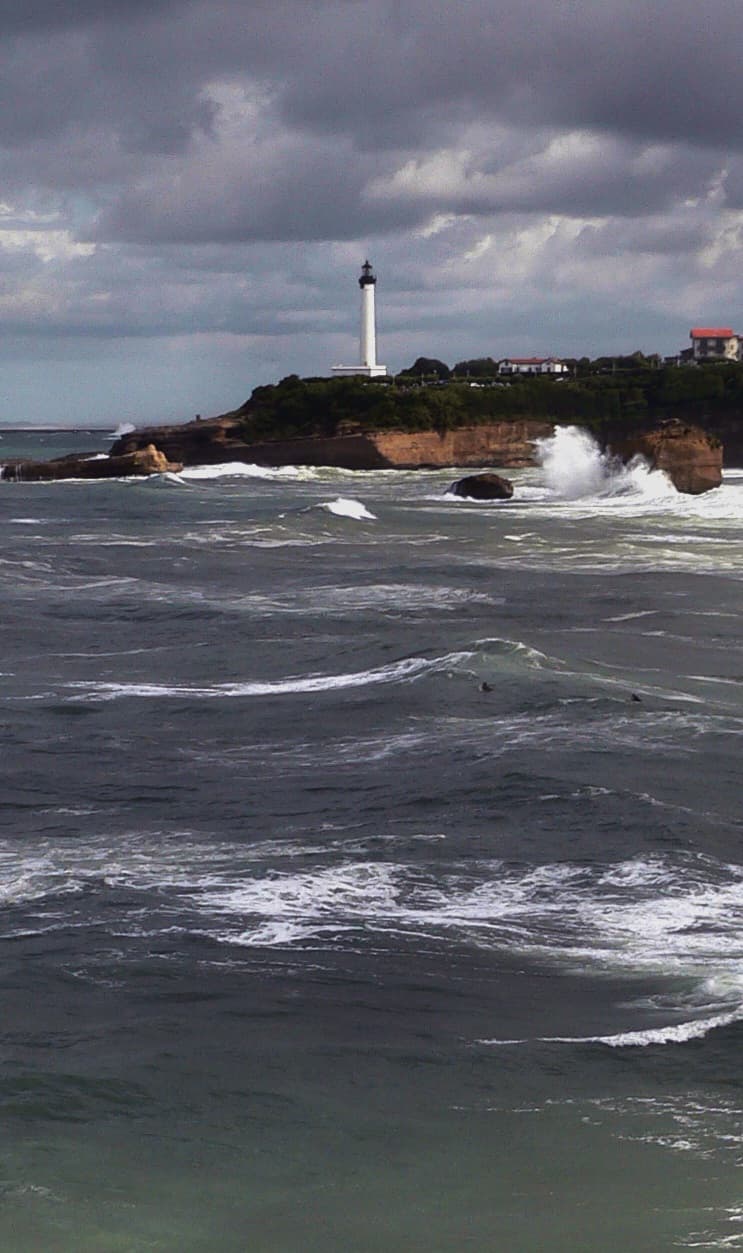
The identity has been Basque as much as coastal from the start. The organiser builds the course around Biarritz and the inland communes of Arcangues, Bassussarry and Arbonne, then brings it back along the Atlantic seafront past the Rocher de la Vierge, the Grande Plage, the Côte des Basques, the old fishing port, the lighthouse and the Hôtel du Palais. Basque language, music, dance and pelota are part of the official weekend programme.
The course has changed since 2022. Earlier organiser material quoted roughly 480 m of climbing; the current route is measured at 644 m. That is a material increase, not a rounding difference, and it changes what kind of race this is: a rolling, hilly road marathon shaped by the hinterland it crosses, not a flat coastal loop. The course records stand at 2:28:57 for men, set by Guillaume Tiphène in 2024, and 2:46:22 for women, set by Anna Wasik-Albano in 2025.
The course
A closed loop starting and finishing at Parc des Sports d’Aguiléra, the two points 57 m apart on the same site. From Aguiléra the route drops south through Biarritz past Lac Marion and Lac Mouriscot, then climbs to the inland Basque communes, crossing Arcangues, Bassussarry and Arbonne across the middle of the race. It descends to Bidart, climbs to the Bidart clifftops, passes Ilbarritz at about km 33, and runs north along the Atlantic seafront before turning inland again for the finish.
The organiser gives 644 m of total climbing. The first 20 km are a series of climbs and drops of up to 60 m, topping out at the day’s high point of 82 m near Arcangues at km 10.7. From km 20 to 27 the course runs gently downhill to its lowest point, 2 m above sea level in Bidart. The single biggest climb follows straight after, and two more rises come before the finish. Kilometre positions and gradients below are read from the course map and the elevation chart beside it.
Km 0 to 8: Aguiléra and the lakes. The gun goes at 07:00. After three gently rolling kilometres through Biarritz the course drops 52 m to Lac Marion by km 5, climbs 49 m in under 2 km on Rue de Mouriscot (about 3%), and loses it all again in just over a kilometre, the steepest descent of the day at over 4% on average. Do not bank time on these early rollers: with 644 m ahead, this is an effort-managed race from the first kilometre.
Km 8 to 15: up to Arcangues. The route climbs out of Biarritz past the La Négresse roundabout, 61 m over 2.6 km at about 2.3%, to the high point of the course at 82 m on the Arcangues lanes at km 10.7. A 36 m descent and a 20 m climb follow before the plateau around Bassussarry at km 14 to 16. The character of the race changes here: smaller roads, village centres, and rural Basque country. Aid arrives roughly every 5 km, and you drink from what you carry.
Km 15 to 22: back through Arcangues to Arbonne. A 21 m climb brings the course back to Arcangues near km 17.5, then it drops 53 m in 2 km to Arbonne by km 20. This is the quietest part of the course.
Km 22 to 27: down to Bidart. The only easy stretch of the course: flat to gently downhill through Arbonne and along the Bidart side roads to the lowest point of the day, near sea level in the Uhabia valley at about km 26.6. Use it to settle and to eat and drink. The hardest kilometre of the race starts about a kilometre later.
Km 27 to 35: the Bidart cliffs and Ilbarritz. The biggest climb of the day: 74 m from the Uhabia valley to the clifftop road above Bidart by km 30, with the kilometre from 28 to 29 rising 46 m, about 4.6%. It drops 66 m to the lake at Ilbarritz by km 33, where the intermediate cutoff sits (stated as km 32, by 13:30), then climbs another 33 m past Ilbarritz and descends to the Biarritz seafront by km 35.
Km 35 to 42.195: the seafront and home. The return runs north along the Atlantic past the Côte des Basques, the Rocher de la Vierge and the old port to the Grande Plage at about km 37. It is the best part of the course to look at and the most exposed to wind. From there the final climb is long and steady: 55 m over the last 4 km at about 1.3%, up Avenue de l’Impératrice past the Hôtel du Palais and the lighthouse, then inland to the finish at Aguiléra. Follow the blue line: on a course with this much lateral movement, the shortest rational line is worth real distance over 42.195 km.
Course Map
The loop from Aguiléra up to Arcangues and Bassussarry, down through Arbonne to Bidart, over the Bidart cliffs and back along the coast. Tap a marker for details, and scrub the slider or press play to move the orange marker along the course with the elevation profile beneath it.
Pacers
None. No pace-team programme appears on the organiser’s site or in the 2027 rules. The elite corral described under Entry affects where you start, not what pace anyone runs you to.
What to wear
Météo-France’s 1991 to 2020 April normals for Biarritz give a mean minimum of 8.8°C, a mean of 12.8°C and a mean maximum of 16.8°C, with 117.7 mm of rain across an average 13.3 days. No official 07:00 reading is published, so treat that as a seasonal baseline and check a forecast two or three days out.
Wind and rain matter more than cold here. April averages close to five days a month with gusts of 58 km/h or more, and the final third runs straight along the exposed Atlantic at Ilbarritz, Milady and the Côte des Basques. Layering works better than it would at a continental spring marathon: a throwaway top for the 07:00 start, shed well before the coastal return where wind chill can outweigh anything you gain from working hard. Remember that the personal food reserve and survival blanket are carried, not dropped. Sunscreen is worth it even under cloud, particularly if you will still be on the seafront into early afternoon.
Entry
Entry is direct and open, with no ballot and no lottery. Pricing is tiered, rising as the field fills and again for late entry. One detail catches people out: the cheapest tier covers the first 1,000 bibs sold across the whole event, not 1,000 marathon places, so it can be gone while marathon entries remain. Online registration stays open until the morning of race day itself, subject to bibs remaining, which is unusually late for a marathon of this size.
Refunds run through a paid cancellation guarantee bought at the point of registration, with a claim deadline in the week before the race; without it there is no medical refund route. A separate paid deferral moves an entry to the following year, on the same or a shorter distance, before the same deadline. Bib transfer to another runner works through the official runner account up to that deadline, with the incoming runner paying the current price and the original refunded minus charges. Nothing is transferable on site, and nothing is accepted after the deadline.
The minimum age for the marathon is 20. Entry needs a valid FFA competition licence, or a Parcours Prévention Santé medical clearance for runners without one. No charity-place programme and no tour-operator allocation were found for this race, and no marathon-only entrant cap is published.
Fast Runner / GFA Standards
There is no good-for-age or guaranteed-entry pathway. The organiser does run an elite corral request at registration for runners who can show a qualifying time from the previous three seasons, currently sub-2:45 for men and sub-3:00 for women. That decides where you stand on the start line, not whether you get in.
Race Weekend
Expo
Bib collection for 2027 is confirmed at Halle Iraty, south of the centre and a few minutes’ walk from Biarritz’s railway station. Opening days and hours have not been published: the organiser still lists them as forthcoming. Collection needs photo identification and your collection card, which is sent a few days beforehand and can also be downloaded. If your file is incomplete you will also need your medical clearance or licence proof. Bibs are not posted, so either you collect in person or you nominate someone with a copy of your identification, the card and any outstanding paperwork.
Halle Iraty was also the hub for shuttles and parking in 2026, which makes it a practical stop for anyone arriving by car or train. Plan the visit as a separate trip from race morning: ordinary bus routes cannot be relied on once race-day diversions are in place. Bag storage is given as 25 litres in the 2027 rules, while the organiser’s own information page still shows 20 litres. The two have not been reconciled, so pack to the smaller figure if you want certainty. There are no showers and no changing rooms at the start or finish.
Getting to the Start
The marathon starts at 07:00 at Parc des Sports d’Aguiléra, and the organiser suggests arriving about 30 minutes beforehand. Anyone travelling from abroad with a bag to drop should allow more than that.
The biggest race-morning risk is assuming the bus network runs normally. In 2026 the operator Txik Txak diverted several routes for the race and dropped Aguiléra from stops on some of them, running special event shuttles from Halle Iraty instead. No 2027 plan has been confirmed, and last year’s pattern should not be treated as a repeat. For anyone staying centrally or in Saint-Charles, walking removes the problem entirely. Runners out near Iraty or the station should work from the published 2027 timetable, not an ordinary Sunday service.
There is no published table of proof-of-time corrals. The organiser releases waves according to how the field is distributed on the day, with net timing from the start arch, so how congested the first kilometres feel is not something that can be forecast in advance.
Nutrition on Course
Eight aid stations are advertised for 2027, positioned roughly every 5 km. No cups are provided at any of them: every runner carries a flask, soft cup or other container for the whole race. Still and sparkling water, dried fruit and dry cakes are the listed products, with the organiser warning that supply varies by station and by year. No sports-drink or gel brand is confirmed, and there is no personal-bottle service.
The rules also require a personal food reserve as mandatory kit, separate from anything on course. Build the plan around that: carry what you intend to take, and treat the stations as water and a light backup. Ilbarritz at km 32 is a cutoff checkpoint and not a confirmed full station, so do not count on it matching the others. The finish offers a traditional refreshment and no full meal.
Spectating
Plan around walking and official event transport, not the ordinary bus network, which was diverted around the race in 2026 with Aguiléra dropped from some stops. The course rewards a spectator who stays central: the closing kilometres run past Biarritz’s best-known seafront before turning back to Aguiléra, so a single well-chosen spot catches runners at their most photogenic and most tired. Live tracking from timing points is published on the organiser’s homepage and social channels on race morning, though the mat locations are not listed.
The simple plan. Watch the start at Aguiléra, walk into central Biarritz once closures allow, pick one coastal sighting point from the final published map, then walk back to Aguiléra for the finish. No dependence on diverted buses, and it suits anyone with children.
The shuttle plan. If the 2026 pattern repeats, Halle Iraty becomes a usable hub for reaching the start and finish area and possibly a second point on the route. Wait for Txik Txak’s own race-weekend notice before building a day around it.
Post-Race Food
There is no full finish meal, only a traditional refreshment, so a proper recovery meal needs its own plan. The Hôtel de Silhouette on rue Gambetta runs weekend brunch from about 11:30 and lunch from about 12:00, timing that suits a runner finishing early enough to eat before mid-afternoon. The Hôtel du Palais does its own Sunday brunch and brasserie service and is one of the course’s own landmarks, expensive enough to be a deliberate celebration. Chez Albert at the Port des Pêcheurs is the seafood option, with Sunday service shown on listings platforms rather than confirmed by the restaurant, so check before relying on it.
Where to Stay
This page normally weighs proximity to the finish against proximity to the start. Biarritz removes that trade-off: both are Parc des Sports d’Aguiléra. The question becomes how far a neighbourhood is from Aguiléra, and how reliable that journey is on a morning when the buses may not run as usual.
Saint-Charles and Aguiléra
Saint-Charles, north-east of the tourist centre and close to Aguiléra, is the strongest choice for minimising race-morning uncertainty: you walk to the start and depend on nothing. The trade-off is real, because the old port, Les Halles and the beachfront restaurants are all further away than from a central hotel, and the district is quieter and less geared to visitors. It suits a first-time visitor who values sleep and a short walk, and anyone expecting to finish late in the field.
Central Biarritz and the Grande Plage
Central Biarritz around the Grande Plage is the best all-round base if you want the race and the town in equal measure, with the beach, restaurants and landmarks all in an easy radius and Aguiléra walkable for a fit runner. Check the specific route on a map: some streets here climb sharply enough to matter to legs running 42.195 km the next morning. Saturday night is busier and louder than the quieter districts.
Les Halles and Port-Vieux
Les Halles and Port-Vieux are the restaurant and social centre, close to the old port and the Rocher de la Vierge. The cost is a longer walk to Aguiléra with real gradients on the way back after finishing. Best for a food-led trip or an extra night after the race.
Côte des Basques and Beaurivage
The Côte des Basques puts you directly on the surf coast, on one of the race’s own landscapes. Biarritz is hilly throughout and the route from this side to Aguiléra is not flat, so it suits a runner treating the marathon as part of a wider coastal break more than one optimising race day.
Iraty and La Négresse
Iraty and La Négresse hold Halle Iraty, where bibs are collected, and Biarritz’s railway station. That makes the district genuinely useful for train and car arrivals and for the expo trip, at the cost of being the least appealing base of the five and the furthest from both the central sights and the coastal finish landmarks. Race-day bus services here cannot be assumed to run normally.
Recommended hotels
Walking distances to Aguiléra are not published, so these are placed by district. Confirm current operation and cancellation terms before booking.
A five-star on the seafront and one of the race’s own course landmarks, so you will run past it late on. It was an official partner in 2026 with an edition-specific discount that should not be assumed for 2027. Its Sunday brunch doubles as a celebration meal.
A 27-room four-star beside Les Halles. Its weekend brunch and lunch service runs early enough to work as a post-race meal if you finish before mid-afternoon.
A central four-star with a pool, fitness room and on-site parking, which is a useful combination for a runner arriving by car and wanting somewhere to recover afterwards.
About as central as Biarritz gets for the beach, shops and restaurants. Suits a runner happy to walk or take a taxi to Aguiléra on race morning.
A four-star camping and accommodation site in the same district as bib collection and the station. A practical budget base for families or a longer stay; it ran a race promotion in 2026 that should not be assumed for 2027.
Booking timeline
There is no ballot, so the usual advice to wait for a result does not apply: book a refundable room as soon as entry is confirmed, then revisit pricing two to three months out. The pressure on accommodation comes from the event’s growth, with participation across all formats rising from about 12,000 in 2024 to around 18,000 in 2026. Biarritz’s airport is small and its routes limited, so April demand is a reason to book travel early. No organiser hotel-partner rate beyond an edition-specific 2026 discount was found.
See & Do
All of these sit in or beside central Biarritz, within reach of the recommended hotels. Distances from Aguiléra are not published, so these are placed relative to the town.
Rocher de la Vierge and Port-Vieux
On the central seafront, and on the race’s own route. A short coastal walk out to the rock and its footbridge, easily combined with the old fishing port and the Sainte-Eugénie church. The walk itself is manageable the day after a marathon; the stairs and uneven surfaces around the rock are less so.
Aquarium de Biarritz
Near the old port, in the centre. The weather-proof option, and it asks far less continuous walking than a coastal loop, which makes it the sensible choice if Atlantic rain arrives on the Monday. Check current opening hours before travelling.
Cité de l’Océan
Towards the southern coastal edge of town. A second indoor attraction built around the ocean and the surf culture that defines Biarritz. It is far enough out to be more practical by bus or taxi than on foot with sore legs.
Phare de Biarritz
On the headland north of the Grande Plage, and one of the course’s own landmarks. The view from the top is worth it, but it is reached by stairs, which makes it a poor choice on race-day afternoon and a good one later in the trip.
Côte des Basques and the Grande Plage
The defining landscape of the trip, and the closing stretch of the marathon itself. April here is often wet and windy, so plan on walking and watching, not a beach day: a short promenade suits the days around the race, with any longer cliff walk saved until legs have recovered.
Read Before you Run
Biarritz Basque
Frédéric Beigbeder
An English-language, visually led look at Biarritz and the Basque coast, built around surf culture, craft and regional identity. The closest published match to what makes this trip different from a generic French city race.
The Basque Exception: The History of an Identity in the Western Pyrenees
Asier H. Aguirresarobe
A broader and more academic history of Basque identity across the Western Pyrenees, not specific to Biarritz. The deeper companion if the inland half of the course leaves you wanting the background to it.
After the Race
Biarritz sits at the end of a short rail and coach network that makes recovery days easy: Bayonne is eleven minutes away, Saint-Jean-de-Luz about a quarter of an hour, and San Sebastián roughly thirty-five minutes by coach across the Spanish border. After a course with 644 m of climbing in it, the difference between a ten-minute train and a two-hour drive decides whether a trip happens at all. April on this coast is mild and unreliable in equal measure, so the indoor options hold up as well as the coastal ones.
The lowest-effort outing from Biarritz: a historic riverside town with a flat walk along the Nive and almost no travel burden the day after a marathon.
A compact Basque fishing port and bay, easy without a car and gentle enough for the day after finishing, with a working harbour.
A medieval Basque hill town and pilgrimage staging post, a complete change from the coast. The cobbles and slopes make it better on day two than day one.
A short hop across the Spanish border into one of Europe’s best-regarded food cities, with an urban beach and a pintxos-bar culture that rewards more than a day.
A full change of scene built around the Guggenheim and the rebuilt Nervión riverside, reachable without flying and substantial enough to justify two nights.
Frequently asked questions
Should I stay near the start or the finish?
One question here: both are Parc des Sports d’Aguiléra. Saint-Charles and Aguiléra give the shortest, most reliable walk to each.
How far in advance should I book a hotel?
As soon as entry is confirmed. No ballot means no results date to wait for, and the event now draws about 18,000 across all formats.
Is there free transport to the start?
Not confirmed. Shuttles ran from Halle Iraty in 2026, but ordinary routes were diverted and Aguiléra dropped from some stops.
What is the best area to stay?
Saint-Charles and Aguiléra for race logistics; central Biarritz around the Grande Plage for a first visit with the city in reach.
When does the expo open?
At Halle Iraty for 2027, with days and hours still unpublished. Bibs are not posted: collect in person with photo identification.
What is the weather typically like on race day?
April normals run 8.8°C to 16.8°C, with 117.7 mm of rain across 13.3 days and close to five days of gusts over 58 km/h.
How do I get from the airport?
Biarritz Pays Basque Airport is about 4 km out, five minutes by road. Txik Txak line 11 runs into town for around €1.40.
Is there a bag drop?
Yes. The 2027 rules say 25 litres, the information page still says 20; pack to the smaller. No showers or changing rooms.
Should I bring a throwaway layer?
Yes, for a 07:00 start averaging close to 9°C. Note the mandatory food reserve and survival blanket must be carried, not dropped.
How do I get back to my hotel after finishing?
Walk, if you are central. Buses were disrupted in 2026 and Biarritz is hilly, so a walk to Les Halles has real gradients in it.