The Race
Not the Médoc Marathon
This page covers the Marathon de Bordeaux AG2R LA MONDIALE, the city race finishing on Quai Richelieu. It is a different event from the Marathon des Châteaux du Médoc, the costumed vineyard marathon run around Pauillac. Different organisers, different courses, different entry systems. The two are easy to mix up when planning a Bordeaux-region trip, and booking the wrong one is an expensive mistake.
| Next Race Date | Sunday 8 November 2026, 08:00 |
|---|---|
| Course Type | Loop: start on Cours de Verdun, finish on Quai Richelieu, about 1.6 km apart on both banks of the Garonne |
| Registration | Open, direct entry through TimeTo. No ballot. FFA lists €75, some secondary sites quote €70 |
| Ballot Opens | Not applicable. Licensed runners get an early-access window before general sale |
| Total Finishers | To be Confirmed: first edition since the 2020 to 2025 gap |
| Average Race Day Temperature | 6.7°C to 14.1°C (Bordeaux-Mérignac November normals) |
| Cutoff Time | 5 hours 30 minutes |
| Free Race Day Transport | Not confirmed. No organiser or TBM statement either way |
| Course Certification | FFA Bronze Label, measured by FFA judges. No World Athletics label confirmed |
The route is not published yet
The organiser’s own course page says its GPX file is prepared but not yet activated, and that the route will be officially measured during the summer of 2026. What is confirmed is the shape of the thing: a start on Cours de Verdun, a finish on Quai Richelieu, both banks of the Garonne, and no two identical loops. What is missing is everything in between, which is why this page carries no course map line, no kilometre-by-kilometre guide and no elevation profile. Those will be added once the file appears. Anyone booking flights now should treat the road-closure map as the last piece to check in race week.
History
Bordeaux ran a marathon under its own name for twelve editions between 1976 and 2002, then stopped. The Marathon de Bordeaux Métropole launched afresh in 2015 and did something few major French races have tried: it started in the evening, sold as the country’s only major night marathon. Heavy rain fell on that first edition in April, and 5,608 runners still finished the marathon alongside 7,232 in the half. Jacek Cieluszecki won in 2:32:50, Gwenn Droisier in 3:06:14.
It settled into a rhythm from there. Saïd Belharizi won in 2016 in 2:32:33. Denis Mayaud ran 2:23:03 in 2017, the fastest winning time of the series. Vivien Laporte took 2018. The gilets jaunes protests pushed the 2019 race back to late October, where Luc Montaudon won in 2:32:29 and Biljana Bursac led the women. That final pre-hiatus edition recorded 1,621 marathon finishers. Nothing ran between 2020 and 2025.
The race came back for 2026 with a new title partner and a changed shape: a daytime start instead of the night race, and a weekend built around a marathon, a half and a 10 km together. The FFA lists it with a Bronze road-race label. Both the organiser and Bordeaux Métropole describe the return as a relaunch, with a newly measured route, which is why nothing from the 2015 to 2019 course appears anywhere on this page outside this section.
The course
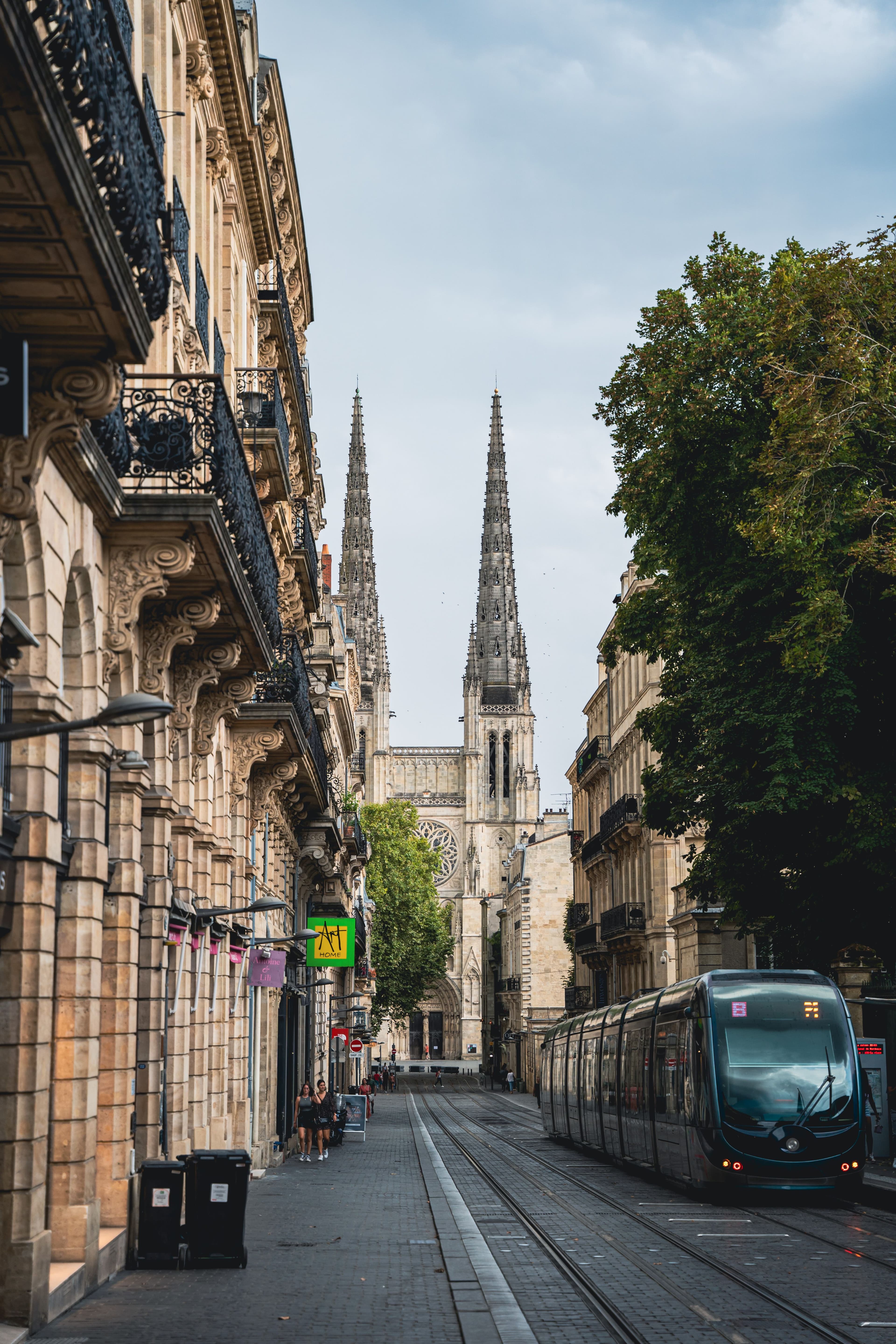
The marathon starts at 08:00 from Cours de Verdun, on the northern edge of the centre beside the Esplanade des Quinconces, and finishes on Quai Richelieu, on the waterfront inside the UNESCO-listed core. Measured between those two points, the gap is 1,586 m, which makes this a loop with an offset finish, not a point-to-point.
The organiser describes the 42.195 km between them as covering both banks of the Garonne without repeating two identical loops. Partner and city publicity names Place de la Bourse, the Cité du Vin, the Hôtel de Ville, Place du Grand Théâtre and Pont Chaban-Delmas among the landmarks tied to the weekend. How many of those the marathon itself passes, and in what order, has not been published.
Km 0: the start. From Cours de Verdun the field funnels out past the Quinconces onto the central streets. The organiser asks for 30 minutes just to reach the correct pen, which is a real instruction given the combined marathon, half and 10 km field. This is the only part of the route confirmed in any detail before the map is released.
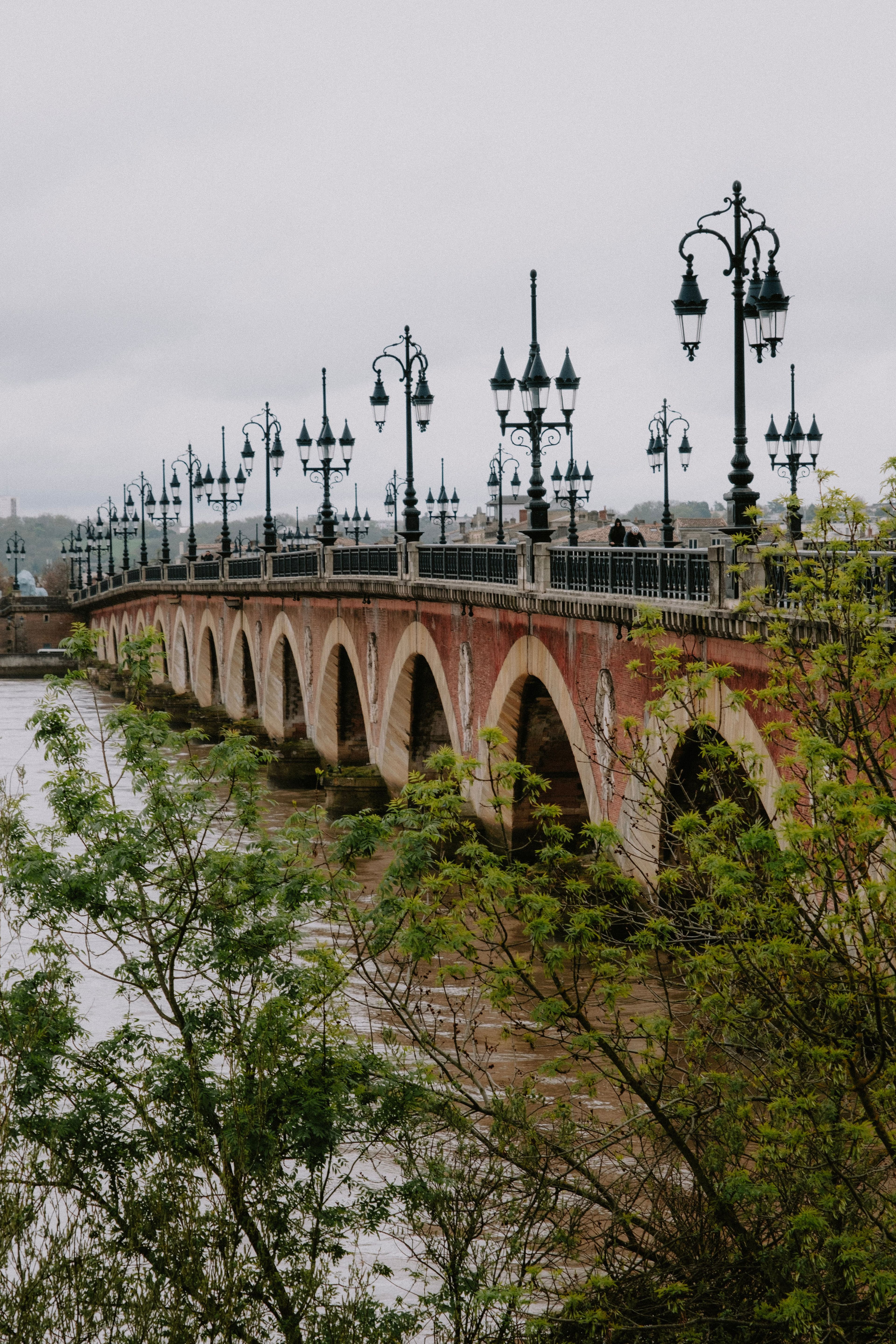
Crossing the Garonne. The race is explicitly a two-bank course. Pont Chaban-Delmas carries the half marathon over the river with a rise of roughly 8 m across several hundred metres, according to a course guide for that shorter distance, which is a gradient you would feel as wind exposure on the open span more than as a climb. Whether the marathon uses the same crossing, and how many times, is unconfirmed.
The finish. Quai Richelieu, on the historic waterfront in the Saint-Pierre district. Aid stations sit roughly every 5 km with another at the finish. The 5 hour 30 minute limit is enforced: runners past it are asked to leave the course, and the sweep vehicle collects bibs behind the closing car. Once the blue line is painted and published, it is worth following closely on a course built around quays and bridge approaches, where the shortest sensible line and the centre of the road can diverge by a meaningful distance over 42 km.
Logistics Map
Fixed points only, because the route itself has not been published. Start, finish, bag drop and bib collection are confirmed; the two landmarks are publicised but not confirmed on the route. Tap a marker for details.
Pacers
Confirmed, carrying coloured flags matched to each runner’s corral colour. The target times themselves have not been released: the organiser says they are coming. Do not plan around a dense pace ladder of the kind Berlin or London runs until the list is actually published.
What to wear
Expect a cool, damp Atlantic morning. Bordeaux-Mérignac’s 1991 to 2020 normals put November’s average low at 6.7°C and its average high at 14.1°C, so an 08:00 start sits close to the coldest hour of the day. November is one of the wetter months here, and the organiser itself flags rain and damp road surfaces as realistic. Wind matters more on the open bridge and quay sections than in the sheltered central streets.
A throwaway layer makes sense for the pen, particularly with a 30-minute arrival buffer spent standing still. No formal collection or charity-bin system for discarded clothing has been confirmed, so treat any layer as genuinely disposable or hand it to a supporter. This is a full road course, so trail shoes are unnecessary. Later finishers should expect the bridge to feel more exposed than the street-level temperature suggests.
Entry
Entry runs through TimeTo, the organiser’s platform, with staged sales, not a lottery. FFA-licensed runners get an early-access window ahead of the general public, with a later phase opening if places remain. The FFA’s own competition listing gives the marathon fee as €75 while some secondary listing sites quote €70, a gap worth settling against the organiser’s own checkout total.
Non-licensed runners complete France’s Parcours Prévention Santé questionnaire, which must be validated before bib collection is possible; a valid FFA licence replaces it. The organiser offers charity bibs, where a runner pays a fixed engagement fee and commits to a minimum fundraising total for a partner charity, in limited numbers. A finisher medal is included.
Wave and corral seeding method, team-entry structure, and whether tour operators sell packaged access have not been published. Neither has a marathon-only field cap: the organiser expects more than 27,000 across the weekend and Bordeaux Métropole separately cites more than 30,000, two official figures that do not agree and cover all three distances together, not the marathon alone.
Fast Runner / GFA Standards
No good-for-age or qualifying pathway exists for this race. An elite start-pen request is open to runners who can supply a result from a race less than two years old, which governs starting position, not entry, and no public qualifying-time table has been published.
Race Weekend
Expo
Bib collection is at Hangar 14 on Quai des Chartrons, Friday and Saturday before the race, 10:00 to 20:00 both days. There is no Sunday or race-morning pickup and bibs are not posted, so a late Saturday arrival leaves no margin at all. Hangar 14 sits close to the Cours du Médoc tram stop, around 10 minutes from the centre.
Bring photo identification and make sure the registration file is complete before you arrive, including a validated PPS form or FFA licence: an incomplete file blocks collection outright. Someone else can collect for you with your bib number, a copy of your identification and the complete file. No merchandise or exhibitor detail beyond collection itself has been published.
Getting to the Start
The race starts at 08:00 from Cours de Verdun. The organiser’s clearest instruction is to allow 30 minutes simply to reach the right pen, given the size of the combined field. Anyone unfamiliar with the closures should add more again for toilets, the bag drop and a diverted walking route into the area.
Free bag storage operates at Place des Quinconces, beside the start, with a 40 by 20 by 30 cm limit and a detachable receipt. It closes 15 minutes before the gun, so it is not a last-minute option. Dry toilets are positioned on the course as well as at the start, though the start-village layout, changing rooms and showers have not been detailed.
No wave or corral start-time table has been published. No organiser statement confirms free public transport on race day either, so assume a normal TBM fare and check TBM directly during race week for Sunday changes around Cours de Verdun and Quai Richelieu. Central Bordeaux is compact enough that anyone staying in Triangle d’Or, Saint-Pierre or the historic centre can walk to the start and sidestep the question.
Nutrition on Course
Aid stations sit roughly every 5 km with one more at the finish. The organiser’s FAQ is more specific than most about the contents: water, oranges, bananas, dried apricots, fruit paste, a Toque Cuivrée gel and dry savoury biscuits. Whether every product appears at every station or is spread across the course has not been published.
You may carry your own food and drink, provided it is carried from the start or collected at an official station. Handing a personal bottle to a supporter for a mid-course pickup, which some larger city marathons allow, has not been confirmed here. Anyone training on a specific carbohydrate or electrolyte product should carry enough for the full distance.
Spectating
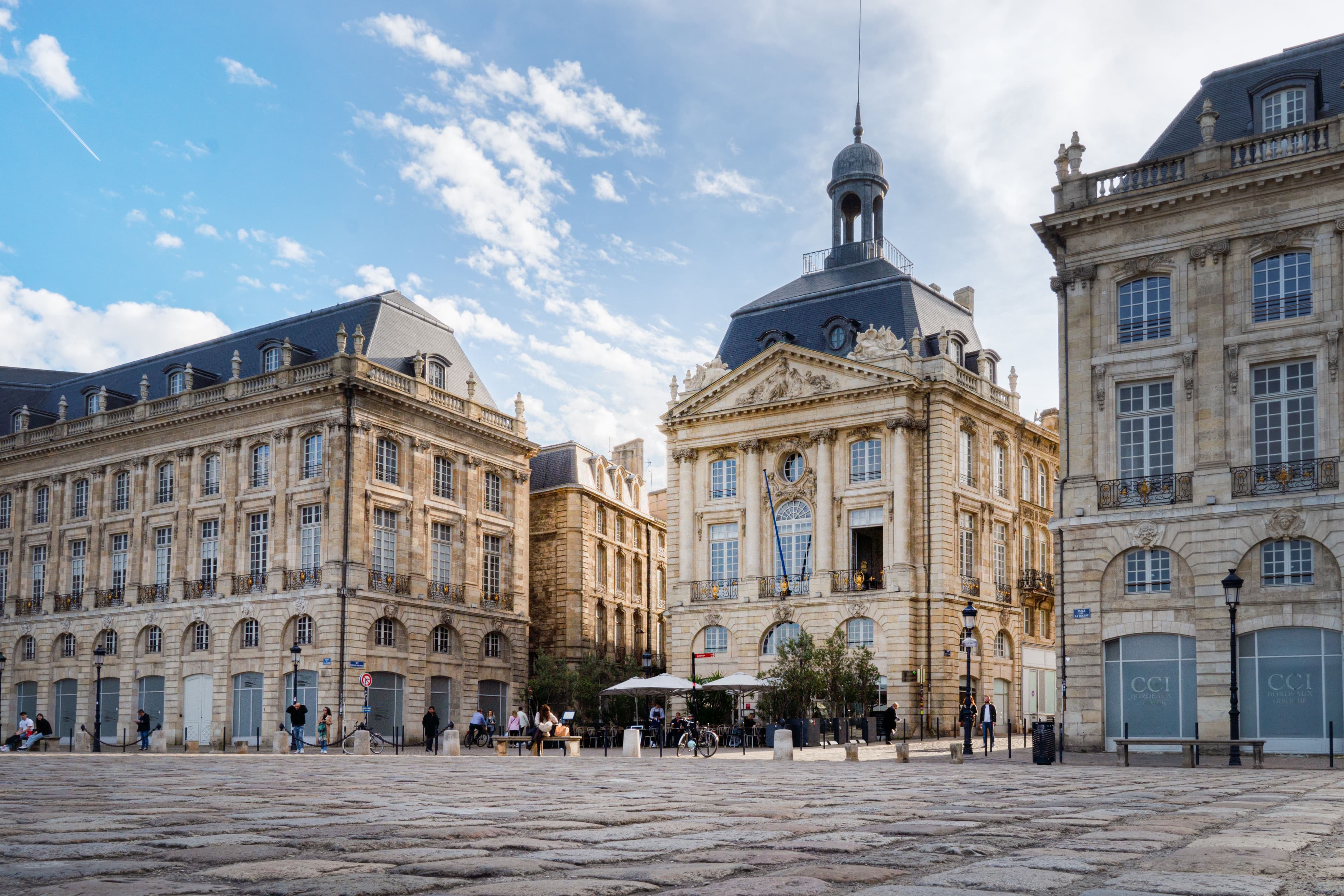
Without a published route, the honest advice is narrow: the Garonne quays, Place de la Bourse and the finish on Quai Richelieu are the three dependable central vantage points, because all three are tied to the confirmed start, finish or the river itself. Other landmarks may belong only to the half marathon or the 10 km.
Plan around TBM’s trams and buses, not a car: central closures make car access to the quays unreliable, and TBM is the organiser’s own recommended source for Sunday service changes. Detailed spectator routing with named stops has to wait for the course map, since writing it now would mean inventing stations for a route nobody has seen. A finish-area meeting point by bib number has not been confirmed, and no live tracking app or SMS service was found.
Post-Race Food
The finish sits inside Saint-Pierre, which is dense with cafés and small restaurants at street level, so nothing about finding food here is difficult. What this page does not yet have is named recommendations: no specific restaurant near Quai Richelieu has been verified for race-Sunday service, so none is named yet.
Where to Stay
Judge everything against the finish on Quai Richelieu: that is where a tired runner actually needs a bed to be near. The saving grace here is that the two ends sit about 1.6 km apart in the same compact centre, so the usual compromise is a mild one.
Triangle d’Or and the Grand Théâtre
Triangle d’Or is the strongest all-round choice. It sits centrally between the start and the finish, with extensive restaurant choice and dense tram and walking connections in both directions. It is also Bordeaux’s most upmarket shopping district, built on the 18th-century grid running out from Place de la Comédie, so rates sit at the higher end and rooms go early once a race weekend is known locally. Saturday night here runs to restaurant and bar noise, not late clubbing, which suits anyone trying to sleep before an 08:00 start.
Historic centre and Saint-Pierre
Saint-Pierre is the closest realistic base to the finish, chosen for that proximity and the narrow medieval streets. The streets radiating from Place Saint-Pierre are largely pedestrianised, which means real quiet after dark and also means some hotels sit a short walk from wherever a taxi can actually stop. For anyone planning to walk from Quai Richelieu straight to bed, it is hard to beat.
Chartrons
Chartrons is the practical choice if bib collection is on your mind, since Hangar 14 sits inside the district on Quai des Chartrons near the Cours du Médoc tram stop. It is a slightly longer tram ride or walk from the finish, and the district, Bordeaux’s old wine-merchant quarter, has built a restaurant and independent-shop scene of its own.
Saint-Jean
Saint-Jean, around the main rail station, is the obvious choice for train arrivals and usually carries a wider spread of prices than the central districts. The trade-off is distance: this is a longer trip to the start than any of the three above, and that extra tram or walking time has to go on top of the 30-minute buffer the organiser already asks for.
Recommended hotels
Distances below are approximate walking-area estimates. Confirm current operation and cancellation terms before booking.
Listed by Bordeaux Tourisme as 100 m from the Grand Théâtre with tram access, which puts it between the finish and the historic centre. Central rooms of this kind go early once a race weekend is known locally.
Closer to the start side of the centre, with a spa and restaurant on site. The premium choice for a runner who wants the stay to be part of the trip.
A central address confirmed through the tourism office. Race-week rates can differ from the standard published offer, so compare before booking.
A small central option with a preferred rate currently listed through the tourism office. Slightly further from the finish than the three above.
Useful for train arrivals given its position by the station, at the cost of a tram ride or a long walk to the start on race morning.
Booking timeline
There is no ballot result to wait for here, so the trigger is simpler: the moment your entry is confirmed through TimeTo, hotel availability starts working against you. Registration opens in stages through spring and summer, with a licensed-runner window ahead of general sale. Central Bordeaux carries a smaller hotel stock than London, Berlin or Paris, and a weekend running three distances pulls a combined field somewhere above 27,000 by the organiser’s count or above 30,000 by the city’s. Book as soon as travel dates are fixed, favour a refundable rate where the premium is small, and treat any specific race-weekend price surge as unconfirmed: no Bordeaux-specific figure exists.
See & Do
Distances are from the finish on Quai Richelieu, and approximate.
Place de la Bourse and the Miroir d’Eau
About 0.5 km (0.3 miles) from the finish. The 18th-century riverfront square with the shallow reflecting pool in front of it, a short walk along the quay and the easiest stop on this list: no booking, no entry fee, and you can do it on tired legs. The water mirror cycles between shallow flooding and evaporation, and November will not give you the version in the summer photographs.
Cité du Vin
About 4 km (2.5 miles) from the finish, in Bacalan. The permanent wine-culture exhibition stays open across race weekend, with evening hours listed for both the Sunday and the Monday after, which makes it workable even for a runner who wants somewhere indoors and lift-served for the afternoon. Book ahead given the scale of it.
Bassins des Lumières
About 4.3 km (2.7 miles) from the finish, in the same dock district as the Cité du Vin. A former submarine base turned into an immersive digital art space, with a programme running through November. Most of the visit is standing or slow walking, and all of it is sheltered, which counts for something if November delivers the rain it usually does.
The historic centre and the Grand Théâtre
About 0.8 km (0.5 miles) from the finish. No ticket is needed to walk the UNESCO-listed streets around the 18th-century opera house, a few streets back from the line. Keep it short on the Monday: the appeal is cafés and tram stops close enough together that you can stop the moment you want to.
Read Before you Run
The Billionaire's Vinegar
Benjamin Wallace
An account of a supposed 18th-century Château Lafite bottle linked to Thomas Jefferson, and the row it caused among collectors. It never mentions the marathon, but it explains why Bordeaux’s name carries the weight it does well beyond the vineyards themselves.
After the Race
November puts the vineyards past harvest and the coast out of season, which shapes what is worth doing afterwards. The wine towns still work, because Bordeaux wine tourism runs year-round and Saint-Émilion is calmer without the summer coaches. The Atlantic is a different proposition: Arcachon in November is oyster cabins and a flat promenade. Everything below is reachable by train except the Dordogne, and the train matters when your legs have just done 42 km.
A medieval hilltop village in the right-bank vineyards, built around a church cut directly into the limestone. November is past the harvest, but the village is calmer without the summer coaches.
A night on the Bassin d’Arcachon, where oyster cabins and a flat seafront promenade stand in for the beach day November was never going to give you.
Two nights based in Saint-Émilion with a half-day in Libourne, the right bank’s working river town, and château visits booked by car or minibus.
The Basque coast out of season: Bayonne’s ham-and-chocolate old town with Biarritz’s Belle Époque seafront, both walkable without asking much of sore legs.
Four nights around Sarlat’s medieval centre, the cliffside villages of the Dordogne valley and the prehistoric cave sites, working from one base.
Frequently asked questions
Should I stay near the start or the finish?
Neither exclusively. Start and finish are about 1.6 km apart in central Bordeaux, so Triangle d’Or, Saint-Pierre or the historic centre reaches both on foot.
How far in advance should I book a hotel?
Once entry and travel dates are fixed. Central Bordeaux has a smaller hotel stock than Europe’s biggest marathon cities, and the weekend draws a large combined field.
Is there free transport to the start?
Not confirmed either way. Assume a normal TBM fare and check for Sunday diversions during race week.
What is the best area to stay?
Triangle d’Or for the best all-round balance. Saint-Pierre is closest to the finish; Chartrons suits bib collection; Saint-Jean suits rail arrivals.
When does the expo open?
Hangar 14, Friday and Saturday 10:00 to 20:00. No Sunday collection, and bibs are not posted. Bring photo ID and a complete file.
What is the weather typically like on race day?
Cool and often wet: November normals run 6.7°C to 14.1°C, and an 08:00 start sits near the cold end.
How do I get from the airport?
Tram line F, about 35 minutes to Hôtel de Ville, €1.90 single, every 10 to 15 minutes depending on the day.
Is there a bag drop?
Yes, free at Place des Quinconces beside the start. Maximum 40 by 20 by 30 cm, closing 15 minutes before the gun.
Should I bring a throwaway layer?
Yes. A cool November wait with a 30-minute arrival buffer, and no confirmed collection scheme for discarded clothing.
How do I get back to my hotel after finishing?
Walk if you are central. Further out, use the tram and check race-day diversions; a car pickup beside the finish is unlikely to work.