The Race
| Next Race Date | Sunday 14 March 2027 |
|---|---|
| Course type | Loop (start and finish about 100 m apart) |
| Registration | Open entry |
| Ballot opens | Not applicable |
| Start | Largo Formentone, 08:30 |
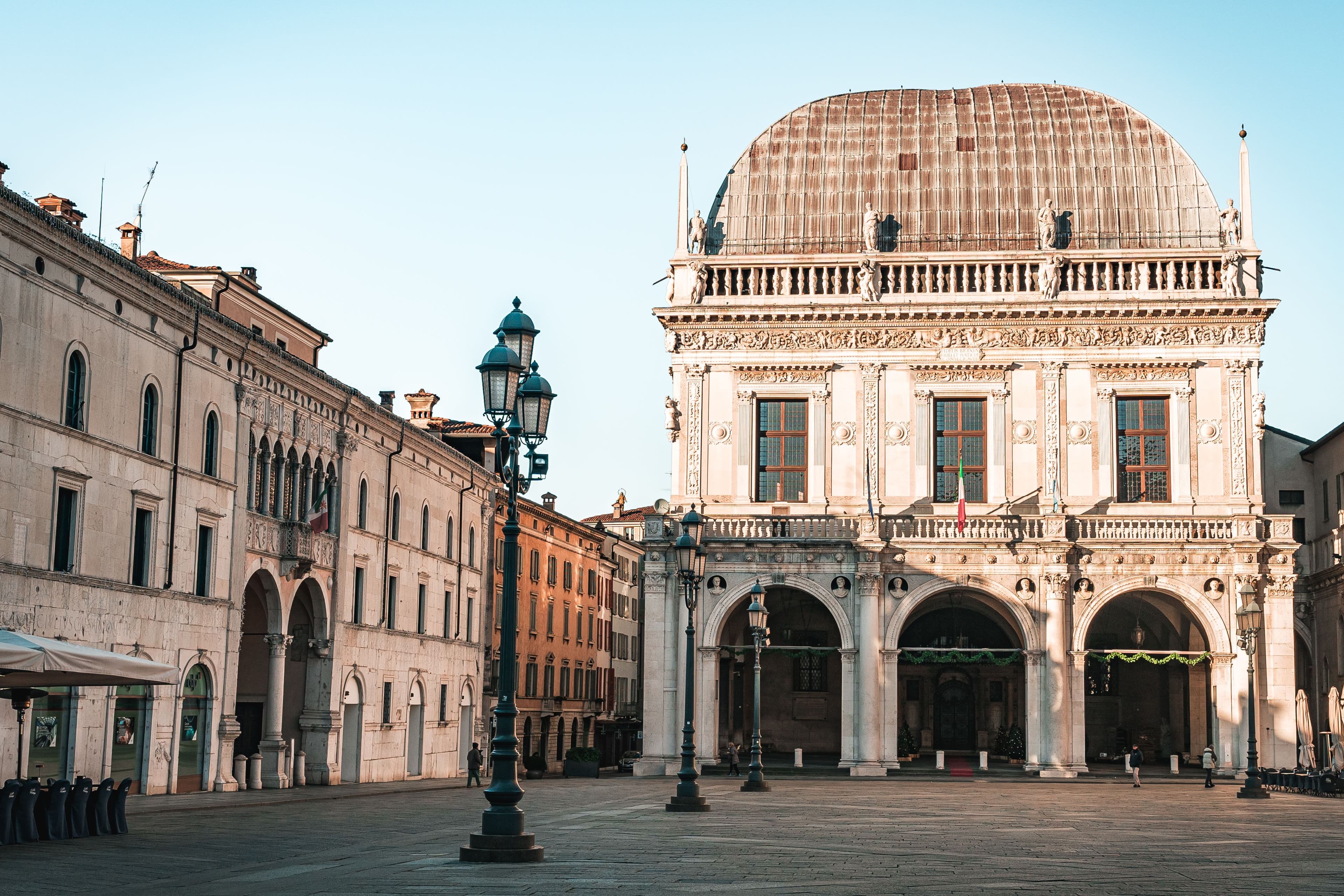
| Finish | Piazza della Loggia |
| Total finishers | ~815 |
| Avg race-day temp | 4 to 14°C (March) |
| Cutoff time | 6 hours |
| Free race-day transport | Not confirmed |
| Course certification | FIDAL certified. No World Athletics Label |
History
The organiser, ASD Rosa Running Team, counts the next running as the 25th Brescia Art Marathon. The weekend has grown beyond the marathon into a festival with a half marathon, a competitive 10K and non-competitive runs. The organiser's report for the latest edition put the whole weekend at a record of about 8,000 participants from around 30 nations, with a cap at that number for safety reasons and an estimated demand of 10,000.
Most of those runners were not in the marathon. The organiser's results list 815 in the 42K, 2,219 in the half marathon and 1,289 in the 10K, with the remainder in non-competitive runs and a family walk. It is a moderately sized marathon inside a very large city weekend.
The latest men's winner, Davide Angilella of Vanotti Running Team, took his fourth consecutive victory in 2:26:08. Laura Gotti of Rosa Running Team won the women's race in 2:41:08, with Oona Kaartinen of Finland second. These are edition results, not verified course records.
The race was held in early March in the latest edition and moves to mid-March for 2027. The course starts at Largo Formentone and finishes in Piazza della Loggia, in the centre of a city whose Roman forum and Longobard monastery are both on the UNESCO list.
The course
The Brescia Art Marathon starts at 08:30 at Largo Formentone and finishes in Piazza della Loggia, about 100 m away, in the historic centre. The 42.195 km route is certified by FIDAL. The organiser lists the Mille Miglia Museum, the Roman Capitolium, the Arco del Broletto and Piazza Paolo VI as course landmarks.
The route leaves the centre to the north-east, reaches its high point of about 180 m near 8 km in Casazza, then loops out to the west through Cellatica, returns through Porta Milano, and runs south and east through Chiesanuova and San Polo before climbing back to the centre. The organiser gives a start elevation of 156 m, a finish elevation of 152 m and a maximum of about 181 m near km 8, and calls the course fluid and fast with minimal hills.
The marathon and half marathon routes cross for roughly a kilometre, according to press coverage of the latest edition, so runners from both events share a short section of road. Water stations are every 5 km, with sponge points between them.
Kilometre by kilometre
Km 0 to 8: north-east to the high point. From Largo Formentone the course heads north-east up Via Luigi Apollonio at 1 km, through San Rocchino at 2 and 3 km and Mompiano at 4 to 6 km, and on to Casazza at 7 and 8 km. This is the only sustained climb of the day: 23 m over 8 km at an average of 0.3 per cent, from 156 m to a high point of 179 to 180 m at 8 km on Via Dominatore Mainetti. It is gentle enough to miss on a map and easy to overcook in the legs, so hold back and ignore the fast start the crowd invites.
Km 8 to 13: down through San Bartolomeo. The course turns south and gives back the climb, falling 51 m over 11.5 km to the day's first low at about 19.5 km, at an average of 0.4 per cent. The steepest kilometre is about 1 per cent at 10 to 11 km through San Bartolomeo. By 12 km the course is on Via Col di Lana, about 1 km north-west of the old centre, where it is thought to cross the half marathon course.
Km 13 to 24: the western loop. The course swings west through Fiumicello at 13 km and Chiusure at 14 and 15 km, reaching its far side in Cellatica at 16 to 19 km, about 4.8 km from the start in a straight line, before turning back through Chiusure at 20 to 22 km. The road is at its lowest here, 129 to 130 m at 17 to 20 km, then climbs 20 m back to about 148 m at 23 km. The field spreads out, and aid stations every 5 km help you count.
Km 24 to 37: south and east. Back through Porta Milano at 24 km, the course runs down Via Industriale and south through Via Dalmazia and Via Orzinuovi to Chiesanuova at 27 to 29 km. It turns east along Via Flero and Via Alessandro Lamarmora at 30 to 32 km, then through Villaggio Ferrari and San Polo at 33 to 37 km. The lowest point of the day, 120 m, comes at about 35 km. The Mille Miglia Museum lies about 100 m from the course at 37.5 km. This is the quietest stretch, with the longest gaps between landmarks.
Km 37 to 42.2: back up to the centre. From Sant'Eufemia at 38 km the course turns west along Viale della Bornata and Viale Venezia at 39 and 40 km, then climbs into Piazza Tebaldo Brusato at 41 km and along the portici of Via Dieci Giornate to the finish. The climb from the low at 35 km is 38 m over 7.4 km at 0.5 per cent, with the last kilometre the steepest at about 1.2 per cent, from 147 to 159 m. The Capitolium and Piazza Paolo VI are within 200 m of the course at 41.3 and 41.7 km.
Follow the blue tangent line. Bib grids are colour-coded by declared personal best, and gun time decides the classification. Intermediate splits and timing mats are not documented.
North-east out of the centre to a high point of about 180 m at 8 km. Keep to a controlled pace and let the grid thin.
A long, gentle fall through San Bartolomeo and out to Cellatica, then back through Chiusure to Porta Milano. Settle into rhythm and use the aid stations.
South through Chiesanuova and east through San Polo, reaching the day's low point of about 120 m near 35 km. This is where the race is decided, with the quietest crowds.
A gentle rise of about 38 m from San Polo back to the old city, past the Capitolium, to a finish in Piazza della Loggia. Do not expect a downhill finish.
Course Map
The line is the route of the 24th edition, until the organiser publishes the 2027 map. Tap a marker for the start, finish, Marathon Village, bag trucks, railway station, showers and the course landmarks, and scrub the slider or press play to move the orange marker along the course with the elevation profile beneath it.
Mid-March in Brescia is cool and changeable. Mornings can be close to freezing and afternoons mild, so the 08:30 start is often colder than the finish. Long sleeves or arm sleeves over a vest, gloves and a light hat suit a start in the low single figures, and a throwaway layer is sensible for the wait in Piazza Vittoria.
The course runs through streets and open ground with little shade, and wind can build in the west and south. A rain jacket is worth packing, although the organiser does not restrict kit. Sunscreen is rarely needed in March, but a bright finish can catch fair skin.
Bring your own gels. The organiser says water stations are every 5 km with sponge points in between and a finish bag with water and food, but does not list sports drink or gels. A thermal blanket is available at the finish, and a bag return service. Leave dry clothes at the bag trucks on Via IV Novembre before 08:00.
Entry
Entry is open and runs through ENDU, with no ballot. Registration opened on 1 September and closes at noon on 11 March or when the field is full. The price rises with the number of runners already entered: €50 for the first 100, €60 for places 101 to 500 and €70 after that. Women pay a fixed €50 throughout. At €1 to £0.858 that is about £43, £51 and £60. The organiser's authorised outside reseller, World's Marathons, may charge differently.
Fees are not refundable. A transfer to another runner, or a deferral to the following year, costs €5 if requested by 1 March, and only one deferral is allowed. The time limit is six hours. There is no ballot, no guaranteed-time route and no charity allocation described.
Entering from outside Italy. Foreign residents can enter the competitive race with membership of a World Athletics-affiliated federation or athletics club, with authorisation or a self-declaration, or with a RunCard plus the prescribed health form and a medical certificate. For a runner from the UK, the English page asks for a membership number, club name and a copy of the card, or for RunCard holders the doctor's form. Italian medical certificates for RunCard must state athletics (Atletica Leggera), and generic running or triathlon certificates are rejected.
A foreign resident with no membership can enter the sport-tourism category. It is non-competitive with a liability waiver: the runner is timed but absent from the ranked results and cannot win prizes. The Italian rules give a minimum age of 20 but quote a birth year of 2006, which does not fit a March race, so confirm borderline ages with the organiser. Check the paperwork with the organiser before paying, since the fee is not refundable.
Fast runner standards
There is no guaranteed-entry standard. Start grids are set by declared personal best.
ENDU: Brescia Art Marathon registration →Race Weekend
Marathon Village
The Marathon Village in Piazza Vittoria is open on Saturday from 09:00 to 19:00 and on Sunday morning from 06:00 to 08:00, according to the rules. Another organiser page gives a Sunday opening of 06:30, so treat 06:00 as the stated time and recheck close to the race. Saturday is the calmer choice, because Sunday collection overlaps with the pre-race rush and the 08:30 start.
Bring your ENDU confirmation and any membership or health paperwork the entry required. Collection by proxy is allowed with a signed authority and a copy of the athlete's identification, including a digital copy. Club batch collection has extra requirements. Grids are coloured by declared personal best, and the colour is printed on the bib. A limited in-person registration option exists on the Saturday.
Getting to the start
The organiser recommends the Vittoria metro stop for Piazza Vittoria, where runners assemble. The start is at 08:30 at Largo Formentone, a short walk from the assembly point, and runners enter a start grid by the colour on their bib.
Bags and changing. Bag trucks are on Via IV Novembre, south of the square, and take bags until 08:00. A changing area is in Piazza Vittoria.
Showers. Showers are at the Antistadio on Via Novagani, reached by the metro to Mompiano, from 09:30 with a bib. That is a separate journey from the finish, so plan it before the race.
Finish. At the finish there is a medal, a thermal blanket if needed, a food bag and a return bag service. A sweep vehicle collects runners who retire, and an ambulance follows the race. The time limit is six hours from the gun, after which road closure is no longer guaranteed.
The organiser does not state whether public transport is free for runners, whether headphones are allowed, or where to leave a throwaway layer. Check the first metro train on Sunday and any strike notice before relying on a hotel outside the centre. The finish is a short walk from the start.
Nutrition on course
Water stations sit every 5 km, with sponge points between them, and there is a finish bag with water and solid food. Bottles and cups must be thrown in marked zones about 100 m after each water point, and the rules make a point of it.
The composition of the stations is not published. Sports drink, gels, fruit and the brand of any electrolyte are unstated, and so is the personal-bottle policy. Carry the gels you have trained with. A five-kilometre spacing gives you eight water stops across the distance, and you can count them off. Toilets on the course are not described.
Spectating
Piazza della Loggia is the verified finish and Largo Formentone the verified start, so a supporter who stays in the centre can see both. The last landmarks on the course, the Capitolium and Piazza Paolo VI, sit within a few minutes' walk of the finish, so a supporter can stand on the closing kilometre and then walk to the line.
On the route, the course passes about 1 km north-west of the old centre at 12 km and again near Porta Milano at 24 km, which makes two mid-race sightings possible for a supporter who knows the route. That needs a check against the official map. Do not assume a supporter can intercept the far western or southern sections on foot. Live tracking is not documented beyond the organiser's timing.
- Watch the 08:30 start at Largo Formentone
- Coffee near Piazza della Loggia
- Stand on the closing kilometre along Via Dieci Giornate for the finish
Post-race food
The finish includes refreshments and a food bag. For a sit-down meal, the historic centre has traditional Brescian restaurants. Trattoria Gasparo is listed by a local dining guide as a trattoria in the historic centre, and Caffè Floriam Restaurant describes its menu as typical Brescian dishes, including casoncelli, the stuffed pasta with butter and sage that is the city's classic.
Book for the early afternoon. Italian kitchens often close between services, and a runner finishing after three or four hours may reach the tables at the end of Sunday lunch. Specific hours for a mid-March Sunday are not confirmed.
Where to Stay
Stay near the finish. The start at Largo Formentone and the finish in Piazza della Loggia are only about 100 m apart, so the choice is easy: the historic centre gives you both.
Historic centre around Piazza della Loggia and Piazza Vittoria
This is the best base. Assembly in Piazza Vittoria, the Vittoria metro stop, the bag trucks and the finish are all within a few minutes on foot. Prices will be higher on race weekend and streets in the centre can be noisy on Saturday night.
Station area
Brescia station is about 700 m south-west of Piazza Vittoria and has a direct metro link to the Vittoria stop, so a hotel near the station is a sound rail-arrival choice. Check the metro's first Sunday train.
Mompiano
The metro stop for the showers at the Antistadio on Via Novagani. It is useful mainly for the post-race wash, not as a base.
Outer metro stops
These may offer parking and lower prices, but create a dependence on the first Sunday train and a possible strike, so they suit runners who have confirmed the timetable.
Aim for a refundable central room, and do not assume a taxi can cross the race closures on Sunday morning. Hotel prices and walking distances need to be checked against actual addresses.
Booking timeline
Entry is open and there is no ballot, so hotel booking does not depend on a results date. The price rises with the number of entrants, which means an early entry is cheaper: only the first 100 places cost the lowest fee. Enter first, then book a refundable central room as soon as your entry is confirmed.
The organiser reports a marathon field of roughly 800 within a weekend of about 8,000, and it does not publish a sell-out date for the marathon. The whole weekend is capped, so rooms in the centre may be tighter than the marathon numbers suggest. Settle medical paperwork early, and if you are travelling from the UK, sort the club or federation documents before you pay. Recheck the metro timetable and any strike notices in race week.
See & Do
The finish square is the centre of the city, and every stop below is within a short walk.
Piazza della Loggia
The race finish is one of the city's main squares, with the Loggia palace and its clock tower. It is free and level, and a good place to watch later finishers come in.
Piazza Paolo VI and the two cathedrals
The square holds the Old Cathedral, a round Romanesque building, and the New Cathedral. The organiser lists it as a course landmark. Check opening hours at the door.
Capitolium and Brixia archaeological park
The Roman temple stands in a UNESCO-listed archaeological area and is a course landmark. Opening days vary by season, so check the hours. An integrated ticket covering the park and the city museums costs about €19.
Museo di Santa Giulia
A museum in a former monastery, holding the Longobard Basilica of San Salvatore, Roman houses with mosaics and the Cross of Desiderius. It is open Tuesday to Sunday, 10:00 to 18:00 in winter, with the last entry at 17:15, and closed on Mondays. A single city museums ticket is about €15. Because the race is on a Sunday, the Monday recovery day cannot include this museum.
Mille Miglia Museum
The organiser lists it as a course landmark, and it sits about 100 m from the course at 37.5 km. Check its opening days before planning a visit.
After the Race
Mid-March is cool and uncrowded. Brescia sits between Milan and Verona, with Lake Iseo and Lake Garda within reach by train.
The walled upper city sits above the modern town and is reached by a funicular. Mid-March is cool and uncrowded.
The lake is quiet in March and the lakefront at Iseo is flat. Boats to Monte Isola run a reduced winter timetable, so check before planning the crossing.
The Arena, the bridges over the Adige and the old squares are all within a flat walk of the station. A March night avoids the summer opera crowds.
Lake Garda's southern shore, with Sirmione's castle and thermal baths. The lake is calm in March and the thermal pools are a natural recovery option.