The Race
| Next Race Date | To be Confirmed. The inaugural edition ran on 28 June 2026 |
|---|---|
| Course Type | Point-to-point: Escalles, beneath Cap Blanc-Nez, to the Calais seafront, about 10 km apart |
| Registration | Open, direct entry with no ballot. From about €45, rising to about €50 nearer the race |
| Ballot Opens | Not applicable: this race has no ballot |
| Total Finishers | About 4,000 across the marathon, half marathon and 10 km combined. No marathon-only figure published |
| Average Race Day Temperature | About 20°C with a light Channel breeze, from a single edition |
| Cutoff Time | 6 hours: a 14:00 deadline from the 08:00 start |
| Free Race Day Transport | The local Imag'in network is normally free. A dedicated runner shuttle to Escalles is not confirmed |
| Course Certification | FFA-registered departmental competition. No AIMS or World Athletics certification found |
Getting to the start is the hard part
Everything about this race is straightforward except reaching the start line. Escalles sits about 11 km west of Calais inside the protected Grand Site des Deux-Caps, where the organiser controls road access on race morning. The free Div’in bus that links Calais-Ville with Cap Blanc-Nez in 35 minutes runs a seasonal sightseeing timetable, and nothing confirms it doubles as a runner shuttle at 06:00. No start-village detail has been published at all: no toilet provision, no bag drop, no corral system, no walking distance from any drop-off point. Wait for the organiser’s own race-week instructions and budget more time than seems necessary. The finish, by contrast, is a 15-minute walk from the station.
History
Calais had never staged a road marathon before this one. It grew out of Groupe Nord Littoral’s existing urban trail programme and out of local club runners wanting a certified road distance, organised with the Grand Calais Terres & Mers tourism office and SO Calais Athlétisme, which holds the race’s FFA registration.
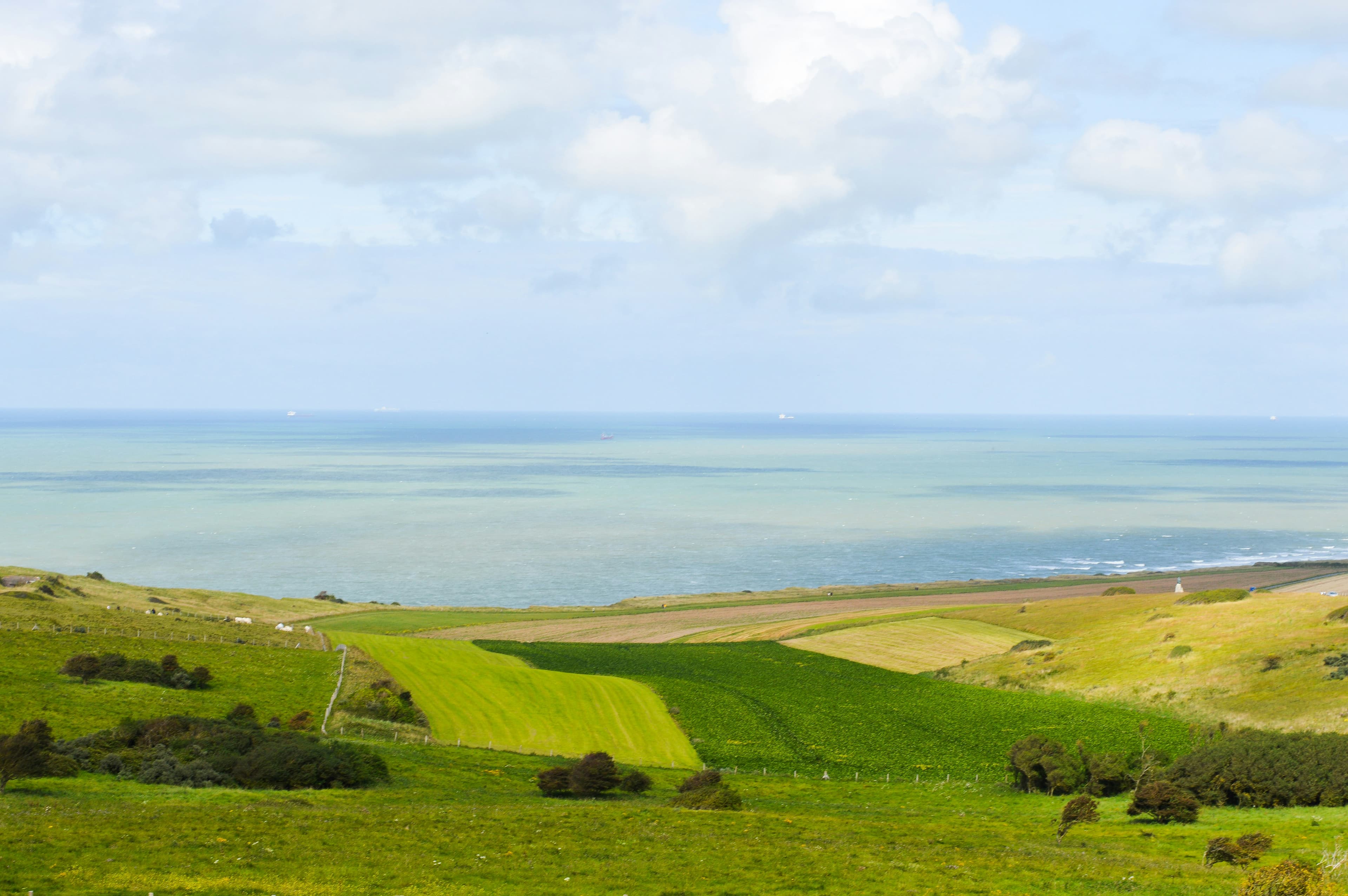
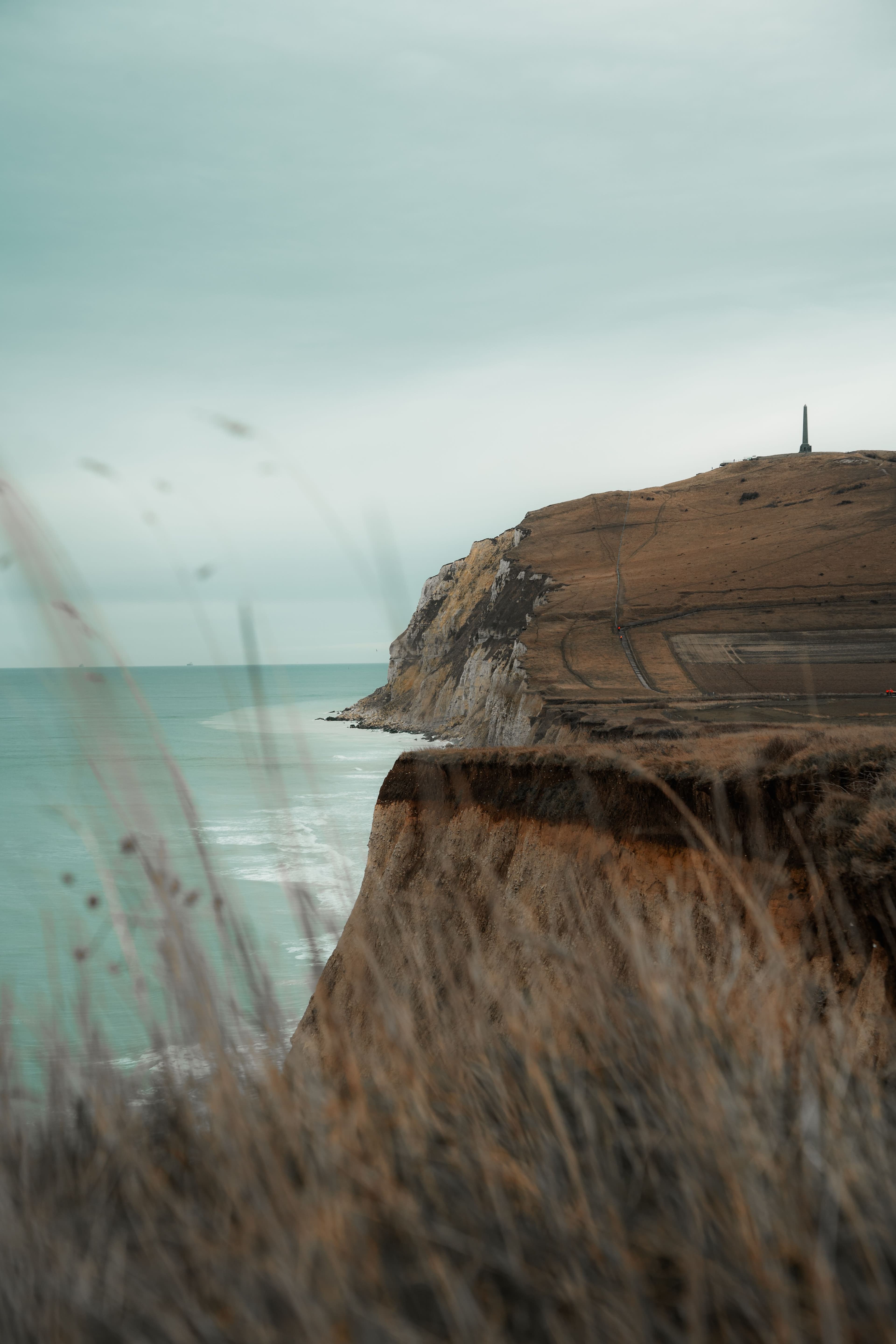
The organisers built the course around the Opal Coast’s defining feature: the chalk headland of Cap Blanc-Nez, part of the protected Grand Site des Deux-Caps. The marathon starts at Escalles beneath the cliffs and runs east into Calais, finishing on the redeveloped seafront promenade. A half marathon shared the Escalles start and a 10 km started separately in central Calais, so all three converged on the same line the same morning.
Pre-event material anticipated up to 3,000 marathon entrants and 6,000 participants across the three distances. Those were forecasts. The tourism office’s own post-event reporting put the actual combined field at close to 4,000 across all three races, and the two numbers should not be read as the same thing. Baptiste Mertz won in 2:40:12.81 and Caroline Sanson in 3:24:18.92: first-edition bests, with only one edition run so far.
The course
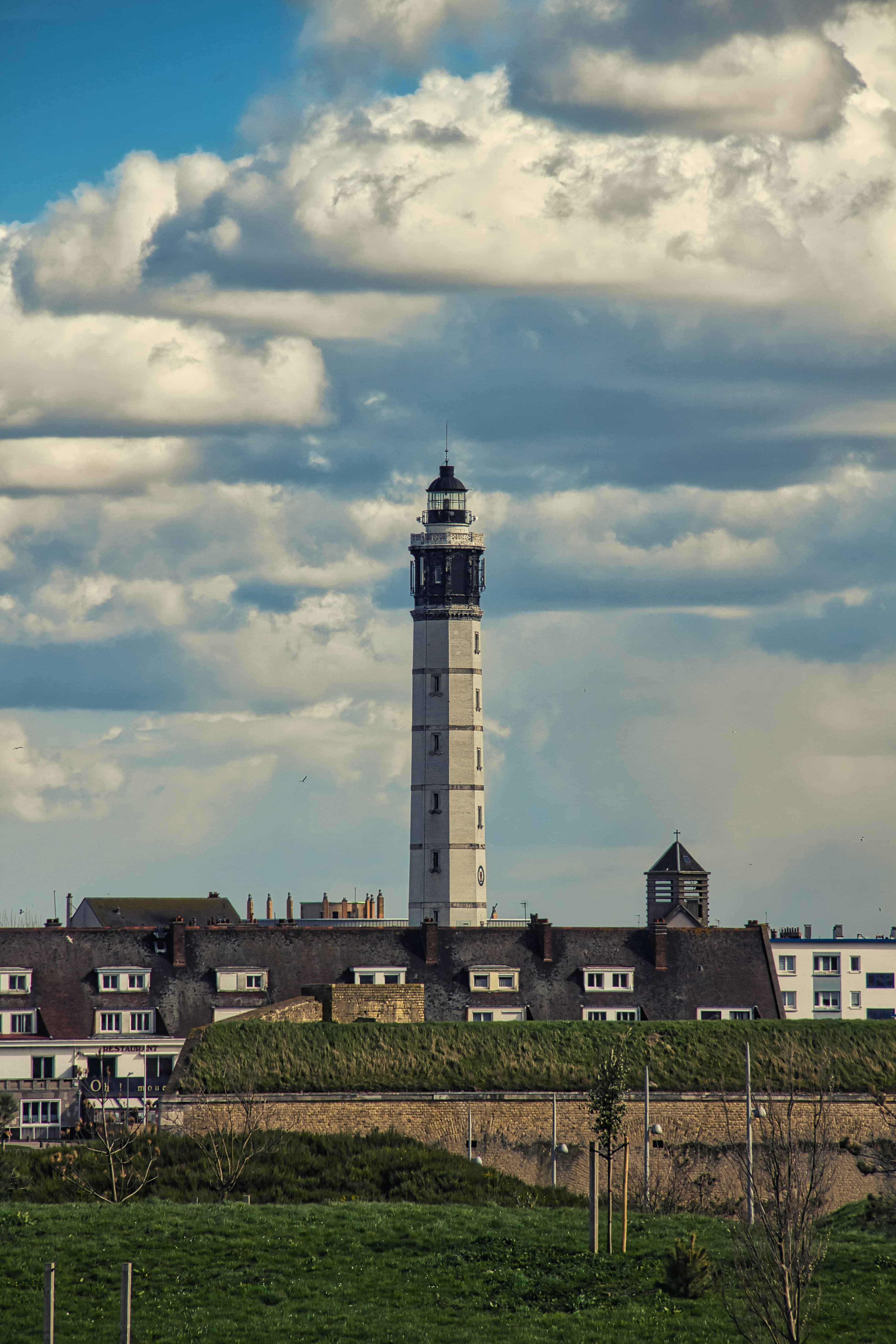
A point-to-point of 42.195 km from Escalles, beneath the chalk cliffs of Cap Blanc-Nez, to the beach promenade in Calais, the two ends about 10 km apart. Only the first 12 km are coastal: a steep drop into Escalles, two short climbs up the cape road, and the D940 along the shore to Sangatte. The route then turns inland on flat back roads through Coquelles, returns through the streets behind Blériot-Plage, enters Calais at about km 26, loops through the town past Calais-Ville station and the port, and finishes along the seafront.
The organiser publishes about 189 m of climbing, and all of it is in the first 8 km. The start, at around 105 m, is the highest point of the day. From Sangatte at km 8 to the finish the road stays within about 10 m of sea level. The wind is at its worst on the open coast road between km 4 and 12; after that the course is inland or in town.
Km 0 to 8: Escalles and the cape road. The race starts on the slope above Escalles and loses 58 m in its first kilometre into the village. Two short climbs follow: 39 m between km 1.2 and 2.6 through Escalles, then 54 m in a single kilometre up the D940 to 94 m at about km 4.7, the steepest stretch of the day at over 5%. The descent toward Sangatte gives nearly all of it back by km 8. Do not bank time on the opening drop; both climbs arrive inside the first 5 km.
Km 8 to 12: the coast road. Flat, on the D940 through Sangatte a few metres above the sea, with the Strait on the left and nothing between the road and the wind. A headwind makes an even pace feel far harder than the profile suggests, and a tailwind flatters a split you pay for later.
Km 12 to 24: inland through Coquelles. After the 12 km barrier the course leaves the coast for flat back roads, through Coquelles between about km 13 and 19, then back west toward Sangatte on the dyke roads around km 21 and 22. Nothing here climbs more than a few metres. This is the longest block between barriers, and the quietest part of the course for spectators.
Km 24 to 35: Blériot-Plage and the Calais loop. The route heads east through the streets behind Blériot-Plage, about a kilometre back from the beach where Louis Blériot’s cross-Channel flight began in 1909, and enters Calais on Rue de Verdun at about km 26. A loop through the town passes close to Calais-Ville station twice, at about km 29 and km 33, and reaches the port quays at the 35 km barrier. It stays flat throughout, but the turns come often.
Km 35 to 42.195: the harbour and the promenade. Past the harbour entrance at the Esplanade des Sauveteurs en Mer around km 36, the route turns back through the western streets, takes a short rise of about 10 m near km 39, and finishes with the last 2 km on the Digue Gaston Berthe, the beach promenade. That final stretch is the easiest part of the course for supporters to reach. Follow the blue line through the Calais loop: on this many corners, the inside line saves measurable distance.
Course Map
The point-to-point from Escalles along the coast road to Sangatte, inland through Coquelles, then a loop through central Calais to the seafront. Tap a marker for details, and scrub the slider or press play to move the orange marker along the course with the elevation profile beneath it.
Pacers
None confirmed. No pacer programme appears in the official race regulation or anywhere else, so do not assume the standard French pace groups exist here. On a course this exposed, that matters more than it would on a sheltered city loop: holding an even effort into a Channel headwind is harder without a group to sit in.
What to wear
One edition is not a climate record. Race day in the inaugural year was reported as around 20°C with a light breeze off the Channel, comfortable for late June, and one data point is only an indication: late June on the Opal Coast can bring wind, sun and showers inside the same morning.
Wind, not temperature, is the variable that counts. The first 12 km, over the lower slopes of Cap Blanc-Nez and along the coast road into Sangatte, have no shelter at all, so a headwind will do more to a finishing time than a few degrees either way. A light packable layer is worth carrying to Escalles even on a mild forecast, given how exposed the start is before 08:00, and no clothing-donation or gear-check scheme was found, so plan to carry it or leave it with someone. Sunscreen before the start, whatever the sky looks like: there is almost no shade over 42 km.
Entry
Direct, open registration: no ballot and no lottery, with entries accepted in order through the official ticketing platform until the field fills or entries close. Fees rise in date-based tiers, from roughly €45 in the earliest window rising to about €50 nearer the race, with the half marathon and 10 km proportionately cheaper. The fee includes the medal, event shirt, timing chip and on-course refreshment.
Marathon entrants must be old enough under FFA rules, effectively 20 or older on race day, with lower thresholds for the shorter distances. A valid medical clearance is required to collect a bib: a current French athletics licence, a medical certificate confirming fitness for competitive road running dated within the past year, or a recognised international equivalent.
Because this is a first edition there is no track record for how quickly it fills. The pre-event talk of up to 3,000 marathon runners was a forecast, not a cap, and the eventual combined field came in below it, so do not assume an immediate sell-out. Entering early is still the only way to get the lowest tier. Transfer, deferral, cancellation and insurance terms were not found in a source stable enough to publish, so check the organiser’s own terms before relying on any of them.
Fast Runner / GFA Standards
Not applicable. No qualification-based entry route exists for this race: entry is open to any eligible runner regardless of predicted finishing time. No charity allocation and no tour-operator programme were found either.
Race Weekend
Expo
The requirement is confirmed; the arrangement is not. Bib collection needs proof of identity together with valid medical clearance: a current competitive athletics licence, a medical certificate confirming fitness for road running dated within the past year, or a recognised international equivalent.
The venue, the opening days and hours, and whether anyone can collect on a registered runner’s behalf have not been published. Nor have a bag-size limit, a gear-check arrangement or merchandise details. Check the runner guide for the next edition.
Getting to the Start
The start is at 08:00 at Escalles, roughly 11 km west of Calais by road. Runners staying in Calais, which is the sensible base, need a plan to be there well before the gun, and that plan has to come from the organiser’s race-week instructions.
For ordinary travel, the free Div’in double-decker links Calais-Ville station with Cap Blanc-Nez in around 35 minutes on its seasonal timetable. That is useful for looking at the start area in the days before the race. It is not evidence of a race-morning shuttle, and road closures plus the early start can change what actually runs. The start sits inside the protected Grand Site des Deux-Caps, so the organiser controls access that morning.
Nothing has been published about the start village itself: toilets, bag drop, assembly or corral system, or how far runners walk from a drop-off point to the line. Headphone rules and deferral policies were not found either. Budget more time than seems necessary.
Afterwards it is much simpler, because the finish is in the city. The seafront is roughly a 15-minute walk from Calais-Ville station according to the tourism office, and the free local network connects the seafront, the centre and the station under normal conditions. Exact finish-line provisions beyond the medal were not confirmed.
Nutrition on Course
The official regulation confirms refreshment points along the course and at the finish, included in the entry fee. It does not publish how many stations there are, where they sit by kilometre, which nutrition brand is used, or what cup or bottle service is offered. No personal-bottle procedure was found.
The first 12 km are fully exposed, so drink early even without a station map: a windy day dehydrates a runner faster than the temperature alone suggests. Anyone relying on a specific gel or drink should carry their own, since the brand has not been confirmed.
Spectating
The finish on the Calais seafront is the one reliable position, reachable on foot or by the free local network from anywhere central. Sightings outside Calais depend on road access the organiser controls on race morning, so do not plan to move between viewing points on the assumption that roads stay open. No spectator shuttle, live-tracking app or spectator map has been published.
Finish only. Stay central, walk or take the free network to the seafront in good time. The safest plan for anyone with limited mobility or young children, and the default until the organiser publishes clearer guidance.
Calais-Ville station, then the finish. The course loops through central Calais and passes close to Calais-Ville station twice, at about km 29 and km 33, before heading for the port and the seafront. That gives two sightings and the finish within walking distance of each other without leaving the city. Closures and crossing points have not been published, so check the organiser’s race-week instructions before relying on getting from one side of the course to the other.
Post-Race Food
The finish sits on the seafront, which puts the centre and Rue Royale within walking distance once bags and medals are sorted. Brasserie de la Mer, on Rue de la Mer close to the seafront, serves little beyond fish and moules done a dozen ways, and is the more practical choice for sitting down within a short walk of the line. Histoire Ancienne on Rue Royale is a long-established bistro in the centre with the kind of carbohydrate-and-protein plates that work after a marathon. Check Sunday hours for either before race weekend: a marathon finishing in the late morning is an awkward time for some kitchens, and neither venue’s hours were confirmed for a race weekend specifically.
Where to Stay
Stay close to the finish in Calais, not close to the start at Escalles. The start is remote and exposed and depends on organiser-controlled transport; the finish is inside the city, near hotels, restaurants, the station and the free network. Staying at the start to save a journey on race morning trades a short hotel-to-station walk for an unconfirmed transport arrangement to a remote headland.
The Calais seafront
The seafront is the most direct option for anyone prioritising the finish: the marathon ends here, the promenade is flat, and recovery involves minimal extra walking. The trade-off is that transport to the start still has to be arranged exactly as from anywhere else in the city, so the gain is all after the race. Saturday nights can run louder here in summer, given the beachfront bars.
The city centre around Rue Royale
Rue Royale and the centre make the strongest all-round base: restaurants, a manageable walk to both the seafront finish and Calais-Ville station, and access to the free network for whatever race-morning transport the organiser publishes. For a rail traveller this is the best compromise between finish-line convenience and practical logistics.
Around Calais-Ville station
The station area suits anyone arriving by train and wanting a fast departure afterwards. The tourism office puts the sea about 15 minutes away on foot, close enough for race morning without being on the seafront. Less atmospheric than the beach, and highly practical if you are travelling on to Lille, Paris or the Eurostar network the same day.
Blériot-Plage and Sangatte
The course passes through Sangatte twice, on the coast road between km 6 and 12 and on the back roads behind Blériot-Plage around km 20 to 25, and both are quieter bases for anyone travelling with family. In practice their usefulness depends entirely on whether the organiser confirms workable transport to Escalles, because staying west of Calais does not by itself solve the problem of reaching Cap Blanc-Nez at dawn. Both are also less convenient for rail arrivals and for getting back into the city afterwards.
Escalles and Cap Blanc-Nez
Escalles is theoretically the most start-convenient option and rarely the best base. Accommodation is limited, the finish is a full marathon away by road, and getting back afterwards is harder than from anywhere in Calais. This becomes sensible only if the organiser confirms participant transport and baggage arrangements that make a start-area stay workable.
Recommended hotels
Confirm current operation and availability before booking. This is a young race with no organiser hotel programme behind it, so none of these carries a negotiated race rate.
A beachfront hotel facing the sea with its own bar and restaurant. The closest practical option to the finish for anyone who wants to be off their feet within minutes of collecting a medal.
A dependable chain hotel on Rue Royale, walkable to both the seafront finish and Calais-Ville station. The strongest compromise between finish-line access and rail logistics.
A long-established central hotel close to Calais-Ville, well suited to arriving by train and wanting a simple route to race-morning transport and back to the platform afterwards.
A smaller budget beachfront option a couple of minutes from the sea, for runners who value finish-line proximity over hotel size or facilities.
A small sea-view guesthouse in Sangatte for a quieter, course-side stay. Its value depends entirely on the organiser confirming workable transport into Calais both before and after the race.
Booking timeline
One edition gives no reliable curve to plan against. What is clear is that late June on the Opal Coast is ordinary summer-holiday season independent of the marathon, so Calais accommodation competes with general seaside demand as well as with runners, and prices are unlikely to fall as the weekend approaches. Book something refundable in central Calais or on the seafront as soon as a next date is confirmed, before entries open. For anyone coming from London, price the Eurostar-to-Lille route and the Dover ferry early: both are cheapest well in advance and neither depends on the race’s own entry system.
See & Do
Distances are from the finish on the Calais seafront.
Cap Blanc-Nez
About 11 km (6.8 miles) from the finish. The chalk headland the marathon starts beneath, and the clearest link between the race and the landscape it crosses. The free Div’in bus reaches it from Calais-Ville in around 35 minutes on normal seasonal service. For tired legs the day after, stay on the summit viewpoints and skip the descent to the beach at Cran d’Escalles, and check tide times before any beach walk.
Calais beach and seafront
At the finish. The obvious recovery option precisely because it needs no further travel: a flat stretch of sand and promenade, reachable straight from most of the hotels above, and well suited to an afternoon spent doing very little.
The Hôtel de Ville and belfry
About 1.5 km (0.9 miles) from the finish. Calais’s central landmark, with its UNESCO-listed belfry, standing beside the square where Rodin’s Burghers of Calais is displayed. The square and the sculpture need no climbing; check lift and access arrangements before attempting the tower on sore legs.
Cité internationale de la dentelle et de la mode
About 2 km (1.2 miles) from the finish. Calais’s lace and fashion museum, fully indoors and largely level, which makes it one of the more forgiving things on this list the day after a marathon. Reachable on the free local network from most central hotels.
Dragon de Calais
On the seafront, close to the finish. A large mechanical dragon that walks the promenade. An easy stop on the way back to a seafront hotel, and not worth a special trip.
Read Before you Run
The White Cliffs of Dover: Britain's Heritage Coast
Paul Harris
A local history of the chalk cliffs between Folkestone and Deal: the geology, the wartime history and the coastal heritage of the cliffs directly across the Strait from where this race starts. The opening kilometres face them across the water, on the French side of the same chalk.
After the Race
Calais is a port before it is a destination, and that is the advantage here: you are already at a crossing. Dover is 90 minutes away by ferry, which puts Kent and London within easy reach. Inland, Lille is the regional city worth the trip. Along the coast, the wider Côte d’Opale needs a car to link properly, and rewards one.
Stand above the marathon’s opening kilometres without running them. Clear June visibility across the Strait from the summit, with a steeper, tide-dependent path down to the beach at Cran d’Escalles.
A working fishing port with a walled old town above it and one of Europe’s larger aquariums below, close enough for a single night without another long transfer.
Flemish squares, a serious art museum and the best eating within easy reach of Calais, two nights being about right to stop rushing it.
The wider Côte d’Opale beyond the race route: the two capes, the dunes and the beach towns strung between them, which need a car to link properly.
Cross the Strait that runs beside the marathon’s first 12 km. Dover and the Kent coast first, then London, by ferry and train.
Frequently asked questions
Should I stay near the start or the finish?
The finish, which means Calais. Escalles is 11 km west inside a protected landscape with organiser-controlled access and little accommodation.
How far in advance should I book a hotel?
One edition of history gives no pattern, but late June is ordinary holiday season here. Book refundable once a date is confirmed.
Is there free transport to the start?
Not confirmed. The local network is normally free, but no evidence says the seasonal Div’in bus doubles as a race shuttle.
What is the best area to stay?
Central Calais around Rue Royale for the best balance; the seafront for finish-line convenience; the station for onward travel.
When does the expo open?
Not published. What is confirmed is the requirement: photo identity plus valid medical clearance or a competitive licence.
What is the weather typically like on race day?
One data point: about 20°C with a light breeze in the inaugural year. Wind, not temperature, is the course’s real variable.
How do I get from the airport?
Most people do not fly. Ferry from Dover, or Eurostar to Lille or Paris and onward rail.
Is there a bag drop?
Not confirmed, along with everything else about the start village at Escalles. Check the organiser’s instructions.
Should I bring a throwaway layer?
Yes, and expect to carry it or hand it over. The start is exposed and no collection scheme was found.
How do I get back to my hotel after finishing?
Walk. The seafront finish is about 15 minutes from Calais-Ville station, and the free local network covers the rest.