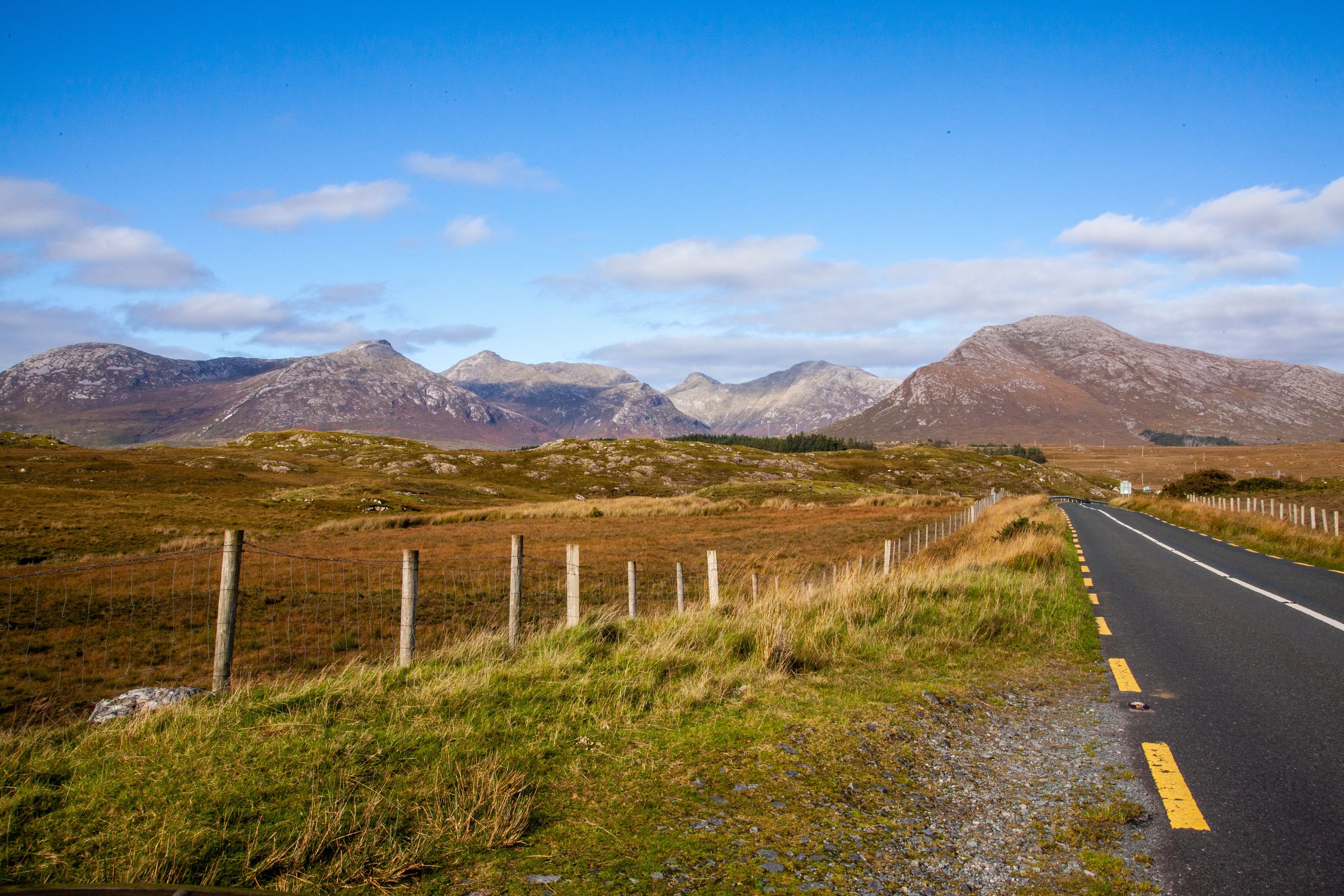
The Race
| Next Race Date | 25 April 2027 (23rd Connemarathon) |
|---|---|
| Course type | Point-to-point: full marathon starts at Lough Inagh at 11:00am, incorporates the half marathon's Leenane-to-Maam Cross route, and finishes at Maam Cross |
| Registration | Open, direct online entry via the official Connemarathon site, no ballot; entry fee includes transport to and from the race |
| Ballot Opens | Not applicable: open entry. The timetable lists 13 March 2027 as the deadline for deferring to 2028 or switching race distance |
| Total finishers | Not confirmed |
| Avg race-day temp | Not confirmed. Late April in Connemara is genuinely variable, with runner reports describing wind, rain and bright sun all within the same race |
| Cutoff time | Not confirmed |
| Free race-day transport | Included in the entry fee itself, given the race's rural, point-to-point start locations at Recess (ultra), Lough Inagh (marathon) and Leenane (half marathon) |
| Course certification | Not confirmed. No Athletics Ireland permit, AIMS certificate or World Athletics label has been sourced |
A transport-included, point-to-point race through Connemara
Unlike almost any other race on this site, Connemarathon includes transport to and from the race directly in the entry fee, a structural response to running three separate distances from three separate rural start points on the same day: an ultra from Recess, the full marathon from Lough Inagh, and a half marathon from Leenane, all converging at Maam Cross. Runners should plan around official race-bus instructions. The course itself, with 362 metres of total elevation gain, is defined by a late climb nicknamed the “Hell of the West,” widely reported to arrive around mile 22 with genuine wind and rain exposure layered on top of accumulated marathon fatigue. This is a race built around scenery and a genuine physical and logistical challenge, not a flat, PB-focused course.
History
The Connemarathon, officially the Connemara International Marathon, is a long-running rural road race through Connemara, County Galway, with the 2027 edition marking its 23rd running. The event runs three distances on the same day from three separate start points: an ultra marathon of 39.3 miles starting at Recess at 9:00am, a full marathon starting at Lough Inagh at 11:00am, and a half marathon starting at Leenane, also at 11:00am, with the full marathon incorporating the half marathon’s own route before both finish together at Maam Cross. This point-to-point, multi-start structure makes the race genuinely transport-led: entry fees for all distances include transport to and from the race, and runners are expected to follow official race-bus logistics. Race packs are posted worldwide to entrants, reducing the friction of in-person expo collection for international runners, though this places the burden on entrants to ensure their mailing address is accurate at the point of registration. No formal Athletics Ireland permit or AIMS certification status has been sourced, despite the race’s long-established history.
The course
The Connemarathon full marathon starts at Lough Inagh at 11:00am and finishes at Maam Cross, incorporating the half marathon’s own Leenane-to-Maam Cross route for its second half; total elevation gain across the course is 362 metres. This is a rural, scenic, point-to-point road race through Connemara. The course’s defining feature, consistently identified across independent runner reports, is a late climb nicknamed the “Hell of the West,” widely reported to arrive around mile 22, when marathon fatigue is already accumulated; runner accounts describe the climb as exposed to wind and rain and frequently walked by tired runners. The elevation chart places it between km 36 and km 38.7: 83 m of climbing at an average of 3 per cent, over 4 per cent in its middle kilometre, to the course’s high point of 96 m. It is not the only climb: out of Leenane, where the half marathon route begins, the road rises 74 m in 3 km between km 21 and km 24. April weather in Connemara is genuinely variable, with runner reports describing wind, rain and bright sun, sometimes within the same race.
Course Map
The map shows the course: point-to-point from Lough Inagh north to the N59, along Killary Harbour to Leenane, and south over two climbs on the R336 to Maam Cross. Tap a marker for details, and scrub the slider or press play to move the orange marker along the course with the elevation profile beneath it.
A scenic lakeside start at 11:00am, consistently praised by runner reports as a striking opening to the race, then gently rolling road north along the R344.
A 37 m climb onto the N59, a 63 m descent to Killary Harbour and Leenane, where the half marathon route begins, then 74 m of climbing in 3 km on the R336.
The course's defining late climb, about 83 m in under 3 km from km 36, exposed to wind and rain, and widely reported as the point where marathon fatigue is at its worst.
About 53 m of descent to the finish and strong crowd support at the line, a genuine reward after the climb that precedes it.
Pacers
Not confirmed. No official pacer programme has been sourced for this race. Given the course’s genuine late-race difficulty, independent runner advice consistently favours conservative early pacing over a fixed target-time approach, since the “Hell of the West” climb tends to reshape finishing times regardless of earlier pace discipline.
What to wear
Late April in Connemara is genuinely unpredictable: runner reports describe wind, rain and bright sun, sometimes within the same race, and the exposed “Hell of the West” climb specifically has been reported with rain on top of accumulated fatigue. Given the course’s genuine hill and weather exposure, layering choices should account for conditions that can shift meaningfully between the sheltered early miles near Lough Inagh and the exposed later climb toward Maam Cross.
Entry
Entry is direct and online via the official Connemarathon site, with no ballot. 2027 entry fees are €70 for the half marathon, €75 for the full marathon, and €80 for the ultra, plus a small online processing fee; all entry fees include transport to and from the race, a distinctive feature given the event’s rural, point-to-point start locations. All distances require runners to be at least 18 on race day. Race packs are posted worldwide, so entrants must provide an accurate mailing address at registration. The timetable lists 13 March 2027 as the deadline for deferring entry to the 2028 edition or for switching race distance. No Good for Age, championship or fast-runner entry route was found.
Fast Runner / GFA Standards
Not applicable. Connemarathon has no dedicated Good for Age or fast-runner entry pathway; entry is open to all at the standard fee for each distance.
Race Weekend
Expo
There is no in-person expo in the conventional sense. Race packs are posted worldwide to entrants ahead of race day, meaningfully reducing the logistical burden on international runners compared with races requiring in-person collection, though it places the responsibility on each entrant to ensure their mailing address is correct and current at the point of registration.
Race Morning
Race morning is genuinely transport-led, given the race’s three separate, rural start points: the ultra starts at Recess at 9:00am, the full marathon at Lough Inagh at 11:00am, and the half marathon at Leenane, also at 11:00am. Entry fees for all distances include transport to and from the race, and runner reports consistently describe shuttle buses running from designated parking or meeting areas to the start; the key practical instruction for any runner is to follow the official race-bus pickup points and timings published in the current-year final race instructions.
Nutrition on Course
Not confirmed. No confirmed aid-station locations, spacing, water provision or gel/sports-drink availability has been sourced for this race. This is a genuine gap for an otherwise well-documented race, and should be sourced directly from the current-year final race instructions, particularly given the course’s genuine rural remoteness in its later miles.
Spectating
Given the race’s point-to-point, transport-led structure across three rural start locations, spectating here is genuinely different from a city marathon: independent runner reports specifically note strong crowd support at the finish in Maam Cross despite the area’s rural setting, suggesting this is the practical gathering point for most spectators; following the course by car across Connemara’s rural road network does not work.
Itinerary:Base at Maam Cross for the finish, where independent runner reports describe strong crowd support despite the area’s rural setting. Confirm whether a spectator shuttle or bus service is offered separately from the runner transport included in entry.
Post-Race Food
No specific named restaurant, pub or finish-area food provision has been sourced for this race. Given the race’s rural finish at Maam Cross, most runners will likely travel back to Galway city or another accommodation base for a fuller post-race meal; dining options at the finish are limited.
Where to Stay
The Connemarathon’s full marathon starts at Lough Inagh and finishes at Maam Cross, two separate rural locations, but because entry fee includes transport and the race is genuinely point-to-point across Connemara, the practical accommodation decision here is less about proximity to either specific point and more about choosing a sensible overall base for the whole race weekend.
Galway city
The best overall base for most runners, offering the strongest accommodation depth, food and onward transport options, and the most straightforward fit with the race’s own transport-included, bus-led logistics. This is the recommended default for international runners in particular, given Galway’s far greater capacity compared with rural Connemara accommodation.
Oughterard or Clifden
Within Connemara itself, offer a more atmospheric, closer-to-the-course base, but accommodation availability is genuinely limited, and race-bus logistics from these locations should be verified directly against the current-year official transport plan before committing to this option.
Leenane or the Lough Inagh area
Closest to the actual start and half marathon start points, are the most atmospheric possible bases but carry the most limited accommodation of all three options; this should only be considered if the official bus and parking plan for that specific edition confirms it works logistically, rather than assumed as convenient purely because of geographic proximity to the start.
Recommended areas
The best overall base for most runners, offering the strongest accommodation depth and food options while remaining compatible with the race's transport-included logistics. No specific named property has been sourced with confidence.
A more atmospheric, closer-to-the-course base than Galway, though accommodation is limited and race-bus logistics should be verified before booking.
A scenic Connemara base with its own independent appeal, though the same transport-verification caveat applies as Oughterard.
Booking timeline
There is no ballot for this race, so demand builds steadily through the standard entry window. Connemara’s own accommodation stock is genuinely limited relative to demand from both the race and general tourism to the region, so runners planning to stay within Connemara itself should book well ahead of race weekend. Galway city offers considerably more capacity and should be the safer default booking strategy for most runners.
See & Do
These attractions sit around the course itself, in Galway city, or a short drive across Connemara.
Connemara National Park and Diamond Hill
A genuinely scenic National Park with a signature walking route up Diamond Hill; runners should treat the summit route as a full hike rather than a gentle post-marathon stroll, given the elevation and terrain involved.
Kylemore Abbey
A well-known Connemara visitor stop, a lakeside Benedictine abbey with formal gardens, suited to a genuinely gentle post-race day given its largely level walking routes.
Galway city
The practical base for most runners. The strongest low-effort race-weekend option beyond the course itself, with food, live music, pubs and a genuinely compact, walkable city centre.
Sky Road and Clifden
Best reached by car or organised tour. A dramatic coastal driving loop near Clifden, best experienced with a car or an organised tour rather than assumed to be reachable by public transport.
Read Before you Run
The Connemara Journals
Tim Robinson
Robinson's detailed cartographic and literary study of Connemara's landscape, built from decades of walking the region himself, gives runners a genuine sense of the terrain the marathon's own course crosses, well beyond what a conventional guidebook would offer, a fitting companion for a race built entirely around its scenery.
After the Race
Connemarathon runs in April. These itineraries stay close to Galway city, Kylemore Abbey and Connemara National Park, or extend further to Clifden and the Aran Islands, suited to runners recovering from a genuinely demanding hilly course.
A simple, social, food-led day in Galway's compact city centre, the lowest-effort option after a genuinely demanding marathon.
A lakeside abbey with gentle, level gardens, paired with Connemara National Park for runners wanting some scenery without a serious hike.
A fuller scenic loop through Connemara's coast and countryside, best done at a slow pace with a car or tour.
A genuine island extension reachable by ferry, though crossings are weather-dependent and should be booked with some flexibility built in.
Frequently asked questions
Should I stay near the start or the finish?
Neither directly. The full marathon starts at Lough Inagh and finishes at Maam Cross, two separate rural locations, but because entry fee includes transport, most runners are better served staying in Galway city and using the race's own bus logistics.
How far in advance should I book a hotel?
Well in advance, particularly for accommodation within Connemara itself, which is genuinely limited. Galway city offers considerably more capacity and is the safer default booking strategy for most runners.
Is there free transport to the start?
Transport to and from the race is included in the entry fee itself, a distinctive feature of this race given its three separate, rural start locations. Runners should follow the official race-bus instructions to reach the start.
What is the best area to stay?
Galway city, for most runners, given its accommodation depth, food options and straightforward fit with the race's transport-included logistics. Oughterard or Clifden within Connemara itself offer a more atmospheric but logistically riskier alternative.
When does the expo open?
There is no conventional in-person expo. Race packs are posted worldwide to entrants ahead of race day, so runners should ensure their mailing address is accurate at registration; there is no expo-style collection.
What is the weather typically like?
Not confirmed for a specific average. Late April in Connemara is genuinely variable, with runner reports describing wind, rain and bright sun, sometimes within the same race.
How do I get from the airport?
Not confirmed. Dublin and Shannon are the geographically plausible arrival airports, with onward travel to Galway or Connemara, but specific transfer routes have not been confirmed.
Is there a bag drop?
Not confirmed. No bag-drop or baggage-storage arrangement has been sourced for this race.
Should I bring a throwaway layer?
Genuinely important given the course's exposed, weather-variable setting, particularly for the late "Hell of the West" climb, which runner reports describe with rain and wind exposure on top of accumulated marathon fatigue.
How do I get back to my hotel after finishing?
Given the race's transport-included, point-to-point structure, runners should follow the official return-transport instructions from Maam Cross; this is a genuinely bus-led race from start to finish.