The Race
| Next Race Date | Saturday 4 September 2027 |
|---|---|
| Course type | Loop: both distances start in Dingle Town; the full marathon finishes in Dingle Town (exact finish-line position stated by the organiser as still to be confirmed); the half marathon finishes separately near Dunquin, with complimentary buses back to Dingle Town |
| Registration | Open when available, direct online entry, no ballot. The 2026 edition is sold out; a waiting list is the only route in |
| Ballot Opens | Not applicable: open entry (currently sold out), no ballot |
| Total finishers | Not confirmed |
| Avg race-day temp | Not confirmed. Early September on the Dingle Peninsula is genuinely variable, with runner reports describing both severe wind and rain and perfect conditions across different editions |
| Cutoff time | Not confirmed |
| Free race-day transport | Three free car parks on the approach to Dingle Town from 7:00am, roughly 5-10 minutes’ walk from the start, vehicles removed by 4:00pm. Complimentary buses return half marathon finishers from near Dunquin to Dingle Town, dropping near Milltown Bridge, about 1 km from the start line |
| Course certification | Not confirmed. No Athletics Ireland permit, AIMS listing or formal course-measurement certificate has been located |
Two Finishes, One Town
Dingle runs a genuinely unusual dual-finish structure: the half marathon finishes near Dunquin, outside Kruger’s Pub, on the western side of the peninsula, while the full marathon continues on to finish back in Dingle Town itself. Spectators are explicitly not permitted access to the half-finish area, given its limited space, parking and rural road network, so half marathon finishers are instead returned to Dingle Town by complimentary bus. Regardless of which distance a runner or spectator is following, Dingle Town itself, not the half marathon’s own finish line, is the practical gathering point for the whole race weekend.
History
The Dingle Full and Half Marathon runs on the Dingle Peninsula in County Kerry, starting in Dingle Town and following a route out toward Ventry and Slea Head before the two distances diverge, with the half finishing near Dunquin and the full continuing inland through Ballyferriter and Murreagh before returning to Dingle Town. The race has built a reputation as one of Ireland’s most sought-after destination marathons, driven by its scenery: the 2026 edition sold out ahead of its official closing date, with entrants now directed to a waiting list. The race is explicitly positioned by both the organiser and independent runners as a scenic, challenging event, not a PB course, with the official course page itself warning of a demanding climb around mile 22 late in the full marathon. No founding year, organiser name beyond the Dingle Marathon branding, or finisher-count history has been published, and no Athletics Ireland permit or AIMS certification is listed.
The course
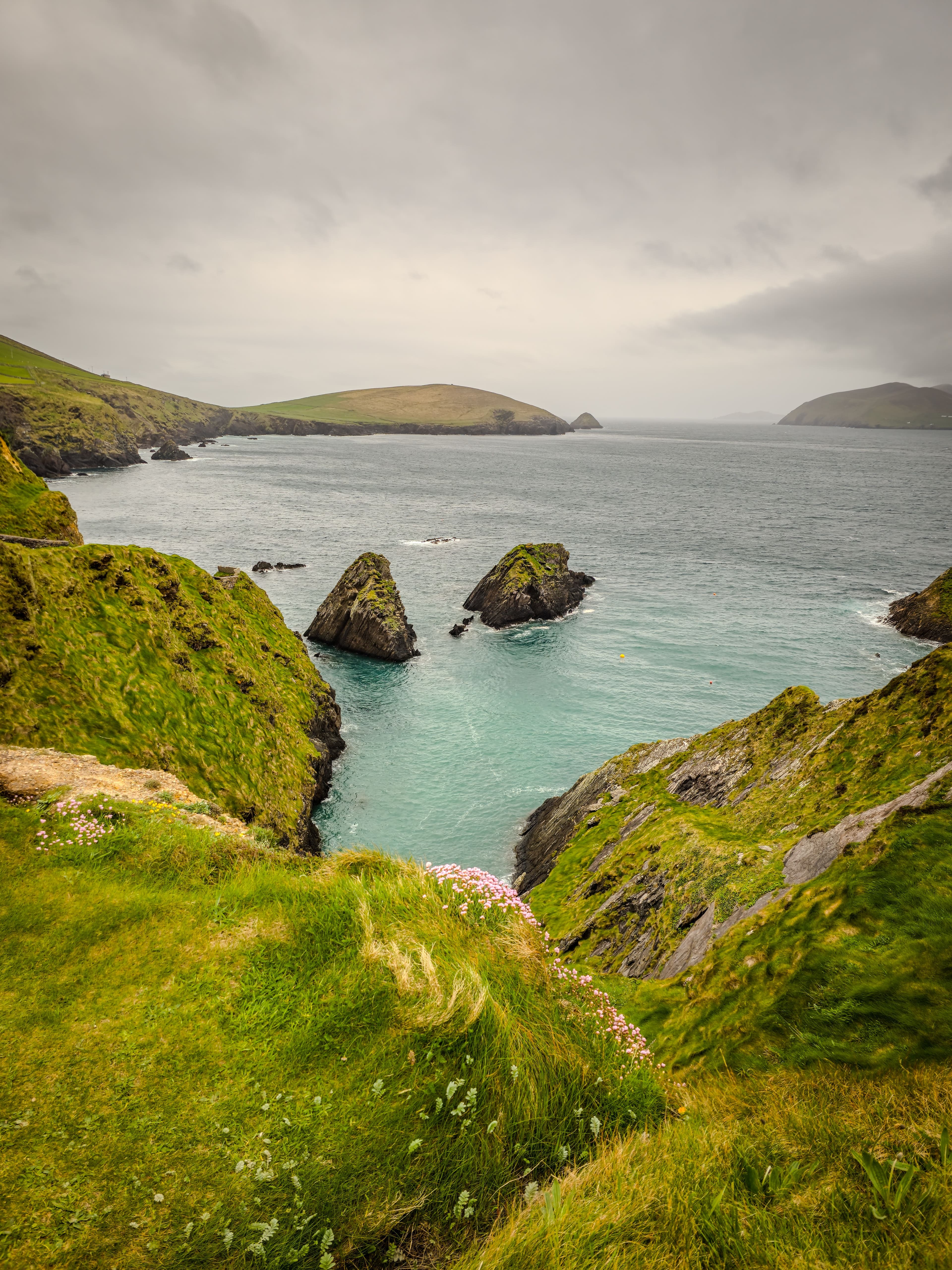
The Dingle Marathon starts in Dingle Town, around Strand Street and the Marina area. Both distances head out through Ventry, around 5.75 km, toward Dunbeg Fort, around 6.7 km, an Iron Age promontory fort on the cliffs, and continue along Slea Head itself with open Atlantic and Blasket Islands views, closed to vehicular traffic on race day. The route passes Coumenoole Strand, around 19.6 km, and reaches Dunquin, around 20.3 km, where the half marathon finishes outside Kruger’s Pub. A genuine climb to the course’s coastal high point, about 120m, follows shortly after Dunquin: some 74 m in under 2 km, then a descent almost as steep towards Ballyferriter. The full marathon continues inland through Ballyferriter, where the organiser’s own flagged “tough uphill climb around mile 22” arrives: the route climbs from around 15m to about 90m between roughly 34 km and 36.5 km, beyond Ballyferriter, steepest at about 4.5 per cent, a genuinely sustained climb independently corroborated by runner reports describing it as “insanely hilly” and, in one account, over a mile long. A long descent follows, which well-paced runners have used to recover time, back through Murreagh, around 40 km, toward Dingle Town, where the organiser’s own course page states the exact finish-line position is still to be confirmed.
Course Map
The map shows the full marathon loop from Dingle Town out to Slea Head, Dunquin and Ballyferriter, and back to Dingle Town. Tap a marker for details, and scrub the slider or press play to move the orange marker along the course with the elevation profile beneath it.
Both distances start together in Dingle Town at 9:00am sharp, heading out through Ventry to Dunbeg Fort, an Iron Age promontory fort on the cliffs.
Open Atlantic and Blasket Islands views along Slea Head, closed to vehicular traffic on race day, reaching Coumenoole Strand and Dunquin, where the half marathon finishes.
A 74 m climb out of Dunquin to the coastal high point, then inland through Ballyferriter to the course’s defining climb: a sustained rise of around 75m in a little over a mile from km 34.
A long descent through Murreagh back to Dingle Town, where the exact finish-line position is stated by the organiser as still to be confirmed.
Pacers
Yes. Half marathon pacers are offered for 1:30, 1:45, 2:00 and 2:15 target finish times. Full marathon pacers are offered for 3:30, 3:45, 4:00, 4:15 and 4:30 target finish times.
What to wear
Early September on the Dingle Peninsula is genuinely unpredictable: runner reports describe both severe wind and rain and perfect conditions across different editions of the race. Given the exposed, coastal nature of the Slea Head section in particular, layering choices should account for genuinely different conditions between the sheltered Dingle Town start and the open Atlantic-facing stretches of the course. No headphone policy or mandatory-kit list has been sourced for this race.
Entry
The 2026 edition is sold out; the official site and Eventmaster both direct prospective entrants to a waiting list. When entry is open, fees are €74 plus a 7% booking fee for the half marathon, and €84 plus a 7% booking fee for the full marathon. Entry fees are strictly non-refundable and non-transferable, and deferrals are not permitted; switching between the full and half marathon is not allowed once entered, and any runner who drops from the full to the half on event day is disqualified and loses access to a finish time, finisher top, medal and bus transfer. Race-number transfers, sales or gifts to another runner are explicitly prohibited. It was not confirmed whether any charity-entry route exists, or how the current waiting list operates in practice. No Good for Age, championship or fast-runner entry route was found.
Fast Runner / GFA Standards
Not applicable. Dingle Marathon has no dedicated Good for Age or fast-runner entry pathway; all entrants use the same standard entry, subject to availability, and the current 2026 edition is sold out.
Race Weekend
Expo
There is no conventional multi-day expo. Irish participants have race packs posted approximately two weeks before the event. Overseas participants, and anyone who has not received a posted pack, collect their race pack on Friday from 1:00pm to 10:00pm at the Dingle Marina office, opposite the Aquarium and beside the Full Finish Line car park, or on race morning from 7:00am to 8:00am at the same location.
Race Morning
Both distances start together in Dingle Town at 9:00am sharp; arrive at the start at least 30 minutes early. Three free car parks are provided on the approach to Dingle Town from 7:00am, roughly 5 to 10 minutes’ walk from the start, with vehicles required to be removed by 4:00pm; runners staying in Dingle itself are advised to walk, and the official FAQ warns against attempting to park in the main start-area car park directly. Half marathon runners must hand bags to the dedicated “Half baggage” van at the start, which departs 20 minutes before the race at 8:40am and delivers bags to the half finish near Dunquin; full marathon runners use a separate “Full Baggage” van at the start, with bags collected at the full finish area in Dingle Town. One small bag per runner is permitted.
Nutrition on Course
Water is provided roughly every 3 miles, with toilets available at aid stations. Bananas and jellies are available at mile 9; jellies, bananas and Lucozade Sport are available at mile 21, positioned specifically ahead of the course’s defining climb around mile 22, a deliberate placement worth flagging to runners planning their fuelling around the course’s toughest section.
Spectating
Spectator access here is genuinely constrained compared with most marathons: the official FAQ explicitly states that spectators are not permitted access to the half-finish area near Dunquin, due to limited space, parking and the rural road network on the peninsula. Dingle Town, as both the start and the point where half marathon finishers are returned by complimentary bus, is the practical gathering point for most spectators, dropping near Milltown Bridge roughly 1 km from the start line. Slea Head itself, closed to vehicular traffic on race day, offers a genuinely scenic stretch of the course, but spectator access to it should not be assumed without confirming current-year road-closure and parking arrangements.
Itinerary: Base in Dingle Town for the start, and remain there or near Milltown Bridge to see half marathon finishers returned by complimentary bus. Wait in Dingle Town for the full marathon finish as well, given the finish-line location is confirmed to be in Dingle Town itself even though its exact position was still to be confirmed at research time.
Post-Race Food
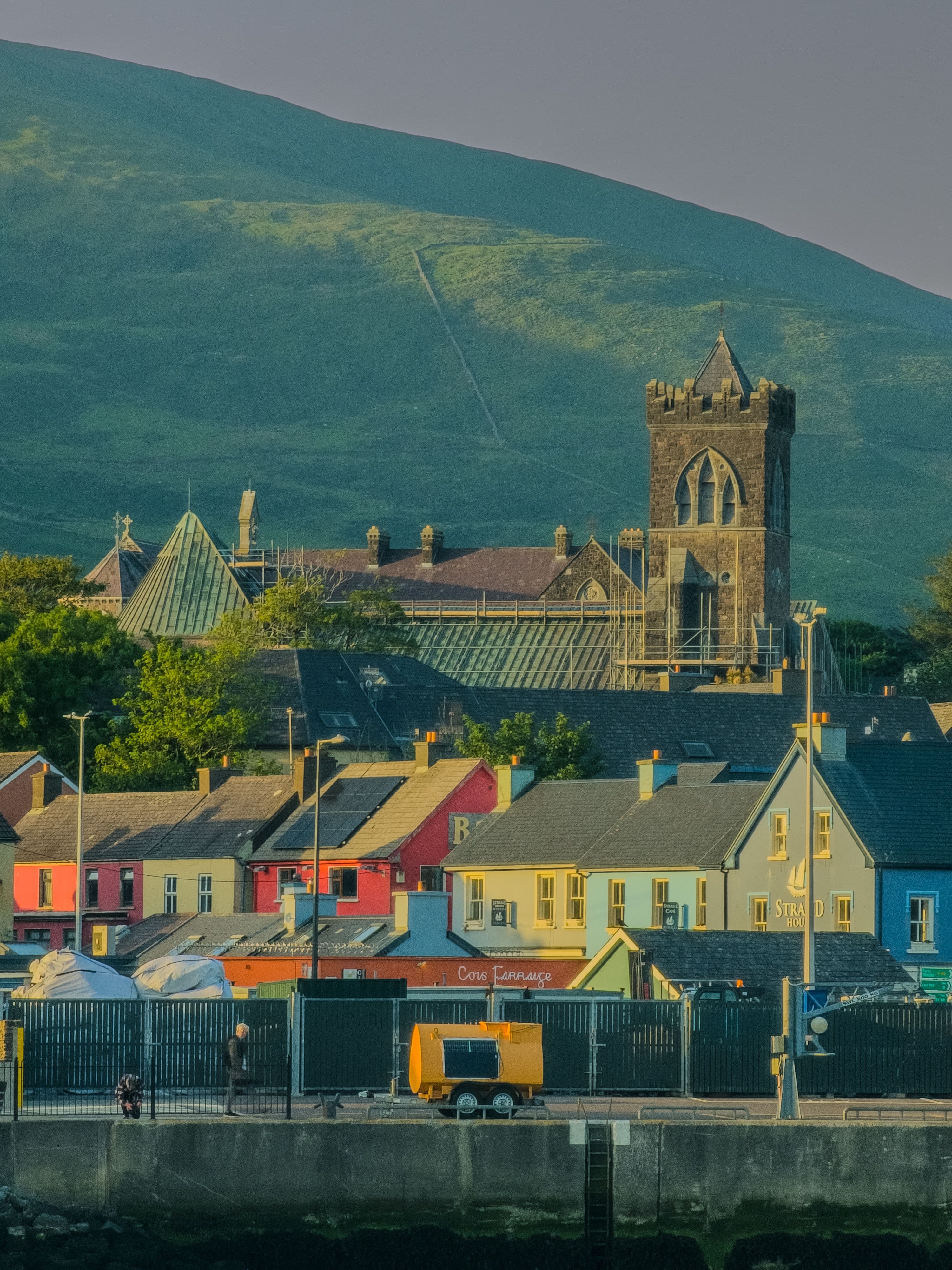
Dingle Town’s food, pub and live-music scene is central to the race weekend’s own appeal, not an afterthought; the town’s concentration of pubs and restaurants around Strand Street and the Marina area offers a genuine post-race destination in its own right. No specific named restaurant has been sourced with confidence for this race.
Where to Stay
The Dingle Marathon starts in Dingle Town, and the full marathon finish is confirmed to be in Dingle Town as well; the half marathon finishes separately near Dunquin, but half finishers are bussed back to Dingle Town, making Dingle Town itself the practical accommodation base for essentially every runner regardless of distance.
Dingle Town, particularly around the Marina and Strand Street
The best base, close to the start, race-pack collection, and the town’s own food and pub scene that forms a genuine part of the race weekend experience; race-day road and parking restrictions make any out-of-town base meaningfully harder to manage logistically.
Milltown, on the western edge of Dingle
Remains walkable for many runners while offering a calmer setting than the town centre itself, a reasonable compromise for anyone wanting some distance from the busiest part of town without losing walkability to the start.
Ventry, Ballyferriter or Dunquin
All genuinely scenic villages directly on the course itself, not recommended as a race-weekend base unless race transport and road closures for that specific edition are clearly understood in advance, given the limited spectator and vehicle access near the half-finish area.
Recommended areas
The most practical base for race weekend, close to the start and the town’s own food and pub scene central to the event’s appeal. No specific property has been sourced with confidence for this guide.
A calmer alternative to the town centre while remaining walkable to the start for many runners. No specific property has been sourced with confidence for this guide.
Booking timeline
Given the 2026 edition sold out ahead of its official closing date, and Dingle itself is a genuinely high-demand tourist destination even without the race, accommodation should be booked as early as possible, ideally at the same time as entry if a place becomes available through the waiting list. Early September falls within Dingle’s peak visitor season, compounding the accommodation pressure created by the race itself.
See & Do
These attractions sit close to the start and finish in Dingle Town, or directly on the course itself.
Slea Head Drive
Passed directly on the course itself. One of Ireland’s most celebrated coastal drives, closed to vehicular traffic on race day itself; visitors should revisit it slowly by car or organised tour after the race; the course is closed on race morning.
The Blasket Centre and Dunquin
Near the half marathon finish area. A cultural centre covering the history of the Blasket Islands and their former island community, a strong race-linked add-on given the course’s own Blasket Islands views.
Dunbeg Fort
Passed directly on the course itself, around 6.7 km. An Iron Age promontory fort on the cliffs near Ventry, one of the course’s own landmarks, worth a proper visit at walking pace after the race.
Dingle Town food, pubs and live music
At the start and finish itself. Central to the race weekend’s own appeal, with a concentration of pubs and restaurants around Strand Street and the Marina offering a genuine post-race welcome.
Boat tours and wildlife watching
Departing from Dingle Marina. Dolphin-watching and other boat tours depart from Dingle’s own harbour, a good fair-weather option but genuinely weather-dependent given the Atlantic setting; verify current operators before booking.
Read Before you Run
Twenty Years A-Growing
Muiris Ó Súilleabháin
Ó Súilleabháin’s memoir of growing up on the Great Blasket Island, visible directly from the marathon’s own Slea Head section, offers a genuine, first-hand account of the island community and landscape the race passes, a far richer companion than a conventional guidebook for anyone running or spectating this particular course.
After the Race
The Dingle Marathon runs in September. These itineraries stay close to Dingle and the Slea Head coast itself or reach Killarney and further along Ireland’s Wild Atlantic Way, suited to legs recovering from a genuinely hilly course.
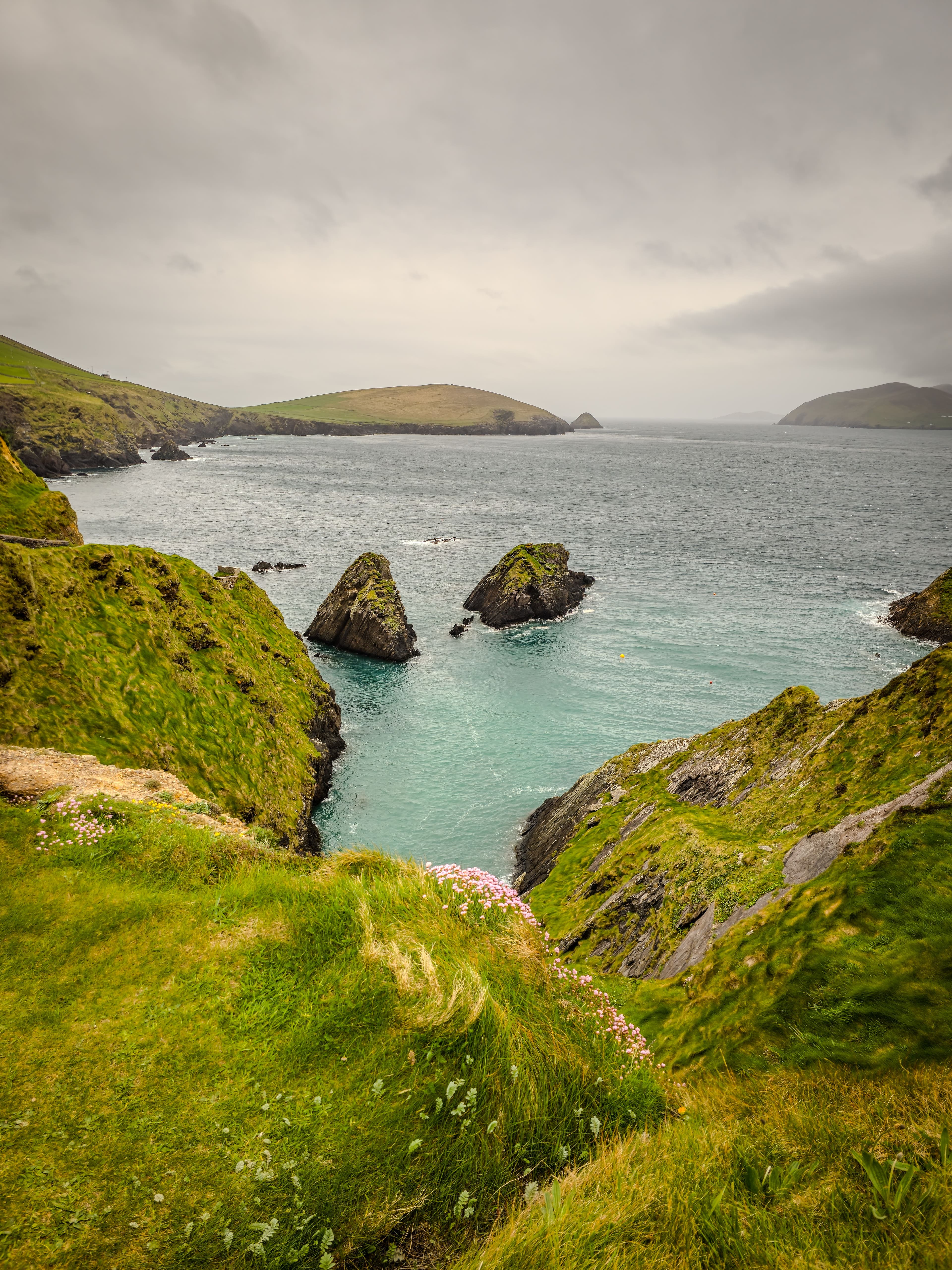
A slow return to the same coastal road the marathon runs along, this time at a pace that allows for actually taking in the Blasket Islands views and Dunbeg Fort.
A cultural centre covering the history of the Blasket Islands, a strong add-on given the course’s own views of the islands from Slea Head.
A more visitor-friendly base with the lakes of Killarney National Park and the Gap of Dunloe, a good extension for runners wanting easier tourist infrastructure after Dingle’s own more remote setting.
A fuller road trip along Ireland’s Wild Atlantic Way, extending north from Kerry into County Clare, best suited to runners with a car and a genuinely open schedule.
Frequently asked questions
Should I stay near the start or the finish?
Both, effectively. The marathon starts in Dingle Town, and the full marathon finish is also confirmed to be in Dingle Town, while half marathon finishers are bussed back there as well. Dingle Town itself is the practical base regardless of distance.
How far in advance should I book a hotel?
As early as possible. Dingle is a high-demand tourist destination independent of the race, September falls within its peak season, and accommodation is genuinely limited; the 2026 race itself sold out ahead of its closing date.
Is there free transport to the start?
Not to the start itself, but three free car parks are provided on the approach to Dingle Town from 7:00am, roughly 5 to 10 minutes’ walk away, and complimentary buses return half marathon finishers from near Dunquin back to Dingle Town after they finish.
What is the best area to stay?
Dingle Town itself, particularly around the Marina and Strand Street, offers the shortest journey to the start and the best access to the town’s own food and pub scene, a genuine part of the race weekend’s appeal.
When does the expo open?
There is no traditional expo. Irish participants have race packs posted roughly two weeks before the event. Overseas participants and anyone without a posted pack collect on Friday from 1:00pm to 10:00pm, or race morning from 7:00am to 8:00am, both at the Dingle Marina office.
What is the weather typically like?
Not confirmed for a race-day-specific average. Early September on the Dingle Peninsula is genuinely variable, with runner reports describing both severe wind and rain and perfect conditions in different editions.
How do I get from the airport?
Not confirmed. Kerry Airport is the closest option, with Cork, Shannon and Dublin airports offering onward connections, but no specific transfer route has been confirmed.
Is there a bag drop?
Yes, separate baggage vans operate for each distance at the start. Half marathon bags go via the "Half baggage" van, departing 8:40am, to the half finish near Dunquin; full marathon bags go via the "Full Baggage" van to the full finish area in Dingle Town. One small bag per runner is permitted.
Should I bring a throwaway layer?
Genuinely worth packing, given the course’s variable, exposed coastal weather and the possibility of conditions ranging from perfect to severe wind and rain across different editions.
How do I get back to my hotel after finishing?
Runners finishing the full marathon in Dingle Town can walk back to most town-centre accommodation directly. Half marathon finishers are returned to Dingle Town by complimentary bus from near Dunquin, dropping near Milltown Bridge, roughly 1 km from the start line.