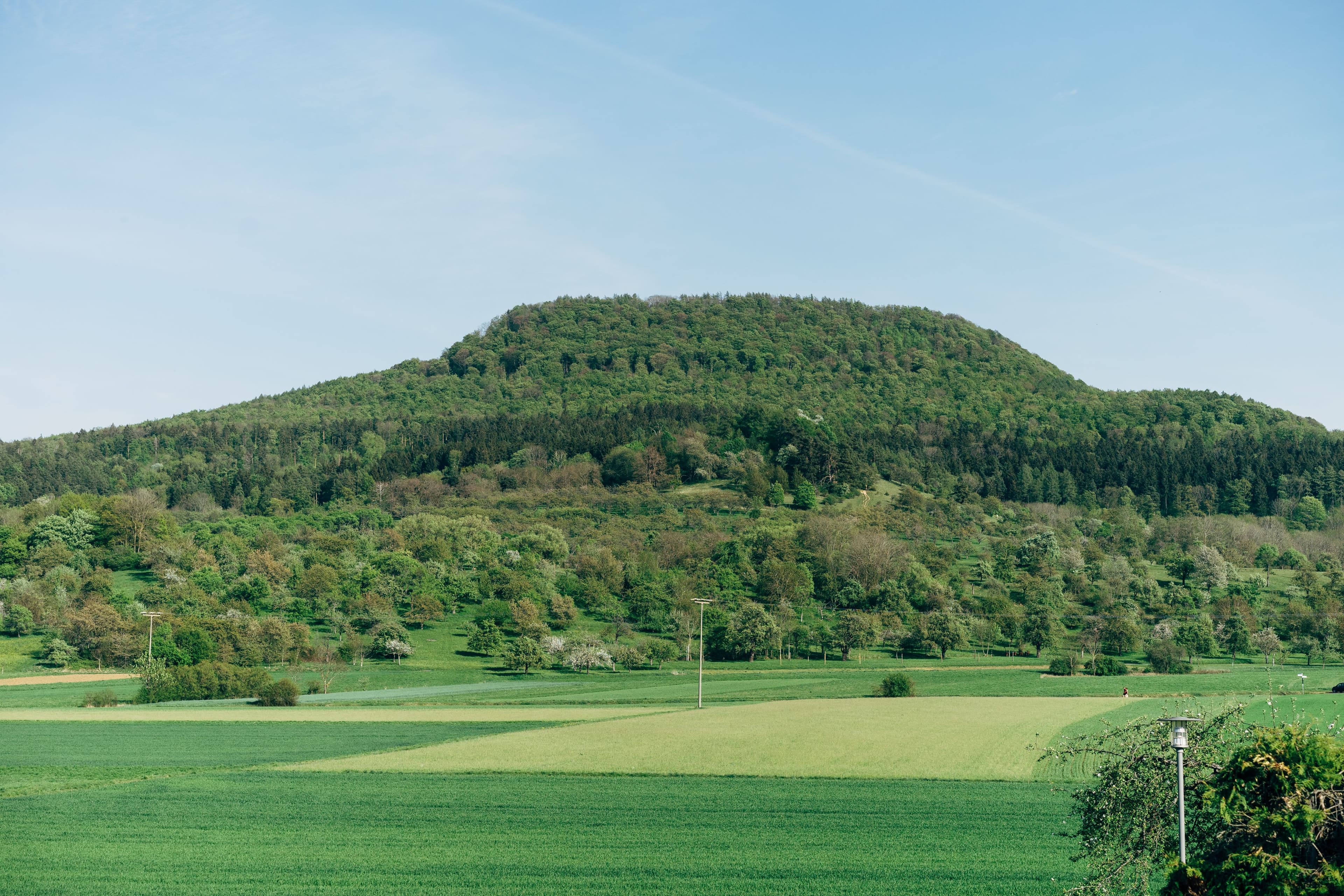
The Race
| Next Race Date | Saturday 18 September 2027 (provisional; the organiser has not yet published the 2027 date) |
|---|---|
| Course Type | Mountain and landscape marathon. Mixed public road and forest or mountain path, around 900m of ascent, start and finish at the Bretschneider-Sportstätte in Eibenstock |
| Registration | Open, no ballot, no published cap. €35 to 31 May, €43 to 13 September, then staged late entry with surcharges |
| Ballot Opens | Not applicable, open entry |
| Total Finishers | 881 in 2022, the most recent figure located |
| Average Race Day Temperature | Variable. Mountain conditions up to roughly 950m, which can differ sharply from the valley start |
| Cutoff Time | 6 hours, a 16:00 finish close from a 10:00 start |
| Free Race Day Transport | Not confirmed. Eibenstock has limited public transport and most runners are advised to stay locally |
| Course Certification | Self-measured by the organiser to 42.195km after a 2019 adjustment. No AIMS or World Athletics certification located |
Entry includes two hours in the pools
Every marathon entry comes with a voucher for two hours of free bathing at the Badegärten Eibenstock, a pool and sauna complex roughly 350m from the event venue, valid to the end of October. It is an unusual thing for a marathon to include and a very good recovery option on tired legs. One caution: a hot sauna immediately after a hard, dehydrating mountain marathon is worth approaching carefully.
History
The Drei-Talsperren-Marathon has run in Eibenstock since 1996, built around the geography of the Western Erzgebirge. By 2026 it reaches its 31st edition, three decades of continuity built entirely on the region’s reservoirs, forests and ridge terrain. The event has grown beyond running into a broader outdoor-sport weekend, sharing the Bretschneider-Sportstätte venue with mountain-bike distances and junior races, so the name refers to the whole event as much as to the 42.195km run.
The course has stayed largely consistent: out of Eibenstock, up toward Carlsfeld and its dam wall, along a stretch of the Erzgebirgskamm ridge and the Kammloipe trail, past below the 1,018m Auersberg, down to the Sosa reservoir wall, on to the course’s low point near Blauenthal, then back up through Neidhardtsthal to the Eibenstock reservoir and a final shared climb into town with the half-marathon field.
In 2019, at the 24th edition, the organiser adjusted the course after runner feedback that the distance ran to more than 43km; a self-measurement exercise brought the route to exactly 42.195km. No independent AIMS or World Athletics certification of that measurement has been located, so the distance should be understood as organiser-verified, not externally certified. The appeal for a travelling runner lies in the combination of a full marathon distance, three reservoir crossings and real Erzgebirge terrain, not in fast-time potential.
The course
The marathon starts and finishes at the Bretschneider-Sportstätte in Eibenstock, at about 640m, and crosses three reservoir dam walls: Carlsfeld, Sosa and Eibenstock. Total ascent runs to approximately 900m across mixed public-road and forest or mountain-path surfaces. The route is self-measured, not certified, and public-road sections remain subject to normal German traffic law; the course is not fully closed.
The Carlsfeld dam is not the high point. The course climbs about 290m out of Eibenstock to 905m by km 7, dips and climbs 80m again to the dam at around 12km, then rises gently along the ridge to 955m near km 17. It stays above 850m from roughly km 6 to km 22. The steepest ground is not on the way up at all: it is the drop to Blauenthal, where the course loses about 100m in a single kilometre between km 29 and 30.
Km 0 to 6: out of Eibenstock and straight up. The race starts at the Bretschneider-Sportstätte and passes through town with local support before the longest sustained climb begins around the Marktplatz. The course gains about 290m between km 1 and km 7, at 6 to 7% for the first three kilometres of it along the Dönitzgrundweg. This is where road-marathon pacing targets stop being useful: sustainable effort, not kilometre splits, should govern the opening third.
Km 6 to 21: the Carlsfeld dam and the Erzgebirgskamm. Fifteen kilometres on high ground between roughly 850m and 955m, and not flat: an 80m drop and an 80m climb either side of Carlsfeld before the dam wall at about 12km, then part of the well-known Kammloipe trail to the high point near km 17, a 79m drop to Steinbach and a 67m climb back to 939m by km 21. Exposure matters here. September often brings ideal cool running conditions, but wind, rain and rapid mountain weather changes are a real factor at this altitude in a way they simply are not on a lowland course. Footwear should reflect the actual forecast and surface, not default to a road racing shoe.
Km 21 to 27: below the Auersberg, down to Sosa. The long descent begins. The course passes below the 1,018m Auersberg plateau at about 24km without summiting it, then drops to the Sosa reservoir wall at around 27km, losing some 270m along the way, most of it between km 21 and 25 at about 6% and up to 9% on the Sosaer Weg. These are fast kilometres, and running them aggressively will cost quadriceps strength that the closing climbs still need.
Km 27 to 34: down to the low point at Blauenthal. After Sosa the course drops 157m in under 3km, including about 100m between km 29 and 30, the steepest kilometre of the race at around 10%. A short 26m rise follows at Blauenthal before the lowest ground, under 500m in the Bockautal at about 34km. After thirteen kilometres of mostly descending there is still real climbing left.
Km 34 to 42.195: Neidhardtsthal, the third dam and home. The last eight kilometres climb about 140m net in three steps: 58m through Neidhardtsthal to km 37, a 43m pitch at over 5% around km 38, and 66m in the final 2km past the Eibenstock dam wall, the third reservoir, with the last kilometre into town at about 5%. Marathon runners merge with the half-marathon field for this stretch. The organiser’s own advice is to save a few grains of energy for what comes after the Blauenthal low point, which is fair warning given how much climbing has already accumulated.
There is no blue tangent line to speak of here: much of the route runs on forest roads and single-track, not a wide, markable road surface. The organiser states explicitly that runners are responsible for knowing the course and following it correctly, since this is not a fully barriered urban marathon. Reviewing the official route map and GPX before race day is worth real time.
Course Map
The map shows the route: up from Eibenstock to the Carlsfeld dam and the ridge, down past the Auersberg to Sosa and the Bockautal, then back up through Neidhardtsthal past the Eibenstock dam to the finish. Tap a marker for details, and scrub the slider or press play to move the orange marker along the course with the elevation profile beneath it.
Around 250m of climbing in the first six kilometres, starting from the Marktplatz. Run this by effort, not by pace target; it sets up everything that follows.
Fifteen kilometres between roughly 850m and 950m, over the Carlsfeld dam at about 12km and along the Kammloipe. The high point is the ridge near km 17, not the dam. Exposure to wind and rain is real up here.
Past below the Auersberg to the Sosa dam at 27km and on to the low point near Blauenthal at 34km. Genuinely fast kilometres that can cost the quadriceps strength the final climb needs.
About 165m of climbing back through Neidhardtsthal to the Eibenstock dam and into town, sharing the road with the half marathon field. Save something for it.
Pacers
None found. No official pacer programme appears in the organiser’s material, and fixed-finish-time pacing is uncommon on a mountain course with this much elevation change. Pace by effort and terrain, not a target split, particularly on the opening climb and the descents to Sosa and Blauenthal.
What to wear
This is not a race to dress for using standard city-marathon logic. The course spends fifteen kilometres above 850m, and mountain weather in the Erzgebirge can shift quickly regardless of what conditions look like at the 10:00 start in Eibenstock itself.
A light shell or windproof carried through the race is more useful here than a single throwaway top, since exposure on the ridge can be significant in wind or rain. September typically brings cool, pleasant running conditions in the valley, but check the forecast for the ridge specifically; Eibenstock’s own forecast does not apply throughout. The late 10:00 start means the valley sections can warm through the morning even while the exposed ridge stays cool, so layers that can be adjusted mid-race beat a single fixed kit choice.
Entry
Entry is open with no ballot, priced at €35 through 31 May 2026 and rising to €43 for the standard period running to the 13 September closing date. Late entry remains available in three further stages: online until 17 September at 17:00 for a €7 surcharge, in person on the Friday evening from 17:30 to 19:30 for €10, and on race morning itself from 08:00 until an hour before the start, also for €10.
One term is stricter than most races offer and worth reading before you commit: cancellation of an entry is explicitly not possible under the 2026 terms. Changing distance after the standard deadline is possible for a €10 processing fee.
There is no guaranteed-entry pathway for fast runners, and no confirmed charity-bib or international tour-operator entry programme. Given the open, uncapped structure and the absence of ballot uncertainty, there is little strategic reason to delay registering once travel plans are firm, beyond the modest early-bird saving before 31 May.
Fast Runner / GFA Standards
Not applicable. No time-qualification entry route exists for this race.
Race Weekend
Expo
This is a small event, not a commercial expo. Registration and race administration are centred on the Bretschneider-Sportstätte itself, with late-entry activity in the festival tent on the Friday evening from 17:30 to 19:30 and the race office opening at 08:00 on race morning. Changing rooms, toilets and showers are available in the sports building, supplemented by additional changing tents at the venue. There is no separate bib-collection venue away from the start line, which simplifies logistics considerably for anyone staying in or near Eibenstock.
Getting to the Start
The marathon starts at 10:00, later than most city marathons, with the race office opening at 08:00. Parking and registration access run via Ludwig-Jahn-Straße, and the organiser specifically asks visitors to use only marked parking spaces to protect emergency vehicle access on residential streets.
Public transport into Eibenstock is considerably less convenient than at a metropolitan marathon, and no race-specific shuttle from a mainline rail station has been confirmed. International runners should plan the final leg of the journey carefully and give serious thought to staying in Eibenstock itself.
Changing rooms, toilets and showers are in the sports building with additional changing tents at the venue, though a separately documented bag-drop or valuables system has not been confirmed beyond these general facilities. The later start means the valley sections can warm through the first half, but the high terrain also makes wind and sudden weather changes a real factor, so carry a light shell even when the forecast looks fine at the start line.
Nutrition on Course
Aid stations are spaced approximately every 7km with a further station at the finish, wider spacing than most city marathons use. Exact drink and food products are not itemised in the organiser’s material. Given both the wide spacing and the demands of around 900m of climbing, runners with specific fuelling needs, particularly anyone used to more frequent intake on a flatter course, should plan to carry their own tested nutrition.
Spectating
This is not an easy course for public-transport spectating. The route spreads runners across forest roads and reservoir crossings that are impractical to reach without a car, and several of the best points on the course, Carlsfeld, Sosa and the Auersberg flank among them, sit well outside walking or public-transport range from Eibenstock.
The single best location by a wide margin is the Bretschneider-Sportstätte, which covers both the start and the finish and includes the wider event’s family-festival facilities, making it a reasonable place to spend most of race day even without a mid-course sighting. A spectator with a car could reach Carlsfeld or Sosa for an intermediate sighting, but road restrictions and access should be checked against the organiser’s final traffic plan close to race day.
Post-Race Food
The finish and event area provides food and festival activity on race day, though specific runner-focused menu items are not itemised. The standout recovery option here is unusual for a marathon: the Badegärten Eibenstock, roughly 350m from the venue, and every marathon entry includes a voucher for two hours of free bathing. The pools make a reasonable, gentle recovery option; a hot sauna immediately after a hard, dehydrating mountain marathon is worth approaching cautiously.
Where to Stay
Stay in Eibenstock, as close to the Bretschneider-Sportstätte and the Badegärten as possible. The start and finish are the same place, and this is a small-town race, so the usual multi-neighbourhood guide simplifies considerably.
Am Bühl and the Badegärten
The Am Bühl area is the best option by a clear margin: walkable to the start and finish, and ideally positioned for using the included recovery-bath voucher without needing transport at all.
Eibenstock town centre
The town centre is good for restaurants and a short trip to the start, though expect real hills even within the town itself. This is Erzgebirge terrain throughout, not a flat valley floor, and the walk home after finishing is not level.
Carlsfeld
Carlsfeld is a scenic mountain village directly on the course, but with poor race-morning logistics unless driving. It suits a pre- or post-race stay better than race weekend itself.
Sosa
Sosa is another quiet course-side village, similarly better suited to companions or a longer stay than to a runner who wants a simple, low-stress pre-start routine.
Aue-Bad Schlema
Aue-Bad Schlema is a larger regional base with more accommodation and transport options, but it requires a road transfer into Eibenstock on race morning. Worth considering only if closer options are unavailable.
Recommended hotels
About as close to both the event venue and the recovery-bath complex as accommodation gets in Eibenstock. Likely to command a premium and fill quickly on race weekend.
Self-catering-style accommodation attached to the pool and sauna complex, with very limited inventory for race weekend.
A sports-oriented local hotel that suits the event’s character, though its exact distance to the Bretschneider-Sportstätte is worth confirming before booking.
A characterful local option. Eibenstock’s streets are not flat, which is worth factoring into both race morning and the walk home after finishing.
Often the most practical option for small groups, sourced through the official Touristinformation Eibenstock directory. Quality and cancellation terms vary by host, so check both.
The organiser directs runners to the Touristinformation Eibenstock for the official accommodation host directory, which is worth using directly given how limited independent hotel inventory is in a town this size.
Booking timeline
Book well ahead once entry is confirmed. Eibenstock is a small town and accommodation within walking distance of the start is sparse compared with a city marathon, so there is real value in booking early even though open entry removes any allocation uncertainty.
International runners should prioritise planning the ground-transport leg over the flight itself. Eibenstock is not served by a major airport or a mainline intercity station, and building buffer time into the final transfer matters more here than comparing flight prices.
See & Do
Eibenstock is small, and the best thing to do after this race is already included in the entry. Distances below are from the Bretschneider-Sportstätte finish.
Badegärten Eibenstock
0.35 km (0.2 miles) from the finish. The obvious recovery attraction, and directly linked to the race entry through a two-hour free bathing voucher valid to the end of October. About as low a walking burden as a post-race attraction gets.
Auersberg
Reached by road from the finish. The region’s major viewpoint at 1,018m, and the mountain the course passes beneath without summiting at about km 24. Worth visiting with vehicle access on a later day of the trip.
Schatzhaus Erzgebirge
Within Eibenstock, exact distance not confirmed. An indoor cultural stop connected to the town’s historic embroidery industry, and a low-walking alternative to outdoor sightseeing on a recovery day.
Wurzelrudis Erlebniswelt
Near Eibenstock, exact distance not confirmed. A family-oriented attraction, useful for runners travelling with children. Seasonal opening should be checked before visiting.
After the Race
The Drei-Talsperren-Marathon runs in September, and the day after 900m of climbing is not the day for more of it. The Erzgebirge’s mining towns are the natural answer: compact, historic, and reachable on short regional transfers. The Czech border sits close enough to make a spa-town extension a realistic option.
A low-logistics regional trip combining a spa town with real mining heritage. Keep the walking light given the marathon’s own climbing the day before.
A compact historic Erzgebirge town with a short regional transfer, well suited to gentle recovery sightseeing.
A stronger Erzgebirge mining-heritage extension than either day trip, with more museums and historic architecture to explore at an unhurried pace.
The strongest larger-city extension from Eibenstock. Stay central and make the first day museum-focused.
The Erzgebirge sits close to the Czech border, which makes a cross-border spa-town extension a logical longer trip. Confirm current cross-border transport before booking.
Frequently asked questions
Should I stay near the start or the finish?
They are the same place, the Bretschneider-Sportstätte in Eibenstock. Stay as close to it and the Badegärten as possible; this is a small-town race with one sensible answer.
How far in advance should I book a hotel?
Well ahead once entry is confirmed. Eibenstock is small and accommodation within walking distance of the start is sparse, even though open entry removes any allocation uncertainty.
Is there free transport to the start?
Not confirmed. Eibenstock has limited public transport and no race shuttle from a mainline station was found. Most runners are advised to stay locally.
What is the best area to stay?
The Am Bühl and Badegärten area, walkable to the start and ideally placed for the free bathing voucher included with entry. The town centre works too, though Eibenstock is hilly throughout.
When does registration open on race day?
The race office opens at 08:00 at the Bretschneider-Sportstätte, with late entry also possible in the festival tent on Friday evening from 17:30 to 19:30. There is no separate bib-collection venue.
What is the weather typically like?
Variable, and different at the top from the start line. September is usually cool and pleasant in the valley, but the route reaches roughly 950m on the ridge. Check the forecast for the ridge specifically.
How do I get to Eibenstock?
There is no major airport or mainline intercity station. Plan the ground-transport leg before comparing flight prices, and build in buffer time for the final transfer.
Is there a bag drop?
Changing rooms, toilets and showers are in the sports building with extra changing tents at the venue, but a separate bag-drop or valuables system was not confirmed beyond those.
Does entry include anything unusual?
Yes. Every marathon entry includes a voucher for two hours of free bathing at the Badegärten Eibenstock, about 350m from the venue. Gentle pools, yes; a hot sauna straight after a dehydrating mountain marathon, approach with care.
Are there pacers?
None found, and fixed-time pacing is uncommon on a course with this much climbing. Pace by effort and terrain, particularly on the long opening climb and the descent to Sosa.