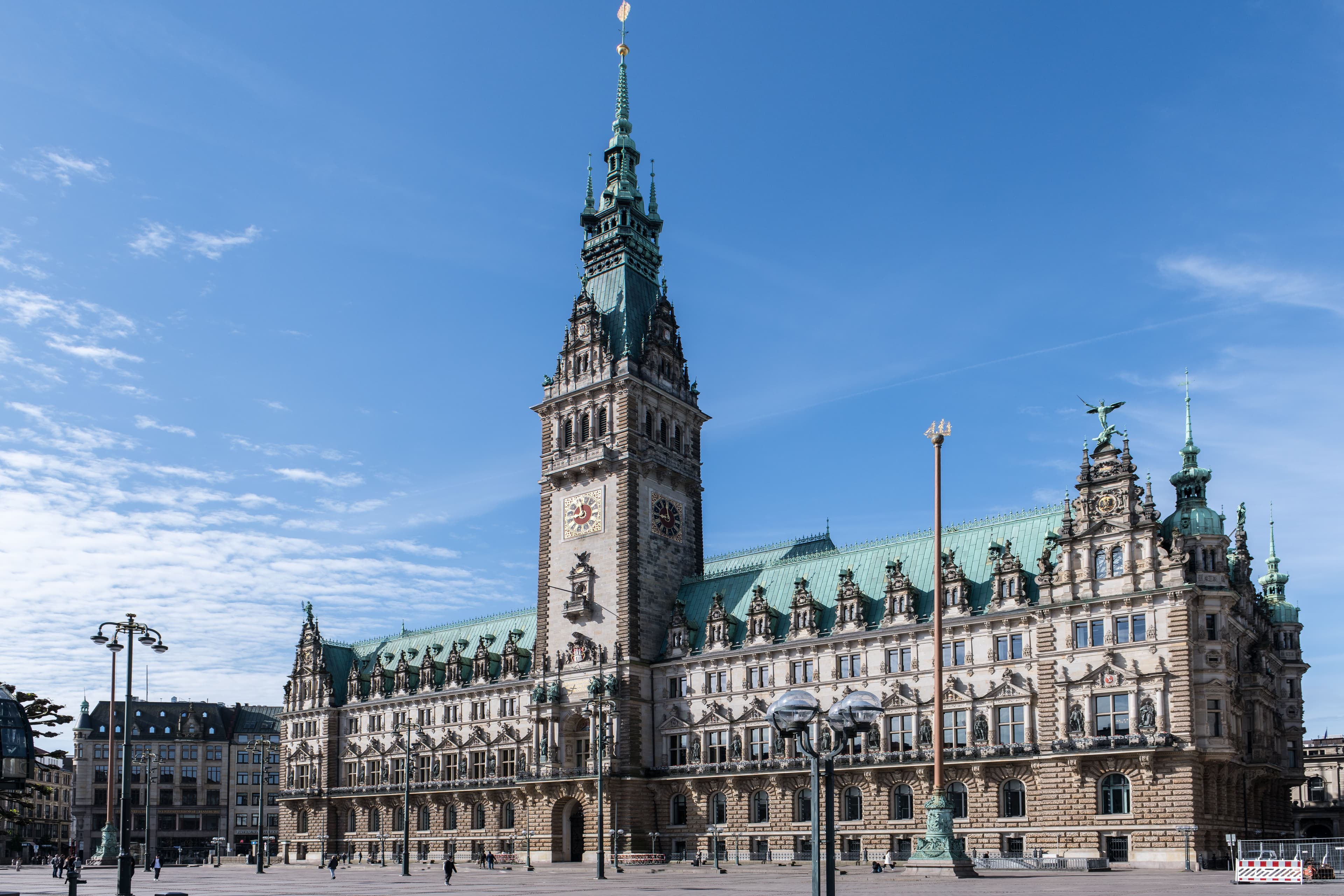
The Race
| Next Race Date | 25 April 2027 |
|---|---|
| Course type | Loop, start and finish at Heiligengeistfeld / Hamburg Messe, St Pauli |
| Certification | Not confirmed |
| Start | Heiligengeistfeld, next to Hamburg Messe, St Pauli |
| Finish | Heiligengeistfeld (same venue as start) |
| Total finishers | Not published (official copy cites "more than 25,000 athletes" as entrant scale, not a finisher count) |
| Avg race-day temp | 8 to 15°C (April) |
| Cutoff time | Not published |
| Free race-day transport | Yes: bib-holders travel free on Hamburg public transport on race day |
| Course certification | Not confirmed |
| Sleeper Train | Not accessible (no confirmed European sleeper service currently calls at Hamburg Hauptbahnhof; the station has extensive day-rail links across northern Europe instead) |
History
Hamburg’s first marathon ran in 1986, a decade after Berlin’s, and it built its identity on a different premise from the start: this was never going to out-glamour the capital, so it went for scale and season instead. Spring is a thin month for major European road marathons. Most of the calendar clusters into autumn, when temperatures cooperate and training blocks line up neatly after a winter base. Hamburg claimed the gap. Forty years on, the race describes itself as Germany’s biggest spring marathon, and the description has stuck because nobody has seriously contested it.
The course reflects a port city’s geography rather than a curated tourist route. Hamburg grew rich on shipping, and the marathon’s identity runs through the working parts of that inheritance as much as the postcard parts: the Reeperbahn’s daytime hush before a Sunday crowd fills it, the raised riverside road along the Elbe where the Elbchaussee’s old merchant villas look down on container traffic, the flat sweep around the Aussenalster where the city’s inland lake does the scenic work the harbour cannot.
The race carries no Abbott World Marathon Major status and makes no claim to one. What it offers instead is a fast, well-supported course inside a city that most travelling runners have never specifically visited, which is itself the pitch: Hamburg as the marathon that gets picked, not because it is famous, but because someone has already worked out the flights and it is April and Berlin is five months away.
The course
The Hamburg Marathon runs as a single loop from and back to Heiligengeistfeld, next to the Hamburg Messe in St Pauli. The opening kilometres move through St Pauli past the Reeperbahn, then run west through Altona and Ottensen onto the Elbchaussee, the raised riverside road above the Elbe in Othmarschen. This stretch carries the course’s only sustained elevation change: a rise from about 18m to a peak of about 40m around km 5, a dip of about 20m, a short, steeper climb back to about 37m near km 7.5, and then down to the harbour by km 12. From there the course runs east along St. Pauli Hafenstraße and through the Altstadt to the Binnenalster, and up the east side of the Aussenalster through St. Georg and Uhlenhorst, holding between about 5 and 12m for most of km 12 to 21. It then loops north through Winterhude, Barmbek-Nord, Ohlsdorf and Alsterdorf, with a second, smaller rise to about 19m around km 22 and again at km 26, and comes back south through Eppendorf and down the west side of the Alster on Harvestehuder Weg to finish at Heiligengeistfeld. The organiser publishes no elevation gain figure.
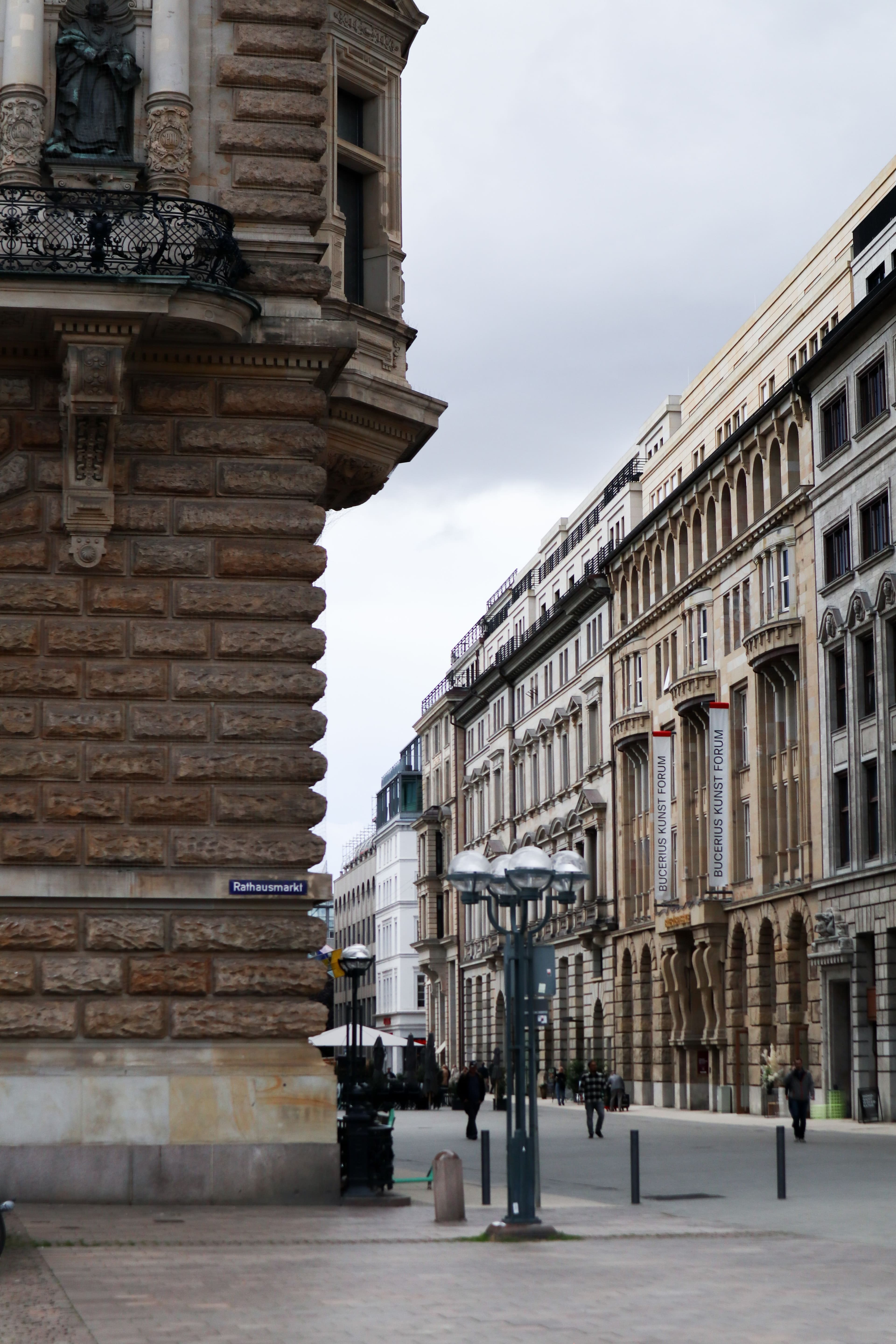
Km 0-3: Heiligengeistfeld to St Pauli. The gun goes off next to the Hamburg Messe halls, and the first kilometre threads past Heiligengeistfeld, the fairground site that hosts the Hamburger Dom three times a year and sits empty and slightly forlorn on race morning. More than 25,000 people do not spread out in three kilometres, and runners chasing a specific finish time should resist the urge to force gaps that will close themselves by km 5. The course cuts close to the Reeperbahn here, a street built for a very different kind of night, currently doing its best impression of quiet.
Km 3-9: The Elbchaussee.This is the only section of the race with anything approaching a hill, and it earns its reputation among Hamburg regulars for exactly that reason. The road runs west along the Elbe’s northern bank, past the grand 19th-century merchant villas that made Elbchaussee one of Germany’s most expensive postcodes, with the river and its container-ship traffic visible below. The climb is roughly 22m, from about 18m to a course peak of about 40m around km 5; the road then dips about 20m and climbs back, the steepest pitch of the race at nearly 3 per cent, to about 37m near km 7.5, before dropping towards Altona. It is not a hill in any Boston or Chester sense. It is enough to notice in the legs on a day when everything else has been flat.
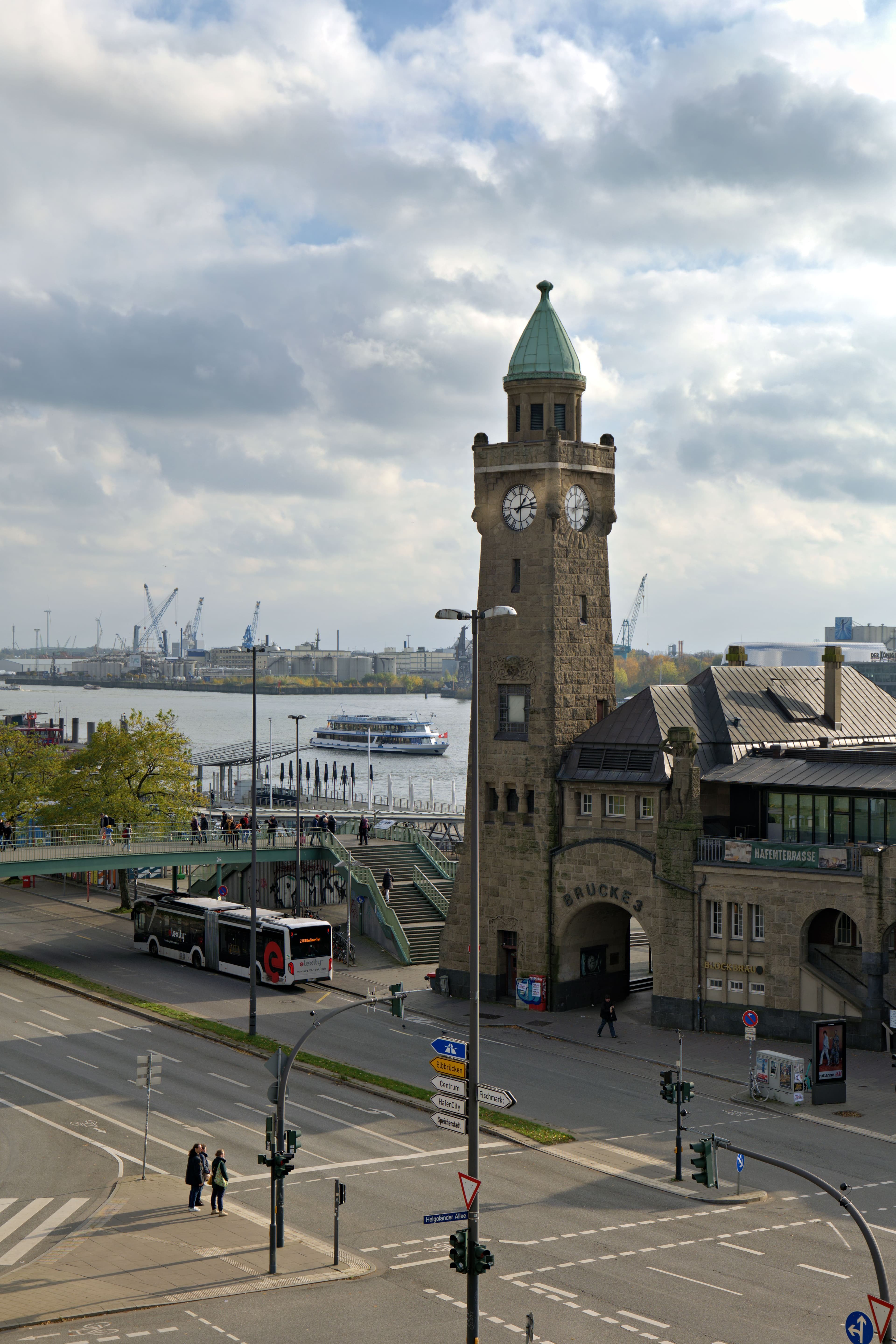
Km 9-14: Return through Altona. The course drops back down off the Elbchaussee through Altona to the harbour, reaching St. Pauli Hafenstraße by km 11 and the Vorsetzen by km 12, then heads through the Altstadt. Elevation falls to single figures and stays there. This is the section where the early adrenaline has worn off and the discipline of the pace plan actually matters; crowd support thins compared with the Reeperbahn opening and the later Alster loop, and wind off the Elbe can be a factor on a blustery April day.
Km 14-21: The Binnenalster and the east side of the Aussenalster. Past Ballindamm and the Neuer Jungfernstieg on the Binnenalster at about km 15 to 16, the route runs up the eastern shore of the Aussenalster through St. Georg, Hohenfelde and Uhlenhorst on An der Alster, Schwanenwik and Schöne Aussicht. It is the flattest stretch of the entire course, between about 5m and 8m for several kilometres running, and the section built for locking into goal pace, with the lake alongside and some of the best crowd support of the day.
Km 21-28: Winterhude and the Stadtpark. The route leaves the lake and heads north through Winterhude on Sierichstraße, past the Stadtpark on Südring and Saarlandstraße, into Barmbek-Nord and Ohlsdorf, reaching City Nord at about km 27. The second, smaller elevation bump comes here, up to around 19m near km 26. Halfway-plus fatigue tends to land in this stretch for anyone who went out too hard on the Elbchaussee climb, and the residential streets offer less crowd support than the lake.
Km 28-42.195: Alsterdorf, Eppendorf and the west side of the Alster. The course loops through Alsterdorf and Ohlsdorf to about km 34, then turns south through Eppendorf and Hoheluft-Ost to the Harvestehuder Weg, running down the western shore of the Aussenalster through Harvestehude and Rotherbaum between km 38 and 40, a second lakeside section and a good place to watch. Elevation stays between 5m and 12m until the last two kilometres, which come through the Neustadt on the Gorch-Fock-Wall and rise about 12m back up to Heiligengeistfeld and the finish inside the Messe grounds.
The course follows the blue tangent line throughout, and runners who track it precisely will run measurably less than 42.195km on their own GPS watch by the finish; this is normal and not a sign of a short course.
Dense early running past Heiligengeistfeld and the Reeperbahn. Do not force gaps in the first three kilometres; the field spreads out naturally by km 5.
The only real elevation of the day, rising to a course peak of 39m along the grand riverside villas above the Elbe. Bank effort here rather than time.
The course's flattest stretch, past the Binnenalster and up the east side of the Aussenalster. This is where goal pace should be locked in and held.
A largely flat closing third through Alsterdorf and Eppendorf, down the west side of the Aussenalster, and a 12m rise in the last two kilometres to Heiligengeistfeld.
Course Map
The map shows the 2026 course route and the shared start/finish at Heiligengeistfeld, next to Hamburg Messe. Tap a marker for details, and scrub the slider or press play to move the orange marker along the course with the elevation profile beneath it.
Pacers
The official race-info page confirms pacers run from 3:00 through 5:00 in 15-minute increments. Wave-by-wave allocation and corral letters have not been confirmed, so no specific wave/pacer table is published here until sourced against the current official athlete guide.
What to wear
Late April in Hamburg sits at the unstable end of a northern German spring, and no single kit list covers it reliably. Morning temperatures at a typical late-April start commonly run between 5°C and 10°C, with a realistic chance of rain, wind, or both blowing in off the North Sea and up the Elbe estuary. Wind exposure is highest along the Elbchaussee and around the Aussenalster, both open, waterside stretches with little building cover. A throwaway layer for the start corrals is close to essential rather than optional here. Runners flying in from milder climates should pack for the possibility of a cold, wet start and a mild, dry finish, since the temperature swing across four hours on an April morning by the water can be significant. Sunscreen advice matters less here than in southern European spring races, though later waves on a rare clear day should not assume Hamburg’s latitude protects them entirely.
Entry
Hamburg operates as an open marathon with capacity limits described on the official site as “more than 25,000 athletes.” Beyond that, the entry details are not confirmed: whether there is a ballot, the acceptance rate, the entry price and any price tiers, what the fee includes, any fast-runner or elite route, charity or tour-operator places, and how corrals are seeded. Check the official entry page before planning around any of them.
Not confirmed. No fast-runner or age-graded entry category has been published for this race.
Race Weekend
Expo and Race Pack Collection
Not confirmed. The expo venue, opening days and hours have not been published. The race is based around the Hamburg Messe halls, so the expo is likely to be on site, but check the athlete guide before fixing an arrival day.
Getting to the Start
The race starts and finishes at Heiligengeistfeld next to the Hamburg Messe in St Pauli, and bib-holders receive free travel on Hamburg’s public transport network on race day. St Pauli sits on multiple U-Bahn and S-Bahn lines into central Hamburg, which should make the start straightforward to reach from most accommodation bases. Race-morning station advice, wave times and corral letters have not been published; check the athlete guide.
Nutrition on Course
Official race-info and refreshment-station pages confirm aid stations from km 7.5 and km 12.5, then at every 5km mark thereafter. The refreshment order, as published, runs: personal nutrition access points, water in cups (Hamburg tap water specifically noted as the water source), bananas from around km 10, HIGH5 energy gels, Coca-Cola from around km 25, and HIGH5 electrolyte drink.
The presence of a personal-nutrition drop-off option suggests Hamburg supports the standard European practice of runners submitting their own bottles for collection at a specific station, though the deadline, submission process and exact station number have not been confirmed. Runners used to gel-only fuelling on other European courses should note the HIGH5 gel provision removes the need to carry a full race’s worth of nutrition, though anyone with a specific gel-brand sensitivity should still carry their own.
Spectating
The course starts and finishes at the same point and runs out along the Elbchaussee before looping north around the Aussenalster, so Hamburg’s U-Bahn and S-Bahn network should allow more than one sighting. Station names and timings for a spectator plan have not been published, so build one from the current course map. The one plan that can be recommended with confidence: since start and finish share one venue, a single base at or near Heiligengeistfeld covers both ends of race day without needing to relocate.
Where to Stay
The course starts and finishes at Heiligengeistfeld, so staying near the finish means staying near the start too: anywhere close to the shared start and finish works for both ends of race day. St Pauli itself, Altona, Sternschanze, Eimsbüttel and the city centre around the Hauptbahnhof are the natural bases given where the course sits. This page does not yet rank them or recommend individual hotels.
Hamburg Messe hosts trade fairs year-round, and a fair on marathon weekend would tighten hotel supply further. Check the Messe events calendar for the race year before deciding when to book.
See & Do
The finish at Heiligengeistfeld puts you in St Pauli, within reach of Hamburg’s harbour-front landmarks.
Elbphilharmonie
Hamburg’s concert hall sits on top of a former cocoa warehouse at the western tip of HafenCity, its glass upper structure built to resemble a wave or a hoisted sail depending on who is describing it. The free public viewing platform, the Plaza, runs partway up the building and gives a harbour-level view without a ticket.
Speicherstadt
The largest warehouse district built on timber piles anywhere in the world, constructed from the 1880s to store coffee, tea, spices and carpets shipped in through the harbour. The narrow canals between the brick warehouses are walkable in under an hour and require no ticket for the exterior.
Fischmarkt
Hamburg’s fish market has run on the Elbe waterfront since 1703 and still opens early on Sunday mornings, which places it directly in range for anyone finishing the marathon and wanting a very different kind of noise and crowd from the finish line.
Miniatur Wunderland
The world’s largest model railway occupies several converted Speicherstadt warehouse floors, with sections modelling Hamburg itself, the Alps, and the United States among others. It is low-effort walking and popular enough that timed tickets are worth booking in advance, particularly on a marathon weekend when demand spikes.
After the Race
Lübeck, Lüneburg, the North Sea coast around Sylt, and Copenhagen by rail to the north are the natural extensions from Hamburg. Full itineraries for them are not written yet.
Frequently asked questions
Should I stay near the start or the finish?
Hamburg Marathon starts and finishes at the same point, Heiligengeistfeld next to the Hamburg Messe in St Pauli, so this question resolves itself: any accommodation near the shared start/finish works for both ends of race day. St Pauli itself puts you closest to both.
How far in advance should I book a hotel?
Book a cancellable room early. Hamburg Messe hosts trade fairs year-round, and a fair on marathon weekend would tighten supply, so check the Messe calendar for the race year.
Is there free transport to the start?
The official race site confirms free public transport for bib-holders on race day, though the exact scope, ticket format and validity dates should be checked against the current-year athlete guide.
What is the best area to stay?
St Pauli, Altona, Sternschanze, Eimsbuttel and the Hauptbahnhof area are the natural bases given the course's shared start/finish at Heiligengeistfeld. This page does not yet rank them.
When does the expo open?
Not confirmed. The expo venue and hours have not been published. It is likely to be at the Hamburg Messe, beside the start, but check the athlete guide.
What is the weather typically like?
Late April in Hamburg typically runs between 5°C and 10°C at the start, with a realistic chance of rain or wind off the Elbe estuary. A throwaway layer for the start is close to essential.
How do I get from the airport?
Hamburg Airport is on the S1 S-Bahn line into the city centre, and a taxi is simpler with luggage. Check the athlete guide for any race-weekend travel offers.
Is there a bag drop?
Not confirmed. Check the current athlete guide before assuming a specific bag-drop procedure.
Should I bring a throwaway layer?
Yes. April race mornings by the Elbe can run cold and exposed, particularly for runners in later waves waiting in the start corrals.
How do I get back to my hotel after finishing?
Road closures and finish-area transport have not been published. Because start and finish share one venue, getting back is simpler than after a point-to-point race: return the way you came.