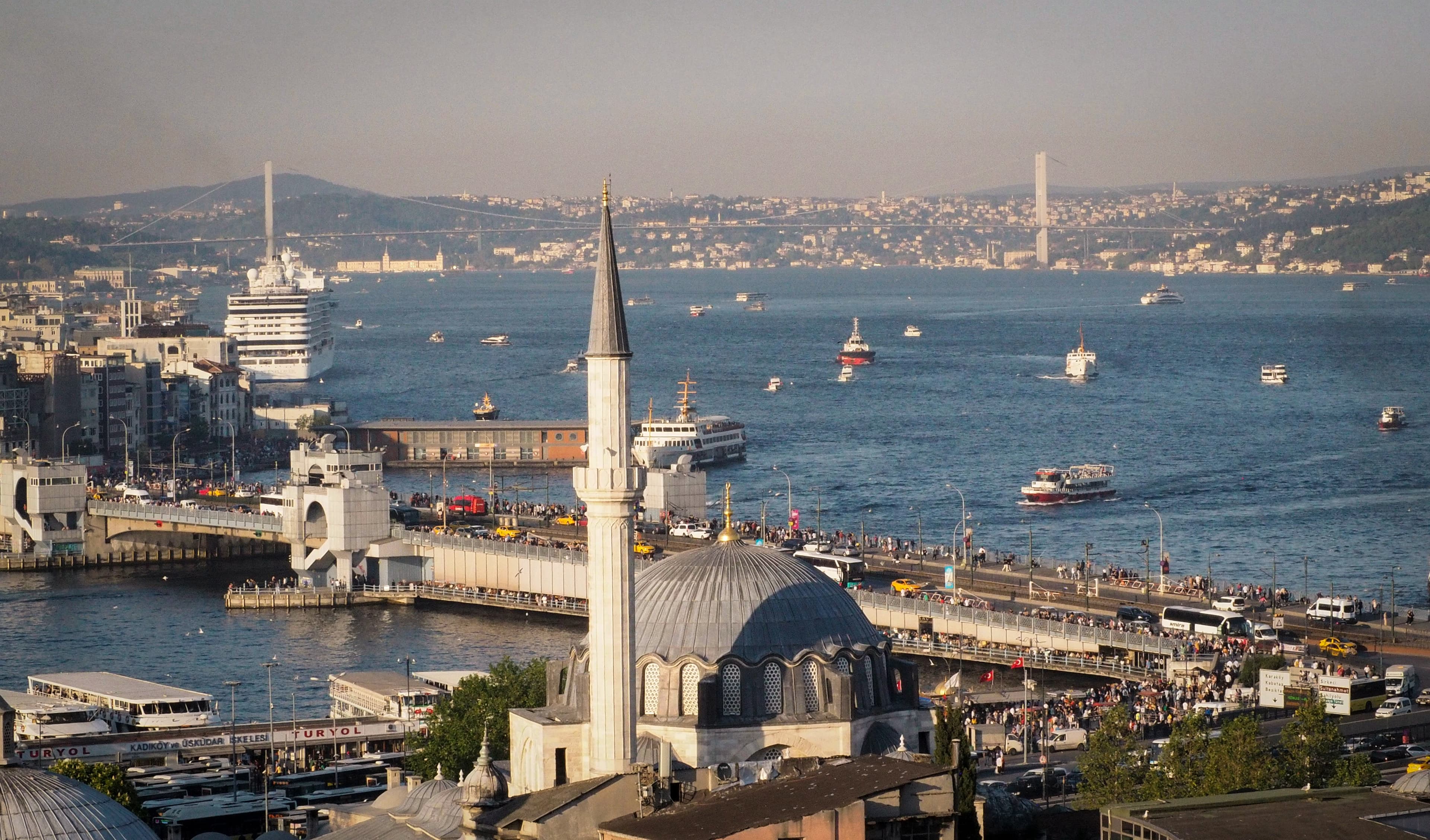
The Race
| Next Race Date | 1 November 2026 |
|---|---|
| Course type | Point-to-point, intercontinental |
| Certification | World Athletics Label Road Race - Gold |
| Start | 15 July Martyrs Bridge area, Asian side |
| Finish | Blue Mosque Square (At Meydanı), Sultanahmet |
| Total finishers | Not published for the 42km distance |
| Avg race-day temp | 9 to 15°C (November) |
| Cutoff time | 6 hours 20 minutes |
| Free race-day transport | Yes, on presentation of bib number (Marmaray chargeable on at least one route) |
| Course certification | World Athletics Label |
| Sleeper Train | Not accessible |
History
The Istanbul Marathon is the only marathon in the world where the start line and the finish line sit on different continents. Runners assemble on the Asian side, cross the Bosphorus on the 15 July Martyrs Bridge, and finish among Ottoman monuments on the European side. No other major race can claim that geography, and the organisers have never needed to oversell it.
The race traces its roots to 1979, when it began as a straightforward Asia-to-Europe crossing and later ran for years under the name Intercontinental Eurasia Marathon before settling into its current identity. The bridge crossing has stayed the defining feature throughout, even as the surrounding event grew into a full World Athletics Label Gold race with companion 15.5km and public fun-run events sharing parts of the same closed roads.
What has changed most for ordinary entrants is who gets to run it. Istanbul is not an open-entry marathon in the way Chester or Valencia are. The 42km distance requires a documented qualifying result: a recent marathon inside 6 hours 20, a half marathon inside 3 hours 25, or a 15km inside 2 hours 15. That barrier keeps the field experienced, which shapes everything from aid station planning to the crowd of runners actually capable of appreciating a bridge view at race pace.
This suits a specific runner: someone who already has a qualifying result in the bank and wants a course that turns a physical achievement into a genuinely unusual geographic one. It is a poor match for a first-time marathoner without a qualifying time, and for anyone hoping for a flat, record-chasing course; the finish climb through Sultanahmet’s old streets sees to that.
The course
Istanbul is a point-to-point course run almost entirely west, from the Asian shore to the historic peninsula. The course crosses the 15 July Martyrs Bridge in the first 2km, then climbs about 60m in 1.5km on the European side, up the ring road to the Balmumcu junction, the highest point of the race at about 95m near the 4km mark, before a fast descent of nearly 90m down Barbaros Bulvarı into Beşiktaş. From there the route runs the European coast road through Dolmabahçe (6km), Tophane and Karaköy, crosses the Galata Bridge at 9km, and threads past the Egyptian Bazaar and Sirkeci at 10km before an out-and-back stretch toward the Air Force Academy turn point.
The long middle, roughly 12km to 40km, is the flattest section of the course, running close to sea level along the coastal road with limited shelter from Bosphorus wind. The final 2km reverse that flatness: the route climbs from around 8m to close to 40m through Gülhane Park and the old city’s cobbled streets before finishing at Blue Mosque Square, where the surface changes from asphalt to cobblestone to paving stone in the last kilometre.
Entry Requires a Qualifying Time
Unlike most destination marathons on this site, Istanbul is not open entry and does not run a ballot. To register for the 42km distance, a runner needs a recent marathon completed within 6 hours 20 minutes, a half marathon within 3 hours 25 minutes, or a 15km within 2 hours 15 minutes. If that result is not already recorded in the Turkish national Spor İstanbul system, it has to be uploaded as a certificate or official results-page image and is checked before a payment link is issued. This is worth confirming well before booking flights or hotels: a place here depends on paperwork clearing, not on winning a lottery.
Km 0-6: To the bridge, and the descent into Beşiktaş. The course goes straight onto the 15 July Martyrs Bridge and crosses the Bosphorus from Asia to Europe in the first 2km. Runners get genuine height and open water on both sides, and more than one finisher has admitted to slowing down for a photograph here. That is a mistake worth avoiding: burning matches on the bridge, in the adrenaline of the start and the view, is one of the most commonly reported errors from runners who have done this race before. Off the bridge, the road climbs about 60m in 1.5km to the Balmumcu junction, the steepest climb of the day at over 4 per cent, then drops fast down Barbaros Bulvarı into Beşiktaş, passing the Naval Museum and Dolmabahçe Palace around 6km. The downhill momentum is real and it is tempting to bank time here.
Km 6-11: Fındıklı to Topkapı.The route runs tight along the water through Fındıklı, Tophane and Karaköy before crossing the Galata Bridge at 9km, then passes the Egyptian Bazaar and Sirkeci around 10km with the Topkapı Palace area visible near 11km. This is a dense sequence of named landmarks packed into five kilometres, and it is also where the old city’s uneven road surfaces first appear underfoot.
Km 11-30: The coastal out-and-back. The character of the race changes here. The course follows the coast road, Kennedy Caddesi, out through Zeytinburnu to a turn point in Bakırköy near the Air Force Academy at about 26km before doubling back along the same road. This stretch is the flattest of the course and also the most exposed: Bosphorus wind has been reported as a factor in multiple editions. The out-and-back structure means the field is visible in both directions, which helps pacing, but reported crowd support thins out noticeably from around 15km, so this is a psychologically long section as much as a physically flat one.
Km 30-40: Back toward the old city. The return leg retraces the coast road before the course turns inland toward Gülhane Park and the approach to Sultanahmet. Support builds again as the route nears the historic peninsula, a welcome change after the quieter coastal miles.
Km 40-42.195: The finish climb. The last two kilometres are where Istanbul stops being flat. The route climbs roughly 30 metres through Gülhane Park and into the old city, and the surface changes: asphalt, then cobblestone, then the flat paving stones of At Meydanı. Runners who have banked time on the early descent tend to find this section the hardest part of the race, not the bridge. Finish crowds here are reported as the strongest on the course.
Blue route markings follow the tangent line throughout; staying tight to them is worth a measurable difference over 42.195km on a course with this many turns. Chip timing is taken at the finish line in At Meydanı itself, not at the Blue Mosque entrance gate slightly before it, so runners glancing at their watch on the approach should keep going until the actual line.
The course opens with its signature feature: a crossing of the Bosphorus from Asia to Europe on the 15 July Martyrs Bridge, followed by a steep climb to the Balmumcu junction, the high point of the race, near the 4km mark. The view is real. So is the temptation to slow down for it.
A fast drop into Beşiktaş followed by a dense run of named sights: Dolmabahçe, the Galata Bridge, the Egyptian Bazaar, and the edge of Topkapı, all inside eleven kilometres.
The flattest, most exposed section of the course. Wind can be a genuine factor here, and crowd support is reported to thin from around 15km. Bank effort, not just time.
A roughly 30-metre climb through Gülhane Park into the old city, with the road surface changing from asphalt to cobblestone to paving stone before the line at At Meydanı. This is where the race is actually decided.
Course Map
The map shows the course, plus the start, finish and the three free-transport convergence points (Beylerbeyi, Kabataş, Eminönü). Tap a marker for details, and scrub the slider or press play to move the orange marker along the course with the elevation profile beneath it.
Pacers
Unverified for this edition. The official page carries a “Start Corrals and Pacers” heading, but specific pace bands had not been published in accessible text at the time of writing. One runner account describes official pacers running inconsistent splits in a recent edition; treat a personal watch as the primary pacing tool.
What to wear
Early November in Istanbul sits between 9°C and 15°C at a typical race start, with November’s monthly average closer to 12°C. That is comfortable marathon weather on paper, and it usually runs that way, but two variables complicate it: wind and rain. The coastal out-and-back between roughly 11km and 30km is exposed to the Bosphorus, and multiple finishers have reported strong wind for the entire distance in some years. Rain is also plausible in early November.
A throwaway layer at the start is worth bringing, both for the pre-race wait near the bridge and because start-morning temperatures can sit at the cooler end of the range. Kit that copes with wind chill on an exposed coastal stretch matters more here than on a fully sheltered urban course.
Entry
| Registration type | Qualifying time required (no open entry, no ballot) |
|---|---|
| Marathon qualifier | Sub-6:20 marathon, sub-3:25 half marathon, or sub-2:15 15km, within the last 2 years (15km: current year) |
| 2026 fee tiers | €60 (6-31 Jan) · €80 (1 Feb-31 May) · €100 (1 Jun-31 Jul) · €120 (1 Aug-13 Oct) |
| Fast runner / GFA entry | No separate category beyond the qualifying-time requirement above |
Istanbul is not an open-entry race and it is not a ballot. Entry to the 42km distance requires a documented qualifying result, and this is the detail most likely to catch out a runner used to majors that only require a credit card. To register, a runner needs one of the following: a marathon completed within 6 hours 20 minutes in the previous two years, a half marathon within 3 hours 25 minutes in the previous two years, or a 15km within 2 hours 15 minutes in the current year. If that result already sits in the Spor İstanbul system it clears automatically. If not, the runner uploads a certificate or an official results-page image from a race recognised by the Turkish Athletics Federation, or from an equivalent race abroad, and the organisers review it within up to three working days before releasing a payment link. Runners who cannot document a qualifying result cannot pay, whatever else they have prepared.
Entry fees are staggered well ahead of race day: €60 from 6-31 January, €80 from 1 February to 31 May, €100 from 1 June to 31 July, and €120 from 1 August to 13 October, so registering during the January window is meaningfully cheaper than waiting.
Charity entry exists through an official charity-run pathway; the specific mechanics were not researched in depth. Tour operator and agency entry is referenced as a site section, but named operators should be verified independently before booking through one. Transfer, deferral and refund policy was not found in accessible official text.
International runners should check current Turkish visa requirements for their nationality directly with official sources close to travel date, since visa rules for UK, EU and US passport holders can change between editions.
Istanbul does not operate a separate Good-for-Age or elite-adjacent fast entry category distinct from the qualifying-time requirement described above.
Race Weekend
Expo and Number Collection
The electronic timing transponder is collected at the Marathon Expo, but the 2026 venue, address and opening hours were listed as “to be announced” at the time of research. Build a buffer of at least half a day into travel plans for bib and transponder collection once dates are confirmed, and do not assume same-day or race-morning collection is possible.
Because entry depends on a verified qualifying result, international runners collecting a bib in person should bring their passport, registration confirmation, and any proof-of-time documentation even if it was already uploaded and approved online. A rejected or missing document at the expo desk is a worse problem here than at a race with open entry.
Race Morning
Reaching the Asian-side start is the single biggest logistics item on Istanbul Marathon race morning, and it deserves more planning time than the marathon distance itself might suggest. Public transport to the start is free on race morning to anyone showing a bib number. Three route patterns are published: Sultanahmet-Eminönü-Beylerbeyi, Taksim-Kabataş-Beylerbeyi, and Üsküdar-Beylerbeyi. Tram and funicular services run from 06:00, and a free ring bus connects Üsküdar Marmaray Station to Beylerbeyi between 07:00 and 08:00. One exception worth flagging: Marmaray itself is chargeable on the Üsküdar route even though the connecting ring bus is free. Vehicles do not run directly from Taksim or Sultanahmet to the start; runners in those areas need the published route via Kabataş or Eminönü.
- Leave your hotel with enough margin to be at your transfer point by 07:00, given the 09:00 start and the multi-leg journey most routes involve.
- Follow your area’s published route (Sultanahmet-Eminönü-Beylerbeyi, Taksim-Kabataş-Beylerbeyi, or Üsküdar-Beylerbeyi) using free public transport on presentation of your bib.
- Allow for the free ring bus window between Üsküdar Marmaray Station and Beylerbeyi (07:00-08:00) if using that route, and carry fare for the Marmaray leg itself.
- Follow race-day signage from your drop-off point to the 15 July Martyrs Bridge start area, using pace-gate access assigned by bib number.
Bag drop vehicles are positioned on the left side of both the 42km and 15.5km start areas and carry official bags directly to the finish; runners must use the vehicle matching their bib number and attach the official bag tag before departure. Only bib holders are admitted to race areas, and headphone and outside-vehicle rules follow standard World Athletics Label event practice; runners must not exchange timing chips or re-enter the course after finishing.
Toilet queue reality, exact start village facilities, and finish-line changing rooms and showers were not detailed in accessible official text. Post-race provisions at the finish include water, snack stations and a post-race food package per the official page, though specific contents were not itemised. On-course and finish massage, and any pregnancy or medical deferral policy, were not confirmed.
Nutrition on Course
Aid stations run at every 5km marker from 5km to 40km, eight stations in total, each offering water and, per official communications, general snack provision. Runner reports narrow this down further: expect water and bananas as the reliable staples, with sports drink, gel and specific brand details unconfirmed for 2026.
The most consistent practical warning from past finishers concerns the later stations. Multiple runners have reported shortages of water, electrolytes and fruit at stations later in the course, and this appears to affect slower runners disproportionately, since the same volume of supplies has already been drawn down by the time later finishers arrive. Anyone targeting a finish time in the 5-hour-plus range should treat the published aid station plan as a supplement to a personal hydration strategy, not a guarantee. Carrying a personal bottle or small hydration vest has been recommended repeatedly by runners who found themselves short of water in the closing kilometres, and discarded plastic bottles on the road surface near aid stations are worth watching for underfoot.
Water is served in plastic bottles at some stations, which is more cumbersome to manage at pace than a standard cup station; runners planning to grab and drink on the move should expect a different rhythm than they may be used to from cup-based majors. Toilets are stated to be available along the course at regular intervals.
Spectating
The single best spectator position at Istanbul is the finish at Blue Mosque Square, where crowds are reported as strongest and where a supporter gets a guaranteed sighting regardless of what happens elsewhere on the course. The Asian-side start and the bridge crossing are effectively unavailable to spectators without very early arrival and acceptance of significant security restrictions, so most support should be planned for the European side.
A workable two-point strategy is to see runners once near the Galata Bridge and Sirkeci area, around the 9-10km mark, then move to Sultanahmet in time for the finish. The coastal out-and-back between roughly 11km and 30km offers a genuine two-sighting opportunity for a supporter willing to find a spot along that stretch, since runners pass the same point in both directions, but crowd density here is markedly thinner than at the start or finish, thinning out from around 15km onward.
Itinerary A: Start at Sultanahmet/Eminönü for the finish area, then walk or use the tram toward Sirkeci for an early sighting around 9-10km before returning to the finish.
Itinerary B: Base in Karaköy or Galata for a Galata Bridge sighting around 9km, then use the tram toward Sultanahmet with time to spare before the finish window.
Itinerary C: Position along the coastal out-and-back for a double sighting as the field passes in both directions, then travel to Sultanahmet for the finish; this itinerary carries the most walking or transit time and needs the most careful timing against expected finisher pace.
Where to Stay
Stay near the finish, not the start: the Asian-side start is reached by organised free transport regardless of which European-side neighbourhood you choose, so proximity to Blue Mosque Square in Sultanahmet matters far more to your race weekend than proximity to the 15 July Martyrs Bridge ever will.
Sultanahmet
This is the finish-convenience choice, and for most runners it should be the default. Hotels here sit within a few hundred metres of At Meydanı, which matters enormously on legs that have just carried you across a continent and through a cobbled finish climb. The trade-off is that Sultanahmet’s public transport instructions to the Asian-side start route through Eminönü, a longer morning journey than starting from somewhere closer to Kabataş, and the neighbourhood is dense with tourist crowds year-round.
Beyoğlu / Taksim
The strongest option for runners who want a livelier base with better nightlife and restaurant density, connecting to the start via the Kabataş route. The cost is noise: Taksim on a Saturday night runs later and louder than most marathon-weekend sleep schedules would prefer, and the finish is not walkable from here, so plan on tram or taxi back after the race.
Beşiktaş
A genuine middle option directly on the Bosphorus and close to the early course itself, since the route passes through Beşiktaş within the opening kilometres. This suits a runner who wants a Bosphorus-adjacent stay and doesn’t mind that both the start transfer and the finish return both require planning.
Kadıköy and the Asian side
The logical choice only for a runner prioritising start-side orientation, ferries and food over finish convenience. The trade-off is the most significant of any option here: a longer, more complicated return journey after finishing on the European side, at exactly the point in the day when a long journey is least welcome.
Recommended hotels
About as close to At Meydanı as a hotel gets, which is the single most valuable thing on offer after a 42km race that finishes on cobblestones.
Comparable finish proximity to the Sura Hagia Sophia at a lower price tier, with views over the old city.
The right choice for a runner prioritising Beyoğlu’s restaurant and nightlife density over a walkable finish; reaching the start via Kabataş is straightforward from here, but the return from Sultanahmet after finishing needs tram or taxi.
A useful base for anyone spectating or running the early course themselves, given Karaköy’s position near the Galata Bridge landmark at 9km, though the walk back from Sultanahmet involves some genuine hills.
The Asian-side option for runners who want to be closer to the start-side orientation and ferries, at the cost of the longest post-race return of any hotel on this list.
Booking timeline
Book Sultanahmet accommodation as soon as your qualifying entry is confirmed, ideally several months ahead. The demand pressure here is different from a ballot race: because Istanbul requires a documented qualifying result, runners typically know their place well in advance, and finish-area hotel stock in Sultanahmet is limited by the neighbourhood’s historic street layout. The earlier a runner books, the more choice remains in the streets nearest At Meydanı. Missing the early window generally means a longer walk from the finish, not a cancelled trip, but on legs that have just run 42.195km across two continents, that longer walk is the whole difference.
See & Do
The finish at Sultanahmet Square puts you at the centre of a neighbourhood with an unusual concentration of historical monuments within an easy walk. All of what follows is reachable on foot from the finish.
Hagia Sophia
A former Byzantine cathedral and Ottoman mosque standing directly beside the finish square, close enough to visit on foot with legs that are not yet working properly. Security and crowd management around the building are worth allowing extra time for, particularly at peak hours.
Topkapı Palace
The Ottoman imperial palace sits near the course’s own 11km landmark zone, which gives runners a direct link between what they saw mid-race and what they can walk through on foot afterward. Allow a genuine half-day; ticketed sections such as the Harem require separate entry and timing.
Grand Bazaar
One of the world’s oldest covered markets, and a genuinely tiring one to walk on rested legs, let alone the day after a marathon. Better suited to a pre-race visit or a short post-race look than a full afternoon.
Bosphorus cruise
The most recovery-friendly option on this list: minimal walking, a seat for most of the experience, and a water-level view of the same strait the race crosses by bridge. The obvious choice for the morning after.
Basilica Cistern
An underground Byzantine cistern a short walk from the finish square, manageable on tired legs if a timed ticket is booked in advance to avoid a standing queue.
Read Before you Run
Istanbul: Memories and the City
Orhan Pamuk
Pamuk’s memoir of growing up in Istanbul gives the old city the kind of layered, melancholic texture that a single race-weekend visit cannot, and it is the natural companion for anyone finishing this race in Sultanahmet and wanting to understand the place beyond the finish-line photographs.
Constantinople: The Last Great Siege, 1453
Roger Crowley
A narrative history of the siege that turned Byzantine Constantinople into Ottoman Istanbul, directly relevant to a course that finishes among the walls and monuments this book describes falling and being rebuilt.
After the Race
The Istanbul Marathon runs in early November. The city sits between summer crowds and winter rain, a practical month for both racing and travel. Two of these itineraries require domestic flights; the rest stay on the ground within Istanbul itself.
The marathon finishes at the Byzantine Hippodrome. The Egyptian Obelisk, the Hagia Sophia, the Basilica Cistern and the Grand Bazaar are all within a 3-4km walking circuit on mostly flat ground.
The European shore north of the Golden Horn: Galata Tower, İstiklal Avenue, the Galata Bridge fish restaurants, and a Bosphorus ferry. Best done the day after the race.
A car-free island in the Marmara Sea: horse-drawn carriages, pine-covered hills, Victorian villas. Level walking suits legs only one day recovered.
One of the best-preserved Roman cities in the world, two hours from Istanbul by air. Covers Ephesus itself, the Temple of Artemis, and the Aegean town of Kuşadası.
Volcanic landscape carved into fairy chimneys and cave churches, with hot air balloons flying at dawn most mornings from late September through November.
Frequently asked questions
Should I stay near the start or the finish?
The finish, in Sultanahmet. The Asian-side start is reached by free organised public transport regardless of which European-side neighbourhood you book, so it does not favour any particular hotel area, whereas the finish at Blue Mosque Square rewards being close on legs that have just run across two continents.
How far in advance should I book a hotel?
As early as your qualifying entry is confirmed. Because Istanbul requires a documented qualifying time, most entrants know their place well ahead of race weekend, and Sultanahmet’s limited hotel stock near the finish books up accordingly.
Is there free transport to the start?
Yes. Istanbul Metropolitan Municipality public transport is free on race morning on presentation of the bib number, with published routes from Sultanahmet, Taksim and Üsküdar to the Asian-side start at Beylerbeyi. One exception: Marmaray itself is chargeable on at least one of these routes even though the connecting bus is free.
What is the best area to stay?
Sultanahmet, for finish proximity. Beyoğlu/Taksim is the alternative for runners who want more nightlife and restaurant choice and are willing to trade a walkable finish for it.
When does the expo open?
The 2026 expo venue and hours were listed as “to be announced” by the official race site for 2027. Check closer to race day.
What is the weather typically like?
Cool and potentially windy, typically 9 to 15°C with a November average close to 12°C. Wind exposure on the coastal section of the course is a bigger factor in several editions than temperature itself, and rain is a real possibility in early November.
How do I get from the airport?
A specific airport-to-Sultanahmet transport option, journey time and fare had not been confirmed at the time of writing. Check a current transit app or the official IST/SAW airport transportation pages before travelling.
Is there a bag drop?
Yes. Official bag-drop vehicles are positioned at the left side of both the 42km and 15.5km start areas and transport tagged bags directly to the finish; runners must use the vehicle matching their own bib number.
Should I bring a throwaway layer?
Yes, particularly for the wait near the bridge-side start area and for the exposed coastal section of the course, where wind has been a consistent factor across editions regardless of the forecast temperature.
How do I get back to my hotel after finishing?
If staying in Sultanahmet, the finish square is walkable directly. Other neighbourhoods should expect tram or taxi once road closures ease; exact timing was not confirmed in accessible official text.