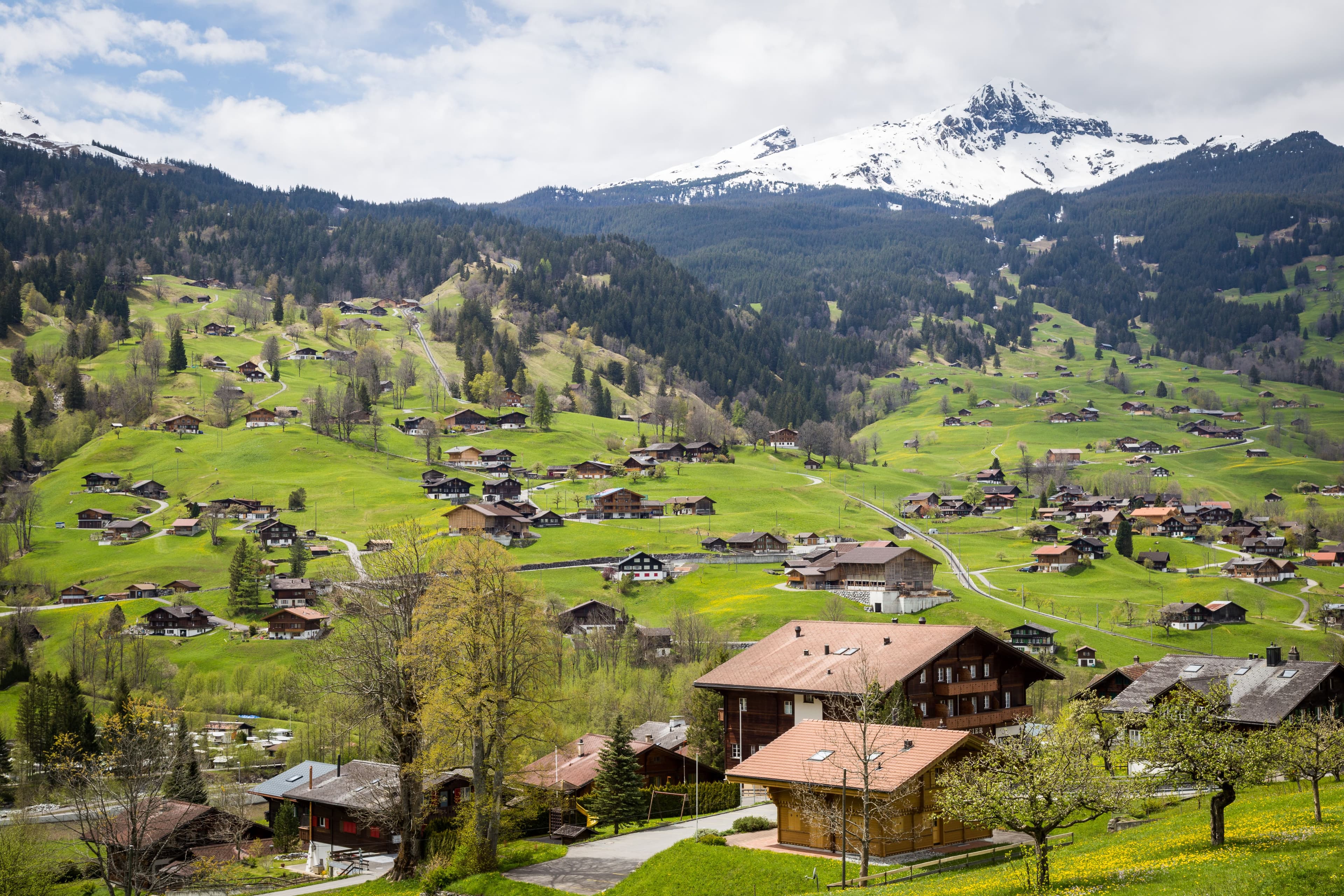
The Race
| Next Race Date | Saturday 11 September 2027 |
|---|---|
| Course type | Point-to-point, road and mountain-road hybrid (Interlaken to Eigergletscher) |
| Registration | Open entry via the official site, first-come; capped at 4,000 entrants and sells out every year. Runners who have completed 9 or more editions receive a personal invitation and a guaranteed entry slot ahead of general registration. |
| Ballot Opens | Not applicable: standard open entry, though the fixed 4,000-entrant cap sells out extremely quickly. 2026 registration opened 14 February 2026 at 08:00 local time. |
| Total finishers | Approximately 3,500 (typical annual figure) |
| Avg race-day temp | Highly variable by altitude: mild in the Interlaken valley, potentially cold and wet at the Eigergletscher finish regardless of valley conditions; no specific range has been published |
| Cutoff time | No single overall cutoff. Two strictly enforced checkpoints instead: Wengen (km 30.7) closes at 13:00 local time (max running time 4h25m), and Wengernalp/Wixi (km 38.5) closes at 14:25 local time (max running time 5h50m). |
| Free race-day transport | Runners stopped at a checkpoint receive free travel to the finish and on to Grindelwald to collect personal effects, using their race number as the ticket |
| Course certification | Not published |
| Sleeper Train | Not accessible |
Not a PB Course: Read This Before Entering
Jungfrau-Marathon climbs 1,953 m over 42.195 km, finishing at Eigergletscher, 2,320 m above sea level. Finishing times here are not comparable to a road marathon in any meaningful way, and the race should be approached as an Alpine goal event. Two strictly enforced checkpoints, at Wengen (km 30.7, closing 13:00 local time) and Wengernalp/Wixi (km 38.5, closing 14:25 local time), mean cutoff pressure is a real part of race planning here, not a formality. Runners entering for the first time should train specifically for sustained climbing; road-marathon fitness does not transfer directly to this course.
History
Jungfrau-Marathon is built on a single defining fact: 1,953 m of net climbing over the marathon distance, from Interlaken up through the Lauterbrunnen valley to a finish at Eigergletscher, beneath the north faces of the Eiger and Mönch. The race is capped at 4,000 entrants and sells out every year, a demand level unusual for a race with a finishing time profile so different from a conventional road marathon; the official site itself frames the appeal around landscape and challenge.
The race has run a version of this route for over three decades, and its finish location has changed over that time: the course now finishes at Eigergletscher, at 2,320 m above sea level; earlier editions finished at the lower Kleine Scheidegg saddle. Runners who have completed nine or more editions receive a personal invitation and a guaranteed entry slot ahead of general registration, a loyalty mechanism that reflects how many entrants return to the race repeatedly.
The course
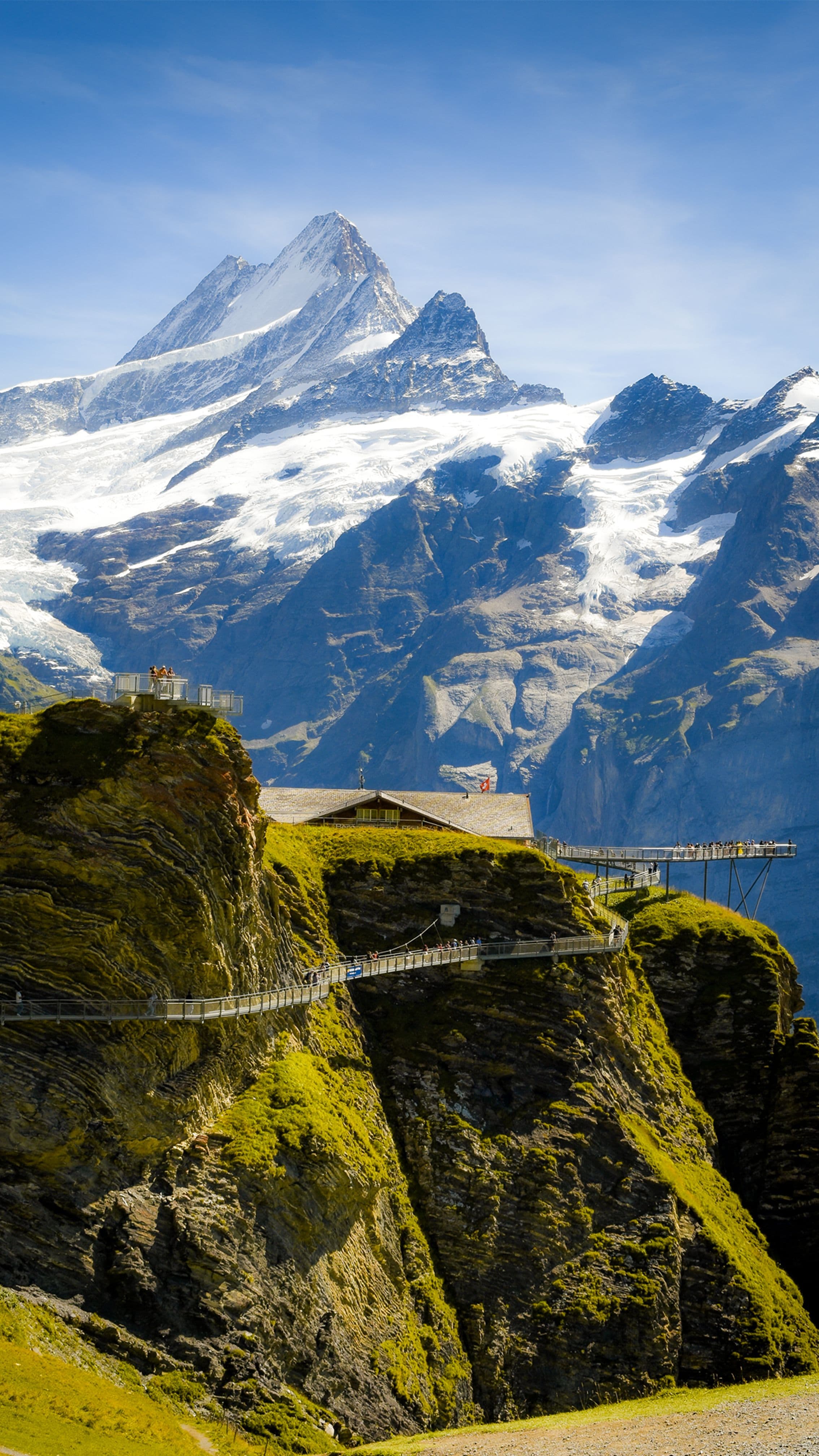
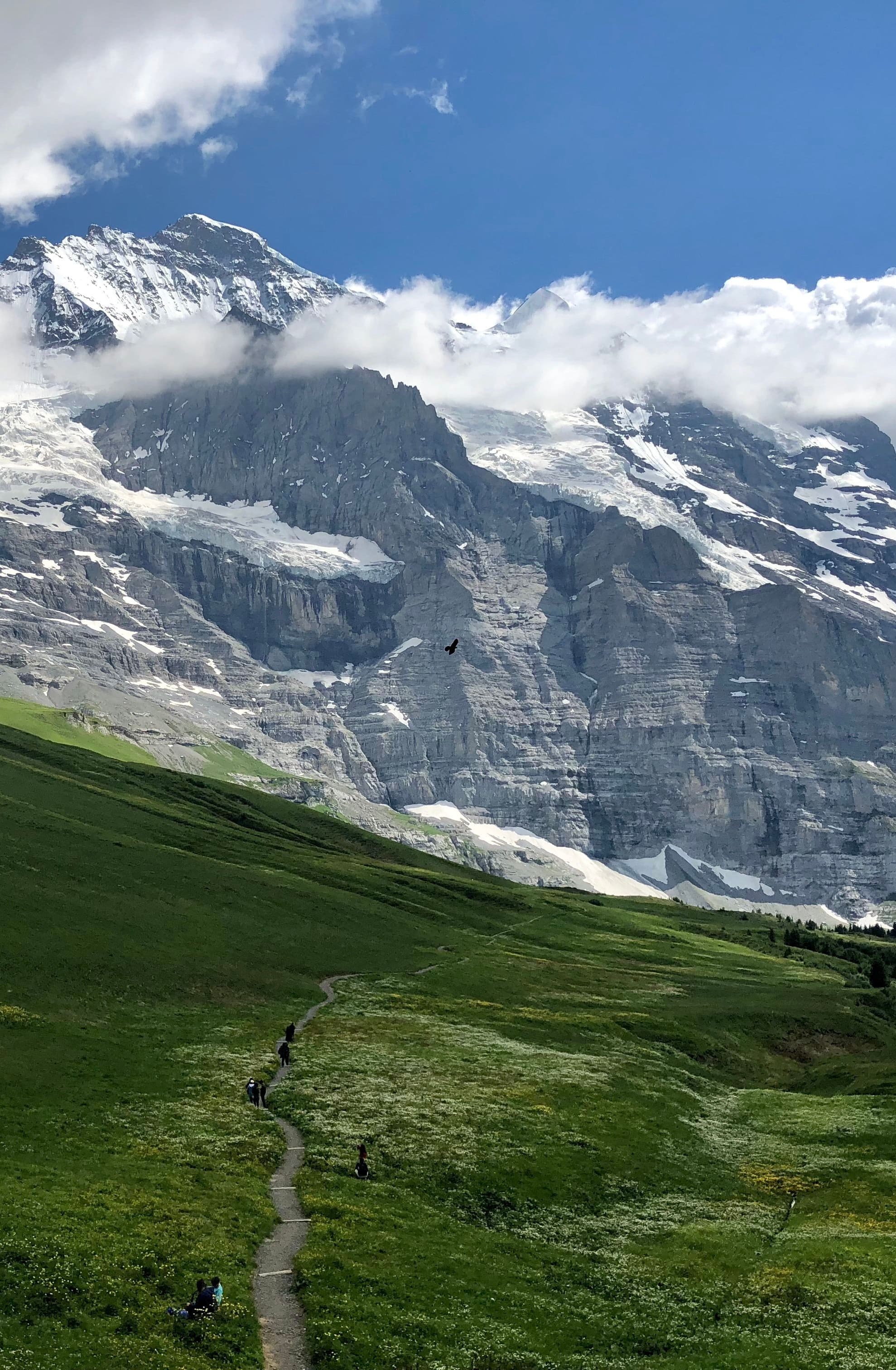
Jungfrau-Marathon starts in central Interlaken and finishes at Eigergletscher, 2,320 m above sea level, a point-to-point course climbing 1,953 m over 42.195 km. The first 10 km are flat, circling Interlaken’s town centre before heading east to Bönigen and briefly following the shore of Lake Brienz, then turning south to Wilderswil. From Wilderswil the course climbs steadily through Zweilütschinen, around km 15, to Lauterbrunnen at km 20, then loops 5 km south of Lauterbrunnen before returning through the town and beginning the climb proper. The steepest section of the entire race runs from Lauterbrunnen to Wengen, roughly km 25 to km 30, a zigzagging ascent gaining 450 m in 5 km. Beyond Wengen the course continues relentlessly upward over the Wengernalp before turning east and northeast beneath the Eiger to the Eigergletscher finish, and the last 3 km from Wixi are as steep as the climb to Wengen. Just from Lauterbrunnen at km 20 to the finish, the course gains about 1,500 m.
Km 0-10: the flat valley opening. The course circles central Interlaken before heading east to Bönigen, briefly following the turquoise shore of Lake Brienz, then turns south to Wilderswil by km 10. The temptation to run this opening stretch at genuine marathon pace is the single biggest pacing error the course punishes; everything from km 10 onward is a sustained climb, and effort banked here is effort unavailable later.
Km 10-20: the climb to Lauterbrunnen. The course climbs steadily through Zweilütschinen, around km 15, to Lauterbrunnen at km 20. This is a real gradient change from the flat opening, though moderate compared with what follows.
Km 20-25: the Lauterbrunnen loop. The course loops 5 km south of Lauterbrunnen before returning through the town, a section that briefly relieves the climbing without ever fully flattening out.
Km 25-30: the climb to Wengen.The steepest section of the entire race, zigzagging up the hillside from Lauterbrunnen and gaining 450 m in just 5 km. Wengen itself, reached at km 30.7, is the site of the race’s first strictly enforced checkpoint, closing at 13:00 local time, a maximum running time of 4 hours 25 minutes from the start.
Km 30-38.5: the Wengernalp and Wixi. Beyond Wengen the course continues climbing over the Wengernalp, with the Wengernalp/Wixi checkpoint at km 38.5 closing at 14:25 local time, a maximum running time of 5 hours 50 minutes. An overspill section of equal length may open at km 38.9 if the field bunches up here, splitting runners across two parallel course sections to prevent a bottleneck.
Km 38.5-42.2: to Eigergletscher. The course turns east and then northeast beneath the Eiger for the final approach to the finish at Eigergletscher, 2,320 m above sea level, the highest point on the entire route. It is also the steepest ground of the day, about 430 m of climbing in the last 3 km, where most of the field walks.
There is no meaningful tangent line consideration on a course this dominated by sustained vertical gain; pacing by effort, and respecting the two checkpoint cutoffs, matters far more than tangent-running technique here. Chip timing starts in Interlaken and finishes at Eigergletscher.
Course Map
The map shows the point-to-point route from central Interlaken through Lauterbrunnen and Wengen to the finish at Eigergletscher, plus the two strictly enforced checkpoints. Tap a marker for details, and scrub the slider or press play to move the orange marker along the course with the elevation profile beneath it.
A deceptively runnable start circling Interlaken and following Lake Brienz's shore to Wilderswil. Resist marathon pace here; everything from km 10 is a sustained climb.
A steady climb through Zweilütschinen to Lauterbrunnen, followed by a loop south of the town. The gradient increases but stays manageable compared with what follows.
The steepest section of the entire race, 450 m gained in 5 km. The first strictly enforced checkpoint sits at the top, in Wengen, closing at 13:00 local time.
About 560 m of sustained climbing to the second checkpoint at Wixi (km 38.5, closing 14:25), then the steepest stretch of the race, about 430 m in 3 km, to the finish at Eigergletscher, 2,320 m above sea level, beneath the Eiger and Mönch.
Pacers
No conventional pacer or corral structure is published for this race. A “Pace Bike” sets the schedule needed to make the Wengen and Wixi checkpoint cutoffs, functioning as a moving cutoff marker; runners overtaken by it are not guaranteed to reach the next checkpoint in time, though they may continue at their own risk unless overtaken by the Sweeper’s Bike, which marks the actual end of the race and withdraws any runner it passes.
What to wear
Jungfrau-Marathon’s altitude range, from Interlaken’s valley floor to the 2,320 m Eigergletscher finish, means dressing for the start tells a runner almost nothing about what to expect at the finish. No official average temperature range has been published. Interlaken in early September can be genuinely warm, which tempts runners into under-dressing for a race that ends more than 1,900 m higher, where cold, wind and even snow are all realistic possibilities regardless of how the valley start felt. Layers that can be shed during the early flat kilometres and the mid-race climb, then held onto for the final approach to Eigergletscher, work better than a single outfit chosen for the start-line temperature.
Entry
Registration opens each year on 14 February at 08:00 local time, first-come with no ballot, and the race’s fixed 4,000-entrant cap means it sells out, in some years within the opening day. A loyalty mechanism exists for repeat entrants: runners who have completed nine or more editions receive a personal invitation on 19 January and a guaranteed entry slot held until 10 February, ahead of general registration opening to everyone else. Entry pricing is tiered by registration timing: third-party sources report an early-window price of CHF 179 for the first 24 hours of registration, rising to CHF 199 from the following day; confirm against the official inscription page before booking around it.
There is no confirmed fast-runner or Good for Age entry route; the fixed entry cap and first-come structure function as the race’s own scarcity mechanism. A transfer option exists for entered runners who can no longer take part, via the official “Transferring an entry” process, and a formal cancellation policy is also published.
Fast Runner / GFA Standards
Not applicable. Jungfrau-Marathon has no confirmed fast-runner or Good for Age entry route; entry is capacity-limited, first-come registration.
Race Weekend
Expo
The official race hosts a “Marathon Village with EXPO” in Interlaken in the days before race day, alongside a pasta party. Full race information, including bib pickup, expo details and transport logistics, is emailed to registered runners at the beginning of August, roughly a month before race day; this is the primary source runners should use for exact expo timing.
Race Morning
The race starts in central Interlaken, straightforward to reach on foot from most Interlaken hotels, making race morning simpler here than at most point-to-point marathons despite the course’s mountain profile. The real logistical complexity comes after the race: the finish sits at Eigergletscher, reached by the Wengernalpbahn mountain railway rather than any road, and getting back down to Interlaken involves the same railway in reverse.
Two checkpoints govern who continues: Wengen at km 30.7, closing at 13:00 local time (a maximum running time of 4 hours 25 minutes), and Wengernalp/Wixi at km 38.5, closing at 14:25 local time (a maximum running time of 5 hours 50 minutes). A Pace Bike marks the schedule needed to make these cutoffs, while a Sweeper’s Bike marks the actual end of the race; runners passed by the Sweeper’s Bike are withdrawn by race stewards and lose access to marathon services. Any runner stopped at a checkpoint receives free travel to the finish and onward to Grindelwald, where personal effects and valuables must be collected, using their race number as the ticket.
Bag transport to the finish has not been confirmed in available sources. Given the finish sits at altitude and is reached only by rail, runners should plan carefully for what they carry versus what needs transporting separately, and check the official race information emailed in August for the current year’s specific arrangements.
Nutrition on Course
Aid stations are positioned roughly every 5 km across the course, offering water, sports drink and food, with increased support through the toughest climbing sections. First aid posts are co-located with the food stations at the same roughly 5 km intervals, relevant given the course’s altitude range and the physical demand of sustained climbing. Specific gel or sports-drink brands have not been confirmed.
Spectating
Jungfrau-Marathon offers an unusually structured spectator option: an official Spectator Day Pass, likely covering rail travel along the course’s mountain railway sections given how much of the route from Lauterbrunnen onward runs beside or is only reachable by rail. Wengen, reached by the Wengernalpbahn, is a natural spectator base given its position as the first checkpoint and the village’s own tourist infrastructure. The Eigergletscher finish itself, reachable only by rail, requires specific planning and a rail ticket.
Itinerary A: Base in Interlaken for the flat opening 10 km, watching from the town centre or along the Lake Brienz shore near Bönigen, then take a train to Lauterbrunnen for a sighting around km 20-25, continuing by rail to Wengen for the first checkpoint around km 30.7.
Itinerary B: Take the Wengernalpbahn directly to Wengen, skipping the valley sections entirely, watch the checkpoint closing procedure at km 30.7, then continue by rail toward Kleine Scheidegg or Eigergletscher for a finish-area sighting, using a Spectator Day Pass if available.
Itinerary C: Travel directly to Eigergletscher by rail for the finish, dressed for genuine alpine conditions regardless of the weather in Interlaken that morning, then use the return rail journey to Grindelwald or back to Interlaken as the natural post-race transport, the same route withdrawn runners use.
Post-Race Food
Hüsi Bierhaus Interlaken offers a straightforward beer-hall menu suited to a hearty post-race appetite once back down in the valley. Restaurant Taverne, a more traditional Swiss option, works for runners wanting a proper sit-down meal after the race’s physical demands. Velo Café Interlaken offers a lighter, café-style alternative for anyone whose appetite runs smaller after a long day at altitude. Given how much of race day is spent travelling back down from Eigergletscher by rail, factor the return journey time into any dinner booking.
Where to Stay
Stay in Interlaken for the start rather than in one of the mountain villages the course passes through: the race starts in Interlaken itself, so a valley base removes any race-morning transport question entirely, while the finish at Eigergletscher is reachable only by rail regardless of where in the region a runner stays overnight.
Interlaken West
The best all-round base, closest to the town’s main shops, restaurants and the start area itself. It runs busy and relatively expensive on race weekend, and suits runners prioritising the simplest possible race morning.
Interlaken Ost
Near the town’s second railway station, offers the best connections onward to the region’s mountain villages and excursions, useful for runners planning to extend their stay into the Jungfrau region afterward.
Wilderswil
A short train or bus ride from central Interlaken, offers a quieter, more village-like base with fewer hotels, reached by the same railway the marathon itself passes through around km 10.
Lauterbrunnen
Directly on the course route around km 20, offers a scenic Alpine valley stay, at the cost of more complex race-day logistics than a straightforward Interlaken base, since getting to the Interlaken start from here on race morning needs proper planning.
Grindelwald
On the other side of the Eiger from the course itself, makes more sense as a post-race extension than a race-weekend base, given it is not directly on the route and the connection back to the Interlaken start on race morning is not simple.
Recommended hotels
A classic, central Interlaken base close to the start area, straightforward for race morning without needing any transport planning.
Positioned near Interlaken West station, useful for runners planning onward rail excursions into the mountains either side of race day.
A budget option near Interlaken's second station, with shared and basic rooms trading comfort for value on an otherwise expensive race weekend.
A practical, no-frills rail-adjacent base, a reasonable middle-ground option between the youth hostel and the pricier central hotels.
A scenic Alpine valley option directly on the course itself, though race-morning logistics back to the Interlaken start need proper planning.
Booking timeline
Book accommodation as soon as entry is confirmed, ideally on or immediately after 14 February when registration opens, since the race’s fixed 4,000-entrant cap and popularity mean both entry and regional hotel capacity can tighten within days. The Jungfrau region is a major year-round Swiss tourist destination independent of the marathon, so hotel supply is generally deeper than in a smaller single-purpose race town, but early September still overlaps with the tail end of the region’s peak summer tourist season. Refundable rates are worth prioritising given how significantly Alpine weather can affect race-week plans. Zurich, Basel and Geneva airports all connect to Interlaken by direct or one-change rail service.
See & Do
The race starts in Interlaken, putting the town’s own viewpoints and the wider Bernese Oberland within easy reach.
Harder Kulm
In Interlaken, reached by funicular from the town centre. A viewpoint above Interlaken reached by funicular, giving sweeping views over both Lake Thun and Lake Brienz and the peaks the marathon finishes beneath. The funicular removes any climbing from the visit itself, though queues can build on a clear day.
Lauterbrunnen Valley
20 minutes from Interlaken by train, directly on the course route. A dramatic glacial valley lined with waterfalls, reachable by the same railway line the marathon course parallels around km 20. Flat valley-floor walking is available without needing to climb toward Wengen or Mürren.
Lake Brienz boat trip
Departs from central Interlaken. A scenic, entirely seated boat trip on Lake Brienz’s turquoise water, the same lake the marathon course briefly follows around km 5 to 10, a low-effort recovery option for the day after finishing. Check the current September timetable before planning around a specific departure.
Jungfraujoch
Reached by rail via Kleine Scheidegg, roughly 2.5 hours each way from Interlaken. Europe’s highest railway station, at 3,454 m, and an expensive, weather-dependent excursion best booked with flexibility built in given how often high-altitude visibility changes. The trip itself involves minimal walking once aboard the train, though the altitude alone can leave visitors more tired than the modest walking distance suggests.
Read Before you Run
Eiger Dreams
Jon Krakauer
Krakauer's essay collection on Alpine climbing culture gives real context to the Eiger north face the marathon finishes directly beneath, even though it is a mountaineering book; understanding what the mountain has meant to climbers sharpens what it means to finish a marathon at its foot.
After the Race
Jungfrau-Marathon runs in September. These itineraries range from a same-day boat trip on Lake Brienz to a three-night extension to Lucerne.
A low-effort day for runners not travelling further, entirely seated on the water. Check the current September boat timetable before planning around a specific departure, since services thin out as the season ends.
A return to the dramatic valley the marathon course itself climbs out of, with flat valley-floor walking available and waterfalls visible without needing to climb toward Wengen. September generally offers settled, pleasant valley weather.
A mountain extension on the far side of the Eiger from the race route itself, offering its own network of cable cars and hiking trails. Alpine weather can change quickly regardless of the season, so build flexibility into any high-altitude plans.
A Swiss lake city, a natural add-on for runners wanting a lower-altitude, more urban contrast to race weekend's mountain focus. An excellent shoulder-season choice in September, before the region's weather turns firmly autumnal.
Frequently asked questions
Should I stay near the start or the finish?
Stay in Interlaken, where the race starts. The finish at Eigergletscher is reached only by mountain railway regardless of where in the region you stay overnight, so a valley base in Interlaken removes the one part of race-day logistics that's actually simple to control.
How far in advance should I book a hotel?
Book as early as possible, ideally as soon as your entry is confirmed, since the race's fixed 4,000-entrant cap sells out quickly and the wider Jungfrau region's hotel capacity is limited relative to demand during race week.
Is there free transport to the start?
The race starts in central Interlaken, walkable from most hotels, so dedicated transport is rarely needed. Runners who are stopped at a checkpoint during the race receive free rail travel to the finish and on to Grindelwald as part of the withdrawal process.
What is the best neighbourhood to stay in?
Interlaken West or Interlaken Ost both work well, differing mainly in which of the town's two railway stations sits closer, useful mainly for planning onward excursions.
When does the expo open, and what do I need to bring?
A Marathon Village with expo runs in Interlaken in the days before race day. Full details, including bib pickup, are emailed to registered runners at the start of August, roughly a month before the race, and are the most reliable source for exact timing.
What is the weather typically like on race day?
Highly variable by altitude. The Interlaken valley start can feel mild in early September, while the Eigergletscher finish, over 1,900 m higher, can be cold, windy or wet regardless of how the morning felt in town.
How do I get from the airport to the city centre?
Zurich, Basel and Geneva airports all connect to Interlaken by direct or one-change Swiss rail service, making airport choice more about flight availability than transfer convenience.
Is there a bag drop at the race?
This has not been confirmed in available sources. Given the finish is reached only by mountain railway, check the official race information emailed in August for the current year's specific bag-transport arrangements.
Should I bring a throwaway layer to the start?
Yes, and plan beyond just the start: the temperature difference between the Interlaken start and the Eigergletscher finish, over 1,900 m higher, can be dramatic regardless of how mild the valley morning feels.
How do I get back to my hotel after finishing?
Use the mountain railway back down from Eigergletscher to Interlaken. This is the same route, and often the same train, used to transport any runners withdrawn at the Wengen or Wixi checkpoints, so allow real time for the journey given how many people are moving through the same rail network on race day.