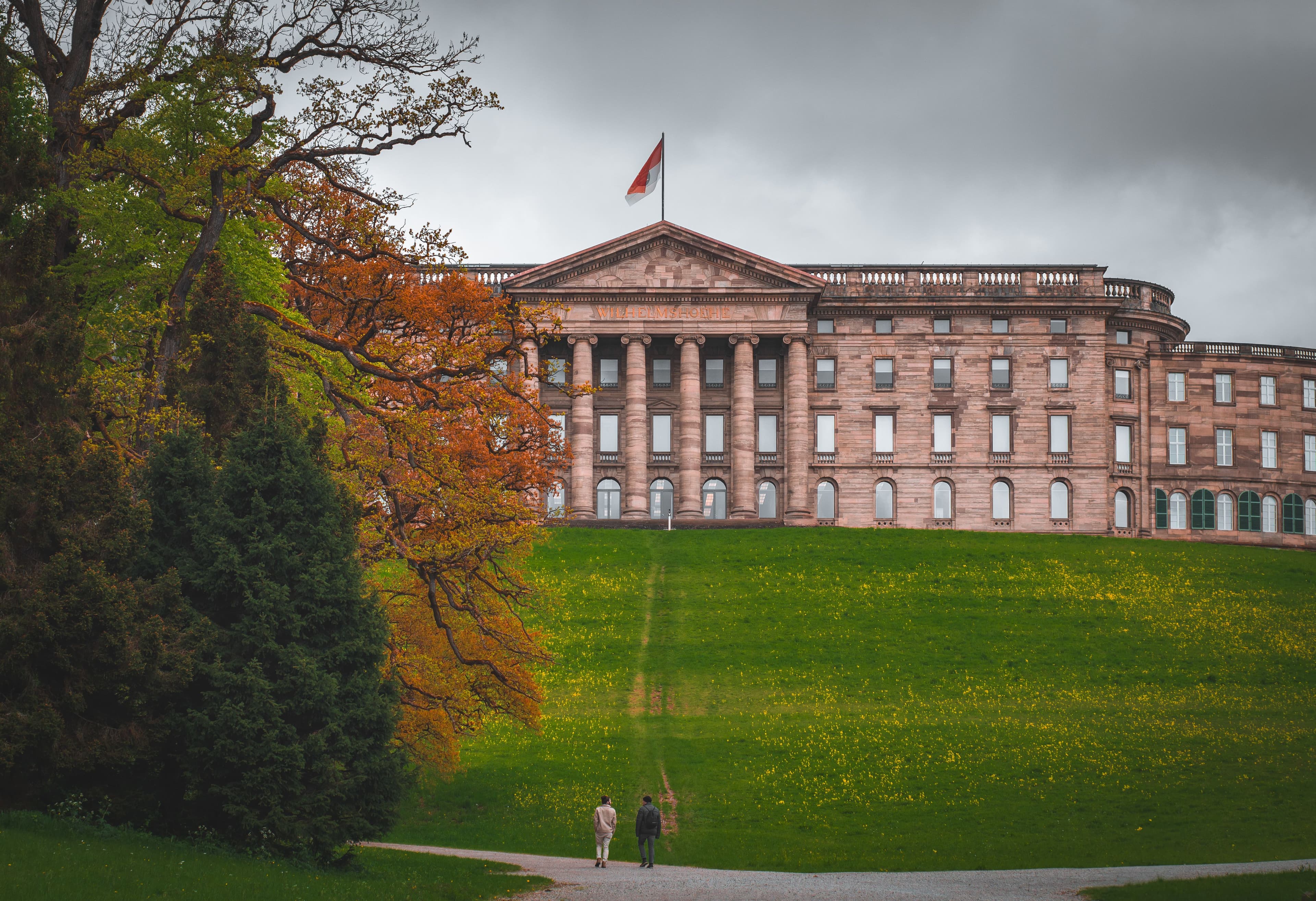
The Race
| Next Race Date | Sunday 19 September 2027 (provisional; the organiser has not yet published the 2027 date) |
|---|---|
| Course Type | Loop: two laps of a city circuit, starting on Damaschkestraße and finishing inside Auestadion |
| Registration | Open entry online, no ballot. Deadline 6 September 2026, then in-person late entry where places remain |
| Ballot Opens | No ballot |
| Total Finishers | Not confirmed for the marathon alone. 15,287 took part across all 2025 weekend events |
| Average Race Day Temperature | Variable in late September. The organiser notes the race normally proceeds in rain |
| Cutoff Time | 6 hours gross. 09:30 start, the finish closes at 15:30 |
| Free Race Day Transport | Not confirmed. Trams 5 and 6 and RegioTram RT5 serve Auestadion at normal fares |
| Course Certification | Run under DLV IWR rules, supervised by the Hessischer Leichtathletik-Verband. No World Athletics label or AIMS certificate confirmed |
History
The marathon was founded in 2007, growing out of the Kasseler Citylauf, which had already run 29 editions by the time the longer race replaced it. The organiser credits Winfried Aufenanger, the long-serving German marathon coach and a central figure in Kassel running, with the original idea, discussed under the working name “Mittsommernacht-Marathon” before the event settled into the city marathon that first ran on 10 June 2007. That debut drew more than 1,100 marathon finishers, a strong first field for a new German race. The move from early summer to September came later, cutting the heat risk and setting the autumn date the event has kept since.
Auestadion has anchored the race from early on. The finish inside the stadium is not a recent addition but one of the defining features of the event, and the two-lap course was built around it: a runnable line through a city whose wider topography is hilly enough that a flat marathon here would have been impossible without deliberate route design. Historical results list a men’s best of 2:12:37 by Edwin Kosgei in 2019 and a women’s best of 2:35:23 by Salome Biwott in 2012, though no current organiser page reconfirms these as the standing course records, so treat them as historical marks.
2026 is the 20th edition, run across a weekend that has grown well beyond the marathon: an expo, children’s races, a company run, a walking event, a half marathon and a marathon relay now sit alongside the Sunday race. The organiser recorded 15,287 participants across all 2025 weekend events, and by late August 2026 had logged more than 12,000 registrations for the anniversary edition, with projections pointing toward roughly 16,000 by the 6 September deadline. Every one of those figures covers the whole weekend; no marathon-only total is published.
What the race offers a travelling marathoner is raceability. The marathon field is a modest slice of a much larger weekend, the start and finish share one compact complex, the personal-nutrition service is more generous than most races this size manage, and the stadium finish is treated as an event in itself. One runner posting on Reddit recommended it specifically for strong organisation and a smaller field with less weaving, which is a fair summary of what it actually delivers.
The course
The marathon starts at 09:30 on Damaschkestraße beside Auestadion, runs two laps of a city circuit and finishes on the track inside the stadium. Each lap covers a broad cross-section of Kassel: east through Waldau, Bettenhausen and Forstfeld, north along the Fulda through Unterneustadt and Wesertor, up to Rothenditmold at the top of the loop, west and climbing to Kirchditmold, then back through Vorderer Westen and Mitte past the state theatre and the town hall before dropping into the Aue. The marathon, half marathon, power-walking half and relay all start together, so the opening kilometres carry the weekend’s largest combined field.
The organiser publishes approximately 200 m of total ascent, which is the figure this page uses. An independent course description gives 250 m for the marathon and 125 m for the half. On each lap the course has one sustained climb, about 57 m over 6 km between km 9.5 and km 15.4 at an average of 1% and never steeper than about 1.4%, followed by high ground through Vorderer Westen and then a descent of about 48 m in 2 km into the Aue, the steepest kilometre just under 3%. The rest of the lap sits within about 15 m of the river. The way to run it badly is to attack the first climb.
Km 0 to 5: east through Waldau and Bettenhausen. The gun goes at 09:30 with four events on the road at once, and the start blocks are self-seeded, not chip-allocated, which puts more weight on honest seeding than usual. The route runs out east through Waldau, Bettenhausen and Forstfeld, reaching its easternmost point at about km 4.9. The ground here is close to level and the temptation is to bank time; the climb is still five kilometres away.
Km 5 to 9.7: the Fulda, and the low point. The course turns north-west and follows the river through Unterneustadt and Wesertor. This is the lowest ground of the lap, bottoming out around km 8 to 9. It is also the fastest, flattest running of the day, which is exactly why it repays restraint: everything spent here comes out of the next five kilometres.
Km 9.7 to 15.4: the climb. The one real test on the lap. The route passes Rothenditmold, the northernmost point of the circuit at about km 10.9, then turns west and climbs steadily for five kilometres to a high point near Kirchditmold at km 15.4, roughly 50 m above the river. It is a long, even gradient of about 1%, which makes it easy to run too hard without noticing. The course tops out about 900 m from Kassel-Wilhelmshöhe station, which is the useful fact for anyone meeting a supporter here.
Km 15.4 to 18: high ground through the centre. The route holds its height across Vorderer Westen and into Mitte, past the state theatre at about km 17.1, the town hall at km 17.9 and Königsplatz at km 18. This is the best-supported part of the lap and the only stretch that feels like a city-centre marathon. Full aid stations arrive every 5 km from km 5, with water-only stations at the midpoints from km 7.5, a denser pattern than most races this size run.
Km 18 to 20.8: the drop, and lap one closes. Almost everything gained on the climb comes back in about two kilometres: roughly 48 m of descent from Friedrich-Ebert-Straße past Königsplatz down into the Aue, the steepest kilometre at just under 3%. It is fast, and on the second pass tired quads feel it. The route runs past the Aueteich pond at about km 20.2 and back past Auestadion at km 20.8, where the half marathon and power-walking fields peel off to their own finish and the road suddenly empties.
Km 21 to 42.195: the second lap. The circuit repeats almost exactly, which is the strongest argument for treating lap one as reconnaissance. The climb returns from about km 30.7 to km 36.4, this time on legs past 30 km, and the descent into the Aue arrives at km 39 to 40. From there it is flat to the stadium. The relay runs the same course, so expect exchange-point traffic in the closing kilometres. The finish is on the track inside Auestadion, with a video screen showing runners entering the stadium, and it closes at 15:30, six hours after the gun.
Course Map
One lap of the city circuit, run twice, from a start on Damaschkestraße to a finish inside Auestadion a few hundred metres away. Tap a marker for details, and scrub the slider or press play to move the orange marker along the course with the elevation profile beneath it.
Four events start together at 09:30 with self-seeded blocks, so honest seeding matters. Out through Waldau and Bettenhausen, then north along the Fulda to the lowest ground of the lap around km 8.
Five kilometres and about 50 m of steady rise from the river past Rothenditmold to a high point near Kirchditmold. An even gradient of about 1%, which is what makes it easy to overrun.
Roughly 50 m of descent from Königsplatz into the Aue in a little over a kilometre. Past the Aueteich and back by the stadium at km 20.8, where the half marathon peels away.
The second descent, then flat running to Auestadion for a finish on the track with a video screen on the runners coming in. Relay traffic builds near the exchange points. Course closes 15:30.
Pacers
PacerTeam provides eight pace groups at 15-minute intervals from 3:15 to 5:00. On a course with one repeated climb and one repeated descent, a pacer is worth more than usual: the even effort a good pacer runs over the km 9.7 to 15.4 rise is exactly what most runners get wrong on their own.
| Start time | 09:30, shared with the half marathon, power-walking half and relay |
|---|---|
| Start blocks | Self-seeded by expected finish time, not chip-allocated |
| Pace groups | 3:15, 3:30, 3:45, 4:00, 4:15, 4:30, 4:45, 5:00 |
| Provider | PacerTeam |
| Cutoff | 6:00 gross, finish closes 15:30 |
What to wear
Late September in Kassel is variable, not reliably cool. The organiser’s own volunteer guidance notes the race normally proceeds in rain, and a 09:30 start means the warmest part of the day lands while marathon runners are still out on the second lap. Plan for the forecast, and for the second lap.
A light throwaway layer is a reasonable precaution on a cold or wet morning, though it matters less here than at a big point-to-point race: the Auestadion start is compact and the wait short. No clothing-donation procedure has been confirmed for the event, so plan to hand a discarded layer to a supporter or carry it. The descent from Königsplatz into the Aue is steep enough on the second pass to be worth a thought about shoes: a plate that handles a fast downhill well is more useful on this course than one tuned purely for flat cruising. Otherwise standard autumn kit, with a dry change in the bag for the walk out of the stadium.
Entry
Entry is open online registration with no ballot, priced on a rising scale by date: €48 from 1 November to 31 December 2025, €53 to 31 March 2026, €64 to 30 June, €72 to the 6 September deadline, and €82 for event-weekend late entry where places remain. At roughly €1 to £0.86 that runs from about £41 to £70, which is inexpensive by the standards of a European city marathon with a stadium finish.
The online deadline is 6 September 2026. Late entry after it is handled in person at Auestadion, and the organiser warns plainly that it can be limited or closed for operational reasons, so it is a fallback, not a plan. Changes and transfers are possible for an additional €10 under the current FAQ. Cancellation and refund terms sit in the event’s participation conditions and should be read before booking travel.
The 2026 edition is the 20th, and the organiser reports registrations tracking toward records across most categories. That does not mean the marathon will sell out, since the marathon is the smallest part of a weekend dominated by the half and the corporate run, but it does mean the usual assumption that a mid-sized German race leaves entry open indefinitely is weaker than normal.
Fast Runner / GFA Standards
There is none. No Good for Age route, no qualifying-time entry, and no confirmed charity-place programme or tour-operator allocation. Everyone enters through the same registration at whichever price band is current.
Race Weekend
Expo
The MarathonExpo sits directly in front of Auestadion and runs alongside bib collection across the whole weekend: Friday 18 September, expo from 14:00 with collection until 19:00; Saturday 19 September, collection and expo to 19:00 alongside the junior races and pasta party; Sunday 20 September, collection reopens at 07:30 with the expo running until 16:00. Bring the registration confirmation showing your allocated race number.
Collect on the Friday or Saturday. The organiser recommends it for a specific reason: race-morning queues at the stadium serve four events starting at the same time, and the personal-nutrition drop-off closes at 08:00 on Sunday. A Saturday visit gets both jobs done and leaves race morning as nothing more than a walk to the start.
Getting to the Start
The marathon starts at 09:30 on Damaschkestraße, immediately beside Auestadion. From Kassel Hauptbahnhof, RegioTram RT5, tram lines 5 and 6 and several bus routes reach the stadium directly. From Kassel-Wilhelmshöhe, the ICE station most international runners arrive at, tram lines 3 or 5 and RT5 are the simplest connection. The organiser advises against driving to Auestadion itself and directs drivers to designated parking at Giesewiesen and the public areas around Buga-Aue and the Messe.
Free race-day travel has not been confirmed. Directions are published in detail, but no statement was found that the bib works as a ticket, so budget for a normal fare unless the final runner information for your edition says otherwise.
Start and finish share the same complex, so there is no bag transfer to plan and no shuttle to catch. Bib collection and late entry both reopen at 07:30 on race morning. Personal nutrition for the aid-station service must be handed in by 08:00 on Sunday, or by 19:00 on the Saturday evening; it is not refrigerated, which makes it suitable for gels, bars and dry nutrition, not anything perishable.
One thing to plan for that the field size alone does not suggest: the marathon, half marathon, power-walking half and relay all start together at 09:30. The opening kilometres are considerably busier than a marathon-only field of this size would be, and because the blocks are self-seeded, the congestion depends on how honestly everyone around you has judged their own finish time. Line up where you actually belong and expect the first two kilometres to run slower than target.
After finishing on the track, runners have immediate access to refreshments, the expo and public transport from the stadium area. A dedicated clothing-bag area is confirmed in principle through the organiser’s volunteer information; check the exact collection point in the final runner instructions.
Nutrition on Course
Full aid stations begin at km 5 and repeat every 5 km, with water, an isotonic drink, Aerobee honey energy gel, banana and apple. Water-only stations sit at the midpoints from km 7.5 and repeat on the same 5 km spacing, so there is something on the road roughly every 2.5 km from km 5 onward. That is denser than most races of this size manage, and on a two-lap course it means the pattern is fully learned by halfway.
The finish inside Auestadion adds water, alcohol-free Hütt wheat beer, bananas, apples and isotonic drink.
Runners can hand in personal nutrition bottles by 19:00 on the Saturday or 08:00 on Sunday morning for placement at the aid stations. Few races at this level offer it to the whole field, and on a two-lap course it is worth more than usual: a bottle left at one station is reached twice. Nothing is refrigerated, so this suits mixed drinks, gels and bars, not anything that needs to stay cold.
One caution on the official gel. A runner’s account on Reddit described stomach trouble after the honey gels despite having used them in training. That is individual tolerance, not a problem with the product, but it is a fair reminder to rehearse race-day fuel exactly as it will be taken on the day, and to carry a backup if the course supply is the whole plan.
Spectating
Kassel is one of the easier marathons to support. The two-lap design and the shared start and finish mean a supporter who never leaves the Auestadion area still sees the start, the lap transition at about km 20.8, and the finish on the track. No transport, no timing calculations, no risk of missing the runner because a tram was late.
Plan A: the stadium anchor. Watch the 09:30 start on Damaschkestraße, walk into the Karlsaue or along the Aue for an early sighting as the route passes, then return to the stadium for the lap transition and the finish. The crowd, the video screen, the music and the commentary are all concentrated here, so this is also where the race feels like an occasion.
Plan B: add the city centre. Take tram 5 or 6 into Mitte for a sighting near the town hall or Königsplatz, which the course reaches at about km 17.9 to 18 on the first lap and km 38.9 to 39 on the second. The gap between the two passes is a little under two hours for most runners, which is enough for lunch and not enough to go far. Return to the stadium well before the expected finish.
Plan C: the high point. The course tops out near Kirchditmold at about km 15.4 and km 36.4, roughly 900 m from Kassel-Wilhelmshöhe station. That makes it the one point away from the centre that is genuinely easy to reach by ICE-station tram, and it is where a runner most wants to see a familiar face. Two sightings from one position, then a single move back to the stadium for the finish.
The eastern and northern residential stretches through Bettenhausen, Forstfeld and Rothenditmold are much quieter. That suits some supporters and some runners, but a first-time visitor should default to the stadium and treat anything else as a bonus. Check kilometre positions against the organiser’s current course map before building a plan around a specific corner.
Post-Race Food
The stadium finish covers the first half hour: water, alcohol-free wheat beer, fruit and isotonic drink, taken sitting on the grass. For a proper meal, Vorderer Westen and central Mitte have considerably more choice and easier tram access than the residential streets immediately around Auestadion.
The regional dish worth ordering is Ahle Wurscht, a cured North Hessian sausage, with bread. It travels better on a marathon stomach than most things a German menu offers at this hour, and it is local, not a tourist proposition. A plain pasta plate is the safer alternative. Sunday opening hours in Kassel vary by venue and by season, so check the specific restaurant close to the weekend and book.
Where to Stay
Start and finish sit a few hundred metres apart inside the same complex, so judge everything by distance to Auestadion and ignore the usual start-versus-finish question. Kassel’s tram network is good enough that several districts work; the choice is really between walking to the stadium and eating well the night before.
Süd and Auestadion
Süd is the pure logistics answer: walkable to the start, walkable back from the finish, and quiet the night before. The cost is dining. There is far less on the doorstep here than in the centre, so plan the Saturday meal elsewhere or accept a tram ride to it.
Mitte and Königsplatz
Mitte is the best all-round balance for anyone treating this as a weekend away. Easy tram access to Auestadion, the central sights within walking distance, and the marathon runs through here twice, which makes a supporter’s day simple. Some blocks pick up Saturday-night street noise, so it is worth reading the room description as well as the location.
Vorderer Westen
Vorderer Westen has the cafés, restaurants and attractive residential streets, and it suits runners travelling with people who want more evening choice than Süd offers. The course passes through it on the descent from the high point, so it is also a decent base for a supporter. Race morning is a short tram ride.
Wilhelmshöhe and Bad Wilhelmshöhe
Wilhelmshöhe is the right base for anyone arriving by ICE, with direct tram connections toward Auestadion and the Bergpark on the doorstep for a second day. Bad Wilhelmshöhe goes further up the hill and closer to the park, at the cost of a longer and less convenient race-morning journey. Both are worse than Mitte for the old centre.
Karlsaue and the Friedrichsplatz edge
The Karlsaue edge sits between the park and the central sights and is reasonably close to the stadium, with flat recovery walking straight out of the door. Hotel choice in this pocket is smaller than elsewhere, so it works when something is available and is not worth holding out for.
The 20th-anniversary edition is tracking toward record participation across most categories, so a cancellable room booked once entry is confirmed beats waiting for the final runner instructions in September.
Recommended hotels
Named directly by the organiser as a marathon hotel, which makes it the one place on this list worth checking first for a runner-specific rate. The catch is the location: Baunatal is a separate town south-west of Kassel, so confirm the Sunday-morning journey to Auestadion before committing.
A large property in the district with the best evening dining in the city. The tram connection to the stadium is simple, and the walk back after finishing is realistic on fresh legs but long on tired ones.
The characterful central choice, in the part of town the marathon runs through at km 17 and km 38. Expect premium pricing on the anniversary weekend.
The practical pick for anyone arriving by ICE at Kassel-Wilhelmshöhe, and the closest of these to the Bergpark for a second day. Race morning is a longer ride than from the centre.
A budget option for runners who would rather spend the money on the trip than the room. Check the Sunday timetable to the stadium; it differs from the weekday frequency.
Booking timeline
Book as soon as entry is confirmed. There is no ballot, so demand rises gradually with the scheduled price increases, and the last online entry date is 6 September 2026. A cancellable room near Auestadion or in the centre, taken several months ahead, gives the best choice, and the anniversary edition makes that more worthwhile than usual.
Treat Kassel as a rail destination. For UK travellers, flying into Frankfurt or Hannover and continuing by ICE to Kassel-Wilhelmshöhe is more practical than hunting for a small local airport, and it puts you on a tram line that reaches the stadium. Check fares and any engineering works close to travel.
See & Do
Distances below are measured from Auestadion, where the race finishes and where most runners will be staying or arriving. Two of the four are flat and central; the Bergpark is neither, and is best kept for a day when the legs have recovered.
Bergpark Wilhelmshöhe and the Hercules monument
Kassel’s UNESCO World Heritage landscape park sits about 4.8 km (3.0 miles) west of the stadium, reached by tram. It is the reason most people have heard of the city, and the climb from the palace up to the Hercules monument is steep and stepped throughout. This is a pre-race walk or a second-recovery-day walk, not something to attempt on the Sunday afternoon. The water features run to a published seasonal schedule, so check before going specifically to see them.
Staatspark Karlsaue and the Orangery
The Karlsaue begins about 1.3 km (0.8 miles) from the finish and is flat throughout, which makes it the obvious place to walk off a marathon on the Sunday evening. The Orangery stands at the northern end, close to the route the marathon takes back toward the stadium. Companions who want somewhere to wait between sightings do better here than anywhere else near the course.
GRIMMWELT Kassel
About 1.4 km (0.9 miles) from the stadium, GRIMMWELT is an indoor museum on Jacob and Wilhelm Grimm, who did much of their working life in Kassel. It is level throughout, which is the practical point on a recovery day, and it does considerably more with the material than the fairy-tale branding suggests.
The Fridericianum and the documenta sites
The Fridericianum is about 1.7 km (1.1 miles) from the finish, on Friedrichsplatz in the centre. Kassel hosts documenta, the contemporary art exhibition that runs every five years, and the permanent traces of past editions are scattered across the city centre. In a non-documenta year the Fridericianum still programmes exhibitions, and the walk between the sites is flat and short.
After the Race
Late September in Hesse still holds reasonable daylight, which makes the days after this race more usable than an October marathon further north. Kassel sits on the main north-south ICE line, so onward travel is easy in both directions. Everything below is ordered by how much walking it asks for, since a course with two 50 m descents leaves quads that will have opinions on the Monday.
A half-timbered town where the Werra and Fulda meet to become the Weser. Flat, compact and walkable in an hour, which is about the right ambition for the Monday after a marathon.
A university town with a café-heavy old centre and almost no gradient. The lowest-effort day out on this list.
The Wartburg involves a real climb up from the town, so this works better as a second or third day than the morning after. Worth the wait.
A straightforward onward city break with the best departure-airport options in the region, reached without changing trains.
A longer trip west by rail. Keep the first day on trains and save the Rhine valley walking until the legs have settled.
Frequently asked questions
Should I stay near the start or the finish?
They are the same complex. The start is on Damaschkestraße and the finish is inside Auestadion, a few hundred metres apart. Staying in Süd means walking to both.
How far in advance should I book a hotel?
Several months, and make it cancellable. There is no ballot to wait for, so book when you enter. The 20th-anniversary edition is tracking toward record numbers across most categories.
Is there free transport to the start on race day?
Not confirmed. Trams 5 and 6 and RegioTram RT5 serve Auestadion directly, but no statement was found that the bib works as a ticket. Budget for a normal fare.
What is the best area to stay?
Süd for pure convenience, Mitte or Vorderer Westen for a better weekend. Wilhelmshöhe if you are arriving by ICE and want to see the Bergpark properly.
When does the expo open?
Friday 18 September from 14:00, Saturday 19 September until 19:00, and Sunday 20 September from 07:30. Bring the registration confirmation showing your race number.
What is the weather typically like on race day?
Variable. Late September in Kassel runs from cool and settled to warm, and the organiser notes the race normally proceeds in rain. A 09:30 start puts the second lap in the warmest hours.
How do I get from the airport?
Fly to Frankfurt or Hannover and take an ICE to Kassel-Wilhelmshöhe. From there, trams 3 or 5 and RegioTram RT5 reach Auestadion without a taxi.
Is there a bag drop?
Yes, a dedicated clothing-bag area at the stadium. Start and finish share the site, so nothing is transported. Check the exact procedure in the final runner instructions.
Should I bring a throwaway layer?
Useful on a cold or wet morning, though the wait at a compact stadium start is short. No donation collection point has been confirmed, so plan to carry it or hand it over.
How do I get back to my hotel after finishing?
Trams 5 and 6, RegioTram RT5 and several buses serve Auestadion. Runners staying in Süd can walk. Normal fares apply.