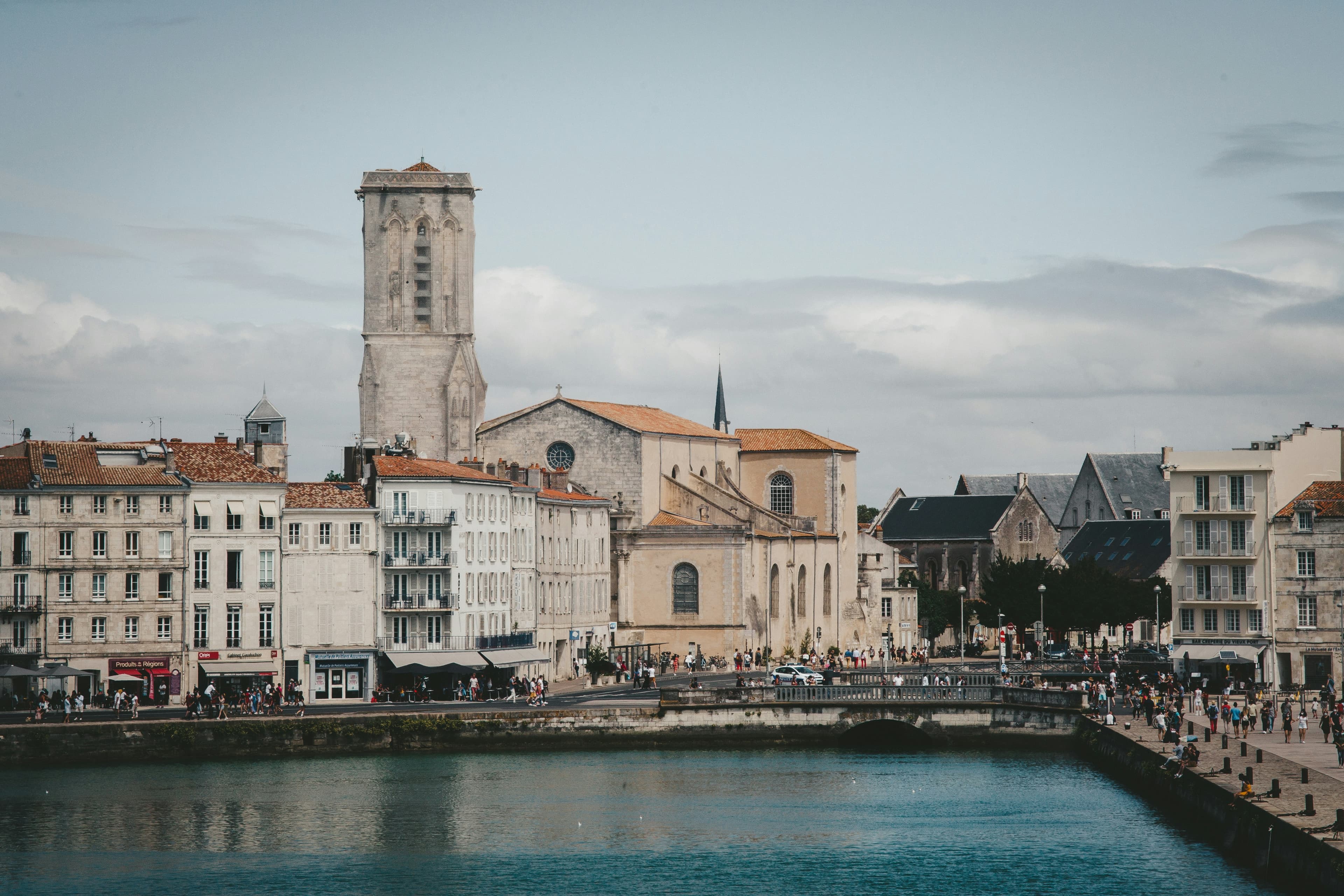
The Race
| Next Race Date | Sunday 29 November 2026, 09:00 |
|---|---|
| Course Type | Loop: two identical laps of 21.0975 km, with a double start merging after about 610 m |
| Registration | Open, direct registration. Capped at 10,000 marathon entrants for 2026, raised from 9,000, and sold out |
| Ballot Opens | Not applicable: this race has no ballot |
| Total Finishers | About 2,955 (2025 marathon). The 10,000 figure above is a cap, not a finisher count |
| Average Race Day Temperature | 8°C to 13°C (November averages for La Rochelle) |
| Cutoff Time | 5 hours 30 minutes |
| Free Race Day Transport | Yes: three free park-and-ride shuttles plus the ILLICO 3 and ILLICO 4 city bus lines |
| Course Certification | FFA-certified route, certificate N-A017/07262/2024/A. FFA Label Or in recent editions. No World Athletics label displayed for 2026 |
The cap and the finisher count are very different numbers
La Rochelle sells 10,000 marathon places and sold them all for 2026. In 2025 it recorded 2,955 classified marathon finishers. Both are real, marathon-specific figures and nothing in the available sources explains the gap between them, so this page states both and draws no conclusion. For context: the race peaked at its 20th edition in 2010 with 10,000 entrants producing 8,625 finishers, and recorded 6,091 in 2018, 5,167 in 2019 and 6,611 in 2021. What that means for start-line density in 2026 is genuinely unclear, and anyone told this is a 10,000-runner marathon should know the recent finishing fields have been a fraction of that.
History
La Rochelle’s relationship with the distance did not begin in 1991. The city hosted an earlier Marathon de La Rochelle from 1981 to 1989, then a gap year in 1990. What followed was a fresh start, not a continuation: local athletics figures formed the Association Marathon de La Rochelle and staged the first edition of the current race in 1991, with Serge Vigot as founding president. From the outset the organisation defined itself around three words still in its identity: populaire, convivial et festif.
The race grew from fewer than a thousand participants into one of France’s largest marathons, peaking at the 20th edition in 2010 with 8,625 finishers. The organiser now mobilises around 1,300 volunteers over the weekend regardless of field size.
Serge Vigot led the association for more than a decade before his death in 2005, during the Marrakech Marathon. The association added his name to the race as a tribute. Several traditions became part of the event in the years that followed: the double start that separates the field across Quai Maubec and Quai Louis Durand before merging after roughly 610 metres, handisport competition including races for visually impaired runners, and the free Chauffe-Gambettes shakeout run.
The organiser presents it as the second most performant French marathon under the FFA Gold scoring system, and recent results carry real depth: Elvis Kipchoge Cheboi won in 2:09:31 in 2025, with Betty Chepkemoi Kibet taking the women’s race in 2:25:32. The 35th edition in 2026 has already filled its newly raised cap.
The course
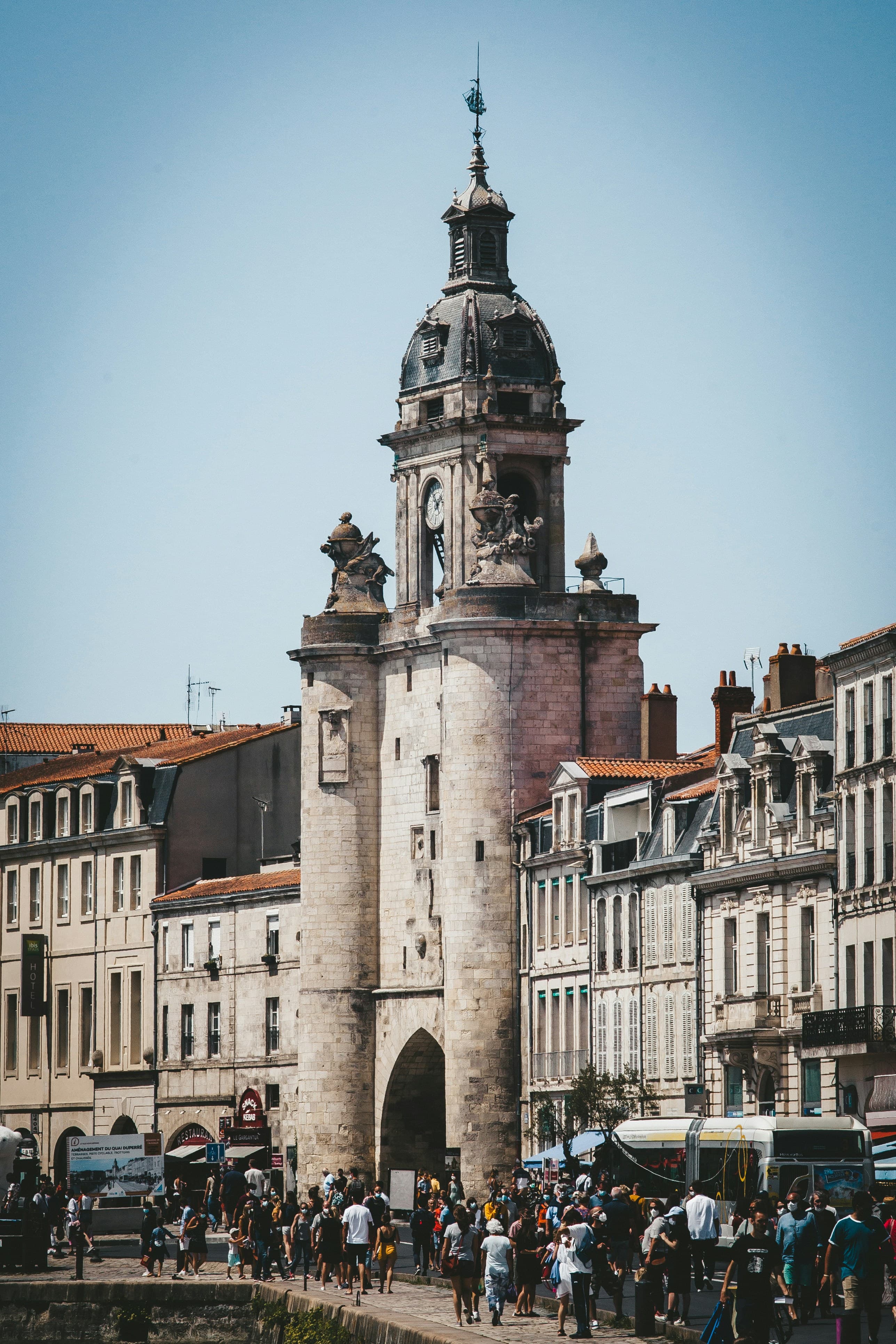
The marathon starts at 09:00 from two adjacent waterfront points, Quai Maubec and Quai Louis Durand, with runners assigned to a start by age category and predicted finish time. The two fields merge after roughly 610 metres. From there the route runs as two identical laps of 21.0975 km. The lap is wider than the harbour postcard suggests: it drops south into Les Minimes and Tasdon, comes back past the railway station and through Porte Royale to Place de Verdun, then swings west across La Genette, La Rossignolette, Mireuil and Bel Air before returning along the Le Mail seafront to the old port. The course was redesigned in 2023 to remove turns and reduce accelerations, which both the organiser and independent running sites describe as making it faster.
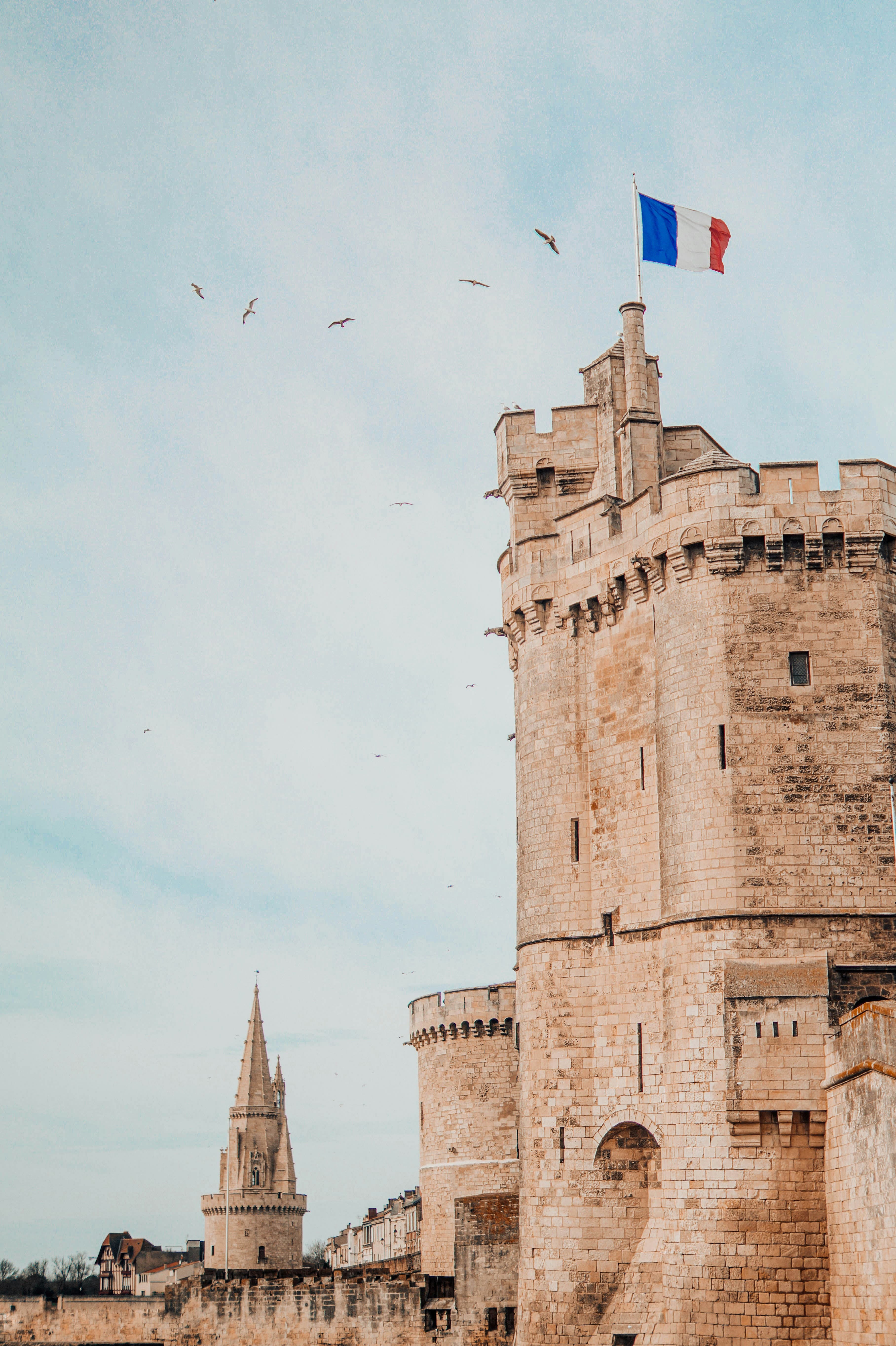
The finish sits at Esplanade Saint-Jean-d’Acre, beside the Tour de la Chaîne and Tour Saint-Nicolas, a few hundred metres west of the start quays. The organiser calls the course quasiment plat, nearly flat, and publishes no total elevation figure, so the band above says Not confirmed. The chart agrees with the description: each lap has a single rise of about 11 m, from Place de Verdun up Avenue Edmond Grasset to the high point of 21 m at km 11.4, then an 18 m descent spread over 4 km toward the port. Nothing else on the lap climbs more than 8 m.
Km 0 to 0.6: the double start. La Rochelle solves the biggest logistical problem of a large field before anyone has covered a kilometre. Instead of funnelling everyone through one line, the race begins simultaneously at Quai Maubec, for seniors, masters 0 to 1 and handisport competitors, and Quai Louis Durand, for masters 2 to 10, the Marathon Duo and the company relay, each split into four corrals by target time. Be in your corral at least 15 minutes before the gun. The two fields converge after about 610 metres, which softens the opening congestion without removing it.
Km 0.6 to 6: the Encan frontage and the southern leg. Once merged, the route runs along the Esplanade de l’Encan past the Aquarium and the Marathon Village you visited the day before, then turns south down Avenue Michel Crépeau into Les Minimes and Tasdon, reaching the far end of the lap on Boulevard de la République around km 4. These are ordinary residential and marina roads, and they are quiet. Aid comes at 4.5 km. With no climbs anywhere, the temptation is to let a flat opening dictate pace. Resist it: the second lap repeats these exact roads, so an early error compounds, with no change of terrain to mask it.
Km 6 to 10: the station, Porte Royale and Place de Verdun. Back north past the railway station on Avenue de Colmar, then through the Porte Royale gate in the old ramparts at about km 8 and into Place de Verdun at km 9, where both Navette Nord shuttles drop spectators. Aid at 9.5 km. This is the most reliably crowded stretch of the lap and the easiest place for supporters to see you.
Km 10 to 17: the western loop. The part of the course the race’s own marketing says least about, and the only part with a gradient. From Place de Verdun the route climbs about 11 m up Avenue Edmond Grasset to the lap’s high point of 21 m around km 11.4, heads west through La Genette and out along Avenue du Président Kennedy into La Rossignolette, Mireuil and Bel Air, then loses 18 m over the next 4 km toward the port before turning back east around km 17. Wider roads, fewer spectators and less shelter. Aid at 14.5 km.
Km 17 to 21.1: Le Mail and the end of lap one. The return runs along Le Mail, the seafront promenade and the lowest point of the lap at about km 19, then Avenue du Général Leclerc back to the harbour. Aid at 19 km. This is the course’s one real psychological test: you come back into the old port within sight of the finish area, and then go out and do all of it again. Sixteen orchestras and animation points sit roughly every two kilometres, so the central sections rarely run silent.
Km 21.1 to 38: the second lap. Identical ground, which means no fresh landmarks to distract from accumulated fatigue, only familiar ones seen twice. Aid at 25 km, 30.5 km and 35 km. The western loop from about km 31 to km 38 is where a second-lap race is usually won or lost, because it is the longest block with the least support and it arrives exactly when that matters.
Km 38 to 42.195: Le Mail again, and the finish. Aid at 40.5 km, water only. The late-race challenge here is not terrain but Atlantic weather: late November brings cool temperatures, rain and wind, and the second pass along Le Mail is the most exposed ground on the course. A strong coastal gust turns the pacing problem into pure effort management on an otherwise unremarkable finishing stretch. The final approach returns to the old harbour and finishes beside the medieval towers at Esplanade Saint-Jean-d’Acre, with a free 500-seat spectator stand reached through the Tour de la Chaîne. Follow the blue line: on a two-lap course with repeated bends around the same streets, the shortest rational line is worth real distance run twice over.
Course Map
Two identical laps through the harbour city, from the double start on the quays to the finish beside the towers. Tap a marker for details, and scrub the slider or press play to move the orange marker along the course with the elevation profile beneath it.
Pacers
Eight official pacers, all carrying visible coloured flags and starting in the corrals matching their targets, distributed across both departure zones. Which times run from which quay is not published, so do not plan on finding a specific group at a specific start. There is nothing faster than 2:45 and nothing slower than 4:30, which leaves an hour of the cutoff unpaced.
What to wear
November in La Rochelle averages around 8°C at the low end and 13°C at the high end, with roughly 99 mm of rain across the month. No official race-morning reading is published, so treat that as a seasonal guide and check a short-range forecast before travelling.
Wind is the bigger concern. La Rochelle sits directly on the Atlantic and the harbour-front sections are genuinely exposed; the organiser’s own course guidance describes wind, not elevation, as the meaningful variable. A cheap throwaway layer for the wait before the 09:00 start is sensible, especially with two waterfront starts offering little shelter. No clothing-donation scheme was found, so do not discard a layer on course unless race-week instructions confirm one. With the sun low and the days short at the end of November, glare is the likelier issue, so carry sunglasses even on a race that will not test sunscreen.
Entry
Entry is direct and open, with no ballot and no lottery. The marathon is capped at 10,000 entrants for 2026, raised from 9,000, and the cap has been reached: the 2026 race is sold out. That cap is not a finisher-count forecast, as the callout above sets out.
The headline price is €58, unchanged for four consecutive editions according to the organiser. FFA listings for the preceding cycle recorded €58 up to a date threshold, rising later to roughly €64.60 for licensed runners and €68 for unlicensed ones, and a separate €7 cancellation guarantee appears bundled into a €65 scenario in the 2026 regulations. Tiered pricing and add-ons change, so treat any checkout total as worth rechecking.
Eligibility depends on age and French participation requirements. The organiser’s own site is internally inconsistent between pages on the birth-year threshold, so use the live regulations or registration portal as the final authority. Entrants need either an accepted FFA competition licence or a valid Pass Prévention Santé medical clearance if unlicensed.
Bib transfers must go through the organiser’s official process, and the site explicitly warns against informal resale and scams. Refund eligibility requires the paid €7 cancellation guarantee taken at registration, and is limited to specified circumstances such as illness, injury, travel accident or family bereavement, with documentation required by a stated deadline.
Fast Runner / GFA Standards
Not applicable. There is no good-for-age or guaranteed-entry scheme here, and no public elite qualifying table: elite participation is handled separately from ordinary entry. No charity-place programme or tour-operator allocation was found.
Race Weekend
Expo
The Marathon Village is at Espace Encan on Quai Louis Prunier, beside the old harbour and roughly 500 metres from the railway station. Collection runs Friday 27 November 15:00 to 20:00 and Saturday 28 November 09:00 to 20:00. There is no ordinary Sunday collection, with a narrow exception tied to certain official bib-plus-coach packages.
The organiser explicitly warns against Saturday afternoon, the busiest window. In a typical year the village draws more than 27,000 visitors and hosts over 65 exhibitors, with bar and music programming and a Saturday pasta party. Bring the collection voucher, downloadable from mid-November, plus photo identification or an accepted copy. A friend or family member can collect for you with the required documents.
Getting to the Start
The railway station sits only around 500 metres from Espace Encan and the start and finish zone, which makes this an unusually convenient destination marathon: anyone staying in the old port, Encan or the station area can walk to the start without any transport at all.
For anyone further out, the organiser runs a free park-and-ride network: a Navette Sud between P+R Simone Veil and the railway station, and two Navette Nord services, from P+R Les Greffières and Vieljeux and from the Beaulieu commercial centre, both running to Place de Verdun. The ILLICO 3 and ILLICO 4 city bus lines serve Espace Encan at the Aquarium stop. One caveat worth flagging plainly: the organiser’s access page refers to race day as Sunday 30 November, which does not match the confirmed date of Sunday 29 November, so the page appears to carry unrevised detail from a previous edition. Treat the routes as a reliable description of the standing pattern and reconfirm exact times closer to race weekend.
Driving into the centre is weaker than it sounds because of closures. Parking at Les Salines, five minutes from the start, is free with proof of car-sharing through the organiser’s Covoit’Run scheme. A bag-drop truck operates near the departure area and bags are transferred to the finish, collected from the Tivoli vestiaire tent. After finishing, free showers are available at Camping du Soleil, reached using the harbour passeur crossing, which the organiser states is free to runners on Sunday. The finish routes runners through a controlled zone with medical support, bag retrieval and signed reunion points named after the islands of Ré, Oléron and Aix.
Nutrition on Course
Nine stations serve the marathon including the finish. Every one except 40.5 km offers the same full mix: water in paper cups and half-litre bottles, Decathlon’s ISO+ isotonic drink, and solids including bananas, oranges and pain d’épices. The 40.5 km station is water only.
No personal-bottle drop-off service and no gel or sports-nutrition brand beyond the ISO+ drink were confirmed, so carry your own if you rely on a specific product. One rule here is enforced: the regulations specify time penalties of five or ten minutes, or disqualification, for deliberate littering outside the marked bins and collection zones. The rule bites harder than usual on a course this exposed to Atlantic wind, where a discarded wrapper travels.
Spectating
The two-lap design is a real spectator advantage. The organiser builds the course to concentrate supporters on the same streets, and because every runner passes the same central points twice, one well-chosen spot produces two sightings.
Walking only. Watch the dual start at Quai Maubec and Quai Louis Durand, move into the old-port area for an intermediate sighting as the field passes through the centre, then walk to Saint-Jean-d’Acre for the finish. No dependence on any timetable.
By bus or shuttle. ILLICO 3 or 4 to the Aquarium stop for an early harbour sighting, or the Navette Nord to Place de Verdun, which is confirmed on the route, then walk to the finish. The compact centre makes either manageable on foot afterwards.
The finish has a free 500-seat grandstand accessed through the Tour de la Chaîne. Seats are limited relative to the field, so arrive well before your runner is due. Live provisional timing is published through the Imagina tracking application.
Post-Race Food
The most race-specific provision comes from the event itself: a Marennes-Oléron oyster basket for marathon finishers, one of the most distinctly local touches in French marathon running. Whether raw oysters appeal immediately after 42.195 km is a personal question, but it is worth knowing about in advance.
For a proper sit-down meal, the Vieux-Port, Saint-Nicolas and Encan area holds the highest concentration of restaurants within walking distance of the finish. This page does not name a specific restaurant as guaranteed open: late-November Sunday service in this part of France varies genuinely by venue, and nothing available confirmed which addresses trade on a race Sunday. Check hours on the day, and book ahead for Sunday afternoon whichever you choose.
Where to Stay
Proximity to the finish is the governing principle, and here it points at the same compact area that serves the start: both start points and the finish sit within a few hundred metres of each other around the old harbour, so a runner staying centrally does not have to choose between them.
Vieux-Port and Saint-Jean-d’Acre
Vieux-Port and Saint-Jean-d’Acre is the strongest all-round choice. It sits directly beside the finish, the historic centre and the harbour restaurants, and puts both starts within easy walking distance. This is the area for minimal race-morning logistics and the least possible dependence on a shuttle or bus.
Encan and the station
Encan is home to the Marathon Village at Espace Encan and the Aquarium, and is probably the most efficient base for a short, logistics-first trip: roughly 500 metres from the railway station and very close to both starts, which makes bib collection, arrival and race morning all simple. Less atmospheric than a room over the old harbour, which is a fair trade if practicality matters more than a view.
The historic centre
The historic centre offers more character, with cafés and sightseeing within an easy walk, and stays walkable to both start and finish. Its narrow streets make vehicle access awkward during race-day closures, which suits rail travellers better than anyone arriving by car.
Port-Neuf and Châtelaillon-Plage
Port-Neuf, west of the centre, is quieter and potentially cheaper than the harbour-front, at the cost of a longer walk or local transport to the start and finish and less convenience for bib pickup. Châtelaillon-Plage and the outer area only make sense for a deliberate seaside stay, or with a car and a tolerance for race-day closures. Neither is a default choice.
Recommended hotels
All five appeared in the organiser’s recent partner accommodation plan or official tourism material. Reconfirm partner status and rates before booking on that basis.
Sits beside the finish and the historic harbour towers. The premium choice for anyone who wants the shortest possible walk after crossing the line.
Next to Espace Encan and close to both starts, which makes bib collection and race morning about as simple as they get. It books quickly for exactly that reason.
Official tourism material places it around 400 m from the station and close to Espace Encan. Practical, not luxurious.
Central, and roughly five minutes on foot from the harbour by recent partner material, though further from Espace Encan than the harbour-front options.
A quieter central setting with a previous marathon partnership. Reconfirm the current partner terms before booking on that basis.
Booking timeline
There is no ballot, so no results date to plan around: the pressure comes from the cap. The 2026 marathon reached its 10,000-runner ceiling well before race week, and the wider weekend adds 10 km runners, Marathon Duo teams, company relays, volunteers and expo visitors on top. Book central accommodation as soon as entry is confirmed. The organiser maintains an accommodation partnership covering more than 30 properties with a marathon-specific quality charter, which in past years has included enhanced breakfasts and post-race shower access even after checkout; reconfirm terms directly. Book rail tickets once SNCF releases the dates, paying attention to Friday arrival and Sunday evening or Monday departure connections.
See & Do
Everything here is within walking distance of the finish, which is the advantage of a race centred on a compact harbour.
The Old Port and Saint-Nicolas quarter
At the finish, 0 km. No booking required and effectively unavoidable, since race weekend is centred here. Keep any Saturday walk short: the old streets are attractive and the cobbles are considerably less friendly to legs the Monday after finishing.
Tours de La Rochelle
Beside the finish. The Tour de la Chaîne and Tour Saint-Nicolas are the visual symbol of the finish area itself. Climbing them involves real stairs, which makes this a better pre-race visit than an immediately post-marathon one. Check late-November opening hours before going.
Aquarium La Rochelle
Immediately beside Espace Encan, so it combines easily with bib collection. The tourism office suggests around an hour and a half, and timed online booking is strongly recommended. Indoors and low on walking, which suits the day before the race or a recovery afternoon equally.
Musée Maritime
Close to Encan and the station, and thematically tied to the city’s maritime identity. A solid indoor option on a wet late-November day, which the course’s own exposed harbour sections are a reminder to expect.
Read Before you Run
The Three Musketeers
Alexandre Dumas
The connection is regional: La Rochelle and the siege of 1627 form part of the novel’s political and military backdrop. It gives the fortified Atlantic city around the old harbour some context on race weekend.
After the Race
Late November is out of season on this coast, which is the point: the Île de Ré without the summer traffic is a different and better place, and it is flat enough to be the ideal recovery day. Further afield, La Rochelle sits on direct rail lines in both directions, with Bordeaux and Nantes each around two hours away and no changes required.
Whitewashed villages, salt marshes and flat cycle paths a bridge away from the city. The flattest possible recovery day, which is the point.
A planned naval town built around its royal rope factory and the Hermione frigate, close enough to reach without much of a journey.
Cognac houses and Roman Saintes in one inland loop, where the tastings reward sitting still.
South to the wine capital for two nights, reachable directly without changing trains and substantial enough to fill them.
The longer version: Bordeaux as a base with Saint-Émilion’s limestone village and right-bank vineyards added on.
North instead, to the mechanical elephants of Les Machines de l’île and a city that has made a habit of doing things differently.
Frequently asked questions
Should I stay near the start or the finish?
No need to choose: both starts and the finish sit within a few hundred metres around the old harbour. Anywhere central covers both.
How far in advance should I book a hotel?
As soon as entry is confirmed. The 10,000 cap filled well before race week and the wider weekend adds tens of thousands more visitors.
Is there free transport to the start?
Yes: three free park-and-ride shuttles plus the ILLICO 3 and 4 bus lines. Reconfirm times, the access page carries an old date.
What is the best area to stay?
Vieux-Port and Saint-Jean-d’Acre beside the finish, or Encan and the station for the most efficient logistics-first trip.
When does the expo open?
Espace Encan, Friday 15:00 to 20:00 and Saturday 09:00 to 20:00. No ordinary Sunday collection. Avoid Saturday afternoon.
What is the weather typically like on race day?
About 8°C to 13°C with real rain and wind risk. Wind on the exposed harbour front matters more than the cold.
How do I get from the airport?
By rail for most. The station is about 500 m from Espace Encan and the start, so you can walk from the train.
Is there a bag drop?
Yes, a truck near the start; bags go to the finish and are collected at the Tivoli vestiaire tent.
Should I bring a throwaway layer?
Yes, for the wait at an exposed waterfront start. No donation scheme was found, so do not discard it on course.
How do I get back to my hotel after finishing?
Walk: the finish is beside the Vieux-Port. Free showers at Camping du Soleil via the harbour passeur, free to runners on Sunday.