The Race
| Next Race Date | Sunday 25 October 2026, 11:15 |
|---|---|
| Course Type | Loop (start and finish ~1.7km apart): boulevard de la Liberté to the Esplanade du Champ de Mars |
| Registration | Sold out. Direct first-come sale at €60, €65 and €75; official resale through Swika |
| Ballot Opens | Not applicable: direct sale, no ballot |
| Total Finishers | None yet: 2026 is the first marathon on this course. More than 20,000 entrants |
| Average Race Day Temperature | 8.4°C to 15.4°C (October normals, Lille-Lesquin) |
| Cutoff Time | 6 hours |
| Free Race Day Transport | Not confirmed |
| Course Certification | FFA Label Or, homologated, French Championship qualifying. No AIMS or World Athletics label |
The 2026 return
Lille has not held a marathon since 1995, and the 2026 race runs on a new course. The event records, 2:13:08 by Helmut Stuhlpfarrer in 1988 and 2:33:58 by Chantal Langlacé in 1986, were set on the old route, so the winning times on 25 October will be the first course records.
History
Lille’s first marathon ran in 1986. Chantal Langlacé won the women’s race in 2:33:58, a time nobody beat in the ten editions that followed, and won again the next year. Jacques Boxberger took the first men’s title in 2:14:16 before the Austrian Helmut Stuhlpfarrer lowered the mark to 2:13:08 in 1988. International winners filled most of the years after: Luis Soares, Jean-Pierre Piétrement, Alexandre Rachide, Elisio Rios, Gyula Borka, Csaba Szűcs and El Hadi Moumou each took a turn between 1987 and 1994.
The tenth marathon, in 1995, doubled as the French Half Marathon Championships, and from 1996 the organiser dropped the full distance. The half marathon became the city’s headline race and built a reputation of its own: three French records and a world junior record, from 2017 on a course along the Grand Boulevard towards La Madeleine. The pandemic cancelled 2020 and 2021; by 2025 the weekend drew around 18,000 participants.
The marathon returns on 25 October 2026, organised by the Ligue Hauts-de-France d’Athlétisme with TREK as title sponsor. The Métropole Européenne de Lille has put €100,000 behind a weekend it expects to draw 40,000 runners across the marathon, half marathon and 10 km. The marathon passed 18,000 registrations before an extra release of bibs took the field above 20,000, and then sold out. The new route was published on 15 September 2026.
The course
The marathon starts at 11:15 on boulevard de la Liberté, on the south-eastern edge of central Lille, and finishes at the Esplanade du Champ de Mars beside the Citadelle, about 1.7 km away. In between it makes a large loop: a first 10 km through the centre and the Vauban district, south through Wazemmes and Moulins to Faches-Thumesnil, west through Loos and Emmerin, south to Seclin, then north through Templemars, Wattignies and Ronchin back into the city, past the Grand’Place a second time and on to the finish. Kilometre positions below come from the published route and may differ slightly from the markers on the day.
The organiser calls the course ultra plat, and by marathon standards it is: the elevation chart spans 34 m from end to end. It is not level, though, and the steeper gradients sit in the second half. The two main inclines both come after 25 km, the second of them climbing to the course’s high point at 30.6 km, and the city kilometres at the start and finish are the flattest of the day. No official elevation-gain figure has been published.
Km 0 to 4: the centre and the Grand’Place. The race heads east from boulevard de la Liberté past the Porte de Paris and Lille Grand Palais, turns north past Lille Flandres station at 2.3 km, and reaches the Grand’Place at 2.7 km, the square it will pass again at 38 km. Rue Nationale then carries the field west towards Boulevard Vauban. With more than 20,000 starters the first kilometres will be crowded whatever corral you are in. The ground is flat, at 27 to 30 m.
Km 4 to 11: Vauban, Wazemmes and Moulins. A loop around the Vauban district follows, along Boulevard Vauban and Boulevard de la Lorraine on the southern side of the Citadelle, to the lowest ground of the first half, about 22 m, near 5 km. The course comes back past the Palais des Beaux-Arts end of the centre on Rue de Solférino at 8 km, then turns south through Wazemmes on Rue des Postes and east along Boulevard Victor Hugo to Rue d’Arras in Moulins.
Km 11 to 20: Faches-Thumesnil, Loos and Emmerin. The first sustained rise of the day takes the course out of Lille past the Porte d’Arras and up the Route d’Arras: about 18 m over 3 km, an average of 0.6 per cent, to around 42 m in Faches-Thumesnil at 13 km. The route then swings west through Loos and gives the height back, losing about 20 m over the next 4 km to Emmerin at 17 km, and the suburbs start to thin out.
Km 20 to 27: Noyelles-lès-Seclin, Houplin-Ancoisne and Seclin. The quietest part of the course runs south through Noyelles-lès-Seclin and Houplin-Ancoisne, more open and less built-up than anything before it, and more exposed if the wind is up. The road rises almost imperceptibly the whole way, about 17 m spread over 9 km from Emmerin, and steepens a little into Seclin. The course passes close to the Collégiale Saint-Piat around 25 km, the furthest point from the start, and leaves Seclin northwards on the Route de Lille at about 39 m.
Km 27 to 31: Templemars and the Wattignies climb. After a short dip into Templemars at 28 km comes the hardest stretch of the course: about 20 m over 2.6 km, roughly 0.8 per cent, north through Wattignies to the high point of about 52 m on Rue Clemenceau at 30.6 km. The gradient is modest, but it starts at 28 km with the city still 10 km away, and runners who went out too fast tend to lose time here.
Km 31 to 36: downhill through Ronchin. From the high point the course loses about 25 m over the next 5 km, east through Faches-Thumesnil and Ronchin and down the Rue du Faubourg de Douai past the Porte de Douai into Moulins, the easiest stretch on which to make up time.
Km 36 to 42.195: the Grand’Place again and the Citadelle. Back on flat city streets, the route retraces its opening past Lille Grand Palais and Lille Flandres at 37.9 km to the Grand’Place at 38.3 km, where crowds are likely to be largest. It then returns south to the Porte de Paris and the Hôtel de Ville belfry at 40 km, runs west along boulevard de la Liberté past République at 41 km, and drops about 8 m in the last kilometre to the finish on the Esplanade du Champ de Mars.
Course Map
The 2026 route from boulevard de la Liberté through central Lille and Vauban, south to Seclin, and back through Wattignies and Ronchin to the Grand’Place and the Champ de Mars. Tap a marker for details, and scrub the slider or press play to move the orange marker along the course with the elevation profile beneath it.
Pacers
No 2026 pacer team has been announced. The organiser’s start corrals, from Elite through sub-3:15 to 5:30+ in 15-minute bands, are seeding groups for the start and do not come with pacers. Plan to run your own race.
What to wear
Late October in Lille is cool: the 1991 to 2020 normals at Lille-Lesquin give a minimum around 8.4°C, a mean of 11.9°C and a maximum near 15.4°C. October is also wet, averaging 64.1 mm of rain, so a throwaway waterproof layer for the corral is a sensible precaution even when the forecast looks dry.
With an 11:15 start, a three-hour runner is out past 14:00 and a five-hour runner past 16:00, so you race through the warmest part of the day and finish in conditions noticeably milder than the corral. Dress for race conditions, with a discardable top and gloves for the start and sunglasses if the sky is clear. The stretch between Emmerin and Seclin, from 17 to 27 km, is the most open to the wind.
Entry
The marathon is sold out. The only legitimate way in now is Swika, the organiser’s official resale platform, which had marathon exchanges open in September 2026. Private transfer of a bib is forbidden, and there is no general refund or deferral.
Entry ran as a direct online sale in three price bands, with platform fees on top: €60 for the first 1,000 places, €65 up to 1 March 2026, then €75 from 2 March to 4 October 2026. FFA-licensed runners received a 5 per cent discount, and runners licensed with the Ligue Hauts-de-France d’Athlétisme for both the 2025–26 and 2026–27 seasons can have their entry refunded after confirmed participation, under the organiser’s licence-renewal conditions. Adult runners need an eligible FFA licence or valid PPS documentation.
Fast Runner / GFA Standards
There is no ballot and no guaranteed good-for-age place. Faster runners instead apply for a seeded corral with official proof of a performance run after 1 January 2025. Strava, Garmin and triathlon results are explicitly refused as evidence.
| Corral | Standard |
|---|---|
| Elite | Sub-2:20 (men), sub-2:30 (women) |
| Sub-Elite | Sub-2:45 |
| Preferential | Sub-3:00 |
| General corrals | Sub-3:15 to 5:30+, in 15-minute bands |
Race Weekend
Expo
Bib collection is not yet confirmed. The regulations say only that collection details will be communicated later, so the venue, days, hours and any proxy-collection rule are all still to come. Do not assume Lille Grand Palais or any other obvious venue until the organiser names one. Your licence or PPS file must be complete and valid before a bib can be issued.
Getting to the Start
The start is at 215 boulevard de la Liberté, at the Porte de Paris end of the boulevard on the south-eastern edge of the centre. Anyone staying centrally can walk: République–Beaux-Arts metro (line 1) is about 700 m away, Rihour and the Grand’Place under 1.5 km. Start-pen closing times, the bag-drop location and Ilévia’s race-day diversions had not been published.
The 11:15 start leaves time for a normal breakfast and a walk to the start line. With more than 20,000 runners to load into the corrals, arrive early. The finish is 1.7 km from the start.
Bag storage is provided for the marathon and the half marathon. There are no showers or changing rooms at the finish: bring warm layers to put on over race kit and change at your hotel.
From Lille Airport, a direct coach runs to the Lille Flandres and Place des Buisses district in around 20 minutes, daily in the 31 August to 2 November window, for about €7.99 one way, €13.99 return or €9 paid to the driver. Ilévia bus 68 links the airport with 4 Cantons metro station. Lille Europe and Lille Flandres both have direct high-speed trains from Paris, Brussels and London.
Nutrition on Course
Fifteen aid points on the course plus the finish: full water stations every 5 km from 5 km to 40 km, and refreshment or sponge points halfway between each pair, at 7.5 km, 12.5 km and so on to 37.5 km. The water format, sports drink, gels and any solid food have not been announced, so carry your own gels if you rely on a particular brand.
Drop waste only inside the marked aid zones. The regulations allow disqualification for littering outside them.
| Point | Type | Provision |
|---|---|---|
| 5 km | Main aid station | Water |
| 7.5 km | Refreshment point | Sponges and refreshment |
| 10 km | Main aid station | Water |
| 12.5 km | Refreshment point | Sponges and refreshment |
| 15 km | Main aid station | Water |
| 17.5 km | Refreshment point | Sponges and refreshment |
| 20 km | Main aid station | Water |
| 22.5 km | Refreshment point | Sponges and refreshment |
| 25 km | Main aid station | Water |
| 27.5 km | Refreshment point | Sponges and refreshment |
| 30 km | Main aid station | Water |
| 32.5 km | Refreshment point | Sponges and refreshment |
| 35 km | Main aid station | Water |
| 37.5 km | Refreshment point | Sponges and refreshment |
| 40 km | Main aid station | Water |
| Finish | Champ de Mars | Finish refreshments |
Spectating
The route makes Lille easy to watch without transport, because it passes the same stretch of the centre near the beginning and near the end. A supporter at the Grand’Place sees runners at 2.7 km, around 11:30, and again at 38.3 km, which a three-hour runner reaches just before 14:00 and a four-hour runner around 14:55. The finish is about 1.5 km away on foot.
Plan A: the centre only. Watch the start on boulevard de la Liberté, walk to the Grand’Place or Lille Flandres for the pass at 2 to 3 km, spend the middle of the race in the cafés there, return to the same spot for 38 km, then walk west through Vieux-Lille to the Champ de Mars for the finish.
Plan B: add the suburbs by metro. Porte d’Arras metro (line 1) sits beside the course where it leaves Lille, around 11.5 km, and Porte de Douai (line 2) beside the return at about 34.5 km. Either can be combined with the Grand’Place, since both lines run to the centre in a few stops; check race-day service changes before relying on them.
The Champ de Mars sits beside the Citadelle and is served by Liane 1 and the Vieux-Lille shuttle under normal service. Race-day diversions had not been published.
Post-Race Food
The late start pushes most finishes past 14:00, after most Sunday lunch services have closed. Plan on a café in the late afternoon and a booked dinner. La Place, at 24 Place du Général de Gaulle on the Grand’Place, is listed by Lille Tourism as open on Sundays from 09:00 to 22:30, which covers almost any finishing time. Mama Shelter’s restaurant by the Euralille stations serves on Sundays from 11:00 to 15:30 and from 19:00 to 23:00; for a three- to five-hour runner the lunch window is tight and dinner is the safer booking. Alliance Couvent des Minimes on Quai du Wault is the closest sit-down option to the finish; confirm its Sunday restaurant hours before relying on it.
Where to Stay
Base yourself around the finish at the Esplanade du Champ de Mars: bag storage and the recovery area are there, and it is where you will least want a long journey. The start is only 1.7 km from the finish and the gun goes at 11:15, so even a finish-side hotel leaves a short, unhurried walk in the morning.
Quai du Wault and southern Vieux-Lille
Quai du Wault and the southern streets of Vieux-Lille are the strongest finish-side choice, a few hundred metres from the Champ de Mars, with the start about 25 minutes’ walk across the centre. The old inner-city port gives the area a quieter feel than the streets around the Grand’Place.
Rihour and the Grand’Place
Rihour and the Grand’Place sit between the two ends of the race, about 1 km from the finish, on metro line 1 and among the densest restaurant choice in the city. They also put a travelling companion beside the course twice, at 2.7 km and 38.3 km, without any transport at all.
République and Beaux-Arts
République and the Beaux-Arts quarter are the start-side option, a few minutes from boulevard de la Liberté, with the Palais des Beaux-Arts on the square and plenty of restaurants. The finish is a manageable walk of under 2 km across the centre.
Vieux-Lille
Vieux-Lille has the city’s best concentration of restaurants, bars and Flemish architecture, and it sits closer to the finish than the start. Its cobbled nightlife streets are loud on a Saturday night, so ask for a quiet room.
Euralille and Lille Flandres
Euralille and Lille Flandres suit anyone putting rail and airport links first: both stations, the airport coach and several large hotels are here. The finish is about 2 km away, and the start just over 1 km, with the course itself passing Lille Flandres at 2.3 km and 37.9 km.
Wazemmes and Gambetta
Wazemmes and the streets around Gambetta can be better value, with metro line 1 into the centre, at the cost of being less convenient for both ends of the race.
Recommended hotels
No official marathon hotel block has been announced. Distances are walking estimates from the finish; confirm rates and availability before booking.
A four-star hotel inside a 17th-century convent on the old inner-city port, the closest of these to the Champ de Mars. The walk from the finish takes a few minutes, and the start is about 25 minutes on foot across the centre, easy with an 11:15 gun.
Between the start and the finish, with a restaurant and gym on site and published rates around €109 to €144. A travelling companion can step out to the Grand’Place, where the course passes at 2.7 km and again at 38.3 km.
The closest of these to boulevard de la Liberté, with a sauna and fitness room for the day before and weekend breakfast normally from 08:00, which fits a late start comfortably.
Beside Lille Flandres and a short walk from Lille Europe and the airport coach, with its own restaurant. Further from both ends of the race than the central options.
The spa option: sauna, hammam, 125 rooms and 17 suites, close to the rail stations. Chosen for recovery facilities, at the cost of a longer walk from the Champ de Mars.
Booking timeline
Book as soon as you hold a bib, from the original sale or the Swika exchange. The marathon sold out months ahead, the weekend is expected to bring around 40,000 runners across three distances, and that lands on top of Lille’s normal weekend visitors from Paris, Brussels and London. Pay the small premium for a refundable rate: bib collection and race-day transport were still unpublished in September, and either could change which side of the centre suits you best. For travel, the train usually beats flying, with direct high-speed services into Lille Europe and Lille Flandres.
See & Do
The first four are walkable from the finish. Two of Lille’s main museums close on Tuesdays and open only from 14:00 on Mondays, so check the day before planning around them.
Parc de la Citadelle
Beside the finish. Vauban’s star-shaped citadel sits inside a free, year-round park, and the Champ de Mars is at its edge, so a recovery walk starts the moment you collect your medal. Keep it short; the full circuit is longer than it looks.
Musée de l’Hospice Comtesse
About 1 km (0.6 miles) from the finish, on rue de la Monnaie in Vieux-Lille. A former hospice with Flemish furniture, paintings and a period kitchen, open Sundays 10:00 to 18:00 and Mondays 14:00 to 18:00. The building is small enough to see on tired legs.
The Grand’Place and the Vieille Bourse
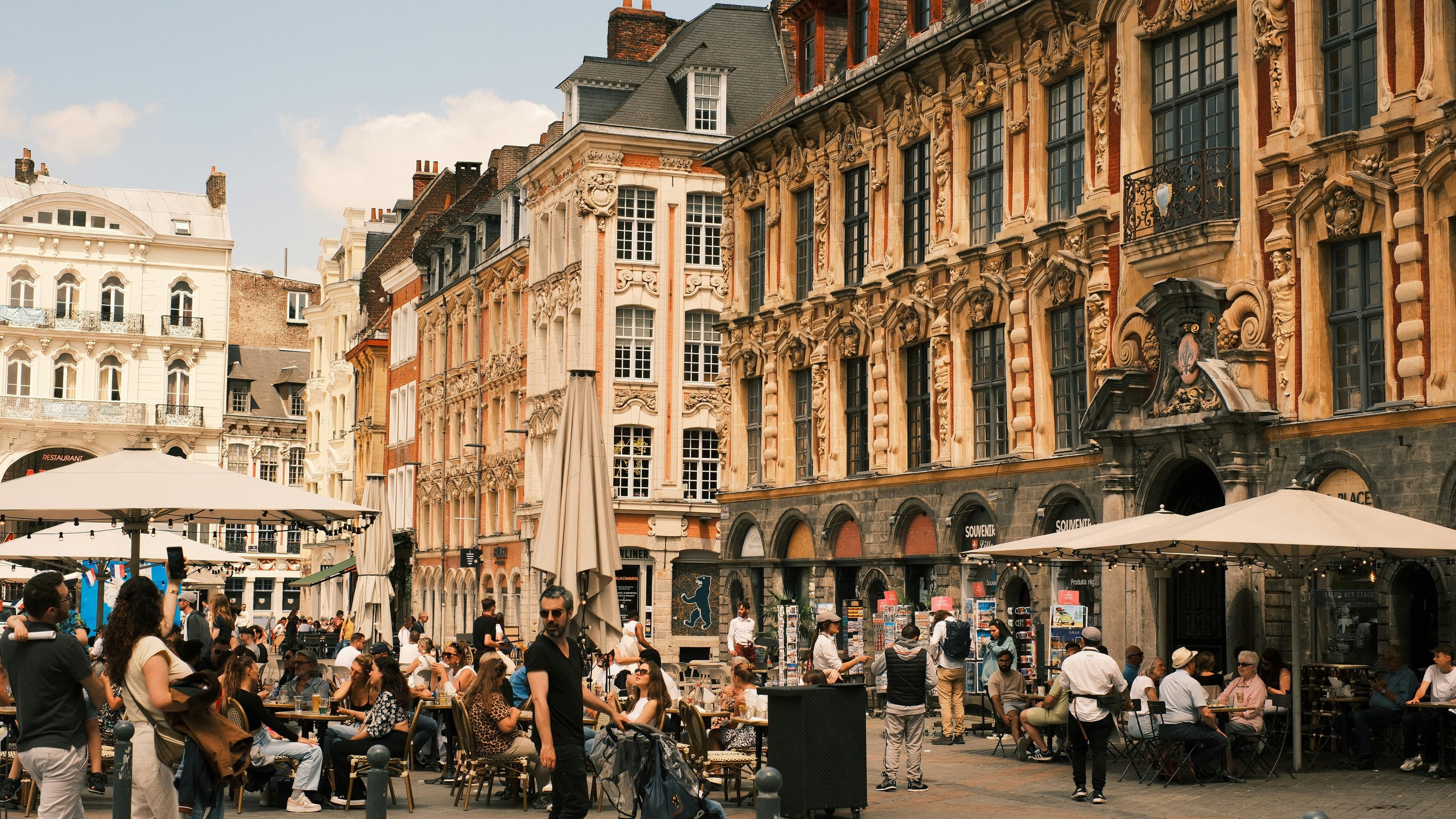
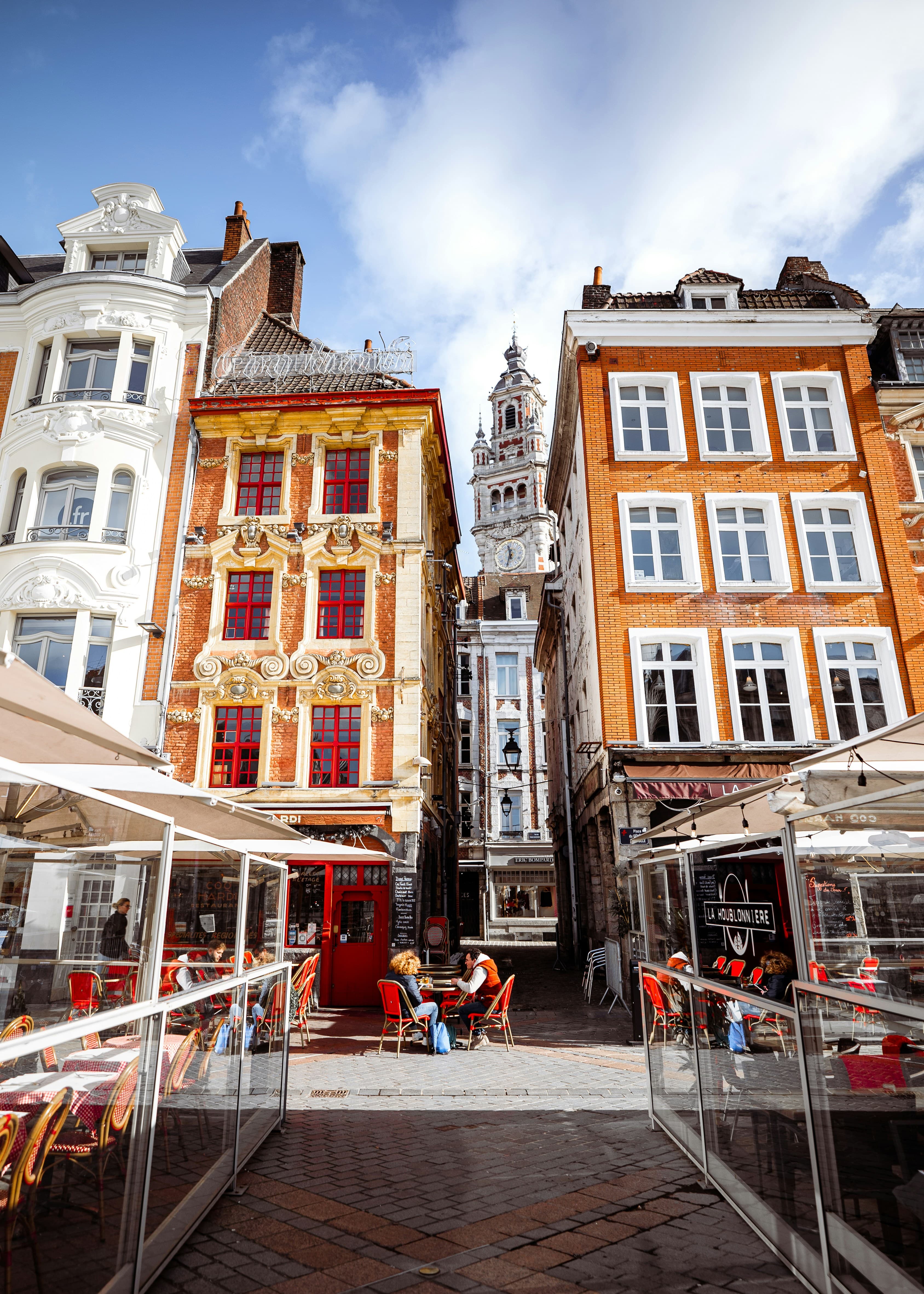
About 1.2 km (0.7 miles) from the finish, and on the course at 2.7 km and 38.3 km. The main square is lined with Flemish facades, with the carved 17th-century Vieille Bourse on one side, whose courtyard holds second-hand book stalls, and the Chamber of Commerce belfry just behind.
Palais des Beaux-Arts
About 1.6 km (1 mile) from the finish, on Place de la République, which the course passes at 41 km. One of France’s largest fine-art collections outside Paris, open Sundays 10:00 to 18:00 and Mondays 14:00 to 18:00, closed Tuesdays, with adult admission up to €7. The Monday afternoon opening, 26 October 2026, makes it a good recovery-day stop.
La Piscine, Roubaix
About 10 km (6 miles) from the finish, around 20 minutes by metro line 2 from central Lille. An art and industry museum built inside a former Art Deco swimming pool. It closes on Mondays, so make it a Tuesday visit; the Roubaix day trip below covers it in full.
After the Race
Late October in northern France and Flanders brings short, cool days, better suited to museums, cafés and short train rides than long walks. Roubaix is on the metro, Arras is under 40 minutes south, and the Belgian cities of Ghent and Bruges are close enough for a two- or three-night extension without a flight.
La Piscine, the art and industry museum built inside a 1932 Art Deco swimming pool, is mostly indoors and level, which suits sore legs in late October.
Two arcaded Flemish-Baroque squares, the Grand’Place and the Place des Héros, a short train ride south. One recovery night is enough.
A flat Flemish city of canals and guildhalls, best on foot or by tram, with enough cafés and museums to fill two cool, possibly wet autumn days.
A compact medieval centre whose cobbles are kinder after a rest day, which three nights allow before sightseeing properly.
Frequently asked questions
Should I stay near the start or the finish?
The finish at the Esplanade du Champ de Mars. The start is only about 1.7 km away and the 11:15 gun makes it an easy walk.
How far in advance should I book a hotel?
As soon as you hold a bib, from the original sale or Swika resale. Around 40,000 runners are expected across the weekend.
Is there free transport to the start?
Not confirmed. The start is walkable from central Lille and République–Beaux-Arts metro, and the late start leaves time to walk.
What is the best area to stay?
Quai du Wault and southern Vieux-Lille for the finish; Rihour and the Grand’Place, beside the course at 2.7 km and 38.3 km, a close second.
When does the expo open?
Not yet confirmed. The organiser says bib collection details will follow; check the official site before booking travel around it.
What is the weather typically like on race day?
October normals at Lille-Lesquin run 8.4°C to 15.4°C, with 64 mm of rain in the month. Expect cool and possibly damp.
How do I get from the airport?
Direct coach to Lille Flandres in about 20 minutes, from about €7.99, or bus 68 to 4 Cantons metro. High-speed rail is often simpler.
Is there a bag drop?
Yes, for the marathon and half. Location and size limits are still to be published. There are no showers or changing rooms at the finish.
Should I bring a throwaway layer?
Yes. Mornings are often around 8°C and the corrals are large. No donation point has been announced, so treat it as gone.
How do I get back to my hotel after finishing?
Walk if you are in Vieux-Lille or near the Grand’Place. Liane 1 and the Vieux-Lille shuttle serve the Champ de Mars in normal service.