The Race
| Next Race Date | Saturday 5 December 2026 |
|---|---|
| Course type | Out and back, start and finish 330 m apart in Costa Teguise |
| Registration | Open online entry; sold out months ahead in 2025 |
| Ballot opens | No ballot |
| Start | Parking Los Charcos, Costa Teguise, 08:00 |
| Finish | Race village beside the Sands Beach Resort, Costa Teguise |
| Total finishers | Over 1,200 (marathon, 2025) |
| Avg race-day temp | 15 to 22°C (AEMET Lanzarote Airport December normal: average daily minimum and maximum) |
| Cutoff time | 6 hours, with cutoffs at the turn (3 hours) and in Arrecife (4 hours 30 minutes) |
| Free race-day transport | No; shuttles serve the half and 10K starts, and there is a paid after-race bus |
| Course certification | Not homologated; Canary Islands federation calendar |
History
The Lanzarote International Marathon began in 1989, one of several endurance events created by the Danish organiser Kenneth Gasque, who had launched a triathlon on the island in 1984. It predates most of Lanzarote’s sports tourism and helped put the island on the calendar for northern Europeans looking for winter sun.
The race has not run every year. There was no marathon in 2014, and none in 2020 or 2021 during the pandemic; the 2022 return was billed as the 30th edition, and the numbering has been inconsistent since. The event is now organised by Sands Beach Active, based in Costa Teguise, and it has grown quickly. By 2025 the weekend drew more than 4,200 runners across the marathon, half marathon and 10K, and the marathon sold out months in advance, with more than 1,200 finishing. Denis Prikulis won in 2:33:02 and Daniela Oemus in 2:46:18.
The fastest winning times in the organiser’s archive from 2013 to 2025 are Gary O’Hanlon’s 2:27:20 in 2017 and Oemus’s 2:46:18. The race is not homologated and is not a fast course; the wind usually decides the times.
The course
The marathon starts at 08:00 from the Parking Los Charcos in Costa Teguise, beside the race village at the Sands Beach Resort, and finishes back in the village 330 m away. It is an out-and-back course along Lanzarote’s east coast: south along Avenida Los Cocederos and through Las Caletas, past the Castillo de San José at km 8.5 and into Arrecife, where it passes the Charco de San Ginés lagoon at km 10.5. It runs along the seafront on Avenida La Marina and Avenida Fred Olsen, through Playa Honda past the airport, and turns at Puerto del Carmen at km 20.9. Runners then retrace the route.
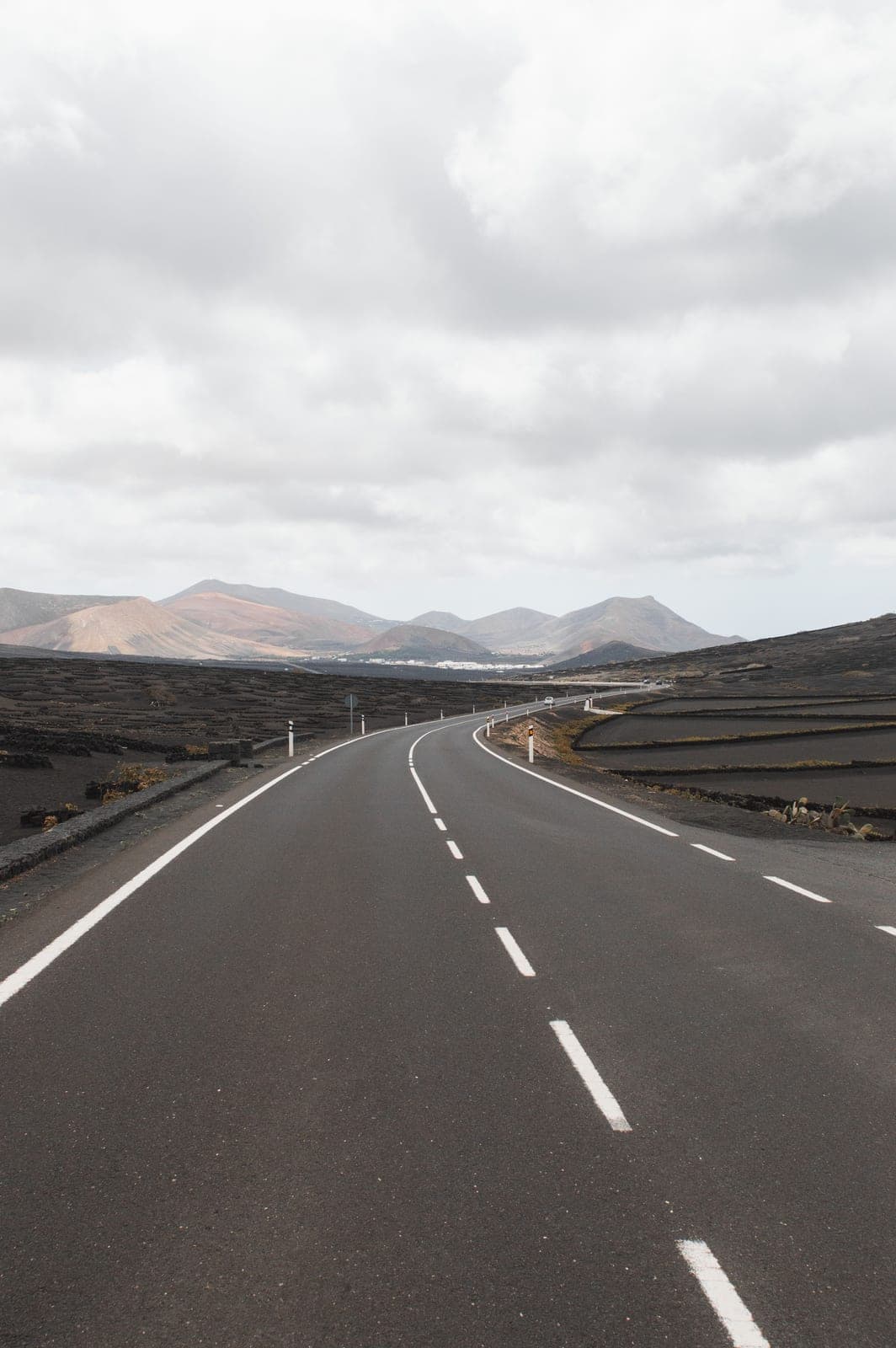
The whole course is below about 22 m. The only rise worth the name is the hump at Carretera de los Mármoles just before Arrecife, 17 to 19 m over about 3 km, run downhill at km 8 to 11 and uphill at km 30.6 to 33.7. The rest is seafront road within a few metres of the Atlantic. Parts of the route stay open to pedestrians. The half marathon starts at the turn at 10:30 and the 10K in Arrecife at 12:00, and both finish in Costa Teguise, so slower marathon runners share the second half with them.
Kilometre by kilometre
Km 0 to 8: Costa Teguise to the edge of Arrecife. The start at 08:00 is a single mass start from the car park by the race village. The field of more than a thousand spreads out once clear of the resort, and the road follows the coast south along Avenida Los Cocederos and through Las Caletas. The first water is at about 2.4 km and aid comes every 2 to 2.5 km from there.
Km 8 to 12: Arrecife. The course crosses the low rise at Carretera de los Mármoles, passes the Castillo de San José at km 8.5 and drops about 17 m into the island capital, the most built-up and best-supported section. It runs along the seafront past the Charco de San Ginés, the old fishermen’s lagoon, at km 10.5. Pedestrians may be on parts of the route; keep an eye out.
Km 12 to 21: Playa Honda to Puerto del Carmen. South of Arrecife the course follows the coastal strip through Playa Honda and past the airport. It is open and exposed, and this is where the wind shows itself: Lanzarote’s trade winds usually blow from the north or north-east, so on most days this southbound stretch is helped. Enjoy it without spending it. The turn at Puerto del Carmen comes at km 20.9, with the first cutoff: 3 hours, 11:00.
Km 21 to 31: back north into the wind. The return is the race. If the trade wind is blowing, the 10 km from Puerto del Carmen back to Arrecife are straight into it on the most exposed part of the course. Run to effort, not pace, and tuck in behind other runners where you can. The sun is higher now too, and the half marathon, started at 10:30, begins to catch slower marathon runners here.
Km 31 to 37: Arrecife again. Back through the capital, past the Charco de San Ginés at km 31.4, with the one climb of the day, about 19 m over 3 km, from km 30.6 to the Carretera de los Mármoles at km 33.7. The second cutoff is after Punta del Camello at the start of Avenida Fred Olsen: 4 hours 30 minutes, 12:30. Runners who miss either cutoff are disqualified and hand in their chip. The 10K, starting in Arrecife at 12:00, joins the course around here.
Km 37 to 42.2: home to Costa Teguise. The last kilometres retrace the start along the coast to the finish in the race village. Expect runners from all three races on the road and a crowd at the finish, where music runs from midday.
No blue line or timing-mat list is published. The course is low throughout; its difficulty is the wind, the sun and the out-and-back, which means the hard half is known in advance.
A mass start, south along the coast, a 17 m drop into the capital. Aid every 2 to 2.5 km.
Open coast past the airport, usually with the wind behind. Bank nothing; the turn has a 3-hour cutoff.
The hardest stretch on most days. Run to effort and find a group.
A 19 m climb out of Arrecife, a 4:30 cutoff, then roads shared with the half and 10K to the Costa Teguise finish.
Course Map
One road along the east coast, run south to Puerto del Carmen and back. Tap a marker for the start, the finish and race village, the turn, the 10K start, the Arrecife landmarks and the buses, and scrub the slider or press play to move the orange marker along the course with the elevation profile beneath it.
Pacers
Pacers run at 3:15, 3:30, 3:45, 4:00 and 4:15 from a single mass start with no waves or pens. There is no pacer slower than 4:15, although the limit is six hours.
The marathon runs on a Saturday, 5 December 2026, not a Sunday, so book flights for a Friday arrival at the latest. The limit is six hours and the race closes at 14:00, with two intermediate cutoffs: 3 hours at the Puerto del Carmen turn (11:00) and 4 hours 30 minutes in Arrecife after Punta del Camello (12:30). A broom vehicle follows the limit.
Lanzarote in December averages a daily low of about 15°C and a high of about 22°C, which is warm for a winter marathon and warmer again in direct sun. The 08:00 start is mild, and no throwaway layer is needed in most years. Race in summer kit: a vest or light top and shorts.
The course has almost no shade, and a runner out for four hours or more finishes around midday under a bright sun that feels much stronger than the thermometer suggests. A cap, sunglasses and sunscreen are worth wearing even in December. Wind is the other factor: the coast is exposed and a cap without a strap can blow away on the return. Rain is uncommon, about 29 mm across the whole of December on average.
Entry
Entry is open online through the race website’s registration platform, with no ballot. Prices rise in phases as race day approaches; at the most recent check the marathon cost €85, plus any platform fee. Residents of the Canary Islands get a discount with proof of residence.
The marathon sells out. In 2025 it was full months before race day, and by mid-September 2026 more than 1,000 marathon entries had been taken. The FAQ gives an online deadline at the end of November if places remain, but runners set on the full distance should not wait for it. Late entrants do not get a personalised bib or the personalised shirt.
Entrants must be 18 or over on race day. Entries are non-refundable and non-transferable. Runners can change distance while places remain, up to a deadline in late November: moving up means paying the difference, moving down brings no refund, and there is a change fee. There is no good-for-age entry, no charity route and no seeding. Book any shuttle for the half or 10K in the runners’ zone at the same time; marathon runners staying in Costa Teguise do not need one.
Fast runner standards
There is no good-for-age or fast-runner entry route and no published elite standard, although the top three men and women win prize money.
Official Lanzarote International Marathon site →Race Weekend
Bib collection and expo
Bib collection and the expo are in the race village in Costa Teguise, around Avenida Islas Canarias 18 by the Sands Beach Resort, the same area as the start and finish. For the Saturday race, collection runs Wednesday 10:00 to 18:00, Thursday 09:00 to 20:00 and Friday 09:00 to 20:00. There is last-minute collection on race morning from 06:30 to 07:30, which needs booking in advance; collect earlier if you possibly can.
Bring photo ID and your registration confirmation. Someone else can collect your bib with a photocopy of your ID and a signed authorisation; resident-rate entrants need proof of residence. The pack includes the bib with its timing chip, race information and partner gifts. The expo is open again on race day from 08:00 to 15:00, and Thursday evening has children’s races and a Santa Claus event.
Getting to the start
The marathon starts at 08:00 from the Parking Los Charcos in Costa Teguise, beside the race village and 120 m from the HD Beach Resort. Check the final start gate in the runner guide.
Getting there. From anywhere in Costa Teguise, walk. The race shuttles are for the half-marathon and 10K starts elsewhere on the island; marathon runners staying in Puerto del Carmen, Arrecife or Playa Blanca must reach Costa Teguise by their own means, and a pre-booked taxi is the practical answer. Some roads on the course close on race morning.
Cloakroom and bibs. The cloakroom in the race village opens at 06:30 and stays open until 15:00. Last-minute bib collection runs 06:30 to 07:30 with prior booking, so toilets and the cloakroom will be busy then; arrive early.
Rules. No pets, no pushchairs and no unauthorised vehicles. Walking is allowed. The bib must be visible and cannot be transferred. The course is partly open to the public, so watch for pedestrians.
The finish. The race ends back in the village. The runners’ area and cloakroom stay open to 15:00, a Marathon Bar serves food and drink until 16:00, music plays from about 12:00 to 14:00, and awards follow the close. Costa Teguise hotels are a walk away; runners based in Puerto del Carmen can book the organiser’s after-race bus in the runners’ zone.
Nutrition on course
Aid comes every 2 to 2.5 km, which is generous and useful on a warm, exposed course. The organiser alternates two kinds of station: water points with water only, and larger aid stations with water, isotonic drink, fruit and toilets. Each is passed twice, once each way. The one longer gap is between about 5.7 and 10.7 km, and 31.6 and 36.6 km on the return.
No gels are listed and the isotonic brand is not named, so carry your own gels for the whole race. On the return north into the wind and sun, drink at every station before you feel thirsty.
| Km out / back | Type | Water | Sports drink | Food |
|---|---|---|---|---|
| 2.4 / 40.0 | Water point | Yes | ||
| 4.5 / 37.8 | Aid station | Yes | Yes | Fruit |
| 5.7 / 36.6 | Water point | Yes | ||
| 10.7 / 31.6 | Aid station | Yes | Yes | Fruit |
| 12.9 / 29.4 | Water point | Yes | ||
| 15.1 / 27.2 | Aid station | Yes | Yes | Fruit |
| 17.0 / 25.4 | Water point | Yes | ||
| 20.0 / 22.4 | Aid station | Yes | Yes | Fruit |
Spectating
The course is one long line along the east coast, run out and back, so a supporter in Costa Teguise sees the start and the finish, and one in Arrecife sees the runner twice, at the Charco de San Ginés at km 10.5 and km 31.4. Chasing the race by car is not worth it with roads closed and later races starting.
For a 4-hour runner, the Arrecife passes come at about 09:00 and 11:00 and the finish at about 12:00. The finish area in Costa Teguise is the best single place: the expo, food, a bar and live music run through the late morning. Race activity runs all morning: the marathon at 08:00, the half marathon at 10:30 and the 10K at 12:00.
- Watch the 08:00 start at the Parking Los Charcos
- Breakfast in the resort and time in the race village
- Watch the finish in the same place
- See the start in Costa Teguise
- Take a bus or taxi to Arrecife, about 20 minutes, for the Charco de San Ginés at km 10.5
- Stay in Arrecife for the return pass at km 31.4
- Return to Costa Teguise for the finish; check race-day bus diversions
- Go to Puerto del Carmen to see the turn at km 20.9
- Return to Costa Teguise by taxi for the finish; with closures and the half-marathon start there at 10:30, this is hard to do reliably
Post-race food
The first stop is the race’s own Marathon Bar in the finish area, which serves tapas and drinks until 16:00 alongside the music; for many runners that is lunch. For a proper meal, Costa Teguise’s restaurants are a short walk away around the Playa de las Cucharas and the resort centre, and many serve lunch through the afternoon, which helps on a day when the race closes at 14:00.
Canarian food suits a post-marathon appetite: papas arrugadas, small potatoes boiled in salted water and served with red and green mojo sauces, grilled local fish, and goat’s cheese from the island’s farms. For more choice, Arrecife’s seafront and the streets around the Charco de San Ginés are a short taxi ride away.
Where to Stay
Stay near the finish, which on Lanzarote means Costa Teguise: the marathon starts and finishes there, 330 m apart, and the expo, cloakroom and after-race food are all in the race village. Everywhere else on the island needs a taxi on race morning.
Costa Teguise, by the race village
The hotels around the Sands Beach Resort and Avenida Islas Canarias are the best base by a wide margin: the Sands Beach Resort is 150 m from the finish, the HD Beach Resort 120 m from the start and Los Zocos about 250 m. The resort is quieter than Puerto del Carmen at night. December is high season for winter-sun visitors, so book early. Price tier: ££ to ££££.
Costa Teguise, further out
The rest of the resort, towards the Playa de las Cucharas, Playa Bastián and the golf course, is 1 to 2 km from the start, a walk of 15 to 25 minutes or a short taxi. The Barceló Teguise Beach sits by the course at km 1.5. It gives more choice and often better value. Price tier: ££ to ££££.
Arrecife
The island capital, on the course at km 8 to 12, is a working town with hotels, restaurants and the best public transport links. It suits spectators, but runners need a taxi to the start. Better for a longer stay than for race night. Price tier: ££.
Puerto del Carmen
The largest resort on the island, with the most hotels, bars and restaurants, and the half-marathon start at the turn. For the full marathon it is at the wrong end of the course, about 25 minutes by taxi to Costa Teguise on race morning, though the organiser’s after-race bus runs back. Good for a holiday after the race. Price tier: ££ to £££.
Playa Blanca
The southern resort, with calm beaches and a relaxed feel, is more than 40 minutes by road from the start. Only for runners treating the race as part of a longer holiday, with transport arranged.
The marathon sells out and December is peak season. Book cancellable accommodation in Costa Teguise when you enter; the organiser lists partner hotels with promotional codes.
Recommended hotels
The organiser’s own base and the heart of the race village, a few steps from the finish and the expo. Busy on race weekend.
Beside the start area named in the race FAQ, 120 m from the start line.
An official race partner, about 250 m from the marathon start and close to the expo. A partner code has been offered.
By the Playa de las Cucharas, 110 m from the course at km 1.5 and 40.4, a 15-minute walk from the start.
An official partner and a full resort for the days after the race. It sits at the southern end of Costa Teguise, so check the walk to the start before booking.
Booking timeline
There is no ballot, but the marathon has sold out months ahead, so enter as soon as you decide; the price also rises in phases. Book accommodation in Costa Teguise at the same time on a cancellable rate: December is Lanzarote’s winter-sun season and the race weekend brings more than 4,000 runners plus families to one resort.
December flights from the UK and northern Europe are plentiful but rise in price towards Christmas. Book any shuttle or after-race bus in the runners’ zone before race week; personalised bibs are only printed for entries before late November. Arrive by Friday at the latest: bib collection runs Wednesday to Friday for the Saturday race, and the race-morning slot needs pre-booking.
See & Do
The finish is in Costa Teguise; Manrique’s work is spread along the east side of the island within a short drive, and Arrecife is on the course.
Playa de las Cucharas
Costa Teguise’s main beach, a short flat walk from the finish, with a promenade behind it. Popular with windsurfers because of the same trade wind the race runs into.
Castillo de San José and the MIAC
An eighteenth-century fort on Arrecife’s harbour, 90 m from the course at km 8.5, converted by César Manrique into the International Museum of Contemporary Art. Entry about €5.40.
Fundación César Manrique
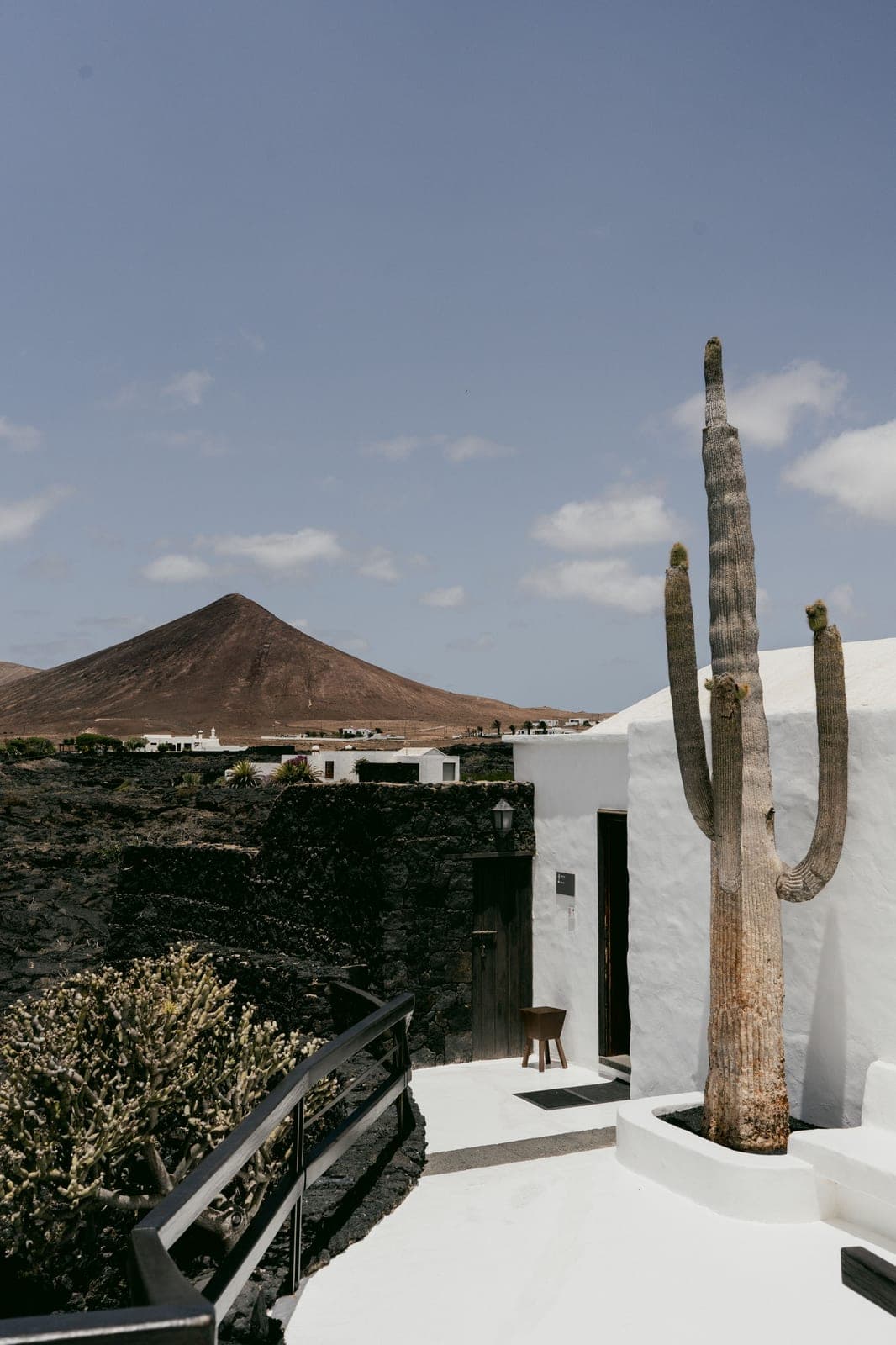
The artist’s former home at Tahíche, built into lava bubbles, now a museum of his work. Manrique shaped modern Lanzarote’s look, and this is the place to understand it. Check current prices and hours.
Charco de San Ginés
A tidal lagoon in the centre of Arrecife ringed by white and blue fishermen’s houses, now cafés. The course passes it twice.
Jardín de Cactus
Manrique’s last major work, a cactus garden in a former quarry at Guatiza. Entry about €9, and mostly level paths.
After the Race
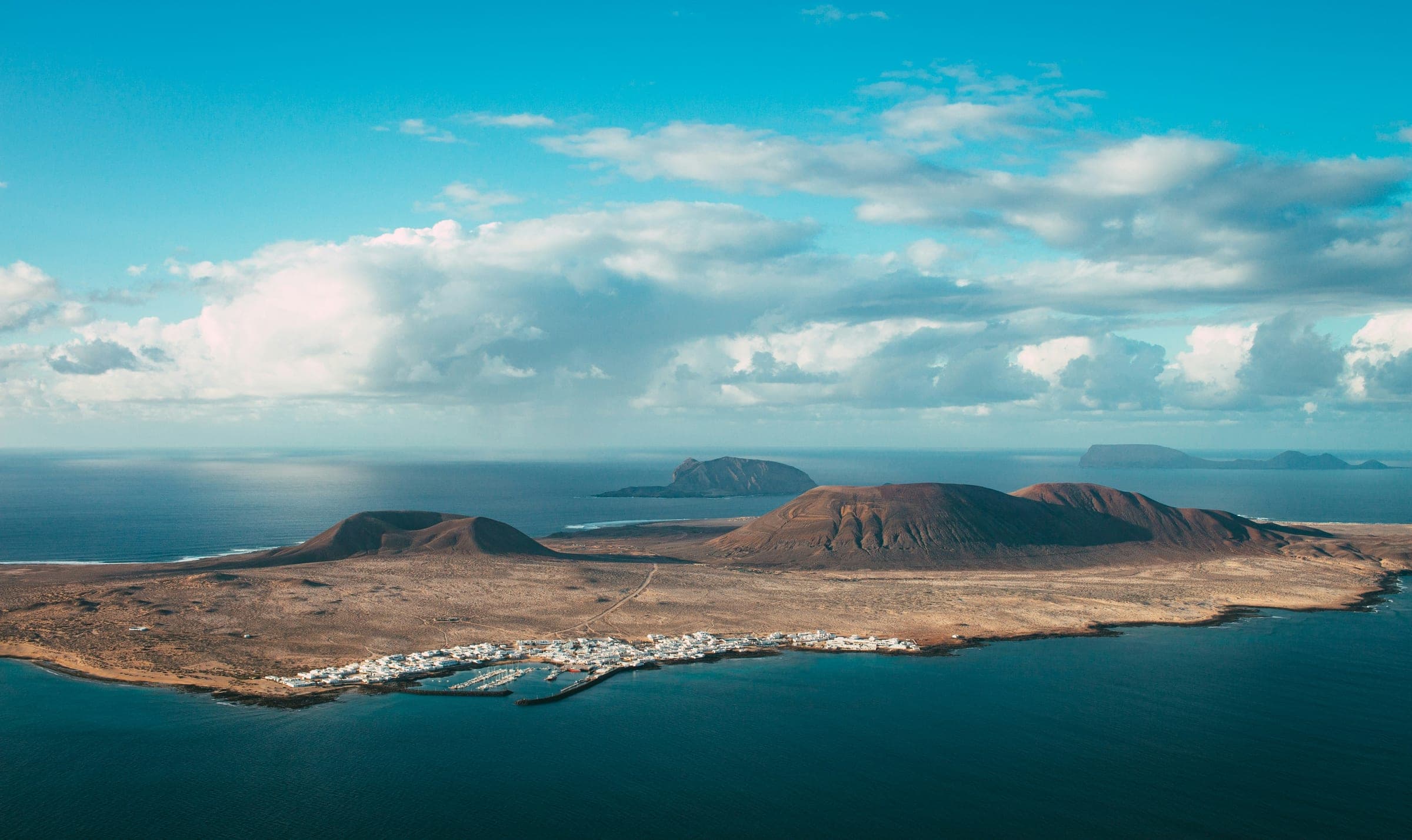
December on Lanzarote is winter sun, and the island is small enough that everything is a day trip from Costa Teguise: the volcanoes of Timanfaya, César Manrique’s lava houses and gardens, the lava caves of the north and the ferry to La Graciosa. None asks much of post-race legs; Timanfaya is seen from a coach, and La Graciosa’s sand streets are flat.
The artist’s lava-bubble house at Tahíche, his cactus garden at Guatiza and the fort he turned into a museum in Arrecife, all close to Costa Teguise.
The Montañas del Fuego, where the ground is still hot enough to cook on, seen from a coach on the Ruta de los Volcanes, and vineyards planted in pits of volcanic ash. Almost no walking.
A lava-tube cave turned into a garden and concert hall by César Manrique, the Cueva de los Verdes and the Mirador del Río over La Graciosa.
A small island with sand streets and no paved roads, a short ferry ride off Lanzarote’s northern tip. Flat, quiet and a complete change of pace.