| Next Race Date | 30 May 2027 |
|---|---|
| Course type | Point to point: Barra da Tijuca to Aterro do Flamengo, about 29 km apart in a straight line |
| Registration | Draw for Brazilian residents; direct entry on Go Dream for foreign runners; sales through accredited travel agencies |
| Ballot opens | Closed for 2027: the domestic draw registration ran 31 August to 13 September 2026 |
| Total finishers | Not published (17,700 marathon entries in 2026) |
| Average race day temperature | Not established; 12°C was reported at the June 2026 start |
| Cutoff time | 6 hours; a sweep vehicle follows and runners it collects receive no medal |
| Free race day transport | None established; optional paid third-party transfers are described |
| Course certification | World Athletics Elite Label (2026), CBAt Gold permit 15/2026, AIMS member; a named course is on the World Athletics measured list to 2029 |
Plan your pace for the Maratona do Rio for you and your supporters
Turn a goal time into grade-adjusted splits, and see when your supporters should be where.
Build your pace planBefore you go
Entry, accommodation and travel: what to sort out before you book.
Entry
Entry depends on where you live. Brazilian residents enter through a draw. Foreign runners can register individually through Go Dream, the organiser's platform, without the draw, or through an accredited travel agency. Residence abroad alone does not make a Brazilian citizen eligible for the foreign channel, and Brazilian residents abroad and people aged 60 and over go through the domestic draw.
The domestic draw registration ran from 31 August to 13 September 2026, and the successive payment windows for selected applicants closed on 13 October. The foreign direct window opened on 18 September 2026, and agency sales are listed for 10 November 2026. Any December remainder batch is conditional and not guaranteed capacity.
Domestic selected entry with shirt costs R$359 (about £53 at 6.801 reais to the pound, 16 October 2026) and the sponsor presale was R$287.20 (about £42). A PcD entry with documentation costs R$179.50 (about £26). The foreign individual entry is printed as $140, so confirm the currency at checkout. Service and card charges are extra.
The organiser's agency page still says foreign participants must buy a package and lists agents including Marathon Tours & Travel UK, while the distance page and the dated manual say foreigners can register independently. Save your checkout confirmation and recheck eligibility before paying for non-refundable travel. A package is worth considering only if it states the start transport and accommodation it includes.
The minimum age is 20 at the end of the year. The two-day challenge pairs the Saturday half marathon with the Sunday marathon and is a separate purchase. Elite entry is separate. There is no good-for-age ladder. Changing the registered runner is possible through Go Dream for a fee, and entry insurance is an optional product that is not medical or travel cover. Charity places and deferrals are not listed.
Fast runner standards
Elite entry is separate from general registration. There is no good-for-age ladder.
See the Maratona do Rio entry page →Where to Stay
The choice is between a room convenient after the finish and a room that simplifies the trip to the start. No single area solves both, and the start transfer has to be arranged separately. Distances are straight-line from the finish.
Flamengo and Catete
The strongest choice for the end of the day. Hotel Regina, Mengo Palace and Windsor Florida are operating hotels here, all about 1 km from the finish. The start is a long road journey away, so book a transfer. A busy street is not automatically quiet, so ask about the room's orientation.
Largo do Machado
Scorial is near the metro, about 1.4 km from the finish. It suits a runner who wants expo and sightseeing access in the South Zone. Compare its walk to the finish area with a Flamengo hotel before booking.
Copacabana
A reasonable base for a mixed race and holiday trip, connected by metro and on the course corridor. Seeing the route from the hotel does not mean the hotel is near the start or the finish exit.
Barra da Tijuca
Windsor Barra is on the west side of the city, about 10 km from the 2026 start and 18 km from the finish. It shortens the trip to the start and lengthens the return from Flamengo. It suits a group extending the holiday there, and its address is not the marathon start, so confirm the transfer.
Recreio and Reserva
Look only after the final start pin is published. Being in the district does not remove a long beachfront approach, and a start-side stay leaves a long road journey after the race.
Glória
Close to the 2026 expo and the metro, 0.5 km from the finish. Check stair and hill access, since a district name does not show whether a room is reached by a level route.
No race-weekend rates, street-by-street noise or measured finish walks have been published. Ask for a like-for-like quote, early food, luggage terms and shower access.
Recommended hotels
A finish-side base on Rua Ferreira Viana. Early breakfast and late checkout are unconfirmed.
Has an à la carte restaurant on site. Non-guest access and Sunday hours need checking.
Near the metro. Not close to the start beach.
On Rua Ferreira Viana, on the finish and expo side. No race shuttle is listed.
An oceanfront hotel on Avenida Lúcio Costa on the west side of the city. It shortens the trip to the start and lengthens the return.
Booking timeline
The domestic draw's payment windows have closed. Foreign direct registration opened on 18 September 2026 and travel agency sales are listed for 10 November 2026, with a December remainder release conditional. An overseas runner should not wait for the domestic draw.
Confirm the entry first, then a cancellable room, then flights once collection and the start transfer are clear. The festival runs over four days, so check which nights your distance needs.
Compare a package with independent booking by its inclusions. A package may include airport and race transfers, meals and late checkout, but only if the supplier states it. Confirm allocations and booking windows with the agent.
Avoid a tight flight on race day. The finish area is a long walk from the exit, and Galeão airport is about 15 km north of the finish in a straight line, across the city.
Race weekend
The expo, number collection and the days either side of the start.
Race Weekend
Expo and number collection
The 2027 collection dates, hours and venue have not been announced. Collection requires original photo identification and proof of registration, and an authorised proxy has their own document requirements.
In 2026 the expo, called Casa Maratona, was in the Pavilhão at Marina da Glória, a short walk from Glória metro station. Entrants collected their kit at an appointed time shown on the GoRunKing platform, and needed their bib number, photo identification and registration QR code. A proxy could collect with a platform-authorised QR code. There was no parking at the Marina.
That is the 2026 workflow and not a promise for 2027, so treat the venue, hours and platform as open until the organiser says otherwise. Plan to arrive before race eve. Check the bib name, distance and shirt at the desk before leaving, and keep the receipt on your phone.
Medical certificate requirements for ordinary foreign entrants are not established, so ask the organiser before travelling.
Getting to the start
The start and finish are on opposite sides of the city, so a hotel at the finish does not solve the journey to the start. In 2026 the start was at Praia da Reserva on Avenida Lúcio Costa, with waves from about 05:30 set by bib colour. Arrive at least 40 minutes before your wave.
Three ways to the start were described in 2026: a ride-share to Posto 9 on Praia da Reserva, a transfer sold through the organiser, and a bus without details. The 2027 listing describes optional paid third-party transfers, and a registration receipt does not include one. Confirm the pickup point, the reporting time and what happens if you miss the departure.
Ordinary Sunday metro opening does not reach the west in time for an early start. The metro helps with the expo and the return from the finish.
Bags go on buses. In 2026 the start bag service ran from 03:50 to 06:15 near the Kostão kiosk, and the finish service ran from 07:50 to 13:00 at the Aterro after the finish arch. Take only what you need and leave valuables behind. The 2027 times and positions are unpublished.
Toilets were at the start, at every hydration point and at the finish. Expect the queue at the start to take longer than you think.
At the finish, the first area gave water and a medal only. Drinks, food and recovery items came after leaving that area and were signposted across the arena. Allow for a long walk before meeting friends or a restaurant booking, and avoid a tight flight on race day.
May is autumn in Rio. A start from about 05:30 is cool and dark, and 12°C was reported at the start of the June 2026 race, which is one observation and not a typical value. The later part of a slow marathon on the open coast can be warm in sun.
Start in a light top and shorts, with a layer you can put in the bag or discard. A thin rain shell is worth carrying if the forecast shows showers. A cap and sunscreen help later finishers on the exposed beachfront sections, where there is no shade for long stretches.
The finish has a substantial medical team, and a thermal blanket was reported at the finish. No clothing donation scheme has been published, so do not leave clothes on the course. Check whether a layer can go in the bag system.
Race day
The course, the clock, getting to the start and what to carry.
The Race
The course
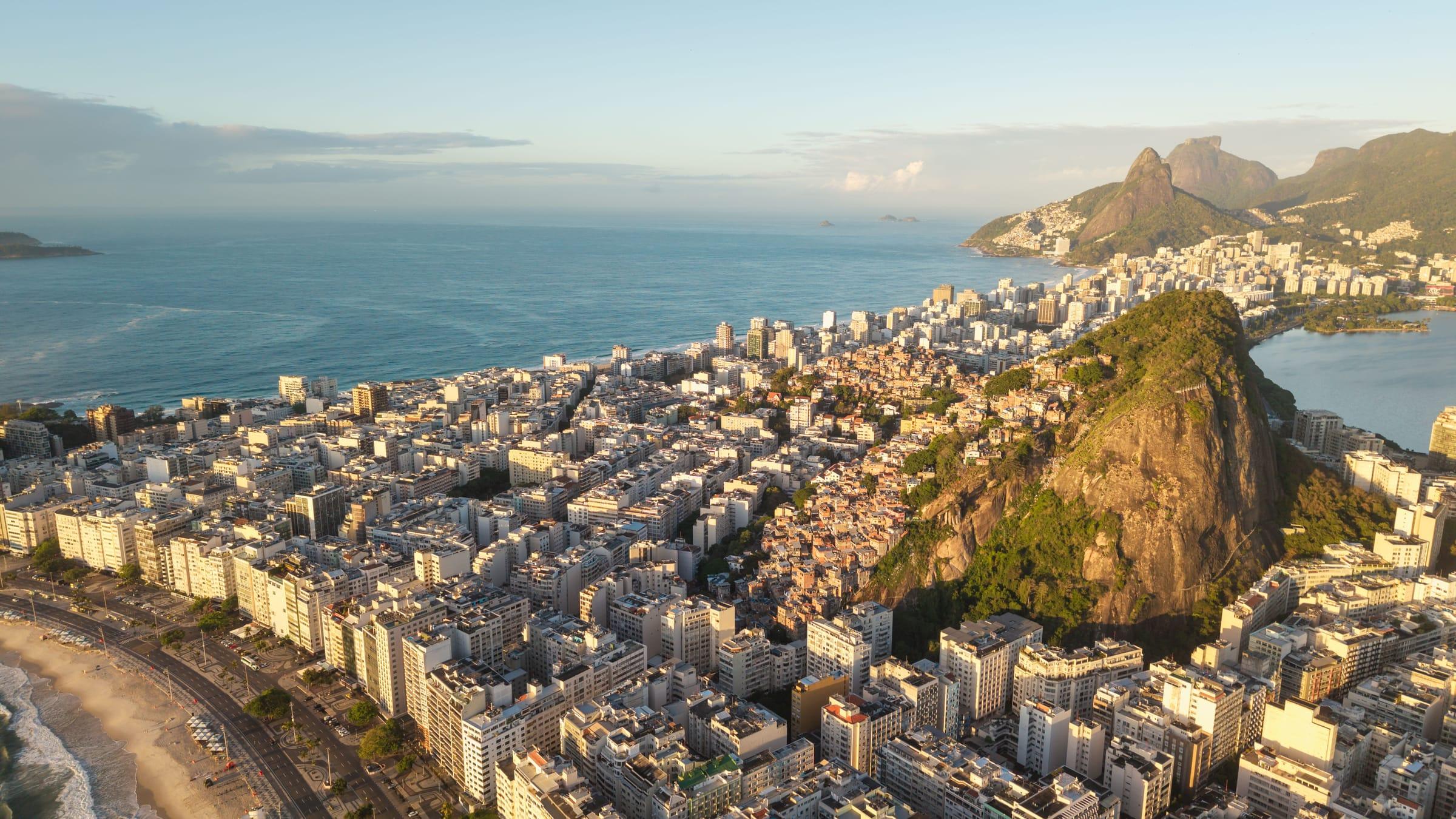
The marathon is a point-to-point road race along the Rio de Janeiro coast. The 2026 race started at Praia da Reserva on Avenida Lúcio Costa in Barra da Tijuca and finished at the Aterro do Flamengo near the Monumento aos Pracinhas. The 2027 race is listed from Praia do Recreio to the Aterro, and the 2027 map has not been released, so this description is the 2026 course.
The first 13 km run east along Avenida Lúcio Costa on the beachfront at 8 to 11 m, then Avenida do Pepê. The Ponte da Joatinga at km 15 and the Elevado do Joá at km 16 to 17 form the first climb, and the road descends to São Conrado at km 18. Avenida Niemeyer carries runners above Vidigal at km 20 to 23 before dropping to Leblon at km 24.
Ipanema follows along Avenida Vieira Souto at km 25 to 27, and the Copacabana beachfront runs from km 28 to 30. The Túnel Novo at km 31 and the Túnel do Pasmado at km 32 lead to Botafogo at km 33. The course follows Avenida Infante Dom Henrique through Flamengo at km 34 to 36, passes the finish area and goes on through Glória to Praça Marechal Âncora in the city centre at km 40. It then doubles back along Avenida General Justo to finish at the Aterro, 28.96 km in a straight line from the start.
The chart spans 6 to 45 m. The first climb gains 32 m at 1.9% from km 14.2 to km 15.9 across the Ponte da Joatinga and the Elevado do Joá, and the road falls 28 m at 1.0% to São Conrado by km 18.6. A second rise of 33 m at 1.2% runs to the high point of 45 m at km 21.3 on Avenida Niemeyer, and the road then falls to 11 m at Leblon by km 24. From there to the Aterro the course stays between 6 and 12 m.
The 2026 street order has not been confirmed for 2027, so treat the kilometre positions as approximate.
Kilometre by kilometre
Km 0 to 13: out along Barra. The start is in waves from about 05:30 at Praia da Reserva on Avenida Lúcio Costa. The road is wide and level at 8 to 11 m for the first 13 km. The 2026 hydration points here were at about km 3.2, 6.2 and 9.2. Use the early kilometres to settle and keep the effort easy.
Km 13 to 19: the Joatinga and Joá climb. Avenida do Pepê leads to the Ponte da Joatinga at km 15. The road climbs 32 m at 1.9% from km 14.2 to a high point of 38 m at km 15.9 on the Elevado do Joá, then falls 28 m at 1.0% to São Conrado at km 18.6. This is the steepest ground on the course, and no kilometre climbs more than 2.0%.
Km 19 to 24: Avenida Niemeyer. The road climbs 33 m at 1.2% from km 18.6 to the high point of the course, 45 m at km 21.3, along the hillside above Vidigal with the sea below. It then falls to 11 m at Leblon by km 24. This is the long, gentle descent where finishers report the load on hips and knees.
Km 24 to 30: Leblon, Ipanema and Copacabana. The flat beachfront begins at Leblon on Avenida Delfim Moreira and continues along Avenida Vieira Souto through Ipanema at km 25 to 27. The course turns inland briefly on Rua Francisco Otaviano at km 27 and reaches the Copacabana seafront at km 28, with crowds strongest through this stretch.
Km 30 to 34: the tunnels to Botafogo. At the Leme end of Copacabana the road enters the Túnel Novo at km 31 and the Túnel do Pasmado at km 32, with the profile staying between 6 and 12 m throughout. Botafogo follows on Avenida das Nações Unidas at km 33.
Km 34 to 42.195: Flamengo, the centre and back. Avenida Infante Dom Henrique runs along Flamengo at km 34 to 36 and passes the finish area at about km 37. The route continues through Glória to Avenida Presidente Antônio Carlos and Praça Marechal Âncora in the city centre at km 40, 30 km from the start. It then turns back along Avenida General Justo and Avenida Infante Dom Henrique to the Aterro. The final kilometres are level at 7 to 11 m.
Measurement. No blue line and no timing-mat positions are published. The recorded track measures about 0.4 km over the distance, so your watch will not match it. Use the official kilometre markers.
Flat road along Avenida Lúcio Costa at 8 to 11 m, in waves from about 05:30. Keep the early effort easy.
A 32 m climb at 1.9% over the Joatinga bridge and the Elevado do Joá, then Avenida Niemeyer: 33 m up at 1.2% to the 45 m high point at km 21.3, and down to Leblon.
Leblon, Ipanema and Copacabana carry the strongest crowds, followed by the tunnels to Botafogo on level ground.
Past the finish area to Praça Marechal Âncora at km 40, then back along Avenida General Justo to the Aterro.
Course Map
The 2026 course from Praia da Reserva in Barra da Tijuca to the Aterro do Flamengo, with the expo venue used in 2026. Tap a marker for details, and scrub the slider or press play to move the orange marker along the course with the elevation profile beneath it.
MarathonPassport
Pace plan and spectator planner for the Maratona do Rio
Enter a start time and goal finish, then tap the course map. Each point you pick shows the window of time your runner is expected to pass it.
Pacers
The first wave in 2026 started at about 05:30, with waves set by bib colour, and later wave times are not yet announced.
The route used for this page is the 2026 course, because the 2027 map has not been published. Treat landmarks and distances as the last known route and check the dated map before planning a sighting.
Build a grade-adjusted pace plan for this course
Nutrition on course
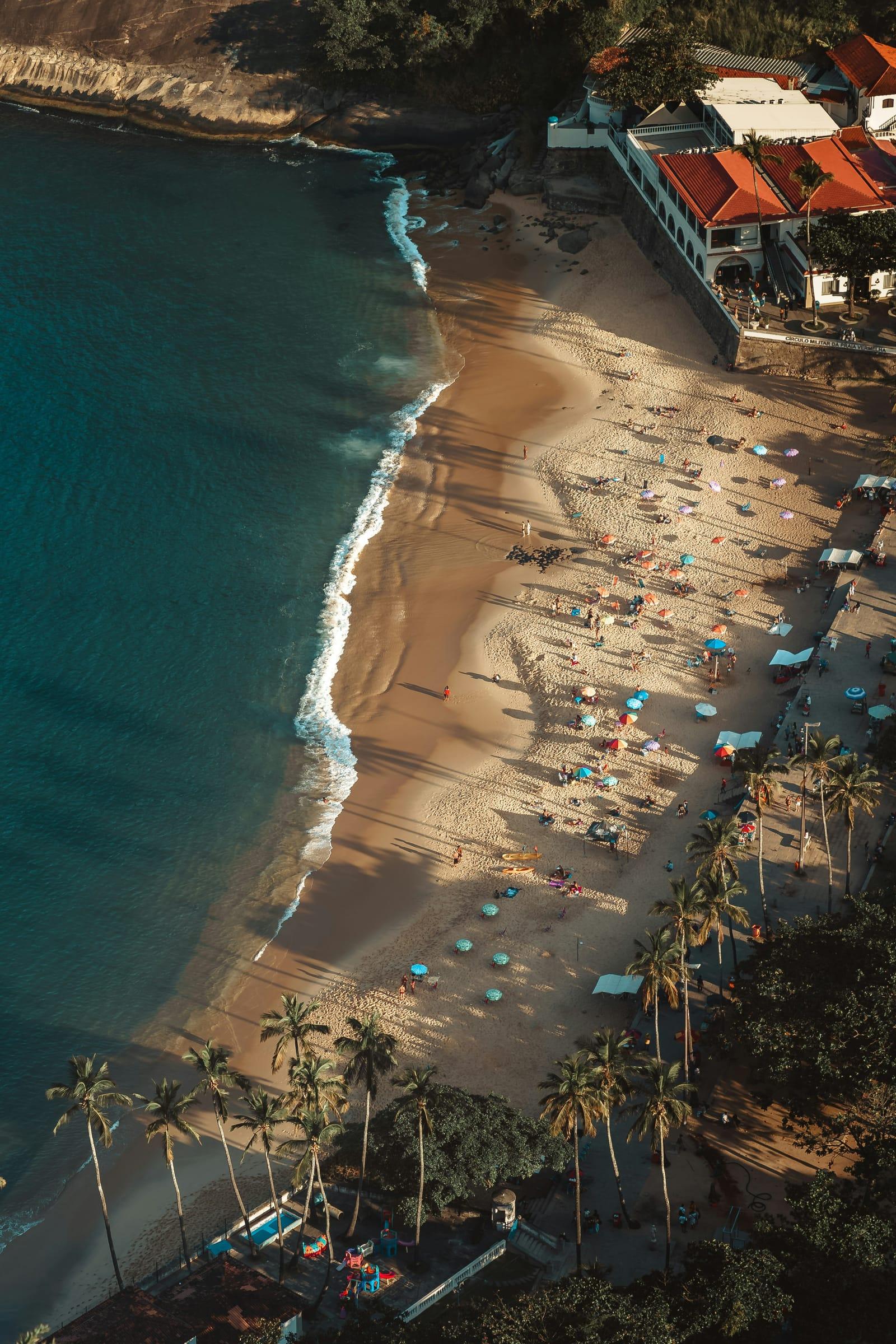
This is the 2026 baseline and not a 2027 promise. Hydration points were at the start, about km 3.2, 6.2, 9.2, 11.8, 14.3, 17.9, 20.4, 23.6, 27.9, 33.6, 36.5, 39 and the finish, each with toilets. Gatorade was served at about km 10.5, 19.3, 25.9, 32.5 and 38.
Medical posts with doctors and physiotherapists were at about km 14.1, 18.2, 23.3, 33.5, 38.3 and 41, with field hospitals at the finish and at the Bosque.
Cup or bottle format, gel supply, personal bottle access, ice and sponges for 2027 have not been published, and silence does not mean not offered. Carry any gel or fuel you depend on.
Spectating
The best-supported plan is a single viewing point followed by a reunion. The start is too far west to follow, and the 2027 kilometre labels, crossings and spectator entrances are not yet published. The metro helps between South Zone districts but does not guarantee an easy walk across the closed course.
A 3:00 marathoner covers 10 km in about 43 minutes and a 4:00 marathoner in about 57, before stops and start delay. Queues, station access and crossing time all take longer than expected, so keep at least 30 minutes of margin. The end of the 2026 route continued to the central waterfront before returning to the Aterro, so a spectator at the finish should not expect the runner to arrive straight from Flamengo.
- Use Glória station as a first approach and follow the pedestrian plan to the Aterro.
- Arrive well before the expected finish and meet outside the controlled area. This is based on the 2026 geography, not a confirmed 2027 spectator gate.
- Choose a confirmed spot near a metro station once the 2027 map is issued.
- Return towards Glória afterwards. A second sighting cannot be promised.
- Once its kilometre is verified, watch from one side of the coastal route and meet after the race.
- This avoids using roads that the event closes.
After the race
Where to eat, what to see and how to spend the days after the finish.
See & Do
Distances are from the finish at the Aterro do Flamengo, in a straight line, kilometres first.
Museu do Amanhã
A science and sustainability museum on the central waterfront, and an indoor option for an unsettled day. It still involves standing, so choose a short visit. Check the visit page for hours and booked tickets.
Pão de Açúcar
The two-stage cable-car ride reaches the viewpoints without a hike. Book with the operator after checking the weather, since visibility cannot be promised.
Corcovado
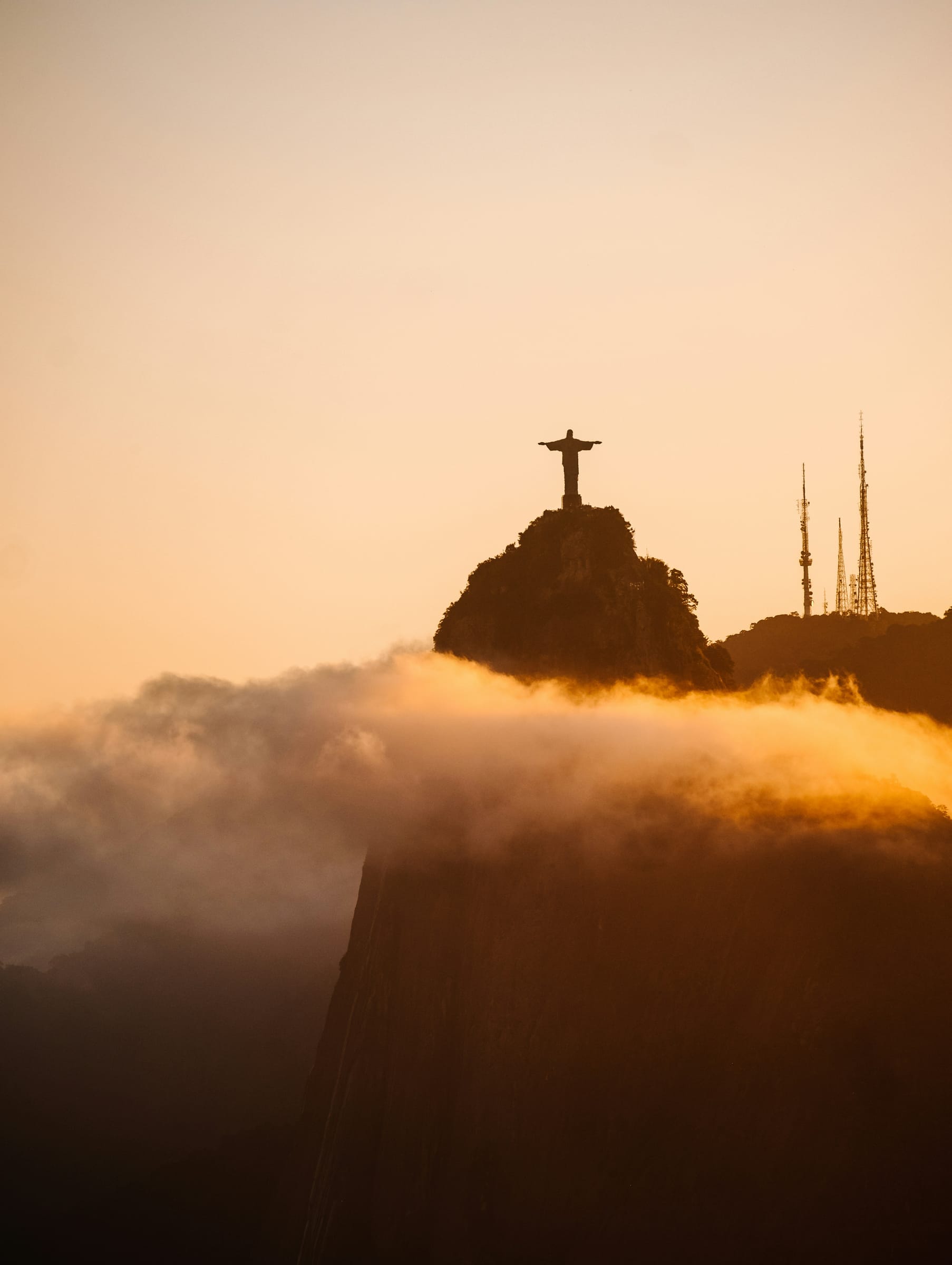
Christ the Redeemer is reached by train or van. Prefer transport over a walking ascent the day after a marathon, and check current hours and last entry.
Post-race food
Carmelo, at Rua Corrêa Dutra 39 in Flamengo, lists house-made pasta, pizza and grilled meats. It is about 1.1 km from the finish. Café Lamas, at Rua Marquês de Abrantes 18-A, lists a filé mignon with rice and chips, an Oswaldo Aranha-style steak and fish dishes, about 1.8 km from the finish.
A hotel meal can be easier for a tired runner. Mengo Palace advertises an à la carte restaurant, but access for non-guests and Sunday hours need checking.
None of these has a confirmed Sunday opening time, table capacity or race-day menu. Reserve only when you know your wave and likely exit time, and allow for the long walk from the finish, bag collection and a shower.
After the Race
The race is on a Sunday at the end of May, and the days after are cooler and often clearer. Mountains and beaches sit within reach of the South Zone, so a second Rio day needs no luggage. Petrópolis is the imperial hill town north of the city, Angra dos Reis and Paraty are on the Costa Verde, and coach times, fares and sailings are indicative, so confirm them when you book.
A booked museum visit and a short waterfront outing, with a seated meal and no long transfer.
The imperial hill town north of Rio, with a night in the cooler air and a museum day.
A coastal town and bay on the Costa Verde, with boat excursions if the weather allows.
A colonial coastal town, with a spare day for boats or walks and a buffer for the return.
Background
History
Rio's marathon has two roots. A race organised in 1979 involved Eleonora Mendonça, and the event promoted by the journalist José Inácio Werneck started on 15 November 1980 at 17:00 with 1,098 registrations and 584 finishers. Greg Meyer and Lorraine Moller won. The Leme-based course included a circuit of the Lagoa Rodrigo de Freitas until 1982, when central streets replaced it. Early measurement problems are recorded for that period, so early winning times do not compare with today's.
The current organising partnership, Dream Factory and Spiridon Eventos, dates its involvement to 2003. The race now sells 2027 as a special 25-year edition, and the city tourism agency called the 2026 festival its 24th edition. Neither count reconciles with the early years, so no edition number is given here.
The marathon took place on 7 June 2026. Ethiopian runners won both races: Tsegaye Getachew ran 2:10:22 and Gadise Mulu Demissie ran 2:25:47, which CBAt described as the fastest women's marathon recorded in a race in Brazil. It is not a Brazilian national record, since she ran for Ethiopia. The 2026 race held a CBAt Gold permit and a World Athletics Elite Label.
CBAt reported 17,700 marathon entries and 66,600 registrations across the festival, where one person can enter several distances. A trade report put total registrants above 70,000, with about 75 per cent from outside Rio. Those are entries, and growth in the festival says nothing about the number of marathon finishers.