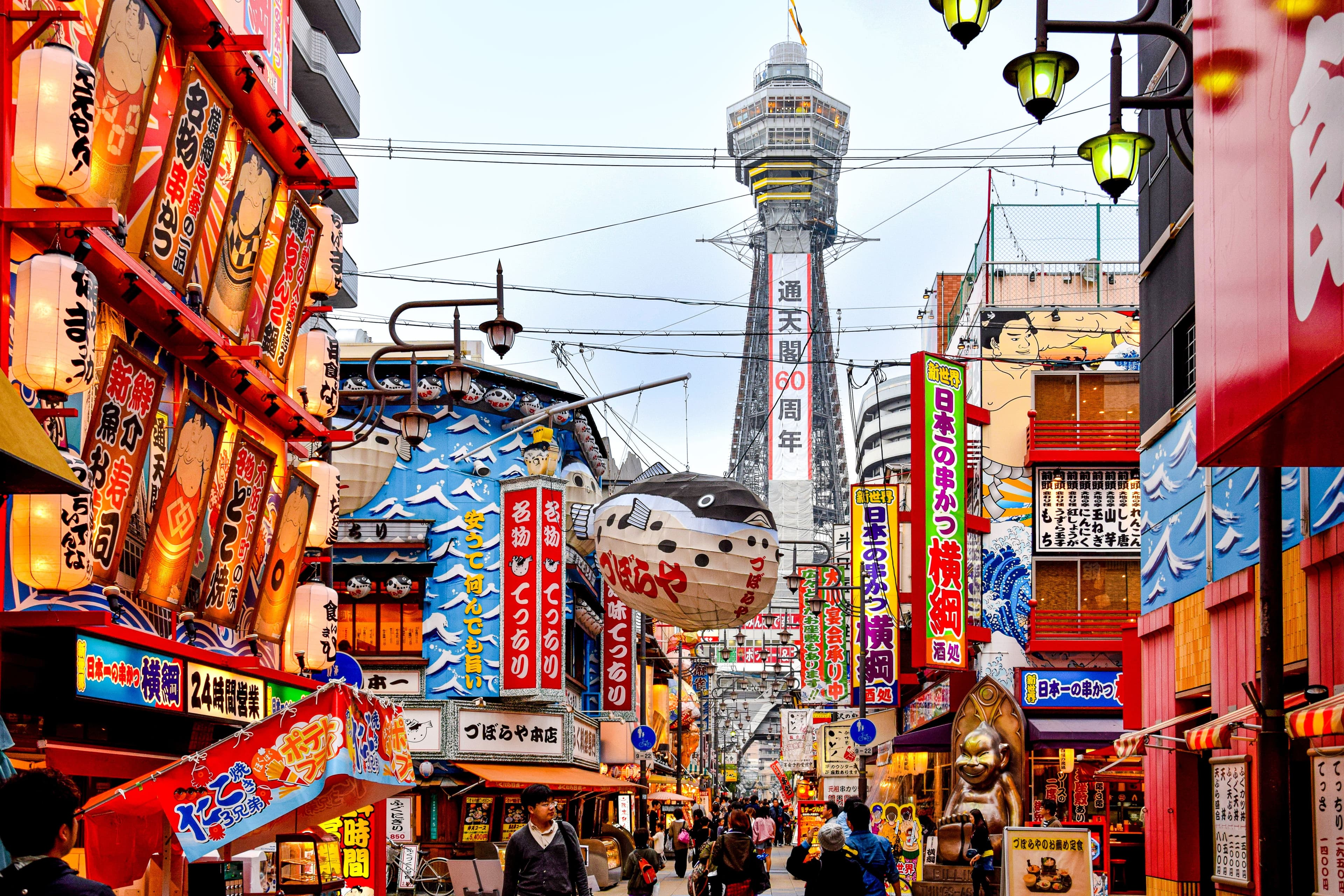
The Race
Who This Race Is For
This is not an open-entry marathon. The Osaka Women’s Marathon accepts only women aged 19 and over who meet a qualifying standard: a marathon under 3:07, a 30km under 2:08, a half marathon under 1:25, or a 10km under 36:00. No ballot, charity route or tour-operator entry path has been published. Runners who do not already hold one of these times will not be able to enter regardless of how far in advance they plan. This page exists both for the narrow band of women fast enough to qualify and for spectators, supporters and travellers interested in a serious piece of Japanese marathon culture who have no expectation of running it themselves.
| Next Race Date | To be confirmed (2026 edition ran 25 January 2026; 2027 date not yet published) |
|---|---|
| Course type | Loop: north from Yanmar Stadium Nagai to Osaka Castle and Midosuji, and back by the same roads |
| Certification | AIMS Japan full member race; World Athletics label tier not confirmed |
| Start | Yanmar Stadium Nagai, Nagai Park, Higashisumiyoshi-ku, Osaka |
| Finish | Yanmar Stadium Nagai (same venue as start) |
| Total finishers | Not published |
| Avg race-day temp | Cold; late January in Osaka, no specific sourced figure |
| Cutoff time | Not published |
| Free race-day transport | Not confirmed |
| Course certification | AIMS Japan full member listing |
| Sleeper Train | Not accessible (the Tokyo-Osaka corridor runs on Shinkansen high-speed rail, not sleeper service) |
History
Osaka’s marathon calendar carries two separate races that first-time readers regularly confuse. The mass-participation Osaka Marathon, run in autumn through the city’s central streets, is a different event entirely. The Osaka Women’s Marathon is a women-only fixture with a qualifying entry standard, sitting inside Japan’s wider tradition of dedicated elite women’s road racing.
The race functions as a performance-first event rather than a mass-participation one, distinguishing it from marathons built around finisher volume and travel packages. AIMS lists it as a Japan full member race, and World Athletics’ label-race pages reference it, though the exact label tier needs annual reconfirmation. For MarathonPassport’s audience, its editorial value sits less in whether this is a good race to run and more in what kind of runner and traveller it serves: qualified women racing for time, and everyone else experiencing it as spectators of a serious, quietly run piece of Japanese athletics culture.
A fuller history, including the founding year and past champions, is not given here.
The course
The course starts and finishes at Yanmar Stadium Nagai in Nagai Park, Higashisumiyoshi-ku. It is an out-and-back in shape: north through Abeno and Ikuno to Osaka Castle, a loop through the city centre along Nagahori-dori, Midosuji and Tosabori-dori, and back south by the same roads to Nagai.
The elevation chart shows a course close to flat, inside a band of about 24m, between roughly 3 and 26m above sea level. The two gentle climbs are about 20m up to Nagahori-dori around 20km and about 21m over the last 5km. No official elevation-gain figure has been published. The finish sits inside Nagai Stadium itself, so the closing metres move from open road into a stadium finish.
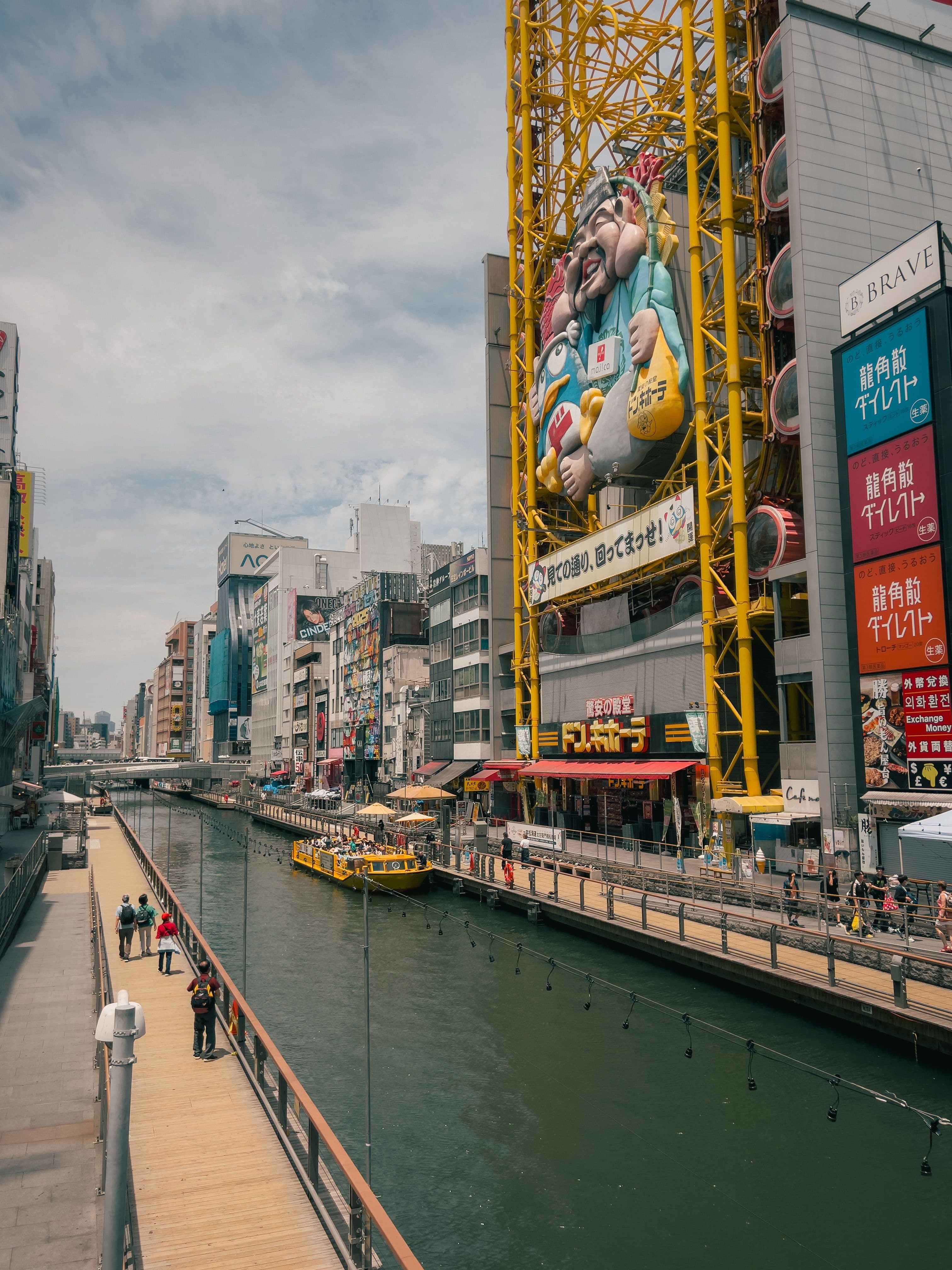
Km 0-11: Nagai Park, Abeno and Imazato-suji. The race leaves the stadium, drops about 11m out of Nagai Park, and heads north up Abiko-suji through Abeno, then east along Matsumushi-dori and north up Imazato-suji through Ikuno. This is dead-flat running at 6 to 12m above sea level. For a qualifying-standard field running for time, this stretch is where pacing discipline matters most.
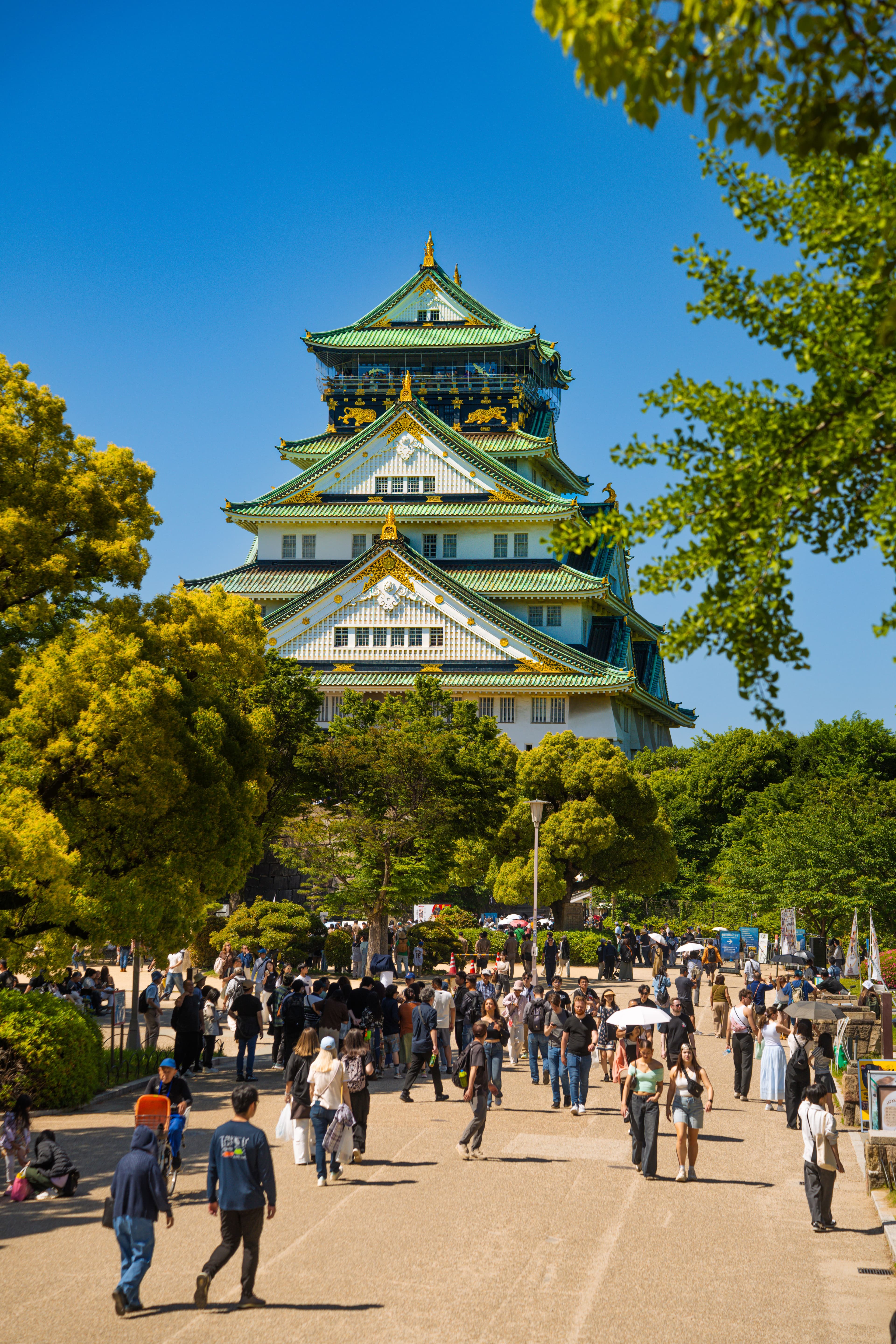
Km 11-20: Tamatsukuri-suji and Osaka Castle. The course turns west on Katsuyama-dori and north up Tamatsukuri-suji into Chuo-ku, running past the eastern side of Osaka Castle Park and looping round its northern edge by Tosabori-dori, the lowest ground of the day at about 3m around 17.5km.
Km 20-28: Nagahori-dori and Midosuji. The only climb of the middle of the race comes here, about 20m over 3km up onto the Uemachi plateau to Nagahori-dori around 21km. The field runs west along Nagahori-dori and turns north onto Midosuji, the wide, ginkgo-lined boulevard that forms Osaka’s principal north-south artery, at about 23km, then east along Tosabori-dori beside the river back towards the castle. Midosuji’s width and long straight sightlines make it a natural section to pace by watch, since a wide boulevard tends to spread spectators thin compared with narrower streets.
Km 28-37: The return south. From the Shin-Shigino bridge the course retraces its outbound route south down Tamatsukuri-suji and Imazato-suji, flat again at 5 to 15m. This is normally where a January race in Osaka starts to test a runner’s clothing decisions from the morning more than their legs.
Km 37-42.195: Back into Nagai Stadium. The closing kilometres retrace Matsumushi-dori and Abiko-suji and climb about 21m, gradually, over the last 5km back into Nagai Park, the highest point of the course being the finish itself. A stadium finish changes the last 200-400m in ways worth flagging: track surface underfoot, a tighter final bend than open road, and a finish line a support crew watching from outside the stadium may not be able to see directly.
As with every certified marathon course, the blue tangent line marks the shortest legal route between start and finish.
North through Abeno and Ikuno at 6 to 12m above sea level. There is no terrain reason to go out fast here, so pacing discipline against a qualifying target matters more than reading the crowd.
Past the eastern side of Osaka Castle Park, a 20m climb to Nagahori-dori, then north on Midosuji at 23km. Sightlines are long but crowd density may thin, so pace by watch here.
Back down Tamatsukuri-suji and Imazato-suji on the outbound roads, flat again. The point where a flat-course strategy needs re-checking against how the legs actually feel.
A gradual 21m climb over the last 5km back into Nagai Park, then a track finish inside the stadium itself.
Course Map
The map shows the 2026 course, north from Yanmar Stadium Nagai to Osaka Castle, round the city centre by Nagahori-dori, Midosuji and Tosabori-dori, and back, with the shared start/finish venue, Osaka Castle and Nagai Station as the nearest Midosuji Line stop. Tap a marker for details, and scrub the slider or press play to move the orange marker along the course with the elevation profile beneath it.
Pacers
An official pacer programme has not been confirmed for this race. No wave table has been published; check the athlete guide closer to the date.
What to wear
Late January in Osaka sits firmly in the city’s cold season, and a 12:15 midday start means runners are racing in whatever the day has warmed to by lunchtime. Typical late-January conditions in the region run cold and can include wind off the bay, though this race’s specific exposure to wind has not been confirmed.
A throwaway layer for the start area makes sense given the season, discarded once the field is moving and body heat builds. Because the start and finish share a venue, runners should think through where a throwaway layer or bag drop leaves warm clothing waiting for them at the finish, since a stadium finish in cold weather makes a lingering wait for supporters considerably less pleasant than a city-street finish. Sunscreen is a lower priority for a January midday race than for a summer one, though a clear winter sky at this latitude still carries some UV exposure worth a moment’s thought for longer-finishing runners out past two hours.
Entry
| Registration type | Closed, qualifying standard only (women aged 19+) |
|---|---|
| 2026 entry fee | ¥15,000 (approx. £70) |
Entry is closed to open registration and restricted to women aged 19 and over who meet one of four qualifying standards: a marathon under 3:07, a 30km under 2:08, a half marathon under 1:25, or a 10km under 36:00. This is the single most important fact for any prospective entrant to understand before reading anything else on this page: this is not a marathon a fast recreational runner can simply sign up for.
The 2026 entry fee was ¥15,000, tax included, which converts to approximately £70 at an exchange rate of roughly £1 to ¥215.
There is no ballot for this race. The entry window, acceptance process once a qualifying time is submitted, and any verification period for that time have not been confirmed; check the current official entry page directly before assuming a specific date.
| Category | Standard |
|---|---|
| Women (overall qualifying standard) | Marathon under 3:07:00, OR 30km under 2:08:00, OR half marathon under 1:25:00, OR 10km under 36:00 |
| Men (any age) | Not applicable: this is a women-only race |
This race does not publish age-banded standards in the style of a Good For Age ballot-bypass system; the single qualifying standard above is the entire entry mechanism, with no relaxed standard for older age bands.
Race Weekend
Expo and Race Pack Collection
Expo venue, address, opening hours and bib-collection requirements have not been confirmed for this race. International entrants should plan to collect race numbers in person during whatever window the organiser specifies; do not count on a late or race-morning pickup option.
Getting to the Start
The confirmed start time for the most recent edition (25 January 2026) was 12:15, a notably late start for a marathon and one that changes the entire morning-of logistics compared with the typical dawn start most destination marathons use. Runners are not racing to beat sunrise traffic to a start village; they are managing a long, cold morning of waiting before a midday gun.
Wave or corral structure has not been confirmed. Nagai Park is served by Osaka Metro’s Midosuji Line at Nagai Station, stated here only as general transit geography, not a confirmed race-day transport plan; road closures and any free race-day transport offer should be checked against the current official guide.
Start village facilities, baggage-drop procedure, headphone policy and any medical or pregnancy deferral policy have not been published and should not be assumed. The practical guidance that can be given without over-claiming: build in more waiting time than a dawn-start race would require, dress for a long cold wait rather than a short one, and check the current athlete guide for wave, transport and bag-drop specifics closer to the date.
Nutrition on Course
No aid-station table, sports-nutrition brand, cup type or personal-bottle-service procedure has been published; no specific claim is made here about the number or spacing of aid stations. As a general principle applicable to any qualifying-standard elite field racing for time, on-course nutrition strategy is likely to matter less to most entrants than for a mass-participation marathon, since sub-3:07 marathoners typically carry their own gels.
Spectating
Because the course starts and finishes at the same venue, spectating this race has one structural advantage over a point-to-point marathon: a single base at or near Nagai Stadium covers both the start and the finish without needing to relocate. Spectator transport routes, named stops along the course and any point where it doubles back for a second sighting have not been published.
The one honest recommendation available: given the shared start/finish venue, a supporter’s simplest plan is to watch the start at Nagai Stadium, use the intervening hours to see Osaka Castle or explore central Osaka (both confirmed as being on the route, so a supporter positioned there has a reasonable chance of a mid-race sighting without a verified itinerary), then return to Nagai Stadium in good time for the finish.
Where to Stay
The lead principle for this race is unusual compared with most MarathonPassport race pages: because start and finish share one venue, the normal “stay near the finish” logic simplifies to “stay near Nagai Park,” full stop.
Tennoji
The nearest major transport and hotel hub to Nagai Park, reachable via the Midosuji Line, and home to Abeno Harukas, one of Japan’s tallest buildings, along with a dense cluster of hotels and restaurants.
Namba
Osaka’s best-known entertainment and dining district, several stops north of Nagai on the Midosuji Line. Livelier and noisier on a Saturday night than Tennoji, better suited to a traveller who wants the city’s energy and accepts a longer, if still direct, journey to the start on race morning.
Umeda / Osaka Station area
The city’s main rail hub, well connected to the airport and to onward Shinkansen travel, but the furthest of these three areas from Nagai Park. Best suited to a traveller prioritising arrival and departure convenience over race-morning simplicity.
With a small, qualifying-standard field, no ballot and no mass-entry spike, hotel demand around this race is unlikely to resemble a Major’s post-ballot booking surge.
Recommended hotels
Treat the properties below as provisional: each is an existing Osaka hotel, but check its distance and journey time to Nagai Park before booking.
Sits atop Abeno Harukas, the tallest building in the area, with direct rail access toward Nagai Park.
A central Osaka property; exact neighbourhood, distance to Nagai Park and race-specific advantages have not been confirmed.
Chosen for Namba's dining and entertainment access.
Booking timeline
There is no ballot for this race, so the usual “book the moment ballot results land” advice that applies to Majors does not transfer here. Entry is confirmed once a qualifying time is verified and accepted, though the actual entry window and acceptance-notification timeline have not been confirmed, so specific booking-window advice cannot be given with confidence.
The one confident piece of advice: once a qualifying time is confirmed and entry is secured, book flights and accommodation promptly, since late January in Osaka is not peak inbound tourist season but lead time still matters for direct flights and convenient connections from most international departure points.
See & Do
The finish at Yanmar Stadium Nagai puts you in Nagai Park itself, within reach of Osaka Castle (on the race route) and the Tennoji hotel and transport hub.
Osaka Castle
Confirmed as a landmark the race route itself passes, making it a natural pre- or post-race visit for anyone already in the city for the race. Opening hours, entry fee and any race-weekend closures have not been confirmed.
Nagai Park
The stadium and race venue sit inside Nagai Park itself, a large public park with sports facilities. A low-effort, low-walking option for the day after the race.
Abeno Harukas
One of Japan’s tallest buildings, in Tennoji, with an observation deck. Current opening hours and ticket pricing have not been confirmed.
After the Race
Kyoto and Nara are the obvious day-trip candidates from Osaka on general geographic grounds, both reachable by direct rail in well under an hour. Full itineraries for them are not written yet.
Frequently asked questions
Should I stay near the start or the finish?
Both are the same place. The race starts and finishes at Yanmar Stadium Nagai in Nagai Park, so there is no start/finish trade-off to plan around. Staying near Nagai Park, most practically in the neighbouring Tennoji district, keeps race-morning and post-race logistics simple.
How far in advance should I book a hotel?
No ballot exists for this race, so the usual post-ballot booking-rush advice does not apply. Entry is confirmed by qualifying time, with no lottery. Book as soon as entry is secured.
Is there free transport to the start?
Not confirmed. Check the official race guide before assuming a specific transport benefit.
What is the best area to stay?
Tennoji, the district nearest Nagai Park on the Midosuji Line, offers the shortest and simplest journey to a shared start/finish venue.
When does the expo open?
Expo details have not been published. Given the race's small qualifying field, bib collection may be a smaller-scale process than a typical expo, but this needs verification.
What is the weather typically like?
Late January in Osaka typically runs cold, with a 12:15 midday start giving some warming versus a dawn race. Specific temperature figures have not been sourced from an official weather dataset.
How do I get from the airport?
Specific transfer routes and journey times from Kansai International Airport to Nagai Park have not been confirmed. General geography places Kansai Airport within a rail journey of central Osaka.
Is there a bag drop?
Not confirmed. Check the current athlete guide before assuming a specific bag-drop procedure.
Should I bring a throwaway layer?
Likely yes, given the cold late-January date, though official guidance on this has not been confirmed.
How do I get back to my hotel after finishing?
Post-race transport and road-closure timing have not been confirmed. Because start and finish share one venue, the return journey should at least be simpler in principle than a point-to-point race.