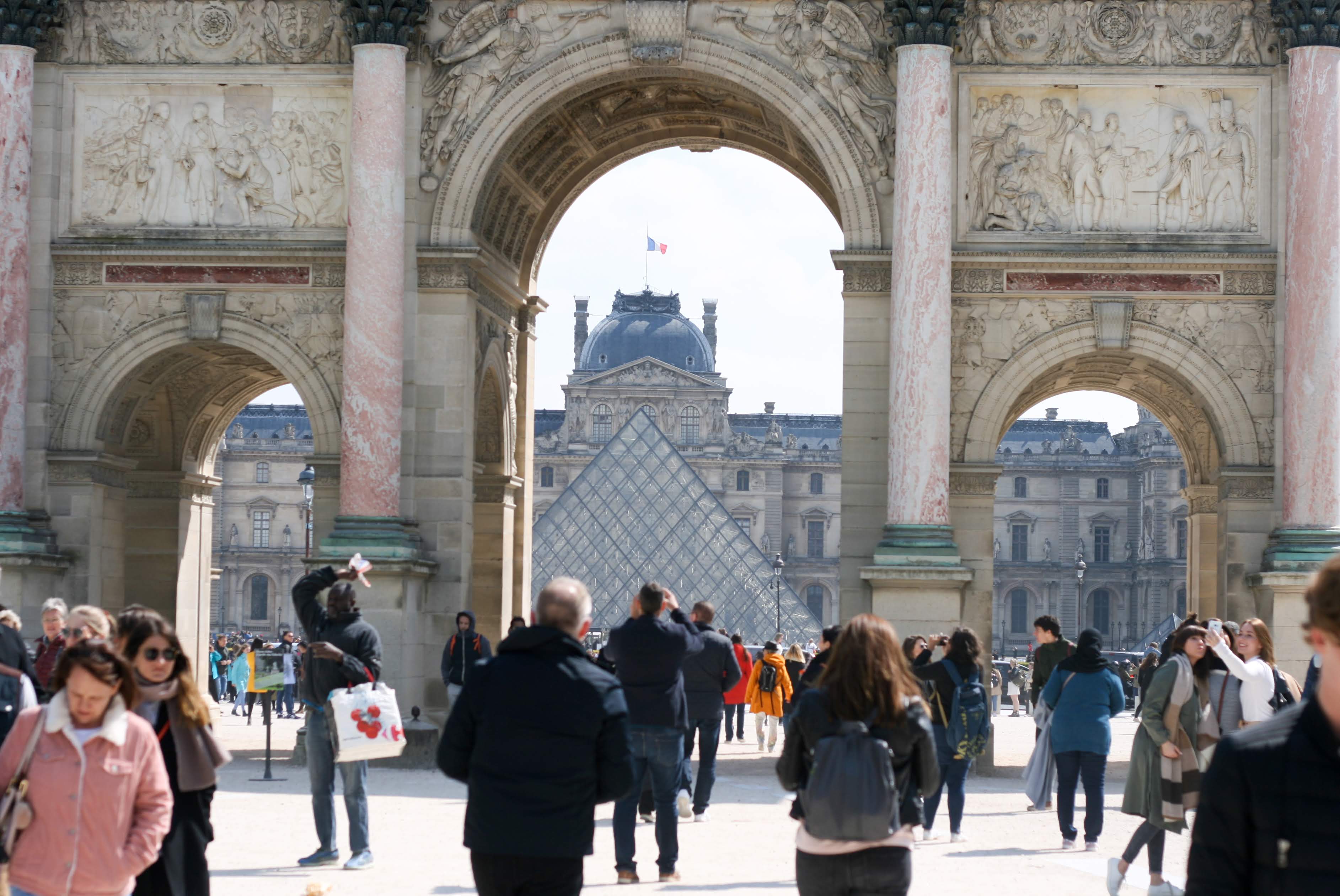
The Race
| Next Race Date | Sunday 4 April 2027 · 50th edition |
|---|---|
| Organiser | Cadence Running United, on a 2027 to 2030 contract. Amaury Sport Organisation ran the race for the previous 29 years |
| Entry | Ballot. Free entry 8 to 30 September 2026, results from 1 October 2026, 72 hours to pay |
| Entry fee | €169 flat for the marathon, no tiered increases |
| Minimum age | Born on or before 31 December 2007 |
| Course type | Single loop, offset start/finish (start and finish about 2.2 km apart) |
| Certification | World Athletics Gold Label · FFA Gold Label road race |
| Start | Avenue des Champs-Élysées, near Arc de Triomphe, 8th arrondissement |
| Finish | Avenue Foch, near Porte Dauphine, 16th arrondissement |
| Total finishers | ~57,000 |
| Avg race-day temp | 7 to 16°C (April) |
| Cutoff time | 6 hours from the last starter crossing the line |
| Half marathon | HOKA Semi de Paris, Sunday 7 March 2027, €79. Its own ballot, and a course that rotates through different arrondissements each year to 2030 |
| Free race-day transport | Not confirmed. No travel ticket was included in 2026; budget for a standard Île-de-France ticket |
| Course certification | Approved by the Fédération Française d'Athlétisme (FFA), run to World Athletics road race regulations |
| Sleeper train | Not accessible from the UK by direct overnight service; Eurostar day travel is the standard approach |
History
Paris did not begin as a showcase. In 1976, a little over a hundred runners gathered in the Bois de Boulogne for a race that had none of the ceremony now associated with the Marathon de Paris. Jean-Pierre Eudier won that first edition in 2:20:57 on 18 September, in a park loop that looked nothing like the city tour the race has since become.
The shift from park race to city spectacle happened gradually, then very quickly. Organisers moved the start to the Champs-Élysées, put the Arc de Triomphe at the runners' backs, and sent the field through the monumental heart of Paris. By 1984 the race had passed 10,000 finishers. By 2015 it had passed 40,000. The trajectory has not slowed: 57,464 runners finished in 2026 from 58,853 starters. Nearly half of that 2026 field, 49 per cent, were running their first marathon. Paris has become a common answer to the question of where to start.
The race has kept pace at the front of the field too. Kenenisa Bekele's 2:05:04 in 2014 stood as a landmark performance for years. The most recent records: Yemaneberhan Crippa won the 2026 edition outright in 2:05:18 with Shure Demise taking the women's race in 2:18:34.
The 2027 race breaks with all of that at once. It is the 50th edition, and it is the first in 29 years not run by Amaury Sport Organisation: the contract for 2027 through 2030 has passed to Cadence Running United, and the race is now branded the ASICS Marathon de Paris. A milestone edition under an organiser with no previous running of it is an unusual pairing, and it shows in what has changed. Entry moved from first-come-first-served to a ballot. Four-tier pricing became a single flat €169. The finisher medal and t-shirt stopped being automatic inclusions. Very little of the entry and race-weekend machinery a returning runner remembers from 2026 survives intact.
One thing does carry across the handover. The city's restrictions on single-use plastics at major events have reshaped the marathon's hydration model: no bottles or cups are distributed on course, and runners are expected to bring their own container. The new organiser has kept the policy and gone further, cutting single-use plastics more widely at aid stations and roughly doubling the number of water points to one every 2.5 km. It is an unusual demand to place on a field this size, and it has become one of the race's defining features.
The race has never held Abbott World Marathon Major status, but in scale, in the density of its landmarks, and in its pull on first-time marathoners, it behaves like one. What began as a hundred or so runners circling a park has become one of the largest single-day sporting events in France.
The course
Everything in this section describes the course as run through 2026. The 2027 route has not been published: the organiser says it will be announced later, and that the start and finish locations will be confirmed at the same time. Press coverage of the handover reported the route staying anchored between the Champs-Élysées and Avenue Foch and then holding unchanged through 2030, which is plausible and is not something the organiser has stated. Read the kilometre positions below as the race as it has been run, not as a plan for 2027.
The course is a single loop with an offset finish: runners start on Avenue des Champs-Élysées beneath the Arc de Triomphe and finish on Avenue Foch, on the far side of the Étoile. The two points are 2.2 km apart in a straight line and closer to 2.5 km on foot around the arch, which matters when you are planning bag drop and where to meet people. From the start the route drops to Place de la Concorde inside the first kilometre, then climbs past the Opéra and turns east along Rue de Rivoli, reaching Place de la Bastille at km 7. It works out through the 12th to the Bois de Vincennes, entering the park at about km 14 and looping through it until km 20. The second half returns west along the quais of the Seine, passing the Île de la Cité, the Musée d'Orsay and the Eiffel Tower at km 32, before the course turns into the Bois de Boulogne at km 35 and climbs out of it through the 16th for the finish. Total elevation gain is +256 m, total elevation loss -252 m, per the official course profile. The Arc de Triomphe is close enough to feel like the symbolic end point, and the timing mat is on Avenue Foch itself.
Kilometre by kilometre
Km 0 to 5: The Champs-Élysées trap. The start is wide, loud, and downhill for about 800 m to Place de la Concorde. Then it stops being downhill. The road climbs 16 m between km 0.8 and km 3.3, up Rue de la Paix and Avenue de l'Opéra, and it is the first place on the course where runners who spent the descent are found out. The crowd noise and the width of the avenue make marathon pace feel slower than it is. Let the faster runners surge past and leave the opening 5 km with the race still in hand.
Km 5 to 10: Rivoli, Bastille and the first real rise. Rue de Rivoli carries the race east past the Louvre and the Hôtel de Ville to Place de la Bastille at km 7, all of it flat and fast. The road then tilts up: 16 m between km 7.9 and km 10, climbing Rue du Faubourg Saint-Antoine and Rue de Picpus out of the Bastille basin. It is only 0.8 per cent, and it is the second time in ten kilometres the course has taken back what it gave. Roads compress at points in the middle waves, so this is a poor section to chase perfect tangents: weaving through a crowd this size costs more than it saves. Full refreshment stations sit at km 4.8 and 8.7.
Km 10 to 21: Into the Bois de Vincennes and back. Avenue Daumesnil runs the race out through the 12th and past Saint-Mandé, and the Bois de Vincennes proper starts at about km 14, not at 10. The character of the race changes there: postcard Paris gives way to long straights and quiet park roads, and the crowds thin to almost nothing. The ground keeps climbing gently to km 16.8, the highest the course has been so far at 66 m, and then gives it all back and more, 27 m of descent spread thinly over the 6.7 km to km 23.5. That descent is the cheapest speed on the course and the easiest place to spend a race you wanted at km 38. Check fuelling, hydration and position on the pacers here. Full stations fall at km 13.3, 16.8 and 21.3, with a water point at 22.5. None of them hands out a cup or bottle: have a soft flask or collapsible cup ready before each one.
Km 21 to 32: The Seine, and the last easy ground. Past halfway the course returns through central Paris and drops onto the riverside expressway, passing the Île de la Cité, the Musée d'Orsay and, at km 32, the Eiffel Tower across the water. The quais carry the lowest ground of the race, 28 m at km 30.1, and the tunnels along Voie Georges-Pompidou are the reason GPS watches come out of this marathon reading long. Each underpass has a short ramp at either end, and they arrive as fatigue is starting to tell: shorten the stride over them and let the pace come back on the flat. Treat everything up to km 30 as the last cheap kilometres of the day, because the climbing starts there and does not really stop. Full stations sit at km 24.2 and 30.6, with a water point at 29 and electrolytes at around 24.2 and 32.2.
Km 32 to 42.195: out of the river and up through the 16th. This is where Paris is won and lost, and the climbing is not where most course descriptions put it. From the low point at km 30.1 the road rises 17 m through Avenue de Versailles and Boulevard Exelmans to km 34.3, then enters the Bois de Boulogne at about km 35. The park itself is the gentlest part of the closing stretch. The hard section comes after it: the course leaves the Bois near km 38.5 and climbs Avenue Ingres, Avenue Paul Doumer and Avenue Raymond Poincaré, and the whole run from km 35.4 to km 40.1 gains 37 m. That is the longest sustained climb of the race, it averages 0.8 per cent, and it tops out at the highest point of the day, 76 m, with barely two kilometres to go. The last 2.1 km then fall 25 m to the line, which is fast if there is anything left and a long way down if there is not. Full stations fall at km 35.1 and 38.8, with a water point at 37. The Arc de Triomphe is visible and magnetic in the closing kilometres and it is not the finish: the race ends on Avenue Foch, whose width makes the final few hundred metres feel longer than they are. Run through the timing mat, not the monument.
Downhill for 800 m to Concorde, then 16 m of climbing to km 3.3 past the Opéra. The easiest place in the race to go out too fast.
The park starts at about km 14, climbs gently to 66 m at km 16.8, then gives back 27 m over the following 6.7 km. Quiet roads, thin crowds, no cups at the stations.
The lowest ground of the day, 28 m at km 30.1, and the tunnels that send GPS watches long. Underpass ramps arrive as fatigue builds; shorten the stride over them.
37 m of climbing from km 35.4 to the day's high point of 76 m at km 40.2, most of it after the Bois de Boulogne ends. The last 2.1 km fall 25 m to Avenue Foch.
Pacers
In 2026 registration included access to more than 30 official pacers covering common finish targets, typically 3:00 through to 5:00, with vests colour-coded by target time. Pace bands, per-wave allocation and whether pacers remain part of the standard entry have not been restated for 2027 under the new organiser.
April in Paris starts cold and finishes mild. Typical morning lows sit around 7 to 8°C with afternoon highs reaching 15 to 16°C, so an 08:00 start usually means standing around in single figures before racing into double figures. A throwaway layer for the start corral is close to essential: old kit you are happy to leave behind, since the organiser collects and recycles discarded clothing. Once moving, most runners are comfortable in standard spring marathon kit. Spring weather in Paris is changeable; some editions have run cool and damp throughout, others have warmed sharply by the second half, particularly for runners in the later waves who finish closer to midday. Sunscreen is worth applying even on a grey-looking morning.
The detail specific to this race is hydration kit. Because no cups or bottles are distributed on course, a soft flask, collapsible cup or small hydration vest is a functional requirement. Runners who train with whatever system they plan to race in arrive far better prepared than those improvising on the day.
Course Map
A single loop with an offset finish: east along Rivoli to Bastille, out to the Bois de Vincennes, back along the quais of the Seine, then west into the Bois de Boulogne and up through the 16th to Avenue Foch. Tap a marker for the start, the finish, the expo and the metro stations, and scrub the slider or press play to move the orange marker along the course with the elevation profile beneath it.
Entry
Paris is a ballot race now. For 2027 the incoming organiser, Cadence Running United, dropped the first-come-first-served model the race had run on for decades and replaced it with a draw, framed openly as bringing Paris into line with World Marathon Majors practice. Anyone who has entered Paris before by watching for the on-sale moment and getting a card in fast should set that instinct aside. It no longer does anything.
Entering the ballot is free. The window runs from 8 September 2026 to 30 September 2026 at asicsmarathondeparis.com, with no payment at that stage. Results are published from 1 October 2026 and go out by email. Selected runners then have 72 hours from the moment the results are sent to complete registration and pay for the bib. Miss that and the right to register is handed to another runner. It is the one deadline in the process that will genuinely cost someone a race, and it lands on whatever day the email arrives, so check the spam folder on 1 October.
Not being drawn is less final than it sounds. If bibs remain after the first draw, further draws follow, and every runner who was not selected is entered into each of them automatically until all the places are gone. There is nothing to re-enter and nothing to watch for. One registration per runner is the rule: a second entry does not improve the odds and is not permitted. The right to register cannot be passed to anyone else.
- 8 September 2026. Ballot opens. Free to enter, no payment taken, one entry per runner.
- 30 September 2026. Ballot closes. Entry timing inside the window is irrelevant to the result.
- 1 October 2026. Results published and emailed, and the moment to book accommodation.
- Results plus 72 hours. Payment deadline for selected runners. Miss it and the place goes to someone else.
- After that. Further draws run until every place is allocated. Unselected runners are entered automatically.
What it costs
Pricing is flat, which is the second structural change and the one that quietly removes all urgency from the calendar. The marathon is €169 and the HOKA Semi de Paris is €79, with no increases by date. The four-tier structure that ran from €135 to €179 across the 2026 window is gone, so there is no early-bird saving to chase and no reason to enter the ballot on day one.
| Entry | Price | Notes |
|---|---|---|
| Marathon, standard | €169 | Flat. No tiered increases across the window |
| Marathon, solidarity | €50 | Reduced place for scholarship students, jobseekers and adults with disabilities |
| Marathon, FFA licence | Reduced | The organiser confirms a special fee for 2026-2027 FFA licence holders meeting the conditions, without publishing the amount. One source reports €80.55 |
| Half marathon, standard | €79 | HOKA Semi de Paris, Sunday 7 March 2027 |
| Half marathon, solidarity | €25 | Same eligibility basis as the marathon solidarity place |
| Half marathon, FFA licence | Reduced | As above. One source reports €75.05 |
Two figures in that table are softer than the rest. The number of solidarity places is not settled, with one source giving 1,000 and another 2,000, and the solidarity scheme does not appear on the organiser's registration pages at all. The FFA licence discount does: the organiser confirms a special fee for holders of a 2026-2027 licence who meet the conditions, but publishes no amount, so the €80.55 and €75.05 reported elsewhere are worth a check before they go into a budget.
Routes into the race
| Route | How it works | Status |
|---|---|---|
| Individual ballot | Free entry in the September window, results from 1 October 2026, 72 hours to pay | Confirmed |
| Team Spirit group | Teams of 2 to 6 enter together; if one member is drawn, all of them are | Confirmed, open to all |
| Charity | Pick a partner charity, run a fundraising campaign on the charity platform, get a place on hitting the target | Confirmed; partner list and target not published |
| Corporate | Companies register their employees through a dedicated platform | Confirmed; no detail published |
| Solidarity | Reduced-price places at €50 marathon, €25 half | Not on the official site; quantity disputed |
| Good For Age | No qualifying-time fast entry found under the new ballot | Not confirmed to exist |
Team Spirit is the most useful of these for anyone travelling with friends, because it converts several independent long shots into one shared result: two to six people enter as a unit and a single hit admits all of them. The organiser sets no club or residency condition on it, so an overseas group of four is as eligible as a Paris running club. Entering as a team only affects the right to register. Nobody has to run together on the day, and each member races their own marathon at their own pace.
Good For Age is the notable absence. Under the old model, fast runners reached the Elite, Preferential and Red waves by registering into the standard wave and then applying separately with proof of a performance from the previous four years. Nothing in the published 2027 material describes a qualifying-time route into the ballot, and no seeding or fast-entry equivalent has been announced. A fast runner should assume, for now, that a good time is worth a better corral and nothing more, and should enter the ballot like everyone else.
Eligibility and the French health requirement
There is an age floor, and it is higher than most marathons. Runners must be born on or before 31 December 2007, which follows French athletics practice of requiring the Espoir category for the marathon distance. A runner turning 19 in 2027 is not eligible.
The health paperwork is the step that catches international runners out more than any other. Under the previous organiser, participation required either an eligible national federation licence or completion of the Parcours Prévention Santé, a health declaration dated within three months of the race, and a home-country medical certificate did not substitute for it. Cadence Running United has not restated that yet: the official answer is that runners must meet the 2027 race regulations and that the required certificates will be set out before the race. Expect something close to the PPS, budget time for it, and read the regulations as soon as they appear. For an April race the three-month window opens around February, which leaves very little room. Leaving it until race week is the most avoidable way to lose a place you won in a ballot.
What entry now includes
Less than it did. The finisher medal and the finisher t-shirt are no longer automatic parts of the entry: the medal becomes an optional purchase and the shirt is tied to supporting community initiatives. Whether that is an opt-in box at registration or a post-race purchase has not been spelled out. For a 50th edition this is a detail worth reading carefully at checkout, because a runner who assumes the medal is included may finish without one.
Beyond that, the full 2027 inclusions list has not been published. Expo access, timing and ranking, pacers and live tracking were all standard in 2026 and are all normal for a race of this size, but none of them has been restated by the new organiser. On cancellation the organiser says only that the conditions will be in the rules and terms of sale a runner accepts at registration, so the refund position is whatever that document says on the day you pay. The one term that is settled: a ballot place cannot be transferred to another runner.
Official ASICS Marathon de Paris registration →Race Weekend
Paris is not a race that leaves you short of water, and for 2027 it gets wetter. In 2026 there were 13 refreshment points across the 42.195 km, 9 full stations and 4 water-only, the first at 4.8 km and another every 4 to 5 km after that. The new organiser is roughly doubling that frequency to a water point every 2.5 km. Exact station positions for 2027 have not been published, so the table below is the 2026 layout and should be read as the shape of the day, not the plan.
The delivery is what makes Paris different, and it survives the handover intact. Following Paris city restrictions on single-use plastics at major events, no cups or bottles are handed out anywhere on course, and Cadence Running United has kept that policy under the name “no bottle, no cup” while cutting single-use plastics more widely at stations. Every station is refill-only, which means the race expects every runner, all 57,000 of them, to arrive with their own container. For anyone used to grabbing a cup and running, that assumption arrives as a surprise at km 22, a far worse place to meet it than the week before flying out. Vannes and Tours already run the same requirement, so this is becoming standard at French races.
This is not a high-risk feature if you plan for it. A collapsible cup is fine if you are happy to slow briefly at stations, which most of the field will be. If you are racing for a specific time, a soft flask or small handheld bottle avoids the repeated stop-and-fill. Sports drink is limited to two Ta Energy electrolyte points around km 24 and km 32. Gels are not confirmed to be provided anywhere on course; carry your own. Run a few long sessions with whatever you plan to carry on race morning, and the cupless system stops being a hazard and becomes one more detail you have already handled.
Expo
Nothing in this section has been confirmed for 2027. The expo was run by Amaury Sport Organisation, and Cadence Running United has published no venue, dates or hours for its first edition. What follows is the 2026 arrangement, which is a reasonable prior and not a plan: do not book flights around a collection slot until the runner guide is out.
The 2026 expo, branded Run Experience, was held at Paris Expo Porte de Versailles, Hall 1, 75015 Paris, accessible directly by Metro line 12 to the Porte de Versailles station. Collection ran across three days: Thursday 15:00 to 20:00, Friday 10:00 to 20:00, and Saturday 09:00 to 18:00, with no race-morning pickup.
Thursday afternoon is the calmer option for most international runners, since the bulk of overseas arrivals land Friday evening or Saturday and queues build accordingly. Saturday carries the most risk: it is the final collection day and a missed Saturday slot means a missed start. To collect a bib, runners need their official QR code or convocation along with valid photo ID. Proxy collection is possible if the proxy carries the runner's QR code, a copy of their ID and confirmation that the PPS health declaration has been validated. Bibs are not posted in advance.
Bag drop on race day is at the finish on Avenue Foch, with free lockers open from 07:00 and a size limit of 45 cm high by 36 cm wide by 20 cm deep. Because bag drop is at the finish rather than the start, the most efficient race morning involves dropping your bag near Avenue Foch first, then making your way to the Champs-Élysées start, considerably easier from the finish-area hotel neighbourhoods covered in the Where to Stay section.
Race morning
The 2026 race began at 08:00, with individual start times confirmed by wave closer to race day. The start sits in the Champs-Élysées and Arc de Triomphe zone, well served by public transport: Charles de Gaulle–Étoile carries Metro lines 1, 2 and 6 plus RER A; Porte Dauphine sits on Metro line 2; Franklin D. Roosevelt covers Metro lines 1 and 9. Sixty to ninety minutes before your assigned wave is a reasonable buffer, longer if bag drop, toilets or unfamiliar transport routes are part of the plan.
Toilet provision follows a specific pattern worth knowing. Urinals and mixed stalls are available at Place de l'Étoile before the start and in the finish area on Avenue Foch. Inside the starting pens, only urinals are provided; anyone needing mixed stalls should use the Étoile facilities before moving into the corral system, not after. A throwaway layer is recommended for the wait, particularly given typical April morning temperatures. Ponchos and plastic bags are not permitted in the starting area, but the organiser collects and recycles any discarded clothing.
Aid stations
These are the 2026 positions. For 2027 the organiser has said water points roughly double in frequency to one every 2.5 km, and the full station list has not been published. Expect more stops than the table shows and check the runner guide for the confirmed kilometres.
| Km | Type | What's available |
|---|---|---|
| 4.8 | Full | Water · banana · gingerbread · dried fruit · sugar cubes · pretzels · salty crackers |
| 8.7 | Full | As above |
| 13.3 | Full | As above |
| 16.8 | Full | As above |
| 21.3 | Full | As above |
| 22.5 | Water only | Water |
| 24.2 | Full + electrolyte | Full food spread · Ta Energy electrolyte drink (refill only) |
| 29 | Water only | Water |
| 30.6 | Full | As above (no electrolyte confirmed) |
| ~32.2 | Electrolyte | Ta Energy electrolyte drink (refill only) |
| 35.1 | Full | As above |
| 37 | Water only | Water |
| 38.8 | Full | As above |
| Finish | Full | Water · fruit · recovery food |
No cups or bottles are provided at any station. Every runner must carry their own container. Gels are not confirmed at any station: carry your own race nutrition. An extended personal-bottle system ran for elite runners targeting sub-2:50 finishes in 2026; it does not apply to the general field and has not been restated for 2027.
Spectating
Two or three sightings is realistic for a spectator using the Metro and walking briskly; four is possible with very tight planning or a slower runner. Nearly 200,000 spectators lined the course in 2026. The organiser's own advice captures the trade-off for fast-runner supporters: “you have to be everywhere at once, you have to choose.” For a single best spot, choose the finish on or near Avenue Foch over the start. The Champs-Élysées start is loud and visually striking but brief; the finish is where a runner needs support most.
- Watch near Bastille or Rue du Faubourg Saint-Antoine for an early sighting around km 8 to 10
- Take Metro line 1 westbound towards Concorde or Tuileries for a second sighting along the river in the second half, access permitting
- Continue west to Charles de Gaulle–Étoile or Porte Dauphine for the finish approach on Avenue Foch
- Watch near Place de la Bastille early in the race
- Travel directly to the Avenue Foch / Porte Dauphine area and wait for the finish
- Best suited to families, children, or anyone who would rather not navigate the Metro repeatedly mid-race
- Watch near Hôtel de Ville or Châtelet for an early central sighting
- Move on foot or by Metro to the Trocadéro side for the river section in the late 20s or early 30s km
- Continue to the finish if time and barrier access allow; bridge crossings can be restricted on race day so build in slack
Live tracking runs through the official app with split times and finish updates on an interactive map. Agree a meeting point well away from the immediate finish chute in advance; the organiser specifically recommends this given the scale of the crowd at the line.
Where to Stay
Stay near the finish, not the start. The Champs-Élysées start and Avenue Foch finish sit close enough that finish-area hotels also work for race morning, but after 42.195 km, being able to walk home matters far more than a slightly shorter walk to the start. The western 8th, 16th and 17th arrondissements give the best overall race-weekend experience.
Arc de Triomphe / Étoile
Arc de Triomphe and Étoile form the most convenient all-round base, sitting within 1 to 1.5 km of the Avenue Foch finish and easy walking distance of the start zone. Charles de Gaulle–Étoile gives access to Metro lines 1, 2 and 6 plus RER A, covering almost any onward journey. Saturday night gets busy and prices climb around the Champs-Élysées itself, though side streets in the 16th and 17th stay calmer. This is the choice for runners who want logistics to be the least of their worries. Price tier: £££–££££.
Ternes / Porte Maillot
Ternes and Porte Maillot sit north-west of the Arc de Triomphe and are noticeably quieter, while remaining practical for Avenue Foch: roughly 1 to 2 km from the finish depending on the exact hotel, and walkable to the start. Metro line 1 at Argentine or Porte Maillot and line 2 at Ternes cover most needs. Often better value than the headline addresses around Étoile while losing little in convenience. Price tier: ££–£££.
Victor Hugo / Passy / La Muette
Victor Hugo, Passy and La Muette are residential, polished, and calmer at night than almost anywhere else this close to the action. The finish sits 1 to 2.5 km away and the start 2 to 3 km away depending on the hotel, with Metro lines 2, 6 and 9 covering access. Prices run above average, but the trade-off is a genuinely quiet Saturday night before an early start. Price tier: £££.
Champs-Élysées / Madeleine / Opéra
Champs-Élysées, Madeleine and Opéra form the glamorous, central choice, with easy access to the start and the early course landmarks. It is considerably less convenient after the finish, since getting back means a Metro ride or a several-kilometre walk on already tired legs. Expect high prices and a livelier Saturday night than the western arrondissements. Price tier: ££££.
Saint-Germain-des-Prés / Invalides
Saint-Germain-des-Prés and Invalides are excellent for sightseeing and restaurants on the Left Bank, though less convenient for race logistics than the western Right Bank neighbourhoods. The journey to the start is manageable by Metro or taxi, but the return after finishing is more tiring than from anywhere closer to Avenue Foch. Suits runners treating the trip as much as a Paris holiday as a race weekend. Price tier: £££.
Montparnasse / Porte de Versailles
Montparnasse and Porte de Versailles were the practical choice for the expo while it sat at Porte de Versailles, which put bib collection on the doorstep. The 2027 venue has not been announced, so treat that advantage as unconfirmed. Montparnasse offers strong rail and Metro links with sometimes better hotel value regardless. The trade-off is longer journeys on race morning and after finishing. Works well for runners arriving by train who prioritise budget and expo convenience over finish-line proximity. Price tier: ££.
Hotels
A compact, practical option close to the Arc de Triomphe and Avenue Foch without paying Champs-Élysées prices. Works well for runners who want finish proximity without the luxury price tag.
Strong finish-area logistics on a quieter side street close to the Arc de Triomphe, useful for walking to bag drop on Avenue Foch and back without relying on transport.
Close enough for easy race-day logistics while staying calmer than the Champs-Élysées itself, near Metro line 2 at Ternes and Charles de Gaulle–Étoile.
A large hotel with strong room availability, within walking distance of Avenue Foch and well placed for runners who prefer a bigger property with simpler airport and taxi logistics.
The luxury option for this race, with outstanding start and finish proximity for runners who want the least possible friction on race morning and a high-comfort base for recovery.
When to book
The move to a ballot gives Paris a single booking trigger it never had before: 1 October 2026, the morning several thousand runners open an email telling them they are in. Book in the days immediately after that draw. It is about six months out from an April race, which is later than the 9 to 12 months this page used to recommend, and it is now the right window because nothing before the draw is certain.
The old urgency is gone with the tiered pricing. Under the previous model, entering early saved real money and booking early beat the rush of runners who entered late. Flat €169 pricing removes the first half of that and the ballot removes the second. There is no longer any advantage to moving early on entry, and the only thing early movement buys on accommodation is a room you may not need.
If a specific hotel matters enough to hold before the result, book it on a refundable rate and cancel if the draw goes against you. That is the whole hedge. Paris carries enormous hotel supply citywide, which softens the usual marathon-weekend price spike, but the Étoile, Ternes and Avenue Foch streets that suit race-day logistics are limited in number and move quickly once the results land. Check walking routes on a map and not straight-line distances: barriers around the start and finish on race weekend add detours a simple distance figure will not show.
See & Do
Arc de Triomphe
The symbolic anchor of race weekend, even though the finish line is on Avenue Foch, more than a kilometre west of the arch. Climbing it before race day gives one of the best views of the Champs-Élysées and the start area, and allows you to see the course layout from above. Tickets are required and worth booking ahead; the stairs are best avoided immediately after running 42 km.
Bois de Boulogne
The course crosses this western park between km 35 and km 38, on the gentlest ground of its closing stretch: the hard climbing starts where the park ends. A slow walk here the day after is worth doing for the way it puts that last section back in proportion. Open daily; keep the route short and stay on the lakeside paths.
Trocadéro and the Eiffel Tower viewpoint
The Trocadéro terraces give the most-photographed Eiffel Tower view in Paris and sit well for runners staying in the Passy or La Muette hotel areas. They also put the Seine-side section of the course into visual context from above, useful after running through it at a pace that doesn't allow much looking up. Book tower summit tickets well ahead if planning to go up.
Musée d'Orsay
The course passes near the Musée d'Orsay along the Seine, and the museum adds depth to the Paris of boulevards and light that the race runs through. A strong choice for the day after if culture without much walking is the goal. Closed Mondays; timed tickets are worth booking for marathon weekend given the volume of visitors in the city.
Post-race food
The Étoile and Ternes neighbourhoods around Avenue Foch are well stocked with brasseries that open early and serve straightforward, calorie-dense food without ceremony, which is exactly what is needed after 42.195 km. The Ternes covered market (Place des Ternes) is within easy walking distance if you want fresh produce to take back to the room. For a proper recovery dinner once the legs have had a few hours, the Saint-Germain-des-Prés area opens up a far wider range of options, though it suits a later, slower return, well after the immediate post-race hour.
Read Before you Run
A Moveable Feast
Ernest Hemingway
Not a running book, but one of the most enduring English-language accounts of inhabiting Paris on foot: cafés, streets, hunger, weather and ambition. It suits the marathon because the race is, at its core, about moving through the city's literary and visual imagination.
The Invention of Paris
Eric Hazan
A layered history of Paris told street by street and district by district. It adds real depth to a course that crosses politically and symbolically charged ground, from Bastille to the grands boulevards to the Seine and the western avenues, for runners who want more than a postcard understanding of the route.
After the Race
April is one of the better months to travel onward from Paris: spring is properly under way, crowds have not yet reached their summer peak across the most popular destinations, and the rail network from Paris's main stations fans out across France and beyond with the kind of frequency that makes the trip feel flexible. The TGV from Montparnasse reaches Tours in under an hour and Lyon in two; Gare de l'Est serves Reims in 45 minutes. Gare Saint-Lazare connects directly to Rouen. For longer legs, CDG handles a full range of European and transatlantic routes, and the Eurostar from Gare du Nord provides the most straightforward return to London.
The Palace of Versailles and its spring gardens on post-marathon legs, with April crowds well below the summer peak. Keep the palace visit focused: the Hall of Mirrors alone is worth the trip.
A champagne house visit through the Roman chalk quarries beneath the city, a Gothic cathedral with Chagall windows, and a brasserie evening. The city is compact and mostly flat, which is exactly what post-marathon legs need.
Rouen's medieval cathedral quarter is manageable on tired legs; Bayeux adds D-Day history and the Bayeux Tapestry at the cost of more travel. April brings lower crowds than summer on both stops.
Châteaux including Chenonceau, Chambord and Amboise against April spring gardens. A recovery trip built around slow travel, long lunches and local Vouvray, with very little walking in it.