| Next Race Date | 4 September 2027, 09:30 (preliminary) |
|---|---|
| Course type | Point-to-point |
| Registration | Open entry; price bands rise as the date nears and places can run out |
| Ballot opens | Not applicable |
| Start | Lago Maravilla, Ruta Y-200 km 27 (preliminary); 09:30 in 2027 |
| Finish | Hotel del Paine, Sector Serrano (preliminary) |
| Total finishers | Not published |
| Average race day temperature | About 2 to 10°C (the organiser's approximate September range; storms are possible) |
| Cutoff time | 7 hours |
| Free race-day transport | No. The official coach from Puerto Natales is paid |
| Course certification | Not certified. The organiser publishes a course length of 42.01 km |
The organiser publishes a course length of 42.01 km, which is 185 m short of the standard 42.195 km marathon, and no measurement certificate has been published. Two runners' GPS recordings of the route measured 41.66 km and 41.26 km. Treat finishing times as indicative only: they are not comparable with certified marathon times and should not be used for qualifying applications unless the organiser confirms the course is certified.
Before you go
Entry, accommodation and travel: what to sort out before you book.
Entry
The organiser publishes the course at 42.01 km, 185 m short of the standard marathon distance, and no measurement certificate has been published, so finishing times from this race are indicative.
Entry is open on the 2027 registration page. The 2026 page is closed and marked sold out. Prices rise through three bands, and payment commissions are extra. The price periods shown are 22 June to 15 September, 15 September to 16 October and 17 October to 17 May, each subject to places running out. The grid does not label the years fully, so confirm the dates at checkout. At 1.3341 dollars to the pound, which was the rate on 16 October 2026, the three foreign prices are about £252, £266 and £286 before payment fees. A reliable pound conversion for the peso prices has not been obtained, so none is given.
Transfers, accommodation and accident insurance are excluded. A medical certificate and a signed waiver are due at least a month before racing. The minimum age is 18. The race limit is seven hours.
The organiser's request centre offers club discounts, distance changes, transfers and cancellation or postponement requests. That is an administrative process and not a promise of refunds, so read the current policy before paying. There is no ballot, guaranteed-entry standard, charity route or elite table. The 2026 sold-out message gives no sell-out date, so nothing shows how fast 2027 places will go.
| Price band | Non-Chilean entrants (USD) | About (GBP) | Chilean entrants (CLP) |
|---|---|---|---|
| 22 June to 15 September | 336 | £252 | 201,520 |
| 15 September to 16 October | 355 | £266 | 212,970 |
| 17 October to 17 May | 382 | £286 | 229,000 |
Fast runner standards
No guaranteed-entry standards, charity route or elite table has been published.
See the official Patagonian International Marathon site →Where to Stay
The choice is between town logistics and remote-lodge access. Neither the start nor the finish is a town, so the usual stay-at-the-finish rule gives way to the coach and the kit collection, both in Puerto Natales. Distances below are straight-line from the Plaza de Armas, where the coach leaves.
Central Puerto Natales
The simplest base, because kit collection and the official coach both start here. A room near the Plaza de Armas cuts the early walk. Hotel Vendaval is half a block from the main square and Hotel Martín Gusinde is near the same plaza. The trade-off is a road transfer to and from the race.
The waterfront
Better for a longer stay, with more services and views over the water. Costaustralis (Pedro Montt 262) and NOI Indigo Patagonia (Ladrilleros 105) are examples. Compare the walk to the coach point, overnight reception and breakfast times, because a waterfront view does not mean an early race breakfast.
Outer lodges
Some partner properties are beyond the central streets and may need a taxi even to reach the coach.
Río Serrano
The finish-area option. Hotel del Paine is at the finish location and removes the tired return to town, though its site states that transfers are not included. You will still need to collect your kit in Puerto Natales and reach the start.
Ask each hotel in writing about early food, luggage storage and cancellation.
Recommended hotels
Its own site puts it half a block from the main square, convenient for the coach. The race itself is a road transfer away.
Near the plaza.
On Pedro Montt at number 262, with a restaurant on site. No included race shuttle is established.
On Ladrilleros at number 105. The organiser lists a 10 per cent runner discount; check the terms.
The finish property. Transfers are not included, and kit collection is in town.
Booking timeline
The date is set but much of the operational website is preliminary. Secure entry and accommodation together, then book the paid coach seat and start the medical paperwork. The medical certificate and waiver are due at least a month before the race.
The 2026 race sold out, but not when. Nothing shows that hotels vanish immediately after entry, so book terms that allow change.
For flights, Puerto Natales (PNT) is the closest airport but its service is seasonal, so confirm September operating days before committing to the rest of the trip. Punta Arenas (PUQ) is the alternative, with an onward road journey to Puerto Natales of about three hours.
Before departure, recheck the start access rules and the final calendar, and keep one weather day free.
Race weekend
The expo, number collection and the days either side of the start.
Race Weekend
Kit collection
There is no expo. Kit collection is in Puerto Natales at Gimnasio Club Natales, Hermann Eberhard 332. The preliminary 2027 calendar gives Thursday 2 September from 14:30 to 21:00, and Friday 3 September from 10:00 to 13:00 and from 14:30 to 22:00. Identification is required.
The kit includes a race shirt, a headband, a number, a timing chip and a bag sticker. The medical and waiver documents are due earlier, so bringing them to collection may not fix a missed deadline. Arrive in Puerto Natales with time to collect before travelling to a lodge in the park area, and do not assume a hotel transfer will collect a number on your behalf. Proxy collection and late collection are not described.
Getting to the start
The coach leaves Plaza de Armas in Puerto Natales at 07:30 and passengers are asked to arrive 20 minutes early. The start is at 09:30, and runners are asked to be at the start an hour before. The coach journey time is not published; ask the organiser for it.
The registration text lets a non-running driver drop an entrant at the start and then drive to the finish. The calendar says private vehicles cannot reach the starts directly, and describes a separate paid shuttle from the finish to the start whose table has confusing location labels and unconfirmed times. Book the official coach or get a written transfer plan from your lodge.
Unwanted layers can be handed over at the start and recovered at the finish. Put a dry change of clothes in the bag. The return coach frequency, finish facilities, warming shelter and meals are not published.
A lodge near the finish saves a long road journey back, but adds a start transfer and a separate trip to town for kit collection.
Early September is late winter in Patagonia. The organiser gives an approximate range of 2 to 10°C and warns of possible storms. That range is not a start-time reading from a weather station. Expect the lower end at the start and wind throughout.
Wear gloves, a hat or headband and a windproof layer you can run in. The organiser describes a bag service from start to finish, so unneeded layers can be handed in at the start and collected at the finish. Mark the bag with the sticker supplied. Littering is prohibited, so do not discard garments beside the road. Bring dry clothes for the finish, because the finish is a long way from town.
Gravel changes footing, so bring shoes you have tested on loose surfaces.
Race day
The course, the clock, getting to the start and what to carry.
The Race
The course
The organiser publishes a course length of 42.01 km, not 42.195 km, and no measurement certificate has been published.
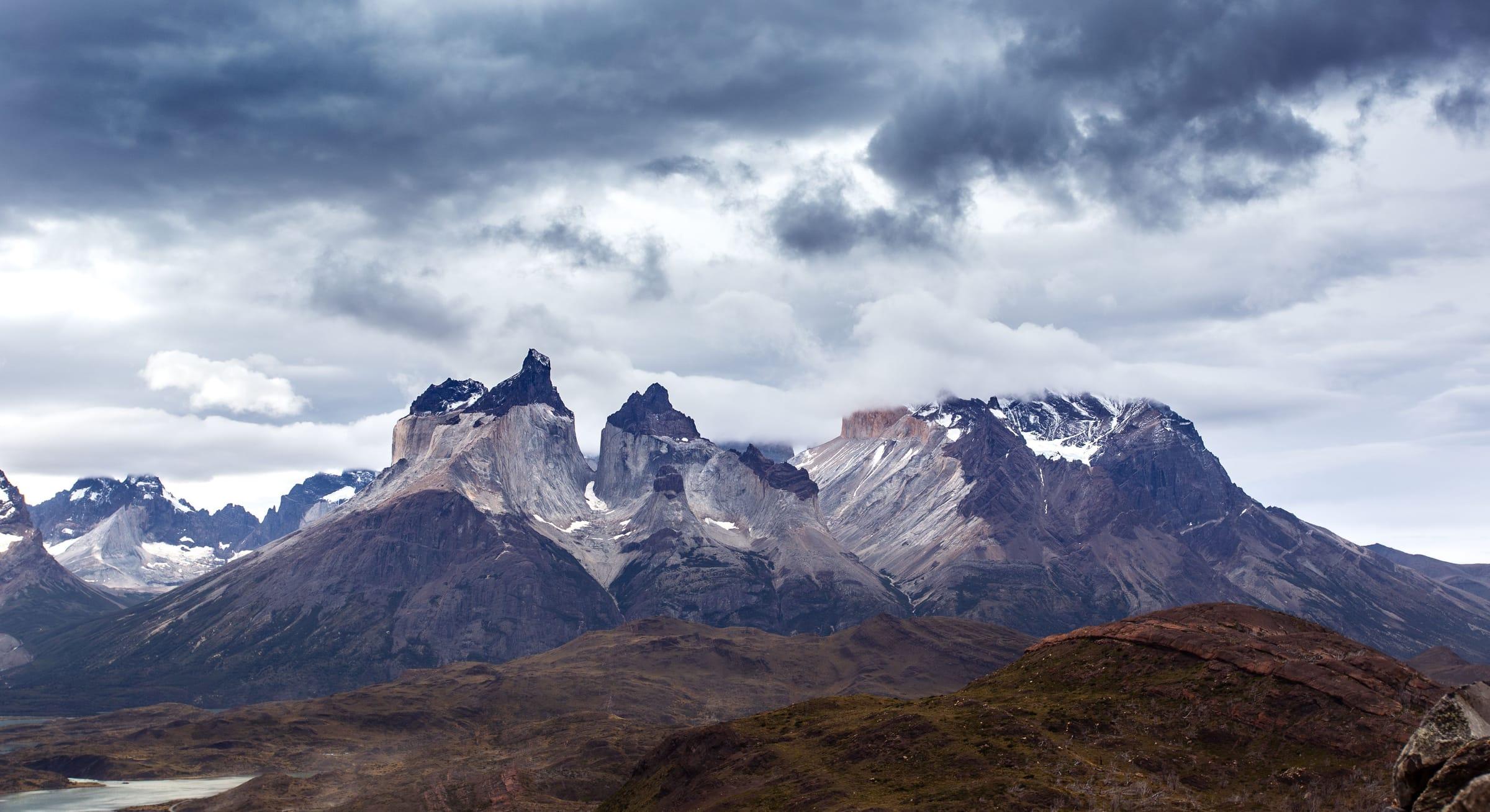
The course runs point to point from Lago Maravilla on Ruta Y-200 to the Hotel del Paine in Sector Serrano, 21.5 km apart in a straight line. The organiser's preliminary route table for the next edition gives 42.01 km, 687 m of ascent, 718 m of descent and a maximum altitude of 257 m. Roughly three-quarters of the surface is gravel and a quarter is asphalt, on vehicle roads with bends and marked gradients. It runs south-west of Torres del Paine National Park, and Puerto Natales is the base, a coach ride from the start.
The first 19 km stay between 40 and 64 m on Ruta Y-200 and then Ruta Y-290, rolling by no more than 18 m in any kilometre. The first real hill comes at km 19 to 20: 80 m in 1.6 km to 121 m, then a 59 m drop and a second climb of 66 m (4.1%) to 127 m at km 23. The road then sits near 105 m until km 26 and climbs 148 m in 2.0 km (7.4%) to the 256 m high point at about km 29. The descent that follows loses 212 m in 4.9 km (4.3%), as steeply as 6.1% at km 30, and reaches 44 m at km 34.
Rolling ground follows, with a 57 m rise (1.7%) to 101 m at km 37.6, a drop to 49 m at km 39 and a final hill of 54 m (3.9%) on Ruta Y-292 at km 39 to 40. The last 2.0 km fall 78 m (3.9%) to the 25 m finish at Río Serrano.
Two runners' GPS recordings show the same route shape and measured 41.66 km and 41.26 km. The route table is labelled preliminary, so treat every position as the last known route.
Kilometre by kilometre
Km 0 to 10: the low roads. The track starts at about 57 m on Ruta Y-200 and bears south-west and then west, falling to 37 m by km 7. The road bends north near km 9. The surface is predominantly gravel, which changes footing and makes passing and cornering different from a city marathon. Keep to an even effort.
Km 10 to 19: Ruta Y-290. The road runs north and then north-west along Ruta Y-290, rolling between 42 and 64 m, with no kilometre changing by more than 18 m. This is the least demanding ground of the day, so use it to settle in.
Km 19 to 27: the first hills. At km 19 to 20 the road climbs 80 m in 1.6 km to 121 m, falls 59 m by km 21.4, then climbs 66 m at 4.1% to 127 m at km 23. It levels at about 105 m through km 26. These are short, sharp efforts on loose surface, so walk the steepest sections if needed.
Km 27 to 34: the climb and the drop. From km 27 the road climbs 148 m in 2.0 km, at 7.4% on average, to the 256 m high point at about km 29. The descent that follows loses 212 m over 4.9 km, at up to 6.1%, to 44 m at km 34. Brake with control on loose gravel and keep the quads in reserve.
Km 34 to 42.2: rolling to the finish. A 57 m rise at 1.7% to km 37.6 is followed by a drop to 49 m at km 39 and a last hill of 54 m (3.9%) on Ruta Y-292 at km 39 to 40. The final 2.0 km fall 78 m to the finish at Hotel del Paine, 25 m above sea level. The distance is the organiser's published 42.01 km.
Wind and cold. Both are part of the course. The organiser's September range is 2 to 10°C, with possible storms.
Gravel at 40 to 64 m. Settle in and hold back.
Two short climbs of 80 m and 66 m, with a 59 m drop between them.
148 m in 2.0 km to the 256 m high point near km 29, then a 212 m descent on loose gravel.
Rolling ground, a last hill at km 39 to 40 and a drop to the finish at Hotel del Paine. The published distance is 42.01 km.
Course Map
The last known point-to-point route from Lago Maravilla on Ruta Y-200 to the Hotel del Paine in Sector Serrano. Tap a marker for details, and scrub the slider or press play to move the orange marker along the course with the elevation profile beneath it.
Pacers
The organiser has not published a pacer programme.
The preliminary 2027 calendar lists a paid coach leaving Plaza de Armas in Puerto Natales at 07:30, with passengers asked to arrive 20 minutes early. The start is at 09:30, and runners are asked to be at the start an hour before. Magallanes uses UTC-3 all year, so do not copy Santiago's clock.
Private-vehicle rules conflict. The registration text lets a non-running driver drop an entrant at the start, while the calendar says private vehicles cannot reach the starts directly. Book the official coach or get a written transfer plan from your lodge, and recheck the restrictions closer to the date.
The route used for this page is from a recording of an earlier edition and the next course has not been confirmed. Treat landmarks and distances as the last known route.
Nutrition on course
The organiser's rules describe eight aid stations including the start and finish, about every 5 km. Disposable plastic cups are not provided, so each runner must carry a personal bottle or cup. Littering is prohibited.
The sports drink, gels and food at the stations are not published. A personal container, allergies, toilets and supplies for slower runners need the final runner guide.
Spectating
City-style multi-sighting plans do not apply. The race is a remote point-to-point road event with organiser transport and no urban transit linking viewing points. The practical choice is one visit to the finish area, with a prebooked companion place on the coach or a confirmed lodge transfer.
A companion booking is not permission to drive onto the course, so settle the private-vehicle rule first. Spectator access, shelter and toilets at the finish, and mobile signal are not published.
A seven-hour runner leaves supporters waiting far longer than a fast finisher does. Bring weather protection and agree a meeting point before losing phone signal.
After the race
Where to eat, what to see and how to spend the days after the finish.
See & Do
Distances are straight-line, kilometres first, from Puerto Natales unless stated.
Puerto Natales waterfront
A short, flat town walk that suits the day after the race. Natales is the regional base for the park.
Cueva del Milodón
A natural monument whose main cave, Cueva Grande, is described by the park service as suitable for reduced mobility. A recent notice said the site would stay closed, so check its status before planning a visit.
Torres del Paine viewpoints
A vehicle-based scenic day, depending on September gates and roads. Race entry does not include park admission. The boat to the Balmaceda and Serrano glaciers runs from October to April, so it is not an option in early September.
Post-race food
The registration package confirms a hydration and snack at the finish, but not a meal. If you stay at the Hotel del Paine, ask what is served on race day for runners and companions.
In Puerto Natales, Costaustralis has a restaurant on site at Pedro Montt 262. A town restaurant is a road journey from the finish and not a walk, so book a late, flexible table after confirming return coach times, or arrange food through your accommodation.
After the Race
The marathon is on a Saturday in early September, and Sunday is the first free day. Cueva del Milodón and a vehicle day in Torres del Paine are day trips from Puerto Natales. A night at Río Serrano keeps you at the finish, and Punta Arenas, about three hours by road, makes a night on the way to the airport. Timetables and fares are indicative, so confirm them when you book.
The cave north of town, if it has reopened, with an easy afternoon on the Natales waterfront.
A booked day of roadside viewpoints in the national park, with almost no walking.
Staying on at Hotel del Paine after finishing, with a pre-booked transfer back to town.
A night in the regional capital on the way to the Punta Arenas airport.
Background
History
The Patagonian International Marathon began on 23 September 2012 inside Torres del Paine National Park. The first start, at Puente Weber, is pictured with the race director, Stjepan Pavicic, and the park administrator, Guillermo Santana.
The distances have changed as often as the place. The race listed 63K ultra distances in 2013 and 2014 and a 60K in 2015. From 2016 to 2019 the routes ran south-west of the park. There was an interruption in 2020 because of the pandemic. The race returned to the park from 2021 to 2024, and from 2025 it has run south-west of the park again.
Those moves make a single record progression impossible. A time from a park-road edition cannot be compared with one from the south-west roads, and no measured distance has been published for the earlier courses.
The 2026 race was the 14th edition, on 5 and 6 September, with the marathon on Saturday 5 September. The reported winners were Cristian Godoy of Chile in 2:56:48 and Iris Catalán of Spain in 3:27:36, among more than 1,700 athletes across all distances. No individual results have been published, so treat both times as unconfirmed and not as course records.
The race is promoted internationally, but "Torres del Paine marathon" does not always mean a run inside the park. Today's course is on the south-west access roads.