The Race
| Next Race Date | Saturday 14 November 2026 |
|---|---|
| Course type | Point-to-point: Millbrook Resort (near Arrowtown) to Queenstown Recreation Ground. Confirmed mixed surface of roughly 70% hard-packed trail/dirt road, 30% sealed road; regular road running shoes are stated as suitable. |
| Registration | Not confirmed. Likely open entry; the ballot or cap model, price and entry deadline have not been published. |
| Ballot Opens | Not applicable, pending confirmation of the entry model |
| Total finishers | Not confirmed for a current year. The 2014 inaugural event reportedly sold out 6,000 entries across all distances combined, a historical figure rather than a current annual total. |
| Avg race-day temp | November average: daytime maximum around 18°C, overnight low around 7°C, described as variable. |
| Cutoff time | 4:00pm course closure. Start time is inferred at roughly 8:20am from this cutoff, not directly confirmed. |
| Course records | 2025: 2:25:02 (men, Jack Moody), 2:48:31 (women, Bara Styblova) |
| Free race-day transport | Yes, an improved event shuttle was confirmed for the current edition, though 2026 services ran from Queenstown only. |
| Course certification | Not stated |
| Sleeper Train | Not applicable, New Zealand has no long-distance sleeper rail network serving Queenstown |
A Point-to-Point Race Across the Wakatipu Basin
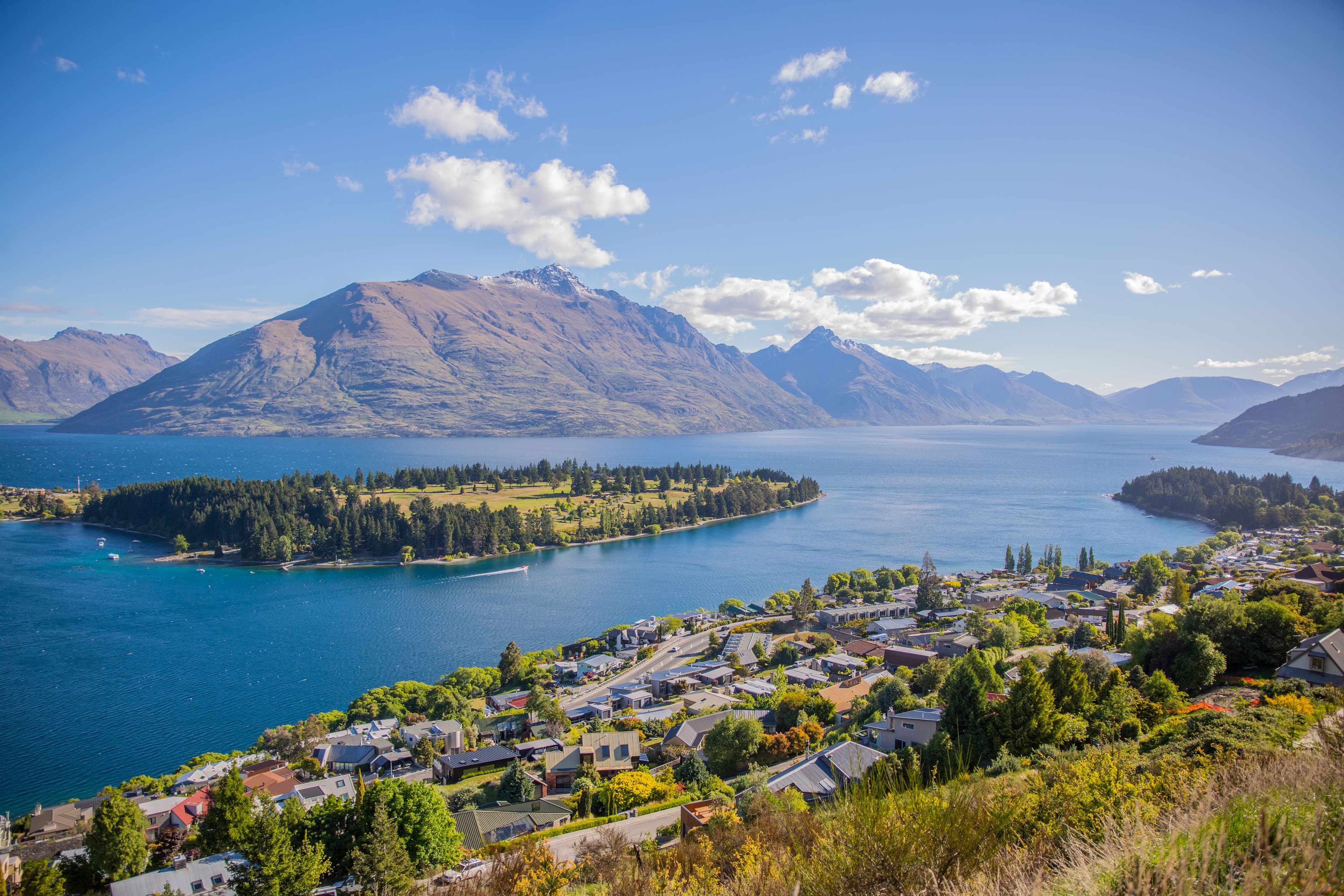
The Queenstown Marathon runs from Millbrook Resort, near Arrowtown, to Queenstown Recreation Ground on the shore of Lake Wakatipu, a point-to-point course about 15km apart as the crow flies. Net elevation change is a descent of roughly 95m start to finish, but the course is not a straight downhill: it climbs before it has warmed anyone up, drops fast down Hogans Gully, circles Lake Hayes on a trail with a short, steep climb on its western side, then climbs again through Speargrass Flat before a sharp descent, the Twin Rivers Trail and a six-kilometre lakeside walkway into town. The 2025 course records, 2:25:02 for men and 2:48:31 for women, show the course rewards strong athletes despite its mixed surface and undulation, even if it should not be sold as a flat PB course to the average entrant. The organisers also confirmed a course update ahead of the 2025 edition that altered the Lake Hayes section while keeping the same start and finish; the route described here is the current one.
History
The Queenstown Marathon began in 2014, and reportedly sold out all 6,000 entries across its four distances, marathon, half marathon, 10km and kids run, in its debut year, a strong showing for a destination race in a resort town rather than a major city. It now runs as part of the Runaway Marathon Series family of New Zealand events, currently carrying New Zealand Sotheby's International Realty title sponsorship. The 2014 sell-out figure comes from a single source.
The race's defining identity has always been the point-to-point journey from the Millbrook Resort area near Arrowtown into central Queenstown, run on a mixed surface of hard-packed trail, dirt road and sealed road, roughly 70% trail, 30% road, with regular road running shoes stated as suitable rather than technical trail shoes. This is not a stadium-anniversary marathon; it exists because Lake Wakatipu, the Wakatipu basin and the Central Otago high country were already there. The founding organisation, any cancellations or reroutes since 2014, and whether the race ran continuously through the 2020-2021 New Zealand border closures are not confirmed.
The course
The course starts on The Avenue at Millbrook Resort and, for the first kilometre, climbs before it has warmed anyone up, gaining around 17m through the Millbrook and Arrowtown residential streets. Runners turn through Malaghans Road, Manse Road, Bush Creek Road, Surrey Street and Villiers Street in quick succession, more turns in three kilometres than most courses manage in ten. The Arrow River Bridges Trail then takes the course south out of town into rural Central Otago proper: hard-packed trail, wide sky, schist visible on the surrounding hillsides, losing about 40m in gentle steps before Centennial Avenue at about 7km and a short 19m rise onto Hogans Gully Road.
Hogans Gully Road and the turn onto Arrowtown-Lake Hayes Road bring the first real descent, about 48m in under two kilometres from 8.5km and another 23m down to the lake. It is fast, and fast this early is a trap: the legs feel good, the pace creeps, and there is climbing waiting on the far side of Lake Hayes that will collect on the debt. The Lake Hayes Trail follows, south along the eastern shore on a dedicated hard-packed trail and flat for three kilometres, then back north up the western side, where the course’s steepest climbing comes: about 40m in 1.3km around 16km and a second sharp 23m pitch just after it.
Rutherford Road and Speargrass Flat Road form the longest sustained climb on the course, about 31m over nearly three kilometres to the top at about 21km, exposed to whatever wind is moving through the basin and, on the evidence of the aid-station spacing, the loneliest stretch of the race. After a flat run along Lower Shotover Road, it comes back down fast towards Lake Hayes Estate, about 53m of descent in 1.5km from 25km, quads that have already taken several descents and climbs registering a real complaint. The Twin Rivers Trail then carries the course south towards Frankton beside the Shotover and Kawarau rivers, rolling, with a 23m climb around 30km, into the edge of the Frankton basin via Robertson Street, before the Frankton Arm Walkway carries the course along the Lake Wakatipu shoreline for roughly six kilometres, past Shoreline Road and Sugar Lane, and finally into central Queenstown to finish at Queenstown Recreation Ground.
Course Map
The map shows the point-to-point route from Millbrook Resort near Arrowtown, through Hogans Gully and Lake Hayes, over Speargrass Flat, down the Twin Rivers Trail and along the Frankton Arm into central Queenstown. Tap a marker for details, and scrub the slider or press play to move the orange marker along the course with the elevation profile beneath it.
A tight, turn-heavy opening climb through Arrowtown’s streets, then the Arrow River Bridges Trail south out of town, losing height in gentle steps.
A fast 48m descent, a flat run down the eastern lakeshore, then the steepest climbing of the day up the western side of Lake Hayes.
The course’s longest sustained climb, exposed and quiet, a flat stretch on Lower Shotover Road, then a sharp 53m descent.
Rolling riverside trail to Frankton, then a long lakeside stretch on the Frankton Arm Walkway before the course turns into central Queenstown for a town-centre finish.
Pacers
No pacer programme has been confirmed for this race. Check the current official athlete guide for pacer availability before assuming one exists.
What to wear
November in Queenstown is New Zealand's late spring: daytime maximum around 18°C, overnight low around 7°C, against a national spring daytime average of 16-19°C, described as variable year to year. A start around 8:20am, inferred from the confirmed 4:00pm cutoff rather than directly stated, means the coldest part of the day is behind the field within the first hour or two, but the overnight low sets the tone at the gun.
A throwaway layer for the start line still earns its keep: even with a daytime high of 18°C, race morning at lake-basin altitude starts closer to the 7°C overnight figure, and the exposed Speargrass Flat climb in the second half means wind protection matters beyond the start. Runners finishing later in the field, closer to the 4pm cutoff, should plan for the day’s ~18°C peak on the exposed later sections and pack sunscreen accordingly, Central Otago's high-altitude UV is sharp even in cool air.
Entry
Confirmed entry inclusions: a personalised bib (for entries received before a cutoff date, exact deadline not stated), gear bag, finisher's medal, an athlete gift, aid-station access, a post-event recovery area, and category awards. Prize money is confirmed for the open categories: NZ$3,000 for first, NZ$1,500 for second, and NZ$750 for third, for both the men's and women's races, awarded on gun time rather than chip time.
Neither ballot dates, acceptance rate, entry price, nor field-cap size have been confirmed. Before entering, check the official entry page directly for whether entry is open, capped, or ballot-based, current entry price, the exact personalised-bib deadline, and any charity or tour-operator entry routes.
Fast Runner / GFA Standards
No fast-runner or Good for Age entry pathway has been identified for this race. Smaller destination marathons sometimes offer elite-only entry without publishing formal GFA standards; the confirmed prize-money structure suggests the race does take elite performance seriously at the open level even without a formal GFA pathway.
Race Weekend
Expo
No expo venue, address, opening hours, or bib-collection detail has been confirmed for this race. Given the finish-area gear-bag logistics point to the Queenstown Memorial Centre as a hub for the event, that venue is a reasonable place to check first, though this is inference rather than confirmation.
Race Morning
The start is at The Avenue, Millbrook Resort, near Arrowtown. Start time is inferred at roughly 8:20am, calculated backward from the confirmed 4:00pm cutoff, not stated directly by the official page. Gear bags are transported to the Queenstown Memorial Centre, with marathon bags available for collection there from 10:30am and required to be collected by 4:30pm, implying bags are dropped at the Millbrook start and trucked to the Queenstown finish rather than carried by the runner.
An improved event shuttle service was confirmed for the current edition, though 2026 services ran from Queenstown only, whether a shuttle also serves the Millbrook start line is unconfirmed and should be checked against the current travel-info page. For general, non-race-day transport, Queenstown Airport connects to Frankton and central Queenstown via the Orbus public bus network, Route 1, a reliable, low-cost option for arrival and departure logistics. The Millbrook start sits roughly 21km by road from central Queenstown, meaning runners staying in Queenstown need a transport plan rather than a walk to the start line, a genuinely unusual arrangement compared with most city marathons.
Nutrition on Course
11 marathon aid stations offer water, PURE electrolyte drink, toilets and first aid. Red Bull is available at the 31km station, and flat cola is offered at aid stations 8 through 11. Exact km placement of each of the 11 stations was not itemised in the sources used for this page; if spread evenly across 42.195km, spacing would average roughly 3.8km, though actual spacing may not be even. Given the long exposed climb through Speargrass Flat around km 18-23 and the six-kilometre Frankton Arm Walkway stretch from roughly km 33-40, runners carrying their own gels should plan for the Speargrass Flat section specifically, both the hardest climb and, on current evidence, the quietest section of the course.
Spectating
The point-to-point nature of the course, combined with the shuttle-service limitation, makes spectating harder than at a loop-course city marathon: supporters cannot easily follow a runner from the Arrowtown-area start to intermediate points without a car. The finish area at Queenstown Recreation Ground is the one point every supporter can reach without transport uncertainty, since it sits in central Queenstown. The Frankton Arm Walkway, roughly km 33-40, runs close to the Queenstown side of the lake and may be reachable on foot or by local bus, a possible second sighting point, though this is inference from the route rather than a confirmed spectator plan.
Post-Race Food
Queenstown has an established café and restaurant scene around the Steamer Wharf and central mall precinct close to the finish, spanning casual pizza/pasta, burger/pub food, and lakeside cafés. No specific venue names have been sourced with confidence for this race.
Where to Stay
Because the start is in Arrowtown and the finish is in Queenstown, and the confirmed shuttle service ran Queenstown-side only in the most recent edition, staying in Queenstown for finish convenience is the safer default recommendation, but it commits a runner to whatever the Queenstown-to-Arrowtown transport solution turns out to be on race morning.
Queenstown town centre
The shortest distance to the finish at Queenstown Recreation Ground, walkable to the lakefront and the central mall. Likely the highest-priced accommodation zone in the region on marathon weekend, given it is New Zealand's most tourist-dense small town.
Frankton
Sits on the route itself, between roughly km 33 and km 40, and is closer to Queenstown Airport than the town centre. Runners flying out shortly after the race may find this a practical base, trading lakefront views for airport convenience.
Arrowtown
The start-line area itself, technically Millbrook Resort rather than central Arrowtown, roughly 21km from the finish by road. Staying here suits a runner focused on race-morning simplicity over post-race convenience, at the cost of needing transport back to Queenstown after finishing. Whether accommodation options exist at the scale needed for a marathon field is unconfirmed.
Millbrook / Arthur's Point
A premium, calm, start-side option, trading higher cost and limited room availability for race-morning simplicity given its direct proximity to the start venue.
Fernhill / Sunshine Bay
Often quieter than the town centre with bus access into Queenstown, at the cost of a hillier walk on the return leg. A mid-tier option between the town centre and the calmer, pricier Millbrook side.
No specific named, bookable hotel property has been sourced with confidence in any of the five areas above; a dedicated accommodation search is recommended before booking.
Booking timeline
Book accommodation early, ideally as soon as entry is secured, since Queenstown is a high-demand resort town in late spring competing with normal tourism traffic. Shuttle transport should also be booked before race-week deadlines rather than left until arrival. No exact booking-window figure or ballot-result date has been confirmed; November sits at the edge of Queenstown's shoulder season between winter sports and peak summer, which likely gives more accommodation headroom than a July or January booking window would, though this is a general seasonal read rather than a confirmed pricing pattern for marathon weekend specifically.
See & Do
These are established, long-standing Queenstown attractions rather than individual businesses whose trading status changes month to month, though opening hours and prices should still be checked before visiting.
Queenstown Gardens
Adjacent to the finish at Queenstown Recreation Ground. A lakeside peninsula park directly beside the finish area, flat walking paths and mature trees, the obvious low-effort option for the hour after finishing.
Skyline Gondola and Skyline Queenstown
Approximately 1-2km from the finish, base station near central Queenstown. A cable-car ascent above the town giving a view over Lake Wakatipu and the Remarkables range. The gondola does the climbing rather than the runner, which matters the day a marathon has been run.
TSS Earnslaw steamship
Departs from Queenstown town centre, close to the finish. A coal-fired vintage steamship operating scenic cruises on Lake Wakatipu, in service since the early twentieth century, a seated, low-effort way to see the lake from the water.
Arrowtown
Roughly 21km from the finish, back at the marathon's own start line. A preserved 19th-century gold-mining town with a historic Chinese Settlement site, worth returning to properly on legs that are not mid-marathon.
Lake Hayes
The course itself passes it around km 11.6-18.3. A small lake in a natural basin that the marathon route circles on foot, worth a slower, non-race-day walk of the same path to see what was missed at pace.
Read Before you Run
The Luminaries
Eleanor Catton
Set on New Zealand’s West Coast during the 1860s Hokitika gold rush: a different goldfield from the Otago rush the marathon course itself runs through, but the same era and the same restless, boom-town energy that once filled towns like Arrowtown. Catton’s novel won the 2013 Booker Prize.
After the Race
The Queenstown Marathon runs in November, New Zealand's late spring. These itineraries range from a same-day walk through Arrowtown to a four-night extension through Central Otago wine country and Wanaka.
A slower, non-race-day walk through the gold-rush town the marathon starts in, including the historic Chinese Settlement site. Low-effort, flat walking, no strenuous transfer.
A drive along the lake’s western shore to Glenorchy, gateway to Paradise and the Dart River valley. November brings long daylight and rivers running high with spring snowmelt.
A structured two-night version rather than a single long day: Night One in Te Anau, Night Two aboard an overnight cruise moored inside the sound itself.
A slower-paced extension combining Gibbston Valley’s cellar doors with a stay at Lake Wanaka, reached over the Crown Range road.
Frequently asked questions
Should I stay near the start or the finish?
The finish, in central Queenstown. The course runs point-to-point from Millbrook Resort, near Arrowtown, roughly 21km apart from the finish by road, and the confirmed event shuttle for the current edition served Queenstown only. Staying in Queenstown means one shuttle journey out to the start rather than solving transport at both ends.
How far in advance should I book a hotel?
Early, ideally as soon as your entry is confirmed. Queenstown is a high-demand resort town in late spring and marathon weekend competes with normal tourism traffic. No exact booking-window figure has been confirmed.
Is there free transport to the start?
An improved event shuttle was confirmed for the current edition, though it ran from Queenstown only in the most recent season. Check the official travel-info page before race weekend. For general transport, Queenstown’s Orbus public bus network, Route 1, connects the airport, Frankton and central Queenstown at low cost.
What is the best area to stay?
Central Queenstown, closest to the finish at Queenstown Recreation Ground. Frankton, nearer the airport, is a practical alternative for runners flying out soon after the race, though it sits further from the finish-line crowds.
When does the expo open?
Expo venue and hours have not been confirmed. Check the current official race-day page.
What is the weather typically like?
Cool, alpine, with a realistic chance of wind. November average: daytime maximum around 18°C, overnight low around 7°C. Pack a throwaway layer for the start and be ready for stronger sun on the exposed later kilometres.
How do I get from the airport?
Queenstown Airport sits close to the Frankton section of the course itself. The Orbus public bus network’s Route 1 connects the airport to Frankton and central Queenstown at low cost. Specific journey time and fare have not been confirmed.
Is there a bag drop?
Yes. Gear bags are transported to the Queenstown Memorial Centre and available for collection from 10:30am, to be collected by 4:30pm. Drop-off procedure at the Millbrook start is not confirmed.
Should I bring a throwaway layer?
Yes. Arrowtown before 8am in Southern Hemisphere spring, at altitude, is genuinely cold, and much of the course is exposed to wind rather than sheltered by buildings.
How do I get back to my hotel after finishing?
The finish sits at Queenstown Recreation Ground in central Queenstown, walkable to most town-centre accommodation. Runners staying in Frankton or further out should check whether the event shuttle runs a return service; this has not been confirmed.