The Race
| Next Race Date | 6 December 2026 |
| Course type | Point to point urban road course |
| Certification | World Athletics Platinum Label road race; Abbott World Marathon Majors candidate race, not yet a full Major |
| Start | The Bund Bull Plaza, Zhongshan East 1st Road, Huangpu District |
| Finish | Xujiahui Sports Park, Zhongshan South 2nd Road, Xuhui District |
| Total finishers | ~30,000 marathon capacity for 2026, up from 23,000 in 2025 |
| Avg race-day temp | 8 to 16°C (early December) |
| Cutoff time | 6 hours 15 minutes per 2025 rules; some tour operators cite 6 hours 30 minutes for 2026 |
| Free race-day transport | No race-wide entitlement confirmed |
| Course certification | Chinese Athletics Association, applying World Athletics technical rules |
| Sleeper Train | Not applicable. The useful rail link is the high-speed network to Suzhou and Hangzhou, covered in After the Race |
History
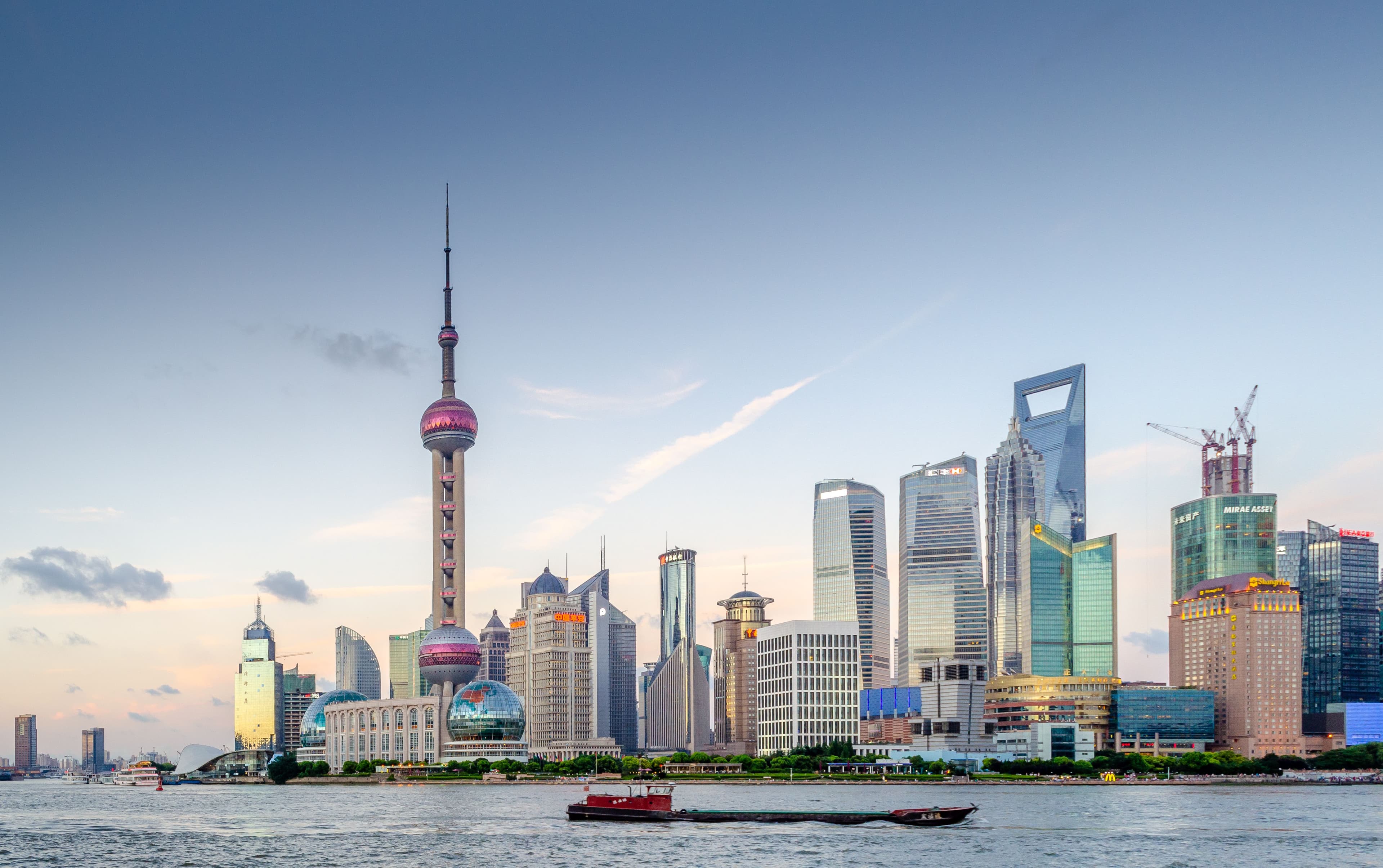
Shanghai's marathon began in 1996 as a domestic showcase, years before it drew an international field: a way to put a fast-growing Chinese commercial city in front of its own runners before anyone abroad was paying attention. That changed gradually, then quickly. The course settled around a start on the Bund, beside the Huangpu River and the colonial-era trading houses that built the city's first international reputation, and a finish at what is now Xujiahui Sports Park, several kilometres inland. In 2020, Shanghai became the first race in China to earn World Athletics Platinum Label status, the top tier in the road race ranking system, putting it in the same administrative bracket as the established Majors.
Results have done the rest of the talking. Brigid Kosgei ran 2:16:36 here in 2025, reported as the fastest marathon time ever recorded on Chinese soil, while Philimon Kiptoo Kipchumba's 2:05:35 from 2023 remains the men's course record. The 2026 edition marks the 30th running and expands the marathon field from 23,000 to 30,000, splitting off the mass-participation Health Run onto a separate date so the marathon itself can focus on serious 42.195 km racing.
This suits a runner chasing a fast, flat course with real elite depth and willing to manage variable November air quality in exchange for it. It is a poor fit for anyone wanting wall-to-wall crowd noise over the full distance; Shanghai's crowd support is real but concentrated, not constant.
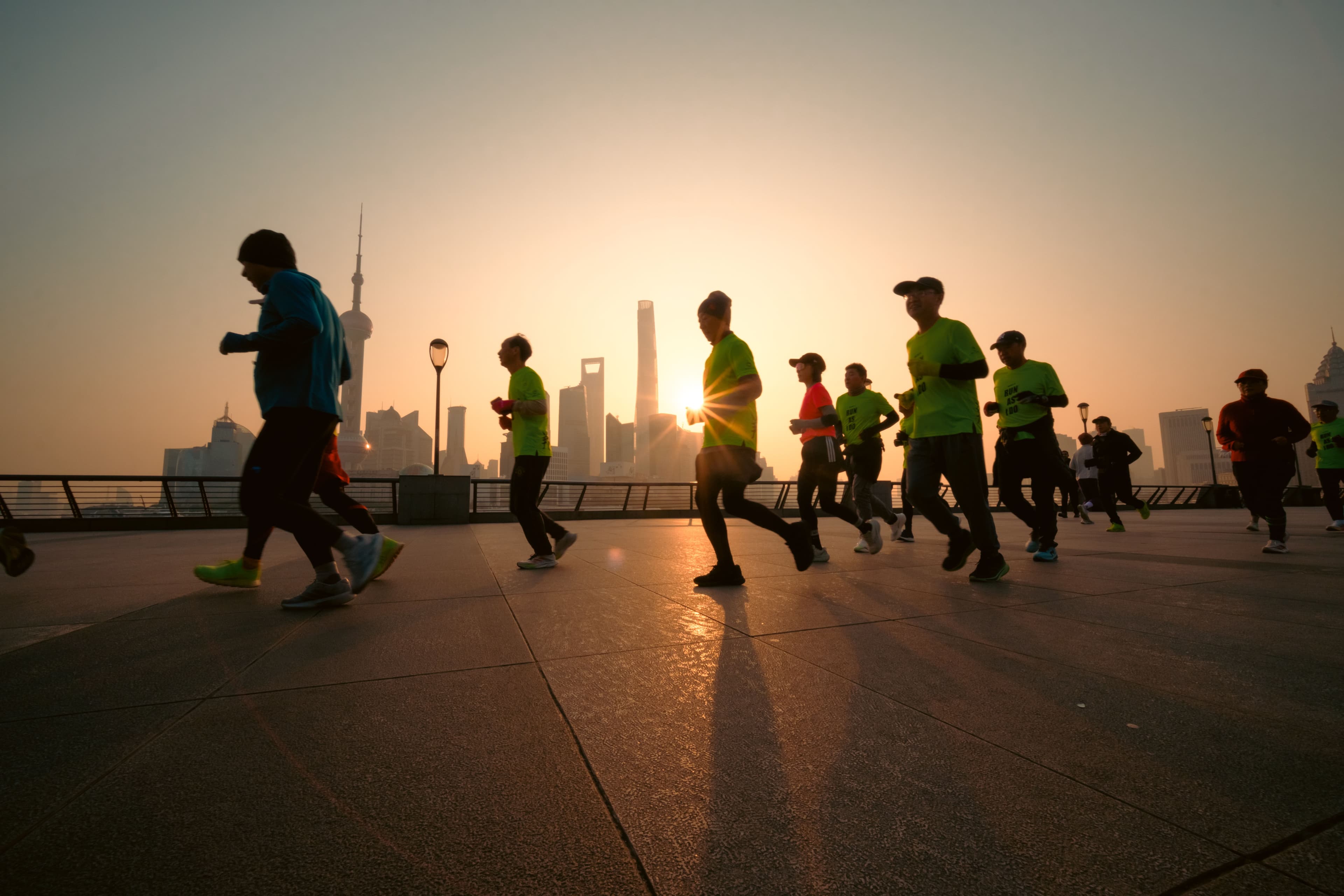
Shanghai is currently an Abbott World Marathon Majors candidate race, not yet a full Major. Abbott named Shanghai a candidate in 2024, citing 27 editions and its status as China's first World Athletics Platinum Label marathon; by 2026, the race had passed the first stage of WMM assessment. This is not a formality. Candidacy is a multi-year evaluation process and there is no confirmed date by which Shanghai is expected to graduate to full Major status, if it does at all. For runners, the practical effect right now is rising demand; the race itself has not changed: ballot applications have grown sharply year on year, the 2026 field has expanded from 23,000 to 30,000 to absorb some of that pressure, and international tour-operator interest has increased accordingly. A Shanghai entry secured in 2026 is, by most informed predictions, likely to be considerably harder to get in a few years' time.
The course
The course is a point to point road race, not a loop, starting at the Bund Bull Plaza on Zhongshan East 1st Road and finishing roughly 8 km away as the crow flies at Xujiahui Sports Park, on Zhongshan South 2nd Road. The 2026 official route stays in central Puxi and never crosses into Pudong: from the Bund it passes Nanjing Road Pedestrian Street, Jing'an Temple, Huaihai Road, Xintiandi and the Site of the First National Congress of the Communist Party of China, then continues south-west through Huangpu Riverside, Longteng Avenue, Longhua Temple and Longhua Martyrs' Cemetery before the finish.
There is no organiser-published kilometre-by-kilometre elevation table; a third-party estimate puts total gain at around 25 m on a course widely described as flat. The profile below bears that out. The whole race sits between 2 m and 31 m, the high point comes early at km 6.1, and no rise anywhere on the course reaches 20 m: the largest is 16 m spread over 1.4 km between km 11.2 and km 12.6, which is 1.2%. There is no bridge crossing on the route. The closing kilometres move through the quieter, broader roads of Xuhui and Longhua, useful territory for holding pace, into a stadium-district finish well back from the river.
Course Map
The map shows the marathon route from the Bund Bull Plaza to Xujiahui Sports Park, the expo across the river in Pudong, and the key Metro stations for race morning, expo collection and the finish. Tap a marker for details, and scrub the slider or press play to move the orange marker along the course with the elevation profile beneath it.
Km 5–12: Nanjing Road and Jing'an.The course turns into the commercial core of the city: shopfronts, office towers, old plane trees, the gold-roofed Jing'an Temple sitting incongruously among modern blocks. Nanjing Road, normally one of the busiest retail streets in China, is reported by runners to feel almost empty this early on a Sunday, which is its own small disorientation. This stretch carries the strongest "running through a working city" feeling of the whole course.
Km 12–20: Huaihai Road and Xintiandi.The route continues through Huaihai Road into Xintiandi and past the Site of the First National Congress of the Communist Party of China, one of Shanghai's most polished heritage-and-leisure districts. This is city texture. Runners coming from Berlin, London or Tokyo, where the crowd noise rarely drops, should recalibrate: Chinese marathon crowds tend to be enthusiastic and organised at specific cheering points, but the noise thins out between them. Use it where it appears.
Km 20–30: The middle miles. This is where the race goes quiet, in both senses. The published route does not show the marathon crossing into Pudong, so the classic skyline view is largely a start-area and riverside experience; it is not a sustained mid-race backdrop. Expect long, civic, well-marshalled roads with periodic but not constant support. Air quality matters most here: November and early December are usually good marathon weather, but Shanghai can have moderate or occasionally poor AQI days in late autumn. Runners with any respiratory sensitivity should decide their pace-adjustment threshold before race week, not during it.
Km 30–37: Huangpu Riverside and Longteng Avenue. The course returns toward the river before heading south-west on broad roads through Longteng Avenue. These roads are less famous than the Bund but useful: wide, flat, and the kind of territory where discipline matters more than scenery. The flatness removes hills as an excuse. It does not remove fatigue.
Km 37–42.195: Longhua and the finish.The closing kilometres pass Longhua Temple and Longhua Martyrs' Cemetery before the course turns into Xujiahui Sports Park for a stadium finish well back from the river. Late-race fatigue means most runners will register these landmarks only in passing. Hold form. There is nothing technically demanding left, just road.
The official tangent line is the fastest theoretical route between bends, and on a course this wide it is worth following properly: running the straightest practical line between turns adds up to a measurable saving over 42.195 km. Timing mats sit at the start, every 5 km, halfway, turning points and the finish, and missing one can invalidate a result, so stay on the marked course even around cones and medians. GPS watches can also drift among Shanghai's tall buildings, particularly near the Bund and Nanjing Road, so trust the kilometre boards over a GPS split in the early stages.
A dramatic, wide-road opening beside the river and the Pudong skyline. The setting makes early pace feel easier than it is; hold back and let the first kilometre settle on effort, not excitement.
Nanjing Road, Jing'an Temple, Huaihai Road and Xintiandi give the course its strongest urban texture. Crowd support is real but concentrated at specific points and never continuous.
Long, flat, well-marshalled roads with thinner crowds and the course's biggest variable: air quality. Decide a pace-adjustment threshold for AQI before race week.
A return past the Huangpu, then broad south-western roads through Longhua before a stadium finish at Xujiahui Sports Park. No hills left to blame; this is a discipline test on flat roads.
Pacers
Official pacers run at Shanghai, per organiser practice and runner reports, though the 2026 pace-band structure, corral allocation and bilingual signage had not been confirmed at the time of research. A runner-reported complaint from the 2025 edition suggested the 3:00 pacer group ran the first half faster than advertised; this is anecdotal and not an organiser statement, and runners targeting a precise time should use kilometre boards and their own watch alongside any official pacer.
What to wear
Early December race mornings in Shanghai typically sit between 8°C and 16°C, cool enough for fast racing and damp enough to feel colder while standing still for the best part of an hour before a 7am gun. Conditions are commonly described as cool and breezy rather than cold, with the riverfront start adding wind chill that the inland finish does not have. Humidity can spike comfort levels even at moderate temperatures, so layer for the warm-up, not for the gun.
A throwaway top or old long-sleeve is worth bringing for the start corral and discarding once moving; check the final runner guide for designated drop areas. Air quality is the variable that matters more than temperature here. Late autumn can bring moderate-to-poor AQI days in eastern China, and runners with any respiratory sensitivity should pack any relevant medication and decide a personal AQI threshold for adjusting effort before race week. Light gloves are sensible for the start; most runners will be in shorts and a vest or light long-sleeve by the time the field is moving.
Entry
Entry to the Shanghai Marathon runs through three separate channels, and they are not interchangeable. The general ballot, open to domestic and international applicants through the official Shangma app or website (www.shang-ma.com), is the main route: the 2026 window opened on 29 April and closed on 29 May, with results announced 30 June 2026 and payment due by 12:00 on 20 July 2026.
Demand is severe. 2025 drew 356,589 total applications, 317,425 of them for the full marathon, with a success rate around 7.2%; pre-result Chinese running media reported 2026 applications had already passed 400,000 and might approach 500,000, implying a success rate closer to 6%. The domestic entry fee is RMB 200; foreign nationals pay RMB 1,150 (around USD 160).
The second route is direct entry, available to runners who placed highly in specific feeder races. This is not a traditional time-standard GFA system; it is placement-based, and qualifiers still need to register and pay within the standard window.
| Feeder race | Direct-entry standard |
|---|---|
| Shanghai Women's Half Marathon | Top 200 overall |
| Suzhou Creek Half Marathon, Men | Top 150 |
| Suzhou Creek Half Marathon, Women | Top 100 |
| Shanghai Half Marathon, Men | Top 200 |
| Shanghai Half Marathon, Women | Top 100 |
The third route is international tour operators offering guaranteed entry bundled with accommodation and support. Marathon Tours & Travel and Sports Tours International both sell 2026 guaranteed-entry packages, though both explicitly exclude Chinese, Hong Kong, Macao and Taiwan passport or ID holders from this route, even if resident overseas. A charity quota also exists in principle (1,000 places in 2025) but no accessible 2026 quota has been confirmed.
International runners should also plan their visa route separately from race entry. China's unilateral visa-free policy now covers many passport holders, including the UK, for stays up to 30 days for tourism, but this should be checked against current government advice well in advance; runners not covered should allow four to eight weeks for a standard tourist visa application.
Race Weekend
Expo and number collection
2026 expo details have not been published in accessible official material at the time of writing; the pattern below is carried over from the 2025 edition and should be treated as the likely shape of the 2026 process, not confirmed fact. In 2025, race pack collection ran Thursday to Saturday before race day, 09:30 to 19:30 each day, at the Shanghai World Expo Exhibition and Convention Center North Plaza, No. 850 Bocheng Road. Collection required a pre-booked time slot, reserved through the official website or app under "My Registration," and runners were expected to arrive within their slot or risk being refused. Proxy collection was not allowed: runners had to attend in person with the original identification used at registration, which for foreign nationals means a passport matching the registration details exactly.
The venue sits in Pudong, on the opposite side of the river from the Bund start, and is most easily reached by Metro Line 8 to China Art Museum Station (Exit 3, around 430 m walk), Line 13 to Shibo Avenue Station (Exit 1, around 690 m walk), or Line 7 to Yaohua Road Station (Exit 4, around 1.1 km walk). Bus routes exist but the Metro is the simpler option for visiting runners.
At collection, runners should expect to test their chip in a dedicated inspection area, confirm their name and bib number, and choose a T-shirt size on site, subject to availability. Postal delivery and race-day pickup are not available, and a missed collection window is treated as a withdrawal, so build this into travel planning; it is not a flexible task for race week.
Race morning
The 2026 schedule lists the marathon start at 07:00 on Sunday 6 December, with the racing wheelchair event at 06:45. In 2025, runners were instructed to enter the start area from 05:30, and each corral used its own inspection timing carpet before the main start mat; a similar pattern should be expected for 2026, but final arrival windows and entrance points belong in the race-week runner guide.
The start sits on Zhongshan East 1st Road at the Bund Bull Plaza. The most useful Metro station is East Nanjing Road on Lines 2 and 10, around 10 to 15 minutes' walk from the Bund depending on the exact security gate and crowd flow that morning. People's Square, on Lines 1, 2 and 8, is a workable alternative but involves a longer walk. Taxis and ride-hailing are not a reliable option this close to the start: road closures around the Bund are likely to be extensive, and the Metro is the only dependable route in. Build in a generous buffer; arriving at 05:30 for a 07:00 start is not excessive given the corral and security process.
Bag drop is provided. In 2025, runners deposited bags using the official race bag with a matching small bib number, by 06:45, and collected them after the race at a finish-area tent, with collection closing at 14:30. Valuables, ID, phones, cash, watches and fragile items were advised against. No explicit headphone rule has been found in accessible 2026 sources; runner reports confirm headphones were permitted in past editions.
A throwaway layer is sensible. The combination of riverfront wind, standing still for over an hour, and December humidity makes a vest or thin long-sleeve worth discarding once moving. The first kilometres are fast and emotional by design: the Bund setting and the open road encourage overpacing, so check effort against the first split; GPS pace alone cannot be trusted, since GPS can drift among the tall buildings around the Bund and Nanjing Road.
The finish
Past the finish at Xujiahui Sports Park, expect a controlled finish chute, medal collection, then bag reclaim and managed dispersal. The closest Metro options are Shanghai Stadium (Line 4), Shanghai Indoor Stadium (Lines 1 and 4), and Xujiahui (Lines 1, 9 and 11), with the exact useful station depending on the finish-area exit routing on the day. These stations get busy fast after a marathon finish; agree a specific meeting point away from the finish chute itself, such as a hotel lobby, cafe or named Metro exit. "Meet at the finish" is not a plan. Mobile signal can be congested in the immediate finish area.
Finisher provisions for 2026 have not been confirmed; in 2025, runners finishing inside 6 hours 15 minutes received a finisher medal, with results and certificates published online afterwards.
Nutrition on course
The 2025 regulations, the most recent template available, list drink stations every 5 km from 5 km to 40 km, with additional water or sponge stations offset between them every 2.5 km from 7.5 km onward. The exact drink composition at each station, the cup type used, and whether gels are provided to ordinary runners were not confirmed in accessible sources. Reddit reports describe water and a sports drink at roughly every 5 km, broadly consistent with the official spacing, but the same reports flag the second half of the course as noticeably thinner on fuel support than the first: "the back half of the Shanghai marathon is not great in terms of support... water stations but no fuel or carb beverages," in one runner's account.
The practical conclusion is straightforward: bring familiar gels and do not rely on course nutrition past halfway, and treat any official nutrition partner or branded drink as unconfirmed until announced for 2026. No distinctive local food items have been confirmed from official sources, so none should be promised here, and on-course massage has not been confirmed either.
For spectators
Shanghai works for spectators who plan around the Metro and accept that two or three sightings is realistic, not five or six. The Bund offers the best sense of occasion, with the start and early kilometres set against the historic riverfront and the Pudong skyline, but it is also the most crowded and security-controlled vantage point, and supporters should not expect to move quickly across the route once the field is running. There is no confirmed "two for one" point where the course passes the same spot twice; the route runs point to point and never loops back. Tracking-app availability in English has not been confirmed for 2026, so supporters relying on live splits should check the official app closer to race week.
- Start at East Nanjing Road Station (Lines 2 and 10) for the Bund and Nanjing Road sections, around km 0-8
- Stay outside any secured start zones unless also entered as a runner
- Watch the field pass, then move on before roads reopen behind it
- Take Metro Line 2 to Jing'an Temple Station (Lines 2 and 7) for a glimpse around km 8-15
- Alternatively use South Huangpi Road on Line 1 for the Xintiandi area, around km 15-20
- Travel by Metro to Shanghai Stadium (Line 4), Shanghai Indoor Stadium (Lines 1 and 4), or Xujiahui (Lines 1, 9 and 11) ahead of the expected finish time
- Arrive with margin: the final approach and exit routes near the park are likely to be access-restricted as the race progresses
- Agree a specific post-race meeting point in advance, away from the finish chute
Where to Stay
The lead recommendation depends on what matters more: race-morning simplicity or post-race recovery, because the start and finish sit roughly 8 km apart and no single neighbourhood serves both equally well.
The Bund and Huangpu give the strongest Shanghai experience and the simplest race morning: walkable to the Bund Bull start, no transport uncertainty before the gun. The cost is price and noise. Nanjing Road and the riverfront stay busy into Saturday evening, so a soundproofed room or one set back from the pedestrian street matters. Marathon-weekend pricing runs roughly CNY 900 to 2,500-plus a night (£95 to £265 / €110 to €305), with riverfront luxury well above that.
Jing'an is the strongest all-rounder: west of the Bund, on Metro Lines 2 and 7, with good restaurants and a straightforward race-morning route to East Nanjing Road. It is quieter than the Bund on a side street but still lively around the temple and shopping district. Expect roughly CNY 700 to 1,800 a night (£75 to £190 / €85 to €220).
The Former French Concession and Xuhui offer a calmer, more residential base, with leafy streets around Hengshan Road and South Shaanxi Road, and the advantage of sitting closer to the finish than the Bund does. Race morning needs a Metro ride or taxi to the edge of the closed zone. Prices vary widely, roughly CNY 600 to 1,800 (£65 to £190 / €75 to €220).
Pudong and Lujiazuiare visually spectacular and hotel-heavy, but require crossing the river to reach the start, usually via Metro Line 2 to East Nanjing Road or People's Square, with extra time needed for race-morning station and road controls. Expect CNY 900 to 3,000-plus (£95 to £315 / €110 to €365-plus).
Xintiandi and South Huangpi Road sit between the Bund and Xuhui, with good Metro access and a polished restaurant and bar scene that can run loud on Saturday night; ask for a room away from the nightlife strip. Expect roughly CNY 900 to 2,200 (£95 to £235 / €110 to €270).
Xujiahui and the Shanghai Stadium areaare the pragmatic finisher's choice: less occasion before the race, but a short walk or Metro ride back after it, which matters more than romance once the legs stop working. Prices are typically lower than the Bund, roughly CNY 500 to 1,500 (£55 to £160 / €60 to €185).
Booking timing follows directly from the ballot calendar: hotel demand spikes once ballot payments close, so the booking window should be opened as soon as a place is confirmed, particularly for the Bund and Xujiahui areas. Ballot results land on 30 June, with successful runners required to pay by 12:00 on 20 July 2026; that payment deadline is the point at which hotel demand should be expected to firm up. With a 30,000-runner field and reported 2026 ballot demand above 400,000 applications, this is no longer a race where a runner can comfortably wait until autumn to book. The most efficient approach is to book a flexible, free-cancellation rate as soon as the ballot opens in spring, then confirm once results and payment are settled in late June and July. Flights into Pudong or Hongqiao should be treated the same way: book refundable where possible, confirm after the ballot.
Listed in Marathon Tours & Travel's 2026 package. Sits on Nanjing East Road, close to East Nanjing Road Metro and within walking distance of the Bund start, which removes the race-morning transport question entirely. Confirm current branding and availability before booking.
Fundy Sports & Travel's official 2026 package hotel, walkable to the start with river views. Strong choice for runners prioritising start-line ease and willing to pay for it. Confirm current availability before booking.
A more budget-conscious option within walking distance of the start, without riverfront luxury pricing. Check current cancellation terms and rates before booking, since marathon-weekend prices can move quickly.
A workable midpoint between Bund-area sightseeing and finish-side practicality, with the Dapuqiao and Tianzifang food scene nearby at lower prices than the riverfront. Check current rates before booking.
The practical recovery choice, a short walk from Xujiahui Sports Park with Metro Lines 1, 9 and 11 nearby. Less occasion before the race, considerably easier after it. Check current rates before booking.
See & Do
The start and finish sit around 8 km apart, so the attractions below span both ends of the course instead of clustering at one point.
The Bund
0 km from the start area. The race's visual anchor and the simplest attraction to fold into marathon weekend, since it is also the start line. Visit at sunrise or evening for the clearest view across the river to Pudong; race weekend itself will be crowded, so early morning works best for photos outside of race day.
Shanghai Tower Observation Deck
Roughly 4 to 5 km from the Bund, across the river in Lujiazui. The best vertical view of the city, useful for understanding the course geography from above: river, Puxi, Pudong and the wider sprawl. Advance booking is recommended, particularly at weekends, and this is better scheduled before the race than immediately after it given the queues and stairs involved. Confirm current opening hours and booking requirements before travelling.
Yu Garden and Yuyuan Old Street
Roughly 1.5 to 2 km from the Bund. One of Shanghai's most visited historic sites, with classical garden architecture and dense, tourist-heavy streets outside it. Convenient to combine with expo collection given the proximity, but can be very busy with tour groups; check the current ticketing system and go early.
Xintiandi and the Site of the First National Congress of the Communist Party of China
Roughly 3 km from the Bund, directly on the marathon route. A polished, walkable district that doubles as both a Saturday lunch destination and one of the named landmarks on the race route itself, giving it added relevance for runners who want to see a section of the course on foot beforehand. Quieter by day; the bar scene picks up at night.
Longhua Temple
Near the later course, close to the Xuhui and Longhua area. A calmer post-race option for anyone staying near the finish, and a direct link to one of the landmarks named in the official route description. A gentler choice than central sightseeing if legs are sore the day after.
Read Before you Run
Shanghai: The Rise and Fall of a Decadent City
Stella Dong
A history of treaty-port Shanghai, the foreign concessions and the Bund's commercial heyday, useful background for the opening kilometres of the race and the buildings runners pass at the start. Connects directly to the marathon's setting, with no general China context.
Empire of the Sun
J. G. Ballard
A wartime Shanghai novel, not a guidebook, that adds a darker historical layer beneath the modern skyline runners see from the start line. Best read alongside, not instead of, a factual account of the city's international settlement period.
After the Race
Shanghai's high-speed rail network puts several of eastern China's best short breaks within easy reach of a runner who has just finished 42.195 km. The excursions below are ordered by how much they ask of legs that ran a marathon.
Zhujiajiao is the gentler recovery option, with canals and short walks close to the city. Suzhou is faster to reach and more substantial, with classical gardens and an old-town canal network; on sore legs, pick one or two gardens and skip the rest of the old town.
An overnight that pairs Suzhou's classical gardens with the quieter water town of Tongli, giving enough movement to make the trip worthwhile without overloading recovering legs. Book trains in advance around weekends.
The strongest post-marathon option for most runners: West Lake is scenic and recovery-friendly if explored by taxi, short walks and lakeside cafes, with no full day of hiking. Add Lingyin Temple if stairs feel manageable. Ideal in November and early December.
A more ambitious extension combining Hangzhou with Yellow Mountain's granite peaks and pine forests, spectacular in late autumn but not gentle on post-marathon legs even with cable cars reducing the climb. Pack warm, waterproof layers.
Frequently asked questions
Should I stay near the start or the finish?
Stay near the start, around the Bund or East Nanjing Road, if this is your first Shanghai Marathon: it removes race-morning transport uncertainty entirely. Stay near Xujiahui or Shanghai Stadium if post-race recovery matters more, since that is where the finish sits, around 8 km from the Bund.
How far in advance should I book a hotel?
Book a flexible rate as soon as you enter the ballot, then confirm once results land on 30 June and payment closes on 20 July 2026. The 2026 field has grown to 30,000 runners with reported ballot demand above 400,000 applications, and hotel prices near the Bund, Nanjing Road and Xujiahui are likely to rise once entries are confirmed.
Is there free transport to the start?
No official 2026 source confirms free race-day public transport for all runners. Some international tour packages include a transport card, but that is package-specific; it is not a race-wide benefit. Plan to pay for Metro journeys using Alipay, WeChat Pay, a transport card or a paper ticket.
What is the best area to stay?
For most international runners, the Bund and East Nanjing Road area is the strongest first choice: walkable to the start and the most distinctively Shanghai experience. Jing'an is the best all-round alternative for comfort and transport. Xujiahui suits runners prioritising recovery, and Pudong suits those who want skyline luxury over logistics.
When does the expo open?
2026 dates have not been confirmed. In 2025, race pack collection ran Thursday to Saturday before race day, 09:30 to 19:30, at the Shanghai World Expo Exhibition and Convention Center North Plaza. A pre-booked time slot and the original ID used at registration were required; proxy and postal collection were not allowed.
What is the weather typically like?
Generally good marathon weather: cool, often 8 to 16°C on race morning, with the bigger variables being humidity, wind off the river and air quality; temperature is rarely the issue. November and early December can bring moderate or occasionally poor AQI days in Shanghai, so it is worth monitoring AQI during race week alongside the standard forecast.
How do I get from the airport?
From Pudong Airport, the Maglev reaches Longyang Road in around 8 minutes, with a Metro transfer from there into the city; Metro Line 2 also connects Pudong Airport directly, more slowly. From Hongqiao Airport, Metro Lines 2 and 10 cover most central destinations. Taxis are convenient but can be slow in traffic.
Is there a bag drop?
Yes. In 2025, runners deposited bags by 06:45 using the official race bag and a matching small bib number, then collected them after finishing, with collection closing at 14:30. Avoid packing valuables, ID, phones or cash. Confirm exact 2026 timings once the runner guide is published.
Should I bring a throwaway layer?
Yes. Early December mornings can feel cool and damp, especially waiting near the river before a 7am start. A cheap long-sleeve top or old sweatshirt is sensible. Never throw clothing onto the running line itself.
How do I get back to my hotel after finishing?
The finish is at Xujiahui Sports Park. Useful Metro stations include Shanghai Stadium on Line 4, Shanghai Indoor Stadium on Lines 1 and 4, and Xujiahui on Lines 1, 9 and 11, depending on race-day exit routing. If staying near the Bund, expect a busy ride back; agree a meeting point with supporters away from the finish chute in advance.