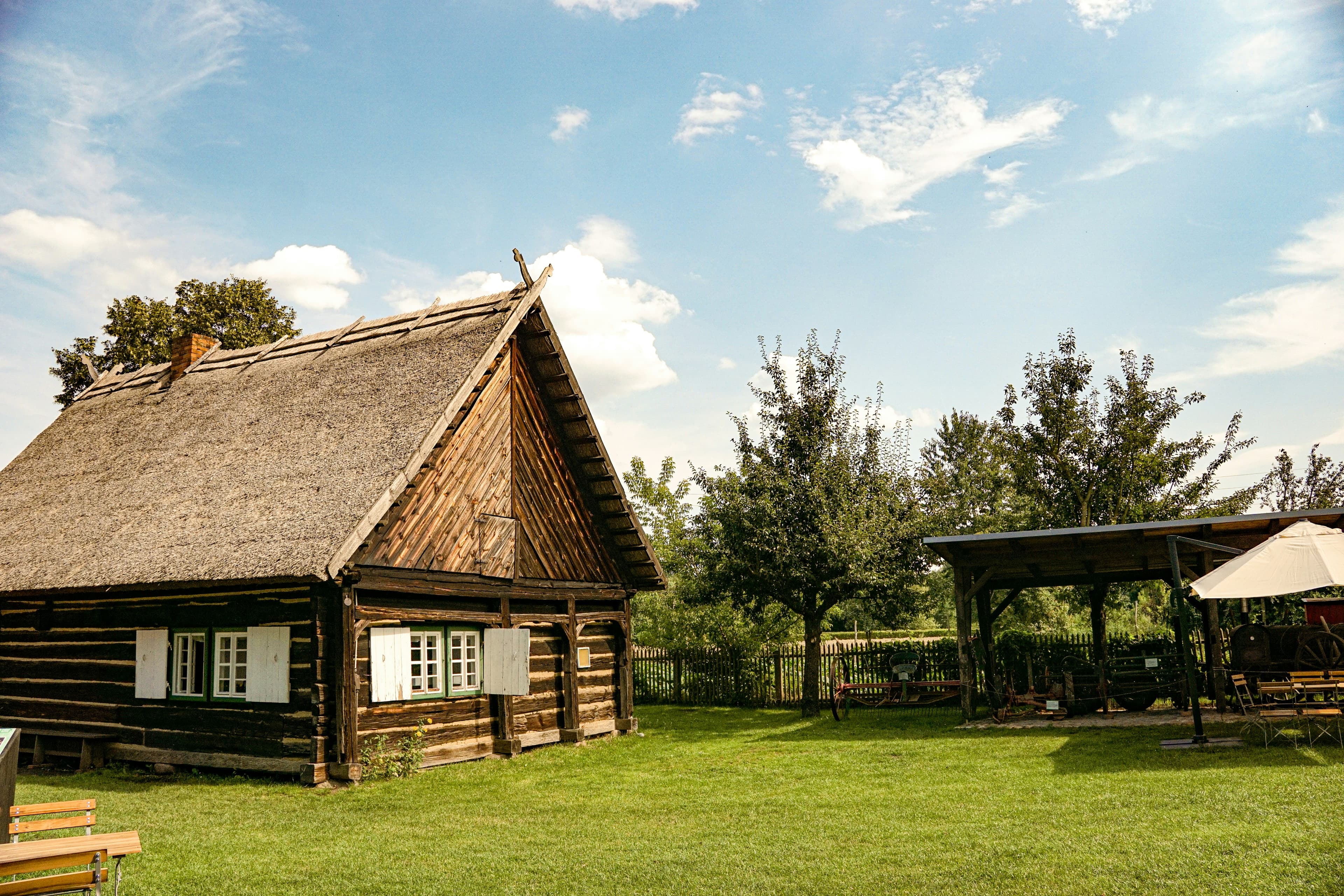
The Race
A new course for the 25th anniversary
The organiser has confirmed that the 2027 edition runs an entirely new marathon course, and the route has not yet been published. Nothing on this page describes the line you will actually run. The kilometre-by-kilometre guide, the aid-station positions and the elevation profile all wait on the organiser’s map and measurement certificate, and the map further down shows the retired route for terrain context only. Everything else here, entry, travel, accommodation and the festival around the race, is unaffected by the change.
| Next Race Date | 25 April 2027 |
|---|---|
| Course Type | Loop: Burg start and finish. The 2027 route geometry is not yet published |
| Registration | Open, no ballot. Every discipline is participant-capped for biosphere-reserve reasons |
| Ballot Opens | Not applicable: open registration |
| Total Finishers | Historically around 200 to 380 for the full marathon |
| Average Race Day Temperature | Not confirmed. April mornings are cool, with a real chance of rain and wind |
| Cutoff Time | 5 hours 30 minutes, a 14:30 finish from the 09:00 start, on the outgoing framework |
| Free Race Day Transport | Not confirmed. Parking sits outside Burg with a 15 to 20 minute walk in |
| Course Certification | The DLV-recognised measurement on record applies to the retired course. The 2027 route’s own certification is not yet confirmed |
History
The Spreewald-Marathon is the running strand of a four-day multi-sport festival built around Burg, in the Brandenburg biosphere reserve southeast of Berlin. The festival is the larger story: it reached its stated maximum of 15,000 registrations across every discipline in 2026, a remarkable number for a rural community of this size, and the weekend covers running, cycling, skating and walking events spread across several Spreewald towns.
The marathon itself has always been the smaller, quieter strand of that total. Pre-pandemic editions typically recorded somewhere between 200 and 380 full-marathon finishers, a fraction of the wider festival’s field. The race began with a Cottbus start in 2003 and 2004 before moving to the Burg-based circuit it has used since. A full edition was lost to the pandemic, and road and bridge works have periodically forced route alterations over the years.
The course’s defining trait has been extreme flatness. The organiser measured the retired route at just 1.8 m of total height difference, which put it among the flattest certified marathons anywhere, with seven short raised wooden stair bridges as the only interruptions to a level profile. For the 25th anniversary in 2027 the organiser has announced an entirely new course, a change significant enough that historical course-specific claims tied to the old route should not be read across to the new one.
What has not changed is the finish. Every finisher receives the Gurkenmedaille, the pickle-shaped medal that has become the event’s signature souvenir and a fair summary of how seriously the race takes itself, alongside a printed certificate and a free alcohol-free Krombacher.
The course
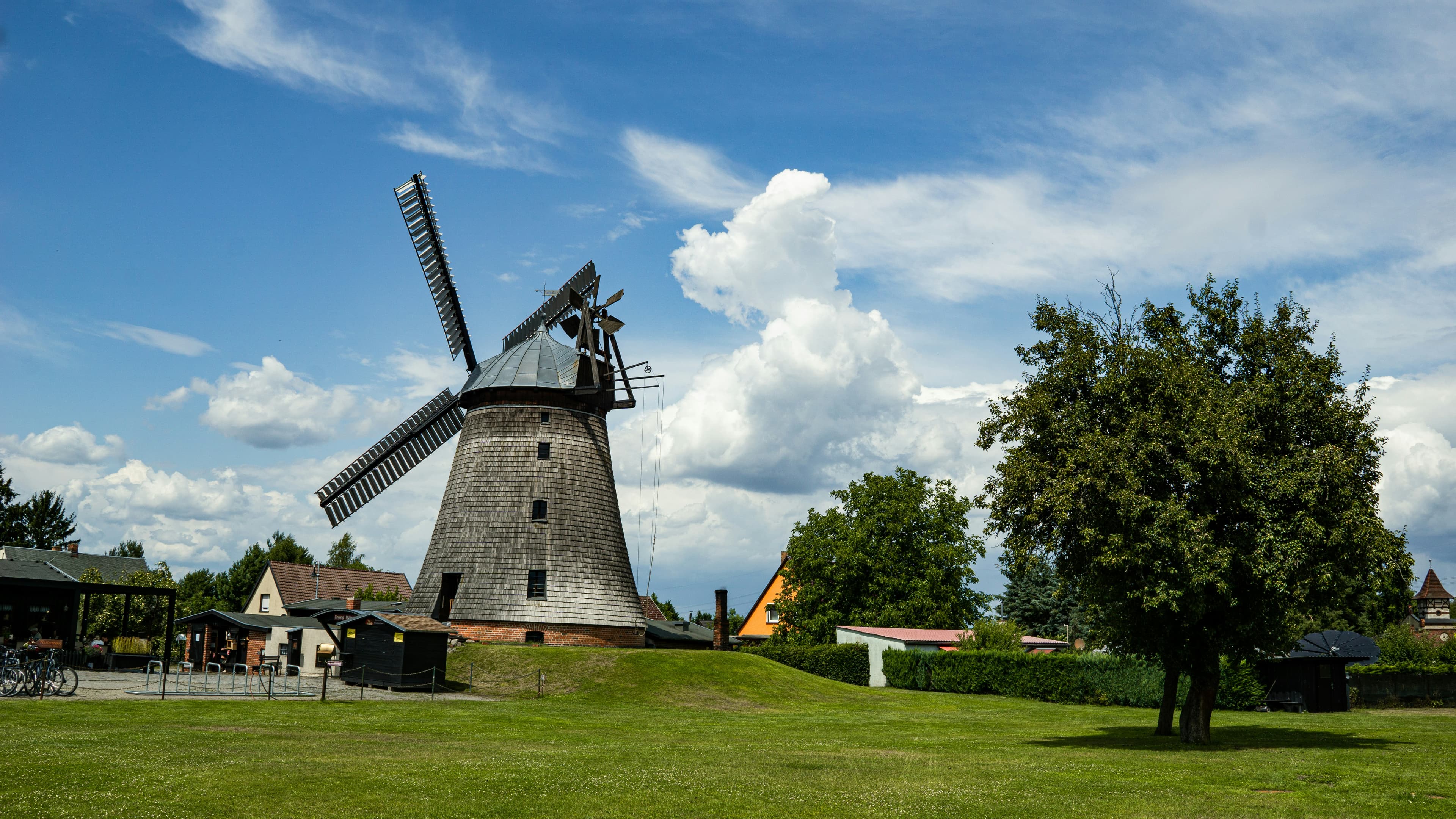
The 42.195 km Spreewald-Marathon starts and finishes at the Festplatz in Burg (Spreewald), near the town’s Tourist Information office. That much holds for 2027. Beyond it, the organiser has confirmed the marathon will run a new course for the anniversary edition, and a detailed village-by-village, bridge-by-bridge sequence has not been published. A full kilometre-by-kilometre guide will be added here once the organiser releases the route map and measurement certificate.
What can be said with confidence is the terrain, because the Spreewald does not change. It is low-lying and water-dominated: long flat sightlines, canals, meadows, scattered settlement and the characteristic wooden bridge crossings are the visual signature of the region whatever line the 2027 route takes. The retired course’s defining number, 1.8 m of total height difference plus seven short raised stair bridges, explains why runners have historically described this race as rhythm-friendly. Those bridges are short, but they interrupt stride and become more noticeable late in a marathon than their modest height suggests. If the new route keeps to similar ground, wind will remain the dominant pacing variable: the organiser’s own description of the old course as fast and fluid applied specifically when there was no wind.
The cutoff structure is worth knowing even before the new route is confirmed, because it shows how the organiser thinks about pacing here. On the retired course a checkpoint fell at km 9 with a 10:10 cutoff, a second at km 24.7 by 12:12, and the course closed entirely at 14:30, a 5 hour 30 minute net cutoff from the 09:00 gun. Runners who missed the km 9 checkpoint were redirected onto the half-marathon course and classified there. This is not a race where a participant can drift comfortably behind a pace group and expect to finish the full distance regardless. Treat those exact kilometre points as provisional: the anniversary redesign could move them.
The retired course
This map is not the 2027 route
What follows is the course used through 2026, as measured by the retired course’s own DLV measurer in February 2025. It is shown for one reason: to give a sense of the ground the race covers, the shape of a Spreewald loop out of Burg and back. It has been explicitly retired for the anniversary edition. Do not pace, plan or recce against it.
The retired loop out of Burg and back through the biosphere reserve. Tap a marker for details, and scrub the slider or press play to move the orange marker along the course with the elevation profile beneath it.
Pacers
No official pace-group programme has been identified for the marathon distance. Given the field size, typically a few hundred runners inside a festival of many thousands, and a course whose 2027 geometry is not yet public, plan to pace by effort and by the checkpoint structure.
What to wear
April mornings between 08:00 and 09:00 in the Spreewald can be genuinely cold, and a throwaway layer is a sensible default whenever the forecast reads in single digits Celsius. Sunshine is possible, but rain and wind are realistic, and no sourced average race-day temperature in degrees was found for this event, so the forecast matters more here than a climate table would.
Waterproof cover deserves more thought here than at many spring city marathons. Once runners are out on the rural course, spectator points and transport options thin out quickly and there is little shelter if conditions worsen: this is open biosphere-reserve landscape, not a street circuit with a café every few hundred metres. The flatness that makes the race fast in still air also means there is nothing to break a headwind.
Entry
Entry is open, not balloted, through the organiser’s online registration system. Every discipline across the four-day festival, not only the marathon, is participant-capped, because the Spreewald Biosphere Reserve’s roads, footbridges and village public space cannot absorb unlimited numbers. That is a real operational constraint: the whole festival reached its stated maximum of 15,000 registrations in 2026. Early entry is worth prioritising for that reason even though the marathon distance itself has historically drawn a comparatively small field.
The entry fee for the anniversary edition is not reliably exposed outside the live registration form, and a figure circulating on a third-party aggregator could not be corroborated against the organiser’s own material. Check the live system directly.
After the online deadline, on-site late entry has historically been available only for disciplines that have not already sold out, with a possible small late-entry surcharge. There is no fast-runner or Good for Age entry route, no charity-place scheme and no official international tour-operator allocation.
The organiser’s entry conditions state plainly that withdrawal or a non-start does not generate a refund, and that switching to a shorter distance after registering does not refund the price difference. A fuller transfer or deferral policy beyond those two points should be confirmed in the registration system before relying on it. The practical advice for a travelling runner is to enter as soon as the fee and terms are visible, primarily because Burg’s own accommodation stock is the binding constraint on a comfortable trip.
Fast Runner / GFA Standards
Not applicable. This race has no fast-runner or Good for Age entry category, and entry is open to all runners at the same terms.
Race Weekend
Expo
Start documents are collected at the Burg Festplatz, not at a separate off-site venue, and the event does not resemble a conventional indoor commercial expo. The Festplatz operates as a broad multi-discipline registration and festival centre, with food stalls, entertainment and heavy participant traffic through the weekend.
The most recently published collection pattern runs Friday 13:00 to 20:00, Saturday 06:00 to 20:00, and Sunday 06:30 to 13:00, ahead of the various Sunday start times. Given the Sunday morning start and a same-day window closing at 13:00, marathon runners should treat Friday or Saturday collection as the safer plan, since Sunday pickup which overlaps directly with pre-race preparation.
Parking is the organiser’s most consistently repeated warning. Official parking fields sit at several approaches to Burg, and the walk from an outer field to the school and Festplatz area takes 15 to 20 minutes. There is no parking immediately adjacent to the Festplatz during the event. Runners staying outside Burg should budget that walk, plus queueing time, into their morning regardless of when they collect their number.
Getting to the Start
The running marathon has started at 09:00 on the Sunday, ten minutes behind the 08:50 Run & Bike marathon. No wave or corral structure has been found for the 42.195 km distance; given the marathon’s comparatively small field within the wider festival, a single start is plausible, but confirm against the 2027 schedule.
Burg is a small town, but race morning is not a small event: thousands of people across multiple disciplines move between parking fields, the registration centre and several separate start areas at once. Treat the morning with the planning discipline of a major event. If driving, build in the organiser’s stated 15 to 20 minute walk from the outer parking fields plus queueing at the field itself. Staying in Burg and walking or cycling to the Festplatz removes this problem entirely, and is the single biggest logistical advantage of a central booking. Public transport reaches the wider Spreewald, but rural Sunday timetables run far less frequently than a city network.
Bag and clothing storage is managed through the Burg event centre. Shower access has been affected by sports-hall construction work in recent years, with the organiser expressing hope that a new hall would be finished by 2027, so treat shower availability as unconfirmed until checked closer to the event. A free post-race massage service has been listed in Burg in past years.
At the finish, runners receive the Gurkenmedaille and a printed certificate, along with one free alcohol-free Krombacher. Festival catering continues around the Festplatz through the afternoon, so there is no pressure to leave the finish area quickly in search of food.
Nutrition on Course
A confirmed aid-station table for the anniversary edition cannot be given, because the course itself has not been released. Plan on-course nutrition around your own carried supplies until the organiser publishes a route-specific matrix.
For context only: the retired course positioned nine water and refreshment points along the marathon route, roughly every 4 to 5 km, plus the finish. Standard drinks across the wider festival’s aid network are water, isotonic drink, cola and tea, and the organiser describes an unusually large festival-wide food offer, more than 100 items across the weekend including regional specialities and cake. Those festival-wide items are not all available at every individual marathon station, and no personal-bottle drop-off service has been described for the marathon distance.
Spectating
Spectating the full marathon cannot be planned in detail until the 2027 course is published. The strategy that works regardless of the final route is to treat the Burg Festplatz as the primary base: it guarantees a view of both the start and the finish and avoids any question of rural road closures elsewhere. Watch the 09:00 start, spend the morning in the wider festival and Burg town centre, and return to the same spot for the finish. That requires no movement around a closed course at all, which suits families and anyone with limited mobility.
The Spreewald is exceptionally cycle-friendly, and spectators on bikes have more flexibility than those on foot or by car, provided they never enter the closed course or obstruct competitors on shared paths. Once the route map is published, parallel cycle paths may allow a second sighting beyond the Festplatz. Driving between multiple course points is not recommended: the organiser has consistently warned about constrained parking around Burg and rural traffic restrictions, and attempting it can easily end up slower than staying put. Live results have historically run through regional timing portals.
Post-Race Food
Immediate calories are rarely a problem here: the event is known for its food offer, and festival catering continues around the Festplatz through the afternoon. For a proper sit-down meal, Burg has a small number of established options. Restaurant Zur Kräutermühle on Kurparkstraße serves regional Spreewald cooking within easy walking distance of the Festplatz and has historically stayed open through Sunday evening. La Bicicletta on Ringchaussee is a straightforward Italian option for a group with mixed appetites. ThermenRestaurant, also on Ringchaussee and attached to the Spreewald Therme complex, suits anyone combining a meal with the thermal spa. Burg is crowded on marathon weekend given the scale of the festival, so reserving a table is worth the five minutes it takes, particularly for a group arriving straight from the finish.
Where to Stay
The organising principle here is simpler than at a big-city marathon, because the start and finish sit in the same small place: stay as close to the Burg Festplatz as possible, and treat that proximity as the deciding factor over anywhere further out that looks appealing on a map.
Burg-Dorf
Burg-Dorf, the village centre, is the strongest overall choice. A room here means walking or cycling directly to the Festplatz on race morning, entirely avoiding the organiser’s repeatedly flagged 15 to 20 minute walk in from the outer parking fields. Restaurants and the Tourist Information office sit close by. The trade-off is inventory: this is the smallest and earliest-booking accommodation pool in the area, and it is worth securing before anywhere else on this list.
Burg-Kauper and Burg-Kolonie
Burg-Kauper spreads accommodation among the waterways and traditional landscape that give the region its character. Staying here means waking beside the canals, but distances to the Festplatz are more deceptive than they appear on a map, and a bicycle or car is generally necessary. Anyone booking here should also check whether their road or path is affected once the new marathon route is published, since the course change could alter local access on race morning. Burg-Kolonie is a quieter rural option with guesthouses and holiday apartments, suited to families or a longer stay, though it serves a 09:00 start less well than Burg-Dorf.
Lübbenau and Cottbus
Lübbenau is a major Spreewald tourism base in its own right and one of the festival’s other host towns, with considerably more accommodation and rail access than Burg. Its drawback for the marathon specifically is straightforward: it requires arranging race-morning transport into Burg, a variable that a Burg-Dorf booking simply removes. It becomes sensible if travelling companions are taking part in Lübbenau-based festival disciplines instead. Cottbus is the best option for rail connections and hotel supply by a clear margin, and was in fact the marathon’s original start city in 2003 and 2004, but the race-day transfer into Burg makes it a fallback. Lübben, north of the core Spreewald with rail access toward Berlin, suits extending a trip more than it suits race morning.
Book as early as the calendar allows. The 2026 festival reached its full 15,000-registration capacity across all disciplines, and Burg is a genuinely small tourism community with finite stock. A central room within walking or cycling distance of the Festplatz is worth more than a marginally cheaper option further out.
Recommended hotels
A small guesthouse in the village centre, the kind of booking that disappears first on marathon weekend precisely because it removes the outer-parking walk entirely. Limited room count makes it worth securing as soon as travel dates are fixed.
A practical, established Burg property, well suited to a runner who wants a straightforward walk to the start and back without extra logistics to plan.
A larger resort-style property with more on-site facilities than the village-centre guesthouses, at the cost of not being walking distance to the start. Useful for a group wanting a bicycle or car for the wider Spreewald as well as race day.
Sits directly among the canals and traditional landscape that make Burg-Kauper distinctive, at the cost of needing a bike or car to reach the start on Sunday morning.
The recovery-focused choice for anyone prioritising a spa afternoon over a short walk to the start line, at a materially higher price point than the other four options here.
Booking timeline
Book Burg accommodation as early as travel dates are fixed, because this race has no ballot to wait for. The binding constraint on a comfortable trip is not marathon entry, which is open, but the small fixed stock of rooms and guesthouses in and around Burg. The 2026 festival’s 15,000 total registrations across all disciplines give a sense of the demand converging on a small rural community over one weekend. Register for the marathon once the fee and terms are visible in the live system: every discipline is explicitly participant-capped for biosphere-reserve reasons, so early entry is sensible, though there is no ballot-style sell-out announcement to watch for. Rail travellers should book through Berlin, Cottbus or Lübbenau depending on their route in. A car is useful for exploring the wider Spreewald either side of the race, but becomes a liability on race morning itself.
See & Do
Everything below is judged from the finish at the Burg Festplatz and the accommodation around it. This is a rural biosphere reserve, so the options are landscape and water, and most of them ask very little of raced legs.
A traditional Kahnfahrt
The region’s classic recovery activity is a seated boat trip along the Spreewald’s canals, propelled by a punt pole, so tired legs do no work at all. Departure points sit within the Burg waterway network. April can still be cool on the water, so bring a layer, and a shorter trip suits the day immediately after finishing better than a long circuit. Book ahead on event weekend given how many runners and spectators are in Burg at once.
Burg harbour and waterways
Within Burg itself, easy walking from the Festplatz and most central accommodation. A flat, low-effort way to spend a recovery afternoon without a transfer of any kind: the harbour area and adjoining waterway paths let a runner see the landscape the marathon runs through without covering much ground on foot.
Spreewald Therme
In Burg, a short walk or drive from the Festplatz. A real recovery option, since warm water and gentle movement can ease post-marathon stiffness. Heat and sauna use immediately after a marathon deserve caution: hydrate properly beforehand and keep any sauna sessions brief.
Lübbenau old town and harbour
About 20 minutes from Burg by road, with regular bus connections between the two towns. Flat old-town streets and one of the Spreewald’s largest boat harbours, with Kahnfahrt options of varying length. April sits in shoulder season, so check boat schedules and frequencies locally before assuming.
Slawenburg Raddusch
A short car or bicycle trip from Burg. A compact reconstructed Slavic ring fort and museum covering the region’s early medieval Sorbian and Slavic history, which gives cultural context for the Spreewald beyond its waterways. Confirm April opening dates and hours directly before visiting.
After the Race
The Spreewald sits between Berlin and the Saxon border, which gives the days after this race more range than Burg’s size suggests. Berlin is a comfortable regional-rail journey through Lübbenau or Cottbus, Dresden a little further, and the Lower Lusatia lake district immediately south is one of the stranger landscapes in Germany. Late April is a good time for all of it, and the first day after a flat marathon is better spent on a boat or a train than on foot.
Flat old-town streets and one of the Spreewald’s largest boat harbours, with Kahnfahrt options of varying length. April is shoulder season, so check boat schedules locally.
The region’s largest city and the marathon’s original start town in 2003 and 2004. Better hotel supply and rail connections than anywhere in the Spreewald itself, and a sensible first stop for anyone continuing onward.
Reached via Lübbenau or Cottbus without much effort, which makes the capital a natural continuation. Two nights allows one slow day and one fuller one.
A post-mining landscape turned into one of Europe’s largest artificial lake districts, still visibly in transition. Flat, quiet and unlike anywhere else nearby, though a car makes it considerably easier.
A longer extension into the Elbe valley, pairing Dresden’s rebuilt centre with the sandstone country upstream. Extends to four nights comfortably if the walking is kept for the later days.
Frequently asked questions
Should I stay near the start or the finish?
They are the same place, the Festplatz in Burg. Burg-Dorf is strongest, since a room there means walking or cycling in and avoiding the organiser’s flagged 15 to 20 minute walk from the outer parking fields.
How far in advance should I book a hotel?
As early as travel dates allow. Entry is open, so the binding constraint is Burg’s small stock of rooms against a festival that reached its 15,000-registration maximum across all disciplines in 2026.
Is there free transport to the start on race day?
None confirmed. Parking is the organiser’s most repeated warning: outer fields with a 15 to 20 minute walk in, and nothing adjacent to the Festplatz. Rural Sunday transport is sparse, so check connections in advance.
What is the best area to stay?
Burg-Dorf for walking distance. Burg-Kauper for the waterway setting, though a bike or car becomes necessary. Lübbenau and Cottbus have far more rooms but need race-morning transport into Burg.
When does the expo open?
There is no indoor expo. Collection is at the Burg Festplatz, most recently Friday 13:00 to 20:00, Saturday 06:00 to 20:00 and Sunday 06:30 to 13:00. Collect Friday or Saturday, not on race morning.
What is the weather typically like on race day?
April mornings can be genuinely cold at the 09:00 start, with a real chance of rain and wind. No sourced average figure in degrees was found. Waterproof cover matters more here than at a city race.
How do I get to Burg?
By rail through Berlin, Cottbus or Lübbenau, then locally into Burg. A car helps for exploring the Spreewald but is a liability on race morning given the parking walk.
Is there a bag drop?
Yes, through the Burg event centre. Shower access has been affected by sports-hall construction in recent years, so treat it as unconfirmed until checked. Free post-race massage has been listed in past years.
Should I bring a throwaway layer?
Yes, whenever the forecast reads in single digits. Waterproof cover deserves more thought than at a city marathon, because the rural course offers little shelter once you are out on it.
How do I get back to my hotel after finishing?
From Burg-Dorf you walk. From Burg-Kauper a bicycle is easiest. There is no rush: festival catering runs through the afternoon, and finishers get the Gurkenmedaille and a free alcohol-free Krombacher.