The Race
| Next Race Date | Sunday 15 November 2026 |
|---|---|
| Course type | Loop (start and finish about 0.3 km apart) |
| Registration | Open entry online on Endu, no ballot |
| Ballot opens | Not applicable |
| Start | Corso Porta Nuova, 09:00 |
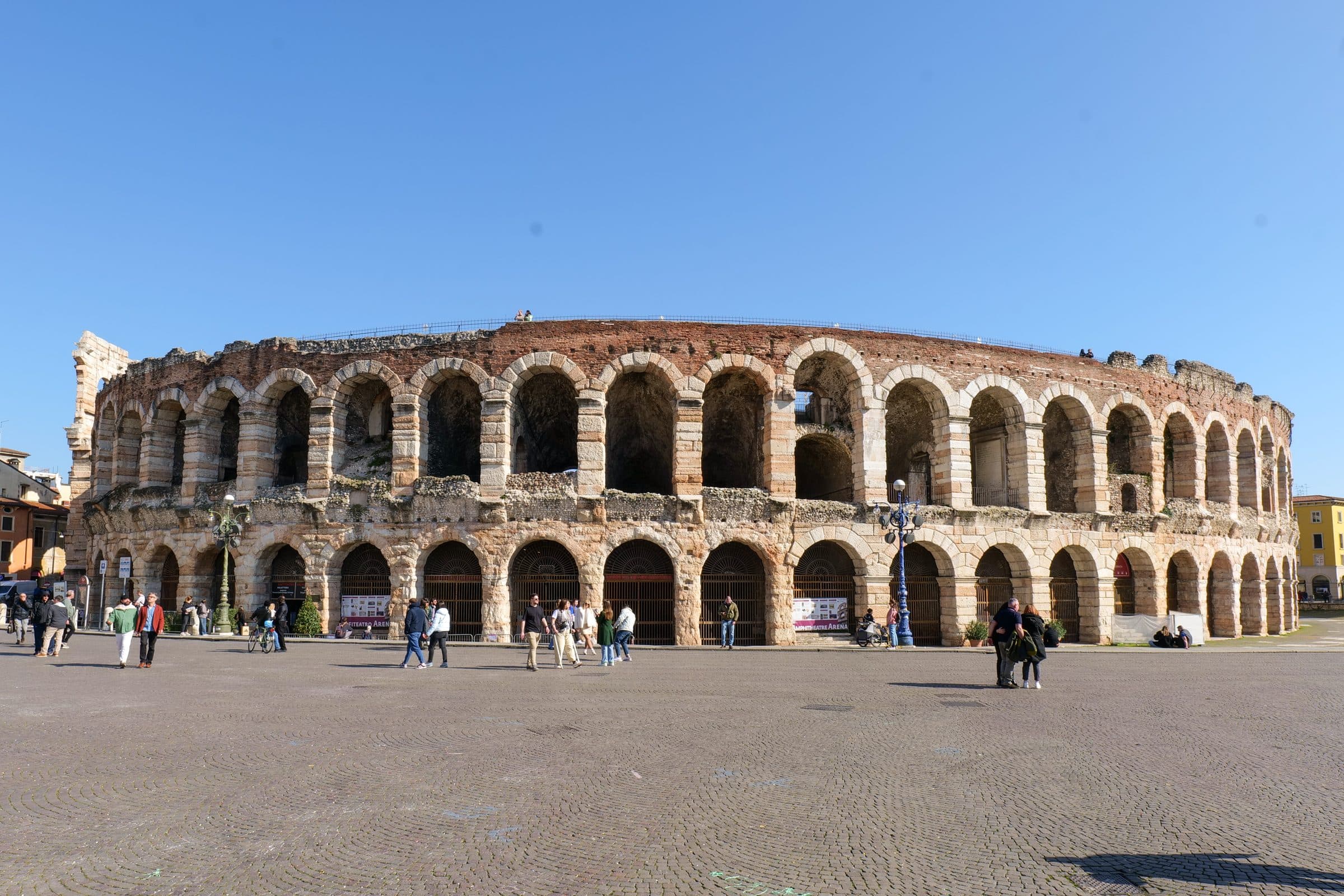
| Finish | Piazza Bra, beside the Arena |
| Total finishers | To be Confirmed |
| Avg race-day temp | 9°C |
| Cutoff time | 6 hours, with a 20 km gate at 11:50 |
| Free race-day transport | Yes, a free shuttle between the expo, Verona Porta Nuova station and Corso Porta Nuova |
| Course certification | FIDAL type A, national silver level |
History
The Verona marathon in its present form is run in November on a city course that starts on Corso Porta Nuova and finishes in Piazza Bra, beside the Roman Arena. It is organised by G.A.A.C. 2007 Veronamarathon ASD, with Infront Italy joining as co-organiser in 2026, and the title sponsor is Eurospin. The organiser's roll of honour begins in 2002 and labels that race the second edition, so an earlier race came before it and the count does not describe a simple annual run.
The race is separate from the February Romeo & Giulietta half marathon and the October Verona Run Fast 10K, and it shares its weekend with a 21K and a Family Run. The 2025 edition was held on 16 November in rain, and Samson Kipchirchir Keiyo of Kenya won the men's race by six seconds in about 2:14:45, with Alessia Tuccitto of Italy winning the women's race in 2:37:41, a personal best. Reports put about 12,000 runners across all events on the day and said numbers grew again, especially in the half marathon, helped by runners entering under the tourist-sport category.
The organiser's roll of honour lists a men's record of 2:09:16, set by Kiplagat Albert Matebor of Kenya in 2011, and a women's record of 2:29:09 set by Giovanna Epis of Italy in 2023, the year the race hosted the Italian marathon championship.
The course
The marathon starts on Corso Porta Nuova, close to Piazza Bra, and finishes in Piazza Bra beside the Arena. It is not a single big loop. The first half works out to the west and north-west of the centre and turns back at the north-west edge of the city at around kilometre 11, after a stretch along the Adige. It returns through the historic centre at about kilometres 18 to 20 and then heads east through the suburbs to a turn at around kilometre 31 to 32, before coming back to the Arena.
The ground is almost flat. Verona sits on the plain beside the Adige, and the chart varies by only about 24 m over the whole distance, from 47 m to 71 m. A few pavement edges, cobbled stretches and tight turns in the centre matter more than any hill. The distance is certified at 42.195 km and the organiser warns that the route may change slightly at the direction of the authorities.
Kilometre by kilometre
Kilometre positions are approximate to about a kilometre. Replace them with the organiser's map where it differs.
Km 0 to 11: out to the north-west. The gun goes at 09:00 on Corso Porta Nuova, with runners starting from six colour-coded corrals. The first kilometres leave the centre by the Circonvallazione Oriani at 1 km, turn through Borgo Milano on Via Albere and Via San Marco at 2 to 4 km, and work up Corso Milano and Via Galvani at 5 to 8 km to the Adige at Parona at 9 km. The route then runs north on the Lungadige Attiraglio and turns at about kilometre 11. Refreshments are at kilometres 5 and 11. The turn sends the field back along the river, so you will meet runners coming the other way.
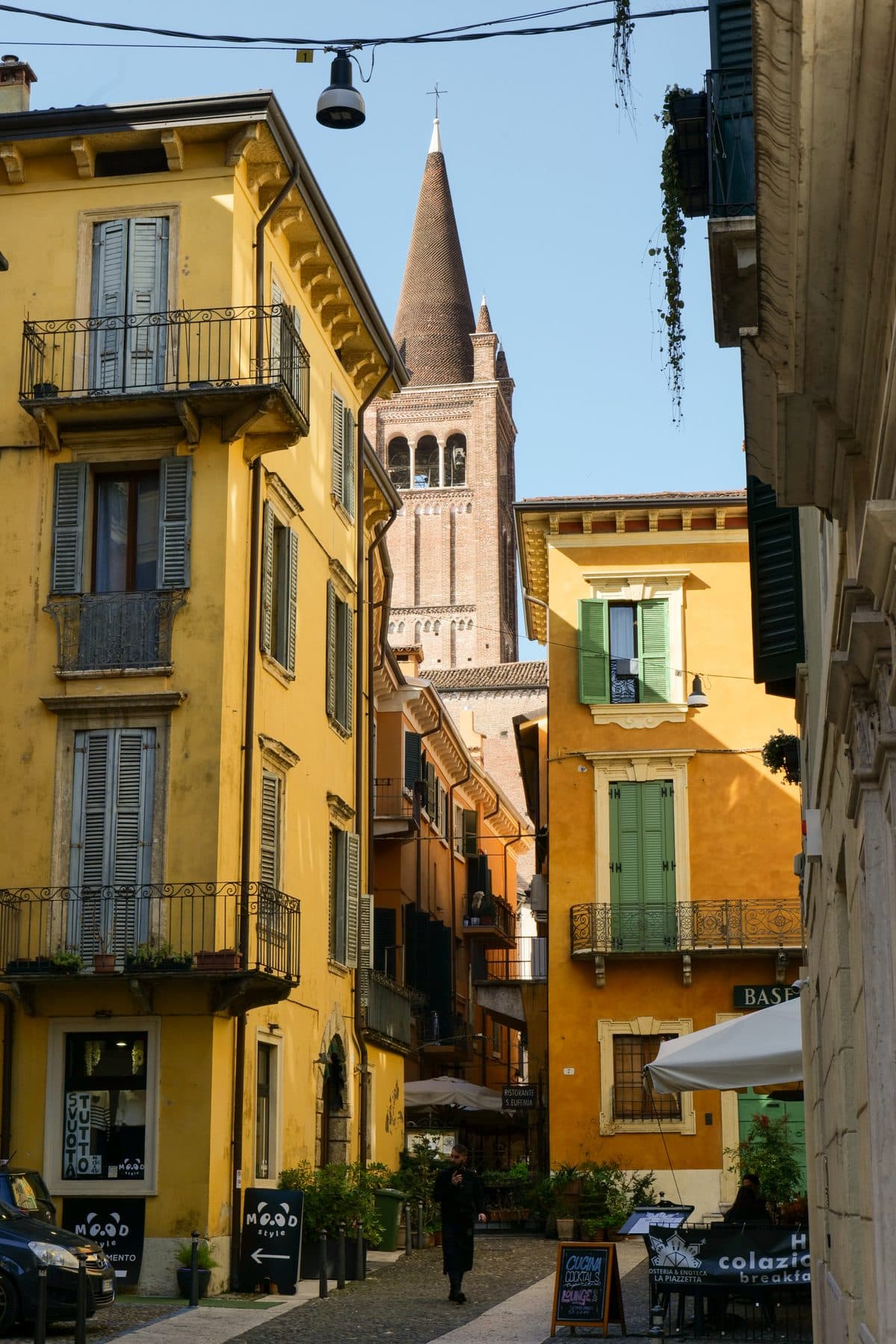
Km 11 to 20: back through the old centre. The return follows the Adige on the Lungadige Attiraglio at 12 to 16 km and the towpath at 17 km, then brings the race into the historic centre, over the Castelvecchio bridge at around kilometre 18 and to Piazza delle Erbe at around kilometre 20. This is where the crowds are, and where cobbles, kerbs and corners cost a little rhythm. The organiser's 20 km gate is at 11:50. A runner who reaches it after that time cannot continue, and the gate is set at about 8:30 per kilometre, which is the pace for a six-hour finish.
Km 20 to 32: east through the suburbs. After the centre the route heads east through Veronetta at 21 and 22 km and out along Via Montorio at 23 and 24 km. This is the quiet middle of the race, with fewer spectators and long straight stretches, and the roads are flat. It loops through Ponte Florio at 25 to 28 km and runs on to San Martino Buon Albergo at 30 to 32 km. Refreshments are at kilometres 25 and 30. The eastern turn is at around kilometre 31 to 32.
Km 32 to 42.195: the return to the Arena. The route comes back west through Ponte Florio and along Via Montorio at 34 to 39 km. Refreshments are at kilometres 33, 36.5 and 40, and the final one is at the finish. The last kilometres run through Veronetta and back into the old town and end in Piazza Bra, with the Arena beside the finish.
Bags go on the trucks on Corso Porta Nuova by 08:30, and the organiser says they come back to the same place near the finish.
The race leaves Corso Porta Nuova and works round the west of the city to a turn on the Adige at Parona. The field is dense, so hold the planned pace.
The return runs along the river, past Castelvecchio and Piazza delle Erbe, with crowds and cobbles. The 20 km gate is at 11:50.
A long, quiet, flat stretch with few spectators. Take your fuel on schedule.
The return west finishes in Piazza Bra beside the Arena.
Course Map
The map shows the 2026 route. Tap a marker for the start, finish and the places on the course, and scrub the slider or press play to move the orange marker along the course with the elevation profile beneath it.
Pacers
The organiser says pacer times may change by race week. The later groups are described as fitwalking groups. Paces per kilometre are computed from 42.195 km.
| Target time | Pace per km |
|---|---|
| 3:00 | 4:16 |
| 3:15 | 4:37 |
| 3:30 | 4:59 |
| 3:45 | 5:20 |
| 4:00 | 5:41 |
| 4:10 | 5:56 |
| 4:20 | 6:10 |
| 4:30 | 6:24 |
| 4:40 | 6:38 |
| 4:50 | 6:52 |
| 5:00 | 7:07 |
| 5:15 | 7:28 |
| 5:30 | 7:49 |
| 5:40 | 8:03 |
| 5:50 | 8:18 |
| 6:00 | 8:32 |
The organiser's gate at 20 km closes at 11:50. That is about 8:30 a kilometre, the pace for a six-hour finish, so a runner who reaches it later cannot continue.
Bibs are collected at Pala Magis, away from the centre. A free shuttle links the expo, Verona Porta Nuova station and Corso Porta Nuova on race day, and Sunday collection is only for bibs, from 06:30 to 08:00. Collect on Friday or Saturday.
Mid-November in Verona is cool and often wet. The organiser gives an average race-day temperature of 9°C, and the 2025 race was run in rain. The start is at 09:00, so the first hour is in cold air, and a plain flat course gives no hills to warm you up.
Shorts or tights, a long-sleeved or short-sleeved top with arm warmers, a hat and thin gloves suit most runners. Carry a throwaway layer to the start and drop it in the first kilometres. Bag deposit is available, with trucks closing at 08:30. Rain is a real possibility, so a thin waterproof for the start area and dry clothes in the bag are worth the space. The surface includes cobbles and painted lines in the centre, so choose shoes with grip that you have already worn in the wet.
Entry
Entry is online through Endu, with no ballot. The 2026 fee rises through the year, as in the table below, and online entry closes on 11 November. If places remain, late entry costs €109 at the expo on Friday and Saturday, and there are no entries on Sunday. At about €1 to £0.858, the €89 and €99 tiers are about £76 and £85, and the late fee is about £94. Teams of ten or more get 20 percent off and teams of thirty or more get 25 percent off. Platform charges may come on top.
The fee includes the bib, a finisher medal, a technical shirt, medical support, timing, refreshment stations, pacers, a bag service and a completion diploma.
The minimum age is 20 on race day. Italian residents need a FIDAL or RunCard membership and a medical certificate for athletics. Runners from abroad can enter with a membership of a federation affiliated with World Athletics or with a RunCard, and the medical certificate is not mandatory for those. The organiser also offers a tourist-sport route for runners with no membership, which is classed separately, so pick the correct category when you enter and read the rules for the paperwork. A runner who cannot start can defer to the next edition or transfer the place for €10, with written notice by 26 October for the 2026 race.
| Registration window (2026) | Marathon fee |
|---|---|
| To 31 May | €59 (about £51) |
| To 31 August | €69 (about £59) |
| To 30 September | €79 (about £68) |
| To 31 October | €89 (about £76) |
| To 11 November, when online entry closes | €99 (about £85) |
| At the expo on Friday and Saturday, if places remain | €109 (about £94) |
Fast runner standards
There is no guaranteed-entry or qualifying standard.
Verona Marathon: official site →Race Weekend
Expo and bib collection
The expo is at Pala Magis (the PalaOlimpia and AGSM Forum), Piazzale Atleti Azzurri d'Italia 1. In 2026 it is open on Friday 13 November from 11:00 to 20:00, on Saturday 14 November from 10:00 to 20:00, and on Sunday 15 November from 06:30 to 08:00 for bib collection only.
Bring the digital confirmation letter, which the organiser emails in race week, and photo ID. A friend can collect your bib with a delegation form and documents. A runner with an irregular entry should go to the expo secretariat on Friday or Saturday. The expo is not at the start. A free shuttle links the expo, Verona Porta Nuova station and Corso Porta Nuova from 06:30 to 16:30 on race day, so use it to reach the expo on Sunday if you have to collect the bib then. Collecting on Friday or Saturday is the safer plan.
Getting to the start
The marathon starts at 09:00 on Corso Porta Nuova, close to Piazza Bra. Runners start from six colour-coded grids, from black for the fastest to green for the slowest and for unregistered runners, and must be in their assigned grid at least 20 minutes before the start, so be there by 08:40.
A free shuttle runs from 06:30 to 16:30 between the expo, Verona Porta Nuova station and Corso Porta Nuova. It is a race shuttle, and it is not a general public transport pass. From the station it is also a reasonable walk to the start area, depending on where the hotel is.
Bags go on the trucks on Corso Porta Nuova with the sticker attached, by 08:30, and only the organiser's bag is accepted. An older useful-information PDF gave 08:00, so confirm the time in the final athlete guide. The bags are returned near the finish. Showers are at the expo, reachable by the shuttle, and toilets are at the start, the finish and the refreshment stations. A runner staying in the old centre can walk to the start. A car is unnecessary in a central base and can be hindered by the limited traffic zone in the old town.
Nutrition on course
The race fee includes refreshment on the course and at the finish. The 2026 rules list refreshment stations at kilometres 5, 11, 15, 19, 25, 30, 33, 36.5 and 40, and at the finish at 42. The tables offer water, electrolyte drink and solid food, and gluten-free options are listed.
The stations are fairly regular, with the longest gap between kilometres 19 and 25 in the quiet eastern section. Carry gels that you have trained with, take water at every station in cold, wet weather as well as in warm, and eat before the long suburban stretch after the centre. Check the athlete guide for the product brands and the allergen list.
Spectating
Piazza Bra is the best single position, because the race finishes there beside the Arena and the start is a short walk away on Corso Porta Nuova. A spectator can see the gun at 09:00, walk to the old centre and return for the finish.
The old centre is the best second position. The course passes Castelvecchio at about kilometre 18 and Piazza delle Erbe at about kilometre 20, so a spectator who walks across the centre catches the field in the middle of the race. Roads are closed along the course, so walking is the way to move around.
- Be on Corso Porta Nuova for the 09:00 start
- Walk to the Castelvecchio or Piazza delle Erbe area for about kilometres 18 to 20
- Walk back to Piazza Bra for the finish
Post-race food
Official finish refreshments are included in the entry. After that, Piazza Bra and the streets around it are full of cafés and restaurants, but a Sunday afternoon on a race day is busy and many kitchens close between lunch and dinner. A slow finisher at about 15:00 may find the kitchens shut, so book a table or plan a late lunch in advance.
For something local, ask for risotto made with Amarone, the red wine of the Valpolicella hills, and for pastissada de caval, a slow-cooked stew traditional in Verona. Check opening days and hours.
Where to Stay
Stay near the start. The start is on Corso Porta Nuova and the finish is in Piazza Bra, the two are a short walk apart, and the free shuttle runs from the station. A central hotel is the simplest base.
Piazza Bra and Corso Porta Nuova
The area around the Arena is the walkable choice. The start and finish are close, and the old town is on the doorstep. The streets around the piazza can be loud, so ask for a quiet room.
Verona Porta Nuova station
The station is the other practical base for a runner arriving by train, with the free shuttle to Corso Porta Nuova and the expo.
Centro Storico
The old centre is scenic and close to the course. The limited traffic zone restricts cars, and restaurants can be noisy at night.
Cittadella
A quieter area south of the centre, a short walk from the start.
San Zeno and Borgo Trento
These are across the river or on the edge, and need a planned morning journey to the start.
Verona's airport has a shuttle bus to the station. Check the Sunday and Monday service and the door-to-door time. The organiser's accommodation page directs runners to travel packages and is the official booking route.
Booking timeline
The entry fee rises at the end of each period, so enter early. The 2026 online window closes on 11 November, or earlier if places run out, and there are no entries on race day.
Book a refundable room as soon as the date is firm, which is Sunday 15 November for 2026 and Sunday 21 November for 2027. No sellout date for the race or hotel price premium was found, but the city's old-centre hotels are limited and the weekend shares the city with a half marathon and a Family Run. Plan to arrive in time for the expo on Friday or Saturday, since Sunday collection is only from 06:30 to 08:00.
See & Do
Distances are straight-line from the finish in Piazza Bra. Check November opening hours and prices.
The Arena, Piazza Bra
The Roman amphitheatre stands beside the finish line. The stone seating is steep, so decide how much of it your legs will take.
Casa di Giulietta
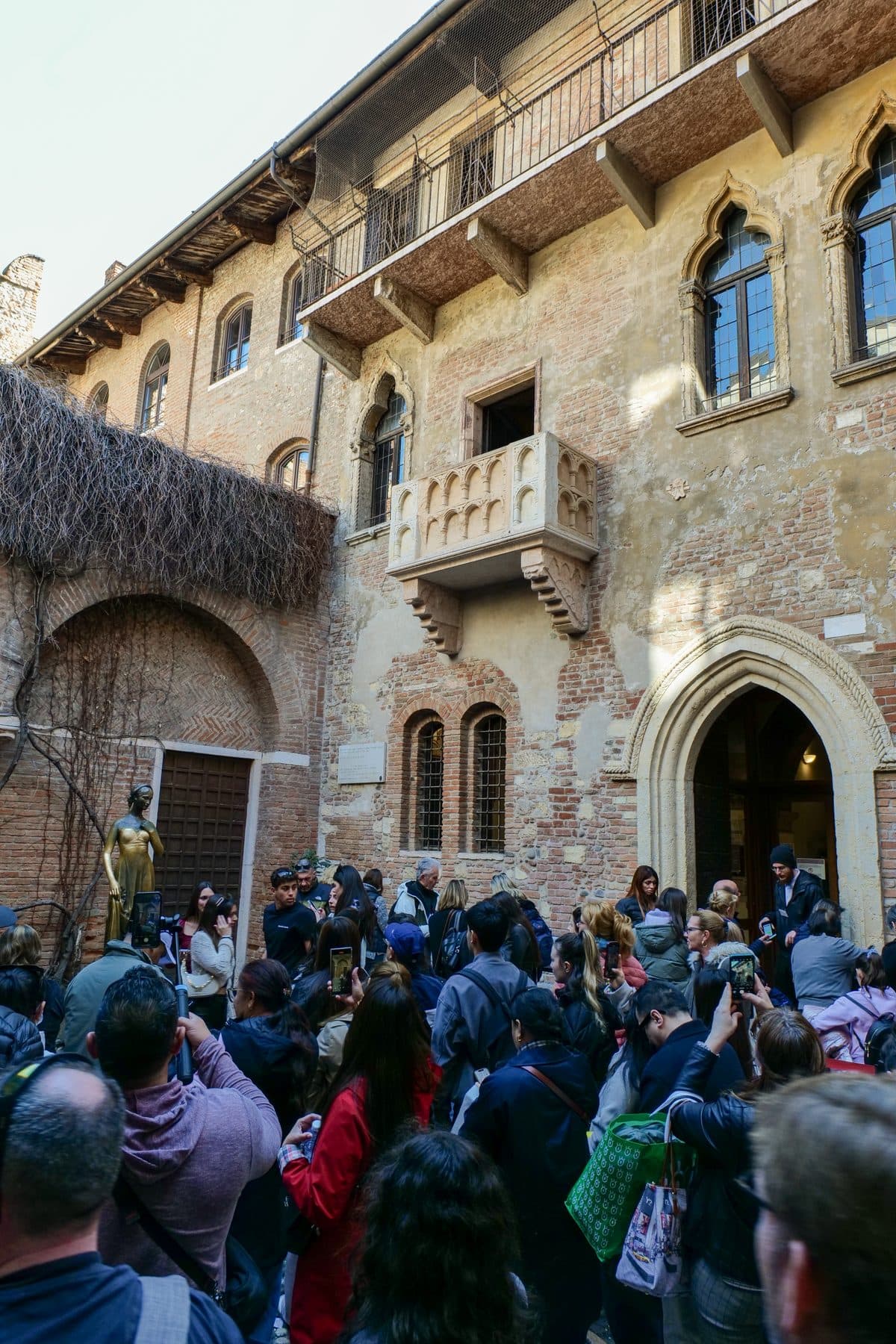
The courtyard of the so-called house of Juliet is close to Piazza delle Erbe. It can be crowded, with queues, so check hours and ticket policy for November.
Piazza delle Erbe
The old market square is on the course at about kilometre 20.
Castelvecchio and the Adige
The castle and its bridge are on the course at about kilometre 18. A slow walk beside the river is flat and easy on tired legs.
After the Race
Race day is Sunday, so Monday is the first free day (16 November 2026). Many museums and wineries close or shorten hours on Mondays. Sirmione, Valpolicella, Mantua and Venice are all within easy reach.
A castle on a peninsula at the southern tip of the lake, with a medieval gate, a Roman villa site and a thermal spa.
Hill villages and Amarone cellars north-west of Verona, with a lunch among the vines.
A Gonzaga city surrounded by lakes, with a ducal palace, frescoed rooms and flat arcaded streets.
A direct train takes you from Verona to Venice, for two nights in the lagoon city in the quiet season.