The Race
Do not book yet
The 2026 race was cancelled for heat. There is no 2027 date yet.
The 20th edition was due on 20 and 21 June 2026. Facing a forecast of exceptional heat the organiser first moved the marathon start from 08:00 to 07:45, and then on 19 June a prefectural order prohibited all sporting events that weekend. The races were cancelled outright. The Saturday Marathon Village went ahead; the running did not.
This race is not discontinued. Every runner registered for 2026 has been transferred automatically to the 20th edition in 2027, and the organiser has confirmed it will return in June. What has not been published is the weekend itself, the start time, entry prices, expo hours or the shuttle schedule.
So this page carries no date. Everything below about the course, the history, the food and wine stations and the terrain comes from nineteen completed editions and will hold. Everything about prices, timings and logistics belongs to a race that did not happen, and is left out here. Check the organiser’s site for the 2027 announcement before booking anything.
| Next Race Date | To be Confirmed: June 2027, weekend not yet published |
|---|---|
| Course Type | Point-to-point, Dorlisheim to Molsheim, through 19 wine villages |
| Registration | 2026 entrants already transferred; no 2027 opening announced |
| Ballot Opens | No ballot |
| Total Finishers | 962 (2025, the last completed edition) |
| Average Race Day Temperature | Around 24°C maximum in June at Strasbourg-Entzheim, and routinely higher |
| Cutoff Time | 6 hours 30 minutes |
| Free Race Day Transport | Not confirmed for 2027 |
| Course Certification | Not confirmed |
History
The Marathon du Vignoble d’Alsace was founded in 2005 by a group of local runners working with Jean-Michel Weber, then deputy mayor of Molsheim responsible for sport and still the organising association’s president. Around a thousand runners took part in the first edition. It has been based in Molsheim ever since, linking the wine villages of the Bas-Rhin between Dorlisheim and Marlenheim on a mixture of road and vineyard path.
Nineteen editions were completed between 2005 and 2025. The 2025 race drew 962 marathon finishers at an average time of 5:18:28, a figure that says more about how the event is run than about the difficulty of the course: Laurent Schaller won it in 2:42:09 and Emilie Tissot was first woman in 2:50:36. The gap between the winners and the average is the race itself, since a large part of the field treats the twelve food and wine stations as the point of the day.
The 20th edition should have been run on 20 and 21 June 2026 and drew nearly 7,600 entrants across the weekend, with the marathon and the half marathon both selling out in record time. It was cancelled by prefectural order for exceptional heat two days before, and the whole field was rolled forward into 2027. That cancellation now belongs to the race’s history as much as any result, and it is the reason heat planning appears on this page as an operational subject.
The course
The race runs 42.195 km from Dorlisheim to the Marathon Village in central Molsheim, two places 1.8 km apart, taking a ten-kilometre loop out through the Alsace wine villages to get between them. The surface alternates between paved village road and vineyard path, and the organiser gives 350 m of climbing.
In order, the course passes through Dorlisheim, Mutzig, Molsheim, Dachstein, Ergersheim, Wolxheim, Dahlenheim, Scharrachbergheim, Odratzheim, Kirchheim, Marlenheim, Wangen, Westhoffen, Traenheim, Irmstett, Bergbieten, Dangolsheim, Soultz-les-Bains and Avolsheim before returning to Molsheim. The first five kilometres climb gently out of Dorlisheim, then the course descends steadily through Mutzig and Molsheim to its low point of 160 m at km 14.2. What follows is the hard half. A 62 m climb over 2.3 km to Wolxheim averages 2.7 per cent, the steepest sustained gradient on the course; the high point of 230 m arrives at km 20.1 above Dahlenheim. From there it falls 55 m to Scharrachbergheim, climbs 50 m again to Wangen by km 28, takes another 33 m at 2.2 per cent between km 30.9 and km 32.4, and only settles into a long descent along the canal through Soultz-les-Bains and Avolsheim over the closing six kilometres. The whole course spans 70 m between its lowest and highest points, which understates it: the climbing comes in repeated bites, six of them.
The twelve gastro-wine stations
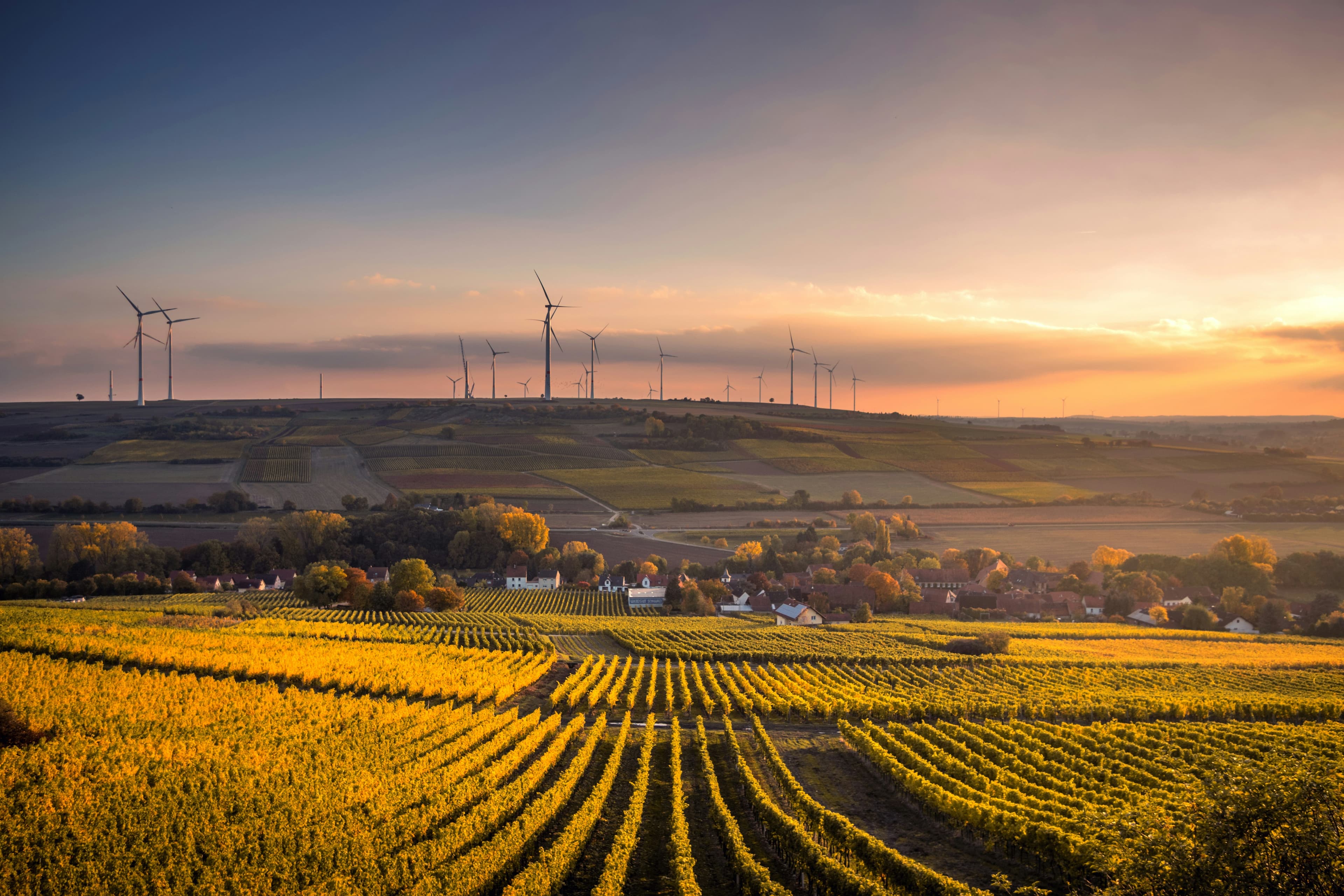
This is the reason most people run this race. Twelve optional gastro-wine stations sit along the course, each pairing an Alsatian dish with a local wine or Crémant, starting with pain d’épices and Sylvaner at Dorlisheim around km 3 and finishing with mini Stollen and Crémant at Molsheim around km 41.5. They run alongside eight separate conventional sports aid stations and additional water points, which comes to roughly 22 refreshment points across the distance.
Every gastro stop is optional, and that matters in both directions. A runner chasing a time can use the sports aid infrastructure alone and ignore the wine entirely; the stations are not on the racing line in a way that forces a stop. Equally, the 6 hour 30 minute cutoff is generous by design because the organiser knows most of the field will not be hurrying. The 2025 average of 5:18:28 across 962 finishers is the honest picture of how this race is actually run.
The specific pairings, station positions and the sports aid menu for 2027 have not been republished, since the 2026 operational guide belongs to a cancelled race. The concept has been stable across nineteen editions and there is no indication it will change.
Course Map
Dorlisheim out through the vineyards to Marlenheim and back down to Molsheim, 19 villages in 42 km. Tap a marker for the start, the finish, the steepest climb and the high point, and scrub the slider or press play to move the orange marker along the course with the elevation profile beneath it.
Pacers
There are none. Under the most recent operational template the whole field starts together at Dorlisheim with no official pace groups, only lead cyclists ahead of the front runners. On a course with 350 m of climbing spread across nineteen villages and a field that mostly is not racing, pacing this one is genuinely your own problem.
Heat
Heat is not a background risk at this race. It cancelled the last edition outright, two days before the start, by prefectural order, after the organiser had already pulled the start forward by fifteen minutes to get the field moving earlier.
June normals at Strasbourg-Entzheim put the average maximum around 24.4°C, and the Rhine plain exceeds that routinely. The course offers very little help: the vineyard paths have no shade, the climbs above Wolxheim and Dahlenheim are exposed on open hillside, and a 6 hour 30 minute cutoff means a mid-pack runner is still out there in the middle of the day. Plan for heat the way you would plan for a hill: as a feature of the course. Carry your own fluid between stations, start conservatively, and set a slower target in a hot year than the elevation alone suggests.
Specific 2027 kit guidance will depend on the weekend the organiser announces, since late June and early July are not the same proposition in Alsace.
Entry
Everyone registered for the cancelled 2026 race has already been transferred to the 20th edition in 2027. They do not need to do anything, and the organiser handled the transfer automatically, without asking runners to claim it.
For anyone not already entered, there is nothing to do yet. The organiser has not announced whether further places will be released for 2027, when registration would open, or what it would cost. That is worth watching: the 2026 marathon and half marathon both sold out in record time against a weekend field of nearly 7,600, and a race carrying a full year of deferred entrants has that much less room for new ones.
Entry has historically been direct online registration with no ballot. The 2026 prices are deliberately not reproduced here, because they belong to a race that did not take place and would be a poor guide to what 2027 will cost.
Fast Runner / GFA Standards
There is no qualifying standard and no Good For Age route. There are also no pace groups and no corral seeding by target time.
Race Weekend
The weekend is built around the Marathon Village in central Molsheim, around 6 rue de la Monnaie, which is both the finish area and the hub for the rest of the event. It is worth noting that when the 2026 races were cancelled the organiser kept the Saturday Village running, which tells you how much of the weekend exists independently of the running.
The start is at Dorlisheim, 1.8 km from the finish, so this is a point-to-point that behaves like a loop: bags, supporters and the end of your day all stay in one place. Under the most recent template the whole field starts together with no waves.
Bib collection hours, the shuttle schedule between Molsheim and the Dorlisheim start, the start time and the bag-drop arrangements for 2027 have not been published. The 2026 guide set the marathon start at 08:00 before moving it to 07:45 for the heat, but that edition was cancelled and those times should not be relied on. Check the organiser’s practical guide once the 2027 date is announced.
Spectating
The course passes through nineteen villages, which makes this a very easy race to watch badly and a hard one to watch well. Without a car a supporter is realistically limited to the start at Dorlisheim and the finish at the Marathon Village in Molsheim, which are 1.8 km apart and walkable between, giving two sightings and a long gap in the middle that central Molsheim is perfectly pleasant to spend.
With a car, the villages on the high ground give the best of the course. Wolxheim at km 17 sits at the top of the steepest climb, Dahlenheim at km 20 is the high point, and Marlenheim at km 27 is the furthest point from the start. Any one of them can be combined with the finish. Road closures through the vineyards on race morning are the constraint, and the organiser has not published the 2027 closure plan.
The gastro-wine stations are run by the villages themselves, so what you get along the course is less crowd noise and more a series of village parties that happen to have a marathon passing through them.
Where to Stay
Stay near the finish, which here means Molsheim. The finish and the Marathon Village are in the town centre and the Dorlisheim start is 1.8 km away, so a base in Molsheim covers both ends of the race on foot.
Molsheim town centre
Molsheim is the obvious choice and the one this site recommends. The finish is here, the Marathon Village is here, and the town has a direct regional rail line to Strasbourg, so you can arrive without a car. It is a small town with a correspondingly small stock of rooms, and a sold-out marathon weekend fills them. Book as soon as the 2027 date is announced.
Dorlisheim
Dorlisheim sits immediately south of Molsheim and holds the start line. It is the shortest possible walk to the start and leaves you 1.8 km from the finish, which after 42 km through the vineyards is a walk you will feel. Sensible if you are driving and the Molsheim rooms have gone.
The wine villages
Wolxheim, Dahlenheim, Traenheim and the rest hold guesthouses and winery rooms, and staying in one puts you inside the landscape the race is about. The catch is race morning: these villages are on the course, the roads through them close, and getting to Dorlisheim for the start becomes a problem you have to solve in advance. Save these for the night after.
Strasbourg
Strasbourg is 25 km east with far more hotels and a proper city to spend a weekend in, connected to Molsheim by direct regional train in about half an hour. The trade is a transfer on a morning with an early start and closed roads, so it suits a supporter, or a runner treating the race as one part of a longer trip.
Booking timeline
Do not book yet. There is no 2027 date, and June weekends in Alsace differ enough that a refundable booking made against a guess is worth very little. What is useful now is knowing what happens when the date lands: a full year of deferred entrants already holds places, Molsheim has limited rooms, and the 2026 race sold out in record time.
When the announcement comes, book Molsheim first and Strasbourg as the fallback, and treat rail from Paris through Strasbourg as the practical way in. The Alsace wine route is a tourist destination in its own right through the summer, so the marathon weekend is not the only thing competing for those rooms.
See & Do
Everything here is within reach of the Molsheim finish, and most of it sits on ground the race itself covers.
Molsheim old town
On the finish line. The Metzig, a Renaissance butchers’ guildhall from 1554 with a double external staircase and a mechanical clock, stands on the main square a short walk from where you stop running. The town is compact enough to see in an hour on tired legs.
The Bugatti connection
About 1 km (0.6 miles) from the finish. Ettore Bugatti built cars in Molsheim from 1909, and the marque is still headquartered here. The Fondation Bugatti museum in the town covers the history; the modern Château Saint-Jean site is a working factory and not generally open, so check before making a journey for it.
Wolxheim and the Altenberg vineyards
About 5 km (3 miles) north of the finish, and km 17 of the race. The climb that hurts most on race day is a pleasant walk on any other, and the hillside above the village gives the view back over the Rhine plain that you will have been in no state to appreciate while running up it.
The Alsace Wine Route
The Route des Vins d’Alsace runs 170 km from Marlenheim, which the course reaches at km 27, south to Thann. Molsheim sits at its northern end, so the race effectively runs the first few kilometres of it. Cellar visits in the villages the marathon passes through are the most direct way to spend the day after.
Strasbourg
25 km (16 miles) east, half an hour by direct regional train from Molsheim. The cathedral, the Petite France quarter and a full city’s worth of museums, and the easiest way to turn a race weekend into a proper trip without moving hotel more than once.
After the Race
There are no itinerary guides for this race yet, and that is deliberate. The excursions worth recommending here depend on seasonal detail, cellar opening hours along the wine route, what is happening in the villages, how far into summer the weekend falls, and all of that turns on a date the organiser has not announced. Writing them against the cancelled June 2026 edition would produce guides that are confidently wrong.
What is already clear is the shape of a good trip from here. Molsheim sits at the northern end of the Alsace Wine Route, half an hour by train from Strasbourg, and within easy reach of Colmar, the Vosges and the German border. The See & Do section above covers what is walkable from the finish. Full itineraries will follow once the 2027 weekend is published.
Frequently asked questions
Is this race still running?
Yes. The 2026 edition was cancelled by prefectural order for exceptional heat, not discontinued. Every 2026 entrant has been transferred automatically to the 20th edition in 2027, which the organiser has confirmed for June.
When is the 2027 race?
June 2027, weekend not yet published. This page shows no date deliberately: moving the cancelled 2026 date forward a year would put a wrong date in front of people booking flights.
What is the course like?
Point-to-point, Dorlisheim to Molsheim, 1.8 km apart, looping 10 km out through the wine villages in between on road and vineyard path. The organiser gives 350 m of climbing; the steepest part gains 62 m in 2.3 km to Wolxheim.
What are the food and wine stations?
Twelve optional gastro-wine stops pairing an Alsatian dish with a local wine or Crémant, alongside eight conventional sports aid stations and water points. Roughly 22 refreshment points in all, and every gastro stop can be skipped.
What is the cutoff time?
6 hours 30 minutes, generous by design because so much of the field stops to eat and drink. The 2025 edition averaged 5:18:28 across 962 finishers.
How hot does it get?
Hot enough to cancel a race. Strasbourg-Entzheim June normals give an average maximum around 24.4°C, but the Rhine plain routinely exceeds that and the vineyard sections have almost no shade.
Are there pacers?
No. The whole field starts together at Dorlisheim with no official pace groups, only lead cyclists ahead of the front runners. You pace this one yourself.
Where should I stay?
Molsheim. The finish and the Marathon Village are in the town centre and the start at Dorlisheim is 1.8 km away. Strasbourg works for the weekend but adds a transfer on race morning.
How do I get to Molsheim?
Direct regional rail from Strasbourg, about half an hour, and Strasbourg is roughly 1 hour 45 minutes from Paris by high-speed train. Strasbourg-Entzheim is the nearest airport.
Can I enter for 2027?
Not yet, and 2026 entrants do not need to. Whether further places will be released, and at what price, has not been published. Both the marathon and half marathon sold out in record time for 2026.