The Race
| Next Race Date | Sunday 4 July 2027 |
|---|---|
| Course type | Loop: two laps from Hnry Stadium |
| Registration | Open entry |
| Ballot opens | No ballot |
| Start | Fran Wilde Walkway, Hnry Stadium, 07:30 |
| Finish | Fran Wilde Walkway, Hnry Stadium |
| Total finishers | 426 (2026) |
| Avg race-day temp | 9 to 13°C (July) |
| Cutoff time | First lap by 11:00; road controls close at 13:00 |
| Free race-day transport | Yes: a free city shuttle to and from Hnry Stadium |
| Course certification | AIMS and IAAF standard |
History
The Wellington Marathon was established in 1986 and is one of New Zealand's longest-running city road races. The organiser lists formal results from 1996, and the 2027 edition is marketed as the 40th anniversary. The gap between the founding year and the anniversary count comes in part from the 2020 and 2021 editions, which were cancelled during the Covid period.
MDJ Media & Events Ltd, a family-owned Wellington company managed by Michael Jacques, organises the race. The marathon is two laps of the half-marathon route, starting and finishing on the Fran Wilde Walkway at Hnry Stadium. Both the full and the half marathon are measured and certified to IAAF and AIMS standard by qualified Athletics New Zealand course measurers.
The 2026 festival drew 4,011 runners and walkers from 27 countries across all events. The marathon had 512 entrants and 426 finishers. It was run after a week of southerly storms, with a cold southerly on the day. Josh Stewart won the men's race in 2:32:51 and Charlotte Burgess the women's in 2:46:06, a new women's race record.
The Heart Foundation has been the official charity partner for more than 15 years and has raised over NZ$100,000 through the event. A sister-city marathon exchange with Sakai in Japan has not run since Covid, and the organiser hopes to revive it. The course is flat, with the ramp into the stadium the only hill, and its main challenge is weather.
The course
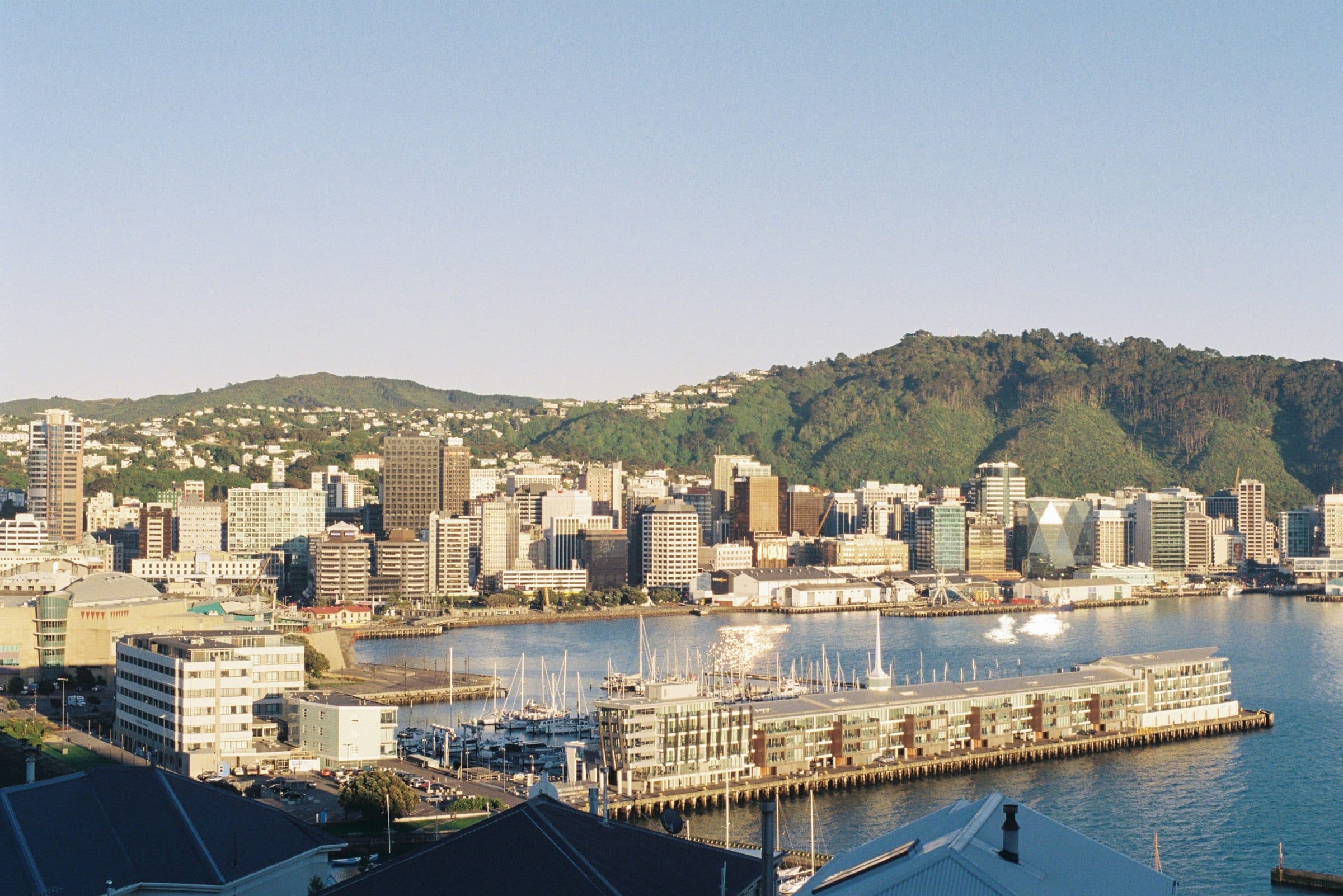
The marathon starts and finishes on the Fran Wilde Walkway beside Hnry Stadium and is two laps of the half-marathon route. From the stadium precinct the route runs south along Waterloo Quay and Customhouse Quay past the Railway Station, the Queens Wharf area and Te Papa, then east along Oriental Parade and Evans Bay Parade, round the bay to Cobham Drive at about 8 km, and out along Shelly Bay Road on the Miramar Peninsula to a turnaround at about 11.5 km. It comes back along the same shore to the waterfront and starts the second lap.
The surface is sealed road and waterfront pavement. The organiser calls the course flat and says the only hill is the ramp into the stadium. Kilometres are marked in order on the outward leg, and on the return they count down the distance remaining, to avoid confusion between the four event distances. The first lap is officially 22.2 km, and the last 2.5 km run in the wharf area before the finish. The organiser publishes no total climb.
The main difficulty is wind. Oriental Parade, Evans Bay and the Miramar side are open to northerly and southerly winds, and a strong southerly can make the return much harder than the way out.
Kilometre by kilometre
Km 0 to 4: Waterloo Quay to Oriental Parade. The marathon runners start at 07:30, after the walkers at 07:00, on the broad Fran Wilde Walkway in time-seeded zones. The first kilometres run south past the Railway Station on a flat, urban stretch of port, rail and city, then along Customhouse Quay to the central waterfront at Te Papa. The first aid station, on Oriental Parade, is at about 3.5 km.
Km 4 to 8: Oriental Parade and Evans Bay. The road curves round the inner harbour with the city behind and the water beside you, and it is where the weather becomes obvious. On a calm morning it is quick, and in a southerly or a northerly the open bay gives no shelter. Evans Bay Parade leads on to Cobham Drive at about 8 km, where there is an aid station.
Km 8 to 15: Cobham Drive and Shelly Bay. The route follows Cobham Drive and Shelly Bay Road out onto the Miramar Peninsula to a turnaround at about 11.5 km, with an aid station there on the first lap only, and back to Evans Bay at about 15 km. The organiser recommends Cobham Drive as a viewing point, at about 8 km and 8 km to go. Controlled roads are not vehicle-free, so watch for traffic and obey marshals.
Km 15 to 22.2: back to the stadium. The return runs by Evans Bay and Oriental Bay to the central waterfront, with a station at 19.5 km. Full-marathon runners must finish the first lap, officially 22.2 km, by 11:00. Anyone who misses that cutoff cannot begin the second lap but may finish and be recorded as a half marathoner.
Km 22.2 to 34: lap two. The same waterfront geography, thinner and slower. The wind that seemed manageable early can become tiring, and familiarity helps pacing but offers few new landmarks. Stations come at 24.5, 29 and 34 km.
Km 34 to 42.2: the wharf and the finish. The last stretch returns along the central waterfront, with a station at 38.5 km, and the last 2.5 km are in the wharf area before the finish back at Hnry Stadium. Once road controls close at 13:00, anyone still on the course must use the public footpaths and take responsibility for their own direction and support, though the finish stays open.
No blue line was documented. The bib holds a disposable timing chip and a QR code that links to live results.
Flat and urban, then Oriental Parade and Evans Bay. Find your zone and watch the wind.
The Miramar side and the return to the waterfront. The first-lap cutoff is 22.2 km by 11:00.
The same route, thinner and windier. Use the stations and run by effort.
The last 2.5 km are in the wharf area. Keep drinking, because the organiser supplies no gels.
Course Map
Two laps of the waterfront route from the Fran Wilde Walkway: south to Te Papa, east along Oriental Parade and Evans Bay to Cobham Drive, out to Shelly Bay Road and back. Tap a marker for the aid stations, the viewing point, race-pack collection and the railway station, and scrub the slider or press play to move the orange marker along the course.
No elevation chart is drawn for this course. It is flat, with the ramp into Hnry Stadium as the only hill, and satellite terrain data along the reclaimed waterfront reads the harbour and returns impossible negative heights. The line is the 2026 route, and lap boundaries are approximate.
Pacers
No marathon pacer list has been verified: the pace-team page found covers the half marathon only, and its groups do not apply to the marathon. Marathon walkers start at 07:00 and runners at 07:30 in time-seeded zones. A runner expecting to take more than six hours may be allowed to start at 07:00 with the walkers while still being classified as a runner.
The course is flat, and the only hill is the ramp into Hnry Stadium, so the main variable is wind. Oriental Parade, Evans Bay and the Miramar side are open to northerly and southerly winds, and a strong southerly can make the return leg much harder than the outward one. The 2026 race was run in a cold southerly after a week of storms. Plan effort around wind direction, not around even kilometre splits.
Wellington in July is cold and windy. A climate-average source gives a July high of about 13°C and a low of about 9°C, with average winds around 14 knots and rain on more than half the days. The 2026 race was run in a cold southerly after a week of storms.
Wear a windproof layer you can tie round the waist, gloves and a hat, and plan effort around the wind direction and not around even kilometre splits. The organiser's safety page tells entrants to prepare for cold weather and bring spare clothing for afterwards. A proper warm, windproof layer is more useful than a flimsy throwaway if a southerly is forecast. No clothing-donation programme was found, and secure gear storage is inside the stadium.
Sunglasses help in low winter sun and a cap keeps rain off the face. Road shoes are right, as the surface is sealed. Headphones are strongly discouraged, and noise-cancelling should be turned off so you can hear traffic and officials. The organiser supplies no gels, sponges, bottles or cola, so carry the gels you use and attach them to your personal bottle if you plan to use the service.
Entry
Entry for 2027 opens on 1 October 2026 and is open, with no ballot and no general qualifying route. The 2027 fee bands are NZ$100, about £43, to 1 January, NZ$120, about £51, from 2 January to 1 April, NZ$140, about £60, from 2 April to 1 June, and NZ$160, about £68, from 2 to 30 June. Online entries close at noon on 30 June 2027, and last-minute entry is available only at race-pack pickup if space remains. The minimum age for the full marathon is 15, with parental or guardian consent under 16.
Withdrawals before midnight on 28 June 2027 receive a refund minus a NZ$15 admin fee, and after that entries are non-refundable. Moving to a longer distance costs the difference, and moving down refunds the difference until the same deadline. Entries are not transferable between people unless the organiser processes the change.
The organiser runs an Elite Support Program for full-marathon athletes who run under 2:30 (men) or 3:00 (women): qualifying athletes email the organiser with their results, and support can range from a free entry to travel and accommodation. That is elite support, not guaranteed entry for the general public. Charity fundraising is through the Heart Foundation, and no tour-operator allocation was found.
Fast runner standards
There is no good-for-age route and no qualifying standard for the general public. The Elite Support Program standards are above.
Wellington Marathon entry information →Race Weekend
Race-pack collection
Every participant must collect a race pack. The 2027 entry page gives Saturday 3 July 2027 for race-pack pickup, and recent pickups have been at Gazley Volkswagen on Kent Terrace, about 2.2 km south of the stadium. The 2027 hours and venue should be rechecked when the pickup page is updated.
There is no convention-centre expo. The setup is organised race-pack collection with merchandise and entry administration, and any changes made during race week must also be processed there. The safest plan for overseas runners is to arrive in Wellington by Friday evening and collect on Saturday, because ordinary entrants should not expect Sunday bib collection unless the final guide says so.
The bib holds a disposable timing transponder and a QR code linking to live race-day results, and a detachable bag tag is used for gear storage. Take photo ID.
Getting to the start
Hnry Stadium opens at 06:00. Marathon walkers start at 07:00 and runners at 07:30, and every start has a briefing 15 minutes before the gun. The time-seeded zones on the Fran Wilde Walkway require you to line up by your expected finish time.
Getting there. The organiser runs a free city shuttle to and from Hnry Stadium. Pre-race circuits were published at about 06:00, 06:30, 07:15 and 08:00, starting near the eastern end of Courtenay Place and travelling via Taranaki, Ghuznee, Willis, Lambton, Bunny and Waterloo Quay, and post-race circuits ran at about 10:30, 11:30, 12:30, 13:30 and 14:45. This is not a free Metlink network pass. Runners staying near Lambton Quay, Te Aro and Courtenay Place can walk or use the shuttle. Stadium parking is by prepaid booking at around NZ$10, though the organiser encourages public transport and the shuttle.
At the stadium. Secure gear storage is at Aisle 11, using the detachable bag tag. Toilets and showers are inside the stadium, with first aid at the stadium and every aid station. The personal-drink service needs bottles deposited at the Pavilion Bar inside the stadium by 07:00.
Rules. Headphones are strongly discouraged, not banned. Dogs, bicycles, scooters, roller blades and skateboards are prohibited, and unregistered companions may not accompany participants.
The finish. The recovery area is at about Aisle 20, with drinks and fruit, and every finisher receives a medal. Post-race massage was advertised at NZ$20 for 15 minutes, cash. The finish is in the same place as the start, so there is no point-to-point transfer.
Nutrition on course
The full marathon has aid every 3.5 to 5 km. All stations offer water and R-Line energy drink in paper cups, first aid and toilets. The organiser says there are no sponges, bottles, cola or energy gels.
Personal drinks are a marathon-only service at most stations, except the first Oriental Parade station and Shelly Bay Road. Bottles must be clearly marked with your name, race number and station and delivered to the Pavilion Bar inside Hnry Stadium by 07:00, and you can attach your own gels or bars to a bottle. Because no gels are supplied, the service is worth using: plan which stations carry your fuel and use the paper-cup drink at the others. Public toilets are also at the stadium, Frank Kitts Park, Oriental Bay, Balena Bay, Hataitai Beach, Evans Bay, Shelly Bay Road and Fergs Kayak.
| Approx km | Location | Water | R-Line drink | Personal drink |
|---|---|---|---|---|
| 3.5 | Oriental Parade | Yes | Yes | No |
| 8 | Evans Bay | Yes | Yes | Yes |
| 11.5 | Shelly Bay Road (first lap only) | Yes | Yes | No |
| 15 | Evans Bay | Yes | Yes | Yes |
| 19.5 | Oriental Bay | Yes | Yes | Yes |
| 24.5 | Oriental Bay | Yes | Yes | Yes |
| 29 | Evans Bay | Yes | Yes | Yes |
| 34 | Evans Bay | Yes | Yes | Yes |
| 38.5 | Oriental Bay | Yes | Yes | Yes |
Spectating
Wellington's two-lap waterfront route is very spectator-friendly, but road closures make car chasing a poor choice. The best single place for convenience is Hnry Stadium, which combines the start, the lap transition and the finish, and the best course point for crowds is Oriental Parade. The bib's QR code links to live race-day results, and no moving-map tracker was verified.
The organiser recommends Cobham Drive and Evans Bay Parade as a viewing point, describing it as about 8 km and 8 km to go. Drivers should approach through the Mt Victoria Tunnel and park near Kilbirnie Park, then use pedestrian crossings.
- Watch the 07:30 start at Hnry Stadium
- Walk south along Waterloo Quay and Queens Wharf for an early sighting
- Return to the stadium for the lap transition and the finish, with no transport needed
- Take a bus or walk from the city centre to Oriental Parade for an outbound and return sighting
- Because the marathon repeats the lap, a well-timed spectator can see the runner more than once here
- Return to the stadium for the finish
- Go to Cobham Drive and Evans Bay Parade, the organiser's recommended point
- Use the pedestrian crossings and follow marshals' instructions
- Return to the stadium by shuttle or bus for the finish
Post-race food
The finish is at the northern end of Wellington's waterfront, so Queens Wharf and the city centre offer the easiest sit-down recovery meal. Dockside at Queens Wharf is a good group option, with seafood and fish and chips and a covered waterfront deck, and Shed 5 at 3 Queens Wharf is a more formal restaurant with waterfront seating. Charley Noble at Post Office Square serves wood-fired meat and seafood. All three are about 1 km from the stadium.
For a more casual choice, Beach Babylon on Oriental Parade is directly on the course and serves breakfast, lunch and dinner, though it is a longer walk or bus ride, about 1.8 km. July weather makes sheltered seating valuable, and Dockside and Shed 5 both work in bad weather.
Where to Stay
Stay as close to the finish as budget allows. At the Wellington Marathon the start and finish are the same place, Hnry Stadium, so the finish recommendation and the start recommendation match.
Pipitea and the northern city centre
Pipitea is the best pure race base. Rydges Wellington, on Featherston Street, is about 0.6 km from the start and finish, and hotels around Featherston Street and Lambton Quay are close to Hnry Stadium and the Railway Station, so a runner can walk to the start and skip the shuttle. It is quieter than Te Aro at night.
Lambton Quay and the central city
Lambton Quay gives the best balance of start access, restaurants and sightseeing. DoubleTree by Hilton is 1.0 km from the stadium, the free race shuttle passes through the central corridor, and Parliament, the Cable Car and Queens Wharf are close. It is slightly further from the stadium than Pipitea but still easy.
Te Aro and Cuba Street
Te Aro suits restaurants and nightlife. The free shuttle begins near Courtenay Place, but Saturday night can be noisy, so choose a well-insulated hotel if sleep matters.
Oriental Bay
Oriental Bay puts a runner directly on the course, with waterfront scenery. Copthorne Hotel Oriental Bay is about 1.7 km from the start. It needs a pre-race walk, shuttle or taxi, but it is excellent for spectators and for a post-race walk.
Thorndon
Thorndon is close to Parliament and the stadium, with the Bolton Hotel and the Sofitel about 0.8 km from the start, and is often quieter than the entertainment districts. It has fewer evening restaurants at the door and suits runners who want an early night.
The waterfront and Te Papa
The area around Te Papa, about 1.5 km from the stadium, sits on the course and has modern hotels and easy walking. It is further from the start than Lambton or Pipitea but excellent for a wider city break.
Booking advice is in the timeline below.
Recommended hotels
280 rooms with a pool, sauna and gym, the easiest mainstream race hotel. Event pricing is possible.
Quiet, with a lap pool, spa and sauna, a strong recovery option. Premium price.
Quiet luxury near the Botanic Garden and Parliament. The approach from some waterfront areas is uphill.
Central, with restaurants and Cable Car access nearby. Less immediate than Rydges, but a walk or a shuttle away.
Harbour views and spectator access on the course. Further from the stadium, so use the shuttle or a taxi.
Booking timeline
The date is fixed and entry opens on 1 October 2026, so there is no need to wait. Wellington has a large hotel inventory relative to the race, so accommodation does not usually need island-race urgency, but the most convenient stadium and city-centre rooms should be reserved once entry is secure. Book a cancellable hotel four to eight months ahead if you want the convenience of Rydges, Thorndon or Lambton Quay, and note that Te Aro has more alternatives if prices near the stadium rise. The 40th anniversary may draw extra demand.
Wellington Airport has strong domestic service and direct Australian routes, and UK runners commonly connect through Auckland, Christchurch, Australia or a long-haul gateway. Arrive on Friday, which allows a buffer for weather disruption and makes Saturday pack collection simple. Wellington's weather can disrupt flights, so avoid arriving on the final Saturday evening if possible.
See & Do
Everything below is within about 1.5 km of the stadium except Zealandia, and most of it is indoors, which matters in July.
Parliament and the Beehive
Close to the northern-city hotels and the stadium. Guided tours should be booked and checked.
The waterfront
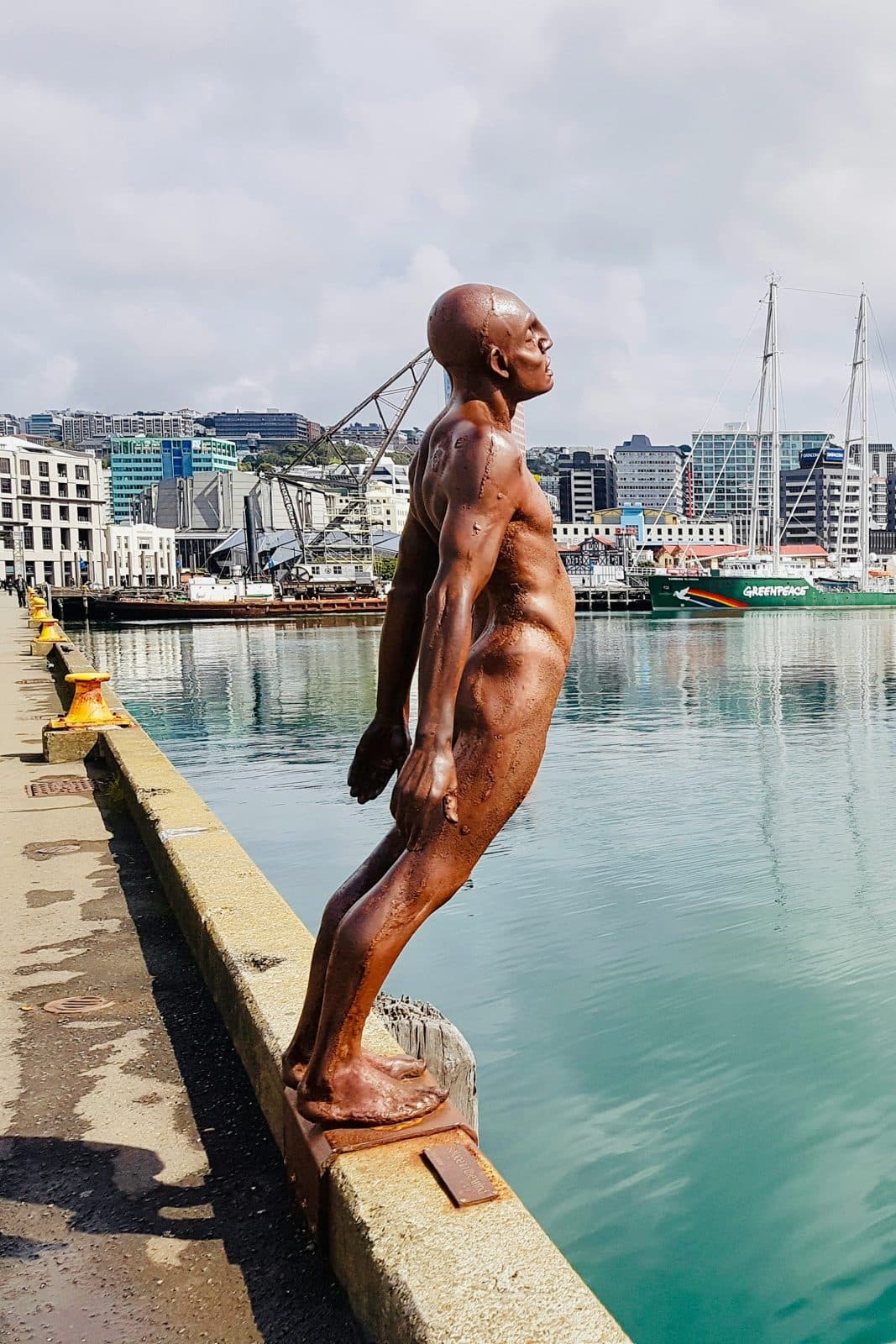
The marathon route makes its own tour. The recovery version is a short Queens Wharf to Te Papa stroll with cafés and almost no climbing.
Wellington Cable Car
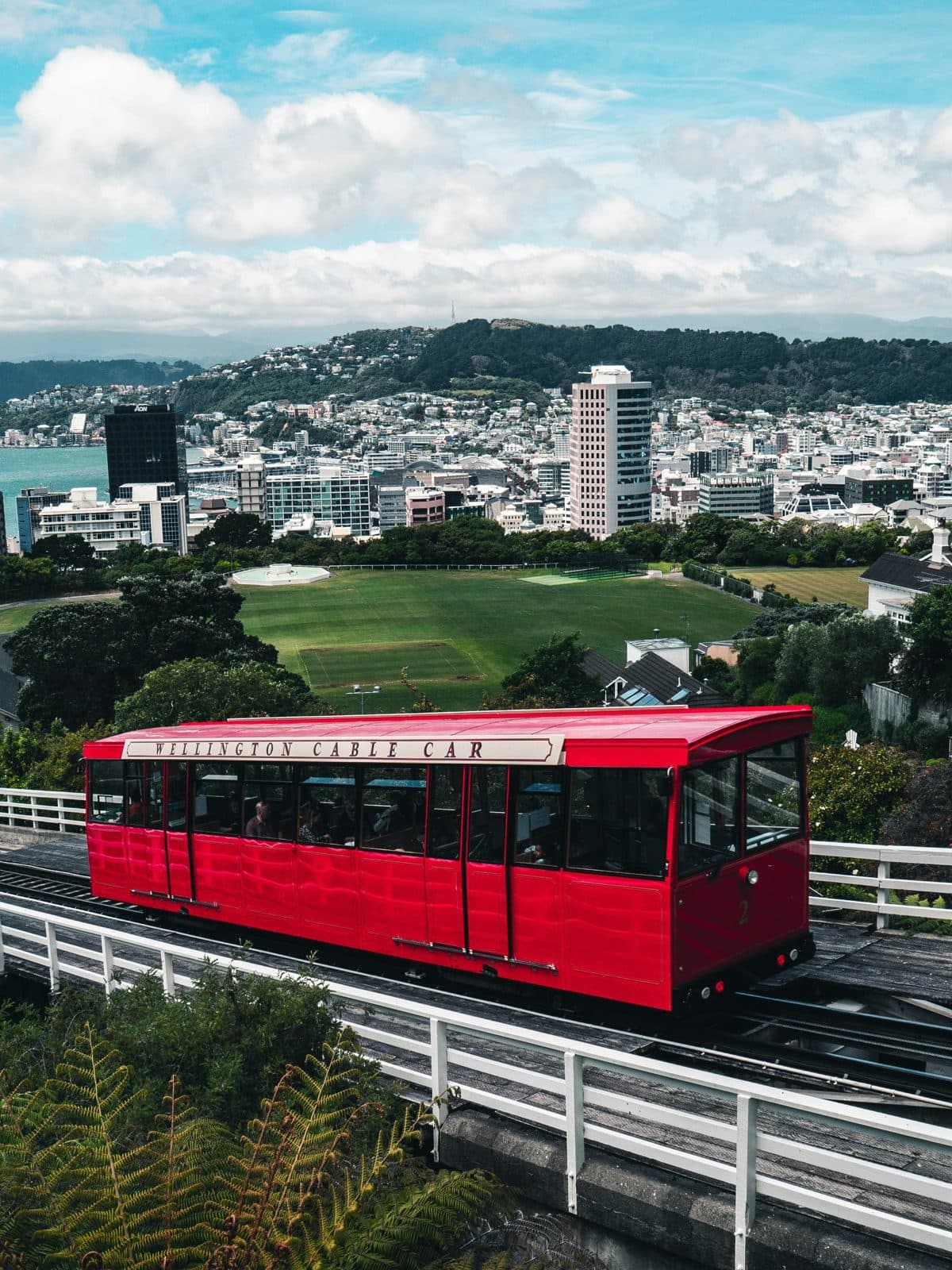
A five-minute ride from Lambton Quay to Kelburn, rising about 120 m, which gives a high viewpoint without asking tired legs to climb. The Cable Car Museum is free.
Museum of New Zealand Te Papa Tongarewa
On the central waterfront, indoors and mostly lift-accessible. It suits a cold recovery day and can absorb several hours without a long walk.
Zealandia Te Māra a Tāne
A predator-free ecosanctuary with a free shuttle from the Wellington i-SITE and the top of the Cable Car. The track network is large, so choose a short route straight after the marathon.
After the Race
July is winter in New Zealand, so the trips below keep to sheltered places and short walks: a ferry across the harbour, wine-town fires, the Kāpiti coast and the Cook Strait crossing.
A harbour crossing to a quiet bay with a level beach path, and no climbing.
A small wine town in the Wairarapa, with seated tastings and log fires in winter.
Beaches and a slower pace on the coast north of Wellington, with an indoor car museum for wet weather.
A Cook Strait ferry to the Marlborough Sounds and Blenheim's wine country, with schedule flexibility for winter seas.