The Race
| Next Race Date | Sunday 18 April 2027 |
|---|---|
| Course type | Loop: one lap from Plaza del Pilar |
| Registration | Open online entry, no ballot |
| Ballot opens | No ballot |
| Start | Plaza del Pilar, 08:30 |
| Finish | Plaza del Pilar |
| Total finishers | 1,572 (2026) |
| Avg race-day temp | About 9 to 20°C (AEMET Zaragoza April normal) |
| Cutoff time | 5 hours |
| Free race-day transport | No |
| Course certification | RFEA certified |
History
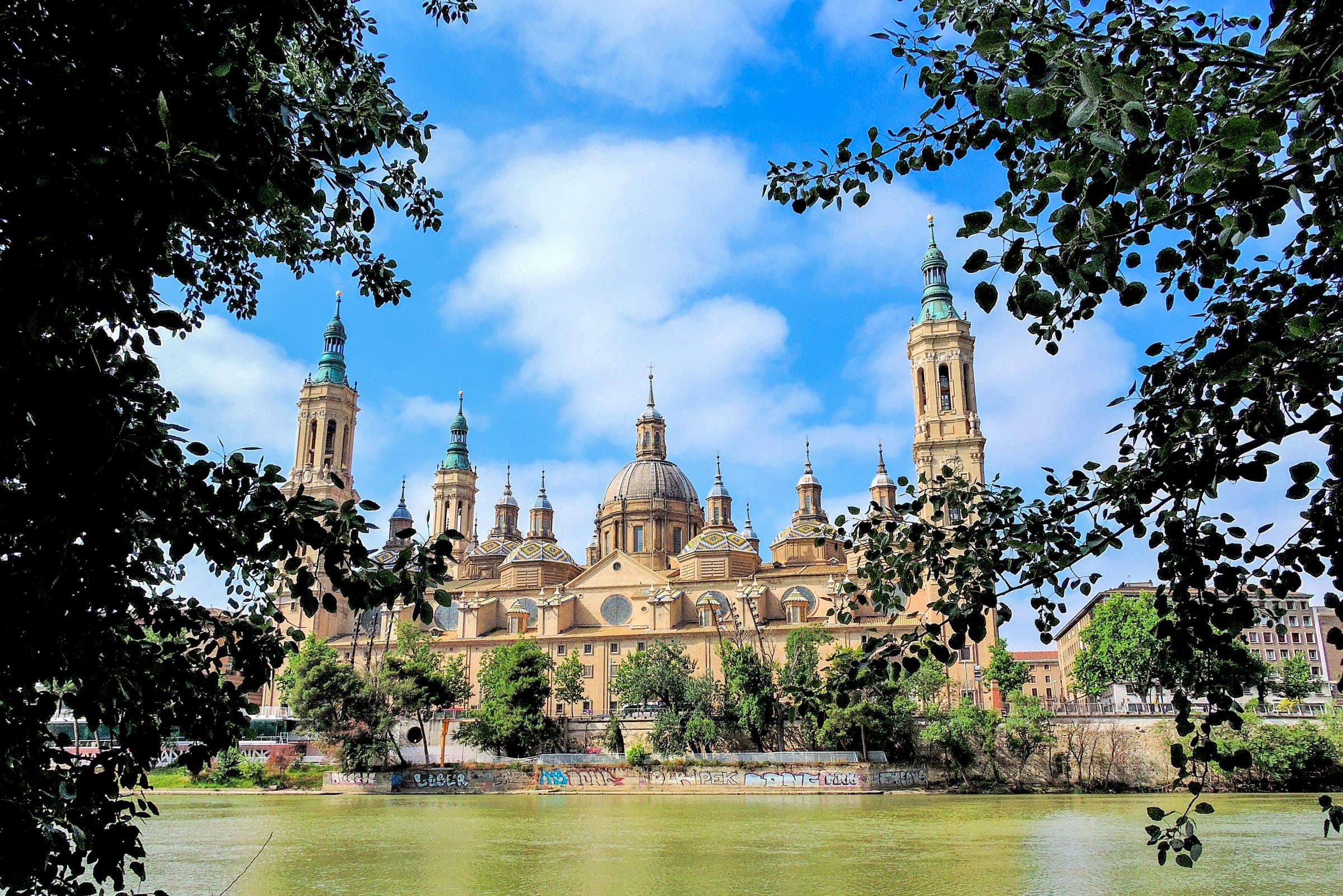
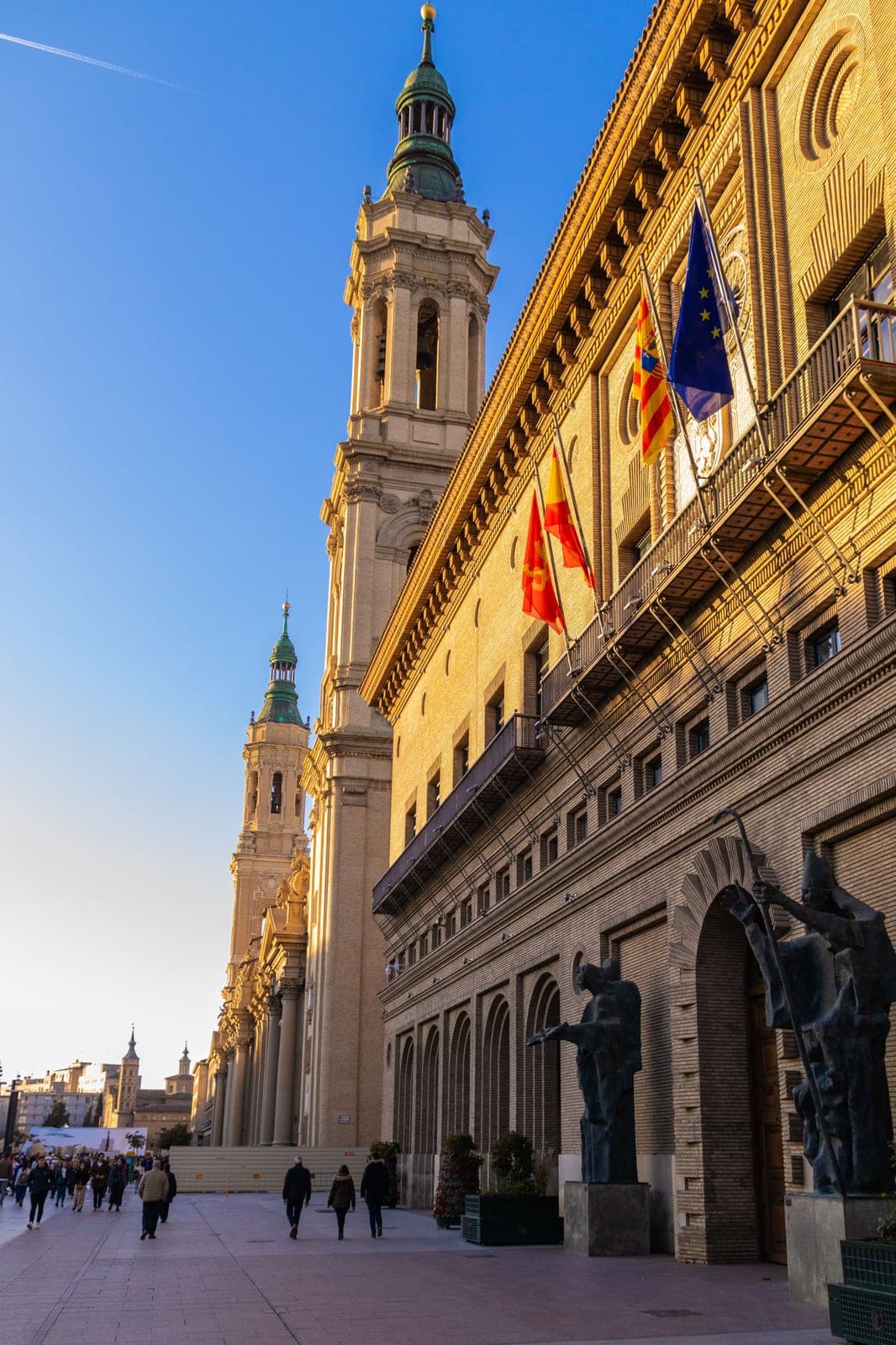
The Zaragoza Marathon is run by the athletics club Corre en Zaragoza with the events company LASTLAP. The organiser counts the 2026 race as the nineteenth edition. From the beginning it has started and finished in Plaza del Pilar, the long square between the Basilica of Our Lady of the Pillar and the cathedral, beside the Ebro. The Spanish athletics federation certifies the course and places it in its International II calendar category.
The men’s course record, 2:11:39, was set in 2022 by Adane Kebede Gebre of Ethiopia; the women’s record stands at 2:26:40. The organiser pays €1,000 to anyone who breaks either.
The biggest recent change came in 2026. The route added the Puente del Tercer Milenio, the bullring and the Paseo de la Constitución, dropped a section of cycle path by the Canal Imperial, and moved the main climb from around km 32 to the middle of the race. That edition was run in rain and gusting wind all morning, which the organisers called the hardest in the race’s history. Micah Kiptoo of Kenya won in 2:17:32 and Ayantu Gemechu of Ethiopia in 2:36:09, and 1,572 runners finished; with the 10 km, about 9,500 took part. For 2027 the marathon cap is 4,000.
The course
The marathon starts at 08:30 in Plaza del Pilar and finishes there after one lap of the city. The 10 km starts later. The course is asphalt except for the stone paving of the square.
The first 4 km run east along the river on Paseo de Echegaray and back, the lowest part of the course at about 192 m, and then the route climbs 28 m over 2.5 km into the centre by Paseo de la Independencia at km 5. It crosses to the north bank and runs west, gently downhill, to the Expo 2008 site, passing the Hotel Hiberus at km 10.1 and crossing back over the Puente del Tercer Milenio at km 10.4.
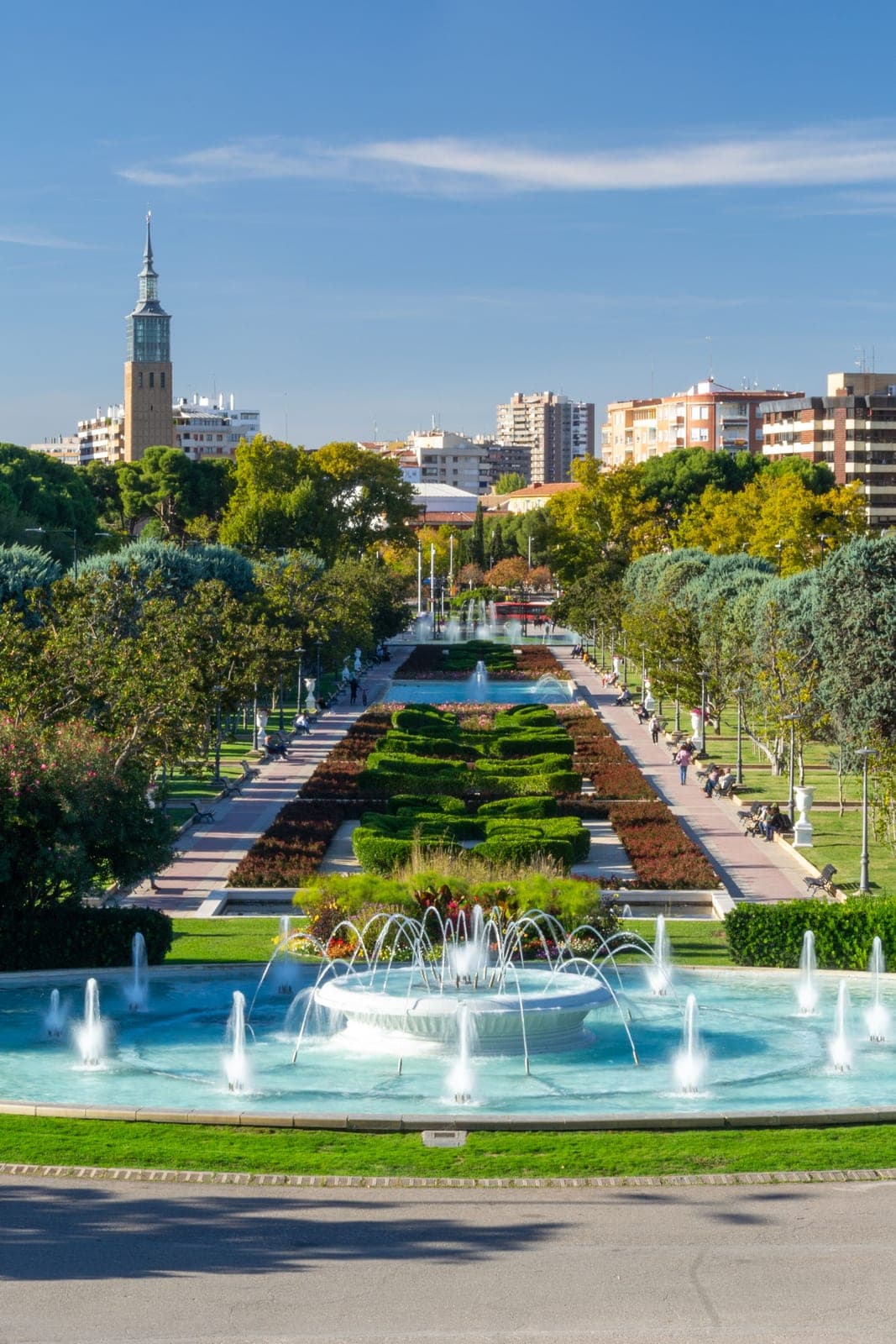
The middle of the race is a long, gradual climb: 30 m between km 10.3 and km 14.1 past the bullring to Paseo de la Constitución, then on from Tenor Fleta past Parque Grande at km 19 to the high point, 246 m on Paseo de Colón at km 21.9, 3.6 km from the start. None of it is steeper than about 1.5 per cent over a kilometre. The second half is kinder: 45 m of descent over 5 km through the eastern districts to Las Fuentes, the river again from km 31, a loop through the Arrabal on the north bank around km 36, and a 26 m rise from km 38 back up through the old town to the finish.
Kilometre by kilometre
Km 0 to 6: the river and the centre. The start is under the Basilica’s domes, with corrals assigned from the time given at entry. The first kilometres run east along the Ebro and back, flat but with turns; hold position and do not weave. Then the course climbs 28 m into the centre by Paseo de la Independencia at km 5.
Km 6 to 12: the Expo. Across to the north bank and west to the Expo 2008 site, then back over the Puente del Tercer Milenio at km 10.4. Wide, open and quieter, and the place where the cierzo, the north-westerly wind of the Ebro valley, does most damage. Tuck into a group and run by effort.
Km 12 to 22: the climb. Past the bullring and along Paseo de la Constitución, then the long rise from Tenor Fleta past Parque Grande to Paseo de Colón, 246 m at km 21.9. It is gradual, never much over 1 per cent, but long enough to tempt runners to defend their pace. Shorten the stride and let the watch slip; the 2026 redesign put this climb here so the last third would be kinder. Solid food starts at 20 km, and the sweep closes halfway at 11:00.
Km 22 to 32: down through the south and east. The course falls 45 m over 5 km through the eastern districts to Las Fuentes and back to Paseo de la Constitución near km 30. Recover rhythm without chasing the downhill. The sweep reaches 30 km at 12:05.
Km 32 to 42.2: home through the old town. The river again, a loop through the Arrabal on the north bank, then back into the old town with the thickest crowds. The sweep reaches 35 km at 12:40. The last 4 km climb 26 m to the finish, and the final 200 m cross the stone of Plaza del Pilar, hard and slippery when wet.
Timing uses a chip on the bib, with splits every 5 km for tracking. Kilometre boards, barriers and marshals take precedence over tangents. Roller-skaters accompany the field over the last 10 km as course support.
The riverside, the centre and the open Expo roads. Run with a group if the cierzo is blowing.
A long, gentle rise past the bullring and Parque Grande to 246 m. Hold effort, not pace.
45 m of descent through the eastern districts. Settle back into rhythm.
The best crowds and a 26 m rise to a finish on stone paving.
Course Map
One lap from Plaza del Pilar: the river, the Expo site, the climb south to Parque Grande and home through the old town. Tap a marker for the start and finish, the bag drop, bib collection, the landmarks and the station, and scrub the slider or press play to move the orange marker along the course with the elevation profile beneath it.
Pacers
Pacers run at 3:00, 3:15, 3:30, 3:45, 4:00 and 4:15 from a single 08:30 start, with corrals by declared or proven time. There is no group slower than 4:15, and the sweep runs at about 7:05 per kilometre.
Zaragoza’s north-westerly wind, the cierzo, funnels down the Ebro valley and can blow hard on spring mornings. The course is most exposed on the river and the open Expo 2008 site between about km 6 and km 12. On a windy day, run in a group through that section and judge the race by effort, then use the sheltered central streets of the second half.
Wind decides the kit in Zaragoza. The cierzo can make the bridges and the Expo roads feel several degrees colder than the thermometer says. AEMET’s April normals are about 9°C at night and 20°C by day, so the 08:30 start is often around 10°C.
In a calm forecast, a vest and shorts with an old top for the wait are enough. In a cierzo forecast, gloves, a thin hat and arm warmers are worth more than extra layers. The 2026 race showed the other risk, rain and gusts all morning: a bin bag at the start and shoes with grip for the wet stone of the square help. There is no clothing-donation scheme, so hand a layer to a supporter. Bag drop is at Tenerías, 600 m away, so leave time to walk back.
Entry
Entry is online, first come, first served, with 4,000 marathon places. There is no ballot, good-for-age or charity route. Runners must be 18. The entry form asks for a target or proven time, which sets the start corral.
Prices rise in steps: €40 for the first 200 or until 30 August, €45 to 18 October, €50 to 13 December, €55 to 7 March and €65 to the close, plus 5% admin. Entry includes the bib and chip, shirt, runner’s bag, course services and medal.
Fees are not refundable. Cancellation insurance can be added at checkout only. An official change of name is possible until 4 April; giving a bib away privately can bring a four-year ban. No deferral is offered.
Fast runner standards
There is no good-for-age route. A proven time moves you forward in the corrals.
Official Zaragoza Marathon site →Race Weekend
Bib collection
Bibs are collected at the Hotel Hiberus, Sala Canariensis, Paseo de los Puentes 2, on the Expo 2008 site 2.9 km west of Plaza del Pilar: Friday 10:00 to 14:00 and 16:00 to 20:00, Saturday 10:00 to 14:00 and 16:00 to 19:00. There is no collection on race morning.
Bring the registration receipt or QR code and ID. A friend can collect with your receipt, a copy of your ID and a signed authorisation. Note the two-hour lunch closure and the 19:00 finish on Saturday. The hotel is 35 to 45 minutes’ walk from Plaza del Pilar; buses and the tram get close.
Getting to the start
The marathon starts at 08:30 in Plaza del Pilar; the 10 km follows at about 09:05.
Getting there. From the old town, walk: 3 to 12 minutes. From the centre, take tram line 1 north to Murallas Romanas, the stop the organiser recommends, and walk five minutes. Public transport is not included with entry. The car park under Plaza del Pilar is inaccessible once roads close, around 08:15.
Bag drop. Bag drop, changing rooms, toilets and showers are at the CDM Tenerías sports centre, Paseo Echegaray y Caballero 162, 600 m from the square, open 07:30 to 15:00. Drop the bag first, then walk back to the corral. Arrive about an hour before the start.
The finish. Medal, recovery food and free physiotherapy in a tent in the square, with limited appointments. Walk back to Tenerías for the bag and a shower, and agree a meeting point outside the barriers.
Nutrition on course
The rules promise liquid every 5 km and solids from km 20; one article says isotonic drink and solids start after km 15. Plan on water only until 15 km and food from 20 km. No gels are handed out on course, although the runner’s bag includes some. Carry your own for the whole distance.
| Km | What is there |
|---|---|
| 5 | Water |
| 10 | Water |
| 15 | Water; isotonic drink possible |
| 20 | Water, isotonic drink, fruit and nuts |
| 25 | Water, isotonic drink, fruit and nuts |
| 30 | Water, isotonic drink, fruit and nuts |
| 35 | Water, isotonic drink, fruit and nuts |
| 40 | Water, isotonic drink, fruit and nuts |
| Finish | Recovery drinks and food |
Spectating
The course comes back to the centre several times, and tram line 1 runs north to south, so three or four sightings are possible. Plaza del Pilar is the best single place, for start and finish. The riverside by Tenerías sees runners at km 1, 3.6, 31.7 and 34.2, all within a 10-minute walk of the square. The QR code on the bib links to a tracking page with 5 km splits.
- Watch the 08:30 start in Plaza del Pilar
- Walk 8 minutes east to the riverside by Tenerías for km 1 and km 3.6
- Come back for km 31.7 and km 34.2, then walk to the square for the finish
- From the start, take tram line 1 south from Murallas Romanas towards Romareda and walk to Parque Grande for km 19 to 22
- Return north on line 1
- Walk to the finish
- Wait on Paseo de la Constitución for km 14 and the return near km 30
- Cross only where marshals allow
- Walk 15 minutes via Independencia to the finish
Post-race food
Bodegas Almau on Calle Estébanes, in the El Tubo tapas quarter about 10 minutes from the finish, is a small, old wine bar known for anchovy and cheese montaditos, good for a first bite. Casa Lac on Calle Mártires, also in El Tubo, claims the oldest restaurant licence in Spain and builds its menu around vegetables from the Ebro valley; book a table. El Fuelle on Calle Mayor serves grilled meat and Aragonese dishes in large portions, better for a late lunch.
El Tubo’s narrow standing bars are fun but crowded; a booked table is easier on marathon legs.
Where to Stay
The start and finish are both in Plaza del Pilar, so stay within a short walk of it. Bag drop and showers are 600 m away at Tenerías.
Casco Histórico and Plaza del Pilar
The old town around Plaza del Pilar is 0 to 10 minutes from the start and finish; no transport needed. Weekend noise from El Tubo bars and church bells, and pedestrian streets that taxis cannot reach.
Centro and Paseo de la Independencia
Centro, around Paseo de la Independencia, is 10 to 20 minutes on foot, or tram line 1 to Murallas Romanas. Larger hotels and easier taxi access; the course passes at km 5.
La Magdalena
La Magdalena, east of the old town, is 10 to 15 minutes’ walk and close to Tenerías. Characterful and cheaper, noisy near bars.
Romareda and the Expo
Romareda is quiet and on tram line 1, 20 to 30 minutes from the start. The Expo district holds the Hotel Hiberus and bib collection: easy on Friday, awkward on Sunday.
Delicias
Delicias, around the AVE station, is 2.8 km from the finish, good for trains, less so for race morning.
Zaragoza has plenty of business hotels, but those near Plaza del Pilar are limited. Book a cancellable room when you enter.
Recommended hotels
A few minutes from Plaza del Pilar, 20 m from the course at km 6.6 and km 38.2.
Near the square on the Coso and linked to the organiser’s VIP package; confirm what the package includes.
An official partner hotel on the Coso, 10 minutes’ walk from the start.
Official partner, modern, near the tram, 60 m from the course at km 13.3.
Bib collection is inside the hotel, and the course passes at km 10.1. Convenient on Friday, less so on race morning.
Booking timeline
Entry is first come, first served, and the price steps up in late August, October, December and March, so there is no reason to wait. Book a cancellable room within 15 minutes’ walk of Plaza del Pilar when you enter, ideally by autumn.
Many international runners fly to Madrid or Barcelona and take the AVE to Zaragoza-Delicias, about 1 hour 20 minutes to 1 hour 40 minutes. Zaragoza Airport (ZAZ) has an airport bus into the city. Arrive on Friday if possible: collection closes at 19:00 on Saturday with a lunch break, and there is none on Sunday.
See & Do
The finish is in Plaza del Pilar, and the basilica, the cathedral and the Roman city are within a few minutes of it.
Basílica de Nuestra Señora del Pilar
The Baroque basilica above the finish, with ceiling frescoes by Goya. Visit on Friday or Monday; the tower has a lift.
Caesaraugusta Forum Museum
The Roman forum under Plaza de la Seo, the closest of the city’s four small Roman museums to the finish.
Museo Goya
Goya’s prints and paintings in a Renaissance palace near El Tubo, indoors and compact.
La Seo cathedral and the Museo de Tapices
The cathedral at the eastern end of the square, part Romanesque, part Mudéjar, with a museum of Flemish tapestries.
Aljafería Palace
An eleventh-century Islamic palace, now the Aragonese parliament, with carved arches and a courtyard garden. Take a taxi after the race; book a time slot.
After the Race
April in Aragón is green on the plain and snowy on the high peaks, and the cierzo still blows. Huesca is an hour by train, Belchite’s ruins 45 minutes by car, the waterfalls of the Monasterio de Piedra earn a night, and Teruel and Albarracín two.
A small cathedral city at the foot of the Pyrenees, with a Romanesque cloister and flat old streets.
The old village destroyed in the 1937 battle and left in ruins, seen on guided visits. Flat but rough underfoot.
Waterfalls, grottoes and gardens round a Cistercian monastery, fullest in spring.
Mudéjar towers in Teruel and a walled pink-stone village in the hills. Cold nights in April at altitude.