The Race
| Next Race Date | 9 May 2027 (Sunday) |
| Course type | Single loop |
| Certification | World Athletics Label Road Race · AIMS / DAF certified |
| Start | Øster Allé, Fælledparken, Østerbro |
| Finish | Øster Allé, Fælledparken, Østerbro |
| Total finishers | ~18,500 (2025) · 35,000 capacity from 2027 |
| Avg race-day temp | 10 to 15°C (May) |
| Cutoff time | 6 hours |
| Free race-day transport | No, discounted DOT Event Ticket via Rejsebillet app (30 DKK zones 1–4 / 60 DKK all zones) |
| Course certification | AIMS / DAF (Danish Athletics Federation) |
| Sleeper Train | Night trains from Hamburg and Amsterdam |
History
The Copenhagen Marathon has never needed to borrow credibility from somewhere else. Since its inaugural running on 24 May 1980, when 995 runners completed a multi-loop route along the harbour lines of the Danish capital, the race has grown into northern Europe's dominant spring marathon through consistent, unglamorous excellence: flat tarmac, punctual organisation, a city that gets out of bed on Sunday morning and actually cheers.
Sparta Atletik & Løb, the non-profit athletics club that founded the race, still runs it today. That continuity shows. Copenhagen does not feel like an event that has changed management five times and forgotten what it was originally for.
The early editions drew primarily Scandinavian fields. The first men's champion finished in 2:19:27; the inaugural women's winner in 2:58:09. For its first decade and a half the race was regional in ambition and modest in scale, growing steadily through the 1990s as recreational marathon running spread across Europe. International runners began arriving in meaningful numbers once Copenhagen's reputation for organisation and its genuinely flat course aligned with the growing appetite for PB-targeted destination races.
The course itself changed in the race's most significant structural shift: for several years the start and finish were anchored at Islands Brygge, the regenerated waterfront district south of the city centre. To accommodate larger fields and improve the competitive pacing profile, the race relocated both to Øster Allé on the edge of Fælledparken, the configuration now shared with the Copenhagen Half Marathon and better suited to the logistics of a 35,000-runner event.
Elite standards have risen sharply. The men's course record stands at 2:08:23 (2022). A women's record of 2:22:08 was set at the 2026 edition, underlining the course's credentials as a genuine PB environment. The race lost its 2020 and 2021 editions to the pandemic. The return in 2022 drew strongly, and by 2025 the race recorded 18,557 finishers. The 2026 edition sold out in 23 hours, prompting organisers to replace open registration with a lottery for 2027 and raise capacity to 35,000. The event now draws participants from over 160 nationalities.
Copenhagen hosted the 2026 World Athletics Road Running Championships, confirming the city's position as one of Europe's leading centres for distance running. The championship confirmed a competitive environment and infrastructure that the marathon's own organisation has been building for more than four decades.
There is a tension worth noting honestly. The race's growth, accelerated by its inclusion in the European Marathon Classics series, has prompted criticism from some long-time runners about a shift away from the community-driven event it once was. The doubling of field size in two years, the lottery introduction and changes to post-race logistics have all generated debate. Whether the race maintains its character through that transition is an open question, and MarathonPassport will update its editorial position as the larger-field editions establish their own pattern.
The course
The Copenhagen Marathon is a single loop starting and finishing on Øster Allé, the wide boulevard running along the eastern edge of Fælledparken in the Østerbro district. From there the course moves through the inner city (Indre By), drops south across Langebro into the Islands Brygge waterfront area, then swings north through Vesterbro, Nørrebro and Frederiksberg before returning through the historic centre and along the lake embankments to the finish.
Total elevation gain is approximately 100 to 120 metres, accumulated almost entirely through gentle transitions across canal bridges. The course never rises meaningfully above 19 metres above sea level. There are no sustained climbs capable of disrupting marathon pace. Brief sections of older stone paving appear in the historic city centre; the remainder is smooth asphalt.
The principal environmental variable is wind. Exposed sections along the harbour and around the Øresund-facing stretches introduce headwind risk on calm-forecasted days. Because the course changes direction regularly, this rarely compounds into a sustained problem. The final approach along Øster Allé is flat, straight and wide, with grandstands lining the finish.
Km 0–5: The Opening. The gun fires on Øster Allé at 9:30 AM. The boulevard is wide and the field has space to spread, but the first kilometre is busy regardless of honest self-seeding. Resist the early pace. Copenhagen rewards patience more reliably than almost any other European marathon, and the opening five kilometres feel deceptively easy. The route flows from Fælledparken through the northern edges of the inner city, broad and smooth, offering nothing to push against. Keep your watch honest.
Km 5–14: The City and the Water. The course descends gradually towards the harbour, crossing Langebro to reach the Islands Brygge waterfront. This is the first significant tactical variable: the open harbour brings coastal air and, depending on the morning, a sustained breeze off the Øresund. Tucking behind a pacing group here is efficient rather than lazy. The waterfront section is wide and visually dramatic, but save the appreciation for after the race. Recross the water heading north into Nørrebro.
Km 14–20: Dronning Louises Bro and Nørrebro. Around km 14 the route crosses Dronning Louises Bro, the bridge over the lakes separating Nørrebro from the inner city. This is the loudest section of the race. Local running communities treat it as a performance space: music, confetti and crowd noise compress into the bridge's narrow corridor before the route widens again into Nørrebro's streets. The neighbourhood is multicultural and genuinely enthusiastic; if energy is dipping towards halfway, this stretch usually restores it. The halfway point arrives inside a section that feels like it is working for you.
Km 20–30: Frederiksberg and the Long Avenues. The course transitions into Frederiksberg around km 20. The noise drops. Elegant residential streets replace the tight energy of Nørrebro, and the wide tree-lined sweep of Frederiksberg Allé arrives around km 24, grand and photogenic and long. This is where discipline matters most. The terrain is flat, the crowd is warm but not electric, and the temptation is to relax into a pace slightly faster than planned. Reassess nutrition and hydration. The next 10 kilometres decide the race.
Km 30–40: The Historic Centre and the Lakes. The route turns back through the inner city, passing landmarks including Nyhavn and sections of the historic core where brief stretches of older stone paving require slightly more attention underfoot. The final approach tracks along the lake embankments, which can feel exposed if wind develops off the water. Spectator density increases noticeably from km 35 onwards, building steadily back towards Fælledparken.
Km 40–Finish: Øster Allé. The final two kilometres are a long, straight return up Øster Allé. The gradient is flat. Grandstands line the approach. What arrives here is not terrain. It is accumulated effort, and the question is whether the first 35 kilometres were run honestly enough to leave something in reserve. The finish line is inside the Fælledparken festival zone.
Follow the blue tangent line painted on the tarmac throughout. On a course with sweeping corners and frequent direction changes, the difference between the legal shortest path and a poorly navigated route accumulates. Timing is chip-based; your net time starts when you cross the start mat on Øster Allé, not the gun.
Course phases
The boulevard start gives the field room to spread, but congestion in the first kilometre is still inevitable regardless of wave allocation. The route runs south through the city and crosses to the Islands Brygge waterfront where exposed harbour sections introduce the race's main environmental variable: coastal wind. Drafting behind a pacing group here costs nothing and saves energy for the second half.
The bridge crossing at km 14 produces the loudest sustained crowd noise on the course, with local running communities creating a compressed tunnel of sound that propels runners through the halfway approach. This is the section most likely to deliver a mid-race lift. Arrive at halfway no faster than target pace.
The course quietens through Frederiksberg's elegant residential streets. Frederiksberg Allé at km 24 is long, flat and visually expansive: ideal conditions for drifting slightly faster than planned. This is where pacing errors from the early kilometres begin to materialise. Run the avenues with the same discipline applied to the harbour sections.
Spectator density builds steadily from km 35 as the route returns through the city towards Øster Allé. The final two kilometres are a direct run up the boulevard to the finish grandstands. There are no terrain surprises. If pace can be lifted here, lift it.
Pacers
Official pacers target even splits throughout. Verify pacer availability and wave distribution annually via the official participant guide.
| Target time | Avg pace / km |
|---|---|
| 2:45 | Verify annually |
| 3:00 | 4:16 / km |
| 3:15 | 4:37 / km |
| 3:30 | 4:59 / km |
| 3:45 | 5:20 / km |
| 4:00 | 5:41 / km |
| 4:15 | 6:03 / km |
| 4:30 | 6:24 / km |
| 4:45 | 6:45 / km |
| 5:00 | 7:07 / km |
| 5:30 | 7:49 / km |
What to wear
The 9:30 AM start gun fires into air that typically sits between 8°C and 12°C. By mid-race temperatures are usually 10 to 15°C, occasionally reaching 18°C in warmer years. The gap between corral temperature and running temperature is significant enough to matter: wear an old throwaway layer to the start. Discarded items are collected by volunteers and donated to local clothing charities.
Racing kit should be standard spring weather gear. Shorts and a technical vest work for most runners in most years. Gloves and a light hat are worth carrying to the start and discarding after the first few kilometres. Arm warmers are useful for runners who run cold and hate making decisions about what to carry.
Wind is a more reliable race-day factor than heat. Exposed sections near the harbour and along the lake embankments can feel significantly cooler than inland streets, and the temperature differential arrives without much warning. A thin, packable wind layer worn over racing kit and removed at km 5 is a reasonable strategy for particularly exposed forecasts.
Sunscreen is rarely the priority it would be at a Mediterranean spring race, but later waves in unusually warm editions should apply it regardless. The Scandinavian sun in May sits higher than runners expect.
Entry
| Registration type | Lottery (from 2027 onwards) |
| Entry fee | 995 DKK + 20 DKK admin fee (approx. €135 / £115, verify annually) |
| Lottery window | Mid-May, the week following the current year's race |
| Payment window | 48 hours after selection notification |
| Group applications | Up to 3 runners; matched ballot outcomes |
| Minimum age | 16 years on race day |
| Good for Age (GFA) | None: all non-elite places via lottery |
| Elite entry | By direct invitation from organisers |
Following the 2026 race selling its 25,000 places in 23 hours and receiving 80,937 applications for 35,000 spots in the first ever ballot window, entry to the Copenhagen Marathon changed fundamentally. The annual lottery opens approximately one week after the current year's race and runs for three weeks. Entry to the lottery is free; places are allocated by random draw; groups of up to three can apply together for matched results.
The Copenhagen Marathon operated on a first-come, first-served registration basis from its founding until 2026, when demand for 2027 produced 80,937 lottery applications for a field of 35,000 places. As of 2027, entry is by lottery only. Register at copenhagenmarathon.dk when the application window opens, typically mid-May, the week after the current year's race.
All entries are strictly personal. The historic resale portal has been decommissioned. An optional 99 DKK insurance policy at checkout provides financial protection in the event of injury or illness. No manual transfers between runners are permitted. Elite athletes are managed separately through direct invitation from organisers; there are no published Good for Age standards for general entry.
The practical implication for international runners: register your interest in the lottery immediately when the window opens, and do not book flights or hotels until a ballot place is confirmed. The 48-hour payment window is strict. Guaranteed entry outside the lottery is accessible through accredited international marathon travel operators who offer package deals including accommodation, a legitimate route for runners unable to secure a lottery place. Starting wave and corral assignments are allocated according to the self-declared estimated finish time submitted during registration. Honest self-seeding is important on a growing field.
Race Weekend
Expo and number collection
No collection on race morning Sunday. Verify hours annually via the official race website before each edition.
Bring the official digital registration card (sent by email or SMS after entry confirmation) and a valid photo ID. A passport works universally; a national identity card is also accepted. Proxy collection is permitted if the proxy presents the runner's original digital registration card and a copy of their photo ID.
The race pack includes the timing-chip-integrated bib number, safety pins, the clear plastic kit bag required for race-morning bag drop, and the official race t-shirt. Check the bag label has been attached correctly before leaving the venue. The expo is modest compared with Berlin or London, but well organised. Friday morning is the quietest collection window; Saturday afternoon becomes noticeably busier as the field size grows toward 35,000. Frederiksberg is worth exploring on expo day: the neighbourhood around Forum is quiet, residential and well supplied with cafés for pre-race carbohydrate loading.
Getting to the start
The start and finish are both on Øster Allé at the edge of Fælledparken. The gun fires at 9:30 AM. The runners' area opens at 7:00 AM; starting corrals open at 7:30 AM. Aim to be in the start village no later than 8:30 AM to allow time for bag drop, toilet queues and finding the correct corral.
By Metro (M3 Cityringen): The fastest option for most runners. Board at any M3 station and alight at Trianglen or Vibenshus Runddel, both a few minutes' walk from the race village entrance. Journey times from central stations: under 10 minutes from Nørreport, approximately 15 minutes from Frederiksberg Allé.
By S-Tog (suburban rail): Nordhavn and Østerport stations are within a 10 to 15 minute walk of the start village, a useful option for runners staying in areas better served by S-Tog than Metro.
On foot: Runners staying in Østerbro can walk directly to the start. From Nørreport station the walk is approximately 20 minutes through the park approach.
Transport costs: Race entry does not include free public transport. Purchase the DOT Event Ticket (Event Billet) via the Rejsebillet app: 30 DKK for central zones 1–4 or 60 DKK for greater Copenhagen zones 1–99. This provides 12 hours of unlimited travel across Metro, bus and regional rail. Verify current pricing annually.
Bag drop: Use only the clear plastic kit bag provided at the expo, with the bib sticker clearly attached. The bag drop is managed within the Fælledparken village. Clear it at least 45 minutes before your wave start.
Start village: Portable toilets and warm-up areas are within the Fælledparken grounds. The start area has a consistent reputation for feeling cramped relative to the field size. Arrive with more time than you think you need, and use toilets earlier rather than later.
Post-finish: Crossing the line on Øster Allé, runners are routed into the finisher recovery zone for medal collection, water and recovery nutrition. Follow the marshals: recent editions have drawn comments about medal distribution feeling disorganised as the event scales up. The exit leads into the main Fælledparken runners' area, where bag collection, changing facilities and alphabetical meeting pillars for post-race reunions are located.
Headphone policy: Bone-conduction headphones and open-ear single earphones are acceptable. Standard noise-cancelling headphones that block environmental awareness are discouraged for safety reasons. Verify annually via the official race rules.
Nutrition on course
The Copenhagen Marathon provides ten official refreshment zones and two standalone energy gel stations across the 42.195 km course. The official nutrition partner is HIGH5, supplying Energy Drink in Citrus flavour and Energy Gel Aqua Berry. Verify sponsor arrangements annually.
| Km | Water | Sports drink | Gel | Food | Notes |
|---|---|---|---|---|---|
| 3.8 | Yes | High5 Citrus | — | — | |
| 8.1 | Yes | High5 Citrus | — | Bananas | |
| 12.3 | Yes | High5 Citrus | — | — | |
| 16.0 | Yes | High5 Citrus | High5 Aqua Berry | — | Gel zone |
| 19.8 | Yes | High5 Citrus | — | — | |
| 21.1 | — | — | — | — | Faxe Kondi PRO Power Zone |
| 24.3 | Yes | High5 Citrus | — | Bananas | |
| 27.8 | Yes | High5 Citrus | High5 Aqua Berry | — | Gel zone |
| 32.7 | Yes | High5 Citrus | — | — | |
| 35.3 | — | — | — | — | Faxe Kondi Booster Zone |
| 35.7 | Yes | High5 Citrus | — | Bananas | |
| 38.3 | Yes | High5 Citrus | — | — |
The gel provision is limited to two points on the course (km 16 and km 27.8), which is insufficient for most runners executing a standard fuelling strategy of one gel every 30 to 40 minutes. Carry enough of your own nutrition to complete the race independently, then use on-course gels only as supplementary. Cups are open-top recyclable cardboard; pinching the rim into a funnel shape makes drinking while moving significantly easier.
Copenhagen's moderate temperatures reduce fluid loss compared with warmer spring marathons. Even so, drink consistently from the first station rather than waiting for thirst. Aid stations can compress into a scrum at peak wave times: slow your pace briefly, take what you need, and move clear of the station before drinking.
Spectating
Copenhagen is one of the most manageable cities in Europe for marathon spectating. The M3 Cityringen Metro line forms a near-complete loop around the city centre, and three of the four best viewing points on the course sit within short walking distance of M3 stations. A supporter with a phone, a Metro ticket and a reasonable sense of direction can realistically see a runner three or four times.
The best single stationary spot is Dronning Louises Bro at approximately km 14. The bridge over the lakes between Nørrebro and the inner city becomes the noise epicentre of the race by mid-morning: running communities set up informal music systems, crowds press close to the barriers, and the narrow crossing amplifies everything. The NBRO running club typically establishes a cheer zone here that runners consistently rate as the race's single best crowd moment.
Download the Copenhagen Marathon app (iOS and Android) for live timing mat data and estimated GPS positioning. For post-race meetings, arrange to meet at the alphabetical lettered columns within the open lawns of Fælledparken rather than at the finish gate.
Route A: Three sightings, start/finish focus
- Start at Øster Allé (Trianglen M3) for km 0 and the final finishers
- Take M3 to Nørreport or walk to Dronning Louises Bro (approx. 15 min walk) for km 14
- Return on M3 from Nørreport to Trianglen for the finish
Route B: Four sightings, full course
- Position at Øster Allé for the km 0 start
- Take M3 from Trianglen to Nørreport, walk to Dronning Louises Bro for km 14
- Take M3 from Nørreport to Frederiksberg Allé station, walk to Frederiksberg Allé boulevard for km 24
- Return on M3 from Frederiksberg Allé back to Trianglen for the finish
Route C: Casual supporter, minimal transit
- Walk from any central Copenhagen hotel to the Inner City Lakes edge (10 to 20 minutes from most of Indre By)
- Watch at km 14 Dronning Louises Bro from a coffee shop on Nørrebrogade or the lakeside path
- Walk or take Metro back to Trianglen for the finish grandstands
- Total transit time: under 30 minutes
Where to Stay
The start and finish are both on Øster Allé at the edge of Fælledparken, which simplifies the accommodation question considerably: there is no start/finish split to navigate. The whole of inner Copenhagen is practical for race weekend.
Østerbro
The most operationally straightforward choice. The neighbourhood wraps around Fælledparken; some hotels are within genuine walking distance of the start corrals. Pre-race morning stress approaches zero. Saturday night is quiet. Hotel availability in Østerbro is limited, however, and places at any level fill earliest of all the central neighbourhoods. A runner targeting Østerbro needs to move within hours of a lottery place being confirmed.
Indre By
Works well for runners travelling with family or visiting Copenhagen for the first time. The historic core puts major attractions (Nyhavn, Rosenborg Castle, the canal walks) all within reach on foot, and the M3 at Kongens Nytorv or Nørreport connects to Trianglen in under ten minutes. Saturday night noise is moderate: select hotels on quieter side alleys rather than the main shopping streets. Pricing is high, reflecting the location.
Vesterbro
Offers the best post-race eating. The former meatpacking district (Kødbyen) has transformed into one of Copenhagen's most interesting dining areas, with craft breweries, coffee bars and restaurants operating across a compact few streets. Pre-race carbohydrate loading is easy; post-race celebration dinner is easier. The M3 from Copenhagen Central Station reaches Trianglen in around 12 minutes. Mid-range pricing with a broad range of options.
Frederiksberg
The quiet alternative for runners who want easy expo access and a calm Saturday night without paying Indre By prices. The neighbourhood sits directly alongside the Race Expo at Forum Copenhagen, and the M3 at Frederiksberg Allé or Forum stations connects to Trianglen in under 10 minutes. Elegant residential streets, large parks and a generally subdued character make pre-race preparation less stressful than in more central districts.
Nørrebro
Copenhagen's most multicultural neighbourhood, young and reasonably priced relative to the rest of the city. Its proximity to Dronning Louises Bro, the km 14 crowd epicentre, means supporters staying here can watch from almost the doorstep before commuting to the finish. Saturday night is lively on the main arteries; avoid those streets if sleep before a race matters. For runners who want energy and relative value, Nørrebro is the correct answer.
Christianshavn
A quieter alternative not always mentioned in marathon guides. The canals, the distinctive tower of Our Saviour's Church and a neighbourhood character built around independent cafés and waterfront walks make it one of Copenhagen's most pleasant areas to stay. Distance to finish is approximately 2 to 3 km; Metro access via M1 or M2 lines with an interchange. A slightly slower start-morning connection than Østerbro or Indre By, but the trade-off in Saturday evening quality of life is worth it for runners who already have the city wired.
Malmö, Sweden
Worth considering for runners on tighter budgets. Copenhagen hotels are expensive at baseline and carry a race-weekend premium; Malmö's hotel inventory is cheaper and the Øresundståg regional train runs directly from Malmö Central Station to Copenhagen in approximately 35 minutes. Factor in travel time and ensure the first train of the day reaches Copenhagen with sufficient margin before the 9:30 AM gun. The logistics work, but they require planning the night before rather than on the morning.
The lottery window opens in mid-May, typically the week following the current year's race, and closes approximately three weeks later. Selected runners receive a 48-hour payment window. Book accommodation on the same day a place is confirmed.
Copenhagen does not have the hotel inventory of London or Berlin. Following the 2026 race selling 25,000 places in 23 hours, demand pressure on accommodation has increased substantially. Østerbro hotels fill within days of lottery notifications. Indre By and Frederiksberg follow within weeks. Marathon weekend price premiums are significant: typically 20 to 40% above standard rates, occasionally more for properties closest to Fælledparken.
Directly above the Forum M3 Metro station, which connects to the Øster Allé start in under 10 minutes. Walking distance from the Race Expo at Forum Copenhagen, making Thursday and Friday collection straightforward. Theatre-themed interiors; large rooms and a reliable breakfast buffet.
Family-owned design hotel five minutes from Copenhagen Central Station, with an organic breakfast buffet that suits pre-race fuelling. The M3 from Central connects to Trianglen in around 12 minutes. Flexible room categories and a reputation for accommodating late checkout requests; worth asking in advance.
Tech-forward hotel on the main city hall square with 24/7 grab-and-go food available, useful for a 6:00 AM pre-race breakfast when nothing else is open. iPad-controlled rooms and XL beds. M3 access from Rådhuspladsen with a direct connection to the start.
One of Copenhagen's flagship luxury hotels, with an outdoor heated rooftop pool providing post-race recovery considerably more enjoyable than a cold hotel bath. Large rooms, an excellent breakfast and an easy walk to the M3 for race morning.
Copenhagen is expensive; Wakeup is one of the most reliable budget options in the city. Rooms are compact and functional. The location near Nyhavn and the M3 makes race morning manageable without paying central premium rates. Book as early as possible; these rooms move fast after lottery notifications.
See & Do
The finish at Øster Allé puts you at the edge of Fælledparken, with the Metro at Trianglen providing rapid connections to every part of the city. Most of Copenhagen's major attractions are within 3 km of the start/finish.
Torvehallerne KBH
2.5 km (1.6 miles) from finish, at Nørreport. Copenhagen's twin glass-hall food market holds over sixty stalls of fresh seafood, artisanal smørrebrød, Danish pastries and good coffee. On the Friday or Saturday before the race, it is one of the best places in the city to carbohydrate-load without sitting down for a formal restaurant dinner. The smørrebrød options (dark rye bread, dense and filling) suit pre-race eating well. Open from mid-morning; arrive before noon to beat the tourist rush.
Dronning Louises Bro
2.5 km (1.6 miles) from finish. The bridge over the lakes connecting Nørrebro to the inner city is where the race's best crowd support concentrates at km 14. It is also worth visiting outside of race morning. The lake views, the cycling traffic, the canal-side cafés and the contrast between the animated Nørrebrogade and the quieter inner-city side make this one of Copenhagen's most engaging street-level experiences. On Saturday afternoon, walk the bridge and watch the city move.
The Round Tower (Rundetårn)
2.5 km (1.6 miles) from finish. Built in 1642 as an astronomical observatory, the Round Tower is ascended via a wide, continuously spiralling equestrian ramp rather than open stairs, a practical distinction for legs that have just run 42.2 km. The viewing platform gives a clear panorama over the old city rooflines. The ramp is gradual enough that post-marathon legs can manage it the day after the race. The nearby Strøget pedestrian street connects it to the rest of the historic centre.
Nyhavn
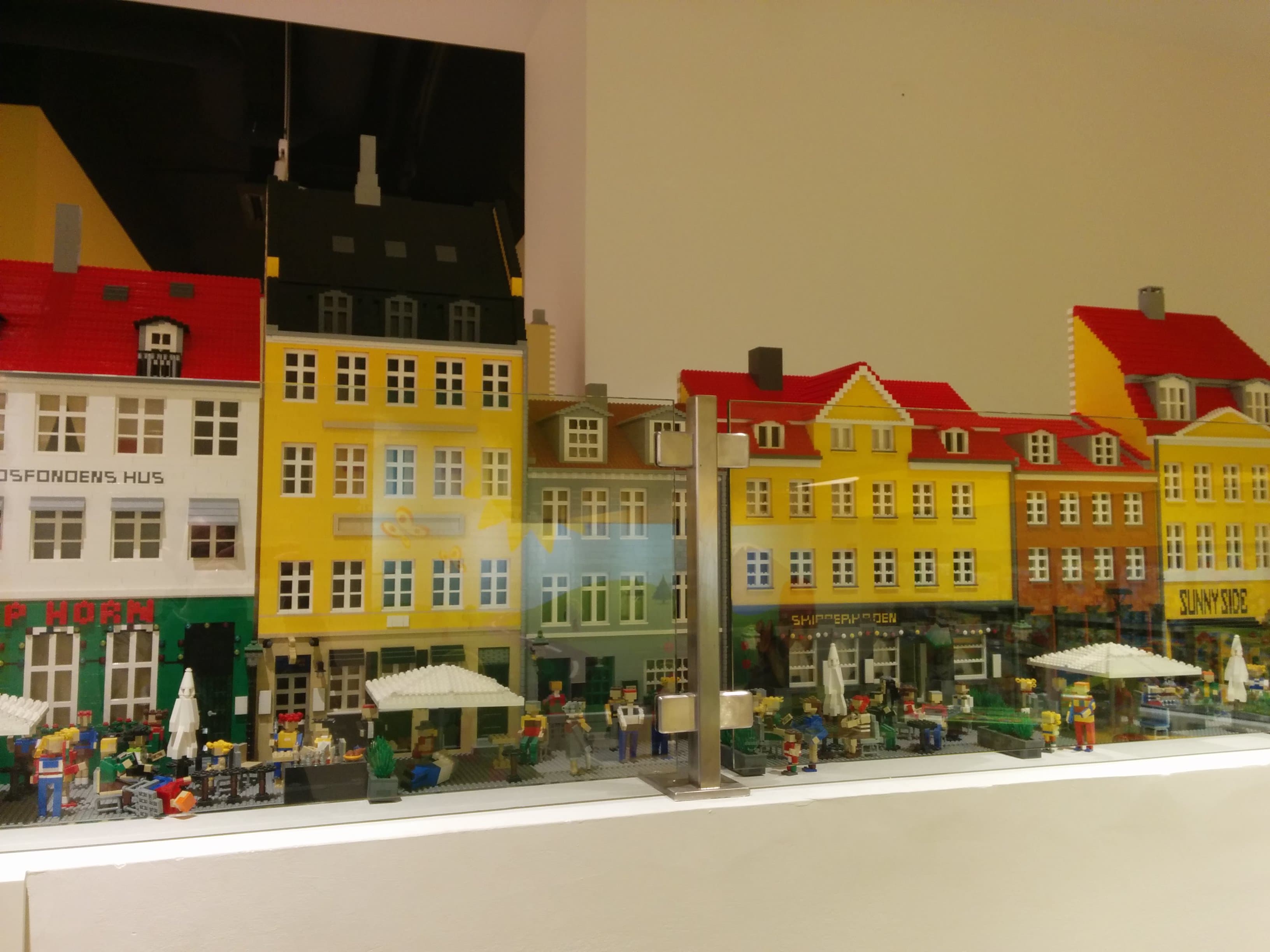
3 km (1.9 miles) from finish. The colourful harbour-front with its 17th-century townhouses is Copenhagen's most photographed district. In May, outdoor tables fill quickly on any afternoon where the cloud cover lifts. For a recovery walk the Monday after the race, the flat canal-side path runs directly alongside the water with no stairs or gradients. The canal boat tours departing from here also solve the post-marathon legs problem: sixty minutes of Copenhagen seen from the water while sitting down.
Fælledparken
0 km, directly adjacent to the finish. The park that hosts the race village is worth staying in after the finish rather than leaving immediately. On the afternoon of race day, the festival zone extends across the lawns with food, music and a large portion of the morning's finishers sitting on the grass comparing medals. It is one of the friendlier post-race environments of any major European marathon, and the May afternoon light in a Copenhagen park is among the better arguments for running this race specifically.
Read Before you Run
The Little Book of Hygge: Danish Secrets to Happy Living
Meik Wiking
The Copenhagen Marathon's crowd behaviour, the neighbourhood cheering stations, the communal music set-ups at Dronning Louises Bro, the bicycle-arrived supporters: it all makes considerably more sense after reading this. Wiking, who runs the Happiness Research Institute in Copenhagen, explains the Danish concept of cosy communal contentment in practical terms.
Hamlet
William Shakespeare
If the recommended excursion to Helsingør and Kronborg Castle (the Elsinore of the play) is on the itinerary, reading or re-reading Hamlet in the days before the race adds a layer to an already worthwhile trip. The castle is 45 minutes by train from Copenhagen Central. The play is better than the castle, but the castle is good enough.
After the Race
The Fælledparken finish village distributes medals, water and recovery nutrition immediately after the finish. For the meal that actually matters, the options are unusually good.
Torvehallerne KBH at Nørreport, approximately 2.5 km from the finish, houses over sixty stalls selling fresh seafood, artisanal smørrebrød, Danish pastries and good coffee. Open-plan, no booking required, and close enough to the finish that a slow post-race walk makes a reasonable journey. Order the smørrebrød: the dark rye bread is carbohydrate-dense without being heavy. Arrive before noon on race day to avoid the tourist rush.
Bæst on Guldbergsgade in Nørrebro is a reliable post-race option: organic pizza, generous portions, and the kind of dining room where nobody will ask you to look presentable. Nyhavn harbour cafés, approximately 3 km from the finish, provide an effortless recovery meal with a reasonable view if the May afternoon is cooperating.
The Copenhagen Marathon runs in mid-May. The DSB rail network connects to the rest of Denmark and southern Sweden in under an hour. The excursions below are all accessible by train from the city centre.
Twenty minutes west: five Viking ships excavated from the Roskilde Fjord, and the cathedral where 39 Danish monarchs are buried. The harbour at Roskilde is flat; the boat yard is operational in May.
Twenty minutes north by S-Tog: 1,100 hectares of royal deer park, 2,000 red and fallow deer, ancient oaks and flat grass avenues. The S-Tog runs directly to Copenhagen Airport from Klampenborg; no re-entry to the city needed.
Roskilde with a night. The Viking Ship Museum in more depth, the fjord walk, the cathedral chapels containing five centuries of Danish royal tombs. Smørrebrød for lunch at Cafe Satchmo.
North along the Øresund coast to Elsinore (Kronborg Castle, the real Hamlet castle) and the Maritime Museum in the old dry dock. Then the Scandlines ferry to Sweden: Helsingborg, then Malmö. Return via the Øresund Bridge direct to Copenhagen Airport.
Frequently asked questions
Should I stay near the start or the finish?
The Copenhagen Marathon starts and finishes in the same place: Øster Allé at the edge of Fælledparken in Østerbro. Staying in Østerbro gives the shortest walk to the race village. The rest of inner Copenhagen is also practical: the M3 Metro connects central stations to Trianglen in under 12 minutes.
How far in advance should I book a hotel?
Book accommodation within 24 hours of a lottery place being confirmed. Copenhagen's hotel inventory is compact and race weekend rates carry a significant premium. Østerbro hotels fill within days of lottery notifications; Indre By and Frederiksberg follow within weeks.
Is there free transport to the start on race day?
No. Race entry does not include free public transport. Runners can purchase a discounted 12-hour DOT Event Ticket (Event Billet) via the Rejsebillet app: 30 DKK for central zones 1 to 4, or 60 DKK for greater Copenhagen zones 1 to 99. Verify current pricing annually.
What is the best area to stay?
Østerbro for pure race-morning simplicity: some hotels are within walking distance of the start corrals, and Saturday night is quiet. Indre By for runners travelling with family. Vesterbro for the best post-race restaurants. Frederiksberg for a calm pre-race environment with easy expo access. All connect to Trianglen Metro in under 12 minutes.
When does the expo open?
The Race Expo at Forum Copenhagen, Julius Thomsens Plads 1, Frederiksberg, typically opens Wednesday afternoon and runs through Saturday evening. No collection on race morning Sunday. Check the official website for current hours. Visit Thursday or Friday morning for shorter queues.
What is the weather typically like on race day?
May in Copenhagen typically produces 10°C to 15°C at the 9:30 AM start, rising through mid-morning. Wind is the principal variable: exposed harbour sections and lake embankments can be noticeably cooler than sheltered neighbourhood streets. A throwaway layer for the start corrals is essential.
How do I get from the airport?
Copenhagen Airport (CPH) connects to the city centre via the M2 Metro in approximately 13 to 15 minutes to central stations. The M2 integrates with the M3 Cityringen loop for direct connections to Trianglen station near the race village.
Is there a bag drop at the Copenhagen Marathon?
Yes. A secure, staffed and covered bag drop is within the Fælledparken start village. Use only the official clear plastic kit bag from the expo with the bib sticker clearly visible. Allow at least 45 minutes before your wave start. Collection is on the same site after finishing.
Should I bring a throwaway layer?
Yes. Pre-race corral temperatures typically sit between 8°C and 10°C before the 9:30 AM start. Throwaway items discarded at the start line are collected for local clothing charities. A light hat and gloves removable after the first few kilometres are also useful in cooler years.
How do I get back to my hotel after finishing?
Trianglen and Vibenshus Runddel Metro stations are a short walk from the Øster Allé finish. The M3 connects back to any central neighbourhood in under 15 minutes. Runners staying in Østerbro can walk. Collect your bag from the alphabetical pillars in the Fælledparken post-race area before leaving.