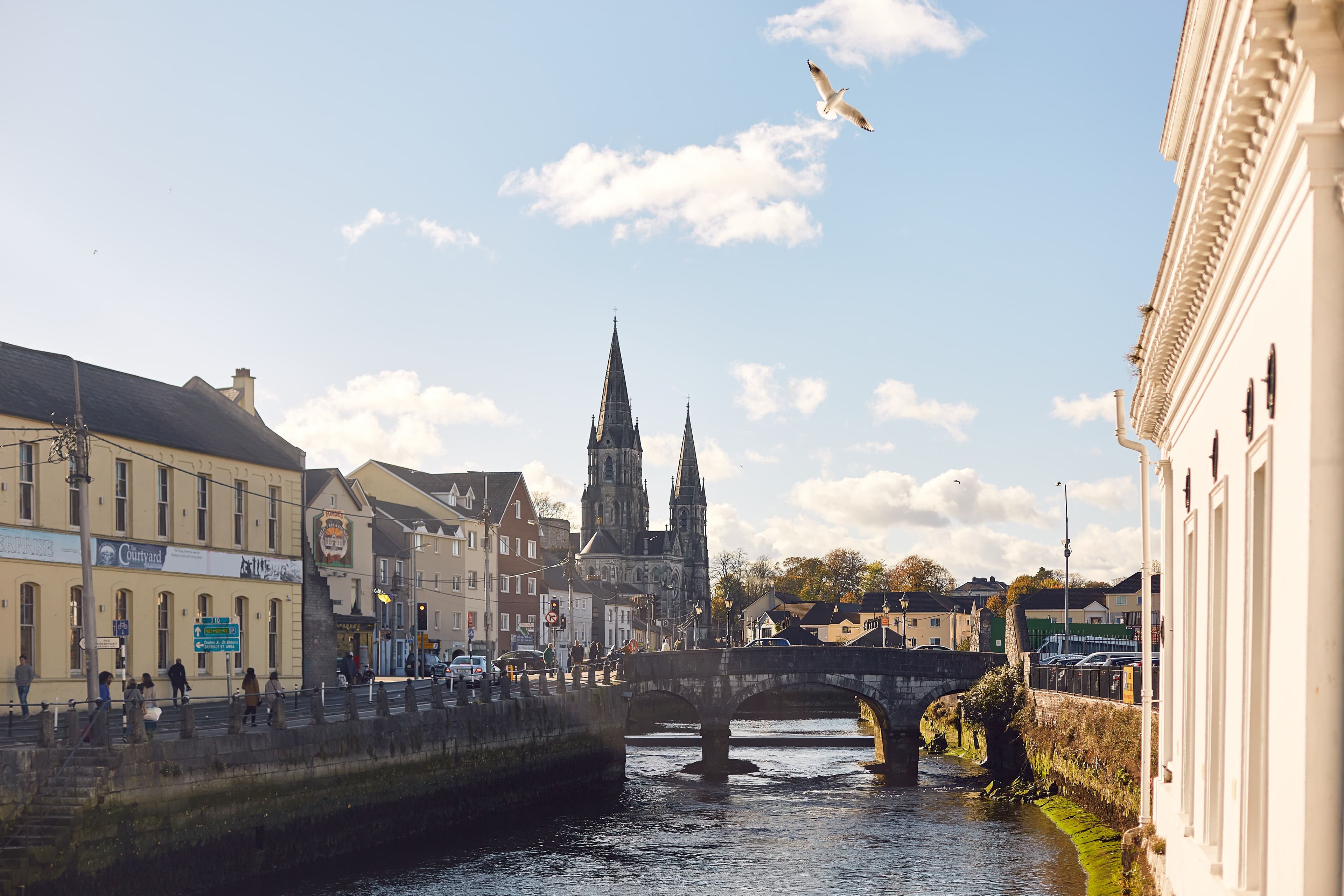
The Race
| Next Race Date | 6 June 2027 |
|---|---|
| Course type | Loop: single-lap city and suburban course; 2026 operational context shows the full marathon starting at 8:15am from St Patrick’s Street, with final 2027 start/finish details to be confirmed against official maps |
| Registration | Ballot, new for 2027 across the full marathon, half marathon and 10K, introduced due to record demand in 2026 and expected higher demand in 2027 |
| Ballot Opens | 9:00am Monday 15 June, closing midnight 30 June 2027, with a €5 admin fee deducted from the full entry fee for successful applicants and refunded to unsuccessful ones; results notified 21 July |
| Total finishers | 12,300+ across marathon, half marathon and 10K combined in 2026 (not marathon-only) |
| Avg race-day temp | Not confirmed. Early June in Cork is generally mild |
| Cutoff time | Not confirmed. No cutoff time was located in official materials reviewed for this race |
| Free race-day transport | Not confirmed. The race causes substantial city-centre road closures and public-transport disruption; runners and spectators should consult official Cork City Marathon / Cork City Council transport pages |
| Course certification | Not confirmed. The organiser, Eventmaster, states AIMS membership and describes the race as "IAAF certified", the former name for World Athletics |
A New Ballot for 2027, After Record Demand
For the first time, entry to the 2027 Cork City Marathon, half marathon and 10K is via a ballot rather than open sale, a direct response to record demand in 2026, when more than 12,300 runners took part across all three distances combined. The ballot opened 9:00am on Monday 15 June and closed midnight on 30 June, with a €5 admin fee, results notified 21 July, and remaining fees for successful applicants processed 28 July; unsuccessful applicants are automatically placed on a waiting list. Runners who deferred their entry from 2026 do not need to re-enter the ballot. This is a genuine structural change from prior editions of this race, and anyone who has run Cork City Marathon before under open entry should not assume the same process applies for 2027.
History
The Analog Devices Cork City Marathon is Ireland’s largest single-city marathon event outside Dublin, run through Cork city and its suburbs alongside a half marathon and 10K on the same day. The 2026 edition drew more than 12,300 participants across all three distances combined, a record that directly led organisers to introduce a ballot entry system for the first time for the 2027 edition, covering all three distances. The race operates under AIMS membership, described by the event’s own Eventmaster listing as “IAAF certified,” legacy terminology likely referring to what is now World Athletics certification. Runners who deferred their entry from the 2026 edition do not need to enter the 2027 ballot, and a good-for-age entry system is set to operate from August 2027, alongside charity entries and official transfer routes still to be confirmed.
The course
The Cork City Marathon runs through Cork city and its suburbs, with 2026 operational context showing the full marathon starting at 8:15am from St Patrick’s Street in the city centre; final 2027 start, finish and route detail should be confirmed against official maps once published. The 2025 course ran from St Patrick’s Street north to Blackpool, east along the quays and the Lower Glanmire Road, under the River Lee through the Jack Lynch Tunnel at about km 10.5, round Mahon, Blackrock and the Cork Harbour Greenway, and back into the city by the Marina; the second half went south through Turner’s Cross and Ballyphehane to Pouladuff, west through Victoria Cross to Model Farm Road, and back along the Carrigrohane Road and the Mardyke to St Patrick’s Street. Independent runner reports consistently describe a flatter opening half and a more rolling, genuinely tougher second half, with one recurring detail being the long, straight Carrigrohane Road past County Hall, at about km 37 to 39, that runners describe as psychologically difficult late in the race, when fatigue has already set in. The elevation chart bears out the shape: the biggest climb, about 29 m over 5 km to Pouladuff, comes after halfway. This should be presented as a genuinely fast course by Irish standards, notably flatter than many of the country’s hillier marathons, but not marketed as dead flat; the course’s own shape rewards pacing discipline through a comparatively easier first half in preparation for a harder second.
Course Map
The map shows the 2025 city and suburban loop: the quays, the Jack Lynch Tunnel, Mahon and Blackrock, then Turner’s Cross, Victoria Cross and the Carrigrohane Road back to St Patrick’s Street. Tap a marker for details, and scrub the slider or press play to move the orange marker along the course with the elevation profile beneath it.
An 8:15am start from central Cork, based on 2026 operational context; final 2027 start details should be confirmed against official maps.
Comparatively flat: north to Blackpool, east along the quays, under the Lee through the Jack Lynch Tunnel at about km 10.5, and round Mahon and Blackrock. A genuine opportunity for controlled early pacing.
The Greenway back to the city, then the biggest climb, about 29 m over 5 km through Turner’s Cross and Ballyphehane to Pouladuff, and a shorter, steeper 17 m rise at Victoria Cross, arriving as fatigue accumulates.
The flat Carrigrohane Road straight, a psychologically demanding stretch widely flagged by runner reports as one of the race’s toughest moments, then the Mardyke and the finish.
Pacers
Not confirmed for the 2027 edition specifically: older independent race reports reference pacing groups at the event in past editions, but this should be checked against current-year official race instructions closer to publication.
What to wear
Early June in Cork is generally mild. No headphone policy or mandatory-kit list was located in official materials reviewed for this race. Given the course’s flatter first half and more rolling second half, layering and pacing should account for a course that genuinely changes character partway through.
Entry
Entry for the 2027 edition is via a new ballot system, introduced across the full marathon, half marathon and 10K due to record demand in 2026 and expected higher demand in 2027. The ballot opened at 9:00am on Monday 15 June and closed at midnight on 30 June, with a €5 admin fee applied at entry, deducted from the full entry fee for successful applicants and refunded in full to unsuccessful ones. Results were notified on 21 July, with the remaining entry fee for successful applicants processed on 28 July; unsuccessful applicants are automatically placed on a waiting list. Runners who deferred their entry from the 2026 edition do not need to re-enter the ballot for 2027. A good-for-age entry system is set to operate from August 2027, alongside charity entries and official transfer routes, though specific standards and mechanics for these were not confirmed in materials reviewed for this race. Transfers between distances are not permitted once a ballot place has been secured.
Fast Runner / GFA Standards
Not confirmed. A good-for-age entry system is confirmed to operate from August 2027, but specific time standards were not published in materials reviewed for this race; this section should be completed once official standards are released.
Race Weekend
Expo
Not confirmed. No information on an expo, race-pack collection process or pre-race-day registration window was located in official materials reviewed for this race. Given the event’s scale, more than 12,300 combined participants in 2026, some form of organised bib collection is likely; check the current-year final race instructions.
Race Morning
Based on 2026 operational context, the full marathon started at 8:15am from St Patrick’s Street, the half marathon at 10:15am from Monahan Road / Kennedy Park, and the 10K at 8:45am from St Patrick’s Street / Merchant’s Quay; final 2027 start times and locations should be confirmed against official maps and race instructions. The race causes substantial city-centre road closures and public-transport disruption in Cork; runners and spectators are advised to use the official Cork City Marathon or Cork City Council transport pages, and should not assume taxis can cross the route on race morning. Because roads close across much of the city centre, runners are advised to stay within walking distance of the start and finish, or to follow the official transport plan closely.
Nutrition on Course
Not confirmed. No official aid-station locations, spacing or nutrition provision were located in official materials reviewed for this race. Recent local Reddit discussion references water-station reliability issues in earlier editions, described as improved since Cork City Council took over organisation, but this is runner-reported, not a confirmed operational fact.
Spectating
Given the scale of this event, more than 12,300 combined participants in 2026, and the substantial city-centre road closures it causes, spectators should plan around the official Cork City Marathon and Cork City Council transport guidance, and should not expect to cross the race route freely on race morning.
Itinerary: Base in central Cork, near St Patrick’s Street, for proximity to the marathon and 10K starts, checking the official transport pages for current-year road-closure timings before planning movement around the city. Avoid assuming taxis or general route-planner directions will work on race morning.
Post-Race Food
Cork’s English Market, a historic covered food market in the city centre, offers a genuine, low-effort post-race food option with a wide range of stalls under one roof.
Where to Stay
Based on 2026 operational context, the marathon starts and returns to the St Patrick’s Street area of central Cork, though final 2027 finish details should be confirmed against official maps; the following guidance assumes a central Cork finish consistent with recent editions.
City centre, around St Patrick’s Street, South Mall and Grand Parade
The best base for most runners, offering the most direct race-day access and the strongest concentration of restaurants and the English Market, though this area should be booked early given the event’s genuinely large scale.
The Victorian Quarter, around MacCurtain Street
Strong restaurant options and good access to Kent Station, though race-day crossing restrictions in this area should be checked in advance given the scale of road closures the race causes.
Near Kent railway station
Practical for runners arriving by rail from Dublin or elsewhere in Ireland, though it is not necessarily the most walkable option for the start line itself, and this trade-off should be weighed against rail convenience.
Outlying Cork suburbs
Offer cheaper accommodation but can become genuinely awkward to navigate once race-day road closures are in effect; this should not be the default recommendation for runners without their own car and a clear understanding of the closure zones.
Recommended areas
The most direct race-day access, close to the marathon and 10K start, and within walking distance of the English Market and city-centre restaurants. No specific property has been sourced with confidence for this guide.
Strong restaurant options and good access to Kent Station, though race-day crossing restrictions in this area should be checked before booking. No specific property has been sourced with confidence for this guide.
Practical for runners arriving by rail from Dublin or elsewhere, though less directly walkable to the start line itself. No specific property has been sourced with confidence for this guide.
Booking timeline
Because entry for 2027 is via ballot rather than open sale, the demand and booking pattern here differs from most races: runners should not book non-refundable accommodation before receiving ballot results on 21 July, given the real possibility of an unsuccessful application. Once a ballot place is confirmed, Cork’s city-centre accommodation should be booked promptly, particularly given the event’s genuinely large combined field size across all three distances.
See & Do
These attractions sit close to the shared start and finish area, or the recommended day-trip extensions.
The English Market
Central Cork, close to St Patrick’s Street. A historic covered food market with a genuinely wide range of stalls, one of Cork’s defining attractions and a low-effort stop either side of race day.
Shandon Bells and St Anne’s Church
A distinctive Cork landmark, with the church’s tower open for visitors to ring the bells themselves; a genuinely different, low-effort local experience.
Crawford Art Gallery
Central Cork. A free-entry art gallery in the city centre, a low-effort indoor option suited to a recovery day after the marathon.
Blarney Castle
A short journey from Cork city. A well-known Irish castle and its gardens, best visited by bus or organised tour given the walking involved; verify current bus timings before recommending as a same-day option.
Fitzgerald Park and University College Cork
Central Cork. A riverside park adjacent to the university campus, offering flat, gentle walking suited to legs recovering from the marathon.
Read Before you Run
Cork stories (various collections)
Frank O’Connor
O’Connor, one of Cork’s own best-known writers, set much of his short fiction directly in the city, capturing its particular texture of streets and characters in a way that a conventional guidebook cannot; a fitting companion for runners spending race weekend exploring the same city his stories are rooted in.
After the Race
The Cork City Marathon runs in early June. These itineraries reach the wider Cork coastline and countryside, suited to legs recovering from a genuinely rolling second half.
A train-friendly harbour town with genuine maritime history, including its Titanic connection, a straightforward and easy Monday option.
A classic Cork-area side trip to the castle and its gardens, best done as a half-day.
A genuine food-and-coast overnight, a softer landing than staying in the city, with Kinsale’s harbour and restaurant scene the main draw.
A fuller West Cork escape through Kinsale, Clonakilty and Baltimore, best suited to runners with their own car and several days to spare.
Frequently asked questions
Should I stay near the start or the finish?
Based on 2026 operational context, the marathon starts and finishes in the St Patrick’s Street area of central Cork, so staying centrally covers both; final 2027 details should be confirmed against official maps closer to race day.
How far in advance should I book a hotel?
Do not book non-refundable accommodation before ballot results are notified on 21 July, given the real chance of an unsuccessful application. Once a place is confirmed, book promptly given the event’s genuinely large combined field size.
Is there free transport to the start?
Not confirmed. The race causes substantial city-centre road closures and public-transport disruption; runners should consult official Cork City Marathon or Cork City Council transport pages before race morning.
What is the best area to stay?
City centre, around St Patrick’s Street, South Mall and Grand Parade, offers the most direct race-day access and the strongest concentration of restaurants, including the English Market.
When does the expo open?
Not confirmed. No information on an expo or race-pack collection process was located in official materials reviewed for this race.
What is the weather typically like?
Not confirmed. Early June in Cork is generally mild, but no race-day-specific figure has been sourced for this race.
How do I get from the airport?
Cork Airport sits close to the city, one of the reasons this race is considered relatively straightforward for overseas visitors compared with more rural Irish marathons, though exact transfer times should be verified close to publication.
Is there a bag drop?
Not confirmed. No bag-drop or baggage-storage arrangement was located in official materials reviewed for this race.
Should I bring a throwaway layer?
Sensible given the early June date and start time, even though conditions in Cork at this time of year are generally mild rather than extreme.
How do I get back to my hotel after finishing?
Runners staying centrally in Cork should find the finish area, based on 2026 context around St Patrick’s Street, within walking distance. Given the scale of road closures this event causes, runners should not assume taxis can navigate normally until closures lift.