The Race
| Next Race Date | Saturday 19 June 2027 (VERIFY ANNUALLY once officially confirmed) |
|---|---|
| Course type | Point-to-point: 893 Scenic Drive, Two Harbors, to DeWitt-Seitz Marketplace, Canal Park, Duluth |
| Registration | Open entry via the official site, first-come; the 2026 edition sold out quickly |
| Ballot Opens | Not applicable: standard open entry, not a ballot. 2027 registration opens 1 October 2026. |
| Total finishers | 9,603 (2026, record field for the race's 50th anniversary edition) |
| Avg race-day temp | Cool lake-effect conditions typical, though fog, wind and warm sun are all possible in mid-June; no specific range has been published |
| Cutoff time | 7 hours, roughly a 16-minute-per-mile pace; runners falling behind are asked to move to the sidewalk once aid stations close |
| Free race-day transport | Mandatory free bus or train transport to the start, since there is no parking there; a free return shuttle also runs continuously from 8:00am to 3:30pm on race day |
| Course certification | Not published |
| Sleeper Train | Not accessible |
Maple Syrup on the Course
At mile 17, Grandma’s Marathon offers Pure Fuel, a maple-syrup-based on-course fuel supplied by Anderson’s Maple Syrup, a distinctly regional touch not found at most American marathons. Combined with fresh fruit from Super One Foods, a Minnesota grocery chain, near miles 19 and 23.5, the race’s nutrition stations lean into Upper Midwest sourcing rather than relying solely on standard national sports-nutrition brands. Runners planning their own gel strategy around the course’s official gel stations, at miles 13 and 20 only, should treat the syrup and fruit stations as a real supplementary option rather than a novelty to skip past.
History
Grandma’s Marathon takes its name from Grandma’s Saloon & Grill, a Duluth restaurant tied to the race’s founding sponsorship, and the name has stayed attached to the event ever since rather than being replaced by a rotating title sponsor. The race has grown into one of the most respected non-Major marathons in the United States, built on a point-to-point course that runs the length of Lake Superior’s North Shore from Two Harbors into Duluth.
The 2026 edition marked the race’s 50th anniversary and drew its largest field ever, 9,603 marathon finishers, breaking the previous year’s record by more than 2,000. The course runs along Scenic Highway 61 beside Lake Superior for the majority of its distance before turning into Duluth for the closing miles and a finish at Canal Park, historic Duluth’s tourist and waterfront district. The race is widely used as a Boston qualifying attempt given its net-downhill profile, and is consistently praised in runner communities for its organisation and Lake Superior scenery, with the recurring caveat that Duluth’s hotel supply is limited relative to demand and the mandatory bus transport to the point-to-point start needs planning around.
The course
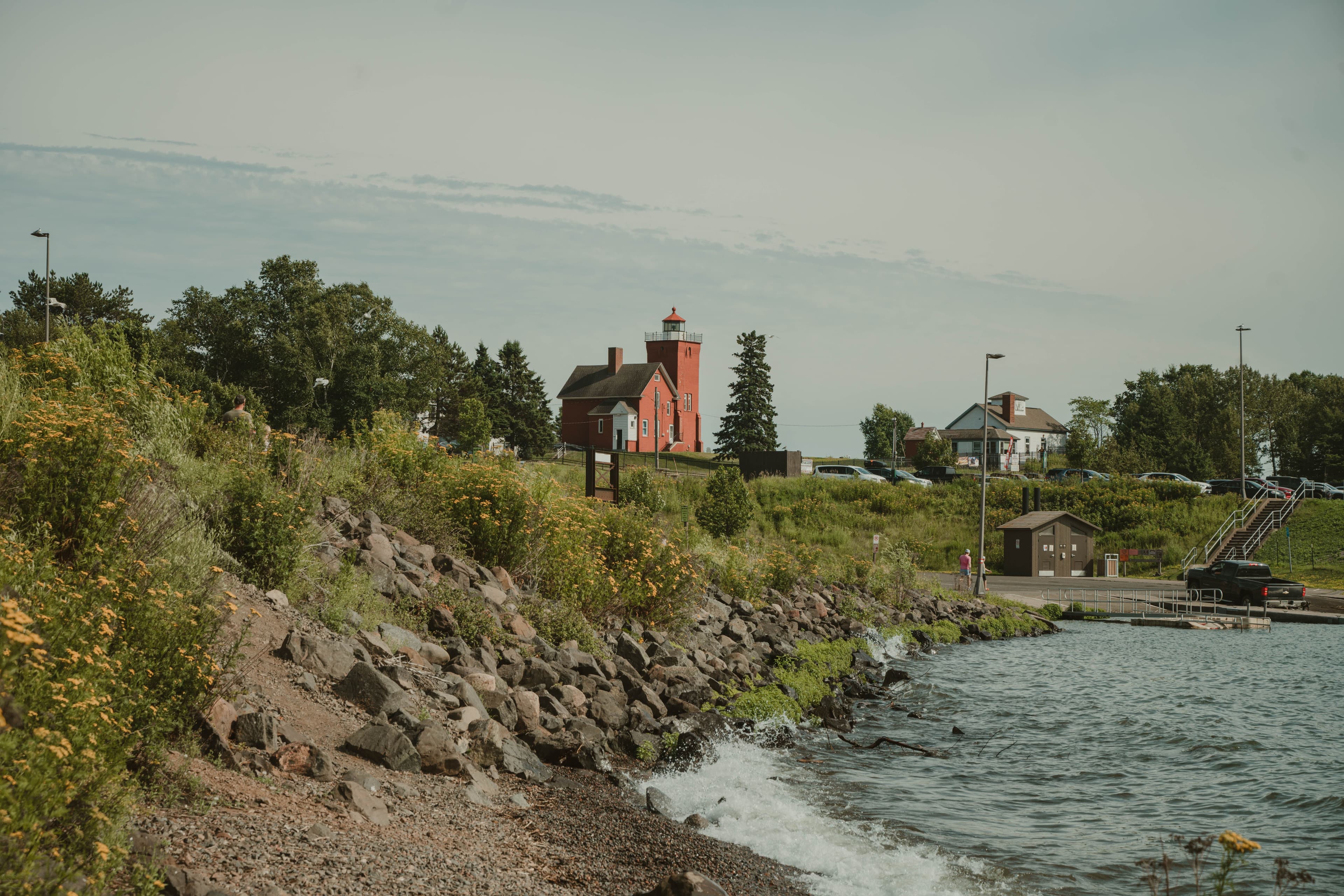
Grandma’s Marathon starts at 893 Scenic Drive in Two Harbors, Minnesota, and finishes at the DeWitt-Seitz Marketplace in Canal Park, Duluth, a point-to-point course running the length of Lake Superior’s North Shore along Scenic Highway 61. The course begins at 740 ft above sea level and finishes at 610 ft, with 542 ft of total descent against 407 ft of total climbing across the route, a net-downhill profile despite rolling terrain throughout. The early and middle miles run largely beside the lake through small North Shore communities, Larsmont, Knife River and Brighton Beach among them, before the course turns inland through Lakeside and into downtown Duluth for the closing miles, finishing at Canal Park.
Miles 0-6: Two Harbors and the early shoreline. The course starts at Two Harbors and runs southwest along Scenic Highway 61, with Larsmont around mile 3 offering the first real spectator vantage point, followed by Knife River around mile 5, both small North Shore communities close enough to Lake Superior for lake views throughout this stretch.
Miles 7-14: the long shoreline rhythm.The course settles into its longest sustained stretch, running beside Lake Superior with rolling terrain rather than any single defining climb. This is the section runners describe as the race’s signature: consistent lakeside rhythm, with aid stations at miles 7, 9, 11 and 13.
Miles 14-19: Brighton Beach and the Lester River. Brighton Beach Park arrives around mile 14.5, followed by the Lester River area around mile 19, both notable landmarks as the course begins its approach into Duluth proper.
Miles 19-22: London Road and Lemon Drop Hill. London Road through the Lakeside neighbourhood, miles 19 to 21, is known for energetic crowds, yard parties and music, one of the loudest stretches on the course. Lemon Drop Hill, at mile 21.97, is the longest continuous climb of the entire race and arrives at a point in the marathon where fatigue makes any real climb feel harder than its actual grade.
Miles 22-26.2: downtown Duluth and Canal Park. The course passes the Fond-du-Luth Casino around mile 24.4, the Lake Superior Railroad Museum and North Shore Scenic Railroad around mile 25.1, and the William A. Irvin Museum around mile 25.6, before finishing in Canal Park with some of the largest crowds anywhere on the course.
Follow the blue tangent line throughout the North Shore’s gentle curves in the early and middle miles, where the highway follows the coastline; the tighter turns through downtown Duluth in the closing two miles matter more for tangent management given the higher density of direction changes. Chip timing starts at Two Harbors and finishes at the DeWitt-Seitz Marketplace in Canal Park.
A lakeside start through small North Shore communities, Larsmont and Knife River among them, with early spectator pockets rather than dense crowds. Settle into pace here rather than chase the net-downhill profile too early.
The course's signature stretch, running beside Lake Superior with rolling terrain and no single defining climb, through Brighton Beach and toward the Lester River. Consistent effort here sets up the closing miles.
The loudest crowd support on the course through Lakeside's London Road, followed immediately by Lemon Drop Hill at mile 21.97, the longest continuous climb of the race, arriving exactly when fatigue makes it hardest.
A landmark-dense closing stretch past the Fond-du-Luth Casino, the Lake Superior Railroad Museum and the William A. Irvin Museum, finishing to some of the largest crowds on the course at Canal Park.
Pacers
Official pacers are confirmed for both the marathon and half marathon, though specific target finish times have not been published. There is no confirmed corral structure; the race uses a single mass start.
What to wear
Grandma’s Marathon runs in mid-June, and Lake Superior’s own microclimate makes the race harder to dress for than its calendar date suggests: cool, foggy mornings, real wind off the lake, and warm, even hot, sun are all plausible on the same race day, sometimes within the same few hours. No official average race-day temperature range has been published. The point-to-point start at Two Harbors involves a bus journey and an outdoor wait before the race begins, so a throwaway layer matters more here than at races with a sheltered start area. The shoreline miles from roughly mile 7 through mile 19 are the most exposed to lake wind, even when the morning felt calm at the start.
Entry
Registration for the 2027 race opens 1 October 2026, first-come rather than a ballot, and recent editions have sold out quickly: the 2026 race drew a record 9,603 marathon finishers for its 50th anniversary. The organiser has not published charity or transfer pathways for entries once general registration sells out.
There is no confirmed fast-runner or Good for Age entry route; entry is standard open registration. The race’s net-downhill course makes it a popular Boston qualifying attempt regardless of the absence of a dedicated fast-runner pathway.
Fast Runner / GFA Standards
Not applicable. Grandma’s Marathon has no confirmed fast-runner or Good for Age entry route.
Race Weekend
Expo
The expo runs at the Duluth Entertainment Convention Center (DECC) on the Thursday and Friday before race day. There is no race-morning packet pickup: every runner must collect their bib at the expo in the days before the race, making a Thursday or Friday arrival in Duluth effectively mandatory rather than optional. Bring photo ID and confirmation of registration for collection.
Race Morning
There is no parking at the start in Two Harbors: every runner is required to use the organiser’s provided bus or train transport from Duluth. Participants select their preferred loading location by email in early May, a step worth watching for closely given how directly it affects race-morning logistics. Because the start is an outdoor wait in a small North Shore town rather than a sheltered city venue, arriving with a throwaway layer and realistic expectations about queuing for the bus matters more here than at most races on the platform.
A free return shuttle bus service runs continuously from 8:00am to 3:30pm on race day, covering both participants and spectators heading back from the Canal Park finish area. Bag-drop and specific finish-chute procedure have not been confirmed in available sources.
The 7-hour cutoff requires roughly a 16-minute-per-mile pace; runners who fall behind are asked to move to the sidewalk and continue at their own risk once aid stations and traffic protection close. Canal Park itself gets congested after the race given the scale of the finish crowd, so pre-arranging a specific meeting point away from the immediate finish chute is worth doing before race day.
Logistics Map
The map below shows the point-to-point route along Lake Superior’s North Shore from Two Harbors, past Brighton Beach and over Lemon Drop Hill, into downtown Duluth and Canal Park, plus the DECC expo venue. Tap any marker for details.
Nutrition on Course
Fifteen aid stations are spaced across the course at miles 3, 5, 7, 9, 11, 13, 15, 17, 19, 20, 21, 22, 23, 24 and 25, water and Powerade Ion4 (Mountain Berry Blast) in cups at every station. Gels are provided at miles 13 and 20, with the specific brand varying year to year. Fresh fruit, supplied by Super One Foods, a regional Minnesota grocery chain, is available near miles 19 and 23.5, and Pure Fuel maple syrup, supplied by Anderson’s Maple Syrup, is available at mile 17.
Spectating
Grandma’s Marathon’s point-to-point shoreline course means spectating requires advance planning rather than picking a single spot: Larsmont around mile 3 and Knife River around mile 5 are the earliest realistic viewing points, both requiring a drive up Scenic Highway 61 from Duluth ahead of the race. London Road through Lakeside, miles 19 to 21, is the loudest and most accessible crowd section for spectators without a car, reachable by Duluth’s own local transit. Canal Park, the finish, is the highest-density spectator area on the entire course and the easiest to reach on foot from most Duluth hotels.
Itinerary A: Drive up Scenic Highway 61 to Larsmont for a sighting around mile 3, continue to Knife River for a second sighting around mile 5, then drive back into Duluth ahead of the field to catch the runner again through Lakeside or at the finish.
Itinerary B: Base in Duluth and use local transit or a short drive to reach London Road in Lakeside for the mile 19-21 stretch, then walk or take transit into downtown Duluth for a sighting around mile 24-25 near the Fond-du-Luth Casino and Lake Superior Railroad Museum, before continuing on foot to Canal Park for the finish.
Itinerary C:Go directly to Canal Park for the finish, positioning along the finish straight for a guaranteed sighting amid the race’s largest crowds, and use a pre-agreed meeting point away from the immediate finish chute, given how congested Canal Park gets after the race.
Post-Race Food
Grandma’s Saloon & Grill, the restaurant the race itself is named for, is the obvious post-race destination in Canal Park, serving a straightforward American menu in a setting directly tied to the event’s history. Canal Park Brewing Company offers a more contemporary brewpub option a short walk from the finish. Fitger’s Brewhouse, in the historic Fitger’s Brewery Complex a little further from Canal Park, gives a quieter alternative for runners willing to walk further from the immediate finish-area crowds.
Where to Stay
Choose a Duluth base over North Shore lodging unless a dedicated North Shore trip is already part of the plan: because the race starts in Two Harbors and runs into Duluth, staying in Duluth means only the outbound bus journey to worry about, while North Shore lodging near the start complicates the post-race return considerably.
Canal Park
Puts a runner within walking distance of the finish itself, the best possible post-race convenience on offer, though it is expensive and books up early given how directly it serves race weekend. It suits runners prioritising a simple finish-day return above all else.
Downtown Duluth
Just inland from Canal Park, offers more hotel supply and a stronger restaurant scene than the waterfront district itself, at a short walk or taxi ride from the finish. It suits runners who want a broader choice of accommodation without losing much finish-day convenience.
Fitger’s and the East End
A historic former brewery complex turned hotel and retail district, offers Duluth character a short walk or taxi ride from the finish. It runs pricier than downtown but rewards runners who want something more distinctive than a standard hotel.
Miller Hill and the airport area
Inland from the lake, offers better value than any lakefront option, at the cost of needing a car or careful shuttle planning to reach both the start-day bus pickup and the Canal Park finish. It suits runners with a car who don’t mind trading walkability for value.
Two Harbors and the North Shore
Near the start itself, offers a scenic, less crowded lodging option, but complicates the finish considerably: getting from a North Shore hotel back to Canal Park after the race is a harder logistical problem than the reverse. It suits runners planning to extend their trip along the North Shore rather than prioritising race-day simplicity.
Recommended hotels
A finish-side option in Canal Park itself, prized for post-race convenience, though it sells out and rises in price fast given how few properties sit this close to the finish.
A waterfront property well suited to recovery, close enough to the finish to remove any need for post-race transport.
A characterful hotel in the historic Fitger's Brewery complex, trading a little finish-day convenience for a distinctive Duluth setting.
A better-value downtown option than the Canal Park hotels, still within a manageable distance of the finish.
A reliable chain option directly in Canal Park, combining brand consistency with finish-side convenience.
Booking timeline
Book accommodation as early as possible, ideally as soon as entry is confirmed, given how limited Duluth’s hotel supply is relative to the size of the field, now over 9,600 marathon finishers alone in its record 2026 edition. This is a race where the usual “book after your ballot result” advice does not apply, since there is no ballot; entry itself can sell out within days of opening on 1 October, which is the real trigger point for booking rather than a later results date. Refundable rates are worth prioritising given how much Lake Superior weather can shift race-week plans. Duluth International Airport (DLH) is the closest airport but has limited direct routes; Minneapolis-St Paul International (MSP) offers far more flight options at the cost of a roughly two-and-a-half-hour drive north.
See & Do
The finish sits in Canal Park, Duluth’s waterfront tourist district, putting the Lakewalk and several museums within easy reach.
Lakewalk
Directly adjacent to Canal Park. A flat, paved waterfront path running for several kilometres along Lake Superior’s shore from Canal Park, the single best low-effort recovery walk available immediately after finishing. Mid-June weather here can shift quickly, so a light layer is worth carrying even on a warm afternoon.
Great Lakes Aquarium
0.3 km (0.2 miles) from finish. An indoor, family-friendly aquarium in Canal Park itself, focused on Great Lakes and regional freshwater species, requiring no significant walking.
Glensheen Mansion
5 km (3.1 miles) from finish. A Gilded Age lakeside mansion offering guided tours through its period rooms, involving a real amount of walking and stairs across multiple floors, better suited to a day the legs have recovered than immediately post-race.
North Shore Scenic Drive
Extends north from Duluth along the course route itself. The same Scenic Highway 61 corridor the marathon runs, best experienced by car after the race rather than on foot, with waterfalls, overlooks and small North Shore towns strung along its length. Fog is a real possibility even in June and can affect visibility along the route.
Read Before you Run
The North Shore: A Four-Season Guide to Minnesota's Favorite Destination
Andrew Slade
A practical, regionally specific guide to the same Lake Superior North Shore corridor the marathon course runs along, useful for a runner planning to extend their trip beyond race weekend rather than fly straight home.
After the Race
Grandma’s Marathon runs in June. These itineraries range from a same-day walk around Canal Park to a three-night extension to Minneapolis-St Paul.
A low-effort option for runners not travelling further: the flat Lakewalk path, the Great Lakes Aquarium, and Canal Park's own restaurants and shops, all within a short walk of the finish. Expect real crowds given June's tourist season.
A quiet North Shore town that most runners only see from a race bus window on the way to the start. A single relaxed night afterward, with a car, gives it the attention race morning doesn't allow.
A scenic extension further up Highway 61 than Two Harbors, with waterfalls, state parks and Lake Superior overlooks strung along the route. June is generally pleasant, though pack for variable weather and early-season insects in the woods.
Minnesota's Twin Cities, reachable by car or a short flight, and the natural add-on for overseas runners who flew into Minneapolis-St Paul International before driving north to Duluth. Works well in June's warm, settled weather.
Frequently asked questions
Should I stay near the start or the finish?
Stay in Duluth, near the finish, unless a dedicated North Shore trip is already part of your plans. Every runner takes a mandatory bus or train to the Two Harbors start regardless of where they stay, so a Duluth base only adds that one outbound journey, while North Shore lodging complicates the post-race return considerably.
How far in advance should I book a hotel?
Book as early as possible, ideally as soon as entry is confirmed. Duluth's hotel capacity is limited relative to the size of the field, over 9,600 marathon finishers in the 2026 record edition, and Canal Park hotels in particular sell out fast.
Is there free transport to the start?
Yes. There is no parking at the start, so every runner uses the organiser's free bus or train transport from Duluth. A free return shuttle also runs continuously from 8:00am to 3:30pm on race day.
What is the best neighbourhood to stay in?
Canal Park offers the best finish-day convenience, within walking distance of the finish itself, though downtown Duluth offers more hotel supply at a similar level of practical access.
When does the expo open, and what do I need to bring?
The expo runs at the Duluth Entertainment Convention Center on the Thursday and Friday before race day. There is no race-morning packet pickup, so collecting your bib at the expo is mandatory; bring photo ID and confirmation of registration.
What is the weather typically like on race day?
Mid-June on Lake Superior's North Shore can bring cool, foggy conditions, real wind, or warm sun, sometimes within the same race. The lake's own microclimate makes the weather here less predictable than the calendar date alone suggests.
How do I get from the airport to the city centre?
Duluth International Airport is the closest option but has limited direct routes. Many runners instead fly into Minneapolis-St Paul International, a roughly two-and-a-half-hour drive south, for a wider choice of flights.
Is there a bag drop at the race?
This has not been confirmed in available sources; check the official participant guide closer to race day.
Should I bring a throwaway layer to the start?
Yes. The Two Harbors start involves an outdoor wait after a bus journey, and Lake Superior mornings in June are often cool even when the day later turns warm.
How do I get back to my hotel after finishing?
Walk from Canal Park if staying nearby, or use the free return shuttle bus, which runs continuously from 8:00am to 3:30pm on race day. Canal Park gets congested after the race, so agree a specific meeting point with anyone supporting you in advance.