The Race
| Next Race Date | Sunday 26 September 2027 |
|---|---|
| Course type | Point-to-point: start on the South Loch Ness road near Whitebridge, finish at the Event Village, Bught Park, Inverness |
| Registration | Open entry via the official site; general entry for 2026 has sold out, with charity places still available |
| Ballot Opens | Not applicable: standard open entry, not a ballot |
| Total finishers | 5,500 marathon entries in 2024, a record edition; distinct from the 10,700 whole-weekend total across marathon, 10K, 5K and children’s race |
| Avg race-day temp | No official average is published; late September in the Highlands is cool and changeable, with a real chance of rain and wind |
| Cutoff time | 7 hours (5:00pm finish from a 10:00am start); runners expecting to take longer than 6 hours 30 minutes are asked to use the pavement through Inverness |
| Free race-day transport | Yes: the mandatory coach transfer from Inverness to the start is included in marathon entry |
| Course certification | AIMS-measured, UK Athletics licensed; eligible for Boston Marathon qualifying times |
| Sleeper Train | Accessible |
The Mandatory Coach Transfer
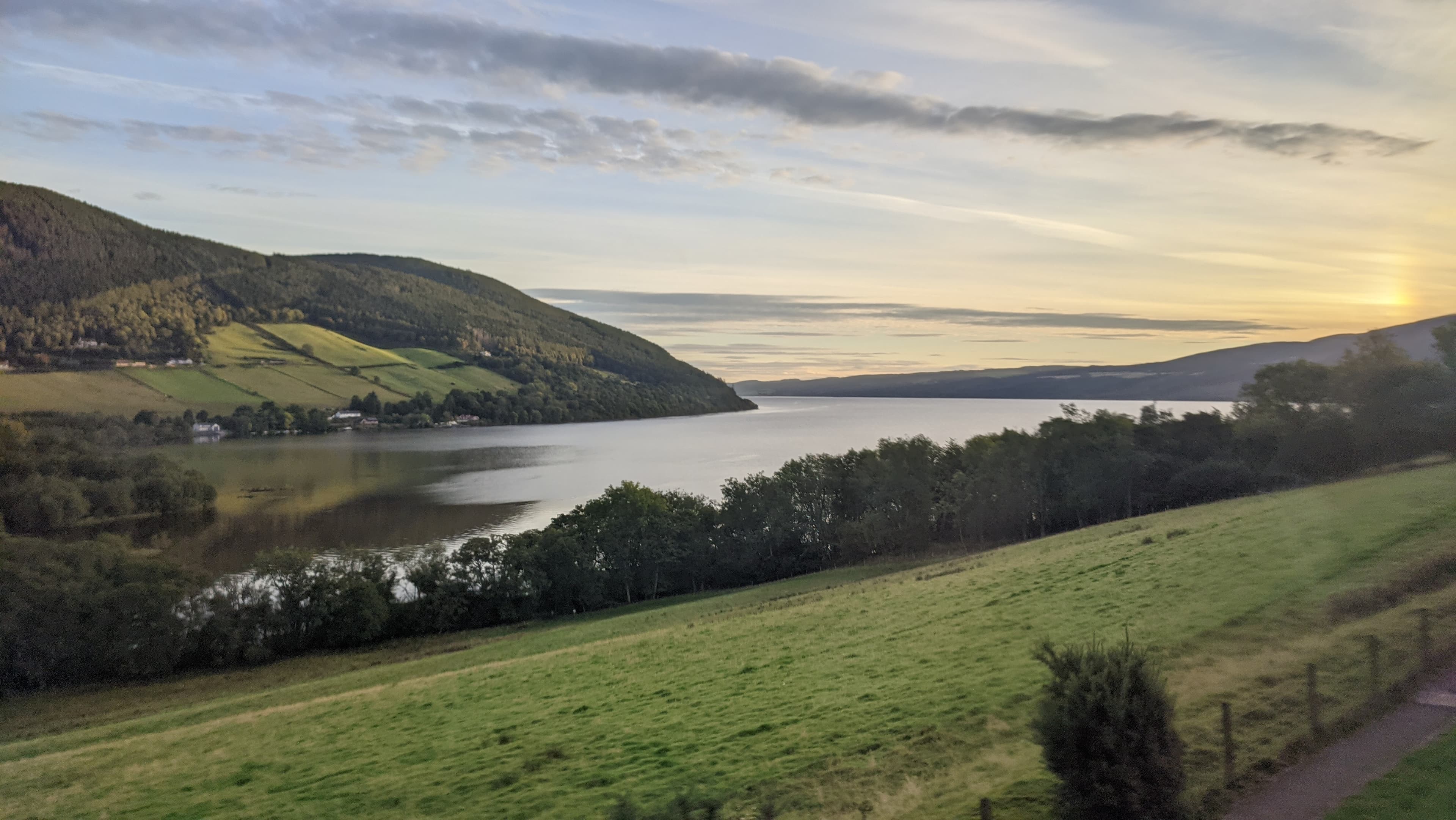
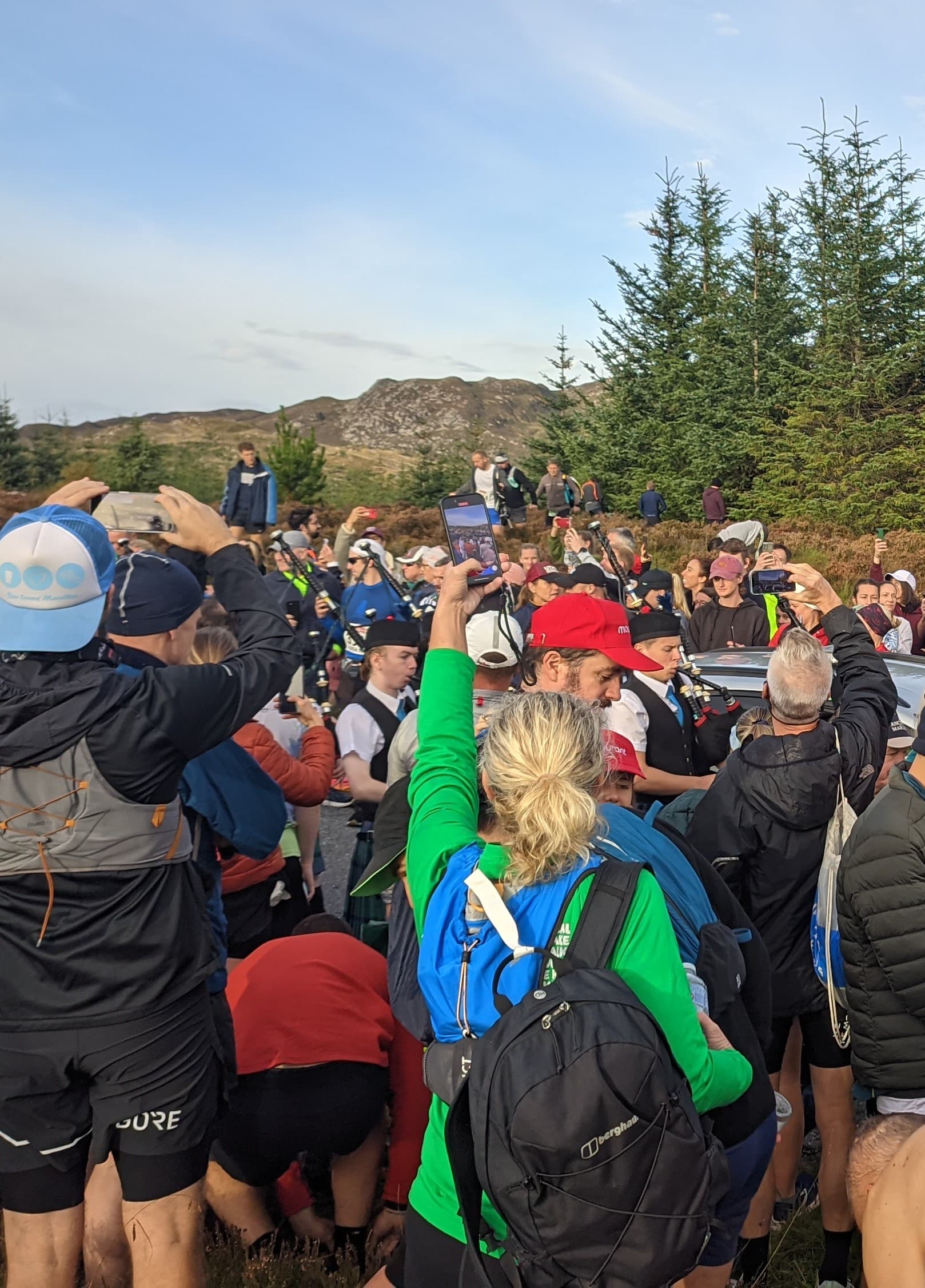
There is no parking, and no other way to reach the start: every runner travels out from Inverness by coach on race morning, arriving between 7:00am and 7:30am for a 7:30am-7:50am departure and a roughly one-hour journey to a remote stretch of the South Loch Ness road. This single fact drives almost every other piece of practical advice on this page, from where to stay (Inverness, not the loch-side villages) to what to wear (a throwaway layer for a long, exposed, outdoor wait before a 10:00am start).
History
The Baxters Loch Ness Marathon has been held annually since 2002, organised as the marathon distance within the wider Baxters Loch Ness Marathon and Festival of Running, a weekend that also includes a 10K, a 5K and a children’s race. Macmillan Cancer Support has been the event’s lead charity partner since 2013. The 2024 edition was a record year for the festival as a whole, with 10,700 entries across all events; the marathon itself accounted for 5,500 of those entries, a figure distinct from the smaller weekend-wide total and the more useful one for judging how busy the marathon field itself runs.
The race is AIMS-measured and UK Athletics licensed, and results are eligible for Boston Marathon qualifying times. The current men’s course record is 2:15:46, set by Alex Milne of Hercules Wimbledon AC in 2025, beating the previous record of 2:19:26 set by Moray Pryde (GBR) in 2024 by almost four minutes. The women’s course record is 2:42:04, set by Katie White (GBR) in 2019.
The course
The Loch Ness Marathon starts on the South Loch Ness road a little south of Whitebridge, roughly 9km from Fort Augustus, and finishes at the Event Village in Bught Park, Inverness, a genuinely point-to-point course of 42.195km. The route runs along the south shore of Loch Ness through Foyers and Inverfarigaig, continues to Dores at the loch’s northern end, then heads into Inverness, crossing the River Ness via Ness Bridge before the final stretch to Bught Park. The course is net downhill overall, starting at roughly 310m above sea level and finishing at close to sea level, but the descent is front-loaded: the first 15km drop about 265m to the loch shore, the middle is almost flat, and the biggest climb, about 68m over 3.7km just after Dores, comes after mile 17, when it catches out runners who treated the net-downhill reputation as a guarantee of an easy day. No official figure for total climbing has been published.
Miles 0-5.5: The South Loch Ness road. The race leaves the start on the South Loch Ness road, immediately quiet and rural, running north through open hill country past Whitebridge towards the loch. This opening stretch starts at the course’s highest elevation, around 310m, and drops about 150m in the first 5 miles, fast running that is easy to overdo.
Miles 5.5-9: Foyers and the drop to the loch. The route reaches the village of Foyers, a small landmark on an otherwise sparsely populated stretch of shoreline, with a short, sharp climb of about 30m, then falls a further 160m to the loch shore at Inverfarigaig.
Miles 9-17.5: Inverfarigaig to Dores. The longest single section of the course, running along the loch shore from Inverfarigaig to Dores at the loch’s northern end. It is close to flat, and this is where quad fatigue from the earlier downhill running tends to catch up with runners who went out too fast.
Miles 17.5-25.5: The Dores hill and into Inverness. Just after Dores the course’s biggest climb arrives, about 68m over 3.7km to Dochgarroch around mile 20, the stretch runners most often remember, followed by a descent past Holm into Inverness, with the character of the race shifting from remote and scenic to urban and crowd-supported as the city approaches.
Miles 25.5-26.2: Ness Bridge to the finish. The course crosses the River Ness via Ness Bridge before the short final stretch to the finish at the Event Village, Bught Park.
Course Map
The map shows the point-to-point route along the south shore of Loch Ness from near Whitebridge through Foyers, Inverfarigaig and Dores, into Inverness and on to the finish at Bught Park. Tap a marker for details, and scrub the slider or press play to move the orange marker along the course with the elevation profile beneath it.
Quiet, rural and exposed, dropping about 265 m from the course’s highest point through Whitebridge and Foyers to the loch shore.
The longest section, close to flat along the loch shore, where quad fatigue from earlier downhill running tends to bite.
The course’s biggest climb, about 68 m after Dores, then down into the city, with the race turning from remote and scenic to urban and crowd-supported.
A short final stretch across the River Ness to the Event Village at Bught Park.
What to wear
Late September in the Highlands is genuinely changeable: a still, clear morning at the loch-side start is possible, but so is cold rain and wind, and the exposed opening miles along the loch shore offer little shelter either way. A throwaway layer for the coach transfer and the wait at the start is worth bringing regardless of the forecast, since runners arrive up to two and a half hours before the 10:00am start and much of that wait happens outdoors at a remote, exposed location.
Entry
Entry is online via the official site, open registration rather than a ballot, though general entry for the 2026 edition sold out, with charity places remaining through partner organisations including lead charity Macmillan Cancer Support. Confirmed 2026 pricing for the early-entry period: £74.99 standard, £72.99 for Scottish Athletics-affiliated runners, and £45 for charity-place runners. The minimum age for the marathon is 18.
Fast Runner / GFA Standards
Not applicable. No Good for Age or fast-runner entry route was found; entry outside the charity pathway is standard tiered registration, sold out well ahead of race day given the field’s popularity.
Race Weekend
Expo
All marathon runners must collect their event pack in person on Saturday 26 September 2026, 10:00am-6:00pm, at the Event Village, Bught Park, Inverness, IV3 5SQ, bringing photo ID. There is no race-morning collection option, so picking up race numbers the day before is essential.
Race Morning
All marathon runners travel to the start by coach; there is no runner parking at the start itself. The main coach service departs from the Inverness Ice Centre, with arrival requested between 7:00am and 7:30am and buses departing 7:30am-7:50am for the roughly one-hour journey to the start. Runners staying around Loch Ness itself can pre-book pickup at points along the loch, but this must be arranged in advance, by 20 September for the 2026 race.
Baggage is transported from the start back to the finish at the Event Village, Bught Park, so kit dropped at the coach can be collected after finishing, so nothing needs carrying on the course. The overall cutoff is 7 hours, giving a 5:00pm finish from the 10:00am start; the organiser asks any runner expecting to take longer than 6 hours 30 minutes to use the pavement through Inverness rather than the closed road.
Nutrition on Course
Seven water stations are spaced along the course, using 330ml recyclable bottled water with a sports cap. Four High5 Energy Gel Aqua stations are provided through the course. Portable toilets are available at the start and at every water station.
Spectating
The remote, point-to-point nature of this course makes spectating genuinely difficult compared with a city-loop marathon: much of the route runs along a single rural road with no rail line and limited bus service, so a spectator plan has to be built around a car or a small number of fixed viewing points rather than moving freely along the course. The simplest and most reliable plan is to skip the loch-side miles entirely and position in Inverness itself, ideally near Ness Bridge or in Bught Park for the finish, both reachable on foot or by taxi from central accommodation. Spectators determined to see the loch-side sections need their own transport and should plan around Dores or Inverfarigaig, arriving well before the road closure and expecting to wait, since there is no way to leapfrog ahead of the field along the single shore road once it closes to general traffic.
Post-Race Food
The Mustard Seed, Black Isle Bar and MacGregor’s Bar are central Inverness options for a recovery meal; check that each is open on the Sunday. The race itself also provides complimentary post-race food at the Event Village in Bught Park for runners who would rather not travel further after finishing.
Where to Stay
The race’s point-to-point structure with a remote start means the finish, not the start, drives the accommodation decision: almost nobody can reasonably base themselves near the start on the South Loch Ness road, so central Inverness is the practical choice for essentially every runner.
Inverness city centre
The best all-round base, walkable or a short taxi ride from the Bught Park finish and close to the coach pickup points for the race-morning transfer. Busy on race weekend but practical.
Bught Park and the riverside
The closest possible finish access, at the cost of a more limited hotel selection than the city centre proper.
Ness Walk
A comfortable, if pricier, riverside stay along the west bank of the River Ness, within easy walking distance of the finish.
Crown / station area
Suits runners arriving by train, with a straightforward walk or taxi ride to the finish.
The Loch Ness villages
A scenic option for runners with a car who want a longer Highland stay either side of the race, but it complicates race-morning and post-race logistics considerably given the mandatory coach transfer runs from Inverness, not from the loch-side villages.
Recommended hotels
The best boutique hotel in Inverness, a Georgian house with individually designed rooms and strong post-race food in its Chez Roux restaurant.
A Victorian hotel with a pool and spa, useful for post-race recovery, set in its own grounds a little away from the city centre.
On the River Ness opposite the castle, well positioned for the city centre and the river walk. Fills early on marathon weekend.
A reliable, well-priced chain option close to both the finish and the city centre.
The best budget option in Inverness, with private rooms available, on a quiet residential road within walking distance of the finish.
Booking timeline
Book refundable accommodation as soon as entry is confirmed. Inverness has a comparatively small hotel stock for a city of its size, and the Loch Ness Marathon shares race weekend with the 10K, 5K and children’s race under the same festival banner, adding further pressure on top of the marathon field alone. Prioritise finish-side logistics over price when choosing a neighbourhood, since the remote start means every runner already depends on the coach transfer regardless of where they sleep.
See & Do
The finish at Bught Park sits close to central Inverness, within easy walking distance of most of what’s worth seeing in the city itself.
River Ness and the Ness Islands
Near the finish, a low-effort recovery walk along a chain of small wooded islands connected by footbridges, flat throughout and well suited to tired legs.
Inverness Castle viewpoint
In the city centre. A short but uphill walk to a viewpoint over the city and the River Ness; keep the visit brief on tired legs.
Loch Ness cruise
A regional option reached by car or organised tour, giving a good scenic view of the loch the marathon runs alongside with very little walking required. Check the current autumn timetable before booking.
Culloden Battlefield
Outside the city, reached by bus or taxi. The site of the 1746 battle that ended the Jacobite rising, with flat, well-marked paths across the moor itself, though the site is exposed to the weather.
Read Before you Run
The Living Mountain
Nan Shepherd
A Cairngorms rather than Loch Ness-specific classic, but the best Scottish Highlands literary companion available, and close enough in spirit and landscape to the race’s own remote, loch-side setting to earn its place here.
After the Race
The Loch Ness Marathon runs in September. These itineraries range from a same-day trip to Nairn to a four-night extension taking in Fort William and the Moray coast.
A long, firm sandy beach on the Moray Firth and Cawdor Castle, the fictional setting of Macbeth and a real medieval tower house, both reachable in a single day off tired legs.
A chain of small wooded islands in the River Ness connected by Victorian footbridges, close enough to the finish that no transport decision is required at all.
A medieval cathedral ruin, a walkable river park, and the most accessible whisky distillery in Scotland, ten minutes from Elgin town centre on foot.
The flat Caledonian Canal towpath below Ben Nevis, then two nights on the Moray Firth coast at Nairn before flying home from Inverness.
Frequently asked questions
Should I stay near the start or the finish?
The finish. The start is remote with no accommodation nearby, reachable only by the mandatory coach transfer from Inverness.
How far in advance should I book a hotel?
As soon as entry is confirmed. Inverness has a relatively small hotel stock for its size, and the marathon shares the weekend with a 10K, 5K and children’s race.
Is public transport free on race day?
The mandatory coach transfer to the start is included in marathon entry; free spectator transport was not confirmed.
What is the best neighbourhood to stay in?
Central Inverness, walkable or a short taxi ride from the Bught Park finish and close to the coach pickup points.
When does the expo open, and what do I need to bring?
Saturday 26 September 2026, 10:00am-6:00pm, at the Event Village, Bught Park. Bring photo ID; there is no race-morning collection.
What is the weather typically like on race day?
Late September in the Highlands is changeable, from calm and clear to cold, wet and windy, with little shelter along the exposed loch-side miles.
How do I get from the airport to the city centre?
Inverness Airport connects to the city centre by bus or taxi; the rail station is also central.
Is there a bag drop at the race?
Yes, bags are transported from the start back to the finish at the Event Village, Bught Park.
Should I bring a throwaway layer to the start?
Yes, runners arrive up to two and a half hours before the 10:00am start at a remote, exposed location.
How do I get back to my hotel after finishing?
Bught Park is walkable or a short taxi ride from most central Inverness accommodation.