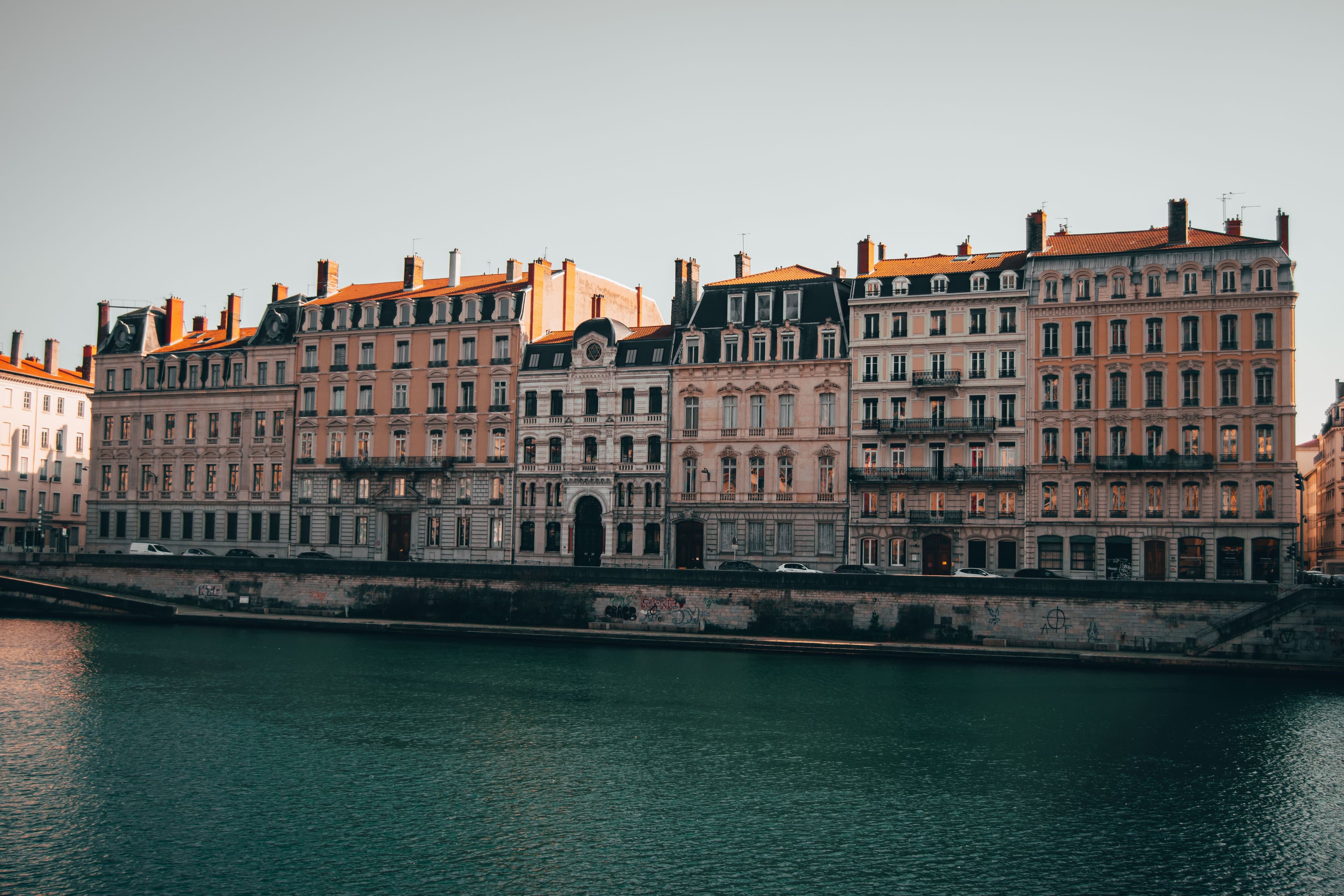
The Race
| Next Race Date | Sunday 3 October 2027 (provisional; the organiser has not yet published the 2027 date) |
|---|---|
| Course Type | Loop: Vieux Lyon to Place Bellecour, about 650 m apart |
| Registration | Open, direct sale with no ballot. A few marathon bibs remained in mid-September |
| Ballot Opens | Not applicable: direct sale, opened October 2025 |
| Total Finishers | None yet on the 2026 route. About 33,000 runners across all 2025 distances |
| Average Race Day Temperature | 9.6°C to 17.7°C (October normals, Lyon-Bron) |
| Cutoff Time | 5 hours 30 minutes |
| Free Race Day Transport | None announced |
| Course Certification | FFA Label Argent. No AIMS or World Athletics label |
A new route for 2026
The Croix-Rousse tunnel is gone. After several editions running through it, the 2026 marathon rebuilds the northern part of the course along the Saône instead, up to the Pont Paul Bocuse and back. Race reports that describe the tunnel’s lighting, heat or effect on GPS watches are about the old route.
History
Lyon had a marathon long before Run In Lyon. A city race began in the early 1980s, with most sources placing the first edition in 1983, and in 1999 Elijah Korir ran 2:09:43 on that earlier course. Money ran out, and the 2009 edition was cancelled.
Run In Lyon started in 2010 as a single weekend with a 10 km, a half marathon and a marathon. The first, on 3 October 2010, drew around 11,000 runners across the three distances, and Nordine Jalal won the marathon in about 2:30:45. The format grew around the two rivers and the big parks, with Place Bellecour as its fixed point.
Winning times fell as the race grew. Eliud Kiplagat ran 2:10:44 in 2013, and in 2015 Nixon Machichim ran 2:10:14, still the fastest marathon time in the race’s history. Joan Kigen won the women’s race in 2:33:27 in 2016. By 2015 the weekend had around 24,600 runners, and Amaury Sport Organisation took over.
After the pandemic the numbers came back quickly: 25,000 runners in 2022 and a record 33,000 across the programme in 2025, when Rouen’s Mustapha Salmi won the marathon in 2:23:24 and Lyon’s Jeanne Garreau in 2:43:34. The organiser called Garreau’s time a race record, although Kigen ran faster in 2016, most likely because the course had changed in between. The 17th edition, on 4 October 2026, changes it again.
The course
The marathon starts on Quai Romain Rolland beside the former Palais de Justice in Vieux Lyon and finishes at Place Bellecour, about 650 m away across the Saône. In between it follows the Saône north to the Pont Paul Bocuse, comes back down the opposite bank to Place des Terreaux, loops the Cité Internationale and the Parc de la Tête d’Or, runs south along the Rhône to Gerland, crosses to Confluence and returns up the Saône to Bellecour. The organiser’s final 2026 map was still to be published; kilometre positions below come from the route as described and may differ slightly from the markers on the day.
Almost the whole course runs on river quays and the Presqu’île, between about 162 and 175 m, so it is flat by any measure. The few real gradients are short: a ramp near Île Barbe at about 6.5 km, a rise into Place des Terreaux at 16 km, bridge approaches, and a gentle climb from the Saône quays up to Bellecour in the last kilometre. No official elevation figure has been published.
Km 0 to 8.4: north along the Saône. The race leaves Vieux Lyon along Quai Pierre Scize, with the Fourvière hillside above, and follows the river north through Vaise on Quai Chauveau and Quai Paul Sédallian. The houses thin out after Saint-Rambert. Near Île Barbe, around 6 km, the road rises about 10 m over a few hundred metres and drops straight back, the sharpest gradient of the day. The turn comes at the Pont Paul Bocuse at 8.4 km, the furthest point from the start. The quays are in shade early and the field is dense: hold your pace and let the gaps come.
Km 8.4 to 17: down the other bank to Terreaux. Across the bridge, the course heads back south on the Caluire bank along Quai Clémenceau, passes Île Barbe again at 10.7 km, and continues through Serin on Quai Joseph Gillet and Quai Saint-Vincent, under the slopes of the Croix-Rousse. It leaves the river at Rue Constantine for Place des Terreaux, beside the Hôtel de Ville and the Musée des Beaux-Arts, at 16.2 km, then cuts across the Presqu’île to the Rhône.
Km 17 to 26: the Cité Internationale and the Tête d’Or. Avenue de Grande-Bretagne takes the field north along the edge of the Parc de la Tête d’Or to the Cité Internationale, where the route loops for about eight kilometres: through the park past the lake around 22 km, out along Boulevard de la Bataille de Stalingrad and back along Quai Charles de Gaulle. The park has trees and crowds; the loops also mean runners pass each other more than once.
Km 26 to 37: the Rhône to Gerland. The course drops onto the Berges du Rhône cycle path and runs south, past the Brotteaux and the Préfecture, under the Pont de l’Université at 30 km and on through Gerland along Quai du Canada. These are the flattest and most regular kilometres of the race, and the most exposed to wind. The route turns inland at Place de Montréal and circles the Stade de Gerland at 35 km before heading back to the river.
Km 37 to 42.195: Confluence and Bellecour. The Pont Raymond Barre carries the field across the Rhône to the Musée des Confluences at 37 km. The route then follows Quai Rambaud past the Confluence docks, reaches the Saône near the Pont Kitchener-Marchand around 41 km, and runs up Quai Maréchal Joffre through Ainay to Place Bellecour, rising a few metres over the last kilometre.
Timing mats sit at the start, 10 km, halfway, 30 km and the finish, and the regulations allow electronic checks every 5 km.
Course Map
The 2026 route from Vieux Lyon up the Saône to the Pont Paul Bocuse, back to Place des Terreaux, around the Tête d’Or, down the Rhône to Gerland and through Confluence to Place Bellecour. Tap a marker for details, and scrub the slider or press play to move the orange marker along the course with the elevation profile beneath it.
Pacers
Official pacers run at 3:15, 3:30, 3:45, 4:00, 4:15 and 4:30. There is no 3:00 group and none slower than 4:30, so runners aiming for those times should plan to run alone. The 2026 wave and corral timetable had not been published.
What to wear
Early October in Lyon is mild: the 1991 to 2020 normals at Lyon-Bron give a minimum of 9.6°C, a mean of 13.7°C and a maximum of 17.7°C. October is also the wettest month of the local autumn, close to 100 mm, so wet roads are a real possibility.
The first 8 km along the Saône are shaded by the Fourvière and Croix-Rousse slopes in the early morning, and the Rhône banks from 26 to 37 km are open to the wind. Carry a discardable top to the start. Most importantly, carry a reusable cup, soft flask or hydration vest from the start: the aid stations hand out no cups or bottles, and without a vessel you cannot use them.
Entry
Entry is a direct sale through Time To, with no ballot, and only a few marathon bibs remained in mid-September 2026. It opened on 13 October 2025 for pre-registered runners and on 15 October for everyone else, in five price bands: €75 until 24 November 2025, €77 until 19 January 2026, €79 until 6 April, €84 until 29 June and €89 after that. A band could close early if its quota sold out.
Charity bibs come with a reduced entry fee and a commitment to raise at least €200 for a chosen cause; the organiser expected close to 400 across all distances in 2026. FFA members have a separate federation offer through jaimecourir.fr.
Registration is personal and final. Bibs cannot be transferred and there is no ordinary refund. A Pass Event FFA can include cancellation cover for set reasons, among them illness or injury, a close relative in hospital, a refused visa, stolen identity documents or a court summons. Adults need an eligible FFA licence, a Pass Event FFA or a PPS less than a year old; a foreign federation licence on its own is not accepted.
Fast Runner / GFA Standards
There is no good-for-age entry and no published time standard. Runners are placed in start corrals by their declared, verified expected finish time.
Race Weekend
Expo
Bib collection is at the Run In Lyon Village on Place Bellecour, on the same square as the finish and bag drop: Friday 2 October from 10:00 to 19:00 and Saturday 3 October from 10:00 to 18:00. There is no collection on race morning and no postal delivery.
Bring photo ID, the convocation from Time To, and your licence, PPS or medical evidence if it has not already been validated online. The regulations say the runner or a legal representative collects the bib in person; collection by a friend is not provided for.
Getting to the Start
The start is on Quai Romain Rolland beside the former Palais de Justice, a few minutes from Vieux Lyon metro (line D) and about 650 m from Place Bellecour across the Passerelle du Palais de Justice. Anyone staying on the Presqu’île walks. The start time was still to be confirmed: secondary calendars give 08:15, matching 2025’s first start, or 08:30. Check the organiser’s participant guide before setting an alarm.
Bag drop is at Place Bellecour, not at the start, with a maximum size of 45 × 36 × 20 cm. Drop your bag on the way and cross the river to the start. Check TCL’s race-day bulletin for metro, tram and bus changes, since several quays and bridges close.
From Lyon-Saint Exupéry Airport, Rhônexpress runs to Part-Dieu in about 30 minutes, normally every 15 minutes, for around €16.30 to €17.40 one way. High-speed trains from Paris reach Part-Dieu or Perrache.
Nutrition on Course
Eight aid stations, one every 5 km, with no disposable cups or bottles. Water comes straight from the city network at self-service taps or from volunteers, into a cup, soft flask or hydration vest you carry yourself. Food at the stations includes crackers, bananas, dried apricots, marble cake and gingerbread. No sports drink or gel brand has been named, so carry your own gels.
| Point | Water | Food |
|---|---|---|
| 5 km | Water refill | Crackers, bananas, dried apricots, marble cake, gingerbread |
| 10 km | Water refill | As above |
| 15 km | Water refill | As above |
| 20 km | Water refill | As above |
| 25 km | Water refill | As above |
| 30 km | Water refill | As above |
| 35 km | Water refill | As above |
| 40 km | Water refill | As above |
| Finish | Place Bellecour | Recovery food |
Spectating
Because the course keeps coming back to the rivers near the centre, a supporter based at Bellecour can see a runner several times on foot. Live results use the timing mats at 10 km, halfway and 30 km.
Plan A: on foot from Bellecour. Watch the start on Quai Romain Rolland, then walk north along the Presqu’île bank of the Saône to Quai Saint-Vincent or Place des Terreaux for the pass at 15 to 16 km. Cross to the Rhône and wait on the Berges du Rhône near the Pont de l’Université for 29 to 30 km, about a kilometre from Bellecour. Finish on Quai Maréchal Joffre for 41 km, a few minutes from the line.
Plan B: the Tête d’Or. The park loops between 19 and 26 km give the longest stretch of crowd support outside the finish, and runners pass more than once. Metro line A towards Masséna or buses towards the Cité Internationale get close; come back to Bellecour for the finish.
Plan C: Gerland. Metro line B to Stade de Gerland puts you beside the course at 35 km, the quietest part of the race. Return by metro B and D to Bellecour, subject to race-day station restrictions.
Post-Race Food
Book, whatever you choose: tens of thousands of runners and supporters fill the Presqu’île on race day. Brasserie Le Sud, at 11 place Antonin Poncet beside Bellecour, is the closest sit-down meal, open on Sundays from 12:00 to 14:30 and 19:00 to 22:00, with mains around €25 to €35. Brasserie Georges on cours de Verdun at Perrache, about a kilometre south, serves all day on Sundays from 11:30 to 23:00 in a large 1836 dining room. Bistrot de Lyon on rue Mercière, between Bellecour and Terreaux, is the traditional bouchon option; confirm its Sunday hours first.
Where to Stay
Stay near Place Bellecour. The finish, bib collection, bag drop and village are all on the square, and the start is only 650 m away across the Saône, so a hotel here puts every part of race weekend within a short walk.
Bellecour and Ainay
Bellecour is the first choice, and Ainay, directly south, has the same access with quieter residential streets. Both are on metro lines A and D.
Vieux Lyon
Vieux Lyon, across the Saône, is the base for walking to the start, among Renaissance houses and traboules, with the finish one bridge away.
The Presqu’île and Cordeliers
The Presqu’île between Bellecour and Terreaux, around Cordeliers, has the widest choice of restaurants and shops, a little further from the start than Vieux Lyon but within an easy walk of both.
Perrache
Perrache and southern Ainay are usually better value than Bellecour and have their own station, about a kilometre from the finish.
Part-Dieu
Part-Dieu suits runners who put rail and the airport first: the Rhônexpress terminates there. It is further from both ends of the race and less interesting on foot.
Croix-Rousse
Croix-Rousse has plenty of neighbourhood character, but it sits on a hill above both the start and the finish, which makes race morning and the walk home harder than anywhere lower down.
Recommended hotels
No official marathon hotel block has been announced. Distances are walking estimates from the finish on Place Bellecour.
On Place Bellecour itself, beside the finish, village and bag drop. 72 rooms and race-weekend pricing to match.
A small historic hotel on the square, with 24 rooms and tourism listings from around €159. Book early; there are few rooms.
On the Rhône a few minutes from Bellecour, with 164 rooms and a wellness area for the afternoon after.
A smaller central hotel beside the Célestins theatre, useful when the hotels on the square are full.
In the restored Hôtel-Dieu hospital on the Rhône, a short walk from Bellecour. The premium recovery base.
Booking timeline
Book as soon as your entry is confirmed. Around 36,000 runners are expected across the weekend, the shorter races sold out months ahead, and early October is already a busy month for Lyon’s conference and tourism trade, so marathon demand adds to prices that are high anyway. A refundable room on or near Bellecour is worth the extra, since the start time and wave timetable were still unconfirmed in mid-September. From Paris, the TGV into the centre is usually simpler than flying into Saint-Exupéry and transferring.
See & Do
The first three are within walking distance of Place Bellecour, with a funicular for the hill. The park is on the course.
Vieux Lyon
About 1 km (0.6 miles) from the finish, across the Saône. The Renaissance quarter beside the start, with the cathedral of Saint-Jean and the covered traboule passages between streets. Keep the Saturday visit short and walk it properly after the race.
Basilique Notre-Dame de Fourvière
About 1.5 km (0.9 miles) from the finish, on the hill above Vieux Lyon. Take the funicular from Vieux Lyon station: the climb on foot is steep. Entry is free and the basilica is normally open 07:00 to 20:00, though Sunday mornings until 12:30 are kept for services. The terrace looks across the whole city, including most of the route.
Lugdunum and the Roman theatres
About 1.5 km (0.9 miles) from the finish, beside Fourvière. The two Roman theatres and the museum of Roman Lyon, which runs the exhibition “Passé antérieur” from 2 October 2026 to 6 June 2027. The museum closes on Mondays, so visit on the Saturday or the Tuesday.
Parc de la Tête d’Or
About 3 km (1.9 miles) from the finish, and on the course from 19 to 26 km. Lyon’s largest park, opened in 1857, with a lake, botanical glasshouses and a free zoo. Flat paths and benches make it a good gentle outing on the Monday, by metro A to Masséna.
After the Race
Early October is between seasons around Lyon: the grape harvest is over in Beaujolais, the Alps are quiet before the ski season, and Provence is out of its summer crowds. Lyon’s rail links reach all of them without a car, from a medieval village 40 minutes away to Chamonix under Mont Blanc.
A walled medieval village on a low hill north-east of Lyon. The cobbles are rough, so take them slowly.
A flat lakeside old town with boat trips on the lake, and one night is enough for a first recovery stop.
The Palais des Papes and the walled centre, cooler and quieter in October than in the summer festival season.
An Alpine extension in the shoulder season, when some lifts and mountain attractions run reduced timetables.
Frequently asked questions
Should I stay near the start or the finish?
The finish at Place Bellecour, which also holds bib collection and bag drop. The start is about 650 m away in Vieux Lyon.
How far in advance should I book a hotel?
As soon as you have a bib. Around 36,000 runners are expected across the weekend, on top of Lyon’s busy early-October trade.
Is there free transport to the start?
None announced. The start is a short walk from Bellecour and beside Vieux Lyon metro (line D).
What is the best area to stay?
Bellecour or Ainay. Both are beside the finish, village and bag drop, with the start ten minutes away on foot.
When does the expo open?
Place Bellecour, Friday 2 October 10:00 to 19:00 and Saturday 3 October 10:00 to 18:00. No race-day collection.
What is the weather typically like on race day?
October normals at Lyon-Bron run 9.6°C to 17.7°C, and it is the wettest month of the local autumn.
How do I get from the airport?
Rhônexpress to Part-Dieu in about 30 minutes, around €16.30 to €17.40, then metro or tram to Bellecour.
Is there a bag drop?
Yes, free, at Place Bellecour. Maximum bag size 45 × 36 × 20 cm.
Should I bring a throwaway layer?
Yes, for a cool start on shaded quays. Bring a reusable cup or soft flask too: the aid stations have no cups.
How do I get back to my hotel after finishing?
Walk from Bellecour, or take metro line A or D. No showers are confirmed at the finish.