The Race
| Next Race Date | Sunday 14 February 2027 |
|---|---|
| Course type | Loop, start and finish 330 m apart |
| Registration | Open online entry; the price rises in stages |
| Ballot opens | No ballot |
| Start | Avenida Vila-real, opposite El Corte Inglés, 09:17 |
| Finish | Central promenade, Parque Ribalta |
| Total finishers | 891 (marathon, most recent edition) |
| Avg race-day temp | 6 to 16°C (AEMET February normal: average daily minimum and maximum) |
| Cutoff time | 5 hours 30 minutes, with intermediate controls |
| Free race-day transport | No; Renfe gives entrants 5% off rail travel |
| Course certification | World Athletics Road Race Label; RFEA and World Athletics homologated |
History
The Castellón marathon began in 2010, organised by the club C.A. Running Castelló with the city sports trust, and it set out to be fast from the first edition. More than 2,400 people took part that year and Ethiopia’s Solomon Tsigue won in 2:10:37. A year later Carles Castillejo ran 2:10:09, the first Spanish winner, and his time stood as the men’s record for years.
The race has been chasing its own records ever since. Andualem Belay Shiferaw lowered the men’s mark to 2:08:16 in 2019. In 2020 Lemi Dumecha took it to 2:07:43 and Webalem Basaznew ran 2:27:39, still the fastest women’s time the organiser lists. The 2021 race went virtual during the pandemic, with more than 1,100 entrants logging their own runs, and the event has carried a World Athletics road race label since then.
Kibrom Ghebrezgiabhier holds the course record at 2:07:25, and the most recent edition went close again: Leonard Kipkgeno Bor won in 2:07:36 and Keleltu Hariso took the women’s race in 2:31:42. Behind the elite race the field is modest for a labelled marathon, 891 finishers at the most recent edition, most of them Spanish club runners.
The route has changed over the years. The organiser has pulled the late kilometres back into the city centre so that the last part of the race passes more spectators, while keeping the run out to the Grau and the sea. The marathon shares its morning with the 10K FACSA Castelló, which starts first.
The course
The marathon starts on Avenida Vila-real, opposite El Corte Inglés, and finishes on the central promenade of Parque Ribalta, 330 m away. It is a road course on tarmac, homologated by the RFEA and World Athletics, and the whole of it sits between sea level and 43 m.
The first 16 km are a series of loops through the city: north-east on Avenida de Barcelona, south-west down Avenida de Casalduch, round the Ronda del Millars and the Ronda de la Magdalena, and back through the centre on Avenida de Casalduch a second time. The ground rolls gently between 22 m and 41 m. From km 15.7 the course heads east down Avinguda del Mar, losing 28 m in 3.2 km to reach sea level in the Grau de Castelló at km 19, and passes the port and the expo hall at km 20.8.
It then runs north along Avenida Ferrandis Salvador, the beach road, to a turn at km 23.3, the furthest point from the start at 6.4 km, and comes back past the port at km 25.7. The climb back inland is the one sustained rise of the day: 37 m over 4.7 km between km 26.7 and km 31.4, an average of 0.8 per cent, up the same Avinguda del Mar. The last 11 km loop through the centre, past the start area on Avenida Vila-real at km 36, through the old town on Carrer Major at km 39 and on to the park.
Kilometre by kilometre
Km 0 to 16: the city loops. The 10K goes first and the marathon follows at 09:17, released from pens sorted by accredited time. With pacers from 2:50 and a fast front end, the risk is the one every flat course sets: going out too hard. The first control, 39 minutes at 5 km, is generous for most runners, and the roads are wide. The race works through the long avenues of the centre and doubles back more than once, with the Ronda del Millars at km 7 and Avenida de Casalduch at km 4 to 5 and again at km 13 to 14. It is sheltered by buildings, and the pace groups settle here.
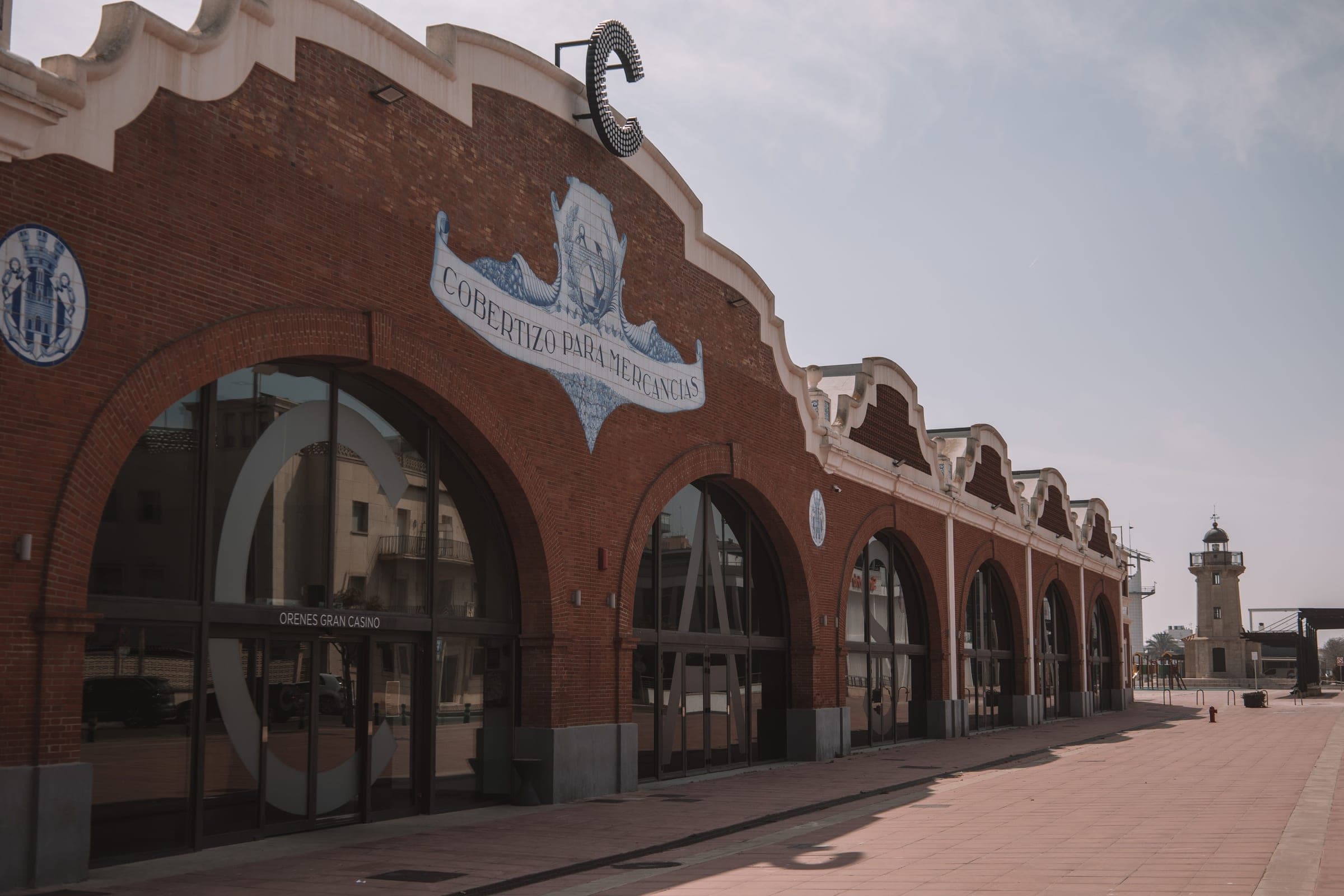
Km 16 to 21: down to the Grau. At km 15.7 the course turns east onto Avinguda del Mar and drops 28 m over 3.2 km to sea level at km 19. The buildings thin out, and this is where wind starts to count. The race reaches the port district at about km 20 and passes the expo hall beside the Casino Puerto Azahar at km 20.8.
Km 21 to 27: the coast. The course runs north up Avenida Ferrandis Salvador towards El Pinar, turns at km 23.3 and comes back past the harbour at km 25.7. This is the most exposed part of the race and the quietest for spectators. With a north wind the outward kilometres will cost time; with a wind off the sea, the whole section will. Run to effort through here and share the work in a group.
Km 27 to 31: the climb inland. The only sustained climb of the day follows: 37 m over 4.7 km up Avinguda del Mar and into the city, an average of 0.8 per cent. It is gentle on paper and it arrives just as the marathon starts to hurt, so hold effort and let the pace drift a few seconds.
Km 31 to 42.2: back in the city. The last 11 km loop through central Castelló, where the organiser moved the late race so the crowd is thicker when runners need it most. The course passes the start area on Avenida Vila-real at km 36, where the chart reaches its high point of 43 m, then runs through the old town on Carrer Major at km 39 and Carrer d’Enmig at km 40. Controls close at 4:25 at 35 km and 5:10 at 40 km. The finish is on the central promenade of Parque Ribalta.
Follow the green measured line on the road. Castelló has many turns, and running the line is worth tens of metres over the distance; trust the kilometre boards over a GPS watch.
Flat, sheltered avenues between 22 m and 41 m. Settle into your pace group and ignore the 10K runners ahead.
28 m down to sea level by km 19, the port at km 20.8, north to the turn at km 23.3 and back. The exposed, quiet part of the race.
37 m over 4.7 km up Avinguda del Mar, 0.8 per cent. The only sustained rise on the course.
Loops through the city past the start area and the old town, to the Parque Ribalta finish.
Course Map
City loops, a run down to the Grau and along the coast, and a return to the centre for the last 11 km. Tap a marker for the start, the finish, the cloakroom, the expo and the station, and scrub the slider or press play to move the orange marker along the course with the elevation profile beneath it.
Pacers
Pacers run at 2:50, 3:00, 3:15, 3:30, 3:45, 4:00, 4:15 and 4:30. They stand at the front of their pen with a coloured balloon and a named shirt. There is no pacer slower than 4:30. Pens are allocated by accredited time: elite, sub-elite, sub-3:00, sub-3:30, sub-4:00, and 4:00 and over.
The Maratón de Castellón shares its morning and its start road with the 10K FACSA Castelló, which goes first. The marathon starts at 09:17, once the 10K field has cleared Avenida Vila-real, which explains the unusual start time. The 10K draws its own elite field, and on marathon morning it means more runners, more spectators and more closed roads in the centre early on. Use your own pen and ignore the pace of the 10K runners ahead.
The limit is 5 hours 30 minutes, with controls at 5 km (39 minutes), 10 km (1:15), 20 km (2:35), halfway (2:40), 25 km (3:10), 30 km (3:45), 35 km (4:25) and 40 km (5:10). A closing vehicle follows the last runners, and anyone outside a control may be asked to hand in the bib and continue at their own risk. The 4:30 pacer is the slowest group, so runners aiming for five hours or more run alone after the first hour.
February in Castelló averages a daily low of about 6°C and a high of about 16°C, so the 09:17 start is usually cool and the finish, for most runners, mild. At the most recent edition runners reported about 8°C at the start and under 19°C at the end. That is close to ideal marathon weather, and shorts and a vest or light T-shirt suit most runners once moving.
The wait in the pen is the cold part. An old top or a bin bag worn until the gun makes the standing time easier; no clothing-donation scheme has been published, so check the runner guide before discarding anything. The Grau and coastal section, km 16 to 27, has no shelter, and a breeze off the sea can make the air feel several degrees colder than the forecast, so arm warmers you can push down are useful. For slower runners, a clear February afternoon on the Mediterranean can feel warm and the port has little shade: carry a cap and sunscreen if you expect to finish after 13:00.
Entry
Entry is open online, first come first served, with no ballot. The price rises in stages the later you enter, so committing early saves money.
For the coming edition the fee starts at €45 for the first 200 entries or until the end of August, then €50 in September, €55 to mid-November, €60 to the end of December, €70 through January and €90 in the final week. Castelló residents had a €40 rate until the end of August with proof of address. Runners without a Spanish federation licence also pay for a temporary day licence; the organiser’s pages have shown both €4 and €5, so check the amount at checkout.
Runners must be 18 or over on race day. There is no good-for-age scheme and no charity-entry route. Start pens are assigned on accredited performance, with proof from a marathon or half marathon on a homologated course within the previous two years. Pen changes are made at an accreditation desk at the expo, never on race morning, and a faster pen than your accredited mark is not allowed.
Transfer and refund terms are not published in the organiser’s general pages; read them on the registration platform before paying. The race has promoted itself as a Boston qualifier and an Abbott World Marathon Majors age-group ranking race; runners who need a qualifying time should check the receiving event’s current list of accepted races.
Fast runner standards
There is no good-for-age or fast-runner entry route. Elite and sub-elite places are handled separately by the organiser, and the pen system is the only place a time counts.
Official Marató bp Castelló site →Race Weekend
Expo
The Expo-Maratón is in Sala El Grau, beside the Casino Puerto Azahar in the port district, about 5 km from the start and finish. It opens on the Friday before the race from 17:00 to 20:00 and on Saturday from 10:00 to 14:00 and 16:00 to 20:00. Bibs are not handed out on race day under any circumstances, so plan the trip around a Friday evening or Saturday visit. The marathon passes the hall at km 20.8.
From central hotels the Grau is a tram, bus or taxi ride; the TRAM de Castelló runs between the centre and the port. Allow an hour for the round trip and collection. Bring photo ID and the registration confirmation. Someone else can collect your bib with a copy of your ID, a signed authorisation form and your registration receipt. The pack includes the event T-shirt, the race magazine and sponsor gifts.
Runners who want a faster pen than the one allocated can bring proof of a qualifying time to the accreditation desk at the expo; it is the last chance to change. The finisher medal can be engraved with name and time, €6 if ordered online in advance and €10 on the day.
Getting to the start
The marathon starts at 09:17 on Avenida Vila-real, opposite El Corte Inglés, on the west side of the centre. The 10K starts first on the same road. From anywhere around Parque Ribalta, the station or the old centre the start is a walk of 5 to 15 minutes, and no public transport is needed.
Bag drop. The cloakroom is at Colegio Gaetà Huguet, entered from Calle Galicia, open 07:45 to 15:00. It is a school 200 m north of the finish, and at the most recent edition runners also used its toilets and showers. Allow time to walk from it to your pen.
Start pens. Pens are colour-coded by accredited time, and pacers wait at the front of each with balloons. Be in your pen 15 to 20 minutes before the start; the 10K departure clears the road ahead of you.
Timing and rules. Timing mats sit at the start, 5 km, 10 km, halfway, 30 km and the finish, and the chip is on the bib, worn on the front. No pacing by unregistered runners or cyclists, no running with pushchairs, children or dogs, and no smoking in race areas.
The finish. The race ends on the central promenade of Parque Ribalta with a medal and finish-line food and drink. Hotels around the park are a few minutes’ walk away.
Getting to Castelló. The city is on the main Mediterranean rail line, and Renfe gives race entrants a 5% discount. Valencia Airport is the main gateway, about an hour by train from Castelló; Castellón Airport, about 25 km north, has a smaller route network.
Nutrition on course
Aid on this course is frequent. The regulations promise full aid stations every 5 km plus extra water about every 2.5 km from 15 km, and the organiser’s aid page describes liquid and solid aid every 2.5 km. At the most recent edition a runner reported stations every 2 to 3 km, which fits the aid page.
Water comes in 33 cl bottles with caps, easier to drink from on the move than cups. The aid page lists Powerade in 50 cl bottles, while a 2026 runner described isotonic drink in paper cups, so expect either. Gels are handed out at 20, 25, 30 and 35 km, with bananas at the solid-food points; the listed gel is Nutrinovex Glucomin. If you rely on a particular gel, carry your own and treat the course ones as a reserve.
There is no personal-bottle service for ordinary entrants; only invited elites hand in drinks, the evening before. On the exposed Grau and coastal section, km 16 to 27, drink at the stations before you feel thirsty.
| Km | Water | Sports drink | Gel |
|---|---|---|---|
| 5 | Yes | Yes | No |
| 10 | Yes | Yes | No |
| 15 | Yes | Yes | No |
| 20 | Yes | Yes | Yes |
| 25 | Yes | Yes | Yes |
| 30 | Yes | Yes | Yes |
| 35 | Yes | Yes | Yes |
| 40 | Yes | Yes | No |
| Finish | Yes | Yes | No |
Spectating
The start and finish are 330 m apart and the course spends its first 16 km and last 11 km in the city, so a supporter on foot can see a runner four or five times without transport. The course comes within 100 to 250 m of El Fadrí and Plaza Mayor at km 3, 10, 31 and 39, runs the Ronda del Millars at km 7 and km 41, and passes the start area again at km 36. The Grau is a tram or taxi ride away and quieter.
For a 4-hour runner starting at 09:17, the Ronda del Millars pass comes at about 09:57, the port at about 11:15 on the way out and 11:43 on the way back, the old town at km 39 at about 13:00 and the finish at about 13:17. Live tracking has run through the timing partner; the link appears on the race website in race week.
- Watch the 09:17 start on Avenida Vila-real
- Walk 5 minutes to the Ronda del Millars for km 7
- Coffee near Plaza Mayor, then back to the Ronda del Millars or Avenida Vila-real for km 36 to 41
- Walk to Parque Ribalta for the finish
- See the start on Avenida Vila-real
- Take the TRAM de Castelló or a taxi to the Grau for the port at km 20.8 and again at km 25.7
- Return to the centre by tram or taxi for the finish in Parque Ribalta; check race-day diversions first
- Skip the start and have breakfast near Plaza Mayor
- Stand on Carrer Major for km 39
- Walk 10 minutes to Parque Ribalta for the finish
Post-race food
Castelló is rice country, and the finish in Parque Ribalta is a short walk from the restaurants of the old centre. Spanish lunch starts around 14:00, which suits most finishers: time to collect a bag, shower and sit down. Book for Sunday lunch, because the rice restaurants fill with local families at weekends.
L’Arrosseria, on Carrer la Font, is a rice specialist: paella valenciana and arroz al horno, rice baked with black pudding and chickpeas, about as much carbohydrate as one plate can carry. EntrefogonesbyJR, on Carrer de Campoamor, also cooks paella valenciana and seasonal rice dishes. For a longer lunch, Le Bistrot Gastronómico on Carrer de Temprado serves one set menu for the whole table. For seafood by the water, the Grau is a better Saturday lunch after the expo than a stop on tired legs.
Where to Stay
Stay near the finish. In Castelló that is easy, because the finish in Parque Ribalta, the start on Avenida Vila-real and the cloakroom are all within 350 m of each other, with the station 650 m west. The only part of the weekend outside the centre is the expo in the Grau.
Parque Ribalta and the station
Parque Ribalta and the streets between it and the railway station are the best base for the race. The finish is on the park’s central promenade, the start is a few minutes west, and trains from Valencia arrive at the western end. Hotel Doña Lola is here, 50 m from the start line. The area is quieter at night than the old centre. Price tier: ££.
Historic centre and Plaza Mayor
The old centre around Plaza Mayor, the Concatedral de Santa María and El Fadrí has the best choice of restaurants and bars and is 700 m from the finish on flat streets. The course passes nearby four times. Saturday night can be lively in the bar streets, so ask for a quiet room. Price tier: ££ to £££.
Ronda del Millars and the south side
The ring road on the south side of the centre is on the course itself at km 7 and km 41. Hotel Castellón Center and NH Castellón Mindoro are here, 500 m and 800 m from the finish, both within 40 m of the course. It is a residential and business district, handy for a supporter who wants to see the race from the door. Price tier: ££ to £££.
Grau de Castelló
The Grau, the port district 5 km east, has the sea, the harbour and the expo. For race logistics it is the wrong side of town: the start and finish are inland and road closures make race-morning taxis less predictable. It suits runners staying on by the sea after the marathon. Price tier: ££ to £££.
Benicàssim
Benicàssim is a beach town up the coast with plenty of hotels and apartments. It is a pleasant place to recover, but reaching a 09:17 start in Castelló needs a car, a taxi or an early train, and the return after the race is the same problem in reverse. Better for the days after than the night before.
Castelló does not see the hotel pressure of Valencia or Seville, but the rooms within a short walk of Parque Ribalta are limited, and marathon weekend is when they fill. Book a cancellable room once entered.
Recommended hotels
On Carrer de Llucena beside Parque Ribalta, 50 m from the start line and a few minutes from the finish. The simplest walk to the start and back of any hotel in the city.
On the Ronda del Millars, 40 m from the course at km 7.1 and again at km 41.1, and a short walk to both start and finish.
Between the park and the old centre, 20 m from the course at km 38.7, so restaurants and the race are both a flat walk. Check breakfast times, since the start is 09:17.
Booking timeline
There is no ballot, so the booking clock starts when you decide to go. Entry prices rise every month or so from late summer to the week before the race, so entering early is the cheapest way in. Book a cancellable hotel near Parque Ribalta at the same time; the central hotel stock is small, and the rooms nearest the finish go first.
For flights from the UK, compare Valencia (VLC), which has the widest choice, with Castellón (CDT), which has fewer routes. From Valencia, trains take about an hour to Castelló, and Renfe gives entrants a 5% discount. Arrive by Friday evening or Saturday morning: bibs are only handed out at the expo in the Grau, on Friday evening and Saturday, never on race day.
See & Do
The finish is in Parque Ribalta, with the old centre a short walk east and the port 5 km away by tram. The first two are an easy walk on tired legs.
Parque Ribalta
The nineteenth-century park where the race ends, with shaded paths and benches. A slow lap on the Saturday or after the race is the lowest-effort sightseeing Castelló offers.
Plaza Mayor, the Concatedral de Santa María and El Fadrí
The old-centre cluster: the main square, the co-cathedral and its freestanding bell tower, all within a couple of hundred metres of each other on flat streets. The course passes close by at km 39.
Grau de Castelló and the harbour
The port district the race reaches at km 19 to 27, with the expo, the harbour and seafood restaurants. Combine it with bib collection on Saturday.
Planetari de Castelló
The city planetarium on the seafront in the Grau, 300 m from the course, and an indoor option if the weather turns. Check opening days and show times before going.
After the Race
Mid-February on the Costa del Azahar is quiet, mild and out of season, and the rail line along the coast makes the trips easy: Benicàssim is ten minutes north and Valencia an hour south. Peñíscola sits on a rocky headland an hour up the coast by bus. Morella, inland in the mountains, is cold and steep in February and needs its extra night.
A flat seafront promenade and beach a short ride north of Castelló, with a line of early twentieth-century summer villas along the shore. February is not beach weather, but it is a good day for a slow walk by the sea.
A walled old town on a rocky headland with the castle of the antipope Benedict XIII at the top. Winter hours run to 17:30, and the long flat promenade below the walls is the easy part of the day.
Nine kilometres of flat park in the old Turia riverbed, the Mercado Central and the city’s own paella tradition. In mid-February, before the Fallas, the city is quiet.
A walled hill town at about 1,000 m in the Els Ports mountains, in black-truffle season. Cold in February and steep underfoot, so save it for the second or third day after the race.