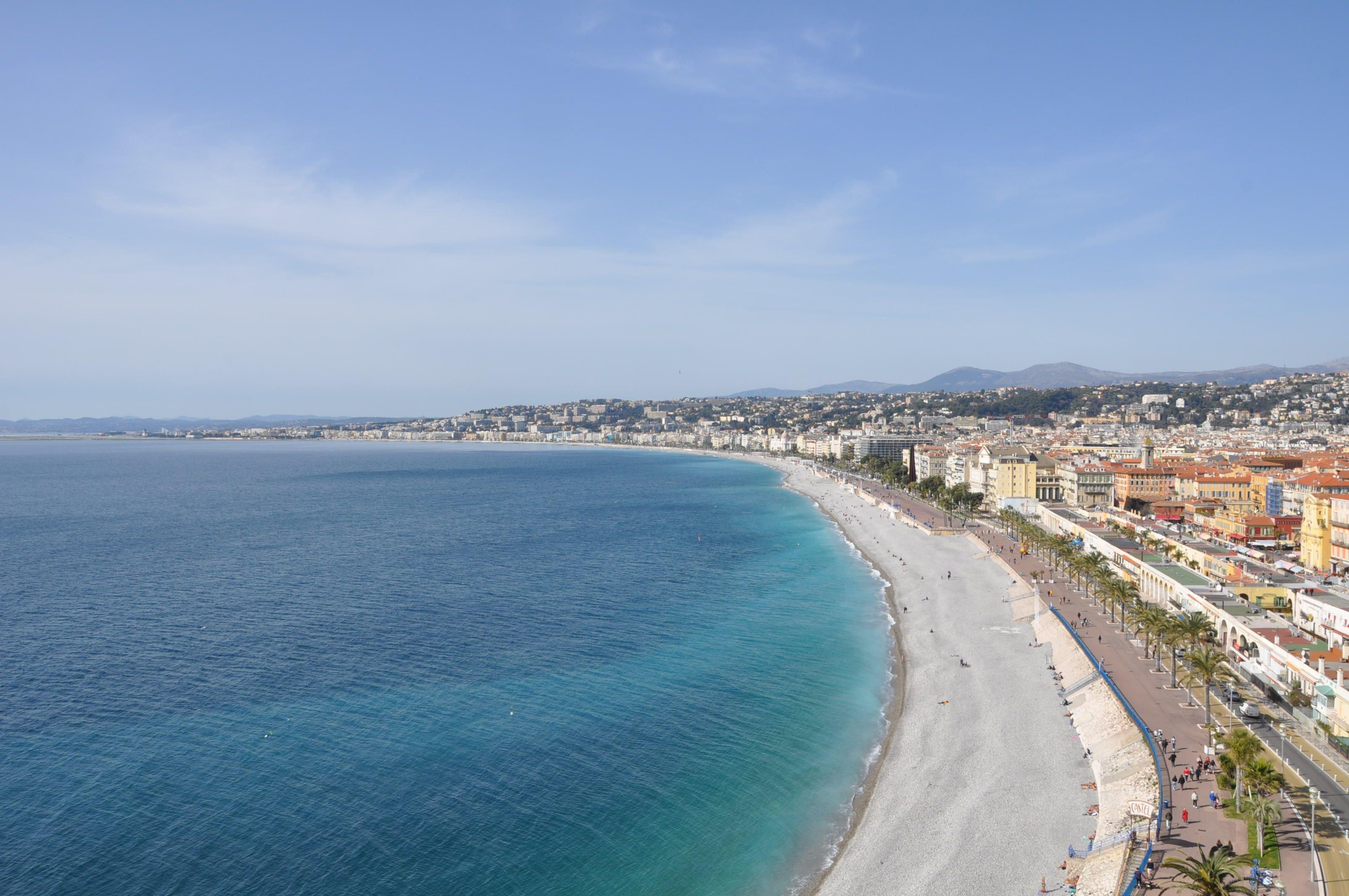
| Next Race Date | 7 November 2027 |
|---|---|
| Course Type | Point-to-point: Promenade des Anglais, Nice, to Boulevard de la Croisette, Cannes |
| Registration | Open, direct registration; the 2026 edition sold out |
| Ballot Opens | No ballot. Direct entry in price tiers; the 2025 race sold out about six months before race day |
| Total Finishers | 11,842 (solo marathon, 2026) |
| Average Race Day Temperature | November at Nice airport: 17.0°C average high, 9.7°C average low (Météo-France, 1991 to 2020) |
| Cutoff Time | 6 hours from the last runner crossing the start, with sweep points at km 10, 21.1, 30 and 35 |
| Free Race Day Transport | Yes: your bib is an unlimited Nice to Cannes train ticket all day |
| Course Certification | AIMS member; FFA International label; AbbottWMM age-group ranking race |
Plan your pace for the Nice-Cannes Marathon for you and your supporters
Turn a goal time into grade-adjusted splits, and see when your supporters should be where.
Build your pace planBefore you go
Entry, accommodation and travel: what to sort out before you book.
Entry
Entry is direct, with no ballot, and the price rises as places sell. The 2026 marathon sold out, as the 2025 race had done about six months before race day, so enter as early as you can. Registration for the next edition is open.
The current price for runners without an FFA licence is 89 euros for the next 5,000 entries, then 99 euros until entries close. Prices rise as the allocation sells, so earlier entrants paid less. The organiser passes 1 euro from each entry to the Banque Alimentaire des Alpes-Maritimes.
The race is open to runners born in 2008 or earlier. Anyone without an FFA licence needs a PPS, the federation’s online health pass at pps.athle.fr, which costs 5 euros, lasts a year and must be valid on race day. Runners with a recent sub-three-hour marathon can request a preferential start position. It sits within open registration and gives no separate entry route. Entry includes the train pass between Nice and Cannes, a bib printed with your first name, a Kiprun 17-litre backpack, a medal, a Kiprun finisher T-shirt, bag transport from Nice to Cannes, timing and photos.
The prices above are for the solo marathon. The 20 km, the duo marathon and the relay are separate events with their own age limits: runners born in 2010 or earlier can enter the 20 km and the duo. Relay age limits depend on team size, from 2008 or earlier in a team of three to 2012 or earlier in a team of six.
Entries are personal and cannot be transferred. Cancellation cover bought at entry can refund 80% of the fees in covered cases; it cannot be added later. Official travel partners, including Marathon Tours & Travel in the UK, sell packages that may include a race place. Runners aged 40 and over can score points in the AbbottWMM age-group world rankings.
Fast Runner / GFA Standards
There is no guaranteed-entry route. Runners with a recent sub-three-hour marathon can request a preferential start position within open registration; it does not guarantee a place.
Where to Stay
The usual rule is to stay near the finish. This race is point to point between two cities, and the finish is 25 km from the start, so the better choice for most runners is Nice. The morning is the hard part to organise; the journey back from Cannes is a free train ride.
Promenade des Anglais and Carré d’Or, Nice
The Promenade des Anglais and the Carré d’Or behind it are the easiest base. The start and the Place Masséna bag drop are a short walk, with no need for early transport. Choose a room a street back from the busiest bars for a quieter Saturday night.
Jean Médecin and Nice-Ville
The streets around Avenue Jean Médecin and Nice-Ville station have plenty of hotels and put the train back from Cannes on your doorstep. The start is a 15 to 25-minute walk.
Vieux Nice and the port
Vieux Nice and the port are closest to the expo and full of restaurants. The start is still walkable, but pick a room away from the bar streets.
Cannes
Central Cannes, around the station and the Croisette, puts you beside the finish, which suits families. Race morning means the 05:30 bus or an early train to Nice.
Antibes and Juan-les-Pins
Antibes and Juan-les-Pins sit between the two on the railway and on the course. They are pleasant for a longer stay, but neither the start nor the finish is walkable.
Recommended hotels
The organiser gives the start as 500 m from this hotel, on the seafront. Race morning is a short walk, and Place Masséna and the bag drop are close. Take the free train back from Cannes after the finish.
The first hotel on the Promenade, opened in 1854, with 121 rooms, most facing the Baie des Anges. The start is along the seafront towards the old town; the free train home leaves from Nice-Ville, about 15 minutes’ walk inland.
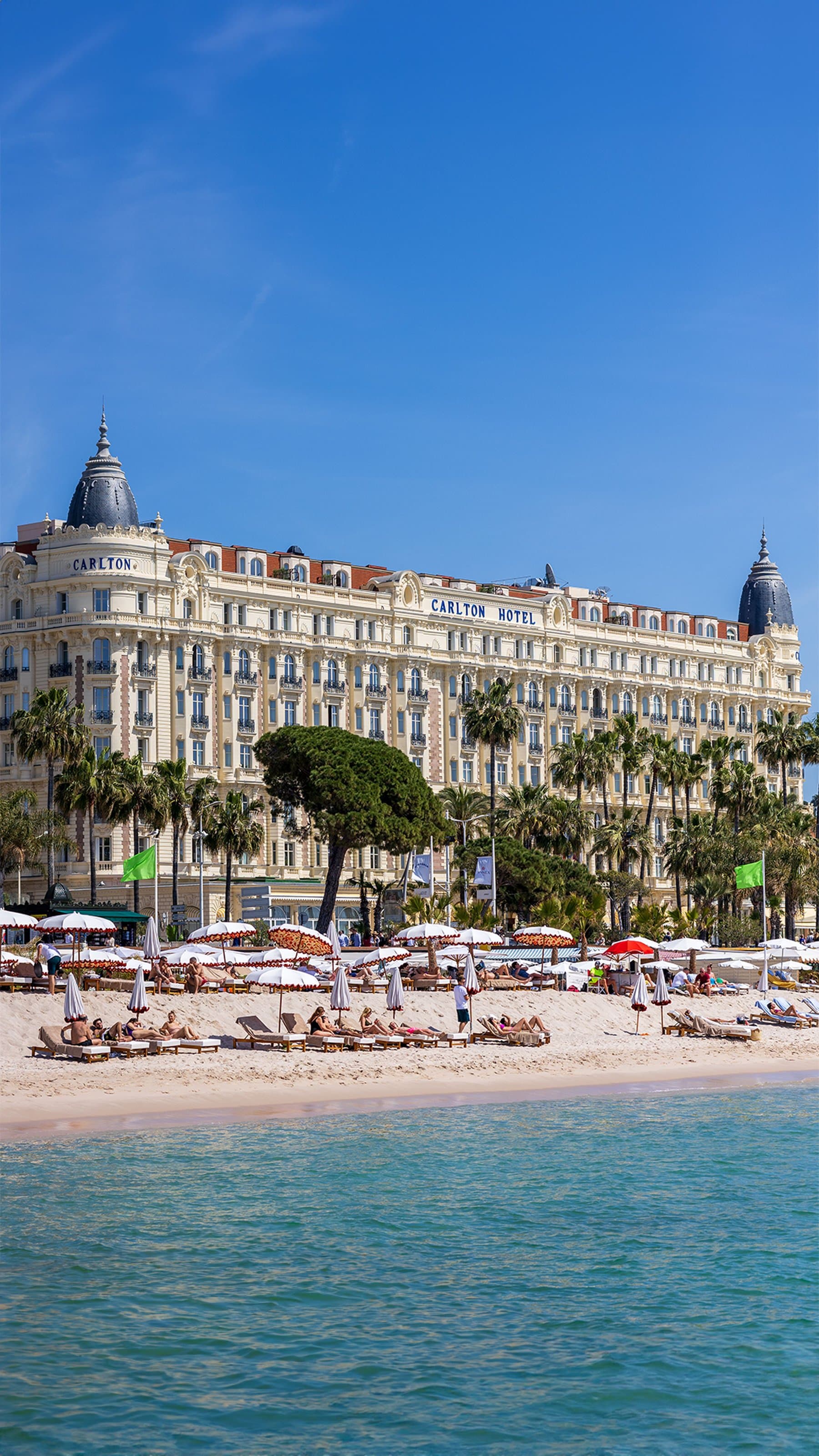
A 125-room four-star beside Cannes station and a five-minute walk from the Croisette and the Palais des Festivals. The finish-side choice: race morning means an early train or the organiser’s bus to Nice.
The grand hotel next to the Palais des Festivals, a few steps from the finish line and its bar open from 10:00. Expensive, and with the same early transfer to Nice on race morning.
Booking timeline
Enter as early as you can: the race sells out months ahead, and the price rises through the tiers. Book a refundable room in Nice as soon as you have a place, and decide early whether you would rather be in Cannes. The organiser’s accommodation partner, Revolugo, has negotiated rooms. Book flights or trains once entry is confirmed. Complete your PPS in the autumn so it is valid on race day, and buy the bus option at entry if you plan to stay in Cannes. In race week, check the train timetable, the bag-drop times and the forecast, and pack your flask.
Race weekend
The expo, number collection and the days either side of the start.
Race Weekend
No cups: bring your own
Bring something to drink from. The course has no cups, only refill points, so pack a soft flask, hydration pack or reusable cup and practise filling it before race weekend. Runners in 2026 had mixed experiences of the system, described under nutrition on the course.
Expo
The Marathon Expo is at the Centre des Congrès Océanice on the Port de Nice, Quai Amiral Infernet, on Thursday 4 November from 12:00 to 19:00, Friday 5 November from 10:00 to 19:00 and Saturday 6 November from 09:00 to 20:00. Bibs are not posted, and none are handed out on race day. Bring photo ID, your collection voucher and your PPS if you have not already provided it.
Someone else can collect your bib and kit if your file is complete: they need your collection voucher and your ID, which can be a copy or a photo on a phone. Bicycles, pets and suitcases are not allowed in the expo. The organiser publishes a chart of busy times. A 2026 finisher who used the chart to pick a quiet time found collection smooth. The expo also sells flasks and cups for anyone not yet equipped for the no-cup course. It is on the far side of the old town from the start, a 20 to 30-minute walk from the Promenade hotels.
Getting to the Start
The start is on the Promenade des Anglais by the Jardin Albert Ier. In 2026 the first wave left at 08:00 and the last at 09:15. Waves start from 08:00 at the next edition; check your own wave in the participant guide. Bags go to the drop at Place Masséna, by the water mirror, and the organiser carries them to the finish area in Cannes. Bag and start-pen opening times come from the participant guide, so check them in race week. Use only the official bag, and leave valuables behind.
From a hotel in Nice. Walk. The Promenade and the Carré d’Or are a few minutes from the start; the Nice-Ville station area is 15 to 25 minutes on foot.
From Cannes by bus. Marathon runners can buy a 15 euro bus option in advance; a white wristband comes in the bib envelope. Buses leave Cannes port between 05:30 and 06:00 and drop runners at Place Masséna. There are no sales on the day.
From elsewhere by train. Your bib is a free ZOU! train ticket between Nice and Cannes all day. Check the race-morning timetable in race week and make sure an early train reaches Nice-Ville in good time, then walk about 15 minutes to the start. Supporters can buy an 8 euro companion pass for unlimited travel between Nice and Cannes on race day.
After the finish. Your bib is also your ticket back, and the station at Cannes fills quickly. One 2026 finisher found it packed but boarded without a long wait. Their lasting regret was not sending a warm layer to the finish in the bag transfer, because they cooled down fast once they stopped. Put a warm top in the bag you hand in, and leave time for the station crowds.
What to wear
The Riviera in November is mild, not warm, and it is wet. Météo-France records an average high of 17.0°C and low of 9.7°C for November at Nice airport, but also 138 mm of rain, the most of any month, falling on about eight days. With an 08:00 start, most runners race in the low to mid teens. The course follows the sea almost the whole way, so a headwind or crosswind can change how the day feels, and sunshine on the open seafront can make it feel warmer than the air.
Wear what you would for a cool spring race, and check the forecast. Bring an old top or a rain poncho for the start, especially in the later waves, which can wait more than an hour after the first gun. Most importantly, add your drinking vessel to your race kit: a soft flask, hydration pack or folding cup that you have practised filling and stowing. Headphones are allowed only if you can still hear what is around you.
Race day
The course, the clock, getting to the start and what to carry.
The Race
The course
The marathon starts on the Promenade des Anglais in Nice, by the Jardin Albert Ier, and finishes on the Croisette in Cannes near the Palais des Festivals, 25.6 km away in a straight line. It follows the sea for almost all of its length. From Nice it runs west past the airport, crosses the Var into Saint-Laurent-du-Var at km 7 and continues along the shore through Cagnes-sur-Mer and Villeneuve-Loubet to Antibes. From km 22 it goes all the way round the Cap d’Antibes, then through Juan-les-Pins and Golfe-Juan to Cannes.
The organiser gives 100 m of climbing, and it is unevenly spread. The first 22 km are flat, between 4 and 12 m above the sea, and the largest rise is the Var bridge at km 7, 8 m up and down. The second half has all the hills: short rises on the Cap d’Antibes, the steepest a 26 m climb in under a kilometre to the high point of 35 m at km 28, and a 10 m step up on the old coast road out of Golfe-Juan at km 36, before a drop into Cannes and a flat last 3.5 km on the Croisette. Wind off the sea is the other factor.
Km 0 to 7: the Promenade des Anglais. The waves set off along the Baie des Anges on one of the widest roads in Nice, with the sea on the left. From km 5 the course runs beside the airport on the Promenade Corniglion-Molinier, then crosses the Var on the Pont Napoléon III into Saint-Laurent-du-Var at km 7. It is flat and open, and the wide road makes it tempting to go too fast.
Km 7 to 21: along the shore to Antibes. The course follows the seafront through Saint-Laurent-du-Var (relay change at km 8.7), Cagnes-sur-Mer past the racecourse (km 11.7) and Villeneuve-Loubet by the stepped towers of the Marina Baie des Anges (km 16.8), where the 20 km runners finish. It then runs along the Route du Bord de Mer into Antibes and reaches halfway there. The ground stays between 4 and 9 m. Crowds gather in the towns and thin out between them, and bands play about every 2 km.
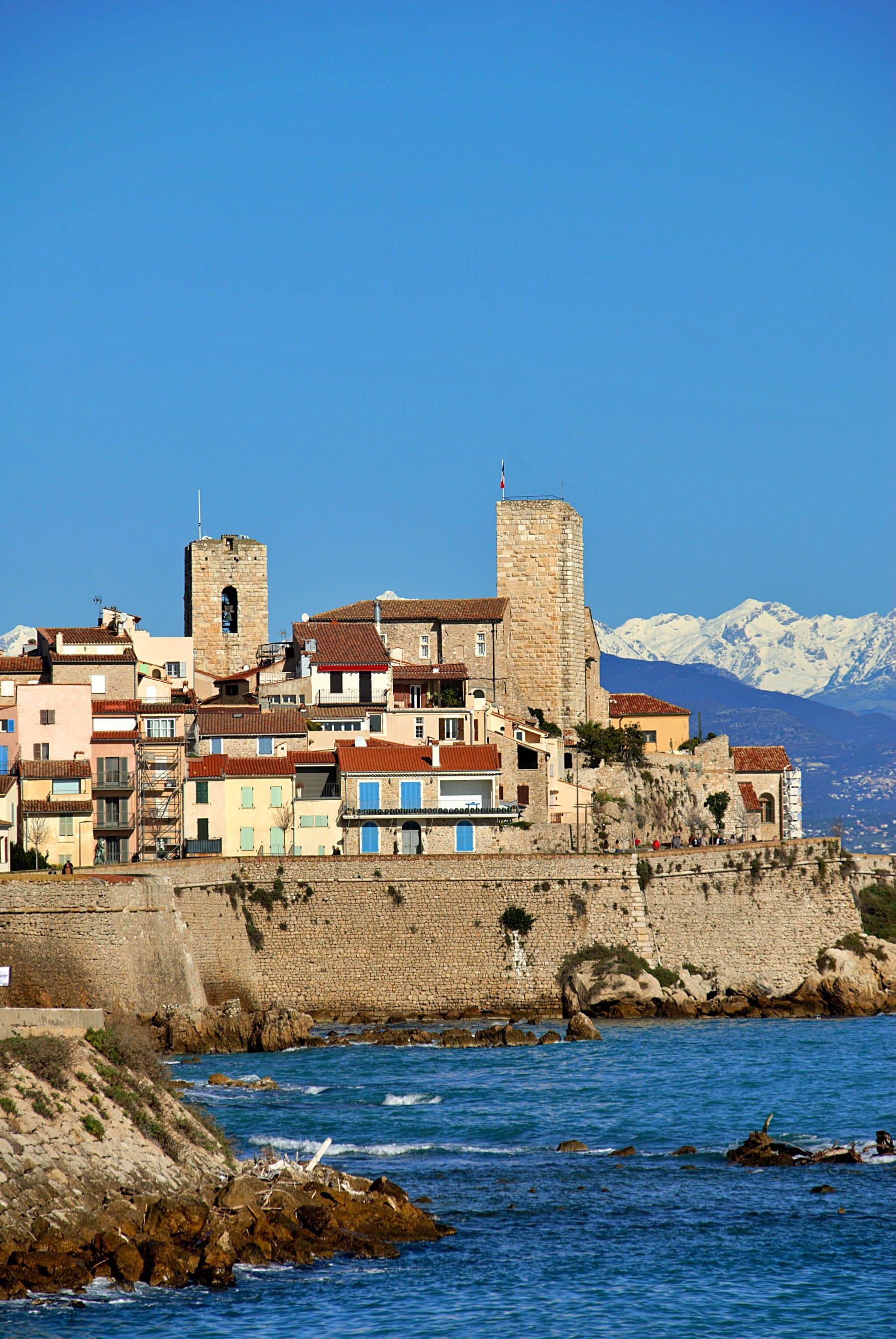
Km 21 to 31: round the Cap d’Antibes. Past Antibes station at km 22, the road rises 8 m to the ramparts of the old town at km 23, then follows the shore round the cape by the Boulevard de Bacon, with small rises and falls, including 8 m up at km 26. The steepest climb of the race comes at km 27 to 28: 26 m in about 900 m, nearly 3% on average, up the Boulevard de la Garoupe to the high point of 35 m. The road then drops 29 m over the next 1.8 km towards the west side of the cape.
Km 31 to 38: Juan-les-Pins and the climb out of Golfe-Juan. Juan-les-Pins at km 31.5 and the Boulevard du Littoral are flat and close to the water. The course passes Golfe-Juan station at km 35, then climbs 10 m in 500 m on the old Route Nationale 7, past the relay change at about km 36. It holds between 15 and 18 m until km 38; then the road drops 9 m in the next 500 m into Cannes.
Km 38 to 42.2: the Croisette. The last 4 km are nearly flat, past Port Canto at km 40.7 and along the Croisette to the finish near the Palais des Festivals. The seafront here is open to any headwind, which costs most at this point.
One club’s account of the 2026 race described an easy, open first half and noticeably harder rises near km 28 and km 35. Hold something back for them.
Chip timing includes control points along the route, and runners who miss one can be disqualified. Sweep points at km 10, 21.1, 30 and 35 enforce the six-hour limit, counted from when the last runner crosses the start line.
Course Map
One way along the Riviera: the Promenade des Anglais, the shore to Antibes, round the Cap d’Antibes, and on through Juan-les-Pins and Golfe-Juan to the Croisette. Tap a marker for details, and scrub the slider or press play to move the orange marker along the course with the elevation profile beneath it.
Pacers
Nine official pacers run at 3:00, 3:15, 3:30, 3:45, 4:00, 4:15, 4:30, 4:45 and 5:00, each carrying a large flag in a colour for its time. The start is in waves, and the pace groups are spread across them. Runners with a recent sub-three-hour marathon can request a preferential start position at the front.
Build a grade-adjusted pace plan for this course
Nutrition on Course
There are no cups anywhere on the course or at the finish, so bring something to drink from: a soft flask, a hydration pack or bladder, or a reusable folding cup. Water points are fed from the mains and volunteers help at many of them, but you fill your own vessel. The organiser sells hydration equipment at the Marathon Village when you collect your bib. Full stations with food and drink are at km 10, 15, 19.5, 25, 30.5, 35.5 and 38.5. Water-only points are at km 5, 7.5, 13, 17, 22, 27, 29, 32.5, 34, 37 and 40, which makes 18 points in all.
The first year of the system, in 2026, drew mixed reports. One sub-three-hour finisher used a collapsible cup at five or six stations, estimated losing 5 to 10 seconds at each refill and still ran a personal best. Another runner, improving on a five-hour best, liked having volunteers fill their bottle and found plenty of aid points. One runner interviewed after the race found the spray pressure too strong and finished with wet feet. Another found that dispensing worked better when the runner controlled it. The organiser acknowledged that some sprayers stayed on continuously and said adjustments would follow. Check the final participant guide for any changes to the stations.
Practise the whole routine before race day: opening the vessel, filling it, closing it and stowing it while moving. Open it before you reach the point, slow enough to fill it without spilling, then move clear before putting it away. Leave room in your race plan for a short stop.
Carry the gels you have trained with. A 2026 finisher saw oranges, bananas and sponge cake at the stations, but do not plan around a particular gel or sports-drink brand without checking the participant guide. The second half, round the Cap d’Antibes and up out of Golfe-Juan, is where fuel matters, so take something at km 25 and km 30.5. Outside assistance is not allowed, and runners seen dropping rubbish away from the bins can be disqualified.
Spectating
The coastal railway runs beside much of the course, so supporters can see a runner several times by train. Buy the 8 euro companion pass for unlimited travel between Nice and Cannes on race day, and check the timetable in race week. The Croisette finish is the best single place to be. Bands play about every 2 km.
Plan A: Nice, Antibes, Cannes. Watch the start on the Promenade, walk to Nice-Ville and take the train to Antibes. The course passes the station at km 22 and the ramparts at km 23, a short walk away. Then take the train to Cannes for the finish. A 4-hour runner reaches Antibes about 2 hours 5 minutes after crossing the start line and finishes at 4 hours.
Plan B: Golfe-Juan and the finish. Golfe-Juan station is on the course at km 35, where the last climb begins. A 4-hour runner passes about 3 hours 20 minutes after crossing the start line. The next stop west is Cannes, for the finish. Work out your runner’s clock time from their wave start once the waves are published.
Plan C: the Croisette. Spend the morning in Cannes and watch runners come along the Croisette from Port Canto. This is the easiest plan with children, and the best place to meet afterwards.
After the race
Where to eat, what to see and how to spend the days after the finish.
See & Do
Two in Nice near the recommended hotels, two in Cannes by the finish, and one on the course in between.
Post-Race Food
The finish is in central Cannes, so there is no transfer before eating. The Bar du Majestic at the Hôtel Barrière Le Majestic, beside the Palais des Festivals, opens at 10:00 and is the closest place to sit down, at a price. Café Crème Brunch Club on Boulevard Jean Hibert, on the old port side, serves brunch until the afternoon. La Libera, an Italian trattoria on Rue Commandant André a few streets inland, is the pasta option.
Book ahead: thousands of runners and supporters finish in the same few streets. Check Sunday opening hours before relying on any of them.
Vieux Nice and the Cours Saleya
About 0.5 km (0.3 miles) from the start. The old town’s narrow lanes and the Cours Saleya market are flat and close together, a good short walk on the Friday or Saturday that also takes you towards the expo.
Colline du Château, Nice
About 1 km (0.6 miles) from the start. The hill above the old town has the best view over the Baie des Anges and the start. It is reached by steps or a lift, and in winter it closes at about 18:00. Save it for before the race.
The Croisette and the Palais des Festivals, Cannes
At the finish. The seafront boulevard, the Belle Époque hotels and the Palais des Festivals, home of the film festival and the tourist office, are all within a few minutes’ walk of the line.
Le Suquet, Cannes
About 0.8 km (0.5 miles) from the finish. The old quarter on the hill above the port, with a view back over the bay. The climb is steep, so leave it for the day after if the legs object.
Antibes old town
On the course at km 23, and on the railway between Nice and Cannes. The ramparts, the Provençal market and the harbour make an easy half day. Check museum hours for Monday.
After the Race
November is off-season on the Riviera: quieter towns, shorter days, some businesses on reduced hours and a real chance of rain. The coastal railway makes it easy to carry on without a car. Start gently, with Antibes or Menton, and leave steep towns and long days for later in the trip.
The old town and ramparts you ran past at km 23, the Picasso museum in the Château Grimaldi and a harbour full of yachts. Flat, compact and on the same line as Nice and Cannes.
Free public lifts and escalators do most of the climbing in the principality, which suits tired legs: harbour, old town, a museum built into a cliff and a look at the casino. The Prince’s Palace interiors are closed in winter and the Oceanographic Museum is open daily.
Italy by local train. An old town above the River Roia, a Friday market, and the Hanbury Gardens and Balzi Rossi caves a bus ride west. Check weekdays first: Monday, the day after the race, is when the gardens and the caves are most likely to be shut.
The last French town before Italy, with a painted old town climbing above the harbour and quiet November seafront walks. A calm first night after the race.
Plane trees, fountains and the Cours Mirabeau, with Cézanne’s studio on the edge of town. November is for food, museums and quiet streets.
Background
History
On 9 November 2008, the first Marathon des Alpes-Maritimes started on the Promenade des Anglais and ran along the coast to the Palais des Festivals in Cannes. Its 10,000 places had gone by September. Azur Sport Organisation had built it as a sports-tourism project with the Alpes-Maritimes département and the seven towns on the route, and two years later it hosted the French marathon championships.
The idea has not changed since: a one-way run west along the Riviera from Nice to Cannes. The roads shift with works and security, but the start is still on the Promenade and the finish on the Croisette. The weekend also includes a 20 km race from Nice to Villeneuve-Loubet, a duo marathon in which two runners each cover a half marathon, and a relay for teams of three to six runners. 237,562 entrants from about 90 countries have taken part since 2008, and there were nearly 22,000 runners in 2025, almost a third from abroad and nearly half running their first marathon. The 2025 race sold out about six months in advance.
It is fast at the front. Abrha Milaw of Ethiopia set the course record of 2:07:25 in 2018, and Zenebu Fikadu, also of Ethiopia, set the women’s record of 2:28:15 in 2022. In 2026, Gerema Lemi won the men’s race in 2:13:27 and Manon Gras the women’s in 2:41:02, both well outside the records, and 11,842 runners were classified as finishers in the solo marathon. The race is a full member of AIMS, holds the French athletics federation’s International label and has been part of the AbbottWMM age-group world rankings since 2022. The 19th edition is on Sunday 7 November 2027, and one euro from every entry goes to the Banque Alimentaire des Alpes-Maritimes.
Frequently asked questions
Should I stay near the start or the finish?
Stay in Nice near the start. Your bib is a free train ticket back from Cannes after the race.
How far in advance should I book a hotel?
As soon as you have a place. The 2026 race sold out and 2025 sold out six months before race day.
Is there free transport to the start on race day?
Yes. Your bib is an unlimited train ticket between Nice and Cannes all day. A 15 euro bus option also runs from Cannes at 05:30.
What is the best area to stay?
The Promenade des Anglais and Carré d’Or in Nice, near the start and the Place Masséna bag drop.
When does the expo open?
Yes. The expo runs at the Centre des Congrès Océanice on the Port de Nice across the three days before race weekend, with no bib collection on race day. Check the current schedule before travelling, since days and hours can shift between editions.
What is the weather typically like on race day?
Mild, often wet: November averages 17.0°C high and 9.7°C low in Nice, and it is the city’s wettest month.
How do I get from the airport?
Nice airport is on the tram line to central Nice, beside the course at km 5 to 6.
Is there a bag drop?
Yes, at Place Masséna in Nice. Bags are taken to the finish in Cannes.
Should I bring a throwaway layer?
Yes. The start is open to the sea and later waves start well after the first.
How do I get back to my hotel after finishing?
Walk 450 m to Cannes station and take the free train to Nice with your bib.
Do I need to carry my own cup or bottle?
Yes. There are no disposable cups on the course or at the finish, so bring a soft flask, hydration pack or reusable cup. Practise opening, filling and stowing it before race day, and allow for slowing down at the water points. Reports from 2026 were mixed: some runners found the system worked well, and one found the spray pressure too strong.