The Race
| Next Race Date | 22 May 2027 (a Saturday) |
|---|---|
| Course Type | Point-to-point, mixed-surface cross-country: asphalt, forest road, gravel and trail |
| Registration | Open entry, three price bands, no qualifying standard |
| Ballot Opens | Not applicable: open registration |
| Total Finishers | 2,521 (2025, marathon distance) |
| Average Race Day Temperature | 7°C to 16°C typical May range. Mountain conditions run colder and wetter than that suggests |
| Cutoff Time | 9 hours, finish closing 18:00. Intermediate control at km 33.4 must be reached by 16:30 |
| Free Race Day Transport | Return shuttle from Schmiedefeld free for registered runners. The outbound transfer to Neuhaus has run as a paid day ticket around €10 |
| Course Certification | Not confirmed. No World Athletics Label or AIMS measurement certificate identified for the marathon distance |
This is not a road marathon
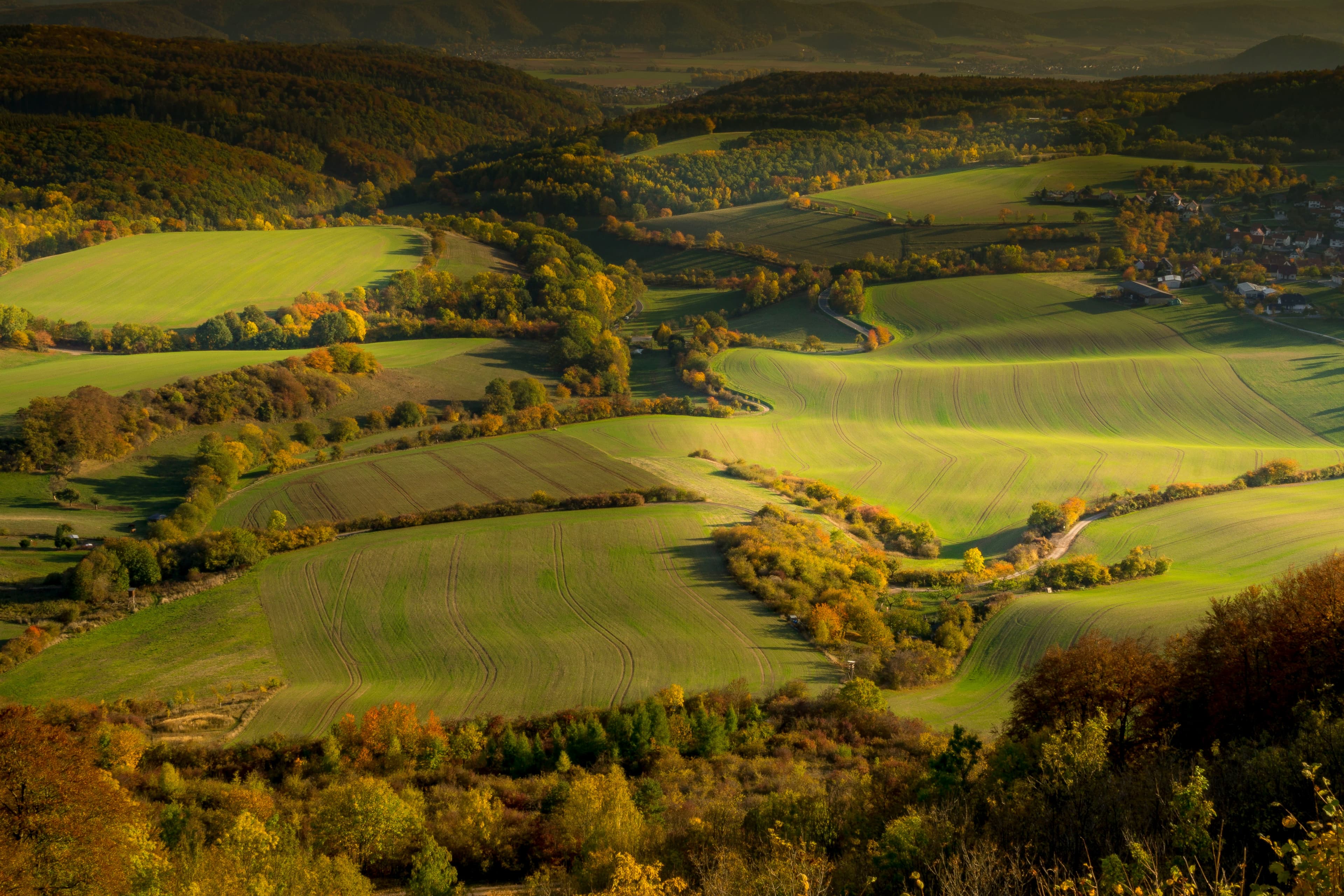
The Rennsteiglauf marathon is a cross-country race across the Thuringian Forest, run point to point on asphalt, forest road, gravel and short technical trail, with 637 m of climbing and a steep final kilometre. Road-marathon assumptions do not transfer: there is no tangent line to run, no pace groups, and the organiser’s own distance label is 42.2 km, not the certified road 42.195 km. Pace by effort and terrain, not by a target split.
History
The Rennsteiglauf began as an endurance outing, not a race. In May 1973 four runners linked to Jena, Hans-Georg Kremer, Hans-Joachim Römhild, Jens Wötzel and Wolf-Dieter Wolfram, covered almost 100 km from Hohen Sonne near Eisenach to Masserberg in around ten hours, with no competitive intention, in memory of the educator Johann Christoph Friedrich GutsMuths. A small invited field repeated the route in 1974 over a shortened 82 km, and by 1975 it was a genuine competition: 974 entrants started and 811 finished. The distance was cut again over the following decade, settling at 65 km through the mid-1980s and 1990s before the ultramarathon reached its present 72.7 to 73.5 km in 1997.
The shorter run from Neuhaus am Rennweg was added in 1977, initially over 45 km and later 43.5 km. It only settled at today’s 42.2 km marathon distance in 2016, so the race’s marathon identity is nearly four decades younger than the event itself. What has not changed is the shared destination: the Neuhaus field and every other Rennsteiglauf distance finish together at Schmiedefeld am Rennsteig, where the organiser builds a temporary sports-ground village each year.
The event has grown into one of Europe’s largest landscape runs, drawing more than 10,000 entrants across its full programme and around 1,700 volunteers from 25 course clubs. Its marathon has produced serious times despite the terrain: Filimon Abraham ran 2:24:47 in 2021 for the men’s course record, and Nora Kusterer 2:53:59 in 2017 for the women’s. In 2025, Samsom Tesfazghi Hayalu won in 2:37:34, a personal best, and Yvonne van Vlerken took the women’s race in 3:02:20. The organiser separately tracks Traditionsläufer, runners with 25 or more finishes, which says something about what brings people back: the temporary village, the food and the returning crowd, not the times.
The course
The marathon runs 42.2 km point to point from Neuhaus am Rennweg, high in the Thuringian Forest, to Schmiedefeld am Rennsteig at 711 m. The two ends sit about 26 km apart in a straight line, which is why the organiser’s transfer network matters more here than any city marathon’s shuttle bus. Surfaces mix road out of Neuhaus, forest road for most of the middle distance, and stretches of gravel, root and stone trail, with a genuine cross-country descent near Triniusbaude.
The first 18 km are three separate climbs of 59 to 82 m with drops of up to 90 m between them, reaching 841.5 m at Eselsberg (km 18.3), site of the Rennsteigwarte observation tower; the ridge near km 4 above Neuhaus is at much the same height. The course then drops about 130 m, most of it in one kilometre near Triniusbaude, and rolls through Masserberg, Schwalbenhauptwiese, Kahlert and Neustadt am Rennsteig before the Großer Burgberg climb around km 31, often walked even by strong runners. An intermediate control sits at km 33.4, Großer Dreiherrenstein. From there the route drops through Frauenwald towards its lowest point near Schmiedefeld station around km 41.1, before the Reitallee climb of about 20 m in the last kilometre into the finish. The organiser gives 637 m of total ascent and 706 m of descent: this is a net downhill race that does not feel like one.
Km 0 to 5.6: Neuhaus onto the forest road. The field starts on streets around the sports ground by the GutsMuths hall, already high in the forest, before reaching the Steinheider Hütte at km 5.6 and its first proper forest-road surface. The opening 4 km climb about 60 m along the Rennsteig, then the course drops 90 m in under 2.5 km to the hut, so pace control has to account for gravel, trail and gradient, and the field bunches wherever the road narrows.
Km 5.6 to 18.3: two climbs to Eselsberg. Aid points at Sandwieschen (km 5.8), Dreistromstein (km 10.6), Friedrichshöhe (km 12.0) and Eisfelder Ausspanne (km 15.7) punctuate a section of rises and drops on forest road: about 80 m up to Dreistromstein by km 11, 70 m down to Goldisthal by km 16, then 80 m up again in under 3 km, at nearly 3%, to Eselsberg at km 18.3, the course’s named high point at 841.5 m and the site of the Rennsteigwarte, comes early enough that attacking it hard tends to be paid for later.
Km 18.3 to 28.3: the technical middle and Neustadt. The descent from Eselsberg towards Masserberg loses about 130 m, including a real cross-country stretch near Triniusbaude where the course drops roughly 90 m in a single kilometre over roots, stones and a hollow trail, before Schwalbenhauptwiese (km 22.2) offers drinks and fruit. The course then climbs about 60 m at over 4% out of the dip and rolls through Kahlert, with two more short climbs of about 35 m, to the Neustadt am Rennsteig aid station at km 28.3, on the local festival ground, one of the few points where the route passes through a settlement.
Km 28.3 to 33.4: Großer Burgberg and the cutoff. The Großer Burgberg climb around km 30 to 31, about 57 m in a single kilometre at nearly 6%, is the steepest ascent of the race and frequently walked by the field at large; there is little time cost to doing the same. The route falls and climbs again past Morast to Großer Dreiherrenstein at km 33.4, the marathon’s intermediate control: runners must reach it by 16:30 or receive their result, medal and certificate there without continuing in classification.
Km 33.4 to 41.1: Frauenwald and the drop to Schwarzwasser. Past Allzunah and over Meisenhügel, the course reaches its final significant feed at the Monument am Bohrstuhl near Frauenwald, km 37.1, where the organiser’s own material mentions a small Köstritzer Schwarzbier on offer, a detail worth knowing, not acting on, mid-race. From Dreiherrenstein the course loses about 160 m in two stages, the steeper second one through Schwarzwasser (km 39.9) toward its lowest point near Schmiedefeld station around km 41.1.
Km 41.1 to 42.2: the Reitallee. The Reitallee climbs about 20 m over the final kilometre to the Schmiedefeld sports-ground finish, after 8 km of descending. It is the strongest spectator point on the whole course.
There is no blue tangent line on this course, and none of the usual tangent-running logic applies: the Rennsteig’s own markings are the route, and following them matters more than shaving metres. The organiser confirms an intermediate timing point at Eselsberg (km 18.3); a complete list of 2027 timing-mat positions has not been published, so check the competition instructions.
Course Map
The point-to-point route from Neuhaus am Rennweg across the ridge to Schmiedefeld, about 26 km apart in a straight line. Tap a marker for details, and scrub the slider or press play to move the orange marker along the course with the elevation profile beneath it.
The Schneewalzer and the Schmiedefeld finish
Two things separate this from a standard marathon. Before the 09:00 gun at Neuhaus, the field gathers, sings and sways to the traditional Schneewalzer, a communal moment specific to this race. At the other end, instead of a permanent stadium, the organiser builds a temporary village on the Schmiedefeld sports ground each year, shared by every Rennsteiglauf distance finishing that weekend, with showers, food, medal engraving and an evening celebration. The km 33.4 control belongs with these: miss 16:30 there and you receive a result, medal and certificate at that point instead of continuing in full classification, which matters to anyone working toward the back of a generous nine-hour window.
Pacers
No official pace-team programme has been identified for this race. Given the trail and forest-road surfaces and 637 m of climbing, fixed pace groups are uncommon on a course like this and would carry limited value even if they existed. Pace by effort, not banded support, and treat the climbs as sections to manage.
What to wear
Neuhaus sits high enough that a 09:00 May start can be cold even when the day warms quickly. Long-term averages put May mornings around 7°C and afternoons around 16°C, but both the start and the course run high enough in the forest that wind and rain feel markedly colder than a valley forecast suggests, and runner reports describe conditions ranging from warm and humid to, in past years, snow. A cheap warm layer for the pre-start wait is sensible on a cool forecast, but this is a rural, environmentally sensitive route: do not assume discarded clothing can be left on forest roads, and use the organiser’s designated collection point.
Footwear needs more thought than on a road marathon. The course mixes cycle path, forest road, gravel and short technical trail with roots and stones, particularly near Triniusbaude. Runner discussion suggests normal road shoes work for many people in dry conditions, but a grippy road-to-trail or light trail shoe is the safer choice if rain is forecast. Aggressive fell-style lugs are unnecessary, given how much of the course is runnable forest road or asphalt.
Entry
Entry is open registration with no ballot and no qualifying standard. Three price bands apply: an early rate running to 31 October, a middle rate to mid-March, and a final rate through race day if places remain. In sterling at recent exchange rates those bands work out to roughly the mid-£50s, high-£60s and low-£80s. Confirm the current euro prices and the exact 2027 dates before treating any of these as a live figure.
The organiser reserves the right to cap the field, and because the wider event draws around 15,000 finishers into a sparsely populated stretch of Thuringia, entering in the first or second band is a more reliable strategy than assuming late availability. Accommodation follows the same logic, and for this race the two decisions are really one.
There is no Good for Age or guaranteed-time entry route: this is not a qualification-controlled event. No official charity-place scheme comparable to a major city marathon was found, and no international tour-operator guaranteed-entry programme was identified. Elite or invited-athlete processes are not published on the general marathon page; the course records confirm that competitive athletes take part, but no formal elite standard should be inferred from that alone.
Timing uses electronic chip technology, though the marathon’s own 2027 technical wording should be confirmed in the competition instructions. Transfer, cancellation and deferral terms are not fully available in accessible text and must be taken from the 2027 Ausschreibung: do not count on a transfer or refund route that has not been confirmed.
Fast Runner / GFA Standards
Not applicable. No Good for Age or fast-runner qualifying route exists for this race, and entry is open to everyone at the same price bands.
Race Weekend
Expo
Marathon bib collection is based in Neuhaus am Rennweg, close to the start. The organiser’s communal accommodation in Neuhaus sits close to the collection point, which is one practical reason to consider staying there the night before. The exact 2027 collection venue, Friday hours and any race-morning window must be confirmed from the competition instructions; the most recent confirmed detail is that communal accommodation ran Friday check-in from 14:00 to 21:00 with check-out before the race on the Saturday, which may not repeat exactly.
There is no single city-centre expo to combine with sightseeing. Runners staying in Suhl or Oberhof need to build travel to Neuhaus into their Friday. ID and confirmation requirements, bag-size limits and any late-collection policy should be taken from the organiser’s downloads page, the Ausschreibung and Wettkampfhinweise, which is the authoritative final source.
Getting to the Start
The marathon starts at 09:00 at the sports ground by the GutsMuths hall in Neuhaus am Rennweg. The Marathon-Wanderung follows ten minutes later at 09:10, so it operates separately. Unlike the half marathon, which has published 500-runner start blocks, the marathon page does not describe a corral scheme, so expect a mass start unless the 2027 instructions say otherwise.
Getting to the start matters more here than at almost any city marathon, because Neuhaus, Schmiedefeld and Suhl are not connected by ordinary city transport. The organiser runs its own bus network. In recent years buses to Neuhaus have departed from multiple towns, including Eisenach, from as early as 05:20, running through Masserberg and other pickup points to around 07:15, on a paid day ticket priced around €10. The return shuttle from Schmiedefeld back towards Frauenwald and Masserberg has run from 13:30, hourly as needed, and is free for registered runners, with companions paying the day-ticket fare. Do not plan a same-day car transfer between Neuhaus and Schmiedefeld: road closures and the point-to-point course make the organised transfer the only realistic option.
Runners staying in Neuhaus can walk to the start with a calm morning. Those based in Schmiedefeld or Suhl need the outbound bus built into their schedule with a comfortable margin, since departure points are spread across several towns. The Ringberg Hotel in Suhl is specifically promoted by the organiser as having its own transfer stop, which simplifies this for anyone wanting conventional hotel infrastructure.
At the finish, runners enter the temporary sports-ground village in Schmiedefeld: showers, food, medal engraving at around €8 for adults, and the evening celebration. Runner feedback describes the walk from the finish to the shuttle stop as noticeable, reportedly close to a kilometre in some cases. That is manageable, but it is better known before racing than discovered on tired legs, so identify your shuttle stop and route home before the start.
Nutrition on Course
Aid stations follow the course’s landmark points, not fixed kilometre intervals. The organiser’s route description confirms drink or food at Sandwieschen (km 5.8), Dreistromstein (km 10.6), Friedrichshöhe (km 12.0), Eisfelder Ausspanne (km 15.7), Eselsberg (km 18.3, food and the intermediate timing point), Schwalbenhauptwiese (km 22.2, drinks and fruit), Neustadt am Rennsteig (km 28.3, a full station on the local festival ground), Großer Dreiherrenstein (km 33.4, aid plus the cutoff control) and the Monument am Bohrstuhl near Frauenwald (km 37.1, the final major feed). Runner reports describe water roughly every 5 km and more substantial food roughly every 10 km, which is consistent with that list.
Rennsteig has a long-standing solid-food identity: Haferschleim, bread and fruit are traditional, and the Frauenwald station is known for offering a small Köstritzer Schwarzbier to runners who want one, a novelty, not a fuelling strategy. The exact 2027 sports-drink brand, gel availability and full product list should be taken from the organiser’s Verpflegung Marathon download once published. Personal bottle arrangements, toilet placement and medical-point locations are not confirmed in accessible text, which on a course this remote is worth resolving before race day.
Spectating
This is not a course built for chasing a runner between sightings. Large stretches run through forest with limited road access and no useful public transport alongside the route, so a spectator does best to commit to one or two points plus the finish. There is no location where the course can be watched twice from the same transport stop.
The single best position is the Schmiedefeld finish. The closing Reitallee climb concentrates the strongest support on the course and lets a spectator see both the decisive final kilometre and the finish-village celebration from one place. The lowest-stress plan is to watch the 09:00 start in Neuhaus and use the organiser’s transport toward Schmiedefeld for the finish.
A car-based spectator can target the Masserberg area around km 18 to 20, then continue to Schmiedefeld well ahead of their runner, though this needs confident local driving and a published closure plan. Frauenwald, around km 37, gives a dramatic late-race sighting near the final major aid station; the onward run to Schmiedefeld is short geographically, but event traffic can make the timing tight, so it suits supporters of runners expected to take four hours or more, not those tracking a fast finish. No dedicated 2027 live-tracking platform has been identified, so confirm the timing provider close to race week.
Post-Race Food
The finish village is the easiest first stop, and the event is known for substantial regional catering. Beyond that, Schmiedefeld has a small restaurant cluster that fills quickly once the field arrives, so booking ahead is worth doing. Pizzeria Rennsteig on Engertal Straße offers straightforward pizza and pasta and has listed daily opening from 10:00 to 22:00. Hotel Gastinger on Alte Ilmenauer Straße serves regional Thuringian food and fresh bread, useful for a sit-down meal close to the finish. Gasthaus Zur Sonne on Fritz-Arno-Wagner-Straße is a traditional local restaurant worth trying if a table is free. Confirm all three are currently trading before relying on them.
Where to Stay
The usual finish-proximity principle applies at Schmiedefeld: staying close to the finish shortens the most important walk of the weekend, the one that comes after 42.2 km rather than before it. This race is unusual in also making the start town a genuinely competitive choice, because a point-to-point course means neither end can be treated as an afterthought.
Neuhaus am Rennweg
Neuhaus am Rennweg is the most race-efficient base for the marathon itself. It is the start town, and the organiser’s communal accommodation sits close to bib collection, so a runner avoids an early transfer and can prepare almost until the 09:00 gun. The trade-off comes afterwards: from Schmiedefeld, a runner staying in Neuhaus still needs the official return transfer. Room supply is limited and the town is quiet on the Saturday night.
Schmiedefeld am Rennsteig
Schmiedefeld am Rennsteig is best for the finish and the evening celebration: the shortest possible walk after the race is the one to a bed here. The compromise runs the other way, since race morning requires the official transfer out to Neuhaus. Accommodation is scarce relative to demand, and the village is the liveliest place on this list on the Saturday night.
Suhl
Suhl is the most practical larger-town base for a runner who wants conventional hotel supply. It has more hotels and restaurants than either Rennsteig village, a working rail station, and the Ringberg Hotel, which the organiser lists as having its own transfer stop. It is less atmospheric than sleeping directly on the Rennsteig, but considerably easier for an international traveller, and the finish transfer needs planning either way.
Oberhof and Frauenwald
Oberhof suits a runner extending the weekend. It is itself a Rennsteiglauf start town, for the half marathon, with substantial sports-tourism infrastructure and its own event transfers, but for the marathon it is neither start nor finish, so it carries a convenience cost the other bases do not. Frauenwald is small, quiet and sits directly on the marathon’s late route, which appeals to a runner travelling with spectators who want to see the course from a rural guesthouse base. Transport is the genuine weakness there: a car, or a carefully planned race bus, matters more than it does from Suhl or Oberhof.
Ilmenau
Ilmenau, a larger university town north of the forest, offers more normal travel infrastructure and dining, but neither the start nor the finish sits close enough for an easy walk. That makes it a weaker pure race-weekend base and a better choice for a longer Thuringia trip either side of the race.
Book as early as the first entry-price deadline allows. This is a rural event drawing roughly 15,000 finishers across its full programme into a handful of small towns, and room inventory comes nowhere near matching a city marathon.
Recommended hotels
Positioned by the finish, with its own restaurant serving regional Thuringian food. Rooms are scarce and the immediate area is the busiest in the region on the Saturday night, being the centre of the finish-village celebration.
A small finish-area property likely to fill early, given how few rooms exist directly in Schmiedefeld. Best for a runner prioritising the shortest possible walk after the race over hotel size or facilities.
The organiser’s own accommodation page features this hotel with a dedicated race-bus stop, and it has a pool and sauna for recovery. It sits at neither the start nor the finish, so the transfer timetable has to be built into the weekend either way.
Self-catering-style space in an established sports-tourism town, useful for a longer stay either side of the race. It needs the outbound transfer to Neuhaus and an onward return from Schmiedefeld, so it suits a runner extending the trip.
A conventional hotel option in Oberhof with more facilities than the Rennsteig villages offer, carrying the same transfer requirement at both ends of race day.
Booking timeline
Registration is structured around a first price deadline at the end of October, well over half a year before race day, and a second in mid-March. Accommodation should follow the same early timetable, since there is no ballot outcome to wait for. Neuhaus and Schmiedefeld carry the tightest inventory of any base here and should be booked as soon as an entry is confirmed. Suhl and Oberhof offer more fallback rooms but still fill with participants as the event approaches. The organiser’s own communal accommodation and the promoted Ringberg Hotel arrangement are useful budget and logistics options, though their 2027 dates and rates need confirming each year.
See & Do
Everything below is judged from the finish at Schmiedefeld and the hotel bases that serve it, not from a host city. This is a rural race, so the options are landscape and small-town, and all of them assume legs that have just climbed 637 m.
Vessertal-Thüringen Biosphere Reserve
On the doorstep of Schmiedefeld, roughly 0 to 5 km (0 to 3 miles). This protected forest landscape surrounds the finish village and gives the physical context for the race itself. A short, gently graded nature walk suits the day after a marathon far better than another climb, and the steeper descents are best avoided on tired legs.
Oberhof winter-sport venues
About 15 km (9 miles) from the finish. Oberhof’s biathlon and winter-sports facilities give a sense of the region’s sporting culture beyond the Rennsteiglauf. Much of the site can be seen with comparatively little walking, though visitor access outside the winter competition season varies and is worth checking in advance.
Suhl museums
About 20 km (12 miles) from the finish. Suhl’s indoor museums, including its long-standing arms and hunting collections, make a practical low-walking recovery option if May weather turns wet. Many German museums close on Mondays, so check opening hours before travelling on from race weekend.
The Rennsteig ridge path
The marathon route follows this path, and further sections extend well beyond the finish. The Rennsteig is the best-known long-distance ridge route in the region, and late May puts it in full spring growth, though paths stay wet after rain. A short, gently rolling stretch is a better choice than another major hike in the days immediately after racing.
Reading
The race is named for Johann Christoph Friedrich GutsMuths, the educator associated with founding modern physical education, so a biography or anthology of his writing is a more direct companion to this event than a general travel title. No current English-language edition was confirmed, and a Rennsteig hiking guide with maps would sit well alongside it; both are worth choosing from what is actually in print.
After the Race
The Rennsteiglauf leaves a runner in the middle of Thuringia, far from an airport, which shapes what comes next. Erfurt and Weimar sit within reach by regional rail and make the natural decompression stops; Eisenach connects back to the event’s own history as the start town of the Supermarathon. May is the region at its best for this, though the first day after 637 m of climbing should stay gentle whichever direction you go.
A low-effort recovery day inside the event’s own transport region: Suhl for museums and easy walking, Oberhof for its sports-tourism venues if legs allow more movement. Stays within territory race-weekend transfers already cover.
Eisenach is the start town of the Rennsteig Supermarathon, which gives a direct link to the event’s long-route history, with the Wartburg as a cultural counterpoint after a rural race.
A compact historic centre, straightforward rail access and an easy pace make Erfurt a comfortable decompression stop, provided the first day stays gentle.
A culture-heavy, not hiking-heavy, extension built around Weimar’s historic centre and museums, easily combined with Erfurt into one trip.
A west-to-east route from Schmiedefeld or Suhl through Eisenach to Erfurt and Weimar, pairing Rennsteig forest with the Wartburg and Thuringia’s two major cultural cities. Extends to four nights without strain.
Frequently asked questions
Should I stay near the start or the finish?
Neuhaus am Rennweg is easiest for race morning, since the start and bib collection are both there. Schmiedefeld is easiest afterwards, for the finish and the evening celebration. Suhl is the best compromise for conventional hotel supply.
How far in advance should I book a hotel?
As early as the October entry deadline. This is a rural event drawing around 15,000 finishers across its programme into a few small villages, and inventory is nothing like a city marathon. Neuhaus and Schmiedefeld are tightest.
Is there free transport to the start on race day?
The return shuttle from Schmiedefeld is free for registered runners. The outbound transfer to Neuhaus has run as a paid day ticket around €10. Do not plan a same-day car transfer between the two ends.
What is the best area to stay?
Neuhaus for the calmest morning, Schmiedefeld for the shortest walk after finishing, Suhl for conventional hotels and a rail station. Oberhof and Frauenwald suit extending the trip.
When does the expo open?
There is no city-centre expo. Bib collection is in Neuhaus am Rennweg near the start. Confirm the 2027 venue and Friday hours from the competition instructions; runners staying in Suhl or Oberhof must build the trip into their Friday.
What is the weather typically like on race day?
Averages give around 7°C in the morning and 16°C by afternoon, but the course runs high in the forest where wind and rain feel far colder. Reports range from warm and humid to snow in past years.
How do I get there?
There is no nearby international airport. Most runners route through Erfurt or Frankfurt, take regional rail to Suhl or Ilmenau, then use the organiser’s race-weekend buses. The transfer timetable governs race morning, not the trains.
Is there a bag drop?
Anything left at the start must travel 42.2 km to reach you, so bag handling is organiser-run. Confirm the 2027 arrangement from the competition instructions. Showers and changing are in the temporary finish village at Schmiedefeld.
Should I bring a throwaway layer?
On a cool forecast, yes, for a 09:00 start at around 800 m. This is a protected forest route, so use the organiser’s designated collection point, not a forest road.
How do I get back to my hotel after finishing?
By the organiser’s return shuttle, free for registered runners, running from Schmiedefeld toward Neuhaus, Frauenwald and Masserberg. The walk from the line to the shuttle stop can approach a kilometre, so know your stop in advance.