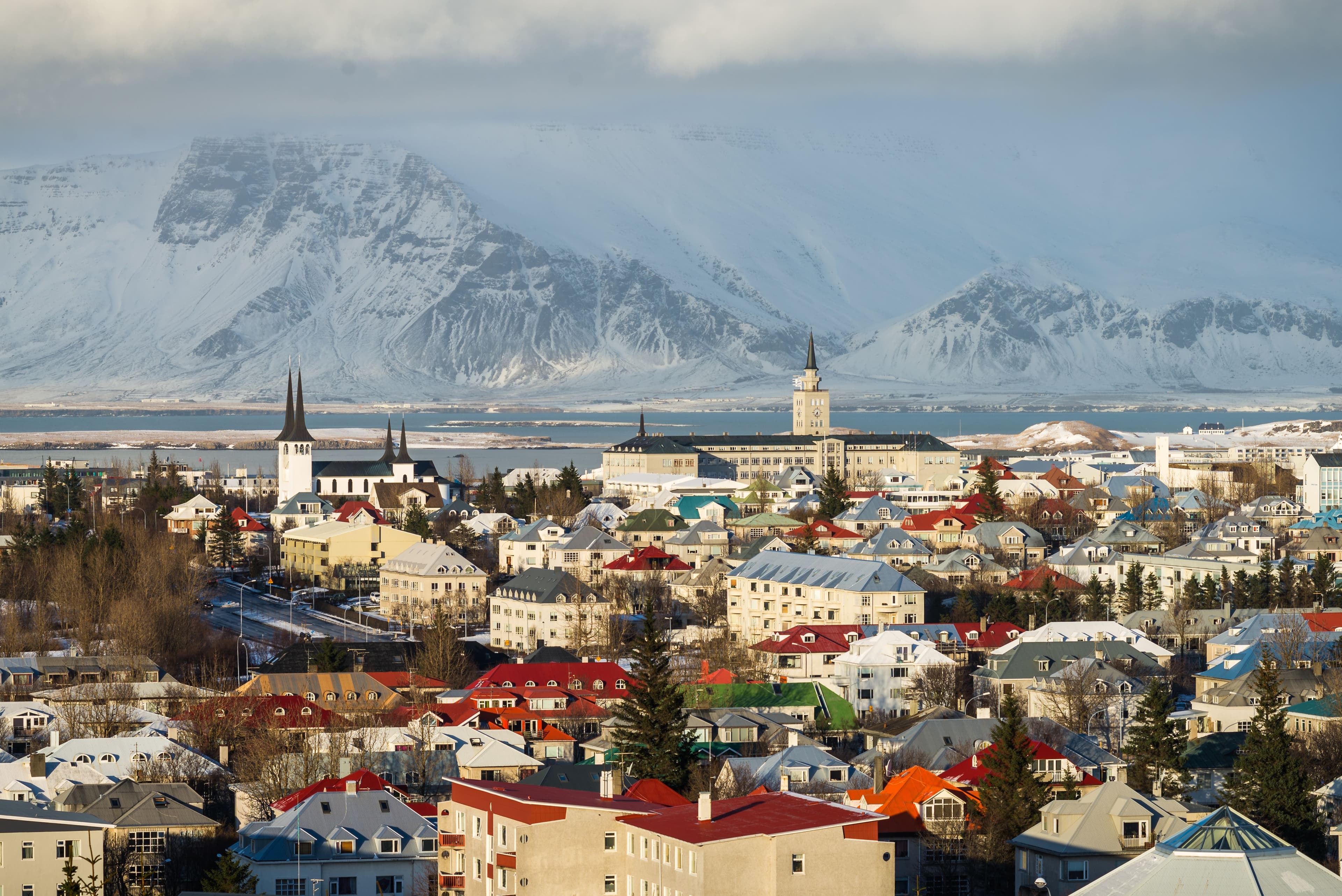
The Race
| Next Race Date | Saturday nearest 18 August 2027 (exact date not yet confirmed) |
|---|---|
| Course type | Point-to-point loop (start and finish both in central Reykjavik, on different streets) |
| Certification | AIMS-certified course measurement |
| Start | Sæmundargata, by the University of Iceland arch |
| Finish | Geirsgata, near the old harbour |
| Total finishers | ~1,500 (marathon distance) |
| Avg race-day temp | 14.5°C average for the time of year |
| Cutoff time | Approximately 6 hours 30 to 45 minutes (sources conflict on the exact figure; timing stops at 15:30) |
| Free race-day transport | Not offered as a discrete perk; entry includes one free geothermal pool admission on race day or the day after instead |
| Course certification | AIMS |
| Sleeper Train | Not accessible (Iceland has no passenger rail network of any kind) |
History
Two Reykjavik travel agency employees came up with the idea in 1983, looking for a way to draw more international visitors to Iceland. The first Reykjavik Marathon ran in 1984 with 214 participants. It has taken place every year since, other than 2020 and 2021, when the event did not run.
The race has been sponsored by Íslandsbanki since 2006, briefly under the bank’s former name, Glitnir, between 2006 and 2009 before it reverted to the Íslandsbanki branding. It is organised by the Reykjavik Sports Association (Íþróttabandalag Reykjavíkur), which also runs the Laugavegur Ultra Marathon, the Suzuki Midnight Sun Run and two smaller winter events in the city.
What began as a single road race is now a multi-distance festival day: a marathon, half marathon, 10K and a children’s fun run of 1.7km or 3km, all starting from central Reykjavik on the same Saturday morning. The 10K has been the most popular distance for two decades, drawing around 7,000 entrants in recent years, while the marathon itself remains a comparatively small field of roughly 1,500. Total participation across every distance runs to around 16,000, including more than 3,000 runners from outside Iceland.
The organisers deliberately schedule the race for the Saturday nearest 18 August, the anniversary of Reykjavik’s founding as a city, which places it on the same day as Menningarnótt, Reykjavik’s Culture Night and the largest annual festival in the capital. Runners cross the finish line into a city already gathering for an evening of concerts, open studios and a fireworks display over the harbour.
The fastest time recorded at the race is 2:14:32, set by Kenyan runner Moses Kemboi in 2015.
The course
The Reykjavik Marathon starts on Sæmundargata by the University of Iceland and finishes on Geirsgata, near the old harbour. The route runs through Ægisíða, Grandi, Sæbraut, Laugardalur, Elliðaárdalur, Bryggjuhverfi, Fossvogur and Þingholt before returning to the city centre. Total elevation gain is around 174m over the full distance, with the most sustained climbs falling around km 14 and km 22. The course is AIMS-certified.
The middle third of the route runs along Sæbraut, the coast road past the Sun Voyager sculpture and Harpa concert hall, with open Atlantic views and no shelter from wind coming off the water. The course is not fully closed to traffic; race marshals and roughly 300 volunteers manage crossings, but runners should stay alert at junctions rather than assume the road is theirs alone.
A detailed kilometre-by-kilometre course narrative is not yet available for this race: independent runner accounts of most named sections are thin, and the organiser’s own course map shows the route visually rather than describing it section by section. This will be expanded once further first-hand material is available, rather than filled in with invented texture now.
Pacers
Official pacers run for the 10K, half marathon and marathon, competition ticket category only. The marathon’s fastest official pace group is 3:30; runners targeting anything faster than that will not have a pacer to follow.
| Wave | Start time | Corrals | Pacers available |
|---|---|---|---|
| Competition, Marathon & Half | 08:15 | Pace-area system, self-placed | Marathon: 3:30, 4:00, 4:15. Half: 1:30-2:00 in 5-minute steps |
| General, Marathon & Half | 08:45 | Same pace-area system | Pacers run with the competition wave only |
| Competition, 10K | 09:30 | Pace-area system | 40, 45, 50, 55, 60, 65 minutes |
| General, 10K | 10:15 | Same pace-area system | Pacers run with the competition wave only |
Runners self-place in a marked pace area matching their expected finish time rather than lettered corrals. Named pacers change year to year and are not published here as permanent.
What to wear
Average race-day temperature is 14.5°C, per the organiser’s own figures, though Reykjavik’s coastal position means conditions can shift within the four hours most runners are out on the course. Wind is the more relevant variable than cold: the Sæbraut stretch between roughly km 5 and km 14 has no shelter from wind coming directly off the water, and a headwind there can matter more to finishing time than temperature alone.
A light, wind-resistant outer layer discarded at the start is a reasonable default for the earlier waves; runners in the later general-ticket start should check the morning forecast rather than assume the 08:15 wave’s conditions will hold. Rain is common enough in an Icelandic August that a genuinely waterproof, not merely water-resistant, top layer is worth the extra weight in a drop bag even if unused. Sunscreen matters more than instinct suggests: August daylight in Reykjavik runs close to 20 hours, and overcast skies do not fully block UV exposure over a four-hour race.
Entry
| Registration period | General ticket | Competition ticket |
|---|---|---|
| Earliest pre-registration | 14,930 ISK (~£89) | 15,170 ISK |
| September to 23 April | 17,910 ISK (~£107) | Higher tier |
| 24 April to 19 August | 19,900 ISK (~£118) | Higher tier |
| Race package pick-up | 23,880 ISK (~£142) | 24,270 ISK |
2026 pricing shown; 2027 pricing had not been published at the time of writing. Registration for 2027 opens the day after the 22 August 2026 race.
Entry is open rather than ballot-based, with tiered pricing that rises the closer a runner registers to race day. There are two ticket categories: a General ticket for runners who simply want to complete the distance, and a Competition ticket for those who want their result certified by FRÍ, the Icelandic Athletic Federation, for use in qualifying elsewhere.
Both ticket types include the race bib with built-in timing chip, on-course services, a finisher’s medal, one free admission to a Reykjavik geothermal pool on race day or the day after, and access to official pacers. The Competition ticket additionally includes the FRÍ certification fee and eligibility for age-category and overall prizes; the General ticket does not compete for prizes and is not FRÍ-certified.
Runners can change their registered distance online via “My Pages” up to 18:00 the day before the race, or in person at the expo, paying only the difference if the new distance costs more. The distance cannot be changed once the race has started. Groups of ten or more registering together, whether running clubs or companies, are eligible for a group discount by contacting the organiser directly.
There is no separate Good For Age or fast-runner qualifying standard published for this race; entry is open to anyone who registers and pays, subject to a minimum age of 18 for the marathon distance.
Race Weekend
Race Day Is Culture Night
The Reykjavik Marathon is deliberately scheduled for the Saturday nearest 18 August, the anniversary of the city’s founding, which places it on the same day as Menningarnótt, Reykjavik’s Culture Night and the largest annual festival in the capital. Runners finish into a city already filling with concerts, open studios and an evening fireworks display over the harbour, rather than into the quieter afternoon most marathons offer. It also means race-day road closures (08:00-15:00) overlap with festival set-up, and central Reykjavik will be considerably busier and noisier than usual both the night before the race and on race night itself.
Expo and Registration
The expo, branded Fit & Run EXPO, is held at Laugardalshöll Sports Hall, Engjavegur 8, Reykjavik, and is dedicated to runner preparation, gear and health rather than general tourism. Use entrance A. In 2026 it opened Thursday and Friday before the race, both days from 14:00 to 19:30; exact 2027 dates and hours will shift with the race date.
Race bibs, which have the timing chip built in along with safety pins, must be collected in person or by a representative carrying the runner’s ticket confirmation. Cash is not accepted at the expo; card payment only. Runners are advised to allow real time for the visit and expect queues during peak hours.
For anyone unable to reach the expo on the Thursday or Friday, bib-only collection (no other race materials) is available on race morning from 07:00 at the information centre near the start line. The organiser is explicit that this is not recommended: queues can be long, with no guarantee of being served before the runner’s wave starts.
Race Morning
Race morning runs on a tight, published schedule (subject to change closer to the date): the information centre and bag storage both open at 07:00; Competition ticket marathon and half marathon runners start at 08:15; General ticket marathon and half marathon runners start at 08:45; Competition ticket 10K starts at 09:30; General ticket 10K at 10:15; the Fun Run warms up from 11:30 and starts at 12:00. Starting in the wrong wave results in disqualification and no registered time, so runners should treat their designated start time as fixed rather than approximate.
The start is on Sæmundargata, using the arch by the University of Iceland as the marker point, with runners placing themselves in the marked pace area matching their expected finish time rather than in lettered corrals. Those unsure of their pace are told plainly to start further back rather than guess optimistically. The nearest parking is by Háskólabíó and the National Library.
A baggage tag is included automatically with marathon registration; runners in other distances must add one separately via “My Pages.” Only one bag per runner can be stored, in a monitored but not insured area, open 07:00 to 15:00. Portable toilets are placed at the start and finish areas, in Hljómskálagarður, on Fríkirkjuvegur, and alongside every refreshment station roughly every 4-5 km along the course; accessible toilets specifically are at the start and finish, at Eiðisgrandi and in Bryggjuhverfi.
The course is marked with yellow ground stripes and neon green spray paint, with roughly 300 volunteers managing crossings, but the organiser is explicit that the route is not fully closed to traffic, so runners should stay alert rather than assume right of way. First aid is stationed by Tryggvagata and at the finish area. Timing is chip-based, built into the bib itself; no bib means no recorded time.
Post-finish, every runner who shows their bib gets one free admission to any Reykjavik geothermal pool, on race day or the day after, a genuinely unusual perk worth building the whole post-race afternoon around rather than treating as a footnote.
Logistics Map
The map below shows the official course route from Sæmundargata through Ægisíða, Grandi, Sæbraut, Laugardalur, Elliðaárdalur and Fossvogur to the Geirsgata finish, plus the expo at Laugardalshöll. Tap any marker for details.
Nutrition on Course
There are 10 refreshment stations on the marathon course, spaced roughly every 4-5 km. Each offers Gatorade sports drink at the front of the station and water at the back. From the second half of the race onward, marathon runners additionally get bananas and oranges at every other station.
No personal-bottle drop-off service is mentioned on any official page. Given Iceland’s climate, the fluid strategy question for most runners is less about overheating and more about wind chill: a headwind on the exposed Sæbraut stretch can increase the temptation to skip a station rather than lose momentum, which is worth planning against rather than deciding on the day.
Spectating
Iceland has no metro or rail-equivalent transport system, and Reykjavik’s Strætó city bus network has not been cross-referenced against the marathon’s exact road-closure map here, so specific spectator transport itineraries are not published rather than invented. What can be stated with reasonable confidence: the course loops back through central Reykjavik at both the start (Sæmundargata) and finish (Geirsgata) areas, both within easy walking distance of each other and of most central hotels, so spectators based downtown do not need transport at all for those two points. The Sæbraut coastal stretch, roughly km 5-14, is walkable from the city centre along the harbour front for anyone wanting a mid-course sighting.
Where to Stay
Because the start (Sæmundargata) and finish (Geirsgata) are both within central Reykjavik and close enough to walk between, a runner staying anywhere in the compact downtown core (the 101 Reykjavik postcode area) should be within reasonable walking distance of both.
One genuinely useful, specific point is worth flagging plainly: because the race falls on the same night as Culture Night, central Reykjavik will be markedly noisier and busier than usual on race night itself, since Menningarnótt draws large evening crowds downtown, including fireworks over the harbour. Runners who want a quiet night’s sleep before racing should weigh a hotel slightly outside the immediate centre against the convenience of a shorter walk to the start.
Specific hotel recommendations with verified current operation and distance from the Geirsgata finish are not yet available for this page and will be added once sourced, rather than published as invented names.
Booking timeline
There is no ballot for this race, so the usual “book after ballot results” logic does not apply. Instead, the entry fee itself is the forcing function: General ticket pricing for the marathon rises in four tiers, from 14,930 ISK at the earliest pre-registration window up to 23,880 ISK at race package pick-up, so registering early saves money directly rather than merely improving hotel odds.
Because the race falls on the same weekend as Reykjavik’s Culture Night, one of the busiest tourism dates in the Icelandic capital’s calendar, hotel availability is the more urgent booking pressure here rather than the race itself. Book as early as possible, ideally months rather than weeks ahead.
See & Do
The course itself passes two of Reykjavik’s best-known landmarks directly, and every runner’s entry fee includes a third attraction already paid for.
Harpa Concert Hall
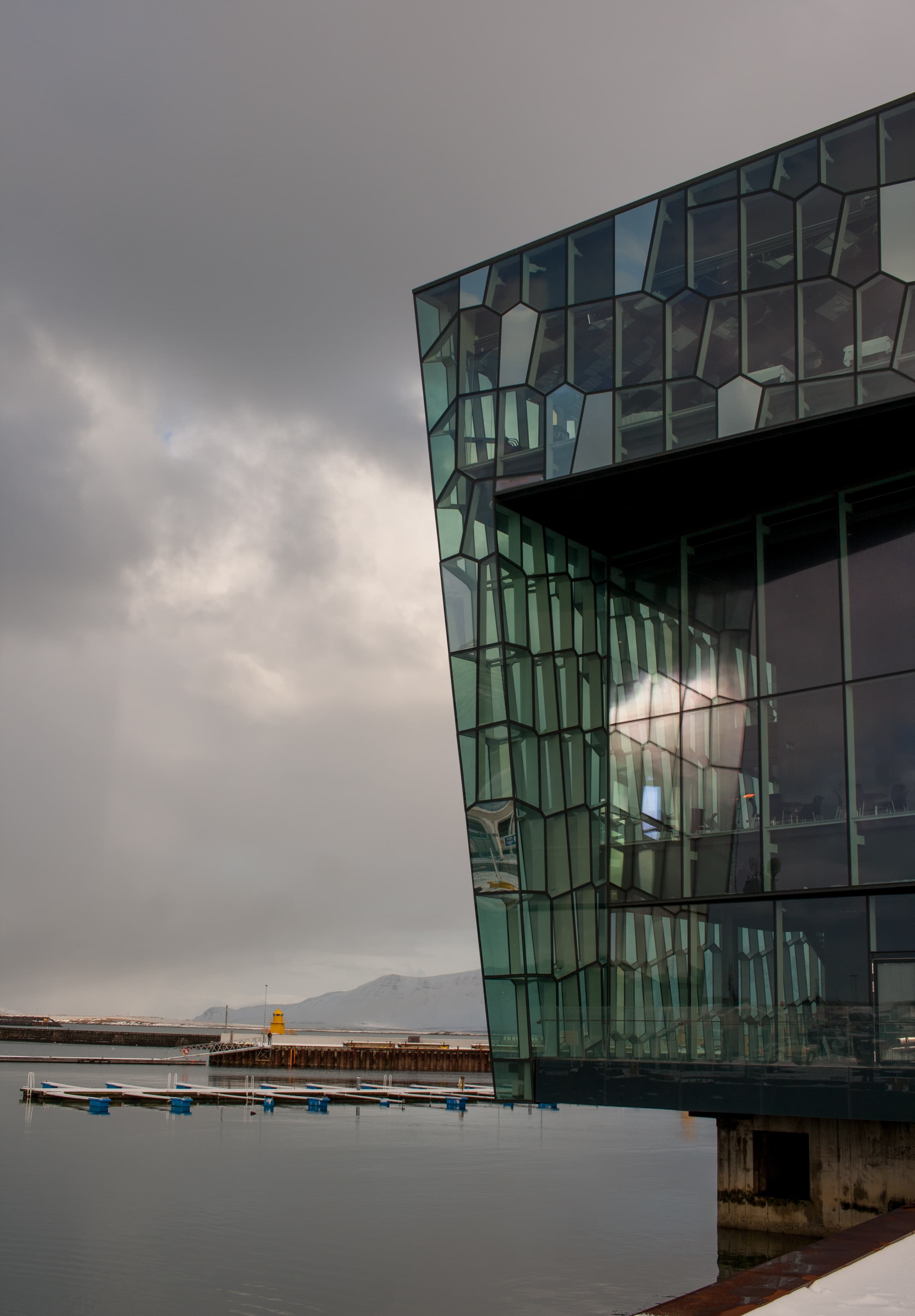
Reykjavik’s glass-fronted concert and conference hall sits directly on the harbour and is visible from the course itself on Sæbraut, roughly 1.5km from the Geirsgata finish on foot. A short, flat walk from the finish, worth returning to for the building’s honeycomb glass facade rather than for any specific event, unless a runner’s dates happen to coincide with a concert.
The Sun Voyager (Sólfar)
A steel sculpture of a Viking-style ship on the harbour front, one of the city’s most photographed landmarks and passed directly by runners during the race, along Sæbraut. Free to view at any time, flat and level ground, an easy stop for anyone retracing part of the course on foot the day after.
Reykjavik geothermal pools
Every runner’s entry fee includes one free admission to any of the city’s geothermal pools on race day or the day after, on presentation of the bib. Genuinely worth prioritising over a generic tourist attraction, both for recovery and because it is already paid for.
After the Race
The Reykjavik Marathon runs in late August, close enough to the end of the Icelandic summer for waterfalls to still be running full and roads to remain fully open, but late enough that the country’s puffin colonies have largely emptied for the season. These itineraries range from a single day on the Golden Circle to a two-night loop around the Snæfellsnes Peninsula.
Þingvellir, Geysir and Gullfoss in a single loop, entirely manageable on tired legs since almost all of it is done from a car or coach seat. August gives the longest daylight window of the year for the full circuit.
Seljalandsfoss, Skógafoss and Reynisfjara black beach on the way to Iceland’s southernmost village. By race weekend in late August, the puffin colonies at Dyrhólaey have largely emptied for the season.
Kirkjufell, Stykkishólmur’s harbour and the Arnarstapi-Hellnar coastal path beneath Snæfellsjökull. A self-drive trip rather than one that works without a car.
Frequently asked questions
Should I stay near the start or the finish?
Both sit inside central Reykjavik within easy walking distance of each other, so this matters less than at a sprawling city marathon. Choose based on hotel budget rather than optimising for start or finish specifically.
How far in advance should I book a hotel?
As early as possible. The race falls on the same weekend as Reykjavik Culture Night, one of the busiest dates in the city’s calendar, so hotel demand is driven by the festival as much as the marathon itself.
Is there free transport to the start?
No dedicated race-day transport scheme has been published. The start on Sæmundargata sits within central Reykjavik, walkable from most downtown hotels.
What is the best area to stay?
Central Reykjavik (the 101 postcode area) puts both start and finish within walking distance, though it will be markedly busier on race night itself because of Culture Night. A quieter option slightly further out trades a short walk for a calmer night before racing.
When does the expo open?
In 2026, the Fit & Run EXPO at Laugardalshöll Sports Hall opened Thursday and Friday before the race, both days 14:00-19:30. Exact 2027 dates will shift with the race date.
What is the weather typically like?
An average of 14.5°C, per the organiser’s own figures, with wind rather than cold the more significant factor, especially on the exposed Sæbraut coastal stretch.
How do I get from the airport?
Keflavík International Airport sits about 50km from Reykjavik; the Flybus coach service takes roughly 45 minutes to the city’s BSÍ terminal.
Is there a bag drop?
Yes. Baggage storage runs 07:00-15:00 at the start area. A tag comes automatically with marathon registration; other distances add one separately online. Only one bag per runner, monitored but not insured.
Should I bring a throwaway layer?
Sensible given an early-morning start in Icelandic August air. The exposed Sæbraut section later in the course rewards a wind-resistant rather than purely warm layer at the start.
How do I get back to my hotel after finishing?
The Geirsgata finish sits inside central Reykjavik, generally walkable to most downtown hotels.