| Next Race Date | To be Confirmed (late July likely) |
|---|---|
| Course type | Point-to-point: Punta Negra reservoir to central San Juan, about 28 km apart in a straight line |
| Registration | Open online entry through the organiser's site; no ballot. 2027 entry has not opened |
| Ballot opens | Not applicable |
| Start | Puerto Aventura, Dique Punta Negra, Zonda, 08:30 (2026) |
| Finish | Avenida Ignacio de la Roza, central San Juan, near the Centro Cívico |
| Total finishers | Not published (about 566 started the marathon in 2025) |
| Average race day temperature | About 0 to 17°C (July city normals; the reservoir start is colder) |
| Cutoff time | 5 hours 30 minutes |
| Free race-day transport | None. The runner arranges and pays for the transfer to the start |
| Course certification | Measured course with downhill and separation limits (World Athletics list, valid to 2026); organiser also cites CADA |
Before you go
Entry, accommodation and travel: what to sort out before you book.
Entry
Entry is open and direct. Runners from outside San Juan province, including foreign runners, register online through the organiser's website, maratondesanjuan.com. Residents of San Juan also had the option of buying at a shop in the city centre. There is no ballot, and no charity place or tour-operator allocation is confirmed. The fee in pesos has not been published, so check the live registration page and convert at the current rate.
The minimum age for the marathon is 18. Runners supply a medical certificate issued within the previous 12 months and identity documents, and the rules ask for the Argentine national identity card (DNI). A visitor with a passport should ask the organiser in writing whether it is accepted in its place before travelling. Registration is non-refundable if the runner cannot attend. A change of distance carried a fee and a deadline in recent regulations, and swapping bibs between runners is prohibited.
The regulations include two discretionary performance-entry categories, capped at ten places each. Elite A takes men at 2:25:00 and women at 3:02:00 with free entry, and Elite B takes men at 2:35:00 and women at 3:06:00 with a 50% reduction. Applicants send performance evidence before a deadline set in the rules, in the week before the race. These are not good-for-age standards and are not age-graded.
The organiser sets an entry limit, but the cap and the usual sell-out date have not been published. With a small marathon field a late purchase is likely to be possible, which is an expectation and not a promise. Register as soon as entries open, then book accommodation, and settle foreign card payment, the exact total and the passport question before booking non-refundable flights.
Fast runner standards
The San Juan Marathon has no qualifying times or guaranteed-entry standard. The two elite categories are discretionary.
See the organiser's site →Where to Stay
Stay in the city centre near the finish. The start is a long transfer from anywhere in San Juan, so staying nearer the start does not shorten the morning, and the finish is where a tired runner needs a bed, a shower and a walk to a meal. Distances are straight-line from the finish and rest on geocoded points.
Central San Juan around Avenida Ignacio de la Roza
The finish area, with the Centro Cívico, the Teatro del Bicentenario and most of the city's hotels in the grid around the plaza and Avenida Libertador, all within 1.1 km of the finish. The expo at Conte Grand is also in the centre. The streets around the finish are closed to traffic for much of Sunday, so ask a hotel which door is reachable on foot. Saturday night is quiet, since San Juan is a provincial city and not a late-night destination. Winter school holidays in Argentina often fall in July, so book early.
Central commercial streets
The area around Avenida España and the plaza has a mix of mid-range hotels, shops and restaurants. Alkazar Hotel and Del Bono Central are in this area, and it suits a runner who wants a hotel with a restaurant and a short walk to the Casa Natal de Sarmiento.
Western city, Avenida José Ignacio de la Roza Oeste
Del Bono Park is a full-service hotel on the western side, about 2.1 km from the finish, with an on-site restaurant. It suits a runner who values facilities over walking distance, so check road closures on race morning. Choose it if you are bringing a car.
Zonda and the reservoir
Staying near the start cuts the transfer but means a taxi back after the race, and no hotel with a confirmed shuttle was found. Avoid it unless a specific property and return transport are arranged.
Vineyard and rural stays
Accommodation in the wine valleys suits a leisurely extension after the race, not the race weekend.
For all options, ask about breakfast before the transfer and about late checkout. A runner who finishes at midday will be back after most hotels' checkout times.
Recommended hotels
Part of the Del Bono group and listed in the provincial tourism directory. It suits a runner who wants group facilities in the centre.
Listed in the tourism directory. Confirm room type, breakfast and checkout times with the hotel.
A central hotel in the commercial centre. Ask about an early food box before the transfer to the start and about late checkout.
Listed in the tourism directory. A modest central option; confirm lift access and breakfast hours.
A full-service hotel with an on-site restaurant, which helps with a Sunday lunch after the race. It sits on the western side of the city, so allow time for a taxi to the finish and check road closures before booking.
Booking timeline
The race date is not announced until the organiser publishes it. Hold a cancellable hotel booking for a Sunday in the second half of July and confirm it once the date is public. Argentine winter school holidays often fall in July, which can tighten room supply in San Juan and on the road to Ischigualasto, so ask the hotel about its cancellation terms.
Open entry means no ballot. Register as soon as the organiser opens entries and check the foreign-card payment process and medical certificate rules before booking flights. Book the paid start transfer at the same time as the hotel.
San Juan's airport (UAQ) is about 11 km from the finish in a straight line and is served by domestic routes. Most overseas visitors fly into Buenos Aires or Santiago and connect, or travel overland to Mendoza and San Juan. Check current connections. If an extension to Ischigualasto or Barreal is planned, book those nights early, because small towns have limited rooms in winter school holidays.
Race weekend
The expo, number collection and the days either side of the start.
Race Weekend
Expo and number collection
Race packs are collected before race day. At the most recent edition the expo was held at the Centro Cultural Conte Grand, on the corner of San Luis and Las Heras in central San Juan, on the Friday and Saturday before the race from 10:00 to 18:00, about 0.7 km from the finish. Treat the venue and hours as a guide until the organiser confirms them for the next edition.
Bring the medical certificate (signed, stamped and dated within the last 12 months), the identity document used at registration and proof of payment. Someone collecting for another runner needs copies of both identity documents and a handwritten, signed authorisation. The pack contains the bib, the timing chip and the official shirt, and sponsor items depend on the year.
Uncollected packs are not handed out after the race, and distance-specific medals can be replaced by a general event medal when stocks run out. There is no marathon-day pack collection for ordinary entrants. A paid exception exists for runners from other provinces, limited to 30 people per start, with arrival one hour before the start and a fee of ARS 15,000 in the last published rules. Do not assume it applies to overseas runners. Collect on the Friday if flights allow: a Saturday arrival leaves one afternoon to fix a certificate problem.
Getting to the start
The start is about 28 km from the finish in a straight line, so the morning begins with a transfer. The marathon starts at 08:30 (2026) at Puerto Aventura, Dique Punta Negra, in Zonda. The regulations make the transfer the runner's responsibility, and a third-party transport service is offered for a fee. There is no organiser shuttle in the published rules and no ordinary public bus has been confirmed as reaching the start in time. Book the paid transfer when entries open, or arrange a taxi or private driver the night before and agree the pick-up time.
The 21K, 10K and 5K have separate, later starts in different places, so do not go to the half marathon start by mistake. Leave the city early enough to be at the reservoir at least an hour before the gun, and expect a cold wait. A warm layer that can be dropped at the start is more useful here than almost anywhere.
Toilets, medical cover and bag deposit are provided, but the number of toilets and the position of the bag point have not been published. Clothing only, in a closed bag marked with the race number, goes to authorised points. Phones, wallets and passports do not.
The cutoff is 5 hours 30 minutes from the gun, an average of about 7:49 per km. A sweeper vehicle follows the last runner, the road reopens behind it and runners behind it are out of the event. The finish is on Avenida Ignacio de la Roza. Road closures in the final stretch cover Libertador, Urquiza, 25 de Mayo, España, Mendoza and Ignacio de la Roza, so plan to walk the last few streets back to a hotel, and meet supporters outside the finish enclosure.
Ask the hotel for an early food box, because the start transfer leaves before breakfast, and ask for late checkout: a 4-hour finisher will not be back until after midday.
July is the middle of winter in San Juan. The 1991 to 2020 normals put the average July minimum at 0.3°C and the maximum at 16.7°C. The start at the Punta Negra reservoir is higher and colder than the city, and fog covered it in one recent edition. Expect near-freezing conditions at 08:30 and mid-teens by the time a 3:30 runner reaches the city.
Shorts or tights with a short-sleeved top and arm warmers work, with gloves and a thin hat. Carry a throwaway layer: a long-sleeved top or an old fleece that can be dropped in the first 5 km. No charity collection for discarded clothing has been confirmed, so treat anything dropped as lost, and keep it off the road. Clothing can be left in a closed numbered bag at an authorised point, but valuables are not accepted.
The sun is strong at altitude even in winter and the finish is in full daylight, so wear sunglasses and put on sunscreen before the start. A 4:30 runner will finish after midday. Dry air raises the need for fluid even when the temperature is low.
Race day
The course, the clock, getting to the start and what to carry.
The Race
The course
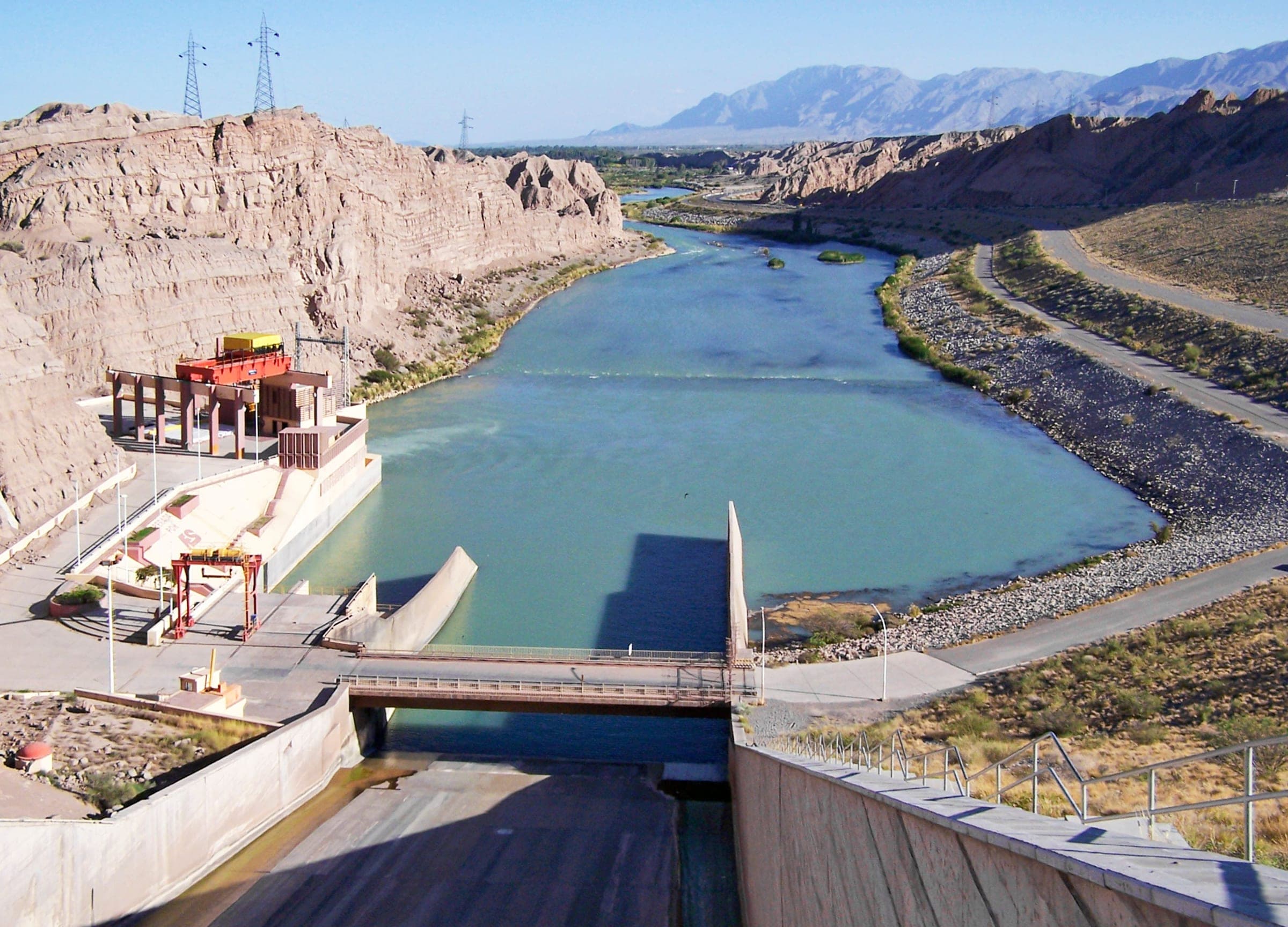
The marathon starts at Puerto Aventura beside the Punta Negra reservoir in Zonda at about 971 m and finishes on Avenida Ignacio de la Roza in the centre of San Juan at about 645 m. The finish is 28.5 km east of the start in a straight line, and the course falls 326 m between them without a climb.
The fall is uneven. After an opening loop of about 1.7 km that returns to the start line, the road drops 30 m in the fourth kilometre and 57 m in the fifth, 3.0% and 5.7%, the only steep ground on the course. From km 5 to 20 the road falls at an average of 0.7% from 876 m to 772 m through Villa Tacú, Zonda Arriba and Villa Basilio Nievas, and from km 20 to the finish at an average of 0.6%.
From km 24 the course follows Avenida Libertador General San Martín for 16 km through Marquesado, Rivadavia and Desamparados, passing within 200 m of the Autódromo Eduardo Copello at km 23 and the Jardín de los Poetas at km 24. It turns east at about km 40, runs a kilometre past the finish area and doubles back along Avenida Ignacio de la Roza from km 41. The half marathon, 10K and 5K start later along the same corridor; the 10K at Avenida Libertador 6000 and the 5K at Libertador and Alvear.
Kilometre by kilometre
Before the gun: the transfer. The start is 28 km from the finish and the transfer is the runner's own. Leave the city early enough to be at the reservoir at least an hour before the 08:30 gun (2026 time).
Km 0 to 5: the reservoir and the drop. The start is at 971 m beside the Punta Negra reservoir. In July this is the coldest point of the day, and fog covered the start in a recent edition. The first 1.7 km loop back through the start line, then the road falls 30 m through the fourth kilometre and 57 m through the fifth, to 876 m. Quads take the damage here. Shorten the stride and hold back.
Km 5 to 12: Villa Tacú and Zonda. The road eases to 0.3 to 1.0% through Villa Tacú at km 7 and along José Ignacio de la Roza in Zonda from km 8, falling from 876 m to 807 m by km 12. Gels are not promised on course, so carry what the plan needs.
Km 12 to 20: south through Zonda Arriba. The course turns south along Matías Sánchez through Zonda Arriba and Villa Basilio Nievas from km 12 to 16, at 0.5 to 0.7%, then east on Recabarren, 9 de Julio and 25 de Mayo to Ruta Provincial 12 at km 20, at 772 m. The ground is almost flat from km 16 to 20, between 782 and 772 m. The half marathon starts later along this corridor, so slower marathoners may meet half marathon runners from here on.
Km 20 to 24: La Bebida and the Autódromo. Avenida José Ignacio de la Roza runs through Comuna La Bebida at km 21 to 23, passing within 200 m of the Autódromo Eduardo Copello at km 23, then reaches the Jardín de los Poetas at km 24, at 743 m. The department of Rivadavia takes its name from the Zonda, a hot dry wind from the west, so check the forecast for wind.
Km 24 to 40: Avenida Libertador. Avenida Libertador General San Martín carries the course for 16 km through Marquesado (km 28 to 31), Rivadavia (km 32 to 36) and Desamparados (km 37 to 39), falling from 743 m to 648 m at 0.4 to 1.4% a kilometre. Nothing on this stretch is a hill, which makes it a long run of tired legs without a feature to blame. Water is every 5 km, with isotonic drink and fruit between.
Km 40 to 42.195: into the centre. The course turns east at about km 40, runs a kilometre past the finish area to km 41 and doubles back along Avenida Ignacio de la Roza to the finish in the centre, at about 645 m. The 10K starts on Avenida Libertador at number 6000 and the 5K at Libertador and Alvear, so the road carries shorter-distance runners again in the last 10 km. Follow the marathon markers.
Gradient. The fall is 326 m, 199 m of it by km 20, and no part of the course climbs. The measured-course listing carries downhill and separation limits. The technical briefing is the place to check timing mat positions.
From 971 m beside the Punta Negra reservoir, with the steepest ground at km 4 and 5 (3.0% and 5.7%), then an easy fall to 823 m. Run it slower than goal pace and let the quads last.
A fall of 1% to 0.5% through Zonda, Zonda Arriba and Villa Basilio Nievas, almost level from km 16 to 20 at 782 to 772 m. Wind can funnel down the valley, so tuck in behind other runners.
The Autódromo, the Jardín de los Poetas and Avenida Libertador through Marquesado, falling from 754 m to 699 m. Fatigue builds without any single obstacle to blame, so keep fuelling on schedule.
Rivadavia and Desamparados to the centre, then a spur east past the finish area and back along Avenida Ignacio de la Roza. Half marathoners and 10K runners share the road, and support grows.
Course Map
A point-to-point course from the Punta Negra reservoir through Zonda and along Avenida Libertador to the city centre, with the 2026 expo venue beside the finish. Tap a marker for details, and scrub the slider or press play to move the orange marker along the course with the elevation profile beneath it.
Pacers
The 2026 programme lists a single start at 08:30 with no corral plan.
The course drops 326 m from the reservoir to the city, which makes San Juan fast. A measured-course listing carries it with downhill and separation limits, so times may not count for records, and acceptance as a qualifying time depends on the receiving race's rules. Check the receiving race before planning around a San Juan result.
Nutrition on course
Water is on the course every 5 km from km 5 to km 40, and at the finish. Isotonic drink and fruit are on offer at points between the water stations. The kilometre markers for the isotonic and fruit tables and the product names have not been published.
No gel provision is promised, so carry what the plan needs. The personal bottle procedure, cup type, elite tables, sponges and on-course toilets have not been published. Cold weather lowers the drive to drink, so set a watch reminder at each water table. Dry air and altitude increase fluid loss even when the day is cold.
Spectating
San Juan is a spectator-light race. The route is long, the start is remote, and the best-supported plan is to watch the last 10 km and the finish. No ticket is needed for the street route.
Every shorter race joins the marathon route nearer the city, with the 10K starting on Avenida Libertador at number 6000 and the 5K at Libertador and Alvear, so Avenida Libertador is the practical spot for a second sighting, with the finish after it. The province's bus network, RedTulum, publishes route changes on race day, so ask the hotel about diversions. At 3:30 pace a runner averages about 4:59 per km, and at 4:30 about 6:24 per km.
- Stay near Avenida Ignacio de la Roza and wait outside the finish enclosure.
- The Centro Cívico is about 0.5 km away, so the walk from central hotels is short.
- Watch from Avenida Libertador in Rivadavia or Desamparados, between about km 32 and 39.
- Move to the finish by taxi or on foot before closures tighten, and allow at least 30 minutes.
- Use a booked car or the paid transfer for the 08:30 gun.
- A start-and-finish double is not realistic: road closures, a five-hour gap for slower runners and the lack of public transport make it unreliable.
After the race
Where to eat, what to see and how to spend the days after the finish.
See & Do
Distances are from the finish on Avenida Ignacio de la Roza, in a straight line, kilometres first.
Casa Natal de Sarmiento
The birthplace of Domingo Faustino Sarmiento, on Calle Sarmiento Sur, is a national museum with free visits and guided options in several languages. It is indoors, on the flat, and a short visit suits tired legs. Check the weekday and weekend hours before going.
Teatro del Bicentenario and the Centro Cívico
The theatre is beside the finish area. The exterior is easy to see after the race and a walk around it needs no ticket. Tour and performance schedules were not verified, so check with the theatre.
Dique Punta Negra
A second visit with a car lets you see the reservoir in daylight and without a number on your chest. Winter is the off-season for water sports.
Ischigualasto Provincial Park
The Triassic badlands of Ischigualasto, also called the Valle de la Luna, are a UNESCO World Heritage site. They are a long extension and not a day-after plan. Details are on the After the Race tab.
Post-race food
The organiser provides fluid and fruit at the finish. A meal needs planning because the area around the finish is closed to traffic until the early afternoon.
The restaurant at the Del Bono Park hotel, Avenida José Ignacio de la Roza Oeste 1946, is open to non-guests, about 2.1 km west of the finish by straight line, a short taxi ride. Check the Sunday lunch hours and reserve a table. Hotels in the centre also serve lunch, so ask the booked hotel for a Sunday table at the time of booking.
San Juan's wine valleys of Tulum, Zonda and Ullum produce the province's wine, and many restaurants list local bottles. Do not book a long lunch at a vineyard restaurant as the first meal after the race. A tired runner needs a short walk, a seat and food within about an hour of finishing.
After the Race
The race is on a Sunday in late July, and Monday is the first free day. Zonda and Ullum are within an hour of the city, Barreal is about 200 km away, and Valle Fértil and Ischigualasto are about 250 km, with Talampaya beyond them in La Rioja. Timetables and fares are indicative, so confirm them when you book.
The Quebrada de Zonda, the Punta Negra reservoir and the Ullum dam sit within an hour of the city, close enough for a slow half-day. July gives dry, clear winter light and cold mornings.
Barreal sits in the Calingasta valley under the high Andes. Winter skies are dry and dark, and the observatories at El Leoncito run daytime and night visits.
San Agustín de Valle Fértil is the base for Ischigualasto, the UNESCO-listed Triassic park about 75 km from the village. Tours run from 09:00 to 16:00 in winter.
Two UNESCO parks in one trip: Ischigualasto in San Juan and Talampaya's red canyons in La Rioja, with Villa Unión as the base for the second. Winter nights are cold.
Background
History
The Maratón Internacional de San Juan runs from the Punta Negra reservoir to the city centre on a Sunday in late July. The 2025 race was reported as the ninth edition and the 2026 race as the tenth, though the numbering varies from year to year, so no first year is stated here. A marathon with a similar name started from a central street in 2011, but nothing links that event to the current series. The 2019 race was reported as a new route linking the Punta Negra dam with the capital.
The organiser is Asociación Civil San Juan Sol y Aventura, which operates as Adventure Pro, with support from the provincial government. The marathon shares its weekend with a half marathon, a 10K, a 5K and a children's race, which start from different points and join the route nearer the city. In 2025 about 4,500 people took part across all distances and 566 of them started the marathon.
Roberto Ruiz of Córdoba (2:25:47) and María Belén Alegre of Mendoza (3:02:26) were reported as the 2025 winners. The 2026 race went to Martín León of Chubut and María Emilia Antille of Santa Fe. Reports differ on their exact times, so no course record is stated here.