The Race
| Next Race Date | 12 September 2027 (Sunday) |
|---|---|
| Course Type | Loop, single loop, flat, road/asphalt, described by the organiser as having no cobblestones and no hills |
| Registration | Open, direct online entry via jooks.ee Customer Portal; five price windows from €48 to €85; 2027 closing and on-the-spot dates not yet published |
| Ballot Opens | Not applicable, open entry |
| Total Finishers | Not confirmed |
| Average Race Day Temperature | Not confirmed |
| Cutoff Time | 6 hours (marathon); 3 hours (half marathon); 2 hours (10 km) |
| Free Race Day Transport | Not confirmed for race day specifically; general airport transfer covered by bus lines 2 and 15 |
| Course Certification | World Athletics Label event, with AIMS certification via the AIMS Estonia country listing |
A flat, beginner-friendly course, and Helsinki a two-hour ferry away
The organiser’s own promotional material is unusually direct in describing Tallinn as a low-friction first international marathon: no cobblestones, no hills, a generous 6-hour cutoff, and an airport just 10 minutes from the start-finish area. Runners with an extra day can cross to Helsinki, Finland by ferry in as little as 2 hours, with close to 10 sailings each way daily across three operators.
History
The Swedbank Tallinn Marathon is organised by Spordiürituste Korraldamise Klubi under World Athletics and Estonian Athletic Association competition rules. The first marathon was held in 1989 with about 100 participants, and in 2024 the organiser marked 35 years since it. The half marathon and 10 km were added from 2000, and the marathon has been a regular fixture since about 2010. The weekend now covers the marathon, a relay marathon in which five-person teams share the 42.195 km, a half marathon, a 10 km Tallinn Fall Race, a 5 km Nike Youth Run, a Limpa Kids’ Race and a 2.6 km Welcome Run through Kadriorg Park, plus a virtual run option.
The 2026 edition, on Sunday 13 September, set a record of 95 countries taking part, and more than 10,000 people from 76 countries had registered 100 days out. Evans Kimtai Kiprono of Kenya won the marathon in 2:12:48, moving at 30 km and leading by about three and a half minutes at 35 km, and Vivian Cherotich of Kenya won the women’s race in 2:31:58. Karel Hussar was the first Estonian man home and won the Estonian title, which the marathon doubles as. The course records stand at 2:09:22 for men, set by Kiprotich Kirui in 2017, and 2:31:09 for women, set by Mercy Kwambai in 2024.
The day before, Vincent Kiptoo of Kenya won the half marathon in 59:48, a course record and the first sub-hour half marathon in Estonia, and Regina Wambui Ndungu won the women’s race in 1:07:35, also a course record. More than 5,000 runners started the half marathon.
The race is a World Athletics Label event and carries AIMS certification, though it has no Abbott World Marathon Majors status. The organiser’s own promotional material targets first-time international marathon runners, describing Tallinn as a low-friction destination for a first marathon abroad, citing the flat course, generous cutoff times and the ease of travelling in via Tallinn Airport.
The course
The marathon starts and finishes at the foot of Toompea on Falgi Road, with the start corridor opening 30 minutes before the start. Runners are grouped into start groups by expected finish time, with elite runners in Group A, and the 2027 start is at 09:00. Finishers cross the line and continue along a finish corridor into a service area, where they receive a beverage; the finish-line celebration itself takes place at the foot of Tall Hermann Tower, part of the Toompea castle complex directly above the Falgi Road finish.
The 2027 route has not been published; this description is of the 2026 course. The course is a single, flat loop run entirely on Tallinn’s roads, passing through the UNESCO World Heritage-listed Old Town, seaside promenades, parks and modern business districts, with the organiser explicitly stating there are no cobblestones and no hills on the route. The profile backs that up with one qualification. The whole course sits between 5 m and 46 m, but it is not level: a long, shallow rise runs from km 14.8 to km 22.5, gaining 37 m at an average of 0.5% out along Paldiski maantee into Haabersti, and the high point of 46 m comes at km 22.4 on Tähetorni, about 9 km west of the Old Town. The same 37 m comes back off between km 22.5 and km 27.5. The low point, 5 m, is the Rocca al Mare seafront at km 33.7, and the closing 6 km drift 19 m back up to the finish below Toompea. Nothing on the course reaches 1%. Refreshment stations appear every 3 to 5 km along the course, offering water and sports drinks from reusable cups, which runners are asked to deposit in yellow collection boxes after use.
The race’s operational hub, the competition centre at Freedom Square, sits a short distance from the start-finish line itself, around 500 m away; the two locations are distinct points, not the same square.
The start: Falgi Road, foot of Toompea. The marathon starts at the foot of Toompea hill on Falgi Road, with the corridor opening 30 minutes before the gun and runners grouped into start groups by expected finish time.
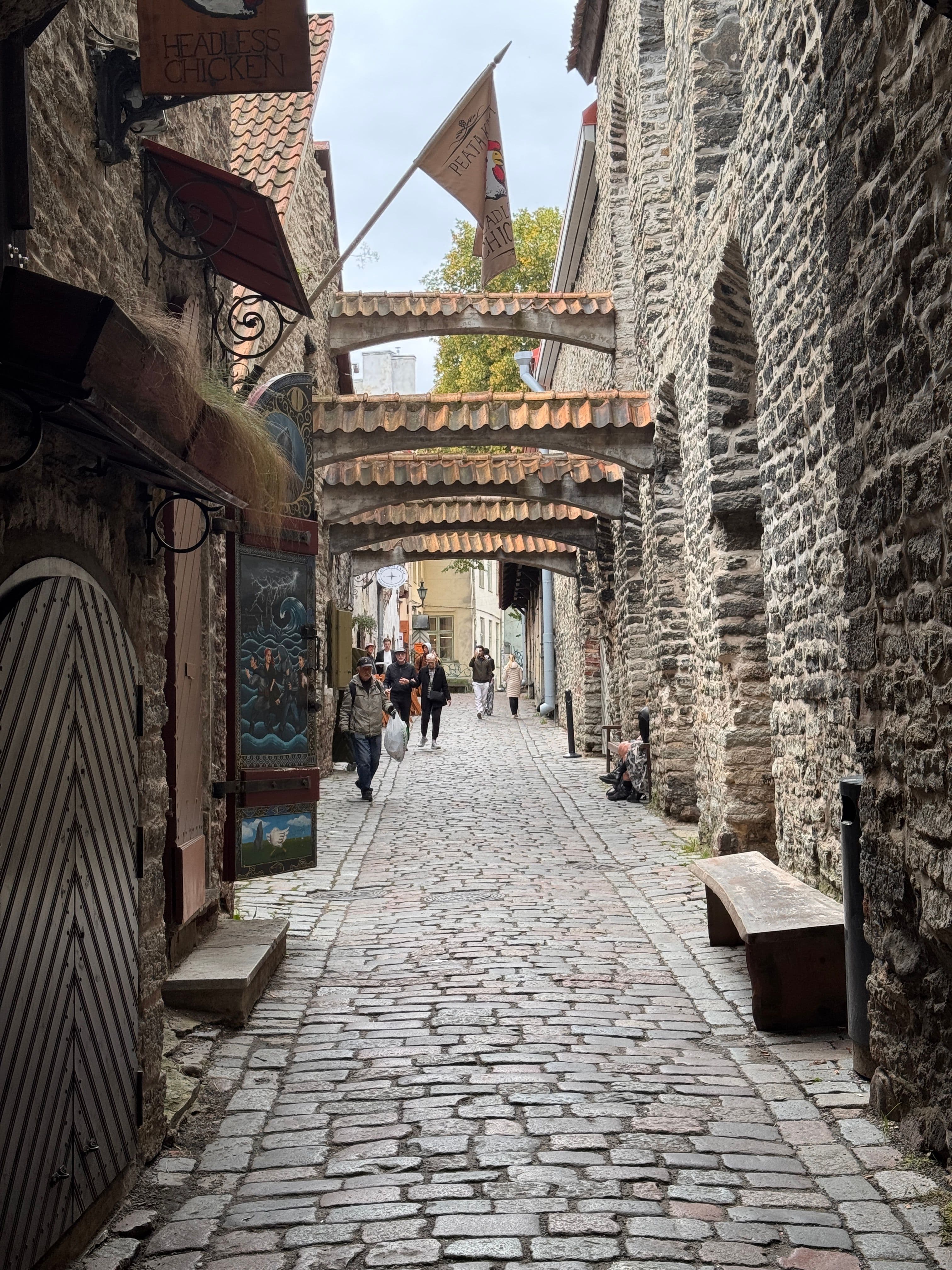
Through the Old Town.The route passes through Tallinn’s UNESCO World Heritage-listed Old Town, one of the best-preserved medieval old towns in northern Europe, described by the organiser as flat throughout with no cobblestones on the running surface itself.
Seaside promenades and parks.The single loop continues along Tallinn’s seaside promenades and through the city’s parks, offering sea views at points along the route.
Modern business districts.The route also passes through Tallinn’s contemporary business areas, a deliberate contrast the organiser highlights against the Old Town’s medieval streets.
The finish: Falgi Road, foot of Tall Hermann Tower.The course returns to Falgi Road at the foot of Toompea, with the finish-line celebration held directly beneath Tall Hermann Tower. Marathon finishers with an official bib gain access to a Marathon Lounge with food, drinks, massages and chill-out space, a benefit specific to the marathon distance among the weekend’s races.
Course Map
The map shows the course: a single loop from Falgi Road through the Old Town, seaside promenades and parks, back to Falgi Road, plotted from a real finisher’s device recording. Tap a marker for details, and scrub the slider or press play to move the orange marker along the course with the elevation profile beneath it.
The marathon starts at the foot of Toompea hill, with the start corridor opening 30 minutes before the gun and runners grouped by expected finish time.
The course passes through Tallinn's UNESCO World Heritage-listed Old Town, described by the organiser as flat throughout with no cobblestones on the running surface.
The single loop continues along Tallinn's coastline and through the city's parks, with refreshment stations every 3 to 5 km.
The course returns to its start point, finishing at the foot of Toompea castle's tallest tower, with marathon finishers gaining access to a dedicated Marathon Lounge.
Pacers
Pace makers are confirmed as part of the entry fee inclusions, but a named pacer programme, specific finish-time bands, or start-corral assignment by pace has not been published.
What to wear
Mid-September in Tallinn generally sits in a transitional early-autumn window, cooler than the peak of a European summer but not yet into winter conditions. A specific, sourced temperature figure for race morning has not been published.
Entry
Entry is direct online registration through the jooks.ee Customer Portal, with no ballot and no published cap. The 2027 online closing date and on-the-spot registration days at the race office are not yet published.
Entry fees rise in five pricing windows: €48 until 10 October 2026, €65 from 11 October to 31 December 2026, €75 from 1 January to 31 May 2027, €75 from 1 June to 31 August 2027, and €85 from 1 to 12 September 2027. That is higher than 2026 in the first three windows and the same in the last two, and the late-entry ceiling has not moved. A 20% discount applies for seniors over 60 and youth under 20, and a 10% group discount applies for groups of at least 10 registering together, both from 11 October 2026 to 31 August 2027; only one discount can be applied per registration, and discounts do not apply during the first and last pricing windows.
The 2026 rules, which are the best guide to 2027, allowed re-registration (changing name or distance) through the Customer Portal until 7 September, free before 26 August; after that, a name change cost €5 and a distance change €5 plus any fee difference. For health reasons a participant could defer to the same distance the following year with a medical certificate before 8 September, or apply for a 50% refund by the same deadline. Entry fees were otherwise non-refundable, including when the event is cancelled for reasons beyond the organiser’s control. The 2027 half-marathon regulations follow the same pattern, with a 6 September 2027 re-registration deadline, so expect similar marathon dates.
The 2026 marathon entry fee included a bib with electronic chip timing, an electronic finisher diploma, a finisher medal, gear check and dressing facilities, medical aid if needed, a beverage at the finish, course marking and marshalling, refreshment stations along the course, shower facilities, pace makers and partner offers; marathon entrants specifically also receive an official race t-shirt and access to a dedicated Marathon Lounge with food, drinks, massages and a chill-out area. The eight fastest men and eight fastest women in the marathon receive prizes.
There is no Boston- or London-style GFA route, and no charity or tour-operator entry pathway has been published.
Fast Runner / GFA Standards
Not applicable. No evidence of a GFA or fast-runner entry pathway was found.
Race Weekend
Expo
Bib collection for 2027 runs from Thursday 9 to Sunday 12 September at Freedom Square, the event’s competition centre, roughly 500 m from the start-finish line at Falgi Road; bibs can also be collected up to 30 minutes before a runner’s own race starts, and timed races need the QR code sent by email. The 2027 hours are not yet published. In 2026 the desk was open Thursday 10:00 to 19:00, Friday 10:00 to 20:00, Saturday 07:00 to 20:00 and Sunday 07:00 to 16:00. The competition centre itself houses the race office, dressing facilities and gear check, toilets, a bicycle park, the awards stage, the expo and medical aid.
Race Morning
The start corridor at Falgi Road, foot of Toompea, opens 30 minutes before the marathon’s start; only runners with a current-year bib may enter, and runners must start in their assigned group, with disqualification the penalty for starting in the wrong group. Elite runners start in Group A, with the remaining field grouped by expected finish time; the rule for 2027 start groups has not been published.
Runners arriving via Tallinn Airport benefit from a genuinely short transfer: the airport sits around 10 minutes from the city centre, reachable by bus lines 2 and 15 or by licensed taxis waiting outside the arrivals hall with no pre-booking required. Free public transport for entrants is not confirmed by the organiser.
Expect road closures around the course. In 2026 roads were closed in Põhja-Tallinn, the centre and Haabersti, including Paldiski maantee, Kopli, Kalaranna and Toompuiestee, and on race morning trams T1 and T5 were suspended from 08:30 to 16:00, trams T2 and T6 shortened and bus 73 suspended from 08:00 to 10:00, with many other bus and trolleybus lines diverted until 16:30. Walk to the start if you can and allow extra time. The 2027 notice will appear on transport.tallinn.ee and jooks.ee, and the list will differ.
After finishing, runners move along a finish corridor to a service area for a beverage, with marathon finishers specifically gaining access to the Marathon Lounge for food, drinks, massages and a chill-out space. Named bag-drop procedure and specific corral structure by pace were not confirmed beyond the general grouping-by-expected-finish-time description above.
Nutrition on Course
Refreshment stations are placed every 3 to 5 km along the course, offering water and sports drinks served from reusable cups; runners are asked to place used cups in yellow collection boxes positioned at each station rather than discard them on the course. A specific total aid-station count or personal-bottle-service procedure was not confirmed.
Spectating
Because the course is a single loop rather than a multi-lap repeat, most spectators will see the field pass only once at any given point, making the start-finish area at Falgi Road, foot of Toompea, and the nearby Freedom Square competition centre the most practical base for anyone wanting a longer window to watch. The finish-line celebration specifically takes place at the foot of Tall Hermann Tower, a fixed and identifiable landmark for spectators to head toward regardless of exact timing.
One base: Falgi Road, foot of Toompea, for both the start and the finish, since the course begins and ends at the same point. A second: Freedom Square, the competition centre roughly 500 m away, for the awards ceremony and expo activity around race weekend. A named live-tracking app, mid-course spectator hotspots along the Old Town or seaside sections, or public transport routes specific to spectators have not been published.
Post-Race Food
This guide does not yet name restaurants near Falgi Road or Toompea. The organiser’s own promotional copy notes that many runners stay in the heart of the city, close enough to walk to the race, get dinner nearby, and explore Tallinn’s Old Town on foot, without naming specific venues.
Where to Stay
Because the course starts and finishes at the same point, at the foot of Toompea on Falgi Road, a hotel within walking distance of the Old Town serves both ends of the race equally well; the organiser’s own copy states that many runners stay in the heart of the city specifically for this reason.
The Old Town, near Toompea
The single most practical base given the confirmed start-finish location, putting a runner within walking distance of the race itself and of the medieval streets described directly by the organiser as part of the course.
Around Freedom Square
The event’s competition centre, around 500 m from the start-finish line, houses the race office, expo and bib collection; a hotel near this square offers easy access to pre-race logistics as well as the finish area.
Kadriorg
Home to the Welcome Run’s 2.6 km course and a well-known park district, within reach of the city centre for a visitor wanting a quieter, greener base slightly outside the Old Town itself.
Near the seaside promenade
Given the course runs along Tallinn’s seafront, a hotel near the promenade offers proximity to a specific stretch of the route itself rather than just the start-finish point.
Recommended hotels
A 5-star boutique property housed in 13th and 14th-century buildings in the heart of the Old Town.
Apartment-style stays within walking distance of the competition centre and bib collection.
A design-led boutique hotel close to the park hosting the marathon weekend's Welcome Run.
Positioned toward Tallinn's waterfront, convenient for the course's seaside promenade stretch.
A large central property close to Toompea, a reliable option along the same stretch of the city as the start-finish.
Booking timeline
Entry has no ballot, so the price ladder sets the pace: entering by 10 October 2026 costs €48, against €65 until the end of 2026, €75 from January and €85 in race week, so early entry saves up to €37. Accommodation has no ballot trigger, but 2027 falls on a festival weekend in which the half marathon alone drew more than 5,000 runners in 2026, so book a hotel early. No hotel supply data is published.
See & Do
These sit at or close to the start-finish, or directly on the course’s own route.
Toompea Castle and Tall Hermann Tower
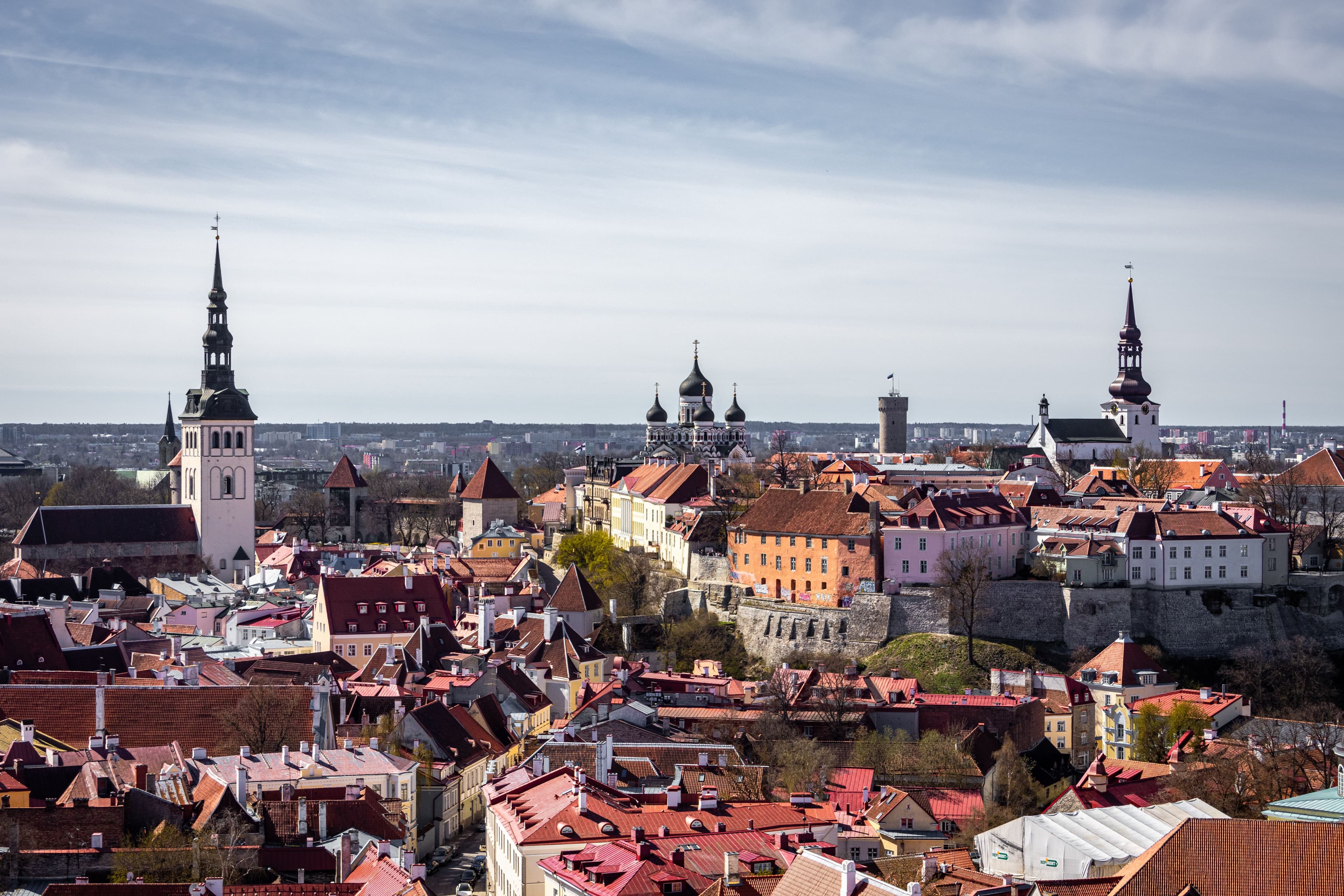
At the start-finish itself. The hilltop castle complex directly above the Falgi Road start-finish, its tallest tower, Tall Hermann, forming the specific backdrop to the marathon’s finish-line celebration.
Tallinn Old Town
Adjoining the start-finish area. A UNESCO World Heritage-listed medieval old town, part of the marathon course itself, with narrow cobbled streets, medieval walls and towers, and a dense concentration of cafés and restaurants.
Kadriorg Park
A large 18th-century park built around Kadriorg Palace, and the setting for the marathon weekend’s 2.6 km Welcome Run.
Telliskivi Creative City
A former industrial complex converted into a hub of independent shops, restaurants and studios, a contemporary counterpoint to the Old Town’s medieval architecture.
Seaplane Harbour
A maritime museum housed in an early-20th-century seaplane hangar on Tallinn’s waterfront, with historic vessels and a submarine open to visitors.
After the Race
Tallinn Marathon runs in September. These itineraries reach a different country by ferry, Estonia’s largest national park, its second city, and the Latvian capital.
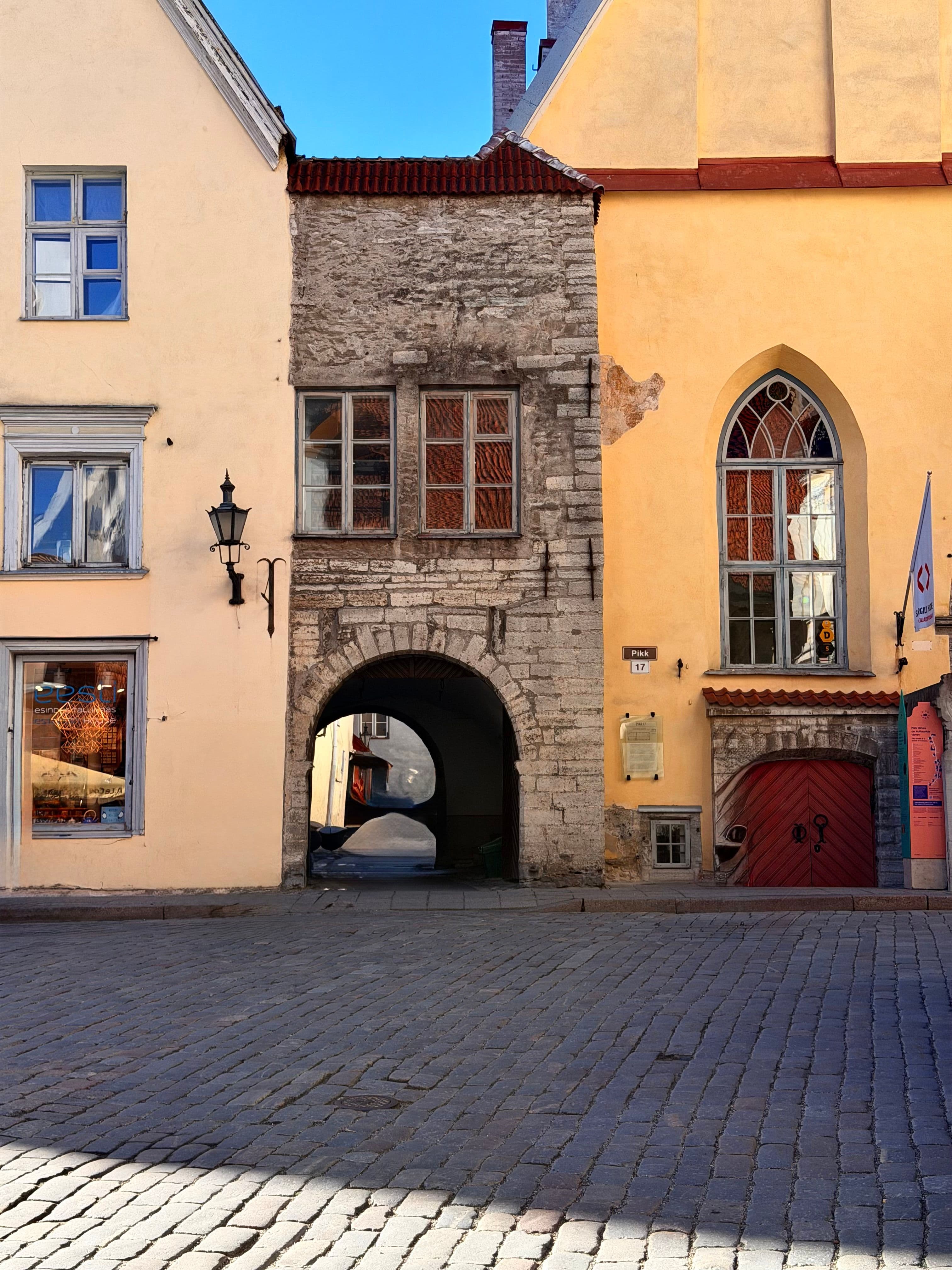
A genuinely different country reachable in the time it takes to run a half marathon, with Tallink, Viking Line and Eckerö Line together running close to 10 daily sailings each way.
Estonia's largest national park, a mix of coastal bog, dense pine forest, and preserved manor houses within easy day-trip range of Tallinn.
Estonia's second city and a university town since the 17th century, named European Capital of Culture 2024, with an old town scaled for slower, closer exploration than Tallinn's.
The Latvian capital and the largest city in the Baltic states, distant enough by road to reward a two-night stay rather than a rushed round trip.
Frequently asked questions
Should I stay near the start or the finish?
No distinction to make: the course starts and finishes at the same point, at the foot of Toompea on Falgi Road, so a hotel in or near the Old Town serves both equally.
How far in advance should I book a hotel?
There's no ballot deadline, but the organiser's own recommendation to stay centrally, combined with September being a popular travel month, makes early booking sensible.
Is there free transport to the start?
Not confirmed specifically for race day. Confirmed transport detail covers the airport-to-city transfer rather than race-day arrangements.
What is the best area to stay?
In or near the Old Town, close to Toompea, per the organiser's own recommendation that many runners stay centrally enough to walk to the race.
How do I collect my bib?
At the race office in Freedom Square, around 500 metres from the start-finish line, from Thursday 9 to Sunday 12 September 2027 (hours not yet published), or up to 30 minutes before your own race starts.
What is the weather typically like?
Not confirmed for a specific range. Mid-September in Tallinn sits in an early-autumn transitional window. Check a live climatology source closer to race day.
How do I get from the airport?
Around 10 minutes from the city centre, by bus lines 2 and 15 or licensed taxis waiting outside arrivals with no pre-booking required.
Is there a bag drop?
Gear check and dressing facilities are confirmed at Freedom Square and included in the entry fee, though the exact procedure was not confirmed.
What is the cutoff time?
Six hours for the marathon; three hours for the half marathon and two hours for the 10 km.
How do I get back to my hotel after finishing?
If staying in or near the Old Town, on foot; the course finishes exactly where it started.