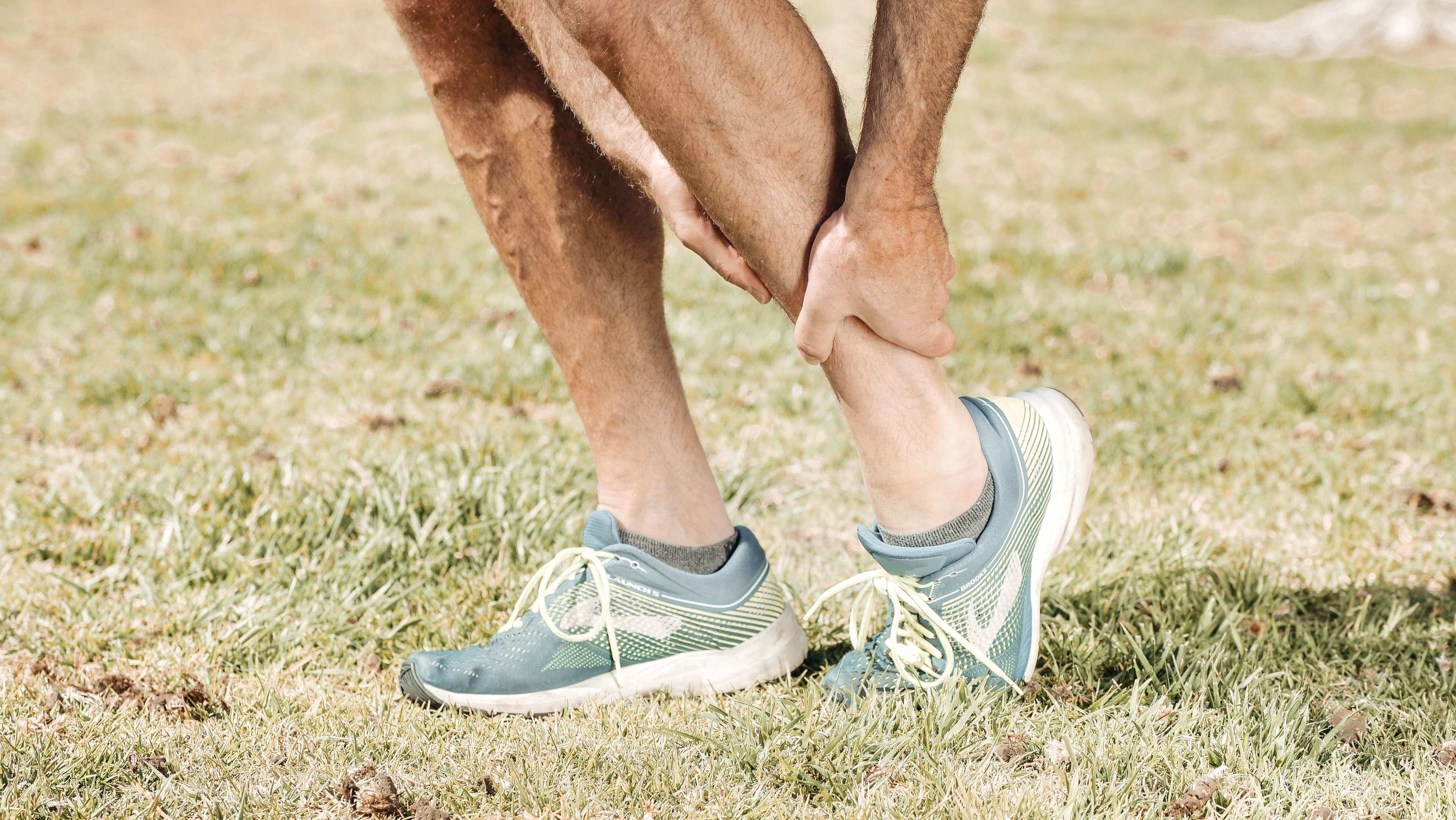
Few things stop a runner as abruptly as a sudden muscle cramp. For generations the locker-room explanation has been consistent: if your muscles lock up during a race, you are either dehydrated or low on salt. Sports science has spent the last two decades unpicking that assumption, and the picture that has emerged is considerably more interesting.
Researchers now study this condition under the label Exercise-Associated Muscle Cramping (EAMC), and they are divided into two camps: those who still back the classic Dehydration and Electrolyte Imbalance theory, and those who argue for what is now called the Altered Neuromuscular Control theory. The evidence strongly favours the second.
The Short Cut
- Muscle cramping is primarily a neurological problem caused by localised muscle fatigue, not a whole-body shortage of water or salt.
- Dehydration does not directly cause an isolated cramp, but it accelerates overall muscle fatigue, which in turn triggers the nervous system to misfire.
- To stop an active cramp fast, either stretch the muscle or take a sharp, pungent substance such as pickle juice, which triggers a nerve reflex in the throat that signals the muscle to relax within seconds.
Theory 1: Dehydration and Electrolyte Depletion
The oldest explanation holds that heavy sweating causes substantial losses of water and minerals (sodium, potassium, magnesium, and calcium), and that this fluid shift leaves motor nerves hyper-irritable and prone to misfiring.
The original evidence came from observations of industrial workers in hot environments. Modern sports science has struggled to replicate it under controlled conditions.
A prospective cohort study by Schwellnus et al. (2004) monitored distance runners during a marathon, taking blood samples the moment athletes crossed the finish line. There were no significant differences in serum electrolyte levels or hydration status between runners who cramped and those who did not. A subsequent study tracking 210 Ironman triathletes found the same thing: dehydration and altered sodium concentrations showed no predictive link to cramping. The only statistically significant predictors were faster racing pace relative to training (which induces sudden high-intensity muscle fatigue) and a prior history of cramping.
Research on runners during a 161km ultramarathon found no difference in fluid or sodium balance between crampers and non-crampers, but did find significantly higher post-race concentrations of blood biomarkers representing skeletal muscle damage in those who cramped, pointing to structural overload of muscle fibres, rather than salt deficit, as the preceding condition.
There is also a logical flaw in the hydration theory. If a full-body systemic issue like dehydration or low blood sodium were the primary trigger, cramping would occur across the whole body. Athletic cramps are almost always localised to the specific muscle groups under continuous, repetitive strain: the calves, the hamstrings, not spread evenly across the body.
Theory 2: Altered Neuromuscular Control
Because fluid loss cannot explain localised spasms, the scientific community has moved towards a neurological explanation. The Altered Neuromuscular Control theory holds that EAMC is primarily a consequence of localised muscle fatigue, which disrupts normal spinal reflex mechanisms.
Inside skeletal muscles, two sensory organs manage contraction and relaxation. Muscle spindles send excitatory signals to the spinal cord to cause contraction. Golgi Tendon Organs (GTOs) send inhibitory signals that tell the muscle to relax when tension gets too high. When a muscle undergoes intense, repetitive, or unaccustomed exertion, it fatigues. Fatigue causes the muscle spindles to become hyper-excitable while simultaneously dampening GTO activity. The spinal cord is flooded with contraction messages without the necessary inhibitory feedback, and the result is a sustained, involuntary motor neuron discharge: a cramp.
Treatment and the Pickle Juice Effect
The strongest evidence for the neurological theory comes from how quickly modern treatments can stop a cramp.
If cramping were caused by systemic salt or fluid deficiency, any ingested remedy would need to pass through the stomach and be absorbed into the bloodstream before it could alter the local muscle environment. That process takes at minimum 20 to 30 minutes.
A study by Miller et al. (2010) showed that ingesting a small volume of pickle juice relieved electrically induced muscle cramps in an average of 85 seconds. Blood tests confirmed that plasma sodium and potassium levels remained entirely unchanged during that window. The recovery had nothing to do with electrolyte replacement.
The mechanism is this: highly pungent, acidic, or bitter substances trigger sensory receptors in the back of the throat known as Transient Receptor Potential (TRP) channels. Activating these receptors sends a rapid reflex signal down the spinal cord that dampens the over-firing alpha motor neurons and forces the cramping muscle to relax.
Randomised trials by neuroscientist Rod MacKinnon confirmed that ingesting strong, spicy organic molecules (ginger, cinnamon, capsicum extracts) targets these same TRP channels, reducing both the frequency and duration of cramps by sending an immediate calming signal down the spinal cord.
What to Do About It
| Strategy | How it works | When to use it |
|---|---|---|
| Passive stretching | Mechanically stretches the muscle tendon, stimulating the GTOs to restore neurological inhibition | Immediate relief from an active cramp |
| TRP channel agonists (pickle juice, mustard, ginger, chilli extract) | Triggers a throat reflex that sends inhibitory signals down the spinal cord | The moment a muscle begins to flutter or lock up |
| Pacing and progressive training | Delays the onset of localised muscle fatigue | Long-term prevention |
| Hydration strategy | Prevents premature fatigue from large fluid or carbohydrate depletion | Endurance maintenance, particularly over ultra distances |
The science does not say hydration is irrelevant. It says hydration does not directly stop a cramp once it starts. Keeping a sensible fluid strategy matters for overall performance. But when a muscle locks up mid-race, that is a job for your nervous system, not your water bottle.
Related reading: Cramping is closely related to muscle fatigue management, which is itself shaped by fuelling. The Golden Rules of Glycogen covers how proper carbohydrate loading delays the onset of the fatigue that triggers cramping in the first place. The races where cramping is most common are also the hottest ones: the Chicago Marathon and London Marathon race pages both cover warm-weather scenarios, hydration station spacing, and race-day medical provision in detail.
The Extra Mile
- Schwellnus, M. P., Nicol, J., Laubscher, R., & Noakes, T. D. (2004). Serum electrolyte concentrations and hydration status are not associated with exercise-associated muscle cramping (EAMC) in distance runners. British Journal of Sports Medicine, 38(4), 488–492.
- Schwellnus, M. P., et al. (2011). Increased running speed and previous cramps rather than dehydration or serum sodium changes predict exercise-associated muscle cramping: a prospective cohort study in 210 Ironman triathletes. British Journal of Sports Medicine, 45(8), 650–656.
- Miller, K. C., et al. (2010). Reflex inhibition of electrically induced muscle cramps in hypohydrated humans. Medicine & Science in Sports & Exercise, 42(5), 953–959.
- MacKinnon, R., et al. (2016). Transient Receptor Potential (TRP) Channel Activation Controls Stimulation-Induced Muscle Cramps. FASEB, 30(1).
- Hoffman, M. D., et al. (2015). Muscle cramping during a 161-km ultramarathon: comparison of characteristics of those with and without cramping. Sports Medicine, 45, 289–299.
- Troyer, W., et al. (2020). Exercise-Associated Muscle Cramps: Causes, Treatment, and Prevention. Current Sports Medicine Reports, 19(10), 415–420.
The information in this article is for educational purposes only and does not constitute medical advice. Always consult a qualified healthcare professional before changing your training, hydration, or medical protocols.